
Do I Need Power Tools Or Is A Basic Home Tool Kit Enough
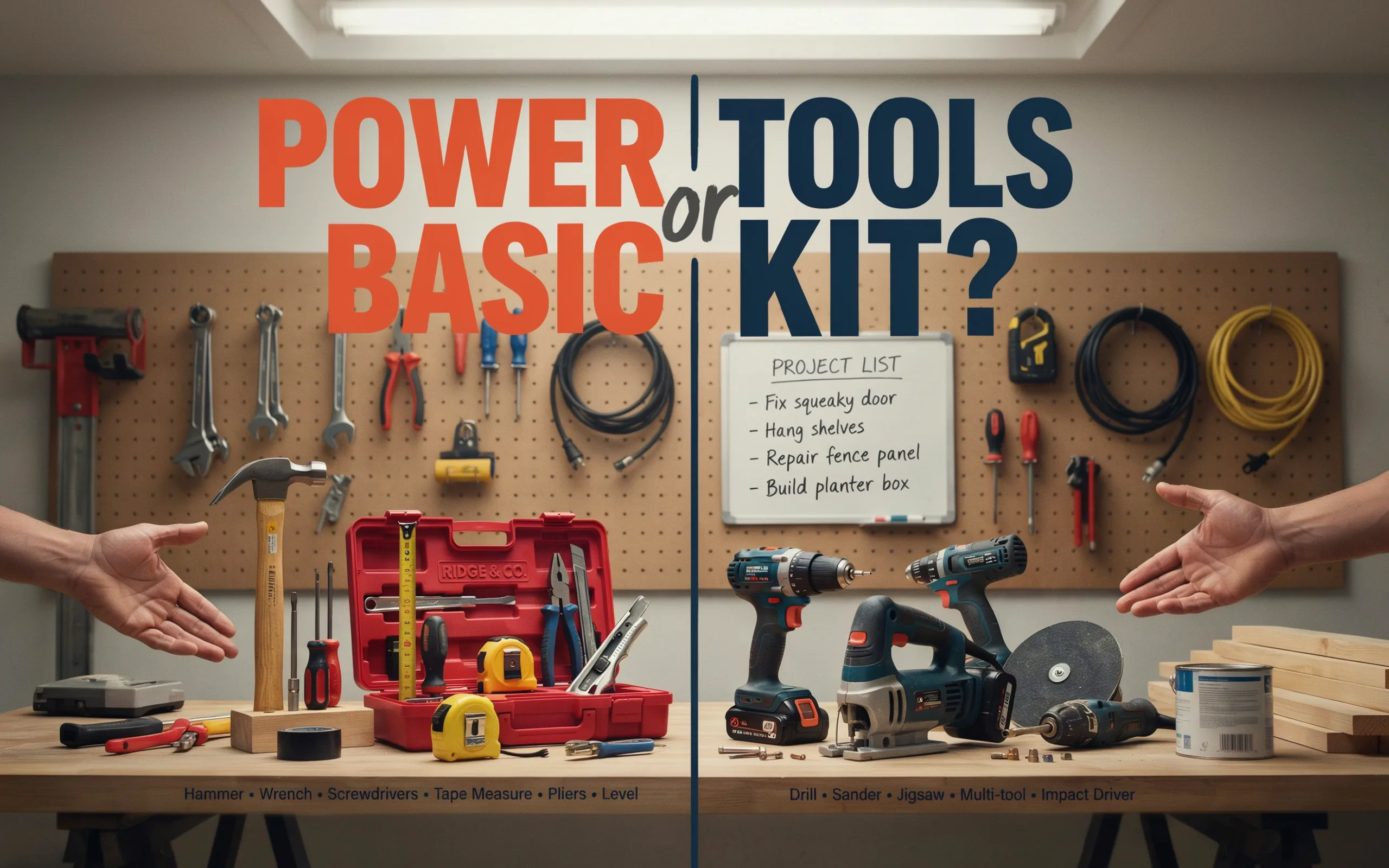
Trying to decide between power tools or is a basic home tool kit enough for your home repairs? A basic kit handles 80% of small jobs. Power tools save time on bigger projects. This guide helps you choose wisely.
You just moved into your first home. Or maybe you have lived in the same apartment for years. Something breaks. A drawer handle falls off. A picture frame needs hanging. A loose shelf wobbles. You open the closet and see a small blue box. That is the basic tool kit you got as a gift. Inside are a hammer, a few screwdrivers, a pair of pliers, and some nails. You ask yourself: Do I need power tools or is a basic home tool kit enough to fix this?
This question comes up for almost everyone who picks up a tool for the first time. I have been there too. When I started doing small repairs, I only had a cheap kit from the grocery store. And for many years, that was all I used. Over time, I added a drill. Then a saw. But looking back, I can tell you this: most people do not need a garage full of power tools. Yet a few power tools can make life much easier.
Let me help you find your own answer. We will look at what a basic kit can do, where it fails, and when you should spend money on something with a cord or a battery. By the end, you will know exactly what works for your home and your skill level.
“A man is only as good as his tools. But the best tool is the one you have in your hand when you need it.” – Norm Abram, Master Carpenter
What Exactly Comes in a Basic Home Tool Kit?
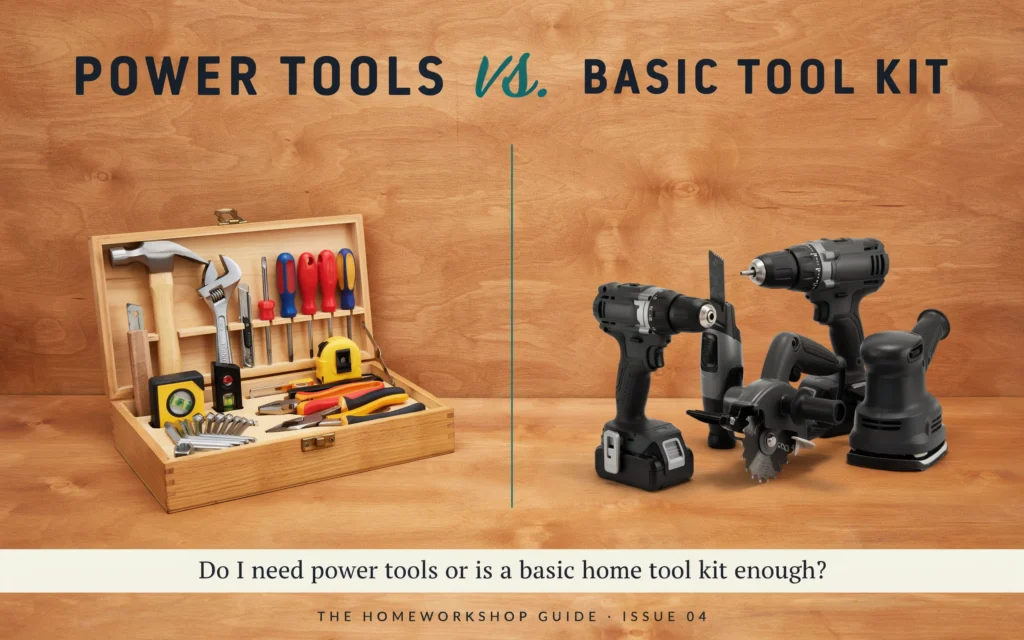
A basic home tool kit is not fancy. It is simple. It contains the classic hand tools that people have used for generations. These tools do not need electricity. They do not need batteries. You just pick them up and use them. Most hardware stores sell ready made kits for twenty to fifty dollars. But you can also build your own.
The Essential Items in a Basic Kit
Here is what you typically find in a starter set. I have used every single one of these many times.
| Tool | Common Use |
|---|---|
| Claw hammer | Hanging nails, pulling nails out of wood |
| Phillips and flathead screwdrivers (multiple sizes) | Tightening or loosening screws on cabinets, toys, electronics |
| Adjustable wrench | Turning nuts and bolts on faucets, furniture, bikes |
| Needle nose pliers | Gripping small parts, bending wire, cutting zip ties |
| Utility knife | Opening boxes, cutting rope or plastic, trimming wallpaper |
| Tape measure | Measuring spaces for furniture, curtains, shelves |
| Level | Making sure picture frames and shelves are straight |
| Assorted nails and screws | Small fasteners for common repairs |
With these eight items, you can handle a surprising number of tasks. I remember using my basic kit to assemble a bookcase, fix a wobbly chair, hang five picture frames, and even replace a broken toilet handle. No power tools needed. Just patience and a little elbow grease.
What a Basic Kit Does Well
A basic home tool kit is perfect for light repairs and small assembly jobs. You can tighten loose cabinet hinges. You can put together flat pack furniture from that famous Swedish store. You can hang curtains or mirrors. You can replace switch plates and outlet covers. You can fix a squeaky door hinge. You can even change a shower head.
For these tasks, you do not need power tools or is a basic home tool kit enough? Yes, absolutely. In fact, using hand tools for small jobs is often faster. You do not waste time finding an outlet or waiting for a battery to charge. You just pick up the screwdriver and turn.
The basic kit also teaches you something valuable. It teaches you feel. When you turn a screw by hand, you know when it is tight. You learn how much force is too much. This feeling helps later if you decide to buy power tools. You will not strip screws or break wood because you learned control first.
The Limits of a Basic Kit
But let me be honest. A basic kit has clear limits. It will not cut a two by four board. It will not drill a hole through brick. It will not sand down a rough edge. It will not drive twenty screws into a floor in five minutes. For those things, you need more than muscle.
Think about drilling. A hand drill exists. But it is slow and tiring. If you ever need to make more than two holes in a wall, you will wish for an electric drill. The same goes for sawing. A hand saw works for one or two cuts. But try cutting ten pieces of trim with a hand saw. Your arm will hurt by the third cut.
So the real question is not do I need power tools or is a basic home tool kit enough for everything? The answer is no kit does everything. You must match the tool to the job. And some jobs demand power.
When Does a Basic Tool Kit Fall Short?
Let me give you real examples from my own experience. A few years ago, I decided to build a simple wooden shelf for my garage. I had my basic kit. I bought a pine board from the store. I needed to cut the board to size. I used my hand saw. It took me twelve minutes to make one cut. The cut was crooked. I had to sand the edge with rough sandpaper by hand. That took another fifteen minutes. Then I needed to drill pilot holes so the wood would not split. I used a hand drill. Each hole took thirty seconds of twisting. I made eight holes. My wrist hurt the next day.
That small shelf took me almost two hours. If I had a circular saw and an electric drill, I could have finished in twenty minutes. That was the day I realized that sometimes you need power.
Here is another example. Hanging a heavy mirror on a plaster wall. A basic hammer and nails will not hold. You need wall anchors. To install wall anchors, you need to drill a hole of the right size. A hand drill can do it. But plaster is hard. You will sweat. An electric drill goes through like butter.
Jobs That Are Hard or Impossible with Only a Basic Kit
| Task | Why Basic Kit Fails |
|---|---|
| Drilling into concrete or brick | Hand drill has no power; you need a hammer drill |
| Cutting long boards or plywood | Hand saw is slow and hard to keep straight |
| Sanding large surfaces | Sandpaper by hand takes hours and gives uneven results |
| Driving many screws (more than 10) | Screwdriver causes hand fatigue and wrist strain |
| Removing rusted or over tightened nuts | Adjustable wrench slips; a impact wrench works better |
| Making precise repeated cuts | Hand tools lack guides; power saws with fences are accurate |
So when you ask yourself “do I need power tools or is a basic home tool kit enough” for these harder jobs, the honest answer is that the basic kit is not enough. You will struggle. You might even damage the material or hurt yourself.
“Use the right tool for the job. A screwdriver is not a chisel. A hammer is not a pry bar. Respect your tools and they will respect your work.” – Bob Vila, Home Improvement Expert
The Case for Power Tools
Power tools get a lot of attention. And for good reason. They save time. They save energy. They let you do jobs that hand tools simply cannot do. But here is the catch. You do not need every power tool on the shelf. You probably need two or three.
Common Power Tools and Their Benefits
Let me walk you through the most useful power tools for a typical homeowner. I will focus on tools that give you the most value for your money.
Cordless Drill – This is the number one power tool I recommend. A good drill does two things. It drills holes. And it drives screws. With a set of drill bits and screwdriver bits, you can handle hundreds of tasks. Hang curtains. Build furniture. Install shelves. Attach hinges. Repair decks. A drill is the one tool that makes every other job easier. You can find a decent cordless drill for forty to eighty dollars. It will last you ten years.
Circular Saw – If you ever need to cut wood, this is your friend. A circular saw cuts straight lines quickly. You can cut plywood, two by fours, fence posts, and even some plastics. It takes practice to cut straight. But once you learn, you will never go back to a hand saw for big jobs. A basic circular saw costs around fifty to one hundred dollars.
Random Orbit Sander – Sanding by hand is boring and slow. A power sander makes wood smooth in seconds. You use it for refinishing furniture, smoothing rough edges, or preparing a surface for paint. It is not necessary for everyone. But if you like wood projects, this tool is a joy to use. Prices start at forty dollars.
Jigsaw – This saw cuts curved lines. You can cut shapes out of wood, plastic, or thin metal. It is great for cutting holes for sinks in countertops or making decorative pieces. A jigsaw costs about thirty to sixty dollars.
You do not need all four. Most people only need a drill. Then add others as you find projects that require them.
Why Power Tools Feel Scary But Should Not
Many beginners worry about power tools. They think about losing fingers or making big mistakes. I understand that fear. I felt it too. But modern power tools have many safety features. Electric brakes stop the blade quickly. Safety guards cover sharp edges. Cordless drills have clutches that stop twisting your wrist if the bit jams.
The key is to start slow. Read the manual. Watch a few videos. Wear safety glasses. And respect the tool. Do not wear loose clothing. Tie back long hair. Keep your fingers away from moving parts. After a few uses, the fear fades and confidence grows.
Power Tools vs Basic Kit: A Side-by-Side Comparison
Let me put this clearly. Neither option is better all the time. The best choice depends on the job, your budget, and your storage space. Here is a table that compares both approaches across several factors.
| Factor | Basic Home Tool Kit | Power Tools |
|---|---|---|
| Cost | Very low ($20–$50) | Moderate to high ($50–$500 for a set) |
| Learning curve | Almost none | Moderate; needs practice |
| Speed | Slow for big jobs | Fast for almost everything |
| Physical effort | High for cutting, drilling, sanding | Low; tools do the work |
| Storage space | Small box or drawer | Needs shelf or cabinet, plus batteries |
| Safety risk | Low (cuts from sharp edges) | Higher (moving blades, electricity) |
| Best for | Small fixes, assembly, hanging pictures | Remodels, woodworking, large repairs |
So when you ask “do I need power tools or is a basic home tool kit enough” for your specific situation, use this table as a guide. If you mostly do tiny repairs and you have plenty of time, stick with basics. If you plan to improve your home, build things, or save time, buy at least one power tool.
Every home needs a hammer, a screwdriver, and a pair of pliers. But the day you buy your first drill is the day you stop being a renter and start being a homeowner.” – Tim Allen, Actor and Woodworker
How to Decide: Questions to Ask Yourself
I cannot tell you what to buy without knowing your life. So let me ask you some questions. Answer them honestly. Then you will know whether you need power tools or is a basic home tool kit enough for you.
Question 1: How often do you fix things around the house?
If you pick up a tool once a month or less, a basic kit is fine. If you fix something every week, you will enjoy having a drill.
Question 2: What kind of home do you live in?
An apartment with soft drywall and simple furniture? Basic kit works. An older house with plaster walls, solid wood, and rusty pipes? You want power.
Question 3: Do you enjoy DIY projects or do you just want repairs done fast?
If you love the process, hand tools give you a sense of connection. If you just want the shelf up so you can watch TV, buy the drill.
Question 4: What is your budget?
A good basic kit costs less than a single power tool. If money is tight, start with the basics. You can always add a cheap corded drill for thirty dollars later.
Question 5: Do you have storage space?
Power tools need space. Batteries need charging. If you live in a tiny studio, a basic kit in a drawer makes more sense.
Question 6: What projects are you planning in the next six months?
Make a list. Hanging three pictures? Basic is fine. Building a raised garden bed? You need a saw and a drill. Installing new laminate flooring? You absolutely need power tools.
After answering these questions, most people fall into one of three groups. Group one: basic kit only. Group two: basic kit plus a cordless drill. Group three: basic kit plus several power tools. Group two is the sweet spot for most homeowners.
Building Your Tool Collection Over Time
You do not need to buy everything today. In fact, I recommend the opposite. Start with a small basic kit. Use it for three months. Notice which tasks feel hard or slow. Then buy one power tool to solve the biggest pain point.
Here is a sensible order for buying tools over two years.
Month 0: Buy a basic home tool kit with the eight items I listed earlier. Spend no more than fifty dollars.
Month 3: If you drilled any hole by hand and hated it, buy a cordless drill. Get one with two batteries and a charger. Spend eighty to one hundred twenty dollars.
Month 6: If you cut any wood by hand and the cut was crooked or tiring, buy a circular saw. Spend sixty to one hundred dollars.
Month 12: If you sanded anything by hand and your arm ached, buy a random orbit sander. Spend forty to sixty dollars.
Month 18: If you cut curves or cut holes inside boards, buy a jigsaw. Spend fifty dollars.
This slow approach saves money. You never buy a tool you do not need. And each new tool feels like a gift instead of a burden.
What About Expensive Brands?
Many people ask if they need top brand names like DeWalt, Milwaukee, or Makita. The honest answer is no. For home use, store brands like Ryobi, Black+Decker, or even Harbor Freight work fine. I have used a thirty dollar drill from a discount store for seven years. It still works. Professionals need expensive tools because they use them every day for hours. You do not.
The only exception is safety tools. Buy a good pair of safety glasses. Buy good work gloves. Buy a dust mask. Those keep you safe regardless of the brand.
Safety Tips for Both Kinds of Tools
Whether you use hand tools or power tools, safety matters. I have cut myself with a screwdriver. I have smashed my thumb with a hammer. I have also had a drill bit snap and fly past my face. Learn from my mistakes.
For hand tools:
- Keep sharp tools like utility knives covered when not in use.
- Do not use a screwdriver as a pry bar. It will break and send metal flying.
- Wear gloves when handling rough wood or metal edges.
- Use the right size screwdriver for the screw. A loose fit strips the screw head.
For power tools:
- Always wear safety glasses. Always.
- Remove jewelry and tie back long hair.
- Unplug or remove the battery before changing bits or blades.
- Wait for the tool to stop completely before setting it down.
- Use clamps to hold your work. Do not hold small pieces with your hand.
- Read the manual. Every tool is different.
One more thing. Do not work when you are tired or distracted. I made my worst mistakes at eleven at night when I just wanted to finish. Walk away. Finish tomorrow.
Frequently Asked Questions
Can a basic home tool kit handle most apartment repairs?
Yes. Most apartment repairs involve tightening screws, hanging pictures, or fixing cabinet doors. A basic kit works perfectly. You rarely need power tools in a rental because you cannot drill into walls anyway.
Do I need power tools or is a basic home tool kit enough for hanging shelves?
It depends on the wall type. For drywall with plastic anchors, a hand drill works but is slow. An electric drill makes it easy. For concrete or brick walls, you need a hammer drill. So for one shelf, a basic kit might be enough. For several shelves, buy a drill.
What is the first power tool I should buy?
A cordless drill. No question. It replaces the screwdriver and hand drill. It saves the most time for the lowest cost.
Will power tools make my repairs faster?
Yes, often three to five times faster. A job that takes one hour with hand tools takes fifteen minutes with power tools.
Are cheap power tools dangerous?
Not if you use them correctly. Cheap tools have less power and shorter life. But they are not automatically unsafe. The danger comes from user error, not price.
Can I build a deck with only a basic tool kit?
No. Building a deck requires cutting many boards, driving many screws, and drilling into joists. You need power tools for that.
How do I store power tools if I have no garage?
Keep them in a plastic storage bin under your bed or in a closet. Charge batteries on a shelf. Many people store tools in a corner of their living room. It is fine.
What if I buy a power tool and never use it?
That happens. To avoid this, only buy a tool when you have a specific project waiting. Do not buy tools on sale just because they are cheap.
Conclusion
So let me answer the big question one more time. Do I need power tools or is a basic home tool kit enough? For most people starting out, a basic kit is enough for the first six months to a year. You can handle small fixes, simple assembly, and basic hanging tasks with just hand tools. The basic kit is cheap, safe, and easy to store.
But once you start doing larger projects, or once you get tired of slow hand work, adding a cordless drill changes everything. That one power tool alone makes you twice as capable. And over time, adding a saw and a sander opens up whole new types of projects.
Here is my simple rule. Buy the basic kit first. Use it. Learn from it. When you find yourself saying “I wish this was faster” or “my hand hurts”, then buy one power tool. Buy only what solves your actual problem. That way you never waste money. And you never feel overwhelmed by tools you do not need.
Start small. Fix one thing today with a hammer and screwdriver. Enjoy the feeling of making something work with your own hands. And when you are ready, let a drill or a saw do the heavy work. Either way, you are already ahead of everyone who calls a handyman for a loose screw.
Keep your tools clean. Store them safely. And always measure twice before cutting once.
Related posts
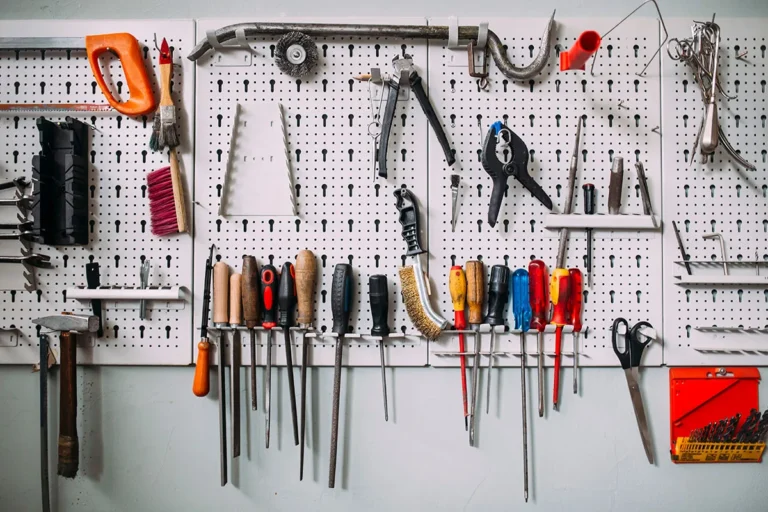 Top Home Tool Kits for Seniors: 2026 Practical Guide
Discover the top home tool kits for seniors in 2026. We compare compact, easy-to-use sets perfect for daily household repairs, furniture assembly, and DIY tasks. Finding…
 Top Home Tool Kits for Women: 2026 Buyer Guide
Discover the top home tool kits for women in 2026. Compare top-rated sets for DIY, furniture assembly, and household repairs to find your perfect match. Finding…
 Top Home Tool Kits for Basic Home Repairs 2026
Find the top home tool kits for basic home repairs in 2026. Compare top-rated sets for DIY projects, furniture assembly, and daily household maintenance. Every home…