
How To Choose A Tool Bag For HVAC Technicians
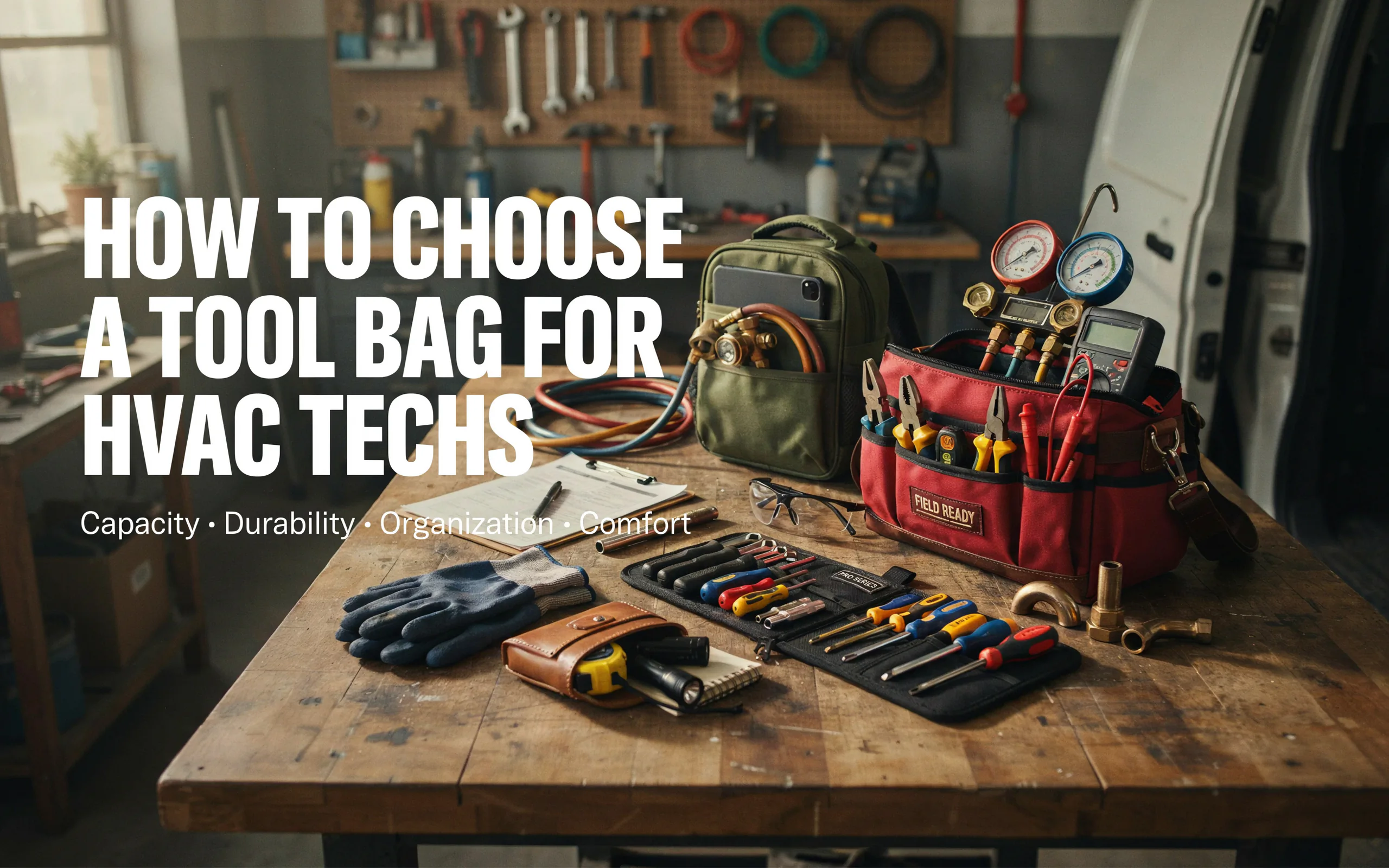
Looking for the best way to choose a tool bag for HVAC technicians? This guide covers durability, pockets, backpack vs. pouch, and top brands to help you pick the right bag for your daily work.
Every HVAC technician knows the feeling. You show up to a job site, grab your bag, and hope everything you need is inside. But when your tools are scattered, your bag is falling apart, or you cannot find that one fitting you just had, the day gets longer and more frustrating.
The right tool bag changes everything. It keeps your gear organized, protects expensive meters and gauges, and saves you from digging through a black hole of screwdrivers and fittings. But with so many options on the market, how do you actually choose a tool bag for HVAC technicians that fits your work?
This guide walks you through everything you need to know. No fluff, no jargon. Just practical advice from someone who has been in the trade and knows what works.
Why Your Tool Bag Choice Matters More Than You Think
Your tool bag is your mobile workstation. You carry it up ladders, into crawl spaces, across rooftops, and through mechanical rooms. It takes a beating every single day.
A poorly chosen bag costs you time. When you spend five minutes searching for a tool, that adds up over a week. A bag that falls apart after six months means you are buying another one sooner than you should. And a bag that hurts your back or shoulder makes every day harder than it needs to be.
“Your tools are your livelihood, and how you carry them says a lot about how you work,” says Mike Sweeney, a 20-year HVAC veteran and trainer at the Air Conditioning Contractors of America. “I have seen guys with expensive tools stuffed in cheap bags that ruin their gear. The bag is just as important as the tools inside it.”
When you choose a tool bag for HVAC technicians, you are investing in your daily workflow, your physical comfort, and the protection of expensive equipment.
Step 1: Assess Your Daily Tool Load
Before you look at any bag, take a honest look at what you carry every day. Make a list. Do not guess.
Most HVAC technicians carry a mix of these items:
- Manifold gauges and hoses
- Digital multimeter
- Screwdrivers (flathead, Phillips, and multi-bit)
- Nut drivers and wrenches
- Pliers and cutters
- Tubing cutters and reamers
- Hex keys (Allen wrenches)
- Tape measure
- Level
- Flashlight or headlamp
- Drill or impact driver with batteries
- Refrigerant scale
- Thermostat and control tools
- Fittings, screws, and small parts
Some technicians carry a full set for installation work. Others carry a lighter load for service calls. Your daily carry determines the size and type of bag you need.
Tool Load by Work Type
| Work Type | Typical Tools Carried | Recommended Bag Size |
|---|---|---|
| Service calls (residential) | Meter, gauges, hand tools, small parts | Compact pouch or small tote |
| Service calls (commercial) | Meter, gauges, hand tools, drill, parts | Medium backpack or open tote |
| Installation work | Full hand tools, drill, saw, tubing tools, fasteners | Large backpack or rolling bag |
| Mixed service and install | Everything above | Large backpack with good organization |
Do not buy a bag that is too big just because you might need extra space someday. A heavy bag slows you down and wears you out. Buy for what you carry now, with a little room for growth.
Step 2: Choose Your Bag Style
HVAC technicians have several options when it comes to bag styles. Each has strengths and weaknesses.
Backpacks
Backpacks have become the most popular choice for HVAC technicians. They distribute weight evenly across both shoulders, which reduces strain on your back and neck. This matters when you climb ladders or walk long distances on commercial sites.
Most tool backpacks offer excellent organization with many pockets. They keep your hands free, which is useful when you carry other equipment or need to steady yourself on a ladder.
The downside? Backpacks can be bulky. They take up more space in a truck or van. And if you need frequent access to tools, you have to take the bag off and unzip it.
“I switched to a backpack five years ago and never looked back,” says David Chen, an HVAC service manager in Texas. “My shoulder pain disappeared. I can carry more tools and still move freely. For anyone who climbs a lot, a backpack is the way to go.”
Open Top Totes
Open top totes give you quick access to your tools. You can see everything at a glance and grab what you need without unzipping anything. This style works well for installation work where you set up in one area and need frequent tool changes.
These bags often have a wide opening and multiple exterior pockets. They sit upright on the ground, which keeps tools visible and accessible.
The drawback is that open totes do not protect tools from dust and moisture as well as closed bags. Tools can also fall out if the bag tips over.
Tool Pouches
Pouches are small bags that clip onto your belt. They hold a few essential tools for quick jobs. Many service technicians use a pouch for diagnostic calls where they only need a meter, screwdriver, and small wrench.
Pouches keep your most-used tools within arm’s reach. They are lightweight and do not get in the way.
But pouches cannot hold much. You still need a larger bag for bigger jobs. Many technicians use both a pouch for quick calls and a larger bag for full days of work.
Rolling Bags
Rolling bags have wheels and a handle like luggage. They are useful for commercial work where you park far from the job site or carry heavy loads.
The advantage is obvious. You do not carry the weight. You roll it.
But rolling bags struggle on stairs, rooftops, and rough terrain. They also take up more space in your vehicle. Most HVAC technicians only use rolling bags for specific situations.
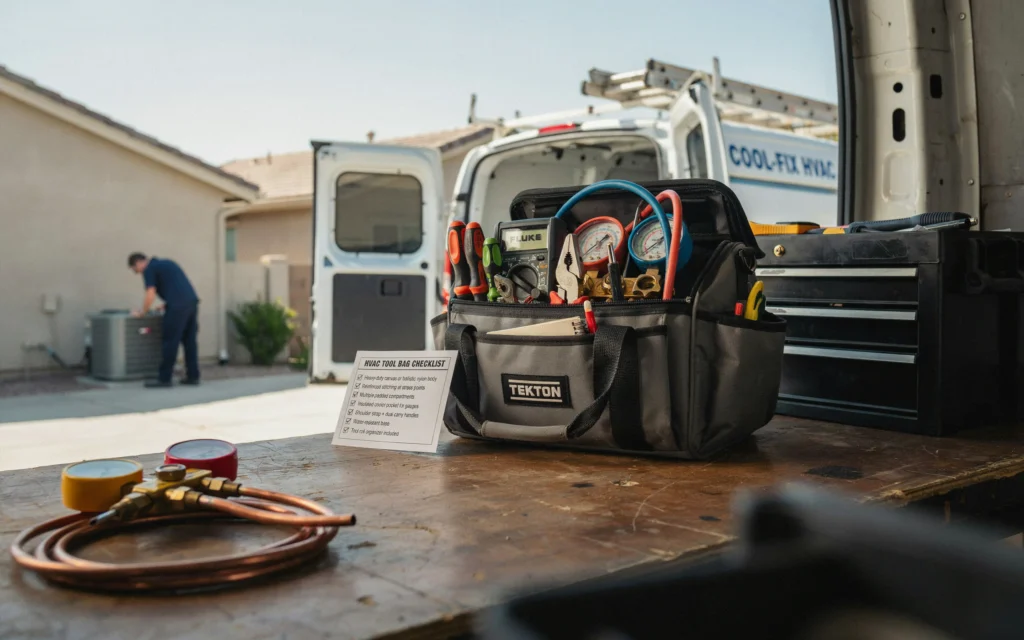
Bag Style Comparison
| Style | Best For | Pros | Cons |
|---|---|---|---|
| Backpack | Climbing, walking, mixed work | Even weight, hands-free, good organization | Bulky, must remove to access tools |
| Open tote | Installation, stationary work | Quick access, visible tools | Less protection, tools can fall out |
| Pouch | Quick service calls | Lightweight, always accessible | Limited capacity |
| Rolling bag | Commercial, heavy loads | No carrying weight | Struggles on stairs and rough ground |
Step 3: Look for These Essential Features
When you choose a tool bag for HVAC technicians, certain features make the difference between a good bag and a great one.
Durable Materials
HVAC work is tough on equipment. Your bag needs materials that hold up.
Look for bags made from 1680D ballistic nylon or heavy-duty canvas. These fabrics resist abrasion, tearing, and punctures. Cheaper materials like standard polyester wear out quickly, especially at stress points.
Check the stitching too. Double stitching and reinforced seams at corners and handle attachments indicate better construction.
Waterproof or Water-Resistant Base
You set your bag down on wet roofs, damp basements, and muddy ground. A waterproof base keeps moisture from seeping into your tools.
Many quality bags use a molded plastic or rubber base. This base also helps the bag stand upright, which keeps tools organized and easy to access.
If the base is not waterproof, at least look for a bag with feet or a raised bottom that keeps the fabric off wet surfaces.
Padded Compartments for Delicate Tools
Your multimeter and manifold gauges cost hundreds of dollars. They need protection.
Look for bags with padded compartments or dedicated pockets for meters and gauges. These pockets keep sensitive equipment from bumping against hard tools during transport.
Some bags use hard-sided sections for fragile tools. Others use thick foam padding. Either approach works, as long as your delicate tools have their own space.
Vertical Pockets for Long Tools
HVAC technicians carry many long, thin tools. Screwdrivers, nut drivers, tubing cutters, and hex keys all need vertical storage.
Vertical pockets keep these tools organized and visible. You can see the handle of each tool and grab the one you need without digging. This saves time and reduces frustration.
Avoid bags that only have horizontal or slanted pockets. They do not work well for the tools HVAC technicians use most.
Strong Zippers and Hardware
Zippers fail more often than any other part of a tool bag. Cheap zippers break, stick, or separate under pressure.
Look for bags with heavy-duty zippers from trusted brands like YKK. Metal zippers generally last longer than plastic ones. The zipper pulls should be large enough to grip easily, even with work gloves on.
Check the hardware too. D-rings, clips, and handle attachments should be metal, not plastic. Metal hardware holds up to daily use and heavy loads.
Comfortable Carrying Options
If you carry your bag for hours, comfort matters.
For backpacks, look for padded shoulder straps with some width. Thin straps dig into your shoulders. A chest strap or waist belt helps distribute weight and keeps the bag stable when you move.
For totes and pouches, padded handles reduce pressure on your hands. An adjustable shoulder strap gives you another carrying option when your hands are full.
Step 4: Consider Organization and Accessibility
A bag with good organization saves you time and keeps your tools in good condition.
Pocket Layout
Look at how the pockets are arranged. Are they placed where you can reach them easily? Do they fit the tools you carry?
Some bags have molded pockets that hold specific tools. Others use flexible pockets that adapt to different items. Both approaches work, but flexible pockets give you more options if your tool set changes.
Interior pockets protect tools from each other. Exterior pockets give quick access to frequently used items. A mix of both works best for most HVAC technicians.
Tool Loops
Tool loops are narrow pockets that hold individual tools like screwdrivers and pliers. They keep tools separated so you can grab one without pulling out others.
Look for bags with plenty of tool loops. You want enough loops for your most-used tools, plus a few extra.
Main Compartment Size
The main compartment should be large enough for your bulky items. This includes your drill, impact driver, refrigerant scale, and larger hand tools.
But the main compartment should not be so large that small items get lost at the bottom. A bag with internal dividers or smaller pockets within the main compartment helps with organization.
Color and Visibility
This sounds minor, but it matters. A bright interior makes it easier to find dark-colored tools. Some bags use orange or yellow linings specifically for this reason.
Exterior color matters too. A brightly colored bag is easier to spot on a crowded job site. It also reflects heat in hot weather, which keeps your tools cooler.
Step 5: Test for Comfort and Fit
You cannot always try a bag before buying, but you can check key comfort factors.
Weight Distribution
For backpacks, the weight should sit high on your back, not low on your hips. A well-designed backpack keeps the load close to your body, which improves balance and reduces strain.
Look for backpacks with adjustable straps. You want to fine-tune the fit to your body. A bag that does not fit properly causes pain and fatigue.
Handle Placement
For totes, the handle should be centered so the bag balances when you carry it. Off-center handles make the bag tilt, which puts uneven pressure on your hand.
Multiple handles give you options. A top handle, side handles, and a shoulder strap let you carry the bag in different ways depending on the situation.
Stand-Up Capability
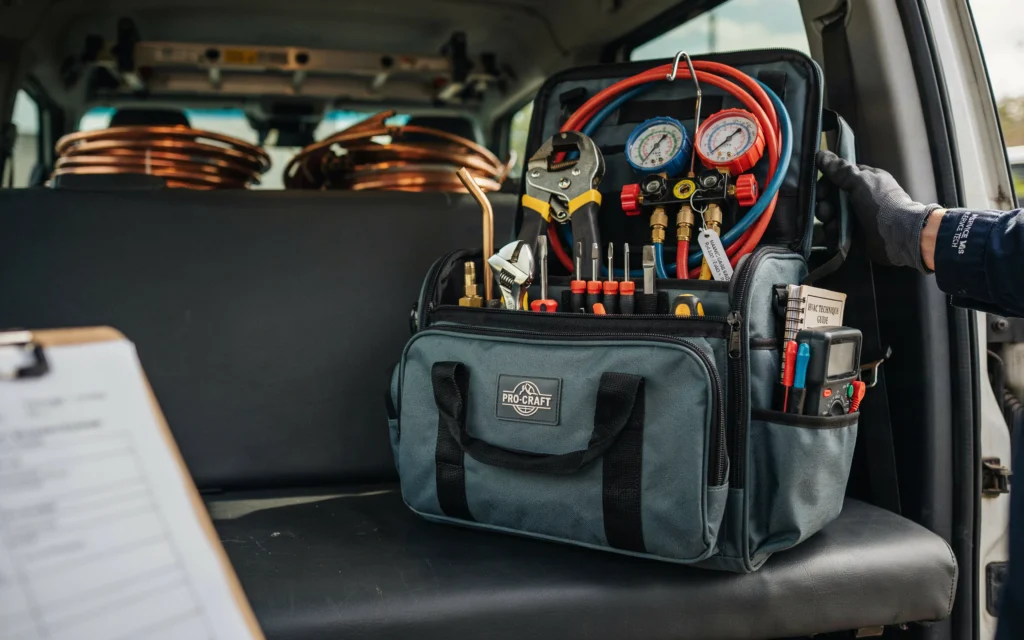
A bag that stands upright on its own makes your life easier. You set it down, and your tools stay organized and accessible.
Bags with molded or hard bottoms stand up best. Some bags also have a curved or reinforced base that helps them stay upright on uneven surfaces.
Step 6: Set a Realistic Budget
Tool bags range from $30 to over $300. Price often reflects quality, but expensive does not always mean better for your needs.
Entry Level ($30-$80)
These bags work for new technicians or as backups. They use standard materials and basic construction. Expect them to last one to two years with regular use.
Mid Range ($80-$150)
Most HVAC technicians buy in this range. These bags use better materials like 1680D nylon, have more pockets, and include features like molded bases and padded compartments. They typically last two to four years.
Premium ($150-$300)
Premium bags come from brands like Veto Pro Pac and Klein Tools. They use the best materials, have excellent organization, and often include warranties. These bags last five years or more with proper care.
“Buy the best bag you can afford,” says Sarah Martinez, an HVAC business owner in Florida. “A cheap bag costs you more in the long run when it fails and you have to replace tools that got damaged. I tell my techs to spend money on their bag and their boots. Those two things affect every single workday.”
Top Brands to Consider
Several brands consistently perform well for HVAC technicians.
Veto Pro Pac
Veto Pro Pac makes premium bags with exceptional durability and organization. Their bags feature waterproof bases, heavy-duty materials, and thoughtful pocket layouts. Many experienced technicians consider Veto the gold standard.
Klein Tools
Klein Tools offers reliable bags at reasonable prices. Their backpacks and totes include molded bottoms, multiple pockets, and good build quality. Klein is a trusted name in the trades.
CLC (Custom LeatherCraft)
CLC makes practical bags with good value. Their bags have many pockets and durable construction at lower price points than premium brands.
Milwaukee
Milwaukee produces rugged bags with heavy-duty materials. Their backpacks use 1680D ballistic nylon and hard molded bases. They hold up well in demanding conditions.
DEWALT
DEWALT offers dependable bags with useful features. Some models include built-in LED lights and water-resistant materials. Good for technicians who work in low-light conditions.
Common Mistakes When Choosing a Tool Bag
Buying Too Big
A huge bag tempts you to carry tools you do not need. Extra weight slows you down and tires you out. Buy for your daily load, not for every tool you own.
Ignoring Comfort
A bag that hurts to carry gets left behind. Then you do not have the tools you need. Comfort matters as much as capacity.
Forgetting About Weather
HVAC work happens in all conditions. Rain, snow, and extreme heat affect your tools and your bag. Waterproof materials and bases protect your investment.
Overlooking Organization
A bag with poor organization wastes your time. You dig and dig instead of working. Good pockets and compartments pay for themselves in time saved.
Real-World Advice from Experienced Technicians
The best way to choose a tool bag for HVAC technicians is to learn from people who have already tested the options.
“I have tried every style of bag over 25 years,” says Robert Johnson, an HVAC contractor in Ohio. “Backpacks work best for me because I climb so much. But I keep a small pouch for quick service calls. One bag does not fit every situation.”
“You need a bag that protects your meters,” says Lisa Park, a commercial HVAC technician in California. “I have seen too many techs with broken gauges because they threw them in a bag with heavy tools. Spend the money on a bag with padded meter pockets. It pays for itself the first time you drop your bag.”
“Look at what experienced techs carry,” says James Wilson, a union HVAC instructor. “They have figured out what works. Ask them what they like and what they would change. That real-world feedback is more valuable than any sales pitch.”
Frequently Asked Questions
What size tool bag do I need for HVAC work?
The right size depends on your daily tool load. Most HVAC technicians use medium to large backpacks or totes that hold 20 to 50 tools. Start with your daily carry list and add a little extra space for growth.
Should I get a backpack or an open tote for HVAC?
Backpacks work better if you climb ladders or walk long distances. Open totes work better if you set up in one area and need quick tool access. Many technicians use both for different situations.
How much should I spend on an HVAC tool bag?
Plan to spend $80 to $150 for a quality bag that lasts several years. Premium bags over $150 offer better durability and organization but may be more than you need. Entry-level bags under $80 often wear out quickly.
What material is best for an HVAC tool bag?
1680D ballistic nylon or heavy-duty canvas offer the best durability for HVAC work. These materials resist abrasion, tearing, and punctures. Look for reinforced stitching at stress points.
How do I organize tools in my HVAC bag?
Group similar tools together. Put frequently used tools in easy-to-reach pockets. Use vertical pockets for long tools like screwdrivers. Keep delicate items like meters in padded compartments.
Can I use a regular backpack for HVAC tools?
Regular backpacks lack the durability and organization that HVAC work requires. They wear out quickly and do not protect tools properly. Invest in a bag designed for trade work.
How long should an HVAC tool bag last?
A quality bag lasts three to five years with regular use. Premium bags can last longer with proper care. Entry-level bags may only last one to two years.
What features protect HVAC tools from damage?
Padded compartments, molded bases, vertical pockets, and waterproof materials all protect tools. These features keep delicate meters and gauges safe from impacts and moisture.
Conclusion
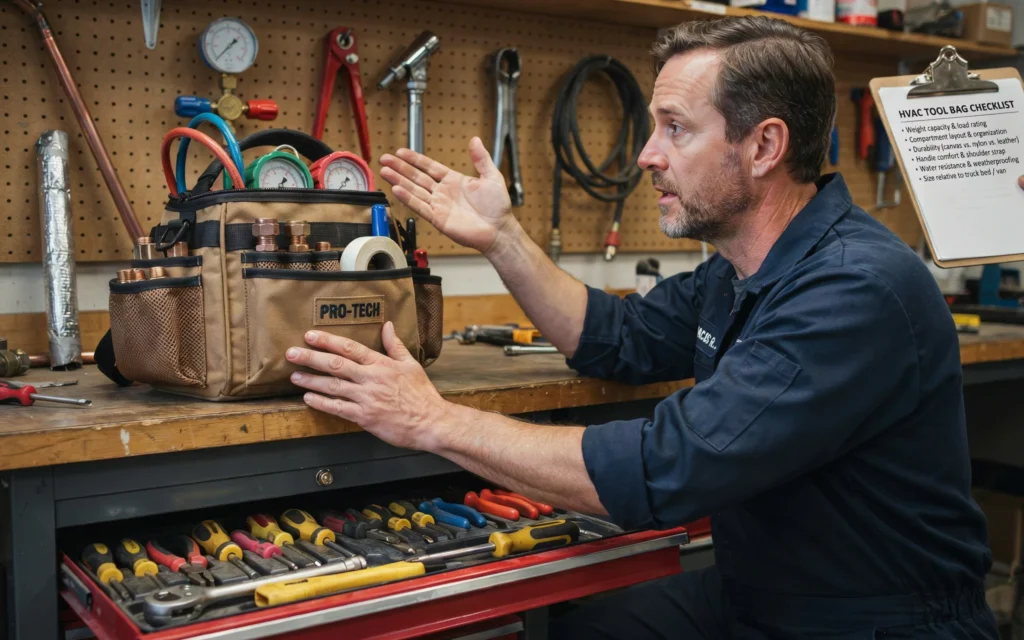
Learning how to choose a tool bag for HVAC technicians takes some thought, but the effort pays off every single workday. The right bag keeps your tools organized, protects expensive equipment, and saves you time and physical strain.
Start with your daily tool load. Pick a style that fits your work. Look for durable materials, waterproof bases, and good organization. Set a realistic budget and choose a brand with a solid reputation.
Your tool bag is more than a carrying case. It is your mobile workshop. Treat it like the important tool that it is. Take your time, do your research, and choose a bag that makes your work easier and more efficient.
The best tool bag for you is the one that fits your tools, your body, and your work style. Use this guide to make an informed choice, and you will wonder how you ever managed without it.
Related posts
 Top Tool Bags for Mobile Contractors: 2026 Buyer Guide
Discover the top tool bags for mobile contractors in 2026. Compare durable totes, backpacks, and multi-pocket organizers to find the best fit for your gear. For…
 Top Tool Bags for Plumbers: 2026 Selection Guide
Discover the top tool bags for plumbers in 2026. We compare durable, multi-pocket storage solutions to help you organize your gear effectively on the job. Plumbing…
 Best Tool Bag for HVAC Technicians in 2026
Find the right tool bag for HVAC technicians with our 2026 guide. Compare top-rated bags, backpacks, and pouches to keep your gear organized and protected. As…