
What Are The Best Mechanic Tools For DIY Repairs
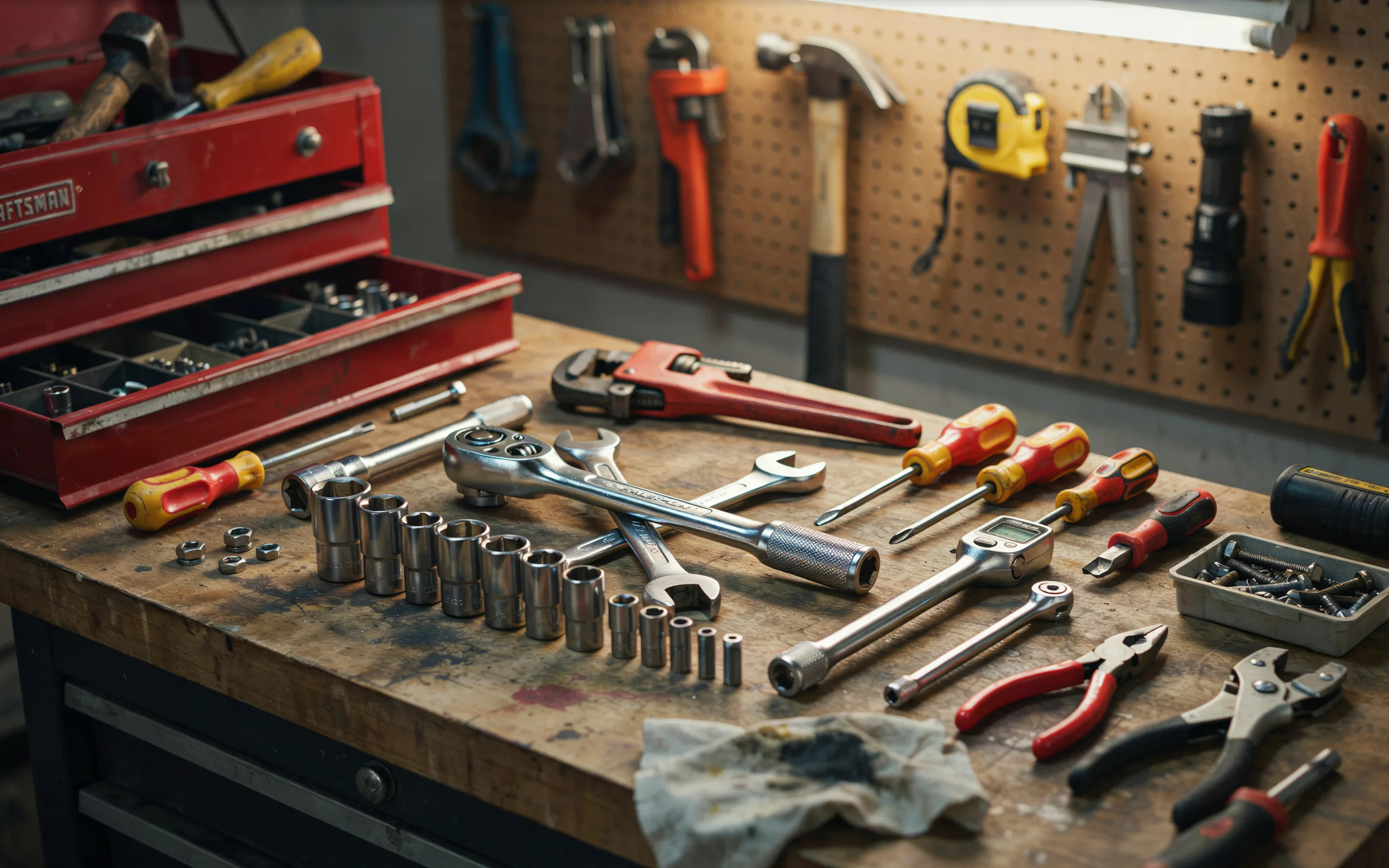
Find the best mechanic tools for DIY repairs with this complete guide covering sockets, wrenches, jacks, scanners, and top brands. Start fixing your car today.
Do you ever look at your car and think, “I could probably fix that myself”? Maybe it is a simple oil change, a set of new brake pads, or just swapping out a dead battery. The truth is, many car repairs are not as hard as they seem. What stops most people is not a lack of skill but a lack of the right equipment. Having the best mechanic tools for DIY repairs changes everything. It turns a frustrating afternoon into a satisfying project. It saves you money and gives you a real sense of accomplishment.
When you have proper tools, you work faster, safer, and with more confidence. You stop guessing and start knowing. This guide walks you through every essential tool you need. We cover hand tools, power tools, safety gear, and diagnostic devices. We also look at the best brands and answer common questions. Whether you are just starting or want to upgrade your garage, this is for you.
Why Having the Right Tools Matters for DIY Repairs
Working on your car without the correct tools is like baking a cake without a measuring cup. You might get lucky, but more often than not, things go wrong. You strip bolts. You round off nuts. You scratch paint. You waste hours fighting with a part that should come off in minutes.
The best mechanic tools for DIY repairs are built to fit fasteners correctly. They are made from strong materials that do not bend or break. They give you leverage and control. This means you can loosen stubborn bolts without hurting yourself or damaging the car. It also means you can tighten parts to the right specification, which keeps you safe on the road.
Good tools also help you learn. When a tool feels right in your hand, you focus on the task, not the struggle. You develop good habits. You start to understand how your car works. Over time, you take on bigger jobs because you trust your equipment. As one experienced mechanic put it:
“A cheap tool will cost you more in the long run than an expensive one. It will break, strip a bolt, or cause an injury. Buy quality once and cry once.” – Tim Gilles, automotive instructor and author
Investing in quality tools is investing in yourself. It is investing in your safety and your independence. You do not need to buy everything at once. Start with the basics and build your collection over time.
The Core Essentials: Must-Have Hand Tools
Every DIY mechanic needs a solid set of hand tools. These are the tools you reach for on almost every job. They form the backbone of your toolbox.
Socket and Ratchet Sets
A good socket and ratchet set is the single most important purchase you will make. Sockets fit over nuts and bolts. The ratchet lets you turn them quickly without removing the tool. Look for a set that includes both metric and SAE (standard) sizes. This covers most cars, both domestic and imported.
You will also see different drive sizes. A 1/4-inch drive is good for small, delicate work in tight engine bays. A 3/8-inch drive handles most general repairs. A 1/2-inch drive gives you more power for bigger jobs like suspension work. Many complete sets include all three.
Quality matters here. Look for sockets made from chrome vanadium steel. This material is strong and resists rust. A set with a 72-tooth or higher ratchet mechanism is smoother and works in tighter spaces. Popular options include the Gearwrench 243-piece set, which performed well in independent tests, and the Craftsman VERSASTACK 230-piece set.
Combination Wrenches
Wrenches are your backup when a socket cannot fit. A combination wrench has an open end on one side and a box end (closed loop) on the other. The box end grips the fastener more securely and is less likely to slip.
You need both metric and SAE sizes. A good set ranges from about 8mm to 19mm for metric and 1/4-inch to 3/4-inch for SAE. Look for wrenches with a slight angle on the open end. This gives you better access in tight spots. Anti-slip design on the open end also helps prevent rounding off bolts.
Screwdrivers and Pliers
Cars use many different types of screws and clips. A set of quality screwdrivers is essential. You need flathead and Phillips head drivers in various sizes. A stubby screwdriver is also very useful for tight spaces. Look for screwdrivers with durable, chemical-resistant handles and diamond-tipped bits for better grip.
Pliers are another must-have. You will use them for gripping, bending, cutting wires, and holding small parts. Needle-nose pliers reach into narrow areas. Slip-joint pliers adjust to different sizes. Diagonal cutters (dikes) are perfect for cutting wires and zip ties. Locking pliers, like Vise-Grips, can clamp onto a stubborn bolt or hold two parts together.
Essential Hand Tools for DIY Mechanics
| Tool Category | Key Features | Why You Need It |
|---|---|---|
| Socket Set | Metric & SAE sizes, 1/4″, 3/8″, 1/2″ drives, deep & standard sockets | Removes and tightens nuts and bolts on almost every car part |
| Combination Wrenches | Open end and box end, metric & SAE sizes | Works in tight spaces where a socket ratchet cannot fit |
| Screwdrivers | Flathead & Phillips, various sizes, durable handles | Removes screws, trim panels, and electrical connectors |
| Pliers | Needle-nose, slip-joint, diagonal cutters, locking pliers | Grips, bends, cuts, and holds parts securely |
Power and Specialty Tools for Bigger Jobs
Once you have the basics, you can add power tools and specialty items. These tools save time and effort on tougher repairs.
Impact Wrench and Driver
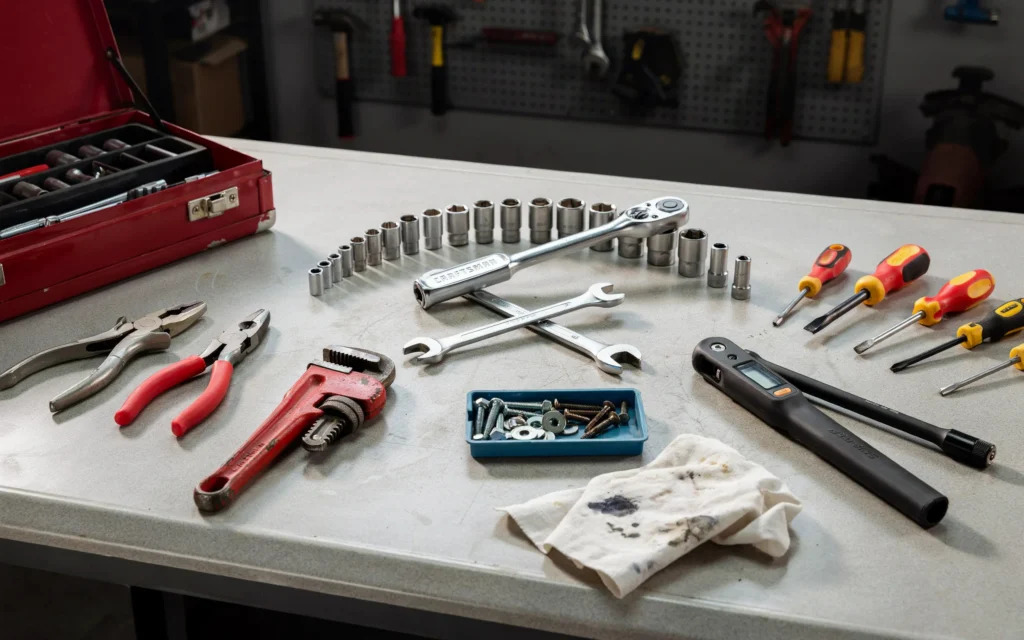
An impact wrench is a game-changer for loosening stubborn bolts. It delivers sudden, high-torque bursts to break free rusted or over-tightened fasteners. You can get pneumatic (air-powered) or cordless electric versions. For home use, a cordless 1/2-inch drive impact wrench is very popular. It gives you professional-level power without needing an air compressor.
An impact driver is a smaller, lighter tool. It uses hex bits instead of sockets. It is great for driving screws and removing smaller fasteners. Many DIYers find both tools incredibly useful.
Torque Wrench
A torque wrench is not about power. It is about precision. Modern cars have specific torque specifications for almost every bolt. This is especially important for lug nuts, cylinder heads, and suspension components. Over-tightening can strip threads or warp parts. Under-tightening can let parts come loose. Both are dangerous.
A torque wrench lets you tighten fasteners to the exact setting the manufacturer recommends. It clicks or beeps when you reach the correct torque. This tool prevents costly mistakes and keeps you safe. It is one of the best mechanic tools for DIY repairs that focus on safety and professionalism.
Diagnostic Tools
Modern cars are full of computers. When something goes wrong, the car’s computer stores a trouble code. An OBD-II (On-Board Diagnostics) scanner reads these codes. It tells you why the check engine light is on. This takes the guesswork out of diagnostics.
Even a basic scanner can save you a trip to the mechanic. More advanced scanners show live data from sensors. This helps you diagnose tricky problems. As automotive expert Martynn Randall notes:
“If you have an OBD reader, modern cars can tell you what’s wrong with them, even before you’ve raised the bonnet.”
This tool is essential for anyone working on a car made after 1996.
Safety and Support Equipment
You cannot work on a car safely without proper support equipment. Your safety is more important than any repair.
Floor Jack and Jack Stands
The jack that comes with your car is only for emergency tire changes. It is not safe for working underneath the vehicle. For garage work, you need a hydraulic floor jack. It lifts the car smoothly and easily. Look for one with a lifting capacity that matches your vehicle.
Never rely on a jack alone to hold up a car. Always use jack stands. Jack stands are sturdy metal supports that go under the car’s frame. They take the weight so you can work safely. Place them on solid ground and use them every time you lift the car. This is the most important rule of DIY car repair.
Work Lights and Inspection Tools
Good lighting is essential. Engine bays and undercarriages are dark. A bright LED work light or a headlamp lets you see what you are doing. Magnetic lights can stick to metal surfaces and shine right where you need them.
Inspection mirrors help you see hidden areas. Telescoping magnets retrieve dropped bolts and sockets. These small tools save a lot of frustration.
Safety and Support Equipment
Building Your Toolkit: Best Brands and Sets
You do not need to spend a fortune to get started. Many brands offer great value for DIYers.
Best All-in-One Tool Sets
Buying a complete set is the easiest way to start. It gives you a wide range of tools in one case.
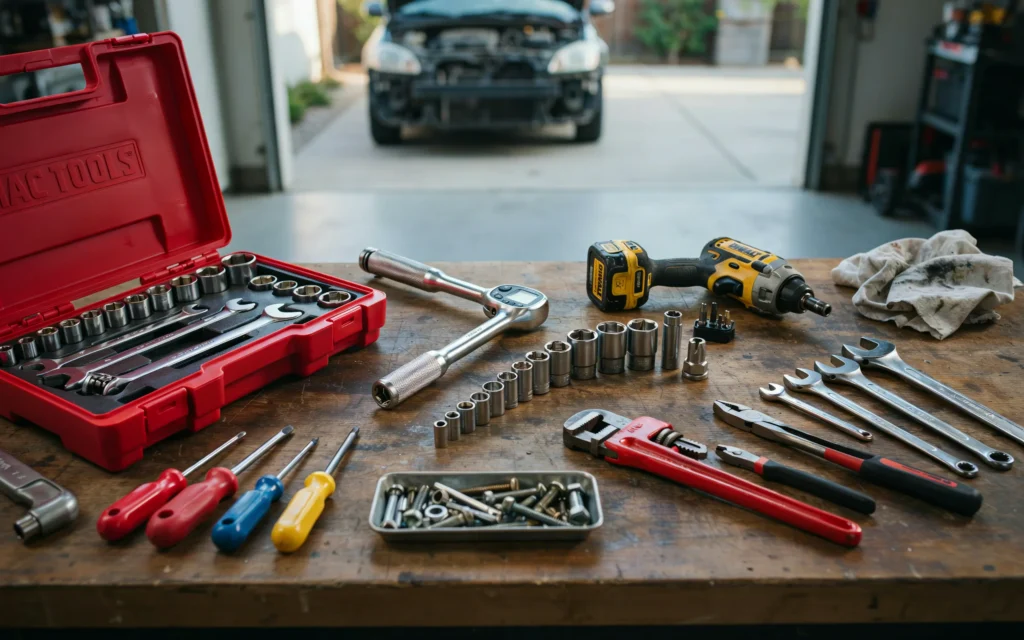
- Gearwrench 243-Piece Set: This set performed very well in independent testing. It includes 1/4, 3/8, and 1/2-inch drive sockets, combination wrenches, and a magnetic bit driver. It offers great value and comes with a lifetime warranty.
- Craftsman VERSASTACK 230-Piece Set: This is a popular choice for its balance of quality and price. It includes all the essential sockets and wrenches. Craftsman tools are easy to find and have a strong warranty.
- DEWALT 205-Piece Set: This set has over 14,000 five-star reviews online. It is well-regarded for its quality and comprehensive selection. It comes in a sturdy plastic case.
- Kobalt 277-Piece Set with Toolbox: If you need a toolbox as well, this is a great option. It includes both SAE and metric tools and a rolling steel cabinet.
Top Brands for Individual Tools
If you prefer to buy tools individually, here are some brands to consider.
- Snap-On: The gold standard for professional mechanics. Exceptional quality but very expensive. Probably overkill for most DIYers.
- Craftsman: Reliable and budget-friendly. A great choice for the home garage.
- Kobalt: Sold at Lowe’s. Offers professional-grade quality at a reasonable price.
- Icon: Harbor Freight’s premium brand. Offers high value for the price.
- Milwaukee: Known for durable and powerful cordless tools.
As one DIY enthusiast put it:
“You don’t need the most expensive tools to do good work. You need tools that fit well, feel solid, and that you can trust. A mid-range brand from a reputable store will serve you just fine for years.” – Eric O., automotive technician and YouTube creator
Organizing Your Workspace
A clean, organized garage makes working on your car much more enjoyable. You spend less time searching for tools and more time fixing things.
A tool chest or rolling cabinet keeps your tools safe and organized. Drawers with labels help you find what you need quickly. A pegboard on the wall is great for hanging frequently used tools. This keeps them within arm’s reach. Magnetic strips can hold metal tools like wrenches and screwdrivers.
Keep your workspace clean. Wipe down tools after use to prevent rust. Dispose of used oil and fluids properly. A tidy garage is a safer garage. It also encourages you to spend more time on your projects.
Frequently Asked Questions
What are the most essential mechanic tools for a beginner?
Start with a good socket and ratchet set (with metric and SAE sizes), a set of combination wrenches, screwdrivers, and pliers. Add a floor jack and jack stands for safety. These are the best mechanic tools for DIY repairs when you are just starting out.
How much should I spend on a mechanic tool set?
You can get a very good starter set for between $150 and $300. Sets in this price range from brands like Craftsman, Kobalt, or Gearwrench include all the essential tools. As you take on more complex jobs, you can add specialty tools over time.
Is it better to buy a tool set or individual tools?
For beginners, a set is the best value. It is much cheaper than buying tools one by one. As you gain experience, you can buy higher-quality individual tools to replace the ones you use most often.
What is the most important safety rule for DIY car repair?
Never work under a car that is supported only by a jack. Always use jack stands. Also, wear safety glasses and work gloves. Your safety is the most important thing.
Do I really need a torque wrench?
Yes. Many critical bolts on your car need to be tightened to a specific torque. Over-tightening can damage parts, and under-tightening can cause them to come loose. A torque wrench is one of the best mechanic tools for DIY repairs that focus on reliability and safety.
Conclusion
Knowing what are the best mechanic tools for DIY repairs is the first step to becoming a confident home mechanic. You do not need a garage full of expensive equipment. You need a solid foundation of quality hand tools, a few key power tools, and a strong commitment to safety.
Start with a good socket and wrench set. Add a floor jack and jack stands. Invest in a torque wrench and an OBD-II scanner. Build your collection as your skills grow. Remember, the goal is not just to save money. It is to learn, to gain independence, and to enjoy the satisfaction of fixing something with your own hands.
Your car is a complex machine, but it is not a mystery. With the right tools in your hand, you can understand it, maintain it, and repair it. So, open your hood, grab your tools, and start your next project with confidence. You have got this.
Related posts
 Which Tool Kit Is Worth Buying? How to Choose the Right Set for Your Home
Wondering which tool kit is worth buying? Compare basic household sets, mechanic kits, and power tool combos to find the best tools for your budget and…
 Which Hand Tools Are Made in the USA? Reliable Brands and Buying Rules
Discover which hand tools are still made in the USA. Compare top domestic brands, tool categories, and learn how to verify origin labels before buying. Several…
 Why Do Campers Carry Multi Tools? Practical Uses in the Field
Why do Campers carry multi tools to handle gear repairs, campsite setup, food prep, and field fixes with minimal weight. Here is why one belongs in…