
What Essential Tools Should Every Automotive Tool Kit Have
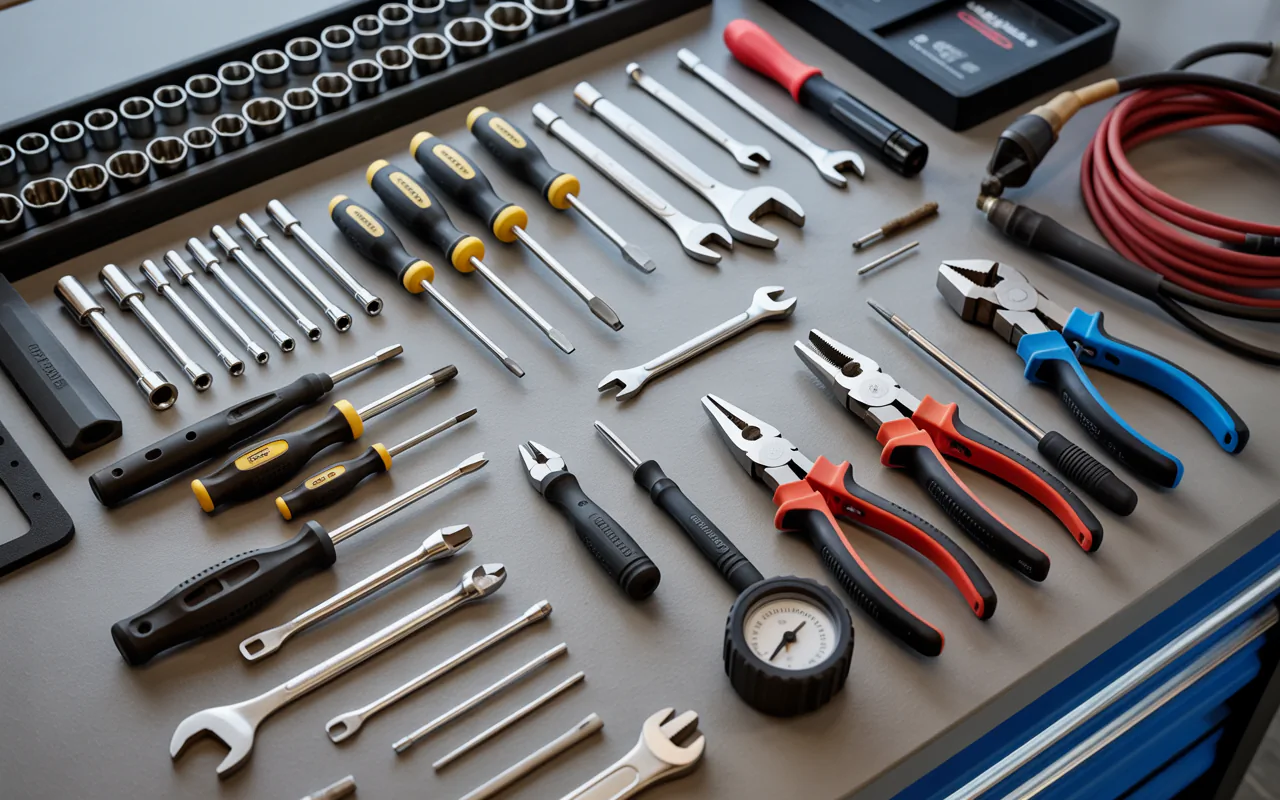
Wondering what essential tools should every automotive tool kit have? You need a socket set, wrenches, screwdrivers, pliers, jack, and more. This guide lists 20 must have items for basic car repairs at home.
Have you ever popped the hood of your car and felt lost because you did not have the right tool? Many of us have been there. You see a loose battery cable or a broken hose clamp, but your small multitool just won’t do the job. That is frustrating. It can also cost you time and money.
I remember my first flat tire on a busy road. I had a spare but no lug wrench that fit. That day taught me a hard lesson. A good tool kit is not just for mechanics. It is for anyone who drives a car. So let me ask you a simple question: what essential tools should every automotive tool kit have?
This guide will give you a straight answer. No fancy words. No extra fluff. Just real tools that real people need. I have worked on old trucks, family sedans, and even a few broken down vans. Over the years, I learned that a small, well chosen set of tools can fix most common problems. You do not need a garage full of expensive gear. You just need the right basics.
“A basic tool kit can save you from a tow truck.” – Scotty Kilmer, mechanic and YouTuber
Let us build that kit together. I will show you each tool, why you need it, and how to pick a good one. By the end, you will know exactly what to buy or gather from your existing toolbox.
Why You Need a Basic Automotive Tool Kit
Some people think car repairs are only for experts. That is not true. Many small fixes are easy to learn. Changing a battery, replacing a fuse, tightening a belt, or swapping a headlight bulb takes less than 20 minutes. But you need the right tool for each job.
A basic automotive tool kit saves you three things: time, money, and stress.
- Time: You do not wait for roadside help.
- Money: You avoid paying a shop for simple jobs.
- Stress: You feel in control when something breaks.
Plus, having your own tools means you can help a friend or family member in need. That feels good. And the truth is, most cars have the same types of fasteners. A handful of tools covers 90% of what you will run into.
“Never underestimate the power of a good ratchet.” – ChrisFix, automotive YouTuber
So let me repeat the core question: what essential tools should every automotive tool kit have? The answer starts with the list below.
The Core Hand Tools – Your Starting Point
Before we talk about specialty items, let us focus on the basics. These are the tools you reach for again and again. I have organized them into a simple table. This is your foundation.
Table 1 – Basic Hand Tools for Every Car Owner
| Tool Name | Why You Need It | Typical Size or Type |
|---|---|---|
| Socket set (metric and SAE) | Removes nuts and bolts quickly | 1/4 inch and 3/8 inch drive, 10mm to 19mm metric |
| Combination wrench set | Works in tight spaces where sockets don’t fit | Same sizes as sockets |
| Screwdriver set (flathead and Phillips) | Opens panels, clamps, and small parts | #1 and #2 Phillips, 1/8 and 1/4 inch flathead |
| Pliers (slip joint and needle nose) | Grips, bends, and cuts wires or hoses | 6 to 8 inch length |
| Adjustable wrench | One tool fits many bolt sizes | 8 inch or 10 inch |
| Hammer (ball peen) | Taps stuck parts or straightens metal | 16 ounce |
| Flashlight or headlamp | Lets you see in dark engine bays | LED, rechargeable or battery |
These seven items alone answer much of what essential tools should every automotive tool kit have. But we need a few more to handle real world repairs.
Why Sockets and Wrenches Come First
You cannot work on a car without turning bolts. Engines, suspensions, brakes, and interiors all use hex head bolts and nuts. A socket set gives you speed. A wrench gives you access to tight spots. Buy both in metric sizes if you own a modern car (most cars after 1980 use metric). If you have an older American car, add SAE (fractional inch) sizes.
The most common size you will use is 10mm. Car makers love 10mm bolts. So buy a set with multiple 10mm sockets. You will lose them. Trust me.
Also get a 3/8 inch drive ratchet. It is the best balance of strength and size. A 1/4 inch set is nice for small work, but 3/8 does most jobs.
Pliers, Screwdrivers, and Wrenches – The Trio of Everyday Fixes
Now let us go deeper. You have your sockets and ratchet. But many car problems need gripping, prying, or turning odd shapes.
Pliers – More Than Just Gripping
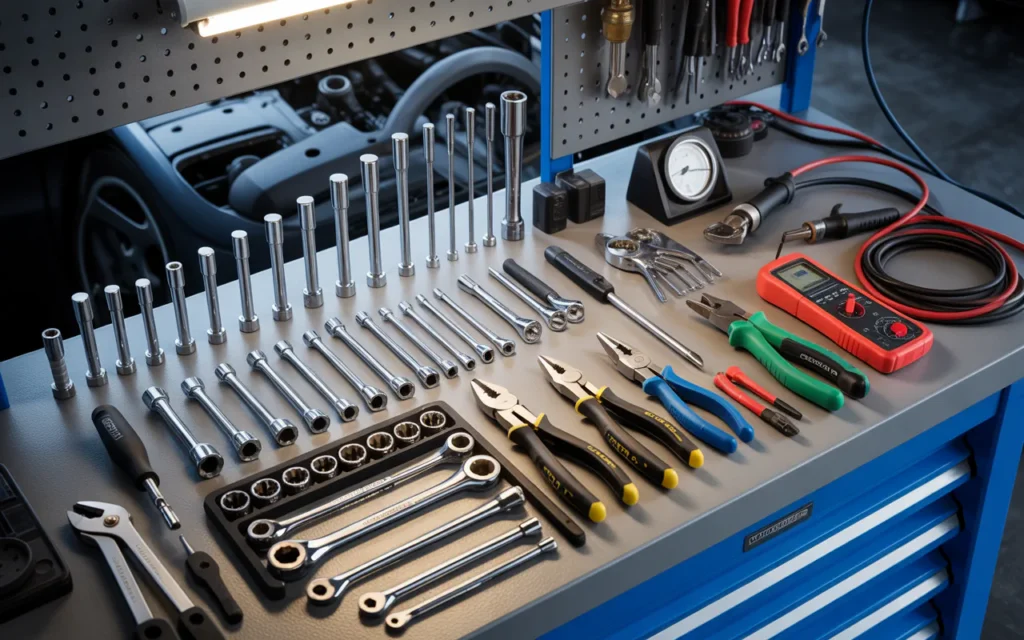
You need at least three types of pliers in your automotive tool kit:
- Slip joint pliers – These adjust to two widths. Good for holding hose clamps or bending brackets.
- Needle nose pliers – Long, thin tips reach into small spaces. Perfect for pulling clips or holding wires.
- Locking pliers (Vise-Grips) – These clamp down and stay locked. Great for holding a broken bolt or pinching a leaking line.
I always keep a pair of 10 inch locking pliers in my car. They have saved me more times than I can count. One time, my throttle cable broke. I used locking pliers to hold the cable end and finished my trip home.
Screwdrivers – Two Types Do Most Jobs
Do not buy a huge set with 50 pieces. You only need a few good screwdrivers for car work.
- Phillips #2 – This is the most common cross shaped screw. It fits interior panels, tail lights, and many clamps.
- Flathead 1/4 inch – Good for prying off plastic clips or scraping gaskets.
- Phillips #1 – Smaller screws on sensors or small parts.
- Flathead 1/8 inch – For hose clamps or delicate trim.
Get screwdrivers with rubber handles. They give you better grip when your hands are oily.
Combination Wrenches – Your Backup Plan
A socket will not fit everywhere. Some bolts sit in deep holes or next to other parts. That is when you need a combination wrench. One end is open (U shaped) and the other end is a closed loop (box end). The box end grips the bolt head better and won’t slip.
Buy a set from 8mm to 19mm. That covers almost everything under your hood. If you want to save space, get a set of ratcheting wrenches. They work like a ratchet but fit in tight spots.
“Start with the basics, then add as you go.” – Eric the Car Guy, automotive educator
Specialty Tools for Common Auto Repairs
Now you know the core hand tools. But what essential tools should every automotive tool kit have beyond the basics? Here are a few specialty items that solve frequent car problems.
Spark Plug Socket and Gap Gauge
Changing spark plugs is easy and cheap. But a regular socket can crack the ceramic insulator. A spark plug socket has a rubber insert that holds the plug safely. Get one in 5/8 inch and 13/16 inch sizes (or 14mm and 16mm for some newer cars). Also buy a simple gap gauge (a coin shaped tool with metal edges) to set the gap correctly.
Multimeter
Electrical problems happen often. A dead light, a bad sensor, or a blown fuse. A multimeter tests voltage, continuity, and resistance. You can find a good one for under 20. Use it to check if a wire is live or if a fuse is blown. This tool pays for itself the first time you avoid buying a part you did not need.
Breaker Bar
Some bolts get stuck. Your ratchet handle is too short to get enough leverage. A breaker bar is a long metal bar (18 to 24 inches) with a ratchet head on one end. No moving parts inside. It just gives you long leverage. Use it for lug nuts and suspension bolts. You will thank me when you do your first brake job.
Many bolts need a specific tightness. Too loose and they fall out. Too tight and they snap. A torque wrench clicks when you reach the right setting. For car work, get a 1/2 inch drive torque wrench that covers 20 to 150 foot pounds. Use it for wheel lugs, spark plugs, and engine parts.
Oil Filter Wrench
Changing your own oil is a great way to save money. But oil filters screw on tight. A strap wrench or a cup style oil filter wrench fits around the filter and gives you grip. Buy one that fits the filter size of your car. Some are adjustable. This tool costs less than 10 and makes oil changes clean and easy.
Safety and Diagnostic Tools – Be Prepared
You cannot fix a car if you hurt yourself. And you cannot fix what you cannot see. So let us add safety and diagnostic items. This part of what essential tools should every automotive tool kit have is often overlooked, but it is just as important as wrenches.
Table 2 – Safety & Diagnostic Tools
| Tool Name | Purpose | Why It Matters |
|---|---|---|
| Car jack (floor or scissor) | Lifts the car to change a tire | Never rely on the factory jack only |
| Jack stands (two) | Holds the car up safely | Prevents crushing injuries |
| Wheel chocks | Blocks wheels from rolling | Adds protection when jacking |
| Work gloves | Protects hands from cuts and heat | Cheap and saves your skin |
| Safety glasses | Shields eyes from debris | One flying bolt can blind you |
| OBD2 scanner | Reads check engine codes | Tells you what is wrong before you guess |
| Tire pressure gauge | Checks air pressure | Saves gas and prevents blowouts |
Why You Need Jack Stands
The jack that came with your car is only for emergency tire changes. Never work under a car held only by that jack. Buy two jack stands. They cost about 30 dollars and they save lives. Always place them on firm ground, under the car’s designated lift points.
An OBD2 Scanner Is a Smart Investment
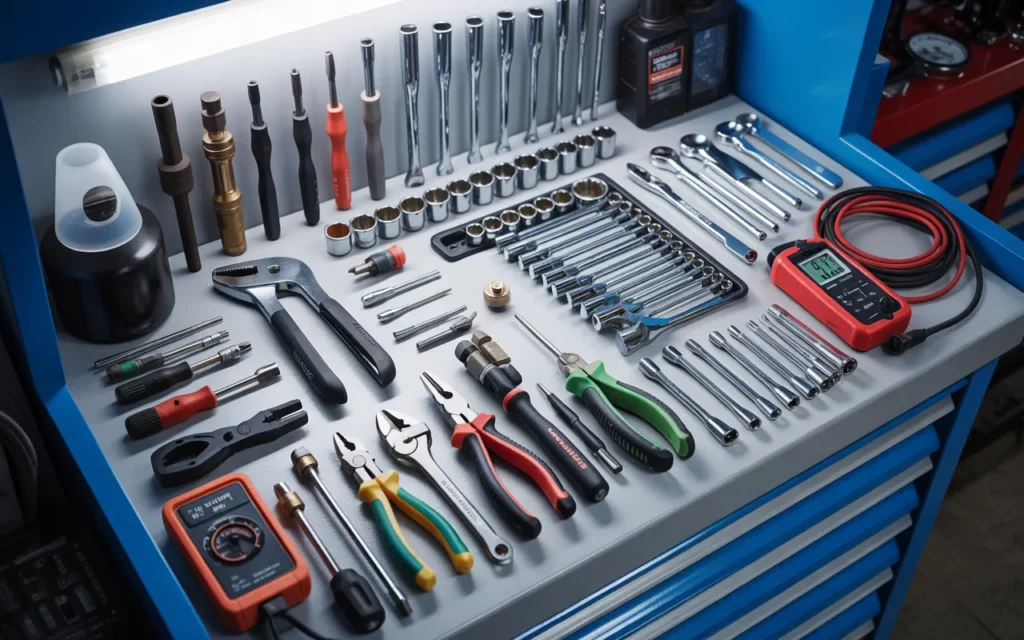
Every car made after 1996 has a computer port (OBD2). When your check engine light comes on, the computer stores a trouble code. A scanner reads that code. You plug it in, press a button, and see a code like P0301 (cylinder 1 misfire). Then you search online for that code. Most of the time, you can fix the problem yourself.
Basic scanners cost 20 to 40 dollars. They are easy to use. I recommend a simple one with a screen and a built in code library. No need for a phone app unless you want more data.
Storage and Organization – Keep Your Tools Together
A pile of loose tools in your trunk is not helpful. You need a bag, box, or organizer. So when we discuss what essential tools should every automotive tool kit have, we must also talk about how to carry them.
Choose a Portable Tool Bag
Hard plastic boxes are strong but heavy. A soft sided tool bag with zippers and pockets is lighter and easier to store. Look for a bag with:
- A wide opening to see inside
- Several small pockets for screwdrivers and pliers
- A strong handle and shoulder strap
- Water resistant fabric
A 12 to 15 inch bag fits all the tools listed here. Keep it in your trunk or cargo area. That way you always have it with you.
Use Small Containers for Small Parts
Throw a few small zipper bags or a small parts organizer into your kit. Use them to hold fuses, bulbs, hose clamps, zip ties, and electrical tape. Loose parts get lost. Keep them sorted.
I also keep a permanent marker and a roll of masking tape. Label any part you remove so you remember where it goes.
Building Your Kit Over Time – Do Not Buy Everything at Once
You do not need to spend 500 dollars tomorrow. Start with the basics and add as you find new needs. Here is a smart way to build your automotive tool kit on a budget.
Month One – The Absolute Essentials
- Socket set (1/4 and 3/8 drive, metric)
- Combination wrench set (metric)
- Screwdriver set (Phillips #2 and flathead)
- Slip joint pliers and needle nose pliers
- Tire pressure gauge
- Flashlight
You can buy these for under 60 dollars from any hardware store or online. This set handles battery changes, light bulbs, air filters, and hose clamps.
Month Two – Add Safety and Repair Items
- Jack and jack stands
- Breaker bar (for stuck lug nuts)
- Multimeter
- OBD2 scanner
- Work gloves and safety glasses
Now you can change tires safely, read check engine codes, and test electrical parts.
Month Three – Specialty Tools as Needed
- Torque wrench (when you do brakes or suspension work)
- Spark plug socket and gap gauge (for tune ups)
- Oil filter wrench (for oil changes)
Only buy these when you plan to do that specific job. That saves money and clutter.
“The right tool for the right job is an old saying, but it’s still true.” – Carroll Smith, engineer and author
What to Skip – Tools Beginners Do Not Need
I have seen many lists that tell you to buy expensive or rare tools. You do not need them. Save your money for things that matter. Skip these until you have a real need:
- Pneumatic (air) tools – You need a large compressor. Not for a basic kit.
- Engine hoist – Only if you swap engines.
- Ball joint press – Suspension shops have these.
- AC manifold gauge – Leave AC work to pros.
- Fuel pressure tester – A simple OBD2 scanner can diagnose most fuel issues.
Stick to hand tools. They never run out of battery and they always work.
Frequently Asked Questions (FAQ)
1. What is the single most important tool in an automotive kit?
A 3/8 inch drive ratchet with a set of metric sockets from 10mm to 19mm. That tool alone removes most bolts on a modern car.
2. Can I use my home tool kit for car repairs?
Sometimes. But household tools often lack the strength or correct sizes. Car bolts are tighter and dirtier. A dedicated automotive tool kit is worth the money.
3. How much does a good basic automotive tool kit cost?
You can build a solid starter kit for 80 to 120 dollars. Avoid the 20 dollar kits with tiny plastic tools. They break. Buy fewer but better tools.
4. Do I need both metric and SAE tools?
If your car was made after 1990, metric is enough. For older American cars, add SAE. Many Asian and European cars are fully metric.
5. Where should I keep my automotive tool kit?
In your trunk or under a rear seat. Keep it accessible. A tool in your garage does not help you on the road.
6. Can I replace a socket set with just a set of wrenches?
You could, but wrenches are slower. A ratchet and socket is much faster for most jobs. Have both.
7. What is the easiest way to learn car repairs?
Watch YouTube videos for your specific car model. Combine that with your tool kit. Start with simple jobs like changing air filters or replacing a taillight bulb.
8. How do I know if a tool is good quality?
Look for a brand that offers a lifetime warranty. Avoid tools that feel loose or have rough edges. Read user reviews. Harbor Freight’s Pittsburgh line and Craftsman are good budget choices.
9. Should I buy individual tools or a prepackaged set?
A prepackaged set saves money if it includes the right sizes. But many cheap sets skip 10mm or 15mm. Check the contents. Then fill the missing pieces individually.
10. What essential tools should every automotive tool kit have for roadside emergencies?
The bare minimum: a lug wrench that fits your car, a jack that works, a flashlight, pliers, a Phillips screwdriver, zip ties, duct tape, and a tire pressure gauge.
Conclusion
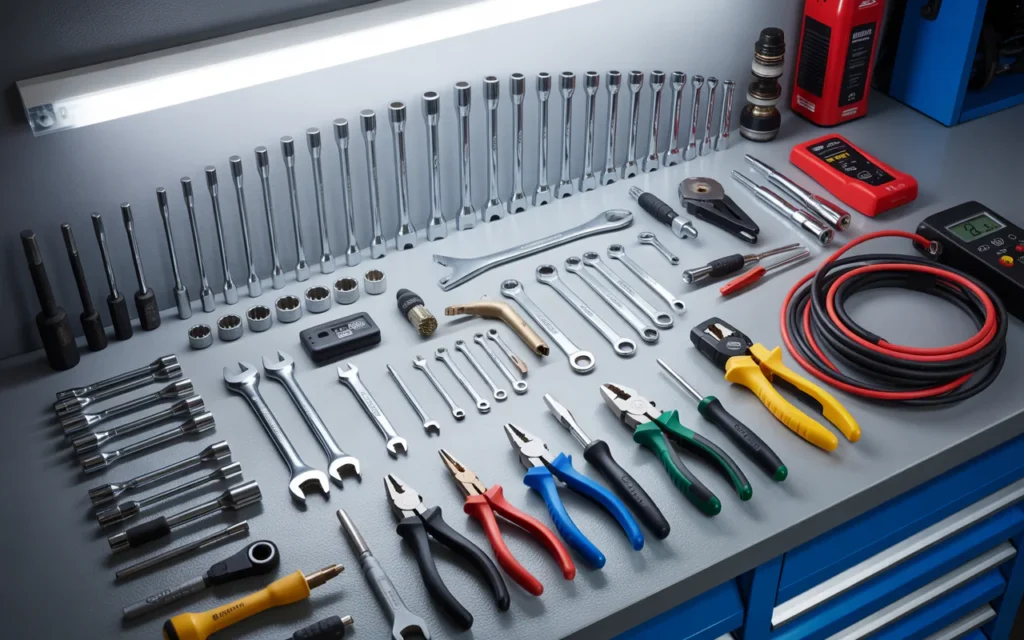
Now you have a clear answer to what essential tools should every automotive tool kit have. Start with sockets, wrenches, screwdrivers, and pliers. Add safety gear like jack stands and an OBD2 scanner. Store everything in a portable bag. Build slowly and only buy what you need for your next repair.
You do not need to be a professional mechanic. You just need the confidence to try. And the right tool in your hand makes all the difference. So grab a few items from this list today. Put them in your trunk. Next time your car acts up, you will be ready.
Remember: every fix starts with one bolt. And every bolt turns easier when you have the right tool. Happy wrenching.
Related posts
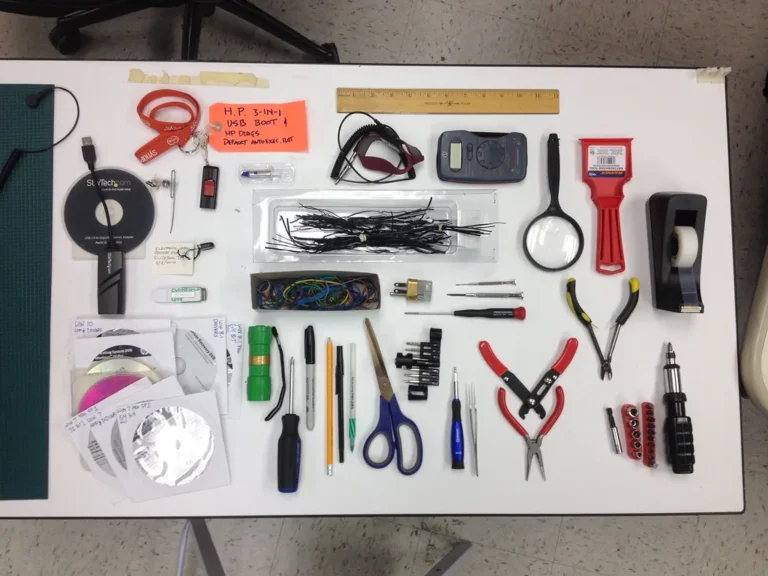 Top Starter Mechanic Tool Kits for Apprentices: Essential Sets for Your Trade
Explore top starter mechanic tool kits for apprentices. Compare sets for mechanics, electricians, and other trades to find your essential tools. Starting an apprenticeship is an…
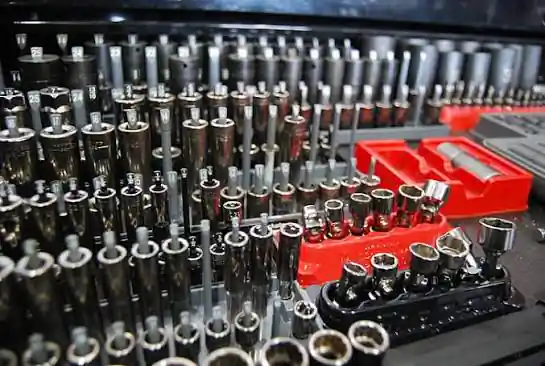 Automotive Tool Kits vs. Mechanic Tool Sets: What’s the Difference?
Understand the key differences between automotive tool kits vs. mechanic tool sets. Learn which is best for your car maintenance needs. When looking for tools to…
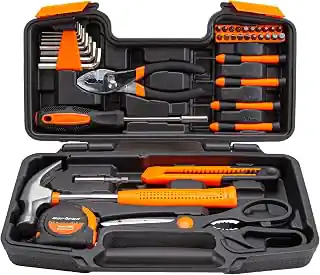 Top Automotive Tool Kits for Garage Workshops: A Buyer’s Guide
Find the top automotive tool kits for garage workshop. Compare versatile sets for car maintenance, home repairs, and DIY projects to choose the best fit. Setting…