
Do I Need Both Metric And SAE Tools In My Automotive Tool Kit
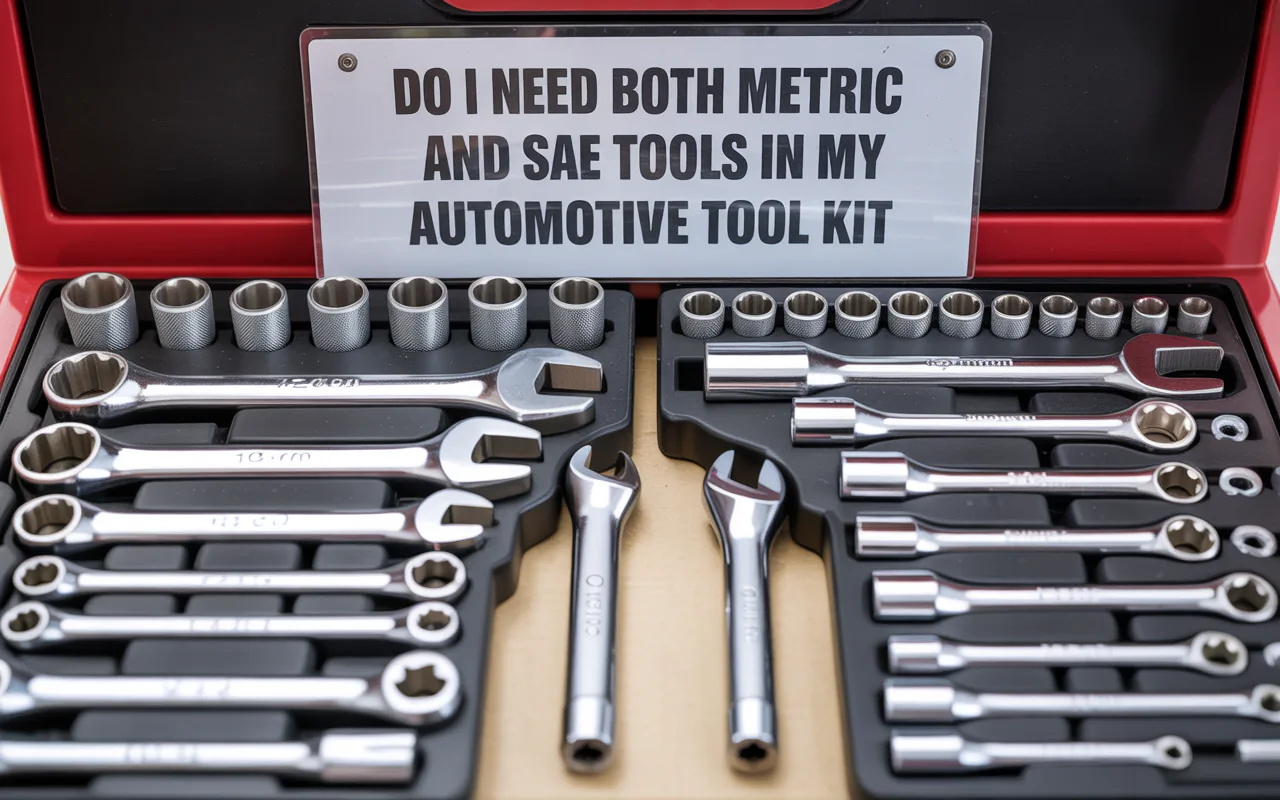
If you own a garage or fix your own car, you might wonder Do I need both metric and SAE tools in my automotive tool kit? The clear answer is yes for most home mechanics. Many cars mix both fastener types. This guide helps you decide based on your vehicles and repair work.
Opening your toolbox and finding the right wrench feels great. But many car owners get stuck with one simple question. Do I need both metric and SAE tools in my automotive tool kit? I have been fixing cars for over 15 years. I started with a cheap set of wrenches from a garage sale. That set had only SAE sizes. Then I bought a Japanese car. None of my tools fit. That day taught me a valuable lesson about tool sets.
You do not need every tool ever made. But you need the right tools for your specific cars. This guide will help you answer that question for your own situation. We will look at what metric and SAE mean. We will check which cars use which system. And we will give you honest advice on building your tool collection without wasting money.
Let me be straight with you. Many home mechanics can get by with one system. But most will be happier with both. Let me explain why.
The Short Answer to “Do I need both metric and SAE tools in my automotive tool kit?”
Here is the simple truth. Do I need both metric and SAE tools in my automotive tool kit? For most people who work on cars at home, the answer is yes. But there are clear exceptions.
If you only work on one car, check that car first. Most cars built after 1985 use metric fasteners. That includes American brands like Ford and GM. They switched to metric in the late 1980s and early 1990s. European and Asian cars have used metric for decades longer.
But here is the catch. Even many modern cars have a few SAE bolts. I have seen battery terminals, hose clamps, and some suspension parts use SAE sizes. So if you plan to do any repair beyond an oil change, you will likely run into both types.
Let me give you a simple rule. If your newest car was made after 1995, you probably need metric most of the time. But keep a small SAE set for those odd bolts. If you own any car from before 1985, you almost certainly need both systems.
A Quick Look at Metric vs. SAE Tools
Before we go further, let me explain the difference. Metric tools use millimeters. SAE tools use inches and fractions of an inch. SAE stands for Society of Automotive Engineers. They set the standard for inch-based fasteners in the United States.
You might see a metric wrench labeled 10mm, 12mm, or 14mm. An SAE wrench might say 3/8 inch, 7/16 inch, or 1/2 inch. They do not interchange. A 10mm wrench is close to 3/8 inch, but not exact. Using the wrong size will strip the bolt head. That creates a much bigger problem.
Table 1: Common Metric and SAE Sizes Compared
| Metric Size (mm) | Close SAE Size (inches) | Will They Interchange? |
|---|---|---|
| 8mm | 5/16″ | No, 5/16 is too loose |
| 10mm | 3/8″ | No, 10mm is slightly smaller |
| 12mm | 1/2″ | No, 12mm is slightly larger |
| 13mm | 1/2″ | No, 13mm is much larger |
| 14mm | 9/16″ | No, 14mm is smaller |
| 15mm | 19/32″ | Rare size, not common |
| 17mm | 11/16″ | No, 17mm is smaller |
| 19mm | 3/4″ | No, 19mm is slightly smaller |
As you can see, the numbers look close. But close is not good enough. Always use the correct system.
Factors That Decide If You Need Both Sets
Your situation is unique. Let me help you figure out what you really need. Ask yourself these three questions.
Your Vehicle’s Age and Origin
The age of your car matters most. Here is a rough timeline.
Cars from the 1960s and 1970s, especially American models, use almost all SAE fasteners. European cars from that era mixed both. Some British cars used SAE. Italian and German cars used metric. It was a mess.
Cars from the 1980s started a shift. American car makers began switching to metric. By 1985, many GM cars used metric bolts. Ford followed soon after. Chrysler took a bit longer.
Cars from 1990 onward. Most cars worldwide use metric fasteners. But again, exceptions exist. I have worked on a 2015 Ford truck with SAE lug nuts. Some aftermarket parts still use SAE sizes.
If you own a mix, like a 1970 Chevy and a 2010 Honda, you need both systems. There is no way around it.
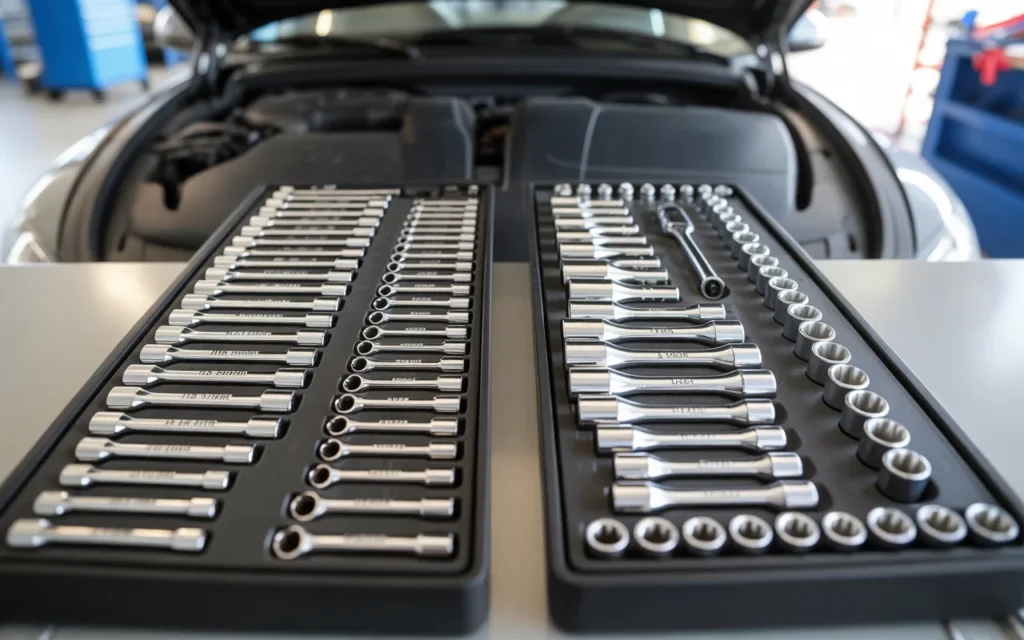
The Types of Repairs You Do
Think about your typical repair work. Changing oil and filters usually needs metric or SAE depending on the car. But a drain plug is one bolt. You could buy one wrench or socket for that size.
If you do brake jobs, you will see many bolts. Most modern brakes use metric. But older cars use SAE. Brake caliper bolts are often 12mm, 14mm, or 1/2 inch.
If you do engine work, you will see every size imaginable. Engine rebuilds need complete tool sets. You cannot guess.
If you only do basic maintenance like air filters, battery changes, and light bulbs, you might need very few tools. A small set of each system could work.
Working on Multiple Cars
This is where most home mechanics get stuck. You might have a 2020 Toyota for the family. That is all metric. But your friend asks you to help with his 1985 Ford truck. Suddenly you need SAE.
Or you own an older boat, a lawn mower, or a motorcycle. Small engines often use SAE hardware. Many lawn mowers and older motorcycles use inch-based bolts.
Quote 1: “I have been a mechanic for 30 years. Every week someone brings a car with a mix of metric and SAE bolts. It is not rare. It is normal. Keep both sets.” – Robert L., Master Automotive Technician
When You Can Get Away With Just One Set
Let me be honest. Some people truly do not need both sets. Here are those situations.
You own one car made after 2000. That car is from a major brand like Toyota, Honda, Hyundai, BMW, Mercedes, Volvo, or a modern Ford or GM. You only work on that car. You never help friends or family with their older cars. You can buy only metric tools. But keep a small adjustable wrench for the odd SAE clamp or battery terminal.
You own one classic car from the 1960s or 1970s that is all SAE. And you never work on anything else. Then buy only SAE tools. But be aware that many aftermarket parts for classic cars now use metric hardware. Always check before you buy.
You are a very casual user. You change wiper blades, add washer fluid, and maybe swap a battery. You can use a basic multi-tool or an adjustable wrench. You do not need full sets.
When You Really Need Both Metric and SAE Tools
Most people reading this article will need both sets. Here is why.
You work on multiple cars. Even two cars from the same brand can use different fasteners. I have seen a 2005 Chevrolet use metric for engine bolts but SAE for body panels. It happens.
You work on older and newer vehicles. If your daily driver is a 2018 Honda, but you are restoring a 1972 Ford, you need both. No question.
You do any work with aftermarket parts. Aftermarket accessories like lights, winches, and hitches often come with SAE bolts. The manufacturers assume you have both tools.
You work on trailers, boats, or power equipment. Most trailers use SAE lug nuts. Many boat engines mix systems. Lawn tractors often use SAE hardware.
Table 2: Common Fasteners by Vehicle Type
| Vehicle Type | Mostly Metric | Mostly SAE | Mixed Common |
|---|---|---|---|
| Asian cars (Honda, Toyota, Nissan) after 1990 | Yes | Rare | Some clamps, battery terminals |
| European cars (BMW, VW, Mercedes) all years | Yes | Very rare | Older models may have some |
| American cars before 1985 | No | Yes | A few metric on late 70s models |
| American cars 1985-1995 | Mixed | Mixed | Many have both systems |
| American cars after 1995 | Yes | Some | Suspension, body, aftermarket parts |
| Motorcycles (most) | Yes | Some | Harley uses SAE, others metric |
| Trailers and RVs | No | Yes | Almost all SAE hardware |
Quote 2: “I tell my students to buy a combination set that includes both metric and SAE. You will save money over buying two separate sets. And you will not get stuck on a Saturday afternoon with the wrong wrench.” – Maria G., Auto Shop Instructor
The Cost of Building a Dual Tool Set
Money is a real concern. Good tools cost money. But you do not need to spend a fortune.
A basic mechanics tool set with both metric and SAE sockets and wrenches costs between 50 and 150 dollars. Brands like Craftsman, Husky, and Pittsburgh offer good starter sets. These sets usually include 1/4 inch, 3/8 inch, and 1/2 inch drive ratchets. They cover sizes from 6mm to 19mm and 1/4 inch to 3/4 inch.
You can also buy tools separately. Start with the sizes you use most. For metric, get 8mm, 10mm, 12mm, 13mm, 14mm, 15mm, 17mm, and 19mm. For SAE, get 1/4, 5/16, 3/8, 7/16, 1/2, 9/16, 5/8, and 3/4 inch. Those sizes cover 90 percent of the bolts on most cars.
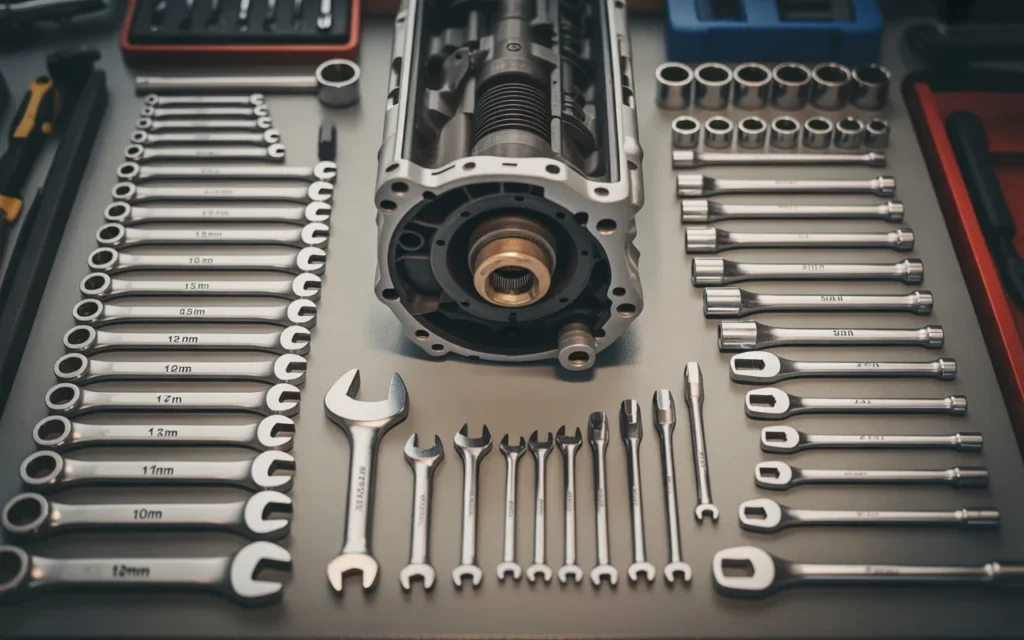
Starter Kits and Budget Options
If money is very tight, try these options.
Buy a 50-piece socket set from a hardware store. These usually include both systems. They are not professional grade, but they work for home use.
Check pawn shops and garage sales. Used tools are fine if they are not damaged. Look for name brands like Snap-on, Mac, Matco, Craftsman, or SK. These last for decades.
Buy just the wrenches first. Then add sockets later. A set of combination wrenches (one open end, one box end) costs less than a full socket set. You can do many repairs with just wrenches.
Avoid very cheap tools from discount stores. They break and strip bolts. A broken socket can ruin your day. Spend a little more for basic quality.
Tips for Organizing Your Metric and SAE Tools
Once you have both sets, keep them separate. Mixing them causes frustration. I have seen mechanics waste minutes searching for a 10mm socket in an SAE drawer.
Use different colored tool organizers. Buy red trays for SAE and blue for metric. Or keep them on opposite sides of your toolbox.
Label your drawers clearly. Write “METRIC” and “SAE” in large letters. If you share a garage with others, this helps everyone.
Keep a small card in your toolbox. Write the most common sizes you use for each car. Then you can grab what you need quickly.
Quote 3: “The best advice I ever got was to buy a magnetic tray for each system. Put metric bolts in the metric tray and SAE bolts in the SAE tray. You will never cross-thread a bolt again.” – James T., Weekend Mechanic and Hot Rod Builder
How to Test Your Own Tool Needs
Before you spend any money, do a simple test. This takes 15 minutes and saves you from buying tools you do not need.
A Simple Garage Check
Open your hood. Look at the bolts you can see. The valve cover, the alternator bracket, the battery hold-down. Pick three or four bolts. Use a ruler with millimeters on one side and inches on the other. Measure across the flats of the bolt head. If you see numbers like 10, 12, or 14, those are metric. If you see fractions like 3/8, 7/16, or 1/2, those are SAE.
Do this on every car you work on. Write down what you find. After five minutes, you will know exactly what you need.
Then go to your current tool set. See which sizes you already own. Make a shopping list of missing sizes.
I did this test on my own cars last year. My 2018 Mazda was all metric except two bolts on the battery clamp. My 1995 Ford truck was half and half. My neighbor’s lawn mower was all SAE. So I keep both sets ready.
Frequently Asked Questions (FAQ)
Q1: Can I use an SAE wrench on a metric bolt in an emergency?
No. Do not do this. You will strip the bolt head. Then you need special tools to remove it. If you are stuck, use an adjustable wrench carefully. But the best answer is to buy the correct tool.
Q2: Which tool system is better, metric or SAE?
Neither is better. They are just different standards. Metric is easier for math because it uses base 10. SAE has been around longer in the United States. Both work fine when you use the right one.
Q3: I only own a 2018 Ford F-150. Do I need both metric and SAE tools?
Modern Ford trucks use mostly metric. But many owners report SAE bolts on body panels and some suspension parts. Buy a set that includes both to be safe. You can find Ford-specific tool set lists online.
Q4: How do I know if a bolt is metric or SAE?
Use a ruler or a thread pitch gauge. But the easiest way is to try a known metric wrench. If it fits snug, it is metric. If it is loose or too tight, try an SAE wrench. Never force a wrench onto a bolt.
Q5: Are there tools that work for both systems?
Some adjustable wrenches and pliers work on both. But for sockets and combination wrenches, no. You need separate tools. Some brands sell “universal” sockets with pins inside. They work but can damage bolt heads. I do not recommend them for regular use.
Q6: Can I just use a digital caliper to measure bolts?
Yes. A digital caliper gives you the exact size in millimeters and inches. This is the most accurate way. But you still need the correct tool to turn the bolt. The caliper just tells you what size to use.
Q7: What is the most common lost size in both systems?
For metric, it is the 10mm. I have lost five 10mm sockets over the years. For SAE, it is the 1/2 inch. Buy extras of these sizes. Keep them in a safe place.
Q8: Do electric cars use metric or SAE tools?
Most electric cars use metric fasteners. Tesla, Nissan Leaf, Chevy Bolt, and Ford Mustang Mach-E all use metric. But like gas cars, some small parts may use SAE. Check your specific model.
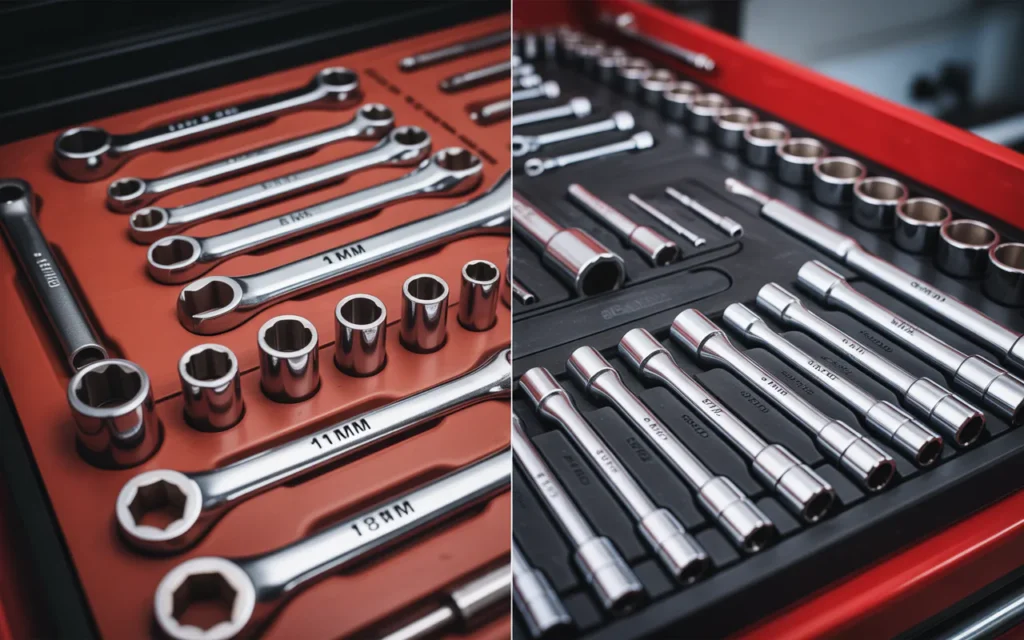
Conclusion
So let’s return to our main question. Do I need both metric and SAE tools in my automotive tool kit? For most people reading this, the honest answer is yes. You will save time, money, and frustration by having both systems available. You do not need professional snap-on sets worth thousands of dollars. A basic 100-piece set from a good brand will cover almost every bolt you touch.
But here is my final advice. Before you buy anything, do the simple garage check I described. Look at your own cars. Write down the sizes you see. Then buy only what you need. If you own a 2015 Honda Civic and nothing else, buy metric. If you own a 1978 Chevy pickup and a 2005 Toyota, buy both. If you help friends and family, buy both.
Start small. Buy a combination wrench set with both systems. Then add sockets over time. Organize them clearly. Label your drawers. Keep metric separate from SAE. And buy extra 10mm sockets. You will thank me later.
Working on your own cars is a great skill. The right tools make it safe and fun. Do not let the metric vs. SAE question stop you. Get the tools you need, learn to use them, and enjoy the satisfaction of fixing your own ride.
Now go check your garage. See what tools you already have. See what bolts are on your car. Then make a smart decision. Your future self will be glad you did.
Related posts
 Top Starter Mechanic Tool Kits for Apprentices: Essential Sets for Your Trade
Explore top starter mechanic tool kits for apprentices. Compare sets for mechanics, electricians, and other trades to find your essential tools. Starting an apprenticeship is an…
 Automotive Tool Kits vs. Mechanic Tool Sets: What’s the Difference?
Understand the key differences between automotive tool kits vs. mechanic tool sets. Learn which is best for your car maintenance needs. When looking for tools to…
 Top Automotive Tool Kits for Garage Workshops: A Buyer’s Guide
Find the top automotive tool kits for garage workshop. Compare versatile sets for car maintenance, home repairs, and DIY projects to choose the best fit. Setting…