
Why Do Professionals Buy Complete Tool Sets? The Real Value of Pre-Assembled Kits
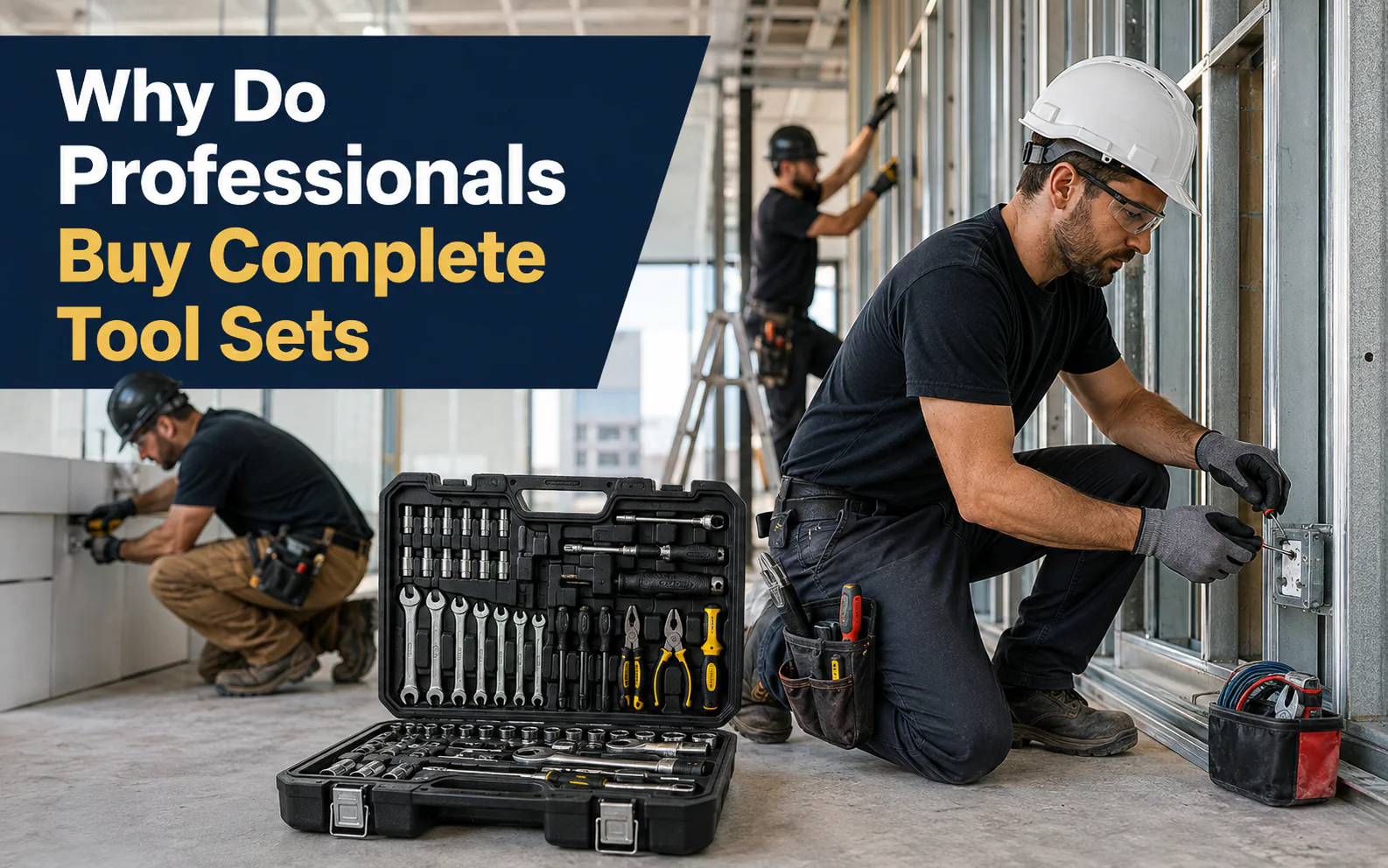
Professional mechanics, industrial technicians, and tradespeople buy complete tool sets because they offer unmatched cost efficiency, systematic organization, and complete size runs without skipped sizes. In a professional environment, time spent searching for a missing socket or driving to a store to buy an individual wrench directly cuts into daily earnings.
Beyond simple convenience, complete sets provide a standardized system. They feature consistent ergonomics, uniform manufacturing tolerances, and a single point of contact for warranty claims.
The cost-per-tool financial advantage
- Buying complete sets significantly lowers the average cost per tool compared to individual purchases.
- Professional sets eliminate skipped sizes, preventing costly project delays when encountering uncommon fasteners.
- Integrated storage systems like high-density foam trays improve workflow speed and prevent tool loss.
- A single-brand set simplifies warranty claims and ensures consistent tool ergonomics.
- Complete sets are designed to meet strict industrial standards, offering better tolerances and durability.
| Topic | When it helps | What to keep in mind |
|---|---|---|
| 1 | Apprentices starting out or shops looking to outfit a new service bay efficiently. | Avoid sets filled with low-value filler items like cheap plastic driver bits to inflate the piece count. |
| 2 | Automotive and industrial technicians working on diverse machinery. | Verify the product listing specifically states ‘no skipped sizes’ in the socket or wrench runs. |
| 3 | Aviation technicians and high-pace automotive shops with strict tool control policies. | Ensure the storage medium fits your existing tool chest drawers before purchasing. |
| 4 | High-volume professionals who cannot afford prolonged tool downtime. | Check if the manufacturer requires shipping the broken tool back or if they offer local over-the-counter replacements. |
| 5 | Technicians performing repetitive, high-torque assembly or disassembly tasks. | Mismatched tools from different brands can cause uneven hand fatigue over long shifts. |
Focus on professional-grade hand tool
1. Significant Cost-Per-Tool Savings
Purchasing tools in a pre-assembled set drastically reduces the price of each individual component. Manufacturers discount bulk packages, allowing buyers to acquire premium ratchets, sockets, and wrenches for a fraction of their individual retail costs.
- Apprentices starting out or shops looking to outfit a new service bay efficiently.
- Avoid sets filled with low-value filler items like cheap plastic driver bits to inflate the piece count.
- Calculate the total cost divided by the number of actual steel tools (sockets, wrenches, ratchets) to find the true value.
- Financial Benefit – High.
- Value Focus – Cost per piece.
2. Elimination of Skipped Sizes
Professional-grade sets include every size within a specific range (such as 6mm to 24mm without skipping 15mm or 18mm). Consumer sets often skip these less common sizes to lower production costs, which can halt a professional job when an odd fastener is encountered.
- Automotive and industrial technicians working on diverse machinery.
- Verify the product listing specifically states ‘no skipped sizes’ in the socket or wrench runs.
- Look for complete metric runs that include 15mm, 16mm, and 18mm sockets, as these are frequently omitted in budget sets.
- Operational Impact – Critical.
- Size Range – Continuous.
3. Integrated Storage and Tool Accountability
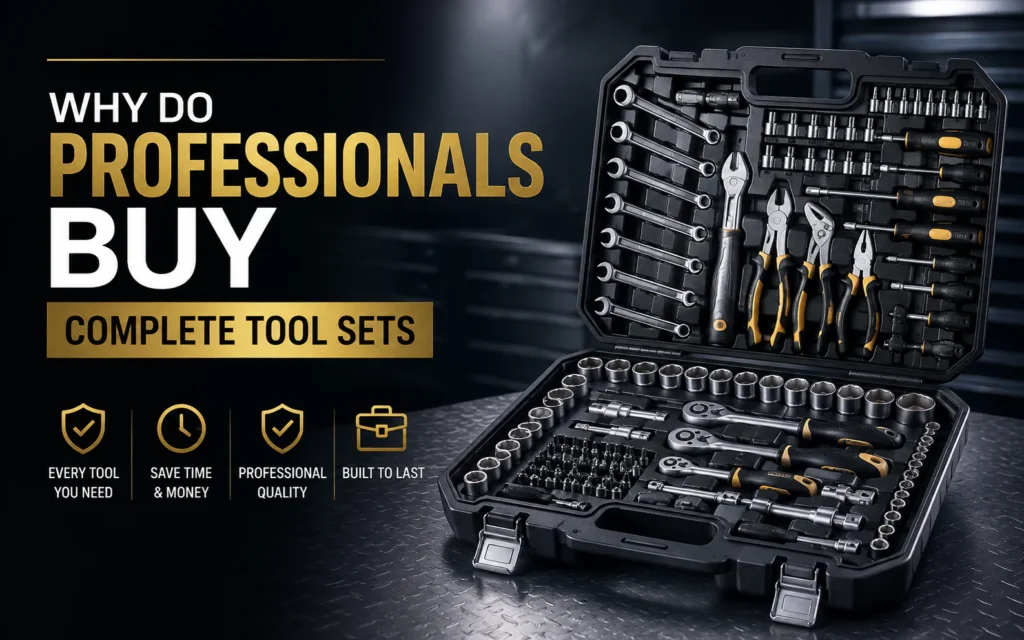
Professional sets often come housed in high-density foam trays (shadow boards) or heavy-duty blow-molded cases. Every tool has a dedicated, labeled slot.
- Aviation technicians and high-pace automotive shops with strict tool control policies.
- Ensure the storage medium fits your existing tool chest drawers before purchasing.
- Opt for dual-color foam inserts where a bright contrasting color underneath highlights any empty tool slot.
- Loss Prevention – Excellent.
- Storage Type – Foam or Molded Case.
4. Streamlined Warranty and Support
Owning a complete set from a single manufacturer simplifies the replacement process. If a tool breaks, dealing with one customer service department or tool truck representative is much faster than managing warranties across five different brands.
- High-volume professionals who cannot afford prolonged tool downtime.
- Check if the manufacturer requires shipping the broken tool back or if they offer local over-the-counter replacements.
- Prioritize brands with lifetime warranties and accessible local distributors or fast online replacement programs.
- Administrative Ease – High.
- Warranty Type – Lifetime Limited.
5. Consistent Ergonomics and Tolerances
Tools from the same set share identical handle profiles, knurling patterns, chrome finishes, and manufacturing tolerances. This consistency allows a technician to switch between different sizes seamlessly without adjusting their grip or hand feel.
- Technicians performing repetitive, high-torque assembly or disassembly tasks.
- Mismatched tools from different brands can cause uneven hand fatigue over long shifts.
- Test the grip and weight of a brand’s core ratchet before committing to their entire master set.
- User Comfort – High.
- Manufacturing – Standardized.
The Financial Math: Complete Sets vs. Piecemeal Buying
When analyzing tool procurement, the math heavily favors complete sets. Manufacturers structure their pricing to incentivize bulk purchases.
This pricing structure is especially beneficial for apprentices entering the trade. While the upfront cost of a professional master set can seem daunting, it represents the lowest possible cost-per-tool acquisition rate.A technician buying a 120-piece socket and ratchet set pays an average of $3 per piece.Do not buy a massive piece-count set if 40% of the items are plastic screwdriver bits you will never use in a heavy-duty shop.Lower average cost per individual tool.Reduced shipping and handling fees compared to multiple small orders.Avoids the premium markups associated with emergency individual tool purchases.Often includes high-value storage cases or foam trays at no extra cost.
| Buying Strategy | Average Cost Per Tool | Size Continuity | Storage Included |
|---|---|---|---|
| Complete Master Set. | Low to Moderate. | Excellent (No skips). | Yes (Foam/Molded). |
| Piecemeal Buying. | High. | Variable (Prone to gaps). | Rarely. |
Organization as a Productivity Tool
In a professional workshop, organization is directly tied to profitability. Technicians are often paid flat-rate hours; the faster they complete a repair, the more money they earn.
Furthermore, professional environments demand strict tool accountability. High-density foam inserts, often called shadow boards, provide a visual inventory system.
In aviation maintenance, a single forgotten socket left inside an engine bay can cause catastrophic failure.Neglecting to return tools to their designated slots immediately after use, which defeats the purpose of an organized set.Reduces search time, directly increasing billable flat-rate hours.Prevents tool loss, saving money on replacement costs over time.Improves shop safety by ensuring no tools are left inside machinery.Creates a highly professional presentation for clients and shop inspectors.
Key Technical Features of Professional Sets
Not all complete sets are created equal. Professional-grade sets are engineered to withstand daily abuse under high torque.
Another critical differentiator is the ratchet mechanism. Professional sets feature high-tooth-count ratchets (typically 72 to 120 teeth).
A professional automotive technician looks for a socket set with off-corner loading designs.
Assuming a high piece count automatically means high quality; always check the steel alloy and ratchet gear specifications.
- High-tooth-count ratchets (72-tooth minimum, 90 to 120 preferred) for tight spaces.
- Off-corner loading socket designs to prevent fastener rounding.
- Premium steel construction (Chrome Vanadium for hand tools, Chrome Moly for impact tools).
- Clear, stamped size markings that resist wear and grease buildup.
FAQs
What is the best complete tool set for a starting professional?
The best set depends on your specific trade. For general automotive technicians, a 150- to 200-piece 3/8-inch and 1/4-inch drive socket and wrench set with no skipped sizes is the ideal starting point.
Why is Snap-on so expensive compared to other professional brands?
Snap-on tools carry a premium price due to their high-grade steel alloys, precise manufacturing tolerances, proprietary ergonomic designs, and the convenience of mobile tool truck service. For many professionals, the immediate on-site warranty replacement offered by tool trucks justifies the higher cost.
What are the benefits of owning a complete tool kit set over individual tools?
Owning a complete set ensures you have a continuous run of sizes without gaps, a significantly lower cost per tool, consistent ergonomics, and an integrated storage system that prevents tool loss and speeds up your workflow.
What is the most high-quality tool brand for industrial use?
Brands like Wright Tool, Proto, SK Professional, and Stahlwille are highly regarded in industrial settings. These brands focus heavily on meeting strict ASME and ANSI standards, offering exceptional durability and safety in high-torque applications.
Conclusion
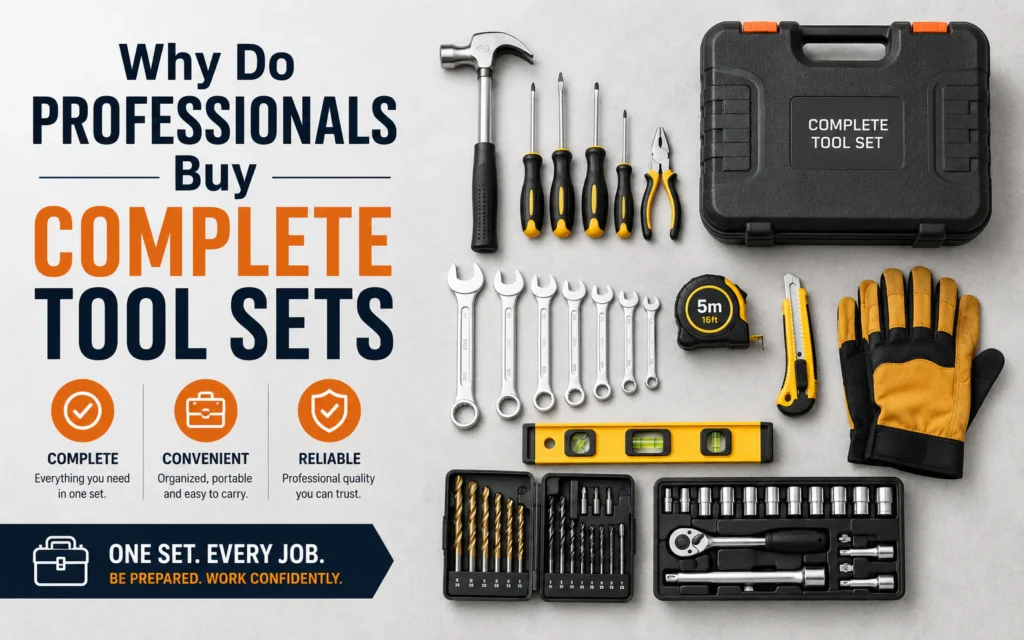
Investing in a complete tool set is a strategic decision that directly impacts a professional’s efficiency, organization, and long-term finances. By eliminating skipped sizes and consolidating purchases under a single, high-quality brand, technicians protect themselves from costly project delays and premature tool failures.
When selecting a set, prioritize continuous size runs, high-tooth-count ratchets, and integrated storage solutions like foam trays. While the upfront cost of a professional-grade master set is higher than piecing a kit together slowly, the daily time savings and reduced cost-per-tool make it the most logical choice for anyone serious about their trade.
Related posts
 Which Tool Kit Is Worth Buying? How to Choose the Right Set for Your Home
Wondering which tool kit is worth buying? Compare basic household sets, mechanic kits, and power tool combos to find the best tools for your budget and…
 Which Hand Tools Are Made in the USA? Reliable Brands and Buying Rules
Discover which hand tools are still made in the USA. Compare top domestic brands, tool categories, and learn how to verify origin labels before buying. Several…
 Why Do Campers Carry Multi Tools? Practical Uses in the Field
Why do Campers carry multi tools to handle gear repairs, campsite setup, food prep, and field fixes with minimal weight. Here is why one belongs in…