
How to Keep Tools Organized: Smart Storage Solutions and Habits
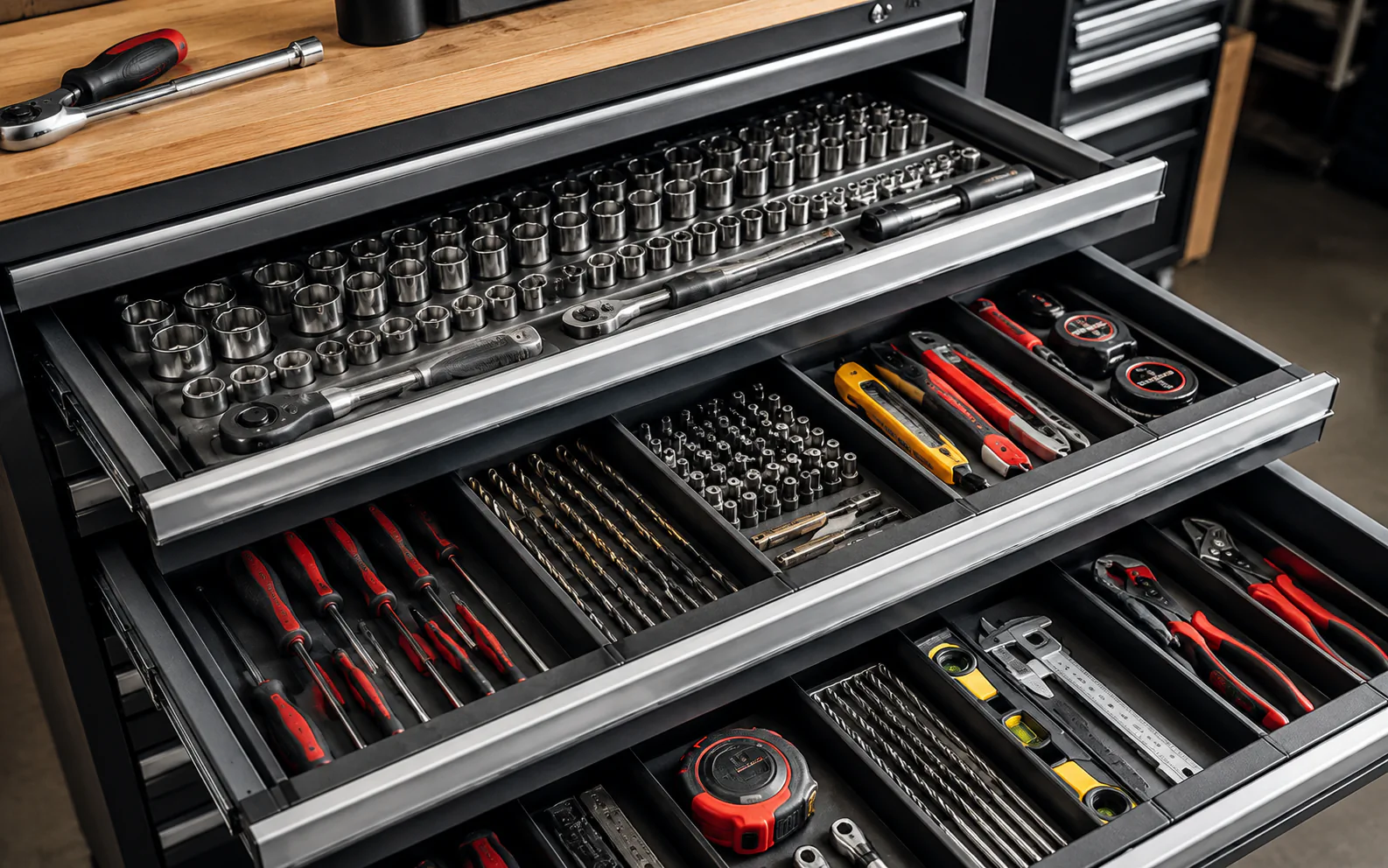
Keeping your tools organized is about more than just tidiness; it’s about efficiency, safety, and extending the life of your equipment. A well-organized workspace means you spend less time searching for tools and more time on your projects.
The key to lasting tool organization lies in a two-part approach: first, setting up smart storage solutions that fit your space and tool collection, and second, establishing consistent habits to maintain that order. It starts with understanding what you have and how you use it, then creating a system where every tool has a designated, easily accessible home.
Initial decluttering and sorting process
- Start by decluttering and categorizing your tools to understand what you truly need to store.
- Choose storage solutions that fit the tool type, frequency of use, and your available space.
- Assign a specific, visible ‘home’ for every tool and label storage clearly.
- Develop consistent habits, like putting tools away immediately after use, to maintain order.
- Utilize vertical space and mobile storage solutions, especially in smaller workspaces.
| Topic | When it helps | What to keep in mind |
|---|---|---|
| Step 1 | Anyone starting their organization journey or feeling overwhelmed by existing clutter. | Don’t skip this step, thinking you’ll organize around unused items. |
| Step 2 | Ensuring quick access to essential tools and logical placement for all others. | Avoid creating too many small, overlapping categories, which can make things harder to find. |
| Step 3 | Matching specific tool needs with appropriate, long-lasting storage. | Don’t buy storage just because it looks good; ensure it’s practical for the tools you intend to store. |
| Step 4 | Maintaining organization long-term and making cleanup effortless. | Skipping labels can lead to tools migrating and the system breaking down over time. |
| Step 5 | Ensuring long-term organization and tool longevity. | Procrastinating on putting tools away is the fastest way for clutter to return. |
The article must cover the
Step 1. Declutter and Sort Your Entire Tool Collection
How to Keep Tools Organized. Before you buy any storage, take everything out and sort through your tools. Create three piles: ‘Keep,’ ‘Repair,’ and ‘Discard.’ This initial purge helps you identify what you actually need to organize and prevents you from storing broken or unused items.
- Anyone starting their organization journey or feeling overwhelmed by existing clutter.
- Don’t skip this step, thinking you’ll organize around unused items.
- Be honest about what you use.
- Action – Purge and categorize.
- Benefit – Reduces storage needs.
Step 2. Categorize Tools by Type and Frequency of Use
Once you know what you’re keeping, group similar tools together (e.g., all wrenches, all screwdrivers, all power drills). Within these categories, consider how often you use each tool.
- Ensuring quick access to essential tools and logical placement for all others.
- Avoid creating too many small, overlapping categories, which can make things harder to find.
- Think about your workflow.
- Method – Grouping by type/frequency.
- Goal – Improved workflow.
Step 3. Choose the Right Storage Solutions for Each Category
Select storage options that best suit the tools you have and your available space. Options range from pegboards and magnetic strips for visible, frequently used items to tool chests, rolling carts, and dedicated cases for power tools or less-used sets.
- Matching specific tool needs with appropriate, long-lasting storage.
- Don’t buy storage just because it looks good; ensure it’s practical for the tools you intend to store.
- For delicate or expensive power tools, hard cases offer the best protection against dust and impact.
- Solution Types – Pegboards, drawers, cases, magnetic strips.
- Consideration – Tool type, space, frequency.
Step 4. Establish a ‘Home for Everything’ and Label Clearly
Every single tool needs a designated spot. Once you’ve placed a tool, that’s its home.
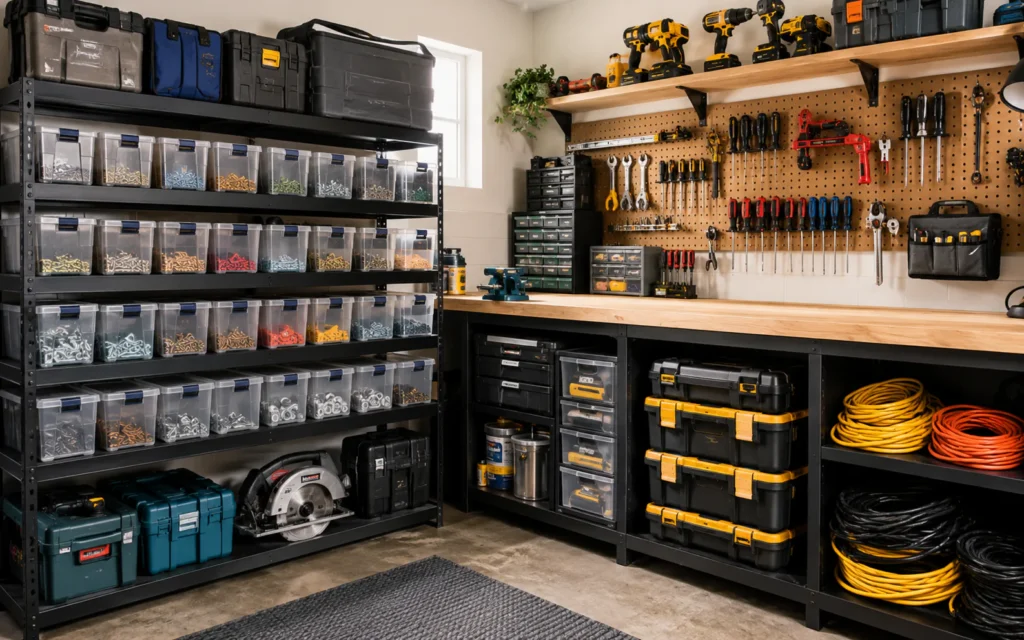
- Maintaining organization long-term and making cleanup effortless.
- Skipping labels can lead to tools migrating and the system breaking down over time.
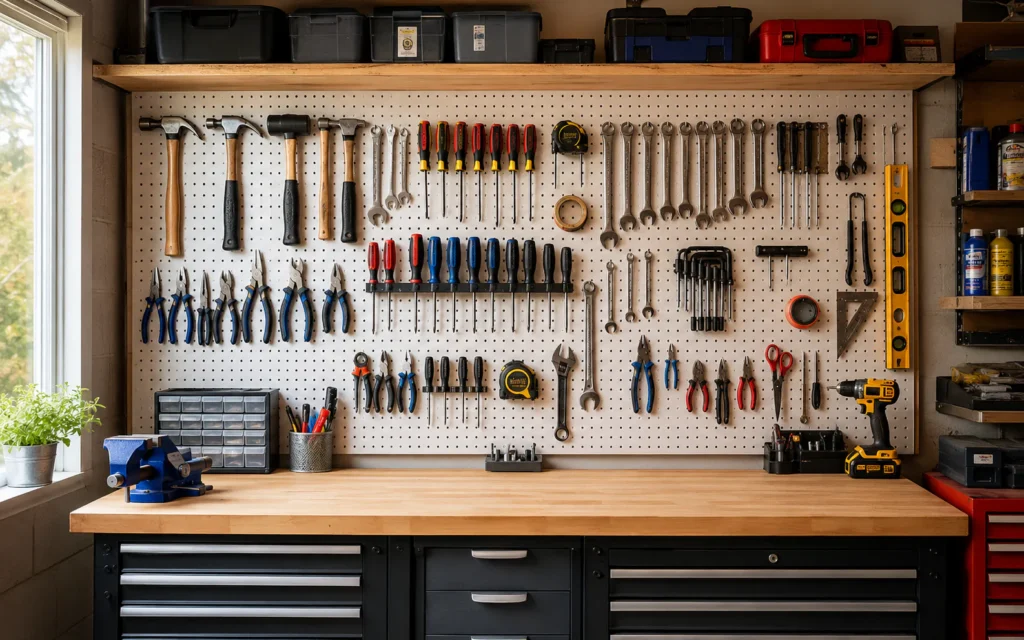
- For pegboards, trace the outline of tools directly onto the board.
- Principle – Designated spots.
- Technique – Labeling, outlines.
Step 5. Implement a Consistent ‘Put Away’ Habit and Routine Maintenance
The most crucial step to keeping tools organized is to put them back in their designated spots immediately after each use. Make it a habit.
- Ensuring long-term organization and tool longevity.
- Procrastinating on putting tools away is the fastest way for clutter to return.
- Dedicate five minutes after every project to clean up and put away tools.
- Habit – Immediate put-away.
- Routine – Clean and inspect.
The Foundation: Decluttering and Categorizing Your Tools
Effective tool organization begins not with buying storage, but with a thorough assessment of your current collection. This means taking everything out, examining each item, and making decisions about its future.
Once you’ve decided which tools to keep, the next step is to categorize them. Grouping tools by type-like all wrenches together, all screwdrivers together-is a natural starting point.
Before starting, empty a drawer or workbench entirely.
A common mistake is trying to organize tools without first decluttering.
Smart Storage Solutions for Every Tool
Choosing the right storage solution is crucial for maintaining an organized tool collection. The ‘best’ solution isn’t universal; it depends on the type of tool, its size, how often you use it, and the space you have available.
For hand tools, visibility and easy access are often priorities. Power tools, on the other hand, benefit from protection and dedicated storage to prevent damage.
For a collection of frequently used screwdrivers and pliers, a magnetic strip mounted above your workbench or a pegboard with custom hooks allows for quick grabbing and easy visual inventory.
One common pitfall is using a ‘one-size-fits-all’ storage approach.
| Storage Type | Best For | Key Benefit | Consideration |
|---|---|---|---|
| Pegboards & Wall Organizers. | Hand tools, frequently used items. | High visibility, customizable layout. | Requires wall space, can get dusty. |
| Magnetic Strips. | Metal hand tools (wrenches, screwdrivers). | Instant access, space-saving. | Only for magnetic tools, limited weight capacity. |
| Tool Chests & Rolling Carts. | Assorted hand tools, small power tools. | Organized drawers, portability. | Takes up floor space, can be heavy. |
| Dedicated Tool Cases. | Power tools, delicate instruments. | Protection from dust/impact, portability. | Takes up shelf/cabinet space, less visible. |
Maintaining Your Organized Workspace
Setting up an organized tool space is a great start, but the real challenge is maintaining it. This requires developing consistent habits and integrating tool care into your routine.
The ‘one home’ principle is paramount: every tool has a specific place, and it should always return there. This simple rule, combined with regular, brief clean-ups, will prevent clutter from accumulating and ensure your tools are always ready for the next task.
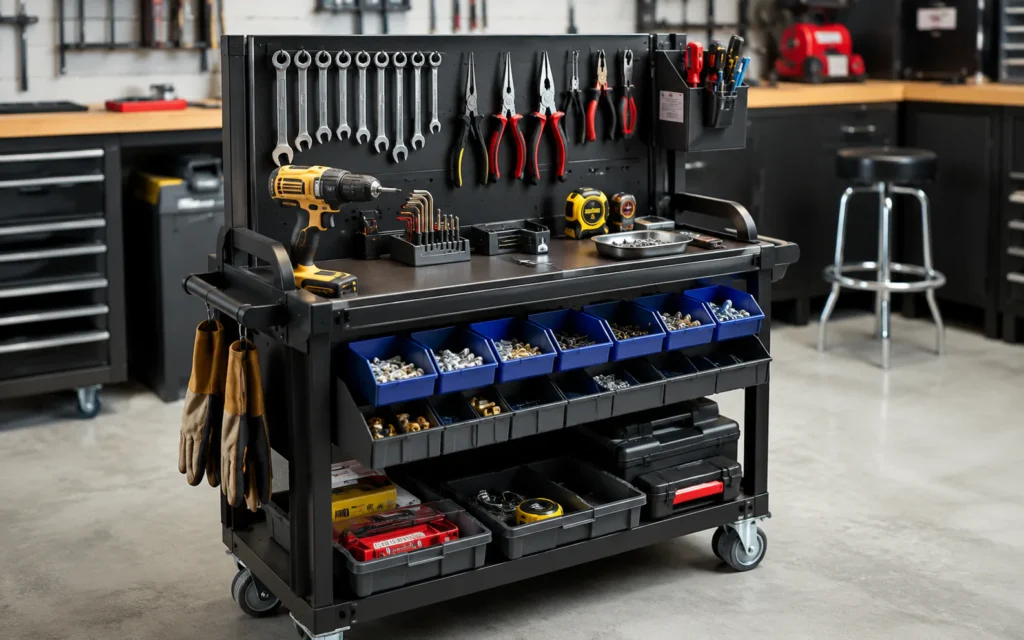
After finishing a small repair, instead of leaving the screwdriver and pliers on the workbench, take the extra 30 seconds to wipe them down and return them to their designated pegboard hooks.
The biggest mistake is thinking organization is a one-time event.
- The ‘Put Away Immediately’ Rule: Make it a non-negotiable habit to return tools to their designated spots as.
- Regular Mini-Cleanups: Don’t wait for a major overhaul. Dedicate 5-10 minutes after each project, or at the end.
- Clean and Inspect Before Storing: Before putting a tool away, give it a quick wipe to remove dirt.
- Periodic Review: Every few months, do a quick walk-through of your organized space. Are there any tools that.
Maximizing Organization in Small Spaces
Not everyone has a sprawling garage or dedicated workshop. Organizing tools in a small apartment, a shared space, or a compact utility closet requires creative thinking and a focus on maximizing every inch.
The key to small-space organization is thinking vertically and making items multi-functional or easily storable. Every surface, wall, and corner can potentially become a storage opportunity.
Instead of a large workbench, consider a wall-mounted folding workbench that can be stowed away when not in use.
A common mistake in small spaces is underutilizing vertical space.
- Go Vertical: Install pegboards, slat walls, or shelving units on any available wall space. This frees up floor.
- Utilize Doors and Cabinet Interiors: Over-the-door organizers or magnetic strips on the inside of cabinet doors can hold.
- Mobile Storage Solutions: Rolling tool carts or multi-drawer units on wheels allow you to bring tools to your.
- Folding Workbenches: If a permanent workbench isn’t feasible, consider a wall-mounted folding workbench that can be collapsed when.
- Stackable Bins and Drawers: For small parts and hardware, stackable clear bins or modular drawer systems can keep.
FAQs
How often should I reorganize my tools?
A full reorganization, like the initial decluttering, might only be needed every year or two, or when your tool collection significantly changes. However, daily ‘mini-cleanups’ and putting tools away immediately after use are essential for maintaining organization.
What’s the best way to store power tools?
Power tools are best stored in their original hard cases, dedicated tool bags, or sturdy plastic bins. This protects them from dust, moisture, and accidental damage.
Can I organize tools effectively in a small apartment?
Focus on vertical storage (wall-mounted pegboards, shelves), mobile solutions (rolling carts), and multi-functional items. Utilize hidden spaces like the backs of doors or under beds.
How do I keep track of small parts and hardware?
For small parts like screws, nails, washers, and drill bits, use clear, compartmentalized organizers. Label each compartment clearly.
Conclusion
Keeping your tools organized is a continuous journey that pays off in saved time, reduced frustration, and better-maintained equipment. By starting with a thorough declutter, thoughtfully categorizing your tools, and selecting smart storage solutions, you lay a strong foundation.
The true secret to lasting organization, however, lies in consistent habits. Making a conscious effort to put tools back in their designated homes and performing quick clean-ups after each use will prevent clutter from returning.
Related posts
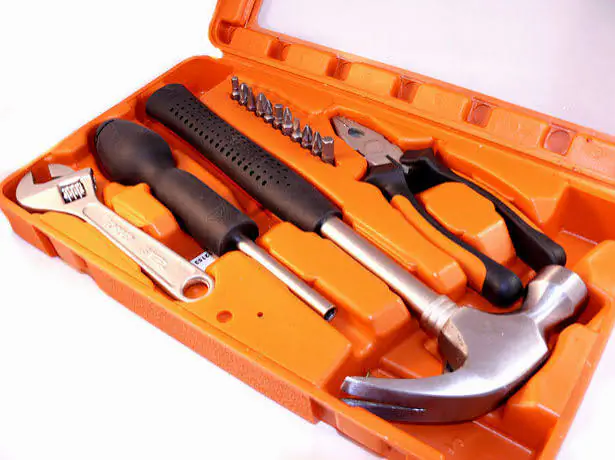 Which Tool Kit Is Worth Buying? How to Choose the Right Set for Your Home
Wondering which tool kit is worth buying? Compare basic household sets, mechanic kits, and power tool combos to find the best tools for your budget and…
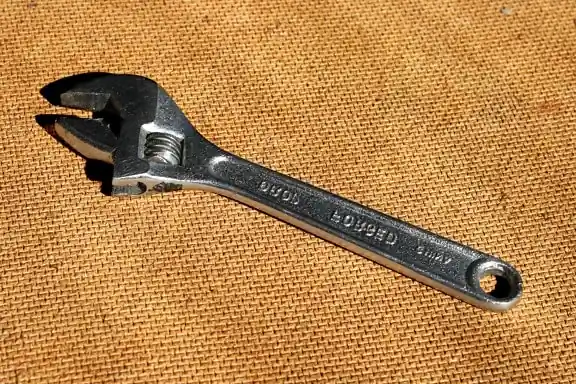 Which Hand Tools Are Made in the USA? Reliable Brands and Buying Rules
Discover which hand tools are still made in the USA. Compare top domestic brands, tool categories, and learn how to verify origin labels before buying. Several…
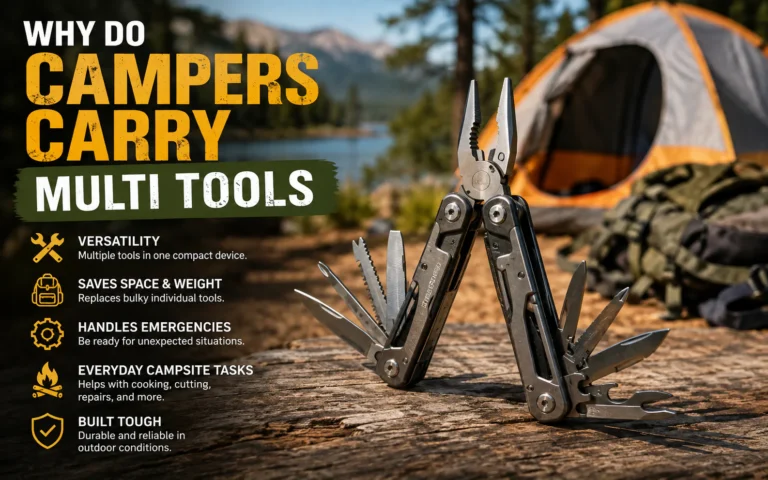 Why Do Campers Carry Multi Tools? Practical Uses in the Field
Why do Campers carry multi tools to handle gear repairs, campsite setup, food prep, and field fixes with minimal weight. Here is why one belongs in…