
What Tools Should Every Home Tool Kit Include
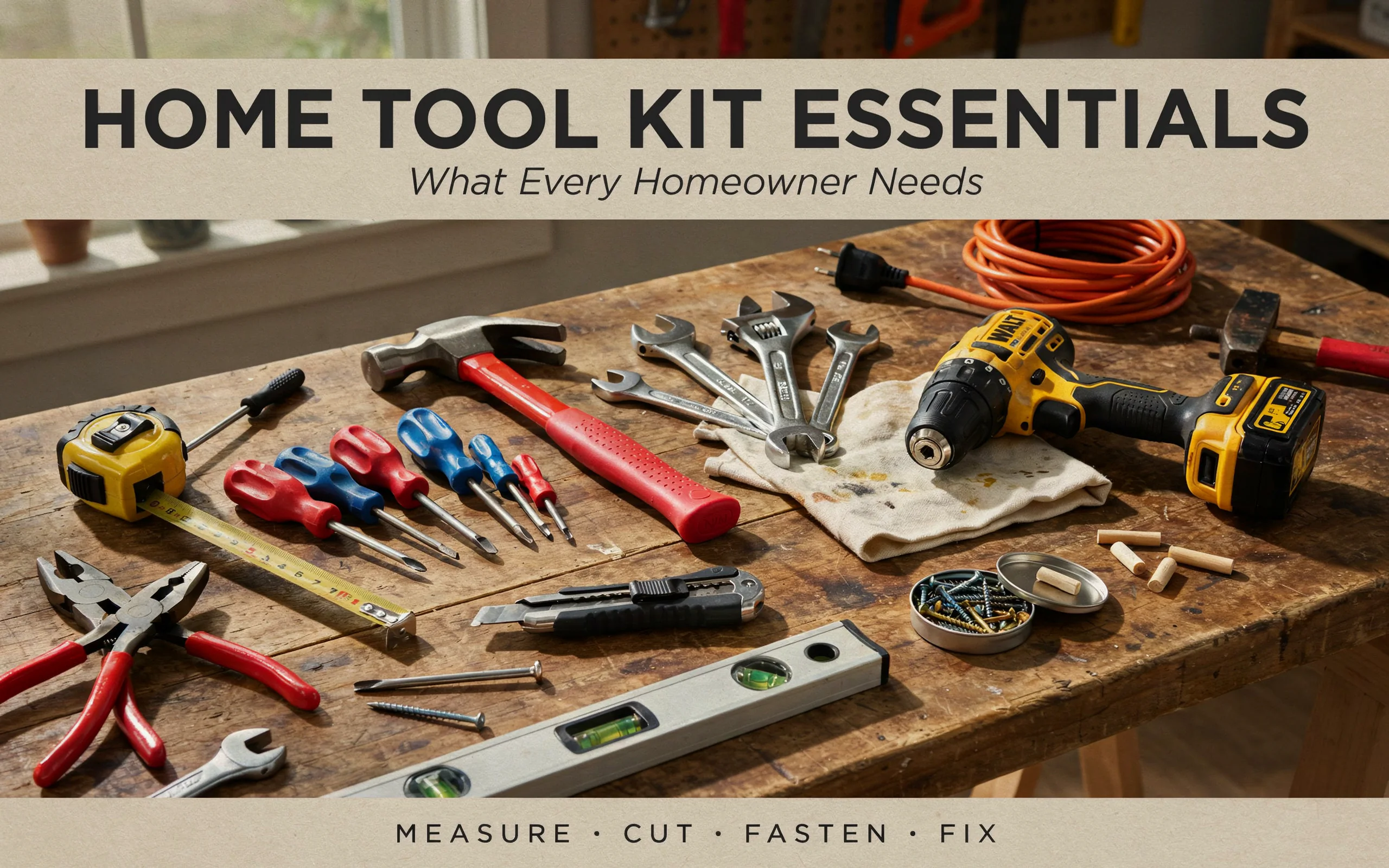
Are you wondering what tools should every home tool kit include? This complete guide lists 25 essential tools for DIY repairs, from hammers to screwdrivers, helping you build a functional home toolkit for any household task.
Moving into your first apartment or buying a new house brings many exciting changes. You need furniture, decor, and kitchen items. But many people forget one vital thing: a home tool kit. You never know when a picture frame needs hanging, a loose cabinet hinge needs tightening, or a wobbly chair leg needs fixing.
That is where knowing what tools should every home tool kit include becomes so useful. Having the right tools on hand saves time, money, and frustration. You avoid calling a handyman for small jobs. You feel more confident handling basic repairs yourself.
This guide covers every essential tool you need. We explain each tool’s purpose clearly. We give practical tips for beginners. After reading, you will know exactly what tools should every home tool kit include for your specific needs.
The Basic Hand Tools That Start Your Collection
Before buying power tools, start with hand tools. These are simple, safe, and affordable. They handle most household repairs. Here is what tools should every home tool kit include as the very basics.
Hammers: The Backbone of Any Tool Kit
A hammer is the first tool that comes to mind. It drives nails, removes nails, and breaks things apart. For home use, a 16-ounce claw hammer works perfectly. The weight feels right for most jobs. The curved claw pulls out nails easily.
Look for a hammer with a steel head and a wooden or fibreglass handle. Wood handles absorb shock well. Fibreglass handles last longer. Hold the hammer near the end of the handle for maximum striking power. Keep your wrist straight when swinging.
“A hammer is the most honest tool. It doesn’t hide its purpose. You either hit the nail or you don’t. That clarity is rare in life.” – David Marks, Master Woodworker
Hammer Safety Tips:
- Wear safety glasses when hammering
- Check the handle for cracks before use
- Strike the nail head squarely, not at an angle
- Use the claw side carefully to avoid scratching surfaces
Screwdrivers: The Most Used Tools
Every home needs screwdrivers. They tighten and loosen screws on furniture, electronics, and appliances. What tools should every home tool kit include in terms of screwdrivers? You need both flathead and Phillips head types in various sizes.
Essential Screwdriver Set:
- Flathead sizes: 1/8 inch and 1/4 inch
- Phillips sizes: #0, #1, #2
- Precision screwdrivers for electronics
- A 6-in-1 multi-bit screwdriver for versatility
Multi-bit screwdrivers save drawer space. They have interchangeable tips in one handle. This design covers most screw types you will encounter. Quality screwdrivers have magnetic tips. This feature holds the screw in place while you start threading.
Tape Measures: Accurate Measurements Matter
Measure twice, cut once. This old saying holds true. A 25-foot tape measure with a locking mechanism is what tools should every home tool kit include. It measures furniture, spaces, and materials.
Tape Measure Features to Look For:
- Easy-to-read markings in inches and centimetres
- A sturdy belt clip
- A thumb lock that works smoothly
- A hook at the end for grabbing edges
A good tape measure extends straight without bending. This feature helps when measuring alone. The hook at the end should slide slightly. This movement accounts for hook thickness when measuring inside or outside dimensions.
Tools for Cutting and Shaping Materials
Cutting tools join the basics. You need them for opening boxes, cutting rope, and trimming materials. Here is what tools should every home tool kit include for cutting tasks.
Utility Knives and Scissors
A utility knife cuts through cardboard, plastic, rope, and light materials. It has a replaceable blade that stays sharp. Retractable designs keep the blade safe when not used.
Good scissors are equally important. Kitchen shears handle food packaging. All-purpose scissors cut paper, tape, and thin plastic. Keep one pair just for the toolkit.
Saws: Hand Saws for Cutting Wood and Plastic
A simple hand saw handles many jobs. It cuts wood, PVC pipe, and plastic. What tools should every home tool kit include for sawing? A 15-inch panel saw with crosscut teeth works well. The teeth cut across the wood grain smoothly.
For smaller projects, a keyhole saw or drywall saw is useful. These have narrow blades for cutting tight curves and holes. A coping saw cuts intricate shapes in wood and plastic. These specialised saws expand your capabilities.
Measuring and Marking Tools
| Tool | Purpose | How to Use |
|---|---|---|
| Level | Checks if surfaces are horizontal or vertical | Place against surface and read bubble position |
| Square | Marks 90-degree angles | Align with straight edge and draw line |
| Chalk Line | Marks long, straight lines | Stretch between two points and snap |
| Pencil | Marks cutting lines | Use carpenter pencil for clear marks |
Good measuring tools prevent mistakes. A 4-foot level checks picture frames and shelves. It shows if your work is straight. A combination square gives accurate right angles. These simple items answer what tools should every home tool kit include for precise work.
Fastening Tools: Beyond Basic Screwdrivers
Screwdrivers handle many screws. But some jobs need more power. Impact drivers and wrenches handle stubborn fasteners. Let us explore what tools should every home tool kit include for strong connections.
Adjustable Wrenches and Pliers
An adjustable wrench grips nuts and bolts of various sizes. A 10-inch wrench covers most home plumbing and furniture needs. The jaw opens to grip different fastener sizes.
Pliers come in several forms:
Slip Joint Pliers: These grip round objects like pipes and fittings. The joint slides to adjust the jaw width.
Needle-Nose Pliers: These reach into tight spaces. They grip small parts and bend wire.
Locking Pliers (Vise-Grips): These clamp onto objects and hold them steady. They free your hands for other work.
Socket Sets and Ratchets
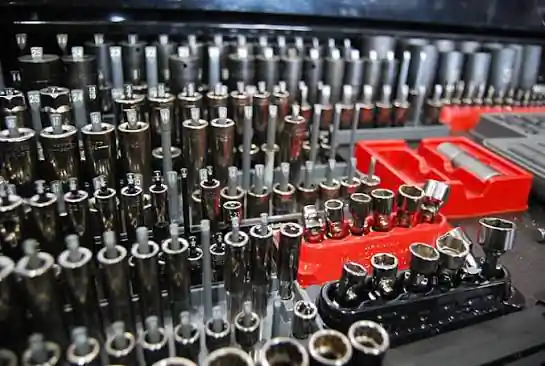
A socket set combines multiple socket sizes with a ratchet handle. This tool helps with automotive and mechanical tasks. It turns nuts and bolts quickly without repositioning.
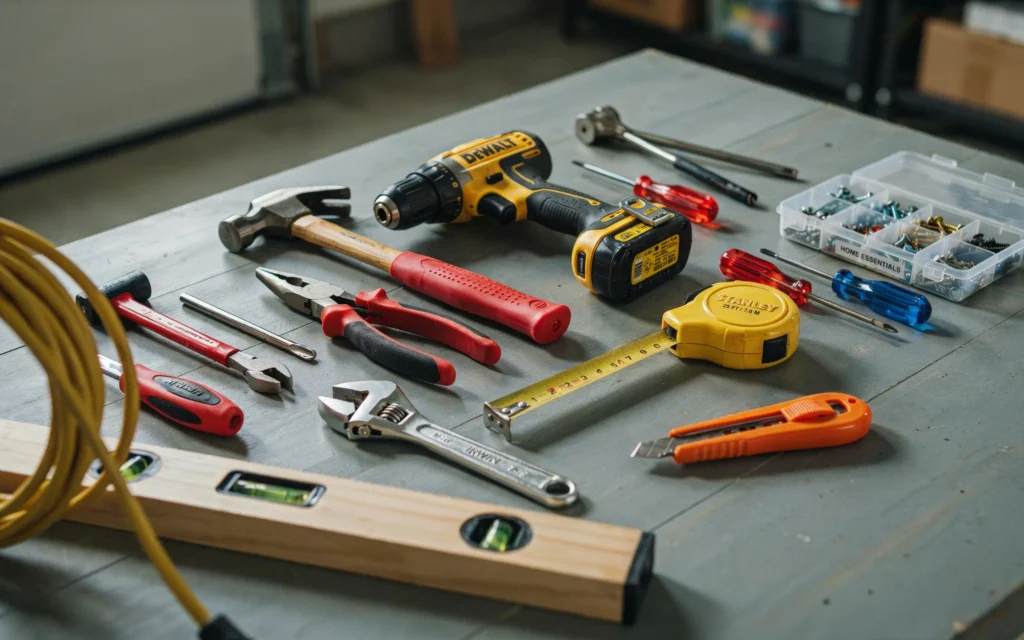
A basic set includes 1/4-inch and 3/8-inch drive sizes. Metric and imperial sockets cover all fastener types. Extension bars reach awkward positions. This answer to what tools should every home tool kit include adds mechanical capability.
Specialty Tools for Electrical and Plumbing
Electrical and plumbing tasks need special tools. These are not daily tools. But having them saves trips to the store. Here is what tools should every home tool kit include for these jobs.
Electrical Tools: Safety First
Electrical work requires insulated tools. These tools protect from shock. A voltage tester confirms if wires are live. A wire stripper removes insulation without damaging wires.
Electrical Tools Checklist:
- Voltage tester (non-contact)
- Wire strippers
- Needle-nose pliers with insulated handles
- Electrical tape
- Cable ties for organizing wires
Plumbing Tools: Fixing Leaks and Clogs
Plumbing issues occur unexpectedly. A plunger clears clogged drains quickly. An adjustable wrench tightens pipe connections. Teflon tape seals threaded joints to prevent leaks.
“The difference between a leak and a flood is having the right plumber’s tape when you need it.” – Hannah Thompson, Plumbing Professional
Plumbing Tool Essentials:
- Plunger (cup style for sinks, flange style for toilets)
- Basin wrench (tightens sink nuts in tight spaces)
- Pipe wrench (grips round pipes firmly)
- Plumber’s tape (Teflon tape)
- Drain snake (clears deeper clogs)
Power Tools That Make Work Easier
Cordless power tools have become affordable and reliable. They speed up projects and reduce physical effort. What tools should every home tool kit include as power tools? Start with these three.
Cordless Drill/Driver
A cordless drill is the most useful power tool. It drills holes and drives screws. A 12-volt or 18-volt model handles home projects well. Lithium-ion batteries hold charge longer than older types.
Drill Features to Consider:
- Keyless chuck (easy bit changes)
- Two-speed settings (low speed for driving, high for drilling)
- Clutch adjustment (prevents stripping screws)
- Built-in level for straight drilling
“A good cordless drill is like a reliable friend. You don’t think about it until you need it, and then you’re grateful it’s there.” – Mark Baker, Construction Foreman
Jigsaw and Circular Saw
A jigsaw cuts curves and straight lines in wood, metal, and plastic. It is safe and easy for beginners. Blades are simple to change for different materials.
A circular saw makes straight cuts in boards and plywood. A 7-1/4 inch saw is standard. It cuts through most building materials. Always use the safety guard and clamp your work.
Random Orbital Sander
Sanding by hand takes time. A random orbital sander smooths wood surfaces fast. It uses circular sandpaper discs. Hook-and-loop attachment makes changing discs easy. Start with 120-grit sandpaper for general work.
Organisational Tools and Storage Solutions
Having tools is good. Keeping them organised is better. A messy toolbox wastes time searching for the right tool. Consider these storage options for what tools should every home tool kit include.
Toolboxes and Bags
Portable storage keeps your tools together. A plastic toolbox is affordable and sturdy. Tool bags have pockets for organisation. Rolling tool chests hold larger collections.
Storage Selection Tips:
- Choose a case with a strong handle
- Look for secure latches
- Consider weight when full
- Select transparent compartments for small parts
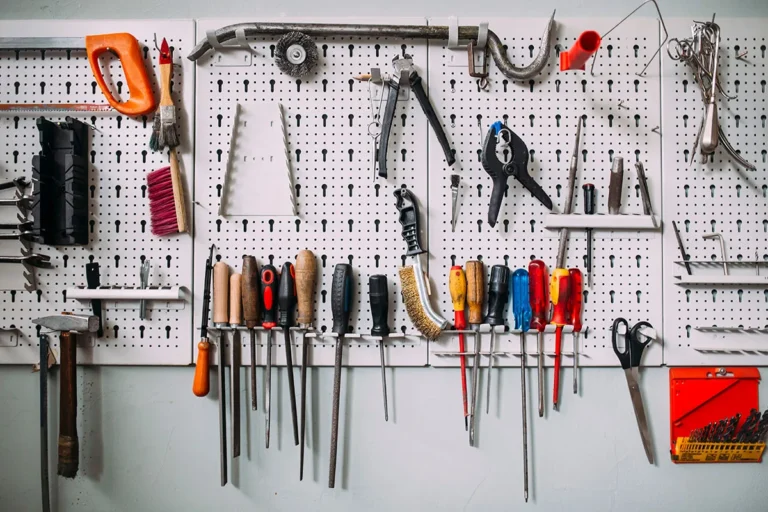
Pegboards and Wall Organizers
For workshops, wall storage saves space. Pegboards hold tools visibly. You see what is available at a glance. Hooks and baskets attach to the board. This setup encourages you to return tools after use.
Drawer organisers keep smaller items separate. Pencils, bits, and fasteners stay contained. Label drawers for quick identification.
Fastener and Hardware Storage
Small screws, nails, and anchors get lost easily. Store them in a tackle box or parts organiser. Compartments keep items separate. Find what you need without digging.
| Storage Type | Best For | Benefits |
|---|---|---|
| Tackle Box | Nails, screws, small parts | Portable, transparent lids |
| Drawer Organizer | Bits, wrenches, small tools | Customisable, keeps items visible |
| Tool Bag | Hand tools, daily use | Portable, pockets for access |
| Wall Pegboard | Frequently used tools | Space saving, visibility |
Safety Gear: Protecting Yourself
Safety equipment is as important as tools. It prevents injuries and accidents. Consider these items when gathering what tools should every home tool kit include.
Eye and Ear Protection
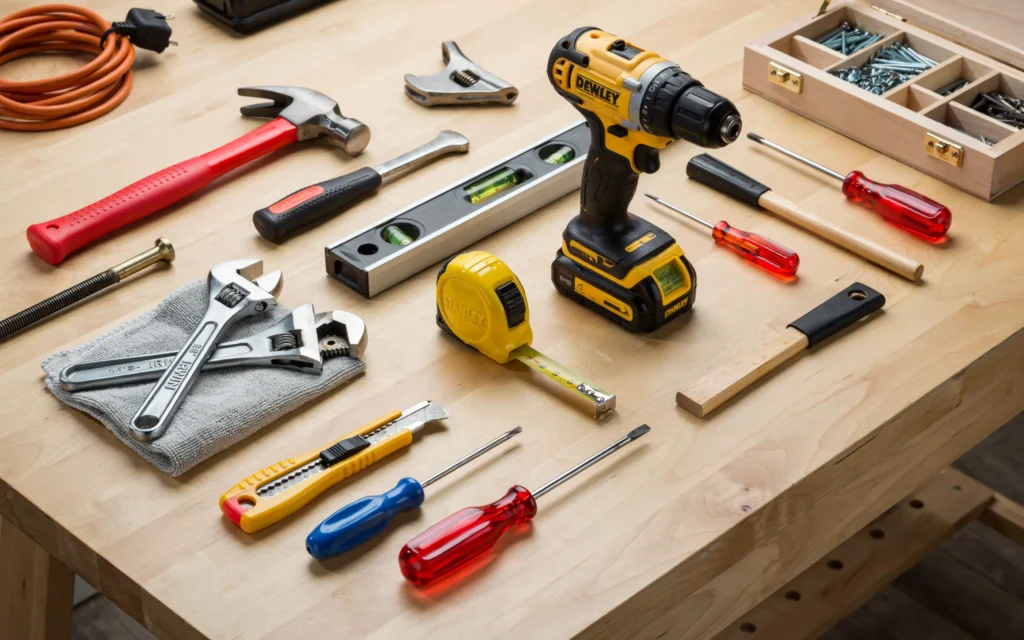
Safety glasses are essential. Dust and debris cause eye injuries. Wear glasses when hammering, sawing, or drilling. Look for glasses that fit comfortably over your prescription eyewear.
Ear protection prevents hearing damage. Power tools create loud noise. Foam earplugs are cheap and effective. Earmuffs provide more protection for extended work.
Gloves and Knee Protection
Work gloves protect your hands. Leather gloves handle rough materials. Rubber gloves insulate from electrical work. Cut-resistant gloves add protection when handling sharp tools.
Knee pads save your knees during floor work. Foam pads cushion hard surfaces. Choose adjustable straps for comfort. This protection matters more as you age.
“The most expensive tool you’ll ever use is the one you’re born with. Protect your eyes, ears, hands, and knees.” – John Smith, Safety Trainer
Tool Maintenance: Making Tools Last
Tools need care to work well. A rusty wrench turns hard. A dull saw cuts poorly. Following simple maintenance ensures your tools last years. This also helps you determine what tools should every home tool kit include for long-term use.
Cleaning and Sharpening
Clean tools after each use. Wipe dust and dirt off with a cloth. Rust forms when moisture stays on metal. Lubricate moving parts with light oil.
Sharp tools are safer than dull ones. A dull blade slips off the material. Learn to sharpen saws and chisels. Many hardware stores offer sharpening services.
Proper Storage Conditions
Keep tools in a dry place. Moisture causes rust and corrosion. Attach a silica gel pack in your toolbox to absorb moisture.
Check power tool cords regularly. Frayed cords create shock hazards. Replace damaged cords immediately. Store cordless tools with batteries partially charged.
Building Your Toolkit on a Budget
Starting a toolkit seems expensive. But you can build it gradually. Start with the most used tools and add others over time. Here is a phased approach to what tools should every home tool kit include.
The Starter Kit (Under £50)
Phase One: Immediate Essentials
- Hammer
- Tape measure
- Screwdriver set (multi-bit or individual)
- Utility knife
- Pliers (slip-joint)
- Adjustable wrench
This phase covers 80% of basic home repairs. It fits in a small bag. Start here and add tools as projects arise.
The Intermediate Kit (Under £100)
Phase Two: Expanded Capabilities
- All Phase One items
- Socket set
- Level
- Cordless drill
- Drill bit set
- Safety glasses
- Electrical tape
This kit handles most household projects. You can hang shelves, assemble furniture, and install blinds. This is what tools should every home tool kit include for most homeowners.
The Advanced Kit (£150 and Up)
Phase Three: Specialised Tools
- All Phase One and Two items
- Jigsaw or circular saw
- Random orbital sander
- Plumbing tools (plunger, basin wrench)
- Clamps
- Work light
- Knee pads
This comprehensive kit handles renovations and DIY projects. You can build furniture, repair decking, and install flooring.
Frequently Asked Questions
What tools should every home tool kit include for beginners?
Start with a hammer, screwdrivers (flathead and Phillips), tape measure, utility knife, pliers, and an adjustable wrench. These basic tools handle most common household repairs. Add a cordless drill when your budget allows. This collection answers what tools should every home tool kit include for basic maintenance.
Are expensive tools worth the cost?
For home use, mid-range tools offer the best value. They last for years without professional-level pricing. Avoid the cheapest options as they break easily. Premium tools are worthwhile for heavy use. For occasional work, quality mid-range tools serve well.
How do I keep my tools organized?
Use a toolbox, tool bag, or pegboard system. Store tools together in one place. Return tools after each use. Label compartments for small parts. Good organisation saves time finding tools and prevents buying duplicates.
What power tools should I buy first?
A cordless drill/driver is the first power tool to own. It drills and drives screws. Add a jigsaw for cutting curves and a circular saw for straight cuts. A random orbital sander helps with finishing work. Buy quality cordless tools from the same brand so batteries interchange.
How do I maintain my hand tools?
Clean tools after use with a cloth. Wipe metal parts with an oily rag to prevent rust. Check handles and grips for cracks. Replace worn items. Store in a dry location. Keep cutting edges sharp. These simple steps extend tool life.
What safety gear do I need?
Safety glasses, ear protection (earplugs or earmuffs), work gloves, and dust masks for dusty work. Knee pads protect your knees during floor work. Work in a well-ventilated area when using chemicals or creating dust. Safety should always come first when determining what tools should every home tool kit include.
Conclusion: Your Perfect Home Toolkit
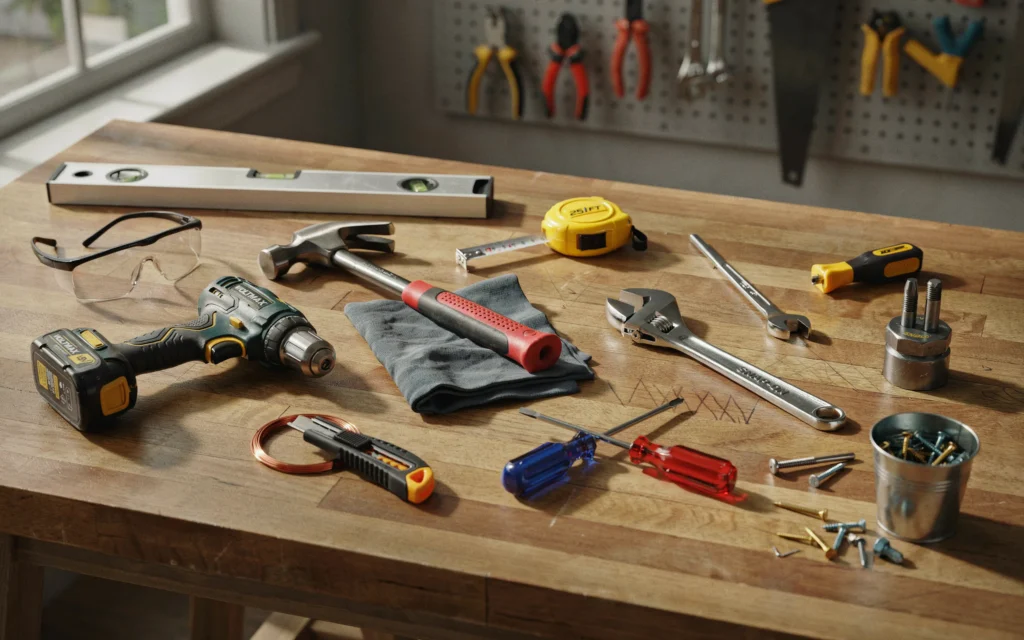
Knowing what tools should every home tool kit include helps you prepare for life’s little emergencies and weekend projects. Start with the basics: hammer, screwdrivers, tape measure, and pliers. Add more tools as you need them for specific tasks.
Remember that the best toolkit fits your lifestyle. A new apartment needs less than a house with a garden. A DIY enthusiast needs more tools than someone who calls professionals for everything. Start with the essentials and grow your collection gradually.
Quality matters more than quantity. Buy tools that feel comfortable in your hand. Test their operation before purchase. Invest in good safety gear alongside your tools. A well-maintained toolkit lasts decades and saves money on repairs.
Think about what tools should every home tool kit include for your situation. Perhaps you need more plumbing tools or gardening implements. Maybe you plan woodworking projects that require specialised saws. Start with this guide and customise as you learn.
The most important tool is your knowledge. Learn how to use each tool safely. Watch tutorials for specific tasks. Practice on scrap material. With time, you gain confidence. That confidence turns household repairs from stress into achievement.
Your tools serve you. They fix the little things that go wrong. They help create the things you need. They stand ready for whatever comes up. Build your toolkit thoughtfully, keep it organised, and it will serve you for years.
Start today. Check what you already own. Make a shopping list for what you need. Your future self will thank you when that loose drawer or wobbly leg gets fixed in minutes. The knowledge of what tools should every home tool kit include puts you in control of your home.
Related posts
 Top Home Tool Kits for Seniors: 2026 Practical Guide
Discover the top home tool kits for seniors in 2026. We compare compact, easy-to-use sets perfect for daily household repairs, furniture assembly, and DIY tasks. Finding…
 Top Home Tool Kits for Women: 2026 Buyer Guide
Discover the top home tool kits for women in 2026. Compare top-rated sets for DIY, furniture assembly, and household repairs to find your perfect match. Finding…
 Top Home Tool Kits for Basic Home Repairs 2026
Find the top home tool kits for basic home repairs in 2026. Compare top-rated sets for DIY projects, furniture assembly, and daily household maintenance. Every home…