
What Should I Look For In A Waterproof Tool Bag
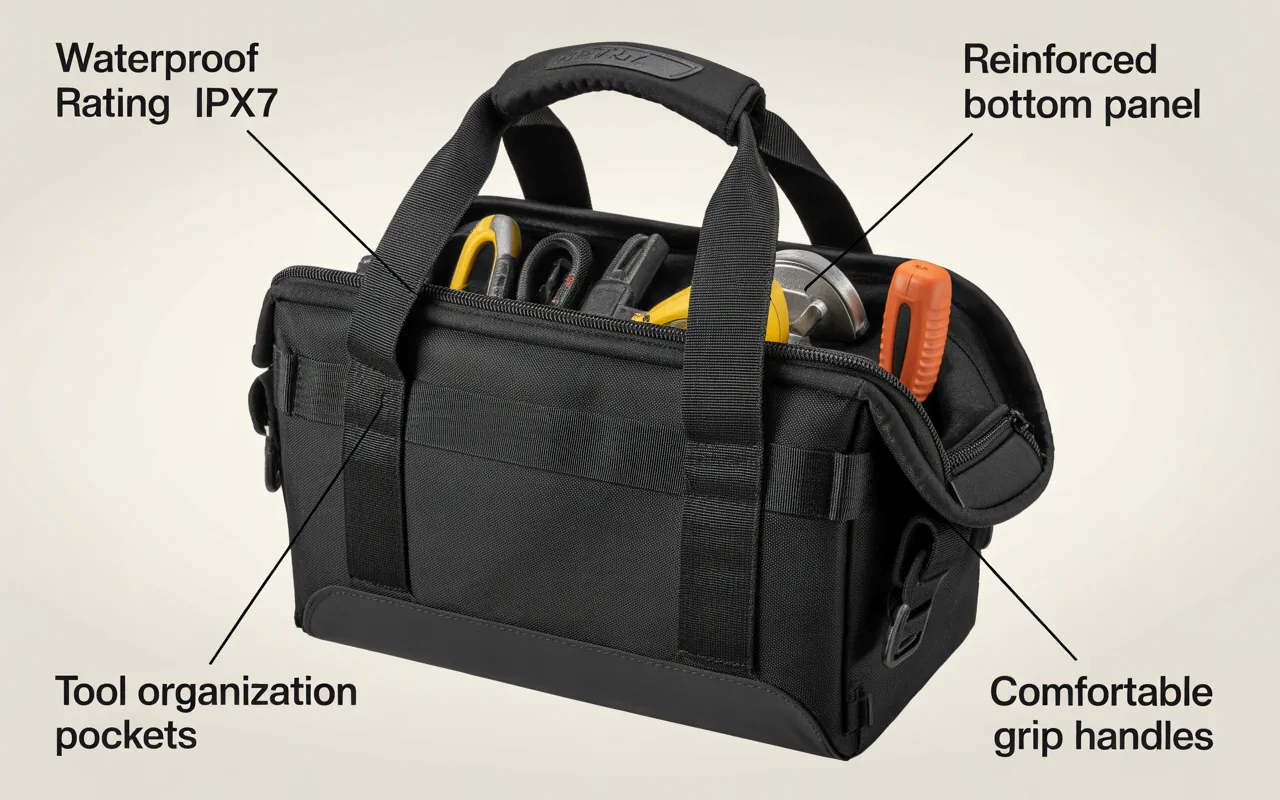
If you ask yourself “What should I look for in a waterproof tool bag?” the answer starts with welded seams, a roll-top closure, and a high IP rating. This guide explains materials, size, comfort, and real durability tests to keep your tools safe and dry.
You have a set of good tools. Maybe a drill, some wrenches, pliers, and screwdrivers. You use them for work or for home projects. One rainy day, you leave your bag outside for a few minutes. Later, you open it and see rust on your pliers. Water got inside. That is a bad feeling. That is why you need a good waterproof tool bag. But not every bag that says “waterproof” actually keeps water out. So the big question is: What should I look for in a waterproof tool bag?
I will help you answer that. We will look at materials, seams, closures, size, comfort, and price. By the end, you will know exactly which bag to buy. No more wet tools. No more rust.
Why You Need a Waterproof Tool Bag
Tools cost money. A good wrench can be 20 dollars. A cordless drill can be 150 dollars. Rust and moisture destroy them fast. Water makes steel rust. Rust makes tools stiff or broken. Then you have to buy new ones. That is a waste.
A waterproof tool bag stops that. It keeps rain, spills, and wet ground away from your tools. If you work outside, on a boat, or in a damp basement, this bag is a must. Even inside a truck bed, water can splash up. A simple fabric bag will soak through. A waterproof bag gives you peace of mind.
“Dry tools are safe tools. A few dollars more for a waterproof bag saves hundreds in replacement costs.” – Bob Vila
Key Features to Check in a Waterproof Tool Bag
Let me break down the most important parts. When you shop, check each of these.
Material and Coating
The outside fabric matters a lot. Look for PVC (polyvinyl chloride) coated polyester or tarpaulin material. These are thick and slick. Water beads up and rolls off. Some bags use TPU (thermoplastic polyurethane). That is also good but often more expensive.
Avoid plain canvas or nylon without a coating. Those fabrics soak up water like a sponge. The bag might feel heavy and wet. Then water seeps inside.
Comparison of Waterproof Tool Bag Materials
| Material | Water Resistance | Durability | Cost | Best For |
|---|---|---|---|---|
| PVC-coated polyester | Excellent | Very high | Low to medium | Everyday outdoor work |
| TPU-coated nylon | Excellent | High | Medium to high | Lightweight needs |
| Vinyl tarpaulin | Very good | High | Medium | Heavy tools, rough use |
| Plain canvas | Poor | Medium | Low | Only indoor dry use |
Seam Sealing and Welding
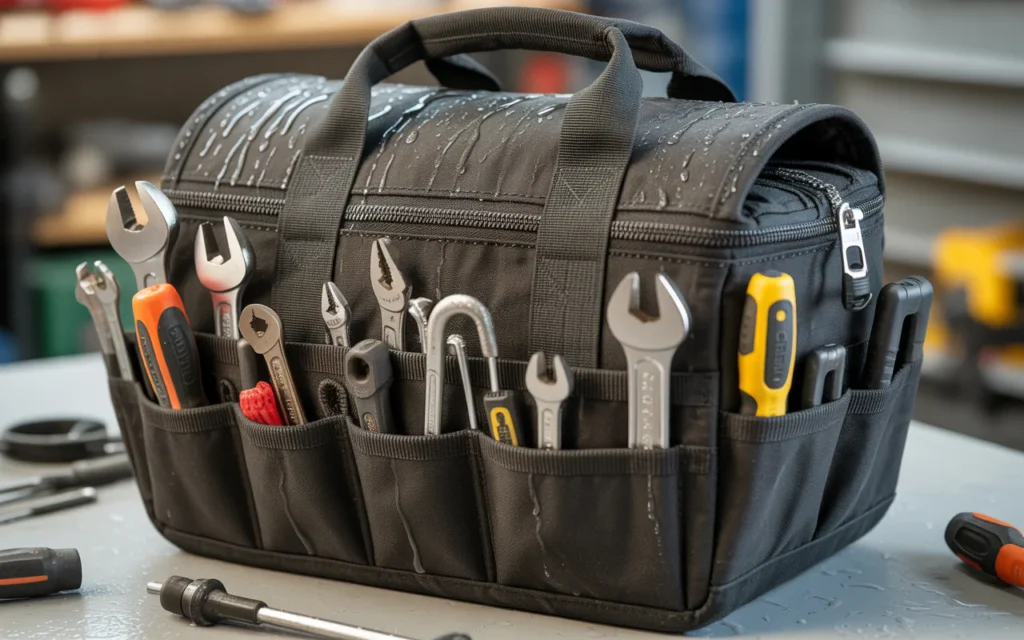
This is a big one. Many bags have stitches. Each stitch is a tiny hole. Water can sneak through those holes. A good waterproof tool bag has no stitches on the main body. Instead, the pieces are welded or heat-sealed together. That means no holes at all.
Check the product description for words like “RF welded” (radio frequency welded) or “heat-sealed seams”. If you see only “seam-taped”, that is okay but less strong. Over time, tape can peel off. Welded seams last much longer.
Closure Type (Roll-Top vs Zipper)
How does the bag close? That is a critical part of what should I look for in a waterproof tool bag.
- Roll-top closure: You fold the top down two or three times and clip it shut. This is the most waterproof method. Even if the bag falls in a puddle, water cannot push past the folds. But it is slower to open and close.
- Waterproof zipper: Some bags use a special zipper with rubber teeth (like a dry bag zipper). These work well but can fail if sand or dirt gets in the teeth. They also cost more.
- Normal zipper with flap: Not truly waterproof. Water can enter through the zipper track. Only use this for light rain.
For serious protection, choose roll-top.
Pros and Cons of Different Closure Types
| Closure Type | Waterproof Level | Ease of Use | Durability | Best Use Case |
|---|---|---|---|---|
| Roll-top | High | Medium | Very high | Heavy rain, full submersion |
| Waterproof zipper | High | High | Medium | Quick access in damp conditions |
| Zipper with flap | Low | High | Low | Dry or very light mist only |
IP Rating (Ingress Protection)
Some bags show an IP rating. For example, IP67 or IP68. The first number is dust protection. The second number is water protection.
- IPX7 means the bag can be submerged in 1 meter of water for 30 minutes.
- IPX6 means it can handle strong jets of water.
- IPX4 means it resists splashes from any direction.
For a tool bag, look for at least IPX6. If you work near deep water or on a boat, get IPX7 or IPX8. Not all bags have an IP rating, but if they do, it is a trusted standard.
Size and Storage Options
A waterproof bag that is too small is useless. One that is too big is heavy and clumsy. So think about your tools.
Number of Compartments
Do you like one big open space? Or many small pockets? A single compartment is simple. You can toss everything inside. But tools bump into each other. A bag with 3 to 5 interior pockets helps you organize. Keep screwdrivers separate from hammers. That saves time.
Some bags have removable dividers. That is a nice bonus. You can change the layout for different jobs.
External Pockets and Loops
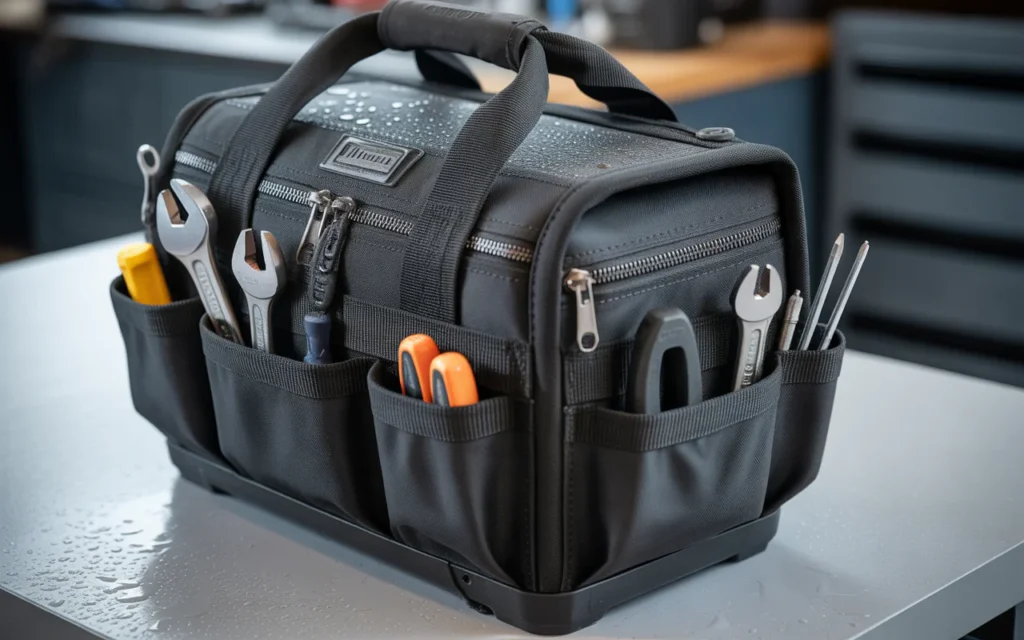
External pockets are handy. But they are not waterproof. If you put a small tool in an external pocket, it may get wet. So use those for things that can handle moisture, like a plastic measuring tape or a pencil.
Look for daisy chains or tool loops on the outside. You can hang a level or a pair of pliers there. That keeps them easy to reach.
“Organization is speed. When your tools are dry and in their place, you work faster and safer.” – Mike Holmes
Comfort and Portability
You might carry this bag for hours. It needs to feel good.
Handles and Straps
Most bags have a top handle. Make sure the handle is padded or wide. Thin plastic handles cut into your hand when the bag is heavy.
A shoulder strap is very useful. Look for a strap with a non-slip pad. Also check the clips. Metal clips are stronger than plastic.
Some bags have backpack straps. That is great if you walk far or climb ladders. Your hands stay free.
Weight of the Bag
A waterproof bag is heavier than a normal cloth bag. The thick material adds weight. That is okay. But do not buy a bag that is too heavy when empty. A 3-pound empty bag is fine. A 6-pound empty bag is too much. Your tools already weigh a lot.
Durability and Build Quality
Waterproof is not the only thing. The bag must survive scrapes, drops, and pressure.
Abrasion Resistance
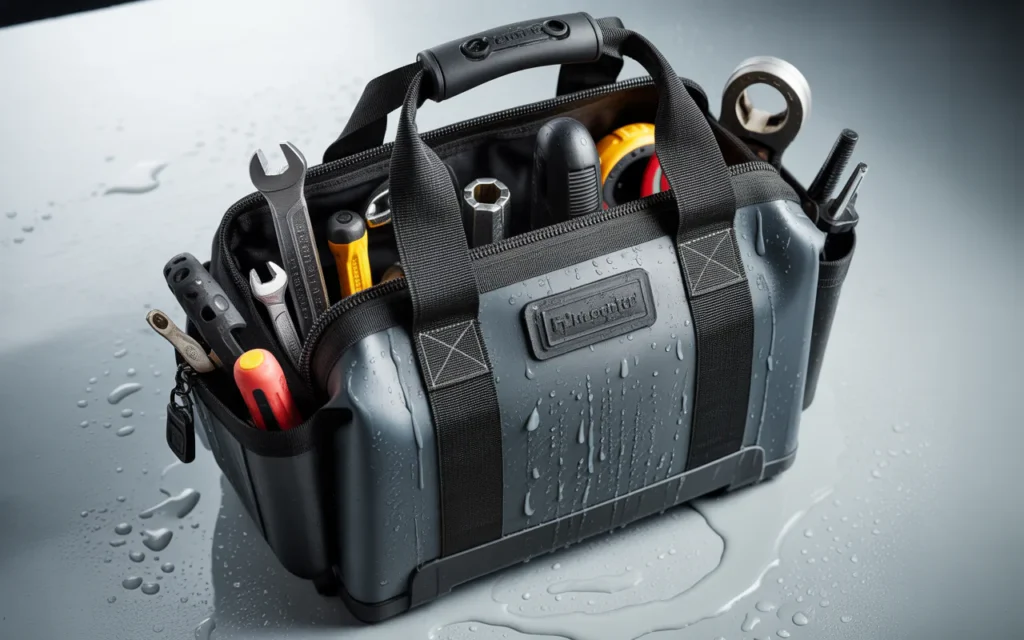
When you set your bag on concrete or gravel, the bottom rubs. Look for reinforced corners or extra thick fabric on the base. Some bags have rubber feet or a separate hard bottom. That prevents wear holes.
Corrosion-Proof Hardware
Zippers, buckles, and D-rings can rust. Salt water or even rain over time rusts cheap metal. Choose bags with stainless steel or coated plastic hardware. Plastic does not rust, but it can break if you step on it. Good stainless steel is best.
Check the rivets on handles too. Loose rivets mean the bag will fall apart.
Price vs Value
You can find waterproof tool bags from 20 dollars to over 100 dollars. What is the right price?
- Under 30 dollars: Usually light duty. The seams may be taped, not welded. Good for occasional use in light rain.
- 30 to 60 dollars: Good balance. Welded seams, roll-top closure, and decent materials. This is the sweet spot for most workers.
- Over 60 dollars: Heavy duty. Often includes IP68 rating, backpack straps, and multiple compartments. Worth it if you work in wet conditions every day.
Do not buy the cheapest one. The savings vanish when your tools get ruined.
“Invest in protection, not replacement. A cheap bag is expensive after one flood.” – Tim Carter
Frequently Asked Questions (FAQ)
1. Can I use a regular dry bag as a tool bag?
Yes, but dry bags often have no pockets or dividers. Your tools will clatter together. Also, dry bags are thin. Sharp tools like chisels can poke holes. So a real waterproof tool bag is better because it has thicker fabric and tool organization.
2. What should I look for in a waterproof tool bag for electric tools?
Focus on IP rating (at least IPX7) and a roll-top closure. Electric tools are very sensitive to moisture. Also make sure the bag has a hard bottom so batteries do not get crushed.
3. How do I clean my waterproof tool bag?
Use a damp cloth and mild soap. Do not put it in a washing machine. Do not use bleach or harsh chemicals. Rinse off salt water right away. Let it air dry open.
4. Are all waterproof tool bags dust proof?
Not always. Look for IP6X rating for full dust protection. That is important if you work in sandy or dusty places like construction sites or deserts.
5. Can I submerge my tool bag in water?
Only if the bag has an IPX7 or IPX8 rating. And even then, close it properly with the roll-top or waterproof zipper. Never submerge a bag with a normal zipper.
6. How long does a waterproof tool bag last?
With good care, 3 to 5 years. The coating may wear off over time. Store it away from direct sunlight, because UV rays break down PVC and TPU.
7. What size bag should I get?
Measure your largest tool. For most people, a 15-inch to 18-inch bag works. That holds a drill, a hammer, several pliers, screwdrivers, and a tape measure. If you carry a saw or a large wrench set, get a 20-inch bag.
8. Are there lightweight waterproof tool bags?
Yes, some use thin TPU-coated fabric. They are lighter but less puncture resistant. Good for hand tools only, not for heavy or sharp items.
Conclusion
You now have a clear answer to what should I look for in a waterproof tool bag. Let me summarize the key points.
First, choose welded seams, not just stitched ones. Second, pick a roll-top closure for the best water protection. Third, look at the material: PVC-coated polyester is affordable and strong. Fourth, check the IP rating; aim for IPX6 or higher. Fifth, make sure the bag has comfortable handles and a shoulder strap if you carry it far. Sixth, do not forget durability features like reinforced bottoms and rust-proof hardware.
A good waterproof tool bag keeps your tools dry, organized, and ready. It saves you money and frustration. Take your time. Compare a few models. Read real customer reviews. And remember: the right bag pays for itself the first time a rainstorm hits.
Related posts
 Top Tool Bags for Mobile Contractors: 2026 Buyer Guide
Discover the top tool bags for mobile contractors in 2026. Compare durable totes, backpacks, and multi-pocket organizers to find the best fit for your gear. For…
 Top Tool Bags for Plumbers: 2026 Selection Guide
Discover the top tool bags for plumbers in 2026. We compare durable, multi-pocket storage solutions to help you organize your gear effectively on the job. Plumbing…
 Best Tool Bag for HVAC Technicians in 2026
Find the right tool bag for HVAC technicians with our 2026 guide. Compare top-rated bags, backpacks, and pouches to keep your gear organized and protected. As…