
How Much Should I Spend On A Good Automotive Tool Kit
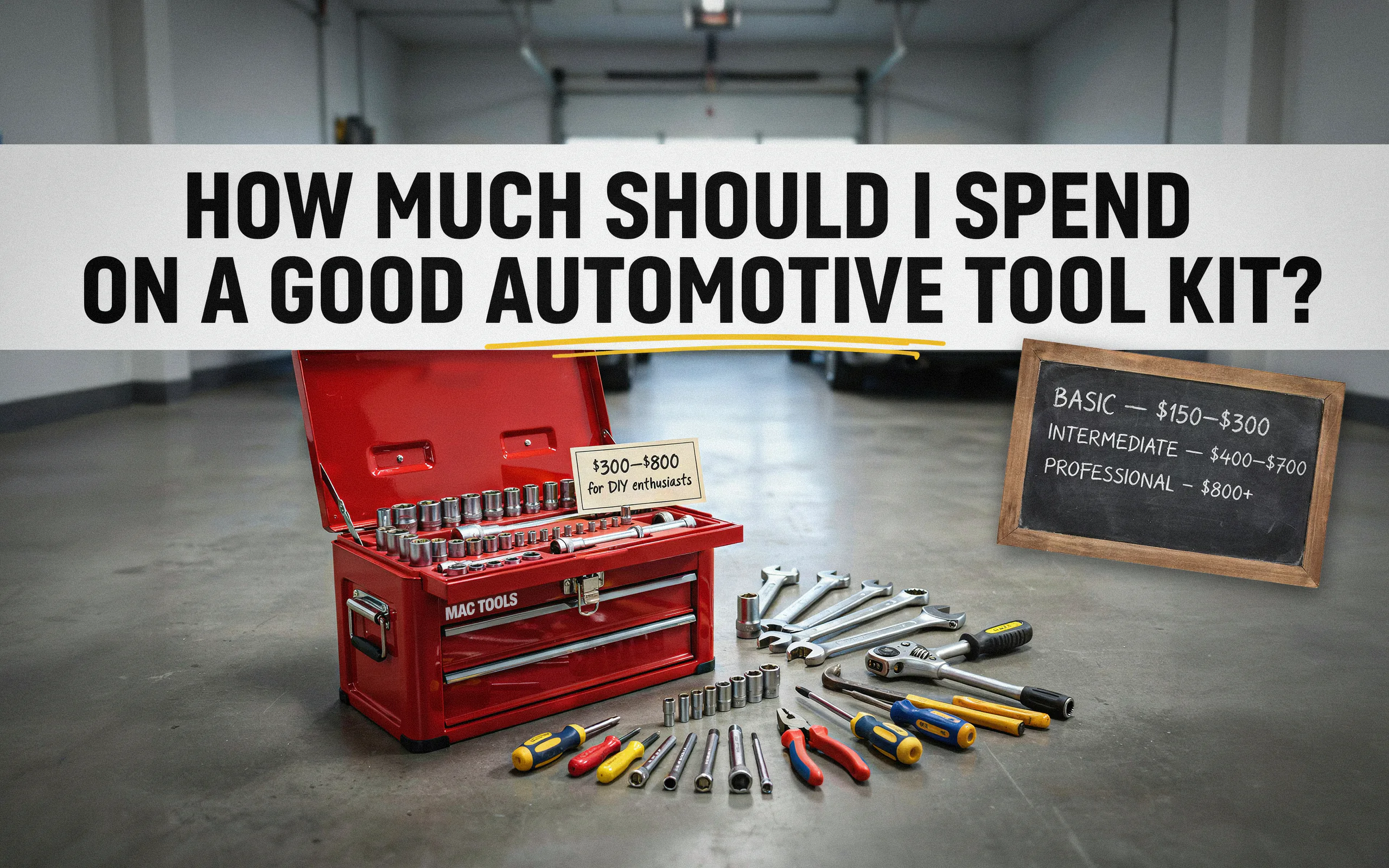
Wondering how much should I spend on a good automotive tool kit? For basic home use, budget $50-$150. For serious DIY, $200-$500. For pros, $600-$1500+. Read on to find your perfect price.
You pop the hood, see a loose bolt, and realize you don’t have the right wrench. We have all been there. So you start looking for a tool set. Then the big question hits you: how much should I spend on a good automotive tool kit? The answer is not the same for everyone. A weekend oil changer needs less than someone who rebuilds engines. A first‑year mechanic needs more than a parent fixing a squeaky belt.
This guide gives you clear price ranges. It shows you what you get at each level. You will learn how to avoid wasting money. You will also learn how to avoid buying cheap tools that break. By the end, you will know exactly what to spend. Let’s get started.
“The bitterness of poor quality remains long after the sweetness of low price is forgotten.” – Carroll Smith, race car engineer and author
Understanding Your Real Needs
Before you spend any money, ask yourself three simple questions.
First, what jobs will you do? Changing a battery? Replacing brakes? Pulling a whole engine? Small jobs need fewer tools. Big jobs need more.
Second, how often will you use the kit? Once a month? Every weekend? Daily use demands stronger tools.
Third, where will you store the kit? A small apartment? A big garage? Storage size matters because bigger kits take more space.
Your answers decide how much should I spend on a good automotive tool kit. A person who only tightens wiper blades can spend $40. A person who swaps alternators should spend more. Be honest with yourself. That saves you money.
Quick Use Cases
- Light use (every few months): Tightening loose bolts, changing air filters, basic home repairs.
- Medium use (every weekend): Oil changes, brake pad swaps, spark plug replacements.
- Heavy use (daily or professional): Engine work, transmission repairs, suspension overhauls.
Breaking Down the Price Ranges
Let’s look at real numbers. I have used many tool kits over 20 years of fixing cars. I have broken cheap ones and loved expensive ones. Here is what the market offers right now.
Basic Home Kits ($50 – $150)
This range fits most car owners. You get a 50‑ to 100‑piece set. It includes common socket sizes (metric and SAE), a ratchet, combination wrenches, hex keys, and screwdriver bits. The tools are chrome vanadium steel. That is fine for light jobs.
What can you fix? You can change a battery, replace an air filter, tighten a loose belt, or swap a car stereo. You cannot remove a rusted crank pulley. The ratchet may break if you push too hard. The case is usually plastic. But for normal home use, this works well.
Example brands: Stanley, Husky, Craftsman (basic lines), Pittsburgh (Harbor Freight).
How much should I spend on a good automotive tool kit for home use? $80 is a sweet spot. You get decent quality without overspending. Avoid $30 kits from no‑name sellers. Those have soft metal that strips bolts.
Table 1: Basic Home Kit Features vs. Cost
| Feature | $50 Kit | $100 Kit | $150 Kit |
|---|---|---|---|
| Piece count | 40‑60 | 60‑80 | 80‑120 |
| Ratchet quality | Basic 36‑tooth | 72‑tooth, smoother | 90‑tooth, fine mechanism |
| Socket finish | Painted or light chrome | Polished chrome | Full chrome, corrosion‑resistant |
| Warranty | 1 year | Limited lifetime | Lifetime |
| Best for | Trunk emergency | Garage basics | Frequent small repairs |
Serious DIY Kits ($200 – $500)
Now we enter the zone for real car enthusiasts. You fix your own brakes. You do tune‑ups. You might swap a starter or an alternator. You need stronger tools. A $200‑$500 kit often has 150‑250 pieces. It includes deep sockets, extension bars, a breaker bar, combination wrenches up to 19mm or 3/4 inch, and a sturdy ratchet with fine teeth.
Many kits add pliers, wire strippers, a test light, and a magnetic pick‑up tool. Some even include a torque wrench. That is a big plus because torque wrenches alone cost $40‑$100.
The materials improve too. You get heat‑treated chrome vanadium or chrome molybdenum steel. The ratchet mechanism has 72 to 120 teeth. That means you can turn fasteners in tight spaces. The case is metal or heavy plastic with secure latches.
Example brands: GearWrench, TEKTON, DeWalt, Milwaukee (hand tool sets), Craftsman (Gunmetal or higher lines).
How much should I spend on a good automotive tool kit at this level? Aim for $300. That buys a complete set without fancy extras you do not need. You will use these tools for years.
“Buy the best tools you can afford, because a broken tool at midnight on a Sunday is no fun at all.” – Mike Allen, automotive journalist, Popular Mechanics
Pro Grade Kits ($600 – $1500+)
Professional mechanics or hardcore restorers need this level. You work on cars every day. You need tools that survive constant use. The kit has 300‑500 pieces. You get every socket size from 4mm to 24mm, plus deep, shallow, and swivel sockets. You get high‑leverage ratchets, long‑handle wrenches, many extension bars, and universal joints.
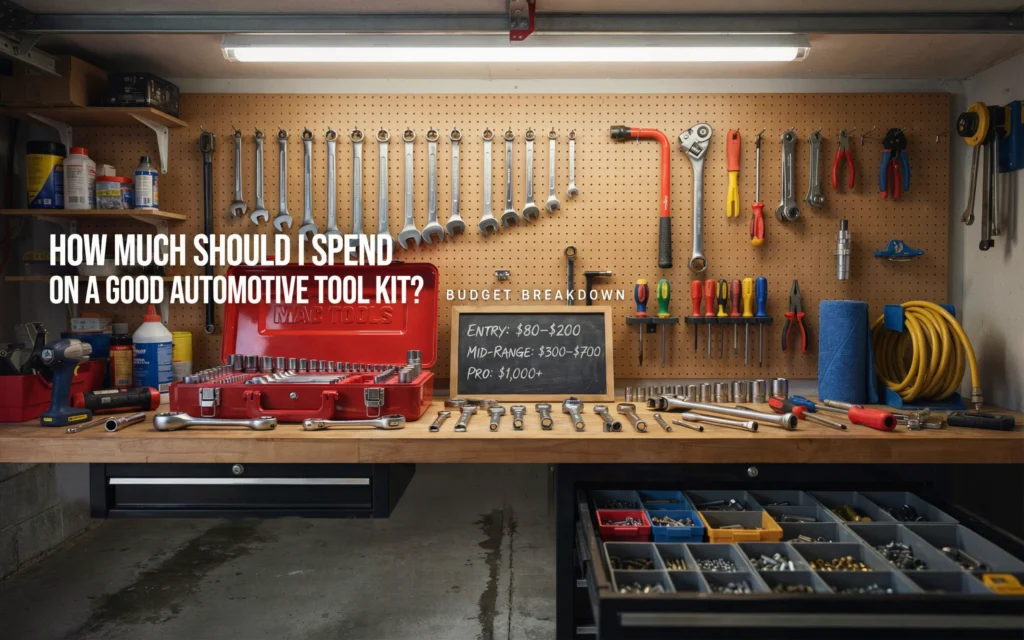
These kits include specialty tools like oxygen sensor sockets, oil filter wrenches, brake caliper tools, and trim removal tools. The steel is high‑grade chrome molybdenum or impact‑rated materials. The ratchet has 90‑120 teeth with quick release. The case is often a tool chest or heavy‑duty blow‑molded box.
Brands like Snap‑on, Mac, Matco, and Cornwell dominate here. But you can also find excellent pro‑level sets from Blue‑Point (Snap‑on’s sister brand) or Sunex.
How much should I spend on a good automotive tool kit for professional work? At least $800. That buys a solid used set or a mid‑range pro kit. New top‑tier sets cost over $1,500. But many pros start with $600‑$800 sets from reputable industrial brands like SK Hand Tool or Wright Tool.
Table 2: Price vs. Usage Level
| Your Usage | Recommended Spend | Kit Size (pieces) | Example Jobs |
|---|---|---|---|
| Once a month, light fixes | $50‑$150 | 50‑100 | Battery, wipers, mirror, light bulbs |
| Every weekend, medium repairs | $200‑$500 | 150‑250 | Brakes, alternator, belts, spark plugs |
| Daily, heavy or professional | $600‑$1500+ | 300‑500+ | Engines, transmissions, suspension, full rebuilds |
What Makes a Tool Kit “Good”?
Price alone does not define quality. A good automotive tool kit has four traits.
First, the steel. Look for “chrome vanadium” (Cr‑V) or “chrome molybdenum” (Cr‑Mo). Avoid cheap “carbon steel” or no‑name alloys. Good steel bends before it breaks. Bad steel snaps.
Second, the ratchet mechanism. More teeth mean smaller swing arc. A 36‑tooth ratchet needs a 10‑degree swing. A 120‑tooth ratchet needs only 3 degrees. That helps in tight engine bays.
Third, fit and finish. Sockets should grip fastener heads, not the corners. That prevents rounding off bolts. Look for “six‑point” sockets for hex bolts. Twelve‑point sockets are fine for square or 12‑point fasteners.
Fourth, warranty. A lifetime warranty is common on good kits. If a tool breaks, the company replaces it. That gives peace of mind.
Key Features to Look For
- Deep sockets – reach nuts on long studs.
- Breaker bar – loosens rusted bolts without breaking your ratchet.
- Universal joint – works around corners.
- Extension bars – get to recessed fasteners.
- Torque wrench (optional but smart) – tightens bolts to spec, prevents damage.
Now you can see why how much should I spend on a good automotive tool kit depends on these features. A $100 kit might skip deep sockets. A $300 kit includes them. Decide what you need.
How to Avoid Spending Too Much or Too Little
Many people make two mistakes. First, they buy a cheap $30 kit from a discount store. The wrenches bend. The ratchet skips teeth. They end up buying another set. That costs more in the long run.
Second, they buy a $2,000 Snap‑on set for oil changes. That is overkill. They waste money on tools they never touch.
So here is a simple rule: buy for the hardest job you plan to do in the next two years. If you only change oil, a $100 kit is fine. If you plan to replace a timing belt, get a $300 kit.
Another tip: start small and grow. Buy a $150 basic set. Then add tools as you need them. Need a torque wrench? Buy one separately. Need a ball joint separator? Buy just that tool. This way, you never overpay for a giant set with many useless pieces.
“A tool is an extension of the hand, and a cheap tool is like a clumsy hand.” – John Muir, author of How to Keep Your Volkswagen Alive
Where to Save Money
- Buy store brands – Husky (Home Depot), Kobalt (Lowe’s), Pittsburgh (Harbor Freight) offer good value.
- Buy used – Garage sales, estate sales, Facebook Marketplace. Older Craftsman tools have lifetime warranties.
- Wait for sales – Black Friday, Father’s Day, and Amazon Prime Day have big discounts.
Where to Spend More
- Ratchets – A smooth, fine‑tooth ratchet makes work pleasant. Spend $40‑$60 on a good ratchet alone.
- Wrenches – Cheap wrenches spread open. Buy mid‑range or better.
- Torque wrench – Never buy a $15 torque wrench. Get a $40‑$80 one (Tekton, CDI, Precision Instruments).
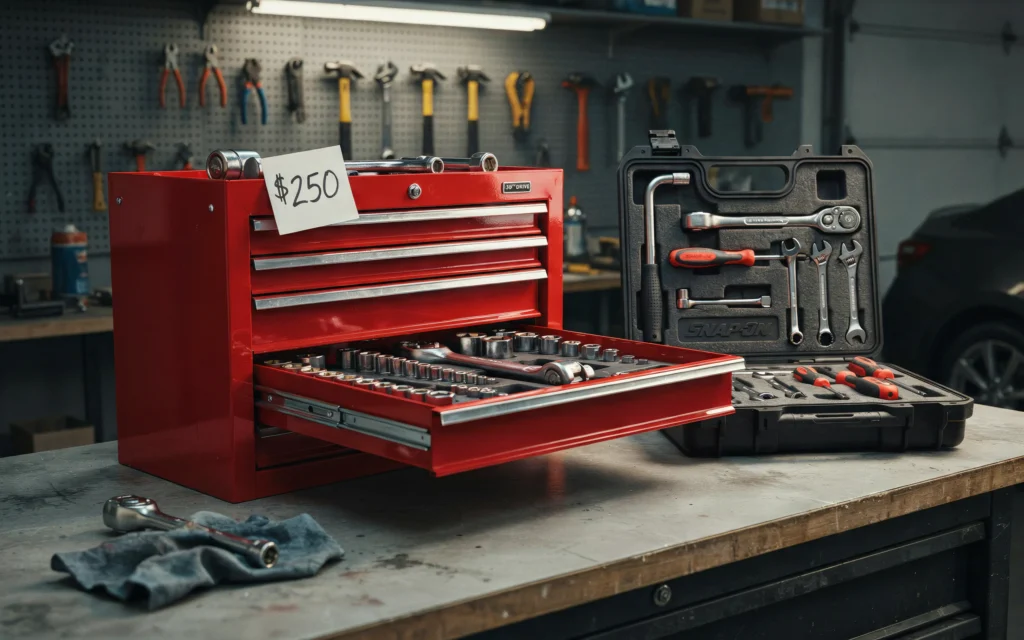
So again, how much should I spend on a good automotive tool kit? If you want a single answer for most home mechanics: $250. That buys a complete, reliable 200‑piece set. You can fix 90% of car problems. You will not feel poor or foolish.
Real Life Examples
Let me share two stories.
Sarah drives a 2015 Honda Civic. She changes her own oil and rotates tires. She swapped a dead battery once. She bought a $90 Stanley 95‑piece set. Two years later, all tools work fine. She spent exactly the right amount.
Mark restores a 1987 Jeep Cherokee. He rebuilt the engine, transmission, and axles. He started with a $250 TEKTON set. Then he added a $60 torque wrench, a $30 breaker bar, and a $40 set of impact sockets. Total $380. He did every job without breaking tools. He says *how much should I spend on a good automotive tool kit* for his needs was under $400.
Now compare to Jake, a new mechanic at a shop. He borrowed tools for six months. Then he bought a $1,200 Snap‑on 300‑piece set. He uses it daily. The fine ratchets save him time. The warranty covers everything. For him, $1,200 was right.
So the real answer is personal. But the numbers above give you a solid guide.
Frequently Asked Questions
1. Is a $50 automotive tool kit good enough?
Yes, for emergency trunk kits and very light jobs like tightening hose clamps or replacing wipers. Do not use it for brakes or suspension work. The tools may break.
2. How much should I spend on a good automotive tool kit for a beginner?
Spend $80‑$120. Get a 60‑80 piece set from a known brand like Craftsman or Husky. You will have enough to learn basic maintenance.
3. Do I need metric or SAE tools?
Most modern cars use metric (mm). Older American cars (pre‑1990s) often use SAE (inches). Buy a set with both. Many kits include both.
4. Can I use a mechanic’s tool kit for home repairs?
Yes. The same wrenches and sockets work on furniture, bikes, and appliances. A good automotive kit is very useful around the house.
5. What is the best brand for the money?
For $200‑$400, TEKTON and GearWrench offer excellent quality. For $500‑$800, look at Sunex or Blue‑Point. For home use, Husky and Kobalt are fine.
6. Should I buy a tool kit or separate tools?
Buy a kit for basic sockets, ratchets, and wrenches. Buy specialty tools separately (torque wrench, multimeter, trim tools). That saves money.
7. How long do good tool kits last?
A quality $300 set can last 20+ years for home use. My personal Craftsman set from 2005 still works perfectly.
8. What is the most important tool in a kit?
A 3/8‑inch drive ratchet with a set of deep and shallow sockets (10mm to 19mm). The 10mm socket is famous for getting lost – buy extras.
9. Is Harbor Freight good for tools?
Their Pittsburgh and Quinn lines are decent for home use. Their Icon line competes with Snap‑on. For $150‑$200, you get a usable kit. But check each tool before buying.
10. How much should I spend on a good automotive tool kit if I only fix one car?
$150‑$200. That covers all scheduled maintenance for a single car. You do not need professional grade.
Conclusion
So let’s bring it home. How much should I spend on a good automotive tool kit? For most people who read this, the answer is between $80 and $300. Spend $80 to $150 for light, occasional work. Spend $200 to $300 if you plan to do brakes, belts, and tune‑ups. Spend $500 to $1,500 only if you work on cars daily or professionally.
Do not buy the cheapest set. Do not buy the most expensive set. Match the price to your real use. Look for chrome vanadium steel, a good ratchet, and a warranty. Add a torque wrench when you need one. Start small, then grow your collection.
A good tool kit is a friend. It saves you towing fees. It lets you help your neighbors. It gives you confidence under the hood. Spend wisely, and that one purchase will serve you for decades. Now go pick the right set for your garage. Your car will thank you.
Related posts
 Top Starter Mechanic Tool Kits for Apprentices: Essential Sets for Your Trade
Explore top starter mechanic tool kits for apprentices. Compare sets for mechanics, electricians, and other trades to find your essential tools. Starting an apprenticeship is an…
 Automotive Tool Kits vs. Mechanic Tool Sets: What’s the Difference?
Understand the key differences between automotive tool kits vs. mechanic tool sets. Learn which is best for your car maintenance needs. When looking for tools to…
 Top Automotive Tool Kits for Garage Workshops: A Buyer’s Guide
Find the top automotive tool kits for garage workshop. Compare versatile sets for car maintenance, home repairs, and DIY projects to choose the best fit. Setting…