
How To Choose A Tool Bag For Heavy-Duty Job Sites
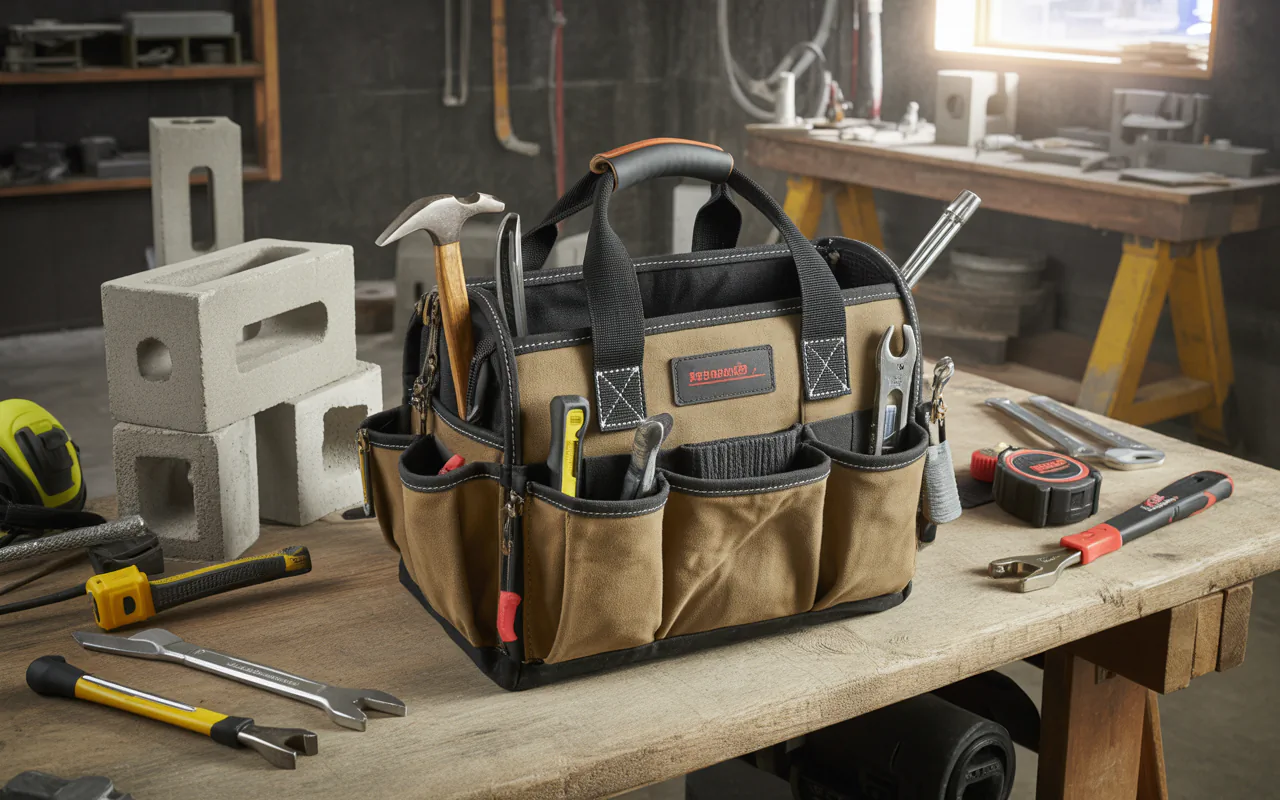
If you work in construction or trades, learning how to choose a tool bag for heavy-duty job sites starts with material strength, stitching quality, and pocket design. This guide gives clear steps, top features, and real tips to keep your gear safe and organized.
You show up to a job site before sunrise. Concrete dust hangs in the air. Rain from last night still sits in puddles. You grab your tool bag from the truck bed. But the bottom has worn through. Zippers are stuck. Handles are tearing. Now you are carrying loose wrenches in your arms. That is a bad start to any day.
Picking the right tool bag is not hard. But if you pick wrong, you waste money and time. This article helps you learn how to choose a tool bag for heavy-duty job sites without confusion. I have worked on many rough sites. I have torn cheap bags apart in three weeks. And I have kept good bags for years. Let me share what works.
Why Your Tool Bag Choice Matters on Heavy-Duty Sites
A heavy-duty job site is not an office. You drop things. You drag your bag across sharp concrete. You leave it in the rain. You overload it with heavy hammers and drill sets. A weak bag fails fast. When it fails, your tools fall out. You might lose a $200 drill. Worse, you could trip on scattered tools and get hurt.
Choosing the right bag keeps your tools safe and your work smooth. It also saves you from buying a new bag every two months. Many workers ignore this. They grab the cheapest bag at the store. Then they regret it. Do not be that person.
The Cost of a Poor Bag Choice
Let me give you real numbers. A low quality tool bag costs around 20.Itlastsmaybethreemonthsonaheavysite.Thenyoubuyanother.Thatis80 per year. A good bag costs 60to120. It lasts three to five years. That is 20to40 per year. Good bags save you money.
Also think about tool damage. A cheap bag has no padding. Your tools knock into each other. Calibration gets off. Edges get chipped. A well made bag has dividers and soft linings. Your tools stay nice.
Safety and Efficiency Benefits
Time is money on a job site. You do not want to dig through a messy bag for ten minutes to find a 10mm socket. A good tool bag has many pockets. Each tool has a spot. You grab and go.
Safety also improves. When your bag stays upright and closed, tools do not spill. No one steps on a sharp chisel. No one slips on a loose screwdriver. Choosing a well designed bag helps everyone on site.
“A cheap tool bag is the most expensive thing you will buy. After three replacements, you could have owned the best bag on the market.” – Tom Rizzo, General Contractor with 22 years of experience
Key Features to Look For When You Choose a Tool Bag for Heavy-Duty Job Sites
Now let me break down the exact features you need. When you learn how to choose a tool bag for heavy-duty job sites, these five areas matter most.
Material Strength: Canvas, Polyester, and Leather
The fabric makes the bag. Three common materials show up in tool bags.
Canvas is thick cotton. Heavy-duty canvas uses 18 to 24 ounces per square yard. It resists tears well. It also breathes, so mold is less common. But plain canvas soaks up water. Look for waxed or coated canvas for outdoor sites.
Polyester is plastic based. It resists water better than plain canvas. It also dries fast. However, thin polyester rips easily. Only trust 1200 denier or higher. Some good bags use 1800 denier polyester. That is tough.
Leather is classic and very strong. Full grain leather lasts decades. But it is heavy and expensive. Leather also needs care. If you work in wet conditions often, leather gets stiff and cracks without treatment.
Here is a quick comparison table to help you decide.
| Material | Durability | Water Resistance | Weight | Average Cost |
|---|---|---|---|---|
| Heavy Canvas (waxed) | Very good | Good (with coating) | Medium | 50−90 |
| High Denier Polyester (1200D+) | Excellent | Very good | Light | 40−80 |
| Full Grain Leather | Outstanding | Fair (needs treatment) | Heavy | 100−200 |
Stitching and Stress Points
Fabric can be strong. But if the stitching fails, the bag falls apart. Look for double stitching or triple stitching at every seam. The best bags use nylon thread. Nylon is stronger than cotton or polyester thread. It also resists rot.
Check corners and handle attachments. These spots take the most force. Good bags have webbing or leather patches at these stress points. Also look for bar tacks. A bar tack is a dense zigzag stitch that locks the thread in place. Turn the bag inside out if possible. See how the seams look on the inside too.
Zippers and Closures
Zippers break more often than anything else on a tool bag. Avoid small zipper teeth. Look for #10 or larger zipper sizes. Metal zippers are stronger than plastic. But metal can rust. Coated metal or stainless steel is best for wet sites.
Some heavy-duty bags use zipperless designs. They have a flap with a buckle or a roll top like a dry bag. These last longer because there is no zipper to jam. But they are slower to open and close.
Handles and Straps
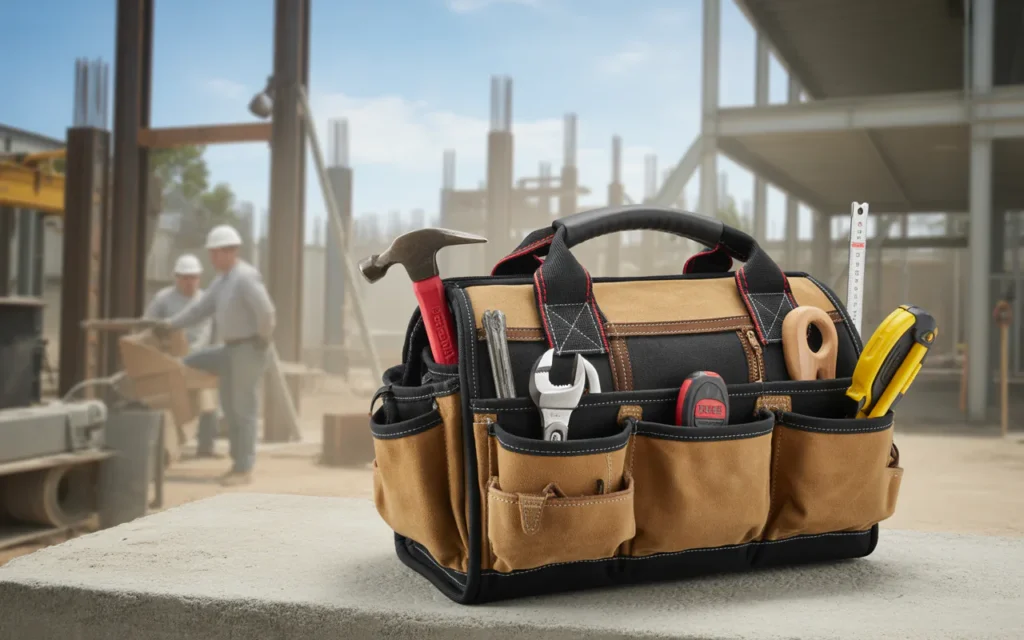
You carry your tool bag every day. Handles and straps must feel good and stay attached.
Padded Shoulder Straps
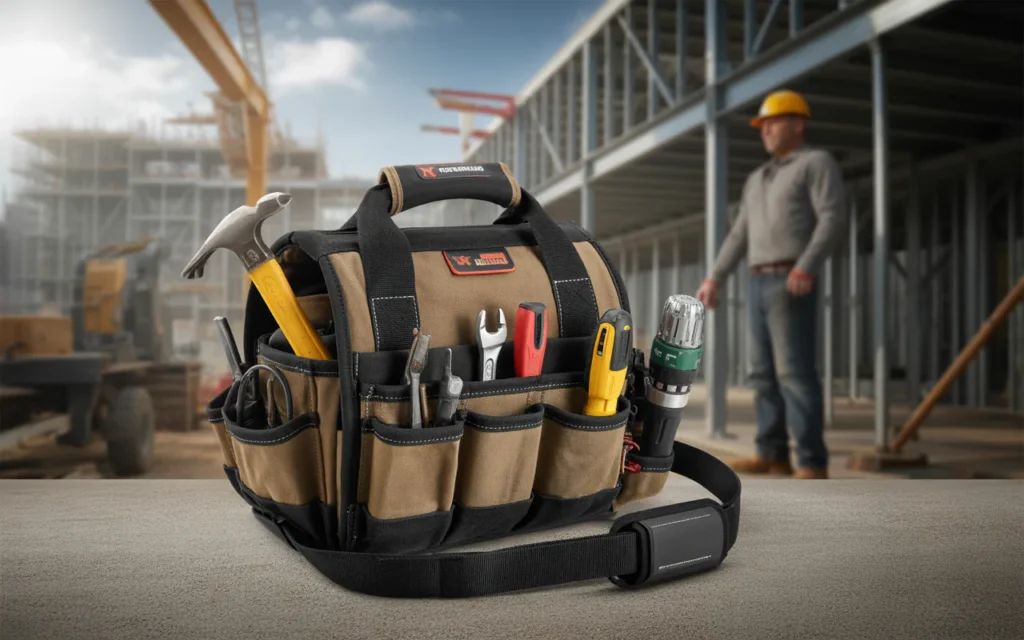
A shoulder strap spreads weight across your body. Look for thick foam padding at least 1 inch thick. The strap should have a non-slip grip. Many bags include a shoulder strap clip that lets you remove it when you do not need it.
Check the hardware. Metal clips and D-rings are better than plastic. Plastic can snap in cold weather. Metal holds strong.
Reinforced Handles
Top handles should wrap around the entire bag. Do not trust handles that only stitch onto the outside. They will rip off. A handle that loops under the bag and attaches to both sides is much stronger. Look for leather or thick nylon webbing handles. They should be wide at least 1.5 inches. Narrow handles dig into your hands when the bag is heavy.
Base Protection
The bottom of your tool bag touches everything. Wet ground. Sharp gravel. Rebar pieces. Mud. A good heavy-duty bag has a reinforced base. Some use a plastic or rubber molded foot. Others add an extra layer of leather or thick rubberized fabric.
Water can soak up through the base. Look for bags with raised feet or a waterproof bottom layer. This keeps your tools dry when you set the bag in a puddle.
Pocket Layout and Organization
Pockets inside and outside help you sort tools. But too many pockets get confusing. Aim for a balanced design.
Outside pockets hold things you grab often. Tape measure. Pencil. Utility knife. Level. These pockets should be deep with flaps or elastic tops so tools do not fall out when you bend over.
Inside pockets work for less common items. Wrenches. Screwdrivers. Pliers. Some bags have removable tool rolls or dividers. These let you customize the layout. That is a great feature.
“I tell my crew to lay out every tool they carry on a normal day. Then find a bag with exactly that many pockets. Extra pockets just collect junk.” – Maria Chen, Lead Electrician and job site safety trainer
Size and Capacity Considerations
Size matters more than you think. A bag too small forces you to leave tools behind. A bag too large becomes heavy and hard to carry.
Matching Bag Size to Your Daily Load
List your daily tools. Write them down. Estimate the total volume. Most heavy-duty tool bags list capacity in liters. A 20 liter bag holds a small hand tool set. A 40 liter bag holds a larger kit with a drill, hammer, levels, and many hand tools. A 60 liter bag is big enough for a full set of power tools and accessories.
If you are not sure, go a little bigger. You can leave empty space. But you cannot add space to a small bag.
Weight When Empty Matters
A leather bag might weigh 8 pounds empty. Add 30 pounds of tools. Now you carry 38 pounds every day. A polyester bag of the same size might weigh 3 pounds empty. That 5 pound difference matters at the end of a long shift.
Strong materials are good. But do not pay for unnecessary weight. Find the right balance.
Expandable Options
Some tool bags have expandable sides. You unzip a gusset to add extra depth. This is helpful if your tool set changes often. For example, some days you bring a saw. Other days you do not. Expandable bags adapt to both.
However, expandable sections add more zippers. More zippers mean more failure points. Choose quality expandable bags from trusted brands only.
Weather Resistance for Outdoor Sites
Many heavy-duty job sites are outside. Rain, snow, and morning dew get everywhere. You need a bag that protects your tools.
Water-Repellent Coatings
Look for bags labeled “water resistant” or “water repellent.” This means the outer fabric has a chemical coating. Water beads up and rolls off. It is not waterproof. Do not drop the bag in a river. But it handles rain fine.
The coating wears off over time. You can buy spray-on repellent to refresh it. Do that once a year.
Sealed Seams
Cheap water resistant bags still leak at the seams. Good bags have taped or welded seams. Turn the bag inside out. Look for plastic tape over the stitching lines. That stops water from seeping through needle holes.
Some high end tool bags use waterproof zippers with rubber seals. These are expensive but very effective.
Top Bag Styles for Heavy-Duty Work
Different job sites call for different bag styles. Here is a second table to help you compare.
| Bag Style | Best For | Pros | Cons |
|---|---|---|---|
| Open Tote | Roofing, framing, demo work | Quick access, no zippers to break | Tools get wet, easy to steal |
| Closed Bag with Zipper | General construction, electrical | Protects from dust and rain, secure | Zipper can fail |
| Backpack Style | Service calls, ladder work, climbing | Hands free, weight balanced | Harder to organize, slower access |
| Rolling Bag | Large tool sets, shop use, parking garage sites | No lifting heavy weight, big capacity | Bad on stairs or rough ground |
Think about how you move through the site. If you climb ladders often, a backpack is best. If you walk on flat ground with many tools, a rolling bag helps. If you need fast access and do not care about rain, an open tote works. For most mixed sites, a closed bag with a tough zipper or buckle flap is the safest choice.
How to Test a Tool Bag Before Buying
You cannot always trust product photos. Try to see the bag in person or read real user reviews carefully.
In-Store Checks
If a local store sells the bag, do these tests.
First, pick it up empty. Feel the handle. Is it comfortable? Shake the bag. Does it rattle? That means loose parts.
Second, open and close the zipper ten times fast. Does it snag? Does the slider feel cheap? Good zippers move smooth.
Third, push on the bottom with your hand. Does it flex too much? A strong base does not bend easily.
Fourth, look at every stitch line. Count stitches per inch. Twelve to sixteen stitches per inch is good. Fewer than eight means the bag will fall apart.
Reading User Reviews
Online reviews help a lot. But ignore five star reviews that say “looks nice.” Look for reviews from people who say “used this daily for six months” or “took this to a bridge job.” Those reviews tell the truth.
Also search for negative reviews about specific failures. If ten people say the zipper broke, believe them. If one person says the color faded, ignore that.
“I read twenty reviews before I buy any tool bag. I look for the same complaint repeated. That is the real weakness.” – David Park, Heavy equipment operator and tool collector
Maintenance Tips to Extend Bag Life
A good tool bag lasts years with basic care. Here is what I do.
Clean off dirt and mud every week. Use a stiff brush. Do not let mud dry and harden in zippers. That ruins them fast.
Check for loose threads or small tears. Sew them early before they grow. Use heavy nylon thread and a thick needle.
Treat canvas or leather with water repellent spray every six months. Store the bag in a dry place overnight. Do not leave it in the truck bed with rain falling.
Empty the bag fully once a month. Shake out metal shavings, dust, and small screws. These little bits grind through fabric over time.
If a zipper gets hard to pull, use zipper wax or soap. Do not force it. Clean the teeth with a brush first.
Frequently Asked Questions
How often should I replace a tool bag on a heavy-duty site?
A quality bag lasts two to five years. Replace it when seams split, zippers fail, or holes form. Do not wait until tools fall out.
Can I wash my tool bag in a washing machine?
No. Machine washing ruins waterproof coatings and beats up stitching. Hand wash with a brush and mild soap. Air dry only.
What is the best brand for heavy-duty tool bags?
Good brands include Klein Tools, Veto Pro Pac, Milwaukee, and Occidental Leather. Each has different strengths. Veto is famous for tough zippers. Occidental makes great leather bags. Klein offers good value for electricians.
Are backpacks strong enough for heavy tools?
Yes, many heavy-duty tool backpacks use reinforced straps and padded backs. But check the weight rating. Some hold up to 50 pounds. Do not overload past that.
How do I choose a tool bag for heavy-duty job sites if I carry power tools?
Look for bags with hard plastic bottoms and padded dividers. Power tools are heavy and have odd shapes. A bag with a stiff structure prevents them from shifting and breaking each other.
Does a more expensive bag always mean better quality?
Not always. Some expensive bags add features you do not need. But extremely cheap bags almost always fail. Stick with mid range to high end from trusted brands. You get what you pay for.
Conclusion
Learning how to choose a tool bag for heavy-duty job sites is not complicated. Focus on material strength, stitching quality, strong zippers or closures, comfortable handles, and a reinforced base. Match the size and style to your daily work. Test the bag before buying if you can. Read honest user reviews.
A good tool bag protects your tools, saves you money over time, and makes your work day easier. Do not rush the decision. Look at three or four options side by side. Feel the fabric. Open and close the zippers. Imagine carrying it for eight hours.
Your tools work hard for you. Give them a home that works just as hard. Pick a bag that lasts. Your back, your wallet, and your next job site will thank you.
Related posts
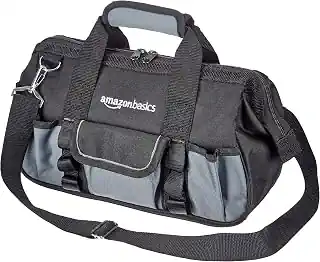 Top Stanley Tool Bags: A Buyer’s Guide for Organized Storage
Compare the top Stanley tool bags for durability, organization, and portability. Find the best fit for your tools and projects with our detailed guide. Finding the…
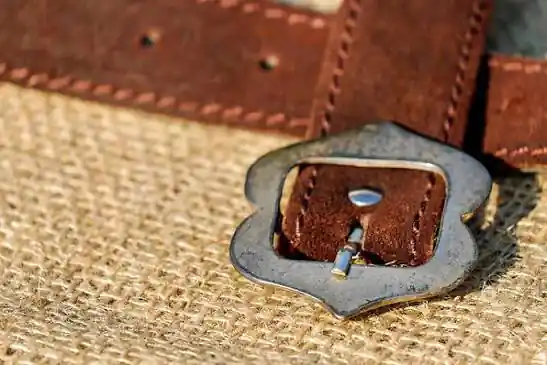 Top Rolling Tool Bags for Portable Organization
Compare top rolling tool bags, including wheeled options for heavy loads and compact roll-up organizers. Find the best portable tool storage for your needs. Rolling tool…
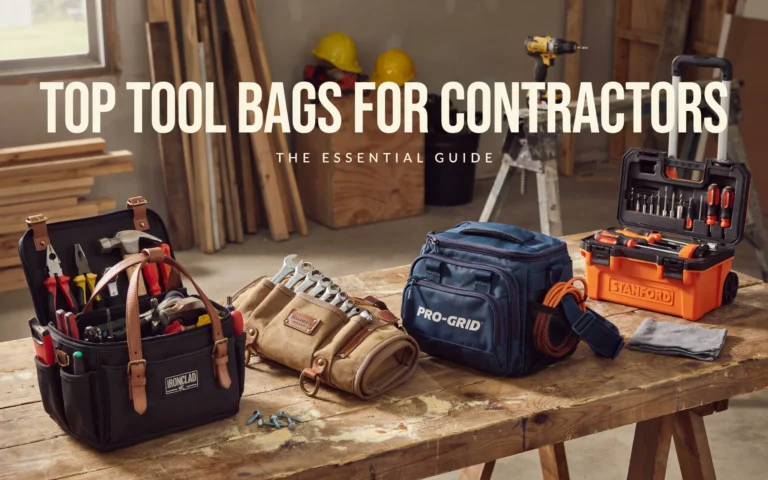 Top Tool Bags for Contractors: A Buyer’s Guide
Find the best top tool bags for contractors with this detailed comparison. Explore durable, organized, and portable options for your job site needs. Every contractor knows…