
What Should Every DIY Homeowner Own
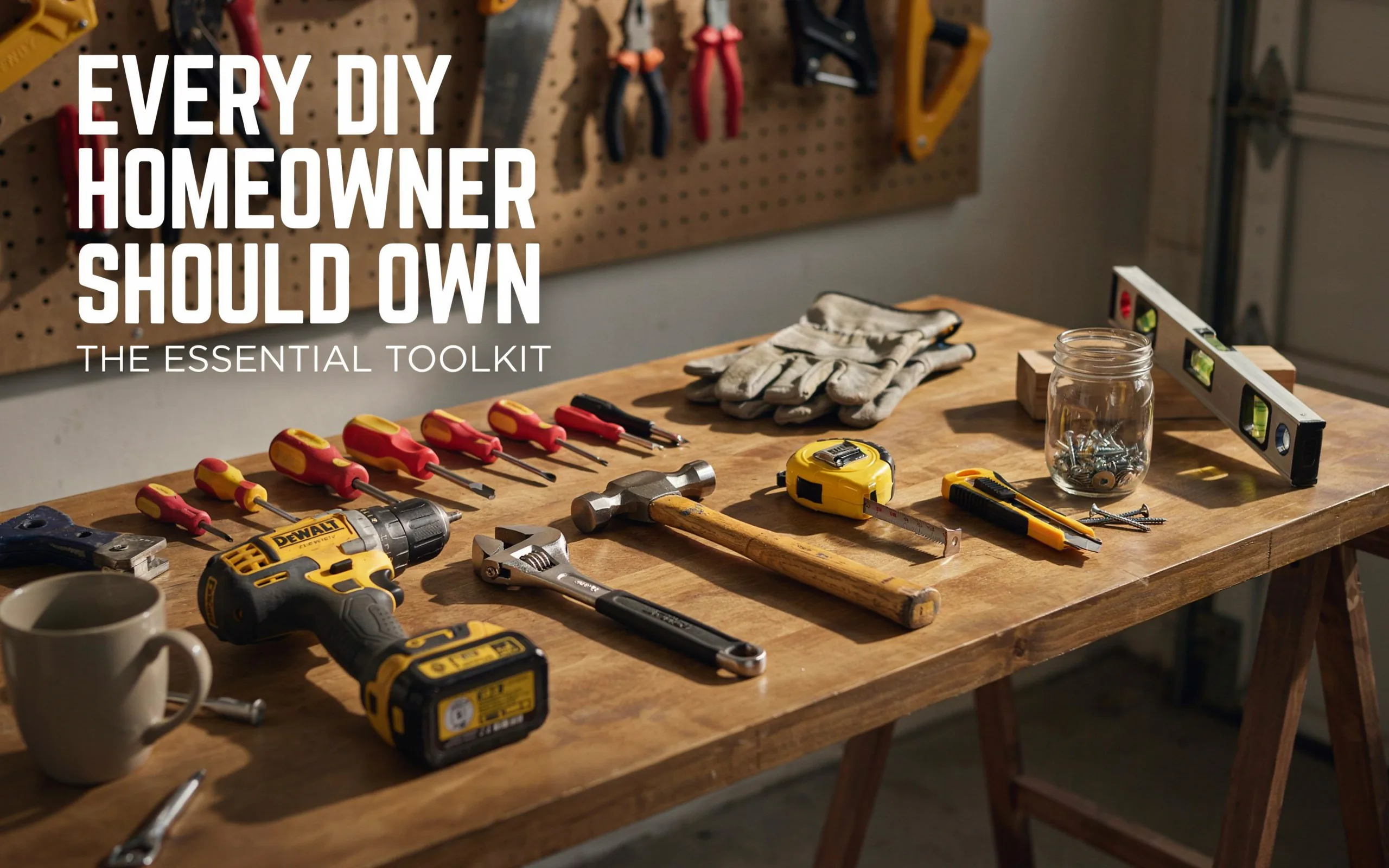
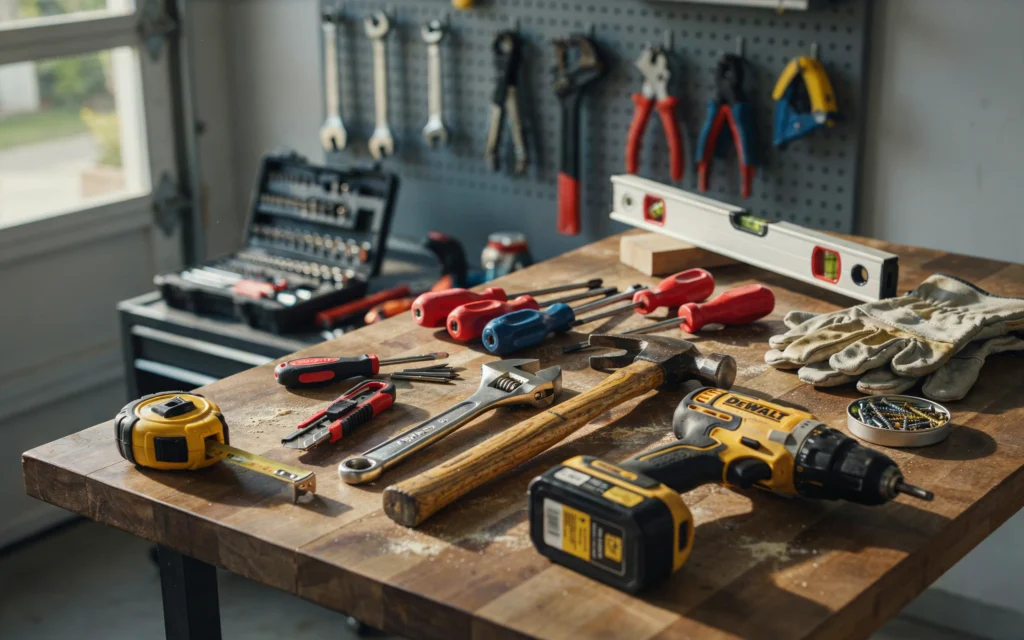
If you are wondering what should every DIY homeowner own, the answer includes a hammer, screwdrivers, a cordless drill, tape measure, level, pliers, and safety gear. This guide covers must-have tools for repairs, projects, and emergencies.
Owning a home brings a lot of joy. It also brings a lot of small repairs and projects. From a loose cabinet hinge to a picture that needs hanging, things break or need updates. You could call a professional for each job. But that gets expensive fast. The better choice is to build your own basic toolkit.
So, what should every DIY homeowner own? The answer is simpler than you think. You do not need a garage full of fancy machines. You need a solid collection of hand tools, a few power tools, and some safety items. With these, you can handle most fixes around the house.
This guide will walk you through the exact tools you need. We will cover hand tools, power tools, measuring tools, safety gear, and storage. By the end, you will know exactly what should every DIY homeowner own to feel ready for anything.
Why Building Your Own Toolkit Matters
A good toolkit saves you money. It also saves you time. You do not have to wait for a repair person to show up. You can fix things on your own schedule.
There is also a great feeling of independence. When you solve a problem with your own hands, it builds confidence. You start to see your home differently. It becomes a place you can shape and improve.
As tool expert Doug Mahoney from Wirecutter says, “The ‘trifecta’ for beginners is simple: a screwdriver, a hammer, and a tape measure. Add a utility knife and pliers as you go, and you’ll be able to handle most small jobs in your home.” Starting with these basics gives you a strong foundation.
The Core Hand Tools: Your Starting Point
Every homeowner should start with a set of reliable hand tools. These are the tools you will reach for again and again. They do not need batteries or cords. They are always ready to go.
Hammer
A claw hammer is the most iconic tool for a reason. You use it to drive nails into walls for hanging pictures. You use it to assemble furniture. You also use the claw side to pull nails out when you make a mistake.
Look for a hammer with a comfortable grip and good balance. You do not need the most expensive one. But avoid the very cheapest options. A mid-range hammer from a known brand will serve you well for years.
Johana Williams, a property manager, notes, “When you are moving into a new home, one of the biggest jobs is to make it yours. So that means hanging a variety of picture frames… A decent hammer will come in handy for these situations.”
Screwdrivers
Screws are everywhere in a modern home. Cabinet hinges, doorknobs, outlet covers, and furniture all use screws. You need a good set of screwdrivers to tighten or remove them.
You should have both Phillips-head (the cross shape) and flat-head (the straight line) screwdrivers. Get them in multiple sizes. A small one for delicate electronics and a larger one for heavy-duty screws.
A multi-bit screwdriver is a great alternative. It stores different tips in the handle. This saves space and keeps you from losing bits. Many experts recommend a 10-in-1 or 12-in-1 screwdriver for its versatility.
Pliers
Pliers are like an extra set of fingers. They help you grip, twist, bend, and cut things. You will use them to hold nuts and bolts. You will use them to pull out staples or small nails.
A combination plier is a good all-rounder. Needle-nose pliers are also very useful. They reach into tight spaces. They are great for electrical work and crafting.
Adjustable Wrench
An adjustable wrench, also called a crescent wrench, is a must for plumbing and mechanical tasks. You use it to tighten or loosen nuts and bolts of various sizes. Instead of buying a full set of fixed wrenches, one or two adjustable ones can handle many jobs.
Utility Knife
A utility knife is one of the most used tools in any home. You will use it to open boxes, cut rope, trim wallpaper, and score materials. The blades get dull quickly. But they are cheap and easy to replace. Always keep a pack of spare blades nearby.
Power Tools: Your Efficiency Boosters
Hand tools are essential. But power tools make jobs faster and easier. They reduce the physical effort required. For many DIYers, a cordless drill is the first power tool they buy. And it is often the most used.
Cordless Drill
Ask any experienced DIYer what should every DIY homeowner own, and a cordless drill will be near the top of the list. It is your everyday workhorse. You use it to drill holes for anchors and screws. You use it to drive screws into wood and drywall. You can even use it to mix paint or stir compounds.
Look for a drill with a keyless chuck. This makes changing bits quick and easy. Get one with a lithium-ion battery. They hold a charge longer and do not lose power as they drain. Having a second battery is a smart move. That way, you can keep working while one charges.
Circular Saw
If you plan to do any woodworking or building projects, a circular saw is a great addition. It makes straight cuts through wood, plywood, and even metal with the right blade. It is portable and powerful. For basic carpentry, it is often a better choice than a bulky table saw.
Oscillating Multi-Tool
This is a newer tool that has become very popular. It vibrates at a high speed. You can attach different blades and accessories to it. It cuts, sands, scrapes, and grouts. It is perfect for flush cuts, like trimming door jambs or cutting out old caulk. If you have to pick one specialty power tool, this is a strong candidate.
Measuring and Marking Tools
You have heard the saying: “Measure twice, cut once.” It is true. Good measuring tools prevent costly mistakes. They ensure your projects look professional and straight.
Tape Measure
A tape measure is non-negotiable. You use it for everything. Hanging shelves, spacing pictures, buying furniture, and planning layouts all require accurate measurements.
Get a tape measure that is at least 25 feet long. Look for one with a good standout. This means the blade stays stiff when you extend it. A lock button is also helpful. It keeps the tape from retracting while you measure.
Level
A level ensures your shelves, pictures, and furniture are straight. Nothing looks worse than a crooked picture frame. A simple bubble level is affordable and easy to use. For larger projects, a laser level can be a huge time-saver. It projects a straight line across an entire wall.
Stud Finder
You cannot hang heavy items directly on drywall. You need to find the wooden studs behind the wall. A stud finder helps you locate them. This prevents you from drilling into nothing or, worse, into a pipe or wire. It is a simple tool that saves a lot of frustration.
Safety Equipment
Safety is not glamorous. But it is critical. Many DIY injuries are preventable with the right gear.
Safety Glasses
Flying debris is a common hazard. When you hammer, drill, or cut, small particles can fly into your eyes. Safety glasses are cheap and effective. Wear them every time you use tools. As Ron Shimek of Mr. Handyman says, “Sorry doesn’t bring back an eye.”
Work Gloves
Gloves protect your hands from cuts, splinters, and blisters. They also give you a better grip on slippery materials. Choose a pair that fits well and allows you to move your fingers freely.
Flashlight
A good flashlight is often overlooked. But you will need it for working in dark basements, attics, and under sinks. A headlamp is even better. It keeps your hands free to work. Make sure it is bright and has a long battery life.
Fasteners and Supplies
Tools are only half the story. You also need the right supplies to complete your projects.
Hardware Assortment
Keep a small collection of screws, nails, wall anchors, and washers. This saves you a trip to the store for every small job. Assortment kits are available at any hardware store. They are a great way to start your collection.
Glue and Adhesives
Wood glue, super glue, and construction adhesive are all useful. They can fix broken items, hold parts together, and secure trim. Having a few different types on hand covers many repair scenarios.
Tool Storage and Organization
All these tools need a home. A well-organized toolbox makes your work easier. You can find what you need quickly. A messy drawer or a scattered pile of tools wastes time and causes frustration.
Toolbox or Tool Bag
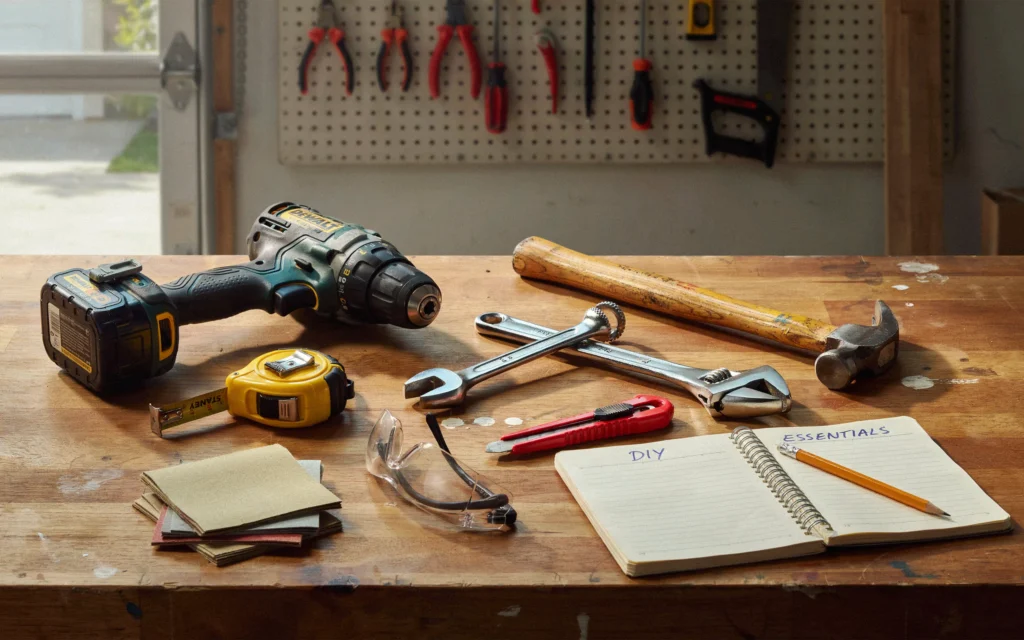
Invest in a sturdy toolbox or a heavy-duty tool bag. Look for one with compartments. This keeps small items like bits and screws from getting lost. A bag with a shoulder strap is easy to carry around the house.
Organizers for Small Parts
Use small containers or a tackle box for nails, screws, and anchors. Label them clearly. This makes finding the right size fastener quick and simple.
Comparison Table: Essential Hand Tools vs. Power Tools
| Hand Tools | Power Tools |
|---|---|
| Hammer | Cordless Drill |
| Screwdrivers (Set) | Circular Saw |
| Pliers | Oscillating Multi-Tool |
| Adjustable Wrench | Jigsaw |
| Utility Knife | Random Orbital Sander |
Comparison Table: Must-Have Measuring Tools vs. Safety Gear
| Measuring & Marking Tools | Safety Equipment |
|---|---|
| Tape Measure | Safety Glasses |
| Level | Work Gloves |
| Stud Finder | Flashlight / Headlamp |
| Combination Square | Dust Mask |
| Chalk Line | Knee Pads |
How to Choose Quality Tools
You do not need to buy the most expensive tools. But you should avoid the cheapest ones. Poor quality tools break easily. They can also be dangerous.
Look for tools with solid construction. For hand tools, check the handle and the material. For power tools, read reviews from trusted sources. Buying from reputable brands is usually a safe bet.
Start with a few core items. Add more as you take on bigger projects. This spreads out the cost. It also lets you learn each tool properly.
Frequently Asked Questions
1. What should every DIY homeowner own as a first purchase?
A hammer, a set of screwdrivers, and a tape measure are the best first purchases. These three tools let you handle a wide range of basic tasks. Add pliers and a utility knife as your next buys.
2. Is a cordless drill really necessary for a beginner?
Yes, it is highly recommended. A cordless drill is the most useful power tool for a homeowner. It saves immense time and effort compared to using a manual screwdriver. It is often the first power tool people buy.
3. How do I know which screwdriver to use?
Look at the screw head. If it has a cross shape, use a Phillips-head screwdriver. If it has a straight line, use a flat-head screwdriver. Using the wrong type can strip the screw.
4. What should I do if I don’t have a lot of storage space?
Choose a soft-sided tool bag that can fit into a closet or under a sink. Use a small organizer for screws and nails. Focus on buying multi-purpose tools to save space.
5. How often should I replace my tools?
Quality hand tools can last a lifetime with proper care. Power tool batteries may need replacing every few years. Replace any tool that becomes damaged or unsafe to use.
Conclusion
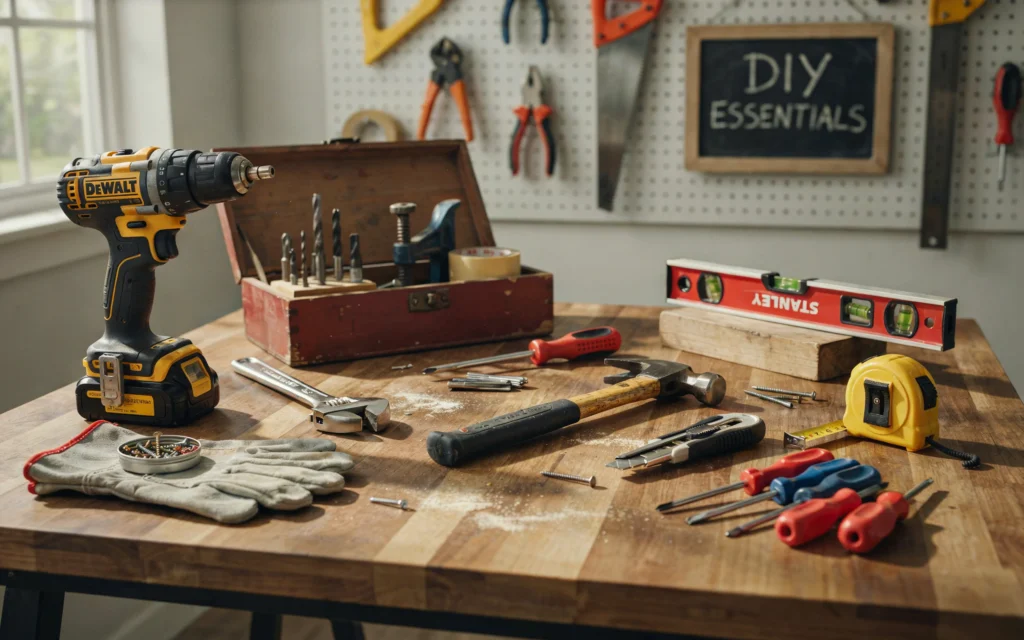
So, what should every DIY homeowner own? You now have a clear answer. Start with the core hand tools: a hammer, screwdrivers, pliers, an adjustable wrench, and a utility knife. Add a tape measure, a level, and a stud finder for accuracy. Then, invest in a cordless drill as your first power tool. Finally, do not forget safety glasses, gloves, and a good flashlight.
Building your toolkit is a process. You do not need to buy everything at once. Start with the basics. Add tools as you need them for specific projects. Over time, you will build a collection that lets you handle almost any home repair or improvement. This saves you money, gives you confidence, and makes your home truly your own.
Remember, every expert was once a beginner. The key is to start. With the right tools in hand, you are ready for whatever your home throws at you.
Related posts
 Top Home Tool Kits for Seniors: 2026 Practical Guide
Discover the top home tool kits for seniors in 2026. We compare compact, easy-to-use sets perfect for daily household repairs, furniture assembly, and DIY tasks. Finding…
 Top Home Tool Kits for Women: 2026 Buyer Guide
Discover the top home tool kits for women in 2026. Compare top-rated sets for DIY, furniture assembly, and household repairs to find your perfect match. Finding…
 Top Home Tool Kits for Basic Home Repairs 2026
Find the top home tool kits for basic home repairs in 2026. Compare top-rated sets for DIY projects, furniture assembly, and daily household maintenance. Every home…