
When should you upgrade to a larger home tool kit
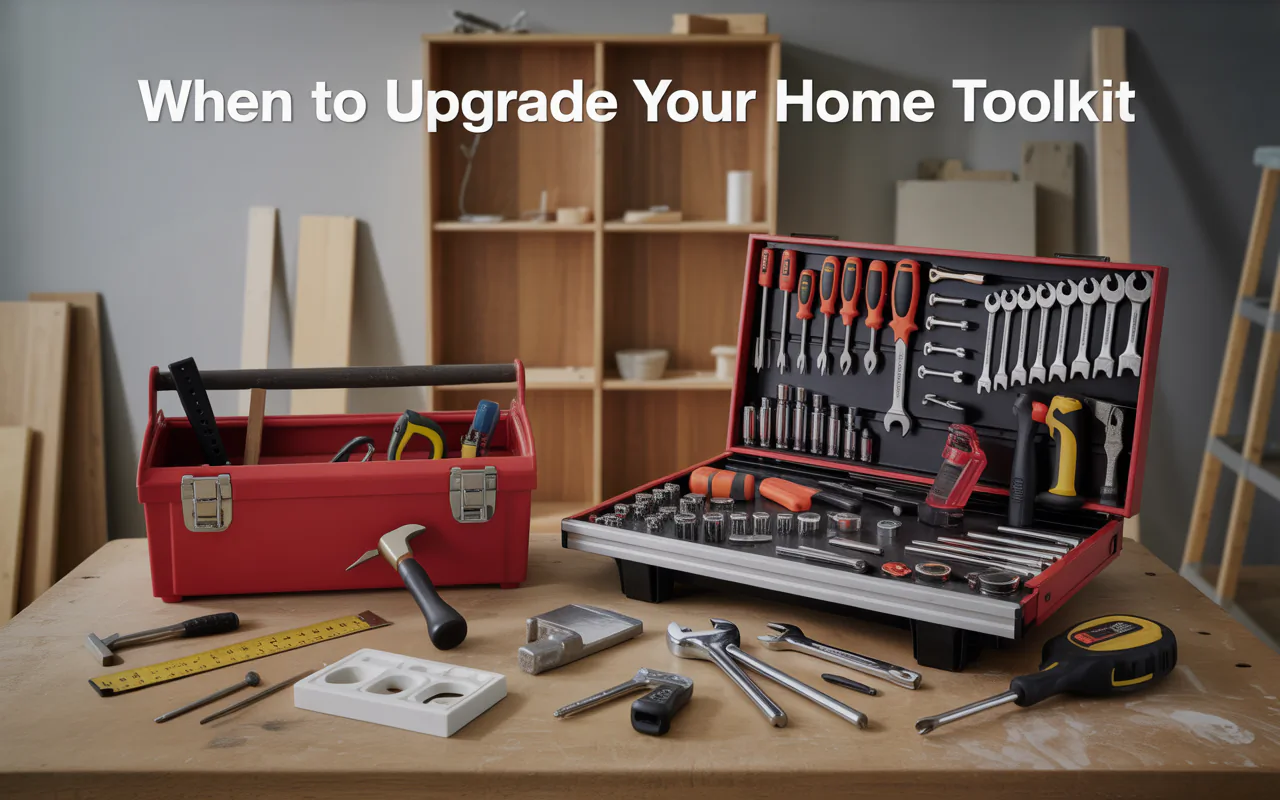
When should you upgrade to a larger home tool kit. Have you ever opened your small home tool kit only to find you can’t fix a simple leaky faucet? Or maybe you needed a wrench that wasn’t there. Many people start with a basic tool set. But as life changes, so do your repair needs. So when is the right time to upgrade to a larger home tool kit? Let me help you figure that out.
I have helped many friends and family with their home repairs over the years. I also made the mistake of sticking with a tiny kit for too long. Trust me, I know the frustration. This article will share real signs that show you are ready for a bigger set. You will also learn what to buy and when to wait. Let’s get started.
5 Clear Signs You Need to Upgrade to a Larger Home Tool Kit
Most people do not think about their tool kit until something breaks. That is normal. But there are clear signals that your small set is no longer enough. Here are five signs that say it is time to upgrade to a larger home tool kit.
Sign 1: Your Current Kit Is Missing Basic Tools
Take a look inside your tool kit. Do you see a hammer, screwdrivers, pliers, and a tape measure? That is the bare minimum. If you cannot find a simple Phillips head screwdriver or a pair of slip joint pliers, your kit is too small. A larger kit includes these basics and more.
I remember trying to tighten a loose cabinet hinge with a butter knife because my kit had no screwdriver. That was my wake up call. Do not wait until you are using kitchen utensils for repairs.
Sign 2: You Are Fixing Things More Often
Maybe you used to call a handyman for every little job. Now you fix your own leaky pipes or squeaky doors. That is great! But fixing more things means you need more tools. A small four piece set will not cut it.
If you find yourself making multiple trips to the hardware store for the same project, that is a sign. Each trip costs time and gas. A larger home tool kit saves you those extra runs. You will have the right tool right when you need it.
“The right tool for the right job makes any repair faster and safer. A small kit is for emergencies. A large kit is for a homeowner.”
— Frank Morrison, Home Repair Instructor
Sign 3: Your Home Projects Are Getting Bigger
Maybe you started with changing light bulbs and hanging pictures. Now you are building a bookshelf or fixing a deck board. Larger projects need a wider range of tools. You might need a level, a utility knife, a set of wrenches, or even a small saw.
When your projects grow, your tool collection must grow too. A basic kit cannot handle wood cutting or pipe fixing. That is a good reason to upgrade to a larger home tool kit. You will feel more confident taking on bigger tasks.
Sign 4: You Borrow Tools All the Time
Do you often knock on your neighbor’s door to borrow a wrench or a drill? Or do you call your dad every weekend to bring his tool bag? Borrowing once in a while is fine. But if it happens every week, you need your own set.
Think about the tools you borrow most. Write them down. Those are the tools your kit is missing. A larger home tool kit usually includes those common borrow items like adjustable wrenches, needle nose pliers, and a screwdriver set.
Sign 5: Your Tool Storage Is a Mess
Open your current tool box. Is everything mixed together? Are screws rolling around with pliers? Is the tape measure stuck under a pile of old keys? A messy kit is a small kit that has been overstuffed.
When you cannot close the lid or find anything quickly, you have outgrown your current setup. A larger kit gives you organized slots for each tool. You will save time looking for things. You will also keep your tools in good shape longer.
Here is a quick table to help you compare a basic kit versus a larger one.
| What You Can Do | Basic Kit (4-7 tools) | Larger Kit (15-25 tools) |
|---|---|---|
| Hang a picture | Yes | Yes |
| Tighten a loose screw | Yes (if screwdriver fits) | Yes (multiple sizes) |
| Fix a leaky pipe | No (needs wrench) | Yes |
| Assemble furniture | Limited | Yes (with allen keys and rubber mallet) |
| Cut a wood board | No | Yes (with hand saw or coping saw) |
| Repair an outlet | No (needs voltage tester) | Often yes |
What a Larger Home Tool Kit Includes (Basic to Advanced)
So what exactly is inside a larger home tool kit? Let me break it down. A good larger kit has between 15 and 25 tools. It covers most common home repairs and small projects.
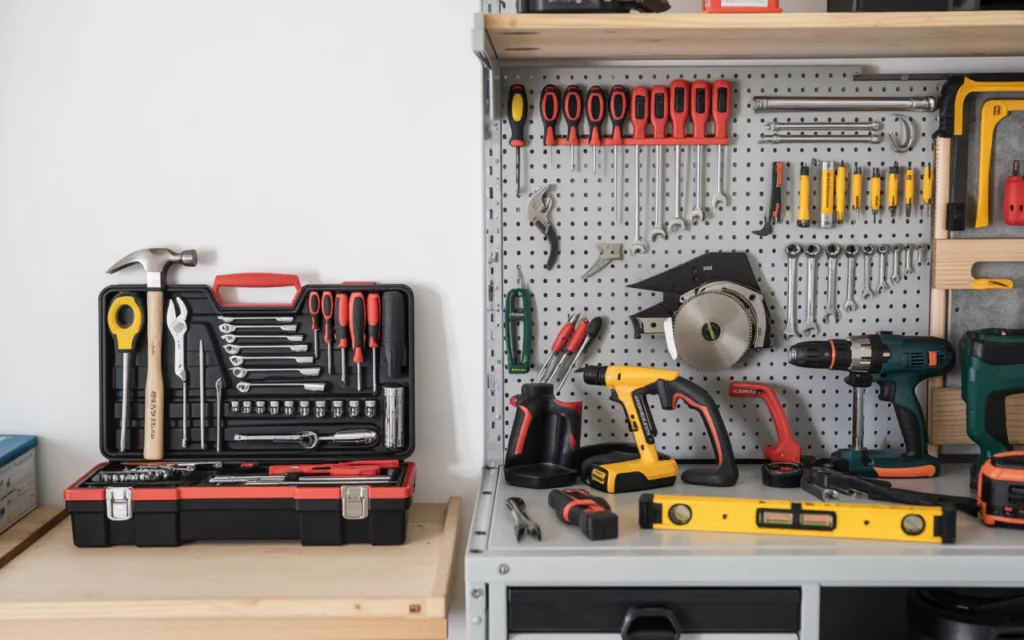
Here is another table showing the typical tools you will find.
| Tool Category | Specific Tools | Common Use |
|---|---|---|
| Striking tools | Claw hammer, rubber mallet | Nailing, tapping without damage |
| Turning tools | Flathead and Phillips screwdrivers (multiple sizes), allen keys | Screws, furniture assembly |
| Gripping tools | Slip joint pliers, needle nose pliers, adjustable wrench | Holding, bending, turning nuts |
| Measuring tools | Tape measure (16 or 25 feet), level | Measuring, checking straight lines |
| Cutting tools | Utility knife, coping saw, wire cutters | Cutting boxes, wood, or wires |
| Specialty tools | Voltage tester, stud finder, putty knife | Electrical safety, finding wall studs, spackling |
Some larger kits also include a small hand saw, a set of hex keys, and a pair of scissors. The best kits come in a sturdy case with labeled spots for each tool. That way you never lose anything.
When you upgrade to a larger home tool kit, you are not just buying more tools. You are buying peace of mind. You will be ready for small emergencies like a loose toilet handle or a broken drawer slide.
“A homeowner with a complete tool kit saves an average of 200 dollars a year on small repairs. That is two dinners out.”
— Linda Cheng, Personal Finance Blogger
How to Choose the Right Larger Home Tool Kit for Your Needs
Not every larger kit is the same. Some focus on electrical work. Others are better for woodworking. You need to pick one that matches your home and your skill level. Here is how.
Think About Your Skill Level
If you are a beginner, look for a kit that includes instructions or a small guide. Many kits now come with a QR code that links to video tutorials. That is very helpful. You do not need professional grade tools. A mid range set from a known brand is fine.
If you have some experience, you may want a kit with more durable materials. Look for tools with rubber grips and chrome vanadium steel. They last longer.
Consider Your Home Type
Do you live in a house with a yard? Then you may need a larger kit that includes a small hand saw and pruning shears. Do you live in an apartment? Then a compact larger kit with basic hand tools is enough. You will not need garden tools.
Do you own an older home? Older homes need more repair work. You will definitely want to upgrade to a larger home tool kit if your house was built before 1980. Old pipes, old wiring, and old windows all need frequent fixes.
Set a Realistic Budget
Larger home tool kits range from 30 to 150 dollars. A 30 dollar kit will have plastic handles and basic tools. It is fine for very light use. A 70 to 100 dollar kit gives you better quality. The tools will last for years.
Do not buy the cheapest option. Also do not buy the most expensive one. A mid priced kit from a trusted brand like Stanley, Craftsman, or Husky is a safe choice. Read online reviews before you buy.
When a Larger Home Tool Kit Might Not Be Needed
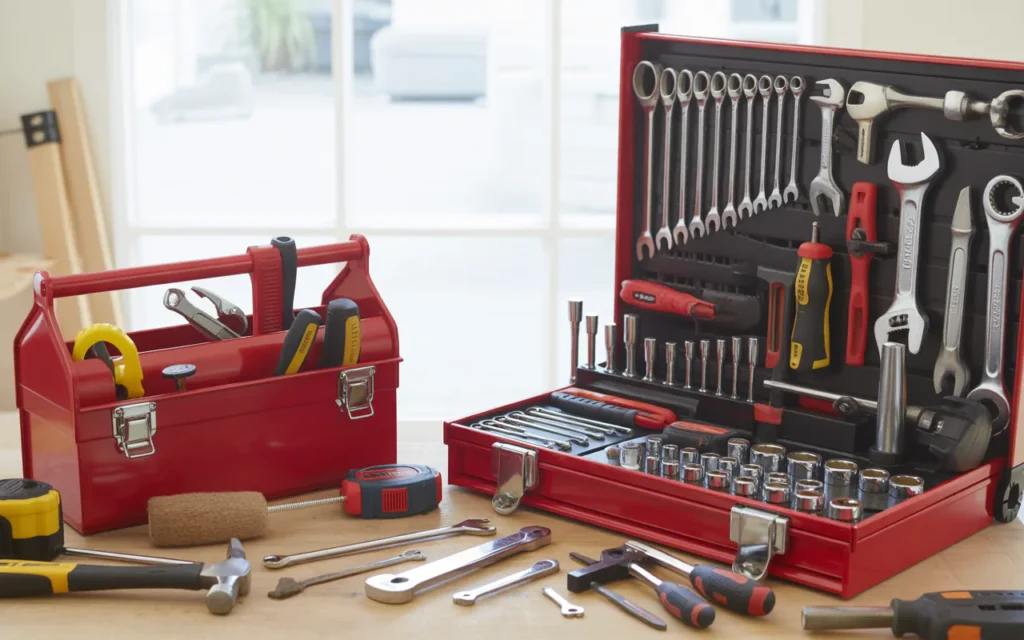
Sometimes you do not need to buy a bigger set. It is okay to stick with a small kit. Let me tell you when that is smart.
You Rarely Do Any Repairs
If you call a handyman for every loose screw and every dripping faucet, you do not need more tools. A small four piece kit for hanging pictures is enough. Save your money.
You Live in a Rental with Maintenance Included
Many apartments have a maintenance person who fixes things for free. If that is your situation, you do not need to upgrade to a larger home tool kit. Just call the front desk. They will bring their own tools.
You Are Moving Soon
If you plan to move in the next six months, wait. A larger kit adds weight and bulk. Moving is stressful enough. Buy the bigger set after you settle into your new place.
“Do not buy tools for a home you are about to leave. Buy them for the home you will stay in for years.”
— David Torres, Professional Organizer
Frequently Asked Questions (FAQ)
1. What is the best size for a home tool kit?
A kit with 15 to 25 tools is best for most homeowners. It covers 90 percent of common repairs without being too heavy or expensive.
2. Can I just buy tools one by one instead of a full kit?
Yes, you can. But buying a full kit is usually cheaper. A 20 piece kit often costs less than buying each tool separately. Plus you get a nice case to keep everything together.
3. How often should I upgrade to a larger home tool kit?
There is no set time. Upgrade when you see the signs from this article. For many people, that is every 3 to 5 years as their skills and home needs grow.
4. Are expensive tool kits worth the money?
Not for beginners. A mid priced kit is fine. Expensive kits are for daily tradespeople like electricians or carpenters. For home use, you do not need top of the line tools.
5. What tools are a waste of money in a large kit?
Avoid kits with many very small or very specialized tools. For example, a tiny watch repair screwdriver set is useless for most home jobs. Also avoid kits with lots of duplicate tools. You only need one hammer and one tape measure.
6. Can I add tools to my existing small kit instead of buying a new one?
Yes! That is a great first step. Buy a few missing tools like a level or a utility knife. Put them in your old box. If the box becomes too full or messy, then it is time to upgrade to a larger home tool kit.
7. Do I need power tools in my larger kit?
Not at first. Stick with hand tools. Power tools like a drill or a jigsaw are separate purchases. Buy them later when you have a specific project that needs them.
8. Where should I store a larger home tool kit?
Keep it in a dry place. A closet, a garage shelf, or under the kitchen sink works. Avoid damp basements because tools can rust. Also keep it away from young children.
9. How do I know if a tool kit has good quality?
Look at the handles. Are they rubber or soft plastic? Good. Are they hard slippery plastic? Bad. Also check the metal. Does it look shiny and smooth? That is fine for home use. Read customer reviews online.
10. Is it okay to upgrade to a larger home tool kit as a gift?
Absolutely. A larger tool kit makes a wonderful housewarming gift or birthday gift for a new homeowner. Just make sure the person actually does DIY projects. Otherwise it will sit in a closet.
Conclusion
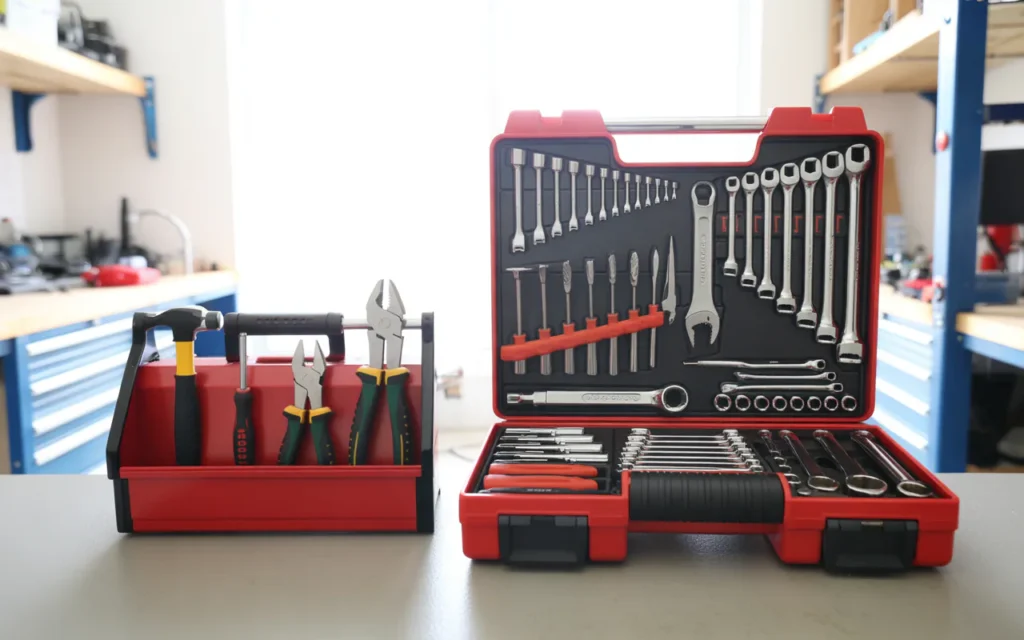
Knowing when to upgrade to a larger home tool kit comes down to your lifestyle. If you fix things often, take on bigger projects, or borrow tools all the time, go for it. A larger kit saves you time, money, and frustration. It also helps you feel more confident as a homeowner or renter.
Start by looking at your current kit. Is it missing basic tools? Is it a mess? Do you wish you had a wrench right now? Those are your answers. You do not need to spend a lot of money. A 70 dollar mid sized kit with 20 tools will serve you well for years.
Remember, you can also add tools slowly. But once you cross that line where your small kit feels useless, do not wait. Buy the larger set. Your future self will thank you when a pipe leaks at 9 PM on a Sunday. Be ready. Be smart. Get the right tools for the job.
Related posts
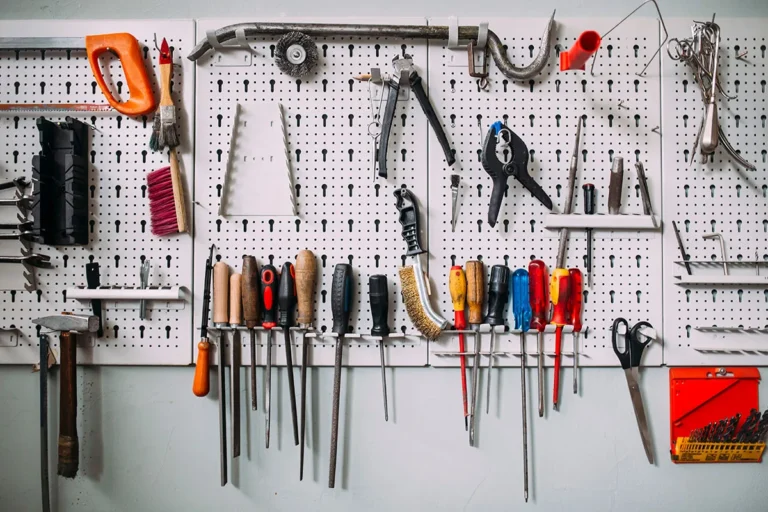 Top Home Tool Kits for Seniors: 2026 Practical Guide
Discover the top home tool kits for seniors in 2026. We compare compact, easy-to-use sets perfect for daily household repairs, furniture assembly, and DIY tasks. Finding…
 Top Home Tool Kits for Women: 2026 Buyer Guide
Discover the top home tool kits for women in 2026. Compare top-rated sets for DIY, furniture assembly, and household repairs to find your perfect match. Finding…
 Top Home Tool Kits for Basic Home Repairs 2026
Find the top home tool kits for basic home repairs in 2026. Compare top-rated sets for DIY projects, furniture assembly, and daily household maintenance. Every home…