
How To Choose A Home Tool Kit As A Housewarming Gift
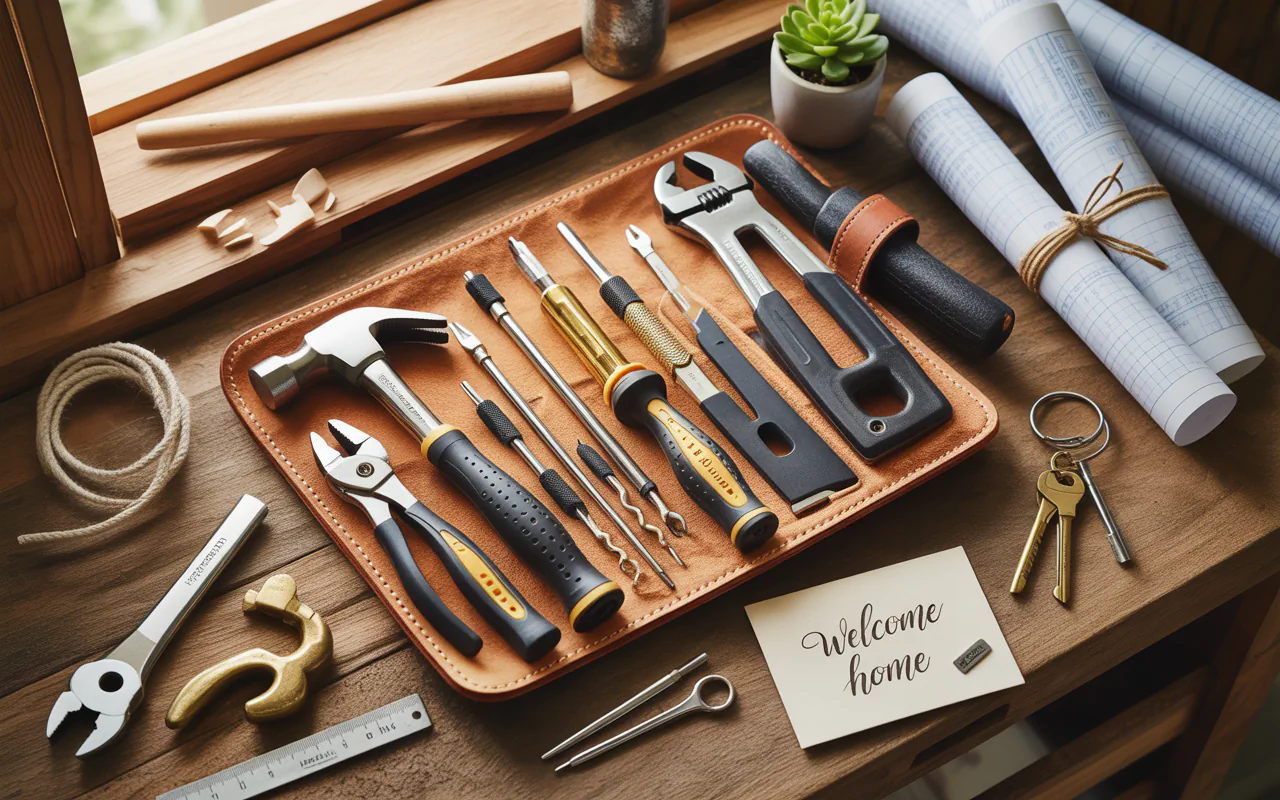
Looking to choose a home tool kit as a housewarming gift? This simple guide helps you pick quality tools, match skill levels, and stay on budget for a gift that gets used for years.
Moving into a new home is a big step. There is so much to do. Unpacking, arranging furniture, and meeting neighbors take time. But soon, something small will break. A drawer will come off its track. A picture will need hanging. A loose screw will show up on a cabinet door. That is when a new homeowner realizes they have no hammer, no screwdriver, and no pliers. This is why learning to choose a home tool kit as a housewarming gift can be one of the smartest, kindest things you do for a friend or family member.
A good tool kit is not fancy. It does not need batteries or a manual full of steps. It just sits in a closet or a garage, waiting to help. When you give one, you give peace of mind. You say, “I want your home to feel safe and easy to care for.” That feeling lasts much longer than a scented candle or a set of wine glasses. In this article, I will walk you through everything you need to know. You will learn what tools matter most, how much to spend, and how to avoid buying junk that breaks the first time someone uses it.
Why a Tool Kit Makes a Great Housewarming Gift
Think about the first week in a new house. The previous owners left nails in the walls. The blinds need adjusting. A towel rack falls off because the screws are loose. Without tools, these small problems become big frustrations. Your gift can turn frustration into a quick fix.
As home improvement expert Bob Vila once said, “A home is never finished. But a basic tool kit gets you started on every project.” That is the truth. A tool kit says you understand real life. It is practical, useful, and personal because you took time to pick it out.
Many housewarming gifts end up in a donation box. A pretty vase? Maybe. A set of coasters? Possibly. But a tool kit? It stays. It gets used again and again. Every time the new homeowner pulls out that hammer to hang a family photo, they will think of you. That is a beautiful thing.
What to Look For When You Choose a Home Tool Kit as a Housewarming Gift
Not all tool kits are the same. Some look great on the store shelf but fall apart fast. Others include weird tools no one will ever use. To choose a home tool kit as a housewarming gift that actually helps, look at three main things: quality, variety, and storage.
Tool Quality and Material
Cheap tools are dangerous. A screwdriver with a soft tip will strip the screw head. A hammer with a loose handle can fly off and hurt someone. You want tools made of steel that does not bend or snap. Look for words like “chrome vanadium” or “heat treated” on the package. Those are signs of better metal.
Plastic handles are fine if they have rubber grips. That helps with comfort and stops slipping. Avoid anything that feels too light or wobbly. Pick up the kit in the store if you can. Shake it. Open the case. Does it feel sturdy? Trust your hands. They will tell you more than any fancy label.
Variety of Tools Included
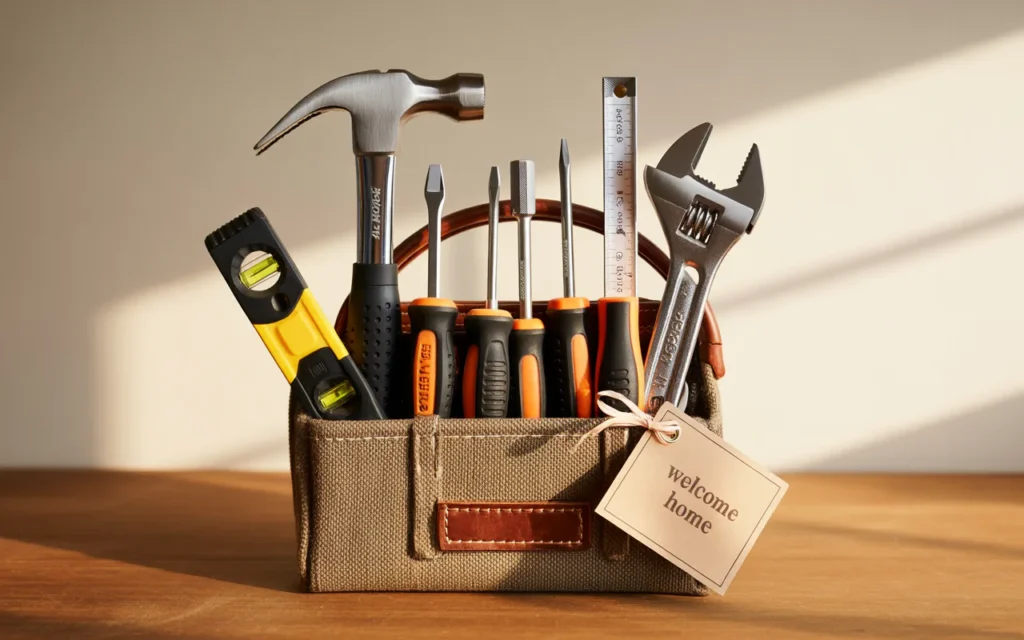
A good starter kit does not need one hundred pieces. Many pieces are just duplicates or tiny bits you lose right away. Focus on the basics. Here is what every new homeowner truly needs:
- Hammer (16 ounce or 20 ounce, claw style)
- Screwdrivers (Phillips #1 and #2, flathead sizes small and medium)
- Pliers (slip joint and needle nose)
- Adjustable wrench (6 or 8 inches)
- Tape measure (16 or 25 feet)
- Utility knife with replaceable blades
- Level (small, about 9 inches)
- Set of hex keys (Allen wrenches, metric and standard)
When you choose a home tool kit as a housewarming gift, count these items. If the kit has at least six of them, it is a good start. Bonus points if it includes a small handsaw or a rubber mallet.
Storage Case or Bag
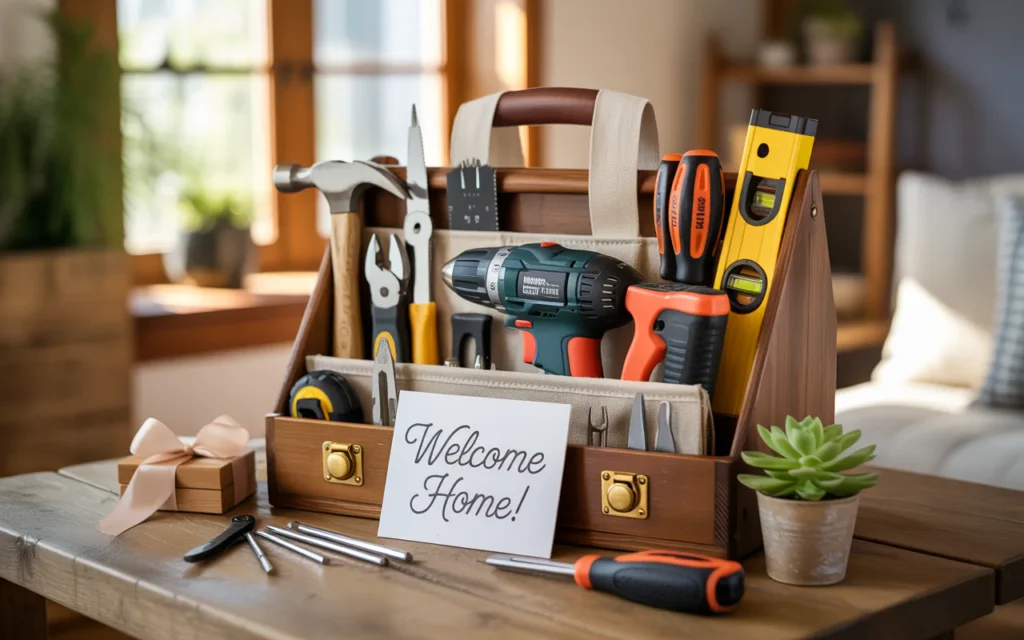
The case matters more than you think. If tools are loose in a cardboard box, they will get lost. A plastic carrying case with labeled slots helps keep everything organized. Some kits come with a soft zippered bag. That is fine for small kits, but bags can tip over. Hard cases protect tools better.
Look for a case with a secure latch. It should be easy to carry with one hand. Some cases have a handle that folds down. Others have a shoulder strap. Either works. Just make sure the case is not too heavy when full. A heavy case is a case that stays in the garage instead of coming inside to fix the loose cabinet door.
“Give someone a tool, and you give them the power to solve their own problems,” says home repair author Sarah Susanka. That is the heart of a good housewarming gift.
How to Match the Tool Kit to the New Homeowner’s Skills
Not everyone grew up using tools. Some people have never held a wrench. Others are weekend DIY fans who already own a drill and a saw. You need to match the kit to the person.
For a Complete Beginner
If your friend has never fixed anything, get a small, simple kit. Ten to twenty pieces is plenty. Include a picture hanging kit inside. Add a small instruction booklet or a note with QR codes to YouTube videos. Labels on the case help too. Some kits have printed labels inside the lid showing what each tool does. That is very helpful.
Avoid adding power tools for beginners. They can be intimidating and even dangerous without practice. Stick to hand tools. They are safe and easy to learn.
For Someone with Some Experience
If the new homeowner already owns a few tools, they probably miss some key items. Maybe they have a hammer but no level. Maybe they have screwdrivers but no pliers. In this case, you can choose a home tool kit as a housewarming gift that fills the gaps. Look for a larger kit with thirty to fifty pieces. Include specialty items like a stud finder, a small hacksaw, or a multi bit screwdriver.
You could also buy a tool kit that focuses on one area, like plumbing or electrical. A small plumbing kit with a basin wrench and PTFE tape is a fantastic gift for someone who just bought an older home.
For the Experienced DIY Person
Your skilled friend may already own high end tools. Do not buy a basic kit. They will not use it. Instead, look for a professional grade tool kit with heavy duty cases. Or buy a tool bag and fill it with premium versions of the basics. A top quality hammer from a brand like Estwing. A set of Wera screwdrivers. Knipex pliers. These are gifts that make a serious DIY person smile.
Budget Friendly Options for Every Price Point
You do not need to spend a lot of money. Good tool kits exist at many price levels. Here is a simple table to help you decide.
| Price Range | What You Get | Best For |
|---|---|---|
| 15−30 | 10 to 20 basic tools, plastic case, average quality steel | Beginners, students, or as a second gift |
| 30−60 | 30 to 50 tools, better materials, organized case, includes level and tape measure | Most new homeowners, main gift |
| 60−120 | 50 to 100+ tools, durable metal parts, soft grip handles, hard case | Frequent DIY users, house with yard |
| $120+ | Professional or premium brand kits, lifetime warranty, very sturdy | Experienced DIY, forever homes |
When you choose a home tool kit as a housewarming gift, remember that price does not always mean quality. I have seen 20kitslastforyears.Ihavealsoseen80 kits with useless plastic parts. Read online reviews. Look for comments about broken tools or missing pieces.
The Best Types of Tools to Include in a Starter Kit
If you decide to build your own tool kit rather than buying a pre made set, here is a table of must have tools. You can buy each piece separately and put them in a toolbox. This often gives better quality for the same money.
| Tool | Why It Matters | Good Price Point |
|---|---|---|
| Claw hammer | Hanging pictures, light demolition | 10−20 |
| Phillips #2 screwdriver | Most common screw in homes | 5−10 |
| Flathead screwdriver | Prying, opening paint cans, slot screws | 5−10 |
| Slip joint pliers | Gripping pipes, nuts, bolts | 8−15 |
| Needle nose pliers | Electrical work, reaching small spaces | 8−15 |
| 6 inch adjustable wrench | Tightening faucets, assembling furniture | 10−18 |
| 16 foot tape measure | Measuring rooms, furniture placement | 8−12 |
| Utility knife | Opening boxes, cutting rope or drywall | 5−10 |
| 9 inch level | Hanging shelves and frames straight | 6−12 |
| Hex key set | Assembling flat pack furniture (IKEA style) | 5−10 |
Add a small flashlight or a headlamp. That is not a tool, but it is very helpful when working under sinks or in dark corners.
As electrician and YouTuber April Wilkerson says, “The best tool in your kit is the one you can find when you need it.” A good case with labeled spots makes finding tools easy.
Where to Buy a Reliable Home Tool Kit
You have many choices. Each has good and bad points.
Hardware stores (Home Depot, Lowe’s, Ace Hardware)
You can touch the tools. Open the case. Feel the weight. Staff often know the products. Look for store brand kits. They are usually fine for basic use. Husky, Kobalt, and Craftsman are solid middle of the road brands.
Online stores (Amazon, Walmart, Target)
More selection. You can read many reviews. But you cannot feel the tools before buying. Look for kits with at least 1,000 reviews and a rating of 4.5 stars or higher. Pay attention to one star reviews. People often mention broken handles or missing pieces.
Warehouse clubs (Costco, Sam’s Club)
Good value. They sell large kits for low prices. The quality is usually decent. But the selection changes often. If you see a kit you like, buy it that day. It may not be there next week.
Auto parts stores
Some auto parts stores sell home tool kits. These are often better quality because car tools need to be strong. But they may cost more. Brands like Stanley and GearWrench are good choices.
Secondhand or thrift stores
This takes time, but you can find amazing old tools. American made tools from the 1970s and 1980s are often better than new cheap tools. Clean them up. Put them in a new box. That is a very personal, thoughtful gift. But only do this if you know tools well.
Final Tips Before You Buy
Before you make your choice, ask yourself four questions.
- Does the new homeowner have any tools already? Ask a family member if you are not sure. You do not want to give duplicates.
- What kind of home do they have? An apartment needs fewer tools than a house with a yard and a garage. A house with old plumbing might need more wrenches.
- Will they feel confident using these tools? If they are nervous, add a small book called something like “Home Repairs for Beginners.” Or write a funny note saying, “YouTube is your friend.”
- Is the gift returnable or exchangeable? Keep the receipt. Maybe they want a different size or color. That is fine. You still gave a great gift.
When you choose a home tool kit as a housewarming gift, think about the long game. This is not a one day present. It is a gift that will help them for ten years or more. A small investment in good tools saves them money on repairs. It saves them time waiting for a handyman. It even saves them stress.
One final story. My friend Rachel bought her brother a $35 tool kit when he got his first condo. He laughed and said he would never use it. Two weeks later, his toilet handle broke. He fixed it with the pliers from that kit. He called her to say thank you. Five years later, he still has that kit. He added a few tools of his own. That little kit helped him build shelves, fix a fence, and hang every picture in his home.
That is the power of the right gift. Not fancy. Not expensive. Just useful.
Frequently Asked Questions (FAQ)
1. How many pieces should a good home tool kit have?
For a starter kit, 15 to 30 pieces is plenty. More pieces does not mean better. Many large kits include tiny bits you lose or weird shapes you never need. Focus on getting the 10 basic tools listed earlier in this article.
2. Can I choose a home tool kit as a housewarming gift for someone who rents an apartment?
Yes, absolutely. Apartment renters still hang pictures, tighten loose cabinet handles, and assemble furniture. A small 10 piece kit is perfect. Avoid heavy duty tools like a large pipe wrench or a hand saw. They probably will not need those.
3. What brand makes the best home tool kit for beginners?
Stanley, Craftsman, and Husky are very reliable for beginners. They are sold in most hardware stores. They have good warranties. Another good brand is WORKPRO on Amazon. Their kits are affordable and well reviewed.
4. Should I include power tools in a housewarming gift?
Only if you know the person well and they have some experience. A cordless drill is a wonderful gift for a confident DIY person. But for most people, stick to hand tools. Power tools need batteries and chargers. They are heavier and more expensive.
5. How do I know if the tools are good quality without opening the package?
Read online reviews. Look for words like “drop forged” or “heat treated steel.” Check if the brand offers a lifetime warranty. Many good brands have that warranty printed on the box. Also, heavier tools are usually stronger. If the kit feels too light, it probably uses cheap metal.
6. What if I cannot decide between two kits?
Buy the one with the better storage case and the better hammer. Those two things matter most. A good case keeps tools from getting lost. A good hammer is the tool people use more than any other. The rest can be upgraded later.
7. Is it okay to give a used tool kit?
Yes, if the tools are clean and in good shape. Many people love vintage tools. They are often made better than new ones. Just make sure there is no rust on the moving parts. Wipe everything down. Put it in a new box or a clean bag. Add a nice card explaining that you picked each tool with care.
8. Can I add a personal touch to the tool kit?
Of course. Write a small note inside the lid. Add a magnetic wristband for holding screws. Include a small notebook and pencil for writing down repair dates. You can also put a few Command hooks or picture hanging strips inside. Those are always useful.
9. What is the single most important tool in any home kit?
A claw hammer. You use it for so many things: hanging, pulling, tapping, and even light demolition. If you buy only one tool, buy a good hammer. A 16 ounce hammer with a smooth face and a curved claw is perfect for nearly every home job.
10. How much should I expect to spend for a decent kit?
Between 30and60 is the sweet spot. That gets you a reliable set of 30 to 50 tools with a hard case and decent steel. You can spend more, but you do not have to. Many people are very happy with a $40 kit for years.
Conclusion
Giving a housewarming gift is about celebrating a new beginning. You want to show love and support. A candle burns out. Flowers wilt. But a tool kit stays. Every time a drawer sticks or a screw comes loose, your gift is there. It says, “You can handle this.”
To choose a home tool kit as a housewarming gift that really works, remember the basics. Look for good quality steel. Pick a case that keeps tools organized. Match the kit to the person’s skill level. Stay in a budget that feels right for you. And do not worry about getting the biggest kit on the shelf. A small, honest set of the right tools beats a giant box of useless pieces.
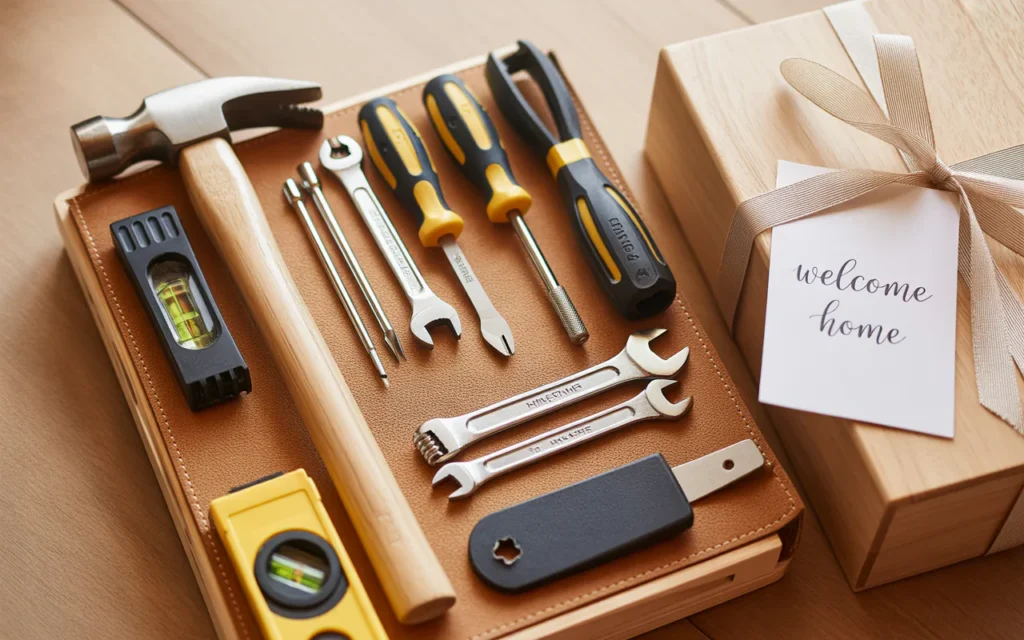
You are giving more than metal and plastic. You are giving confidence. You are giving independence. You are giving the quiet joy of fixing something with your own two hands. That is a beautiful gift. That is a gift that says, “Welcome home.”
“A home is built with love, but it is maintained with tools,” says contractor and author Mike Holmes. Let your gift be the start of a long, happy, well maintained home life for someone you care about.
Now go find that perfect kit. Your friend will thank you every time they pick up that hammer.
Related posts
 Top Home Tool Kits for Seniors: 2026 Practical Guide
Discover the top home tool kits for seniors in 2026. We compare compact, easy-to-use sets perfect for daily household repairs, furniture assembly, and DIY tasks. Finding…
 Top Home Tool Kits for Women: 2026 Buyer Guide
Discover the top home tool kits for women in 2026. Compare top-rated sets for DIY, furniture assembly, and household repairs to find your perfect match. Finding…
 Top Home Tool Kits for Basic Home Repairs 2026
Find the top home tool kits for basic home repairs in 2026. Compare top-rated sets for DIY projects, furniture assembly, and daily household maintenance. Every home…