
How To Choose A Tool Bag For Mechanics
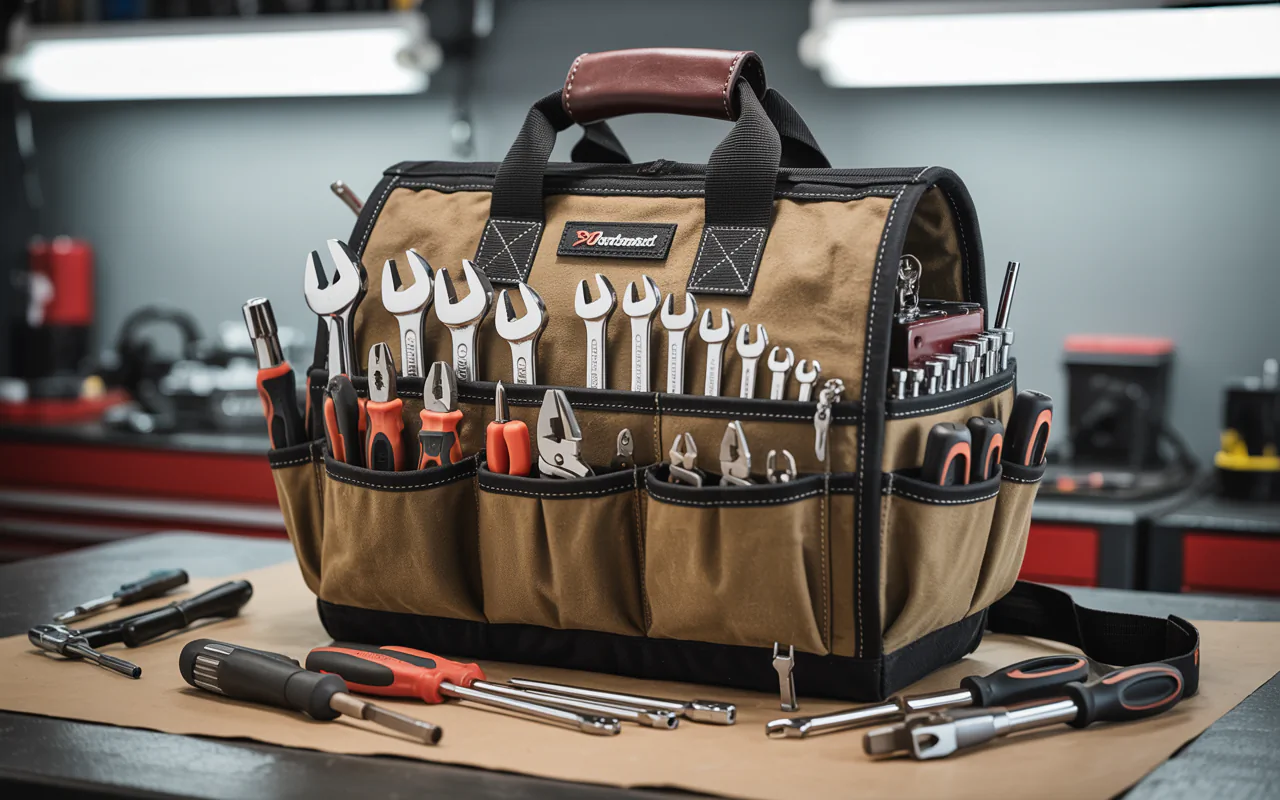
Learn how to choose a tool bag for mechanics with this simple guide. Find the right size, durable fabric, and smart pockets for your shop or mobile work.
If you work with your hands fixing cars, trucks, or heavy equipment, you know the feeling. You reach for a wrench, and it is gone. You look inside your old bag, and everything is a mess. Picking the right bag changes your whole day. I have spent years fixing vehicles, and I learned the hard way that a bad bag slows you down. This guide will help you pick a good one without stress. We will talk about size, material, pockets, and how you work. By the end, you will know exactly how to choose a tool bag for mechanics that fits your life.
What Makes a Good Tool Bag?
A good tool bag does more than hold metal pieces. It keeps your tools safe, dry, and easy to find. Think about your busiest day. You need a bag that stays open, stands up, and does not tip over. The bottom should be hard so it does not sag. The zippers should be strong. The straps should not hurt your shoulder. A cheap bag will tear in a few months. A good bag lasts years. That is why learning to choose a tool bag for mechanics is so important. You save money and time in the long run.
“A mechanic’s tool bag is like a second pair of hands. Pick one that works with you, not against you.” – Robert Hayes, Senior Auto Technician
5 Features to Look For When You Choose a Tool Bag for Mechanics
Let me break down the most important features. These are things I check before I buy any bag.
1. Size and Capacity
Size matters more than you think. A bag that is too small leaves tools scattered in your car. A bag that is too big gets heavy and clumsy. Start by listing the tools you carry every day. Do you have twenty sockets? Ten wrenches? Pliers, screwdrivers, a hammer? Lay them on a table. Measure the space they take. Then add 20 percent for new tools you might buy later. A 12-inch wide bag works for many shop mechanics. A 16-inch bag is better for mobile work where you need more gear. When you choose a tool bag for mechanics, think about your average workday, not your biggest job.
2. Material and Durability
The fabric of your bag decides how long it lasts. Cheap nylon tears fast. Polyester is okay but not great. Canvas is strong but heavy. The best material is thick denier nylon, like 600D or 1200D. Denier is the thickness of the threads. Higher denier means stronger fabric. Also look for a water-resistant coating. You do not want rain to rust your tools. Check the stitching too. Double stitching at stress points is a good sign. The bottom of the bag should have hard plastic or rubber feet. That keeps the fabric from rubbing on wet ground.
3. Pocket Layout and Organization
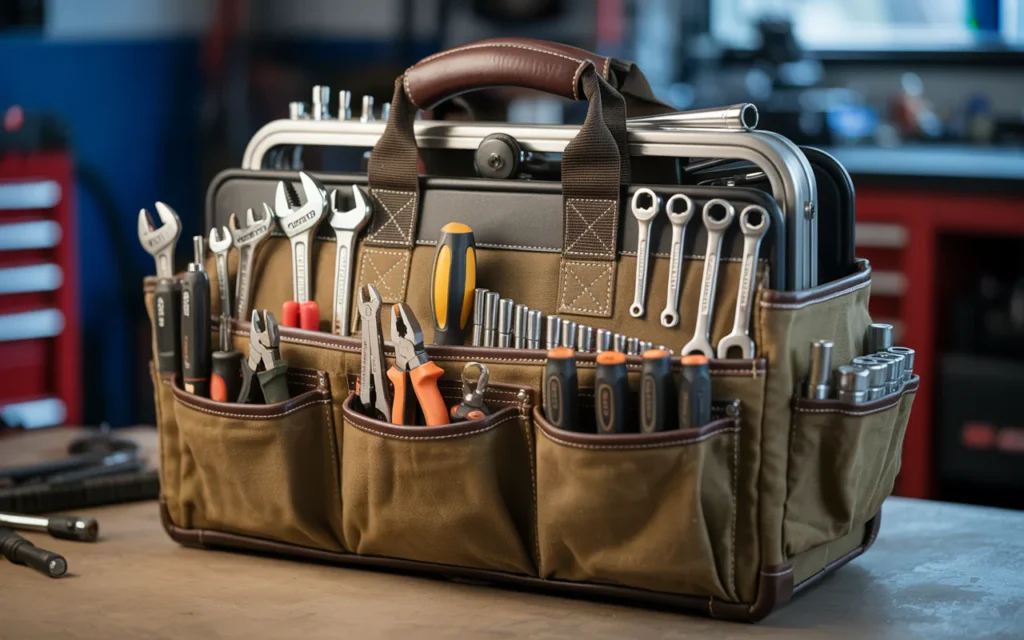
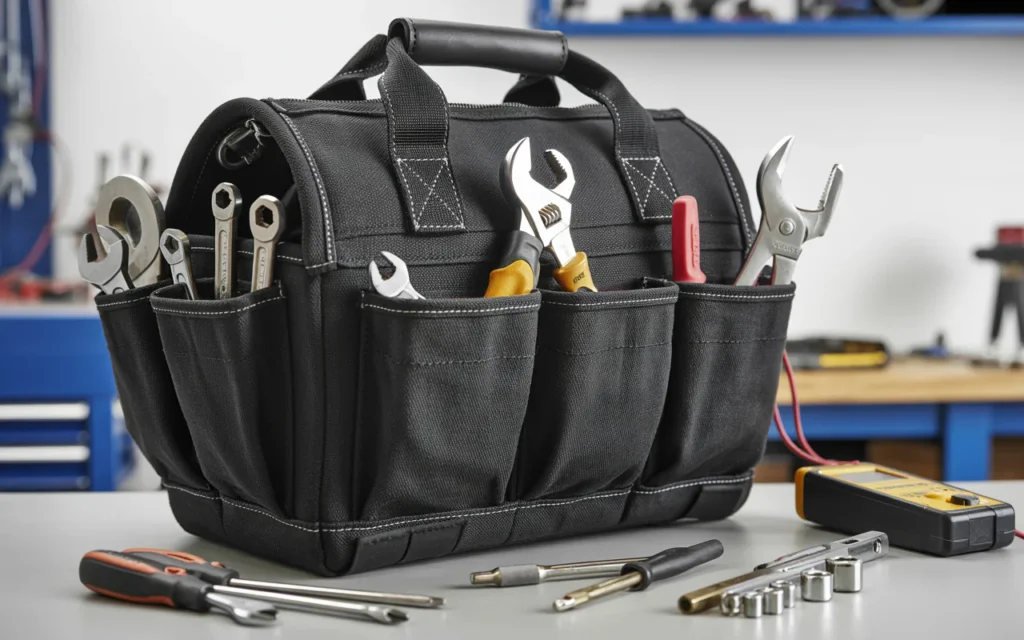
Pockets make or break your speed. A bag with no pockets is just a bucket. You want pockets inside and outside. Outside pockets hold things you grab often, like a flashlight or a marker. Inside pockets keep your screwdrivers upright. Some bags have elastic loops for small tools like picks and files. Others have hard plastic inserts that hold sockets. Think about how you work. Do you like everything in a specific spot? Then look for a bag with many small pockets. Do you just toss things in? Then a few big pockets are fine. The best way to choose a tool bag for mechanics is to imagine your morning routine. Can you find your 10mm socket in five seconds?
4. Portability and Carry Style
Carry style is personal. Some people like a shoulder strap. Others want a backpack. Some prefer a simple handle. Shoulder straps spread weight across your body. They are good for walking between bays or into a customer’s driveway. Backpack style bags are great for mobile mechanics who carry tools up stairs or across large parking lots. Handles are fine for short trips from your car to the shop. But a handle only bag gets heavy fast. Also check the strap padding. Thin straps dig into your shoulder. Wide, padded straps are much nicer.
5. Price and Warranty
Price tells you something, but not everything. A 20bagwillfailinsixmonths.A100 bag might last five years. The sweet spot is between 50and80 for a good quality bag. Look for brands that offer a warranty. Some companies replace a torn bag for free within one year. That shows they trust their product. Do not pay extra for a brand name without checking the features first. Sometimes a lesser known brand makes a better bag for less money.
“I tell my students to spend more on the bag than the tools inside. A cheap bag will lose your expensive tools faster than anything.” – Linda Park, Automotive Instructor
Table: Comparison of Common Tool Bag Materials
| Material | Strength | Weight | Water Resistance | Typical Price (12-inch bag) |
|---|---|---|---|---|
| 600D Nylon | Medium | Light | Good | 30−50 |
| 1200D Nylon | High | Medium | Very Good | 50−80 |
| Polyester | Low | Very Light | Poor | 20−35 |
| Canvas | High | Heavy | Medium (with coating) | 40−70 |
| Leather | Very High | Heavy | Good | 80−150 |
How to Match Your Tool Bag to Your Work Style
Your work style is the biggest clue. Let me walk you through three common types of mechanics.
For Shop Mechanics
If you work in a fixed shop, your bag sits on a cart or a shelf most of the day. You do not carry it far. So weight is not a big issue. You can get a larger, heavier bag with many pockets. Look for a bag with a wide opening. A metal or plastic frame at the top keeps the bag open. That way you see all your tools at once. You also want a hard bottom so the bag stands on its own. Shop mechanics often carry more tools, so a 16 to 18 inch bag works well.
For Mobile Mechanics
Mobile mechanics move around all day. You carry your bag from your truck to the car, then maybe to another car. Weight matters a lot. You want a lighter bag with a good shoulder strap or backpack straps. Look for a bag around 12 to 14 inches wide. That forces you to carry only what you need. Mobile work also means more exposure to weather. So pick a water-resistant bag. Some mobile mechanics use two smaller bags instead of one big one. One bag for common tools, one bag for specialty tools. That keeps the weight down.
For Home Garage Users
If you fix your own car on weekends, you do not need a heavy duty bag. But you still want something better than a plastic box. A medium sized bag with a handle is fine. You can keep it in your trunk or on a garage shelf. Look for a bag with a few outside pockets for your most used tools. Do not spend 100.A40 bag will serve you well for years at home. The key when you choose a tool bag for mechanics at home is to get something that fits in your storage space.
“After twenty years on the road, I switched from a big box to a backpack tool bag. My back thanks me every day.” – Marcus Cole, Mobile Mechanic
Common Mistakes When You Choose a Tool Bag for Mechanics (and How to Avoid Them)
I have seen many mechanics make the same errors. Let me list them so you do not repeat them.
Mistake 1: Buying based on looks alone. A bag might look tough, but the zippers could be cheap. Always check the zipper brand. YKK zippers are a good sign. Avoid no-name zippers.
Mistake 2: Getting a bag that is too big. A huge bag tempts you to fill it with tools you never use. Then it weighs 50 pounds. Your shoulder hurts. You work slower. Stay realistic.
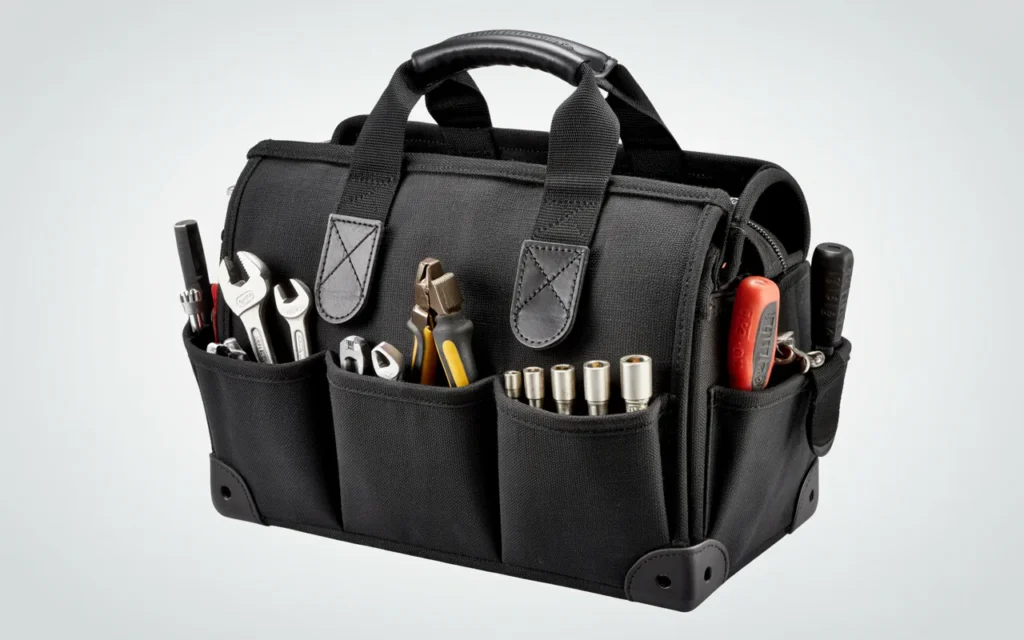
Mistake 3: Ignoring the bottom. Many bags have soft bottoms that get wet and dirty. They also tip over. Look for a reinforced bottom. Rubber feet help a lot.
Mistake 4: Forgetting about the opening. Some bags have a flap that closes with Velcro. Velcro gets weak and loud. Other bags use a drawstring. Drawstrings are slow. Double zippers across the top are the best. They open wide and close fast.
Mistake 5: Not testing the straps. Strap clips can break. Metal clips are better than plastic. Also check how the strap attaches to the bag. Sewn on straps are stronger than clipped on straps. When you choose a tool bag for mechanics, pull the strap hard in the store. If it feels weak, walk away.
Table: Tool Bag Size Guide Based on Tool Count
| Number of Tools (Typical) | Recommended Bag Width | Best For | Example Bag Weight (empty) |
|---|---|---|---|
| 10 – 20 small tools | 10 – 12 inches | Home garage, basic repairs | 1 – 2 lbs |
| 20 – 40 mixed tools | 12 – 14 inches | Shop mechanic, light mobile | 2 – 3 lbs |
| 40 – 60 tools | 14 – 16 inches | Heavy shop use, main bag | 3 – 5 lbs |
| 60+ tools | 16+ inches or multiple bags | Master tech, specialty work | 5+ lbs |
Tips to Extend the Life of Your Tool Bag
A good bag can last many years if you treat it right. Here are simple habits to keep your bag strong.
Keep it dry. Water rusts tools and rots fabric. If your bag gets wet, open it and let it air dry. Do not stuff it in a dark corner.
Clean the zippers. Dirt and grease build up in zipper teeth. Wipe them with a dry cloth. Sometimes add a little wax or zipper lubricant. Do not use oil. Oil attracts more dirt.
Do not overload it. Every bag has a weight limit. If you stuff it past the seams, the stitching will pop. Pay attention to how the bag feels when you lift it.
Store it off the ground. At home or in the shop, hang your bag on a hook or put it on a shelf. Concrete floors hold moisture. Moisture gets into the bottom fabric.
Check the straps often. A loose strap clip or a fraying strap can drop all your tools on the floor. Look at your bag once a month. Fix small tears with strong thread or take it to a shoe repair shop.
When you take care of your bag, you do not have to choose a tool bag for mechanics again for a long time. That is the goal.
Frequently Asked Questions (FAQ)
Q1: What size tool bag do most mechanics use?
Most shop mechanics use a 14 to 16 inch bag. Mobile mechanics often prefer a 12 inch backpack style. Home users can go smaller, around 10 to 12 inches.
Q2: Can I use a regular backpack as a tool bag?
You can, but a regular backpack lacks hard bottoms, tool pockets, and strong zippers. It will wear out fast. Spend a little more on a bag made for tools.
Q3: How much should I spend to choose a tool bag for mechanics that lasts?
Plan to spend 50to80 for a bag that lasts three to five years. Bags under 30oftenfailinmonths.Bagsover100 are nice but not necessary for most people.
Q4: What brand makes the best tool bag?
Several brands are trusted, like Klein Tools, Milwaukee, and Veto Pro Pac. But many good bags come from lesser known brands. Check the features, not just the name.
Q5: How do I clean my tool bag?
Brush off loose dirt. Wipe with a damp cloth and mild soap. Do not put it in a washing machine. The machine will break the zippers and straps. Air dry only.
Q6: Is a backpack tool bag better than a shoulder bag?
It depends on your job. Backpacks are better for walking long distances or climbing stairs. Shoulder bags are faster to grab one tool from. Think about your daily movement.
Q7: Can I fit power tools in a regular tool bag?
Some bags have a hard compartment for a drill or impact driver. Check the bag specs. For most power tools, you need a bag with a wider base and reinforced sides.
Q8: What is the lightest material for a tool bag?
Polyester is light, but it tears easily. 600D nylon is light enough and stronger. For the best balance, look for 600D or 800D nylon.
Conclusion
Learning to choose a tool bag for mechanics does not need to be hard. Look at your tools. Think about where you work. Check the material, the pockets, the zippers, and the straps. Avoid bags that are too big or too cheap. Spend between 50and80 for a bag that will serve you for years. Remember to care for your bag keep it dry and clean the zippers. A good tool bag is a quiet helper. It saves you time, protects your tools, and makes every repair a little easier. Now go find the bag that fits your hands and your work. You have earned it.
Related posts
 Top Tool Bags for Mobile Contractors: 2026 Buyer Guide
Discover the top tool bags for mobile contractors in 2026. Compare durable totes, backpacks, and multi-pocket organizers to find the best fit for your gear. For…
 Top Tool Bags for Plumbers: 2026 Selection Guide
Discover the top tool bags for plumbers in 2026. We compare durable, multi-pocket storage solutions to help you organize your gear effectively on the job. Plumbing…
 Best Tool Bag for HVAC Technicians in 2026
Find the right tool bag for HVAC technicians with our 2026 guide. Compare top-rated bags, backpacks, and pouches to keep your gear organized and protected. As…