
How Do I Prevent Tools From Rusting Inside My Tool Bag
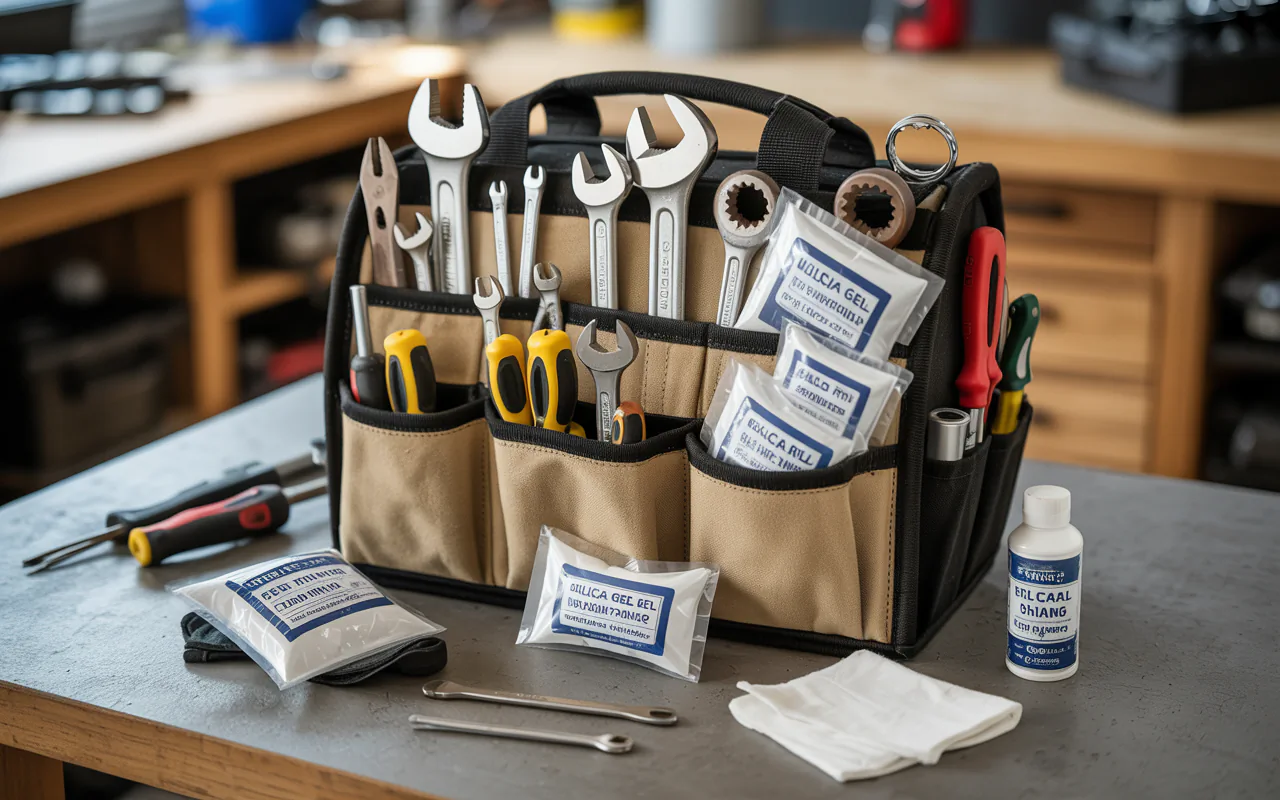
Learn how to prevent tools from rusting inside my tool bag using silica gel, oil, and dry storage. These simple steps keep your tools safe from moisture and rust for good.
I remember opening my tool bag one morning and finding my favorite pliers covered in orange rust. That feeling is awful. You take care of your tools, but moisture finds a way inside the bag. Rust can ruin a good tool fast. The good news is you can stop this problem with a few easy habits. Let me show you how to prevent tools from rusting inside my tool bag without spending much money or time.
Why Do Tools Rust Inside a Tool Bag?
Rust happens when iron meets oxygen and water. Your tool bag holds moisture from humid air, wet jobs, or even sweat from your hands. When you close the bag, that moisture stays trapped. Metal tools sit in a small, damp space for hours or days. That is a perfect home for rust.
“Moisture is the number one enemy of any metal tool. Stop the moisture, and you stop the rust before it starts.”
— Frank H. Meyer, Tool Maintenance Expert
Your bag might also collect dust and dirt. Dirt holds water against the metal surface. So a dirty tool rusts faster than a clean one. Also, some tool bags use cheap materials that trap humidity instead of letting it escape.
Simple Ways to Prevent Tools from Rusting Inside My Tool Bag
You do not need fancy products or a workshop. These methods work for anyone, anywhere. Use one or use all of them. Your tools will thank you.
Use Silica Gel Packs
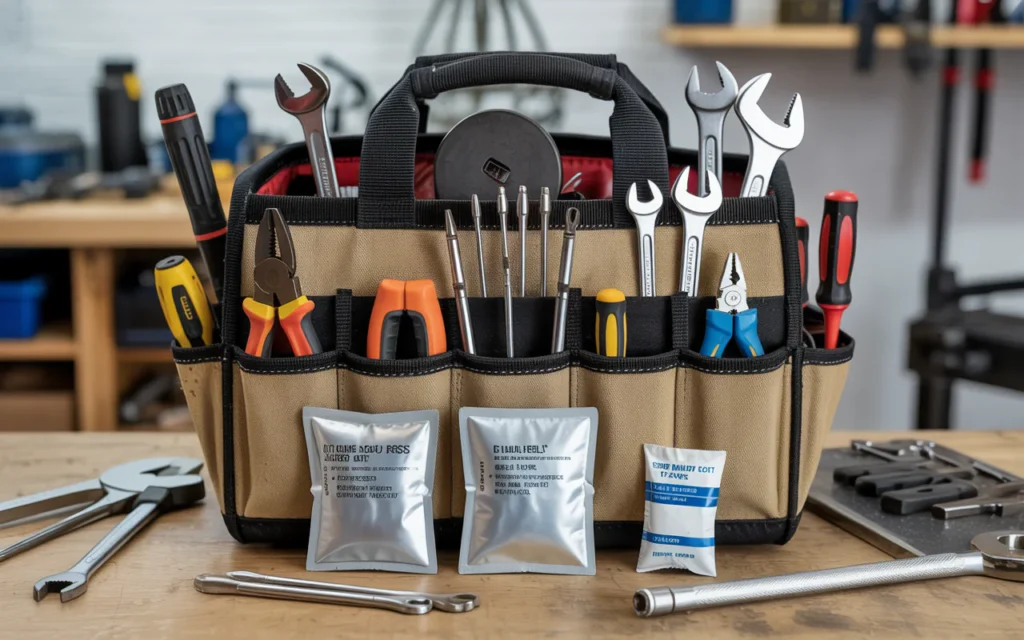
You find these small packets in shoe boxes or electronic packages. Do not throw them away. Silica gel absorbs moisture from the air. Drop two or three packs into your tool bag. They pull water away from your tools. Change them every few months or when they feel full. You can also buy reusable silica gel packs that change color when wet. Heat them in an oven to dry them out and use them again.
Apply a Thin Layer of Oil
Oil blocks air and water from touching the metal surface. You do not need expensive oil. A light machine oil, mineral oil, or even cooking oil works. Put a few drops on a soft cloth. Wipe each tool before you put it back in the bag. The layer should be very thin. Too much oil makes tools slippery and collects dirt. Do this once a week if you use your tools often. If you use them less, oil them after each use.
Keep Your Tools Dry Before Storing
This step sounds simple, but many people skip it. After you finish a job, wipe every tool with a dry rag. Pay extra attention to joints and hinges where water hides. If your tools get very wet, leave them out on a table for an hour before putting them back. Never put wet tools into a closed bag. That is like inviting rust to a party.
“Dry tools are happy tools. A thirty second wipe down saves you hours of rust removal later.”
— Linda Torres, Professional Handywoman
Choose the Right Tool Bag Material
Canvas and nylon bags breathe better than plastic or vinyl bags. Air can move through fabric bags. That helps moisture escape. Plastic bags trap humidity like a sealed container. Look for bags with mesh pockets or vents. Some tool bags have a waterproof bottom but breathable sides. That is a good balance. Avoid bags with rubber linings unless you add extra drying methods.
Add Vapor Corrosion Inhibitors (VCIs)
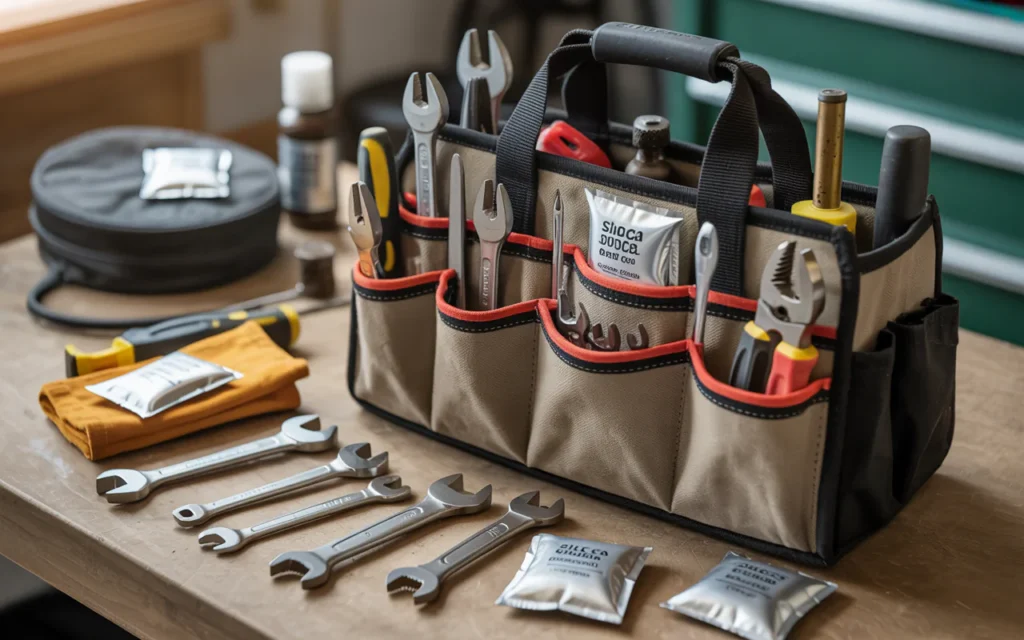
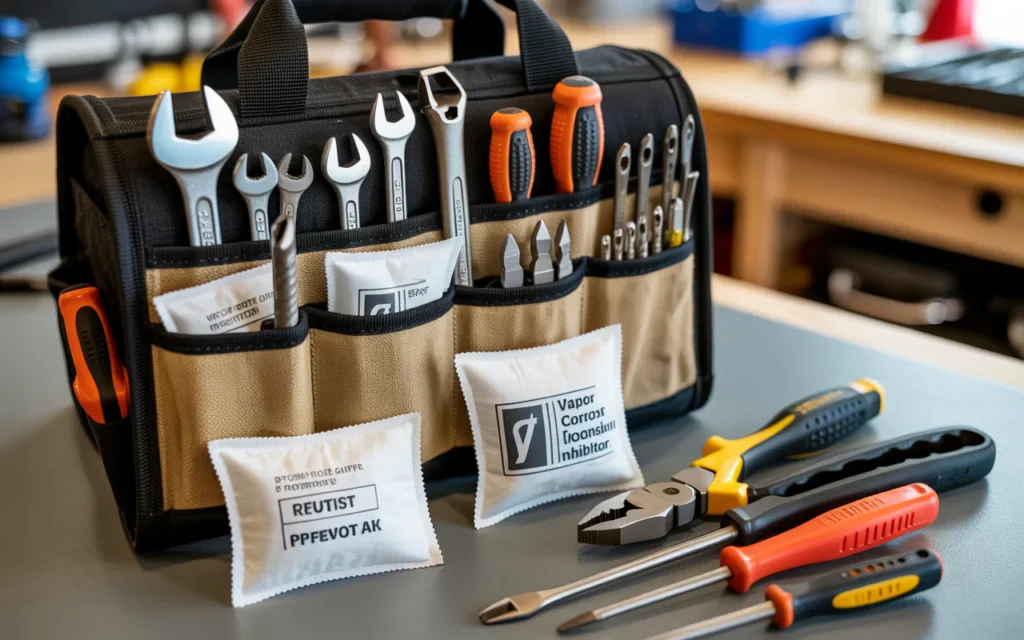
VCIs are special tabs or emitters that release a rust fighting vapor. The vapor forms a microscopic layer on your tools. You cannot see or feel it, but it stops rust. Drop one VCI tab into your bag. It works for up to two years. These are cheap and very effective. Many mechanics use them in their toolboxes. They work even better inside a closed tool bag.
Do’s and Don’ts for Rust Prevention
Here is a quick table to help you remember the best habits.
| Do This | Avoid This |
|---|---|
| Wipe tools dry before storing | Put wet tools into the bag |
| Add silica gel packs or VCIs | Leave the bag in a damp basement |
| Oil tools lightly once a week | Use too much oil that drips |
| Store bag in a dry, indoor place | Close the bag tightly when tools are wet |
| Clean dirt off tools regularly | Ignore small rust spots until they grow |
How to Remove Rust if It Already Started
Sometimes rust still appears. Do not panic. You can fix it. Use fine steel wool or a sanding sponge. Rub the rust gently until the metal looks clean. Then wipe away the dust. Apply a light coat of oil right away. For deep rust, try a rust remover gel. Follow the instructions on the bottle. After cleaning, start your prevention habits so the rust does not come back.
“Removing rust is easy. Stopping it from coming back is the real skill. Prevention takes less work than repair.”
— Carlos Mendez, Metal Fabricator
Best Products to Prevent Tools from Rusting Inside My Tool Bag
You can buy these items at hardware stores or online. They are all low cost and last a long time.
| Product Type | How It Helps | Cost Range |
|---|---|---|
| Silica gel packs (reusable) | Absorbs moisture from air | $5 – $10 for a pack of 10 |
| Light machine oil (3-in-1 or similar) | Creates protective barrier on metal | $4 – $8 per bottle |
| VCI emitter tabs | Releases rust fighting vapor | $8 – $15 for a 2 year supply |
| Mesh tool bag (vented) | Allows air circulation | $15 – $30 |
| Rust preventing spray (WD-40 Specialist) | Long term coating | $6 – $12 per can |
Frequently Asked Questions
How often should I oil my tools to prevent rust inside my tool bag?
Oil your tools once a week if you use them daily. For occasional use, oil them after every use. A thin layer is all you need.
Can I use rice instead of silica gel to prevent tools from rusting inside my tool bag?
Rice absorbs some moisture but not as well as silica gel. Rice can also leave dust and bits inside your bag. Silica gel works much better and stays clean.
What if my tool bag already smells musty?
A musty smell means moisture is inside. Empty the bag completely. Wipe the inside with a cloth dipped in vinegar and water. Let it dry in the sun for a few hours. Then add fresh silica gel packs before putting tools back.
Do plastic tool bags cause more rust than fabric bags?
Yes, plastic bags trap moisture. Fabric bags like canvas or nylon let air move through. If you must use a plastic bag, leave it slightly open when not in use. Also use extra silica gel or VCIs.
Will painting my tools prevent rust?
Paint works on large surfaces but not on moving parts like plier joints or wrench openings. Oil is better for most hand tools because it covers every small spot.
Conclusion
Rust does not have to ruin your tools. You now know exactly how to prevent tools from rusting inside my tool bag. Start with the easiest step. Wipe your tools dry before putting them away. Add a few silica gel packs. Oil them once a week. Choose a bag that lets air flow. These small habits take almost no extra time. But they will keep your tools looking new and working well for years. A rusty tool is a sad tool. A clean, dry tool is a joy to use. Take care of your tools, and they will take care of you.
Related posts
 Top Tool Bags for Mobile Contractors: 2026 Buyer Guide
Discover the top tool bags for mobile contractors in 2026. Compare durable totes, backpacks, and multi-pocket organizers to find the best fit for your gear. For…
 Top Tool Bags for Plumbers: 2026 Selection Guide
Discover the top tool bags for plumbers in 2026. We compare durable, multi-pocket storage solutions to help you organize your gear effectively on the job. Plumbing…
 Best Tool Bag for HVAC Technicians in 2026
Find the right tool bag for HVAC technicians with our 2026 guide. Compare top-rated bags, backpacks, and pouches to keep your gear organized and protected. As…