
How Can I Maintain My Automotive Tools
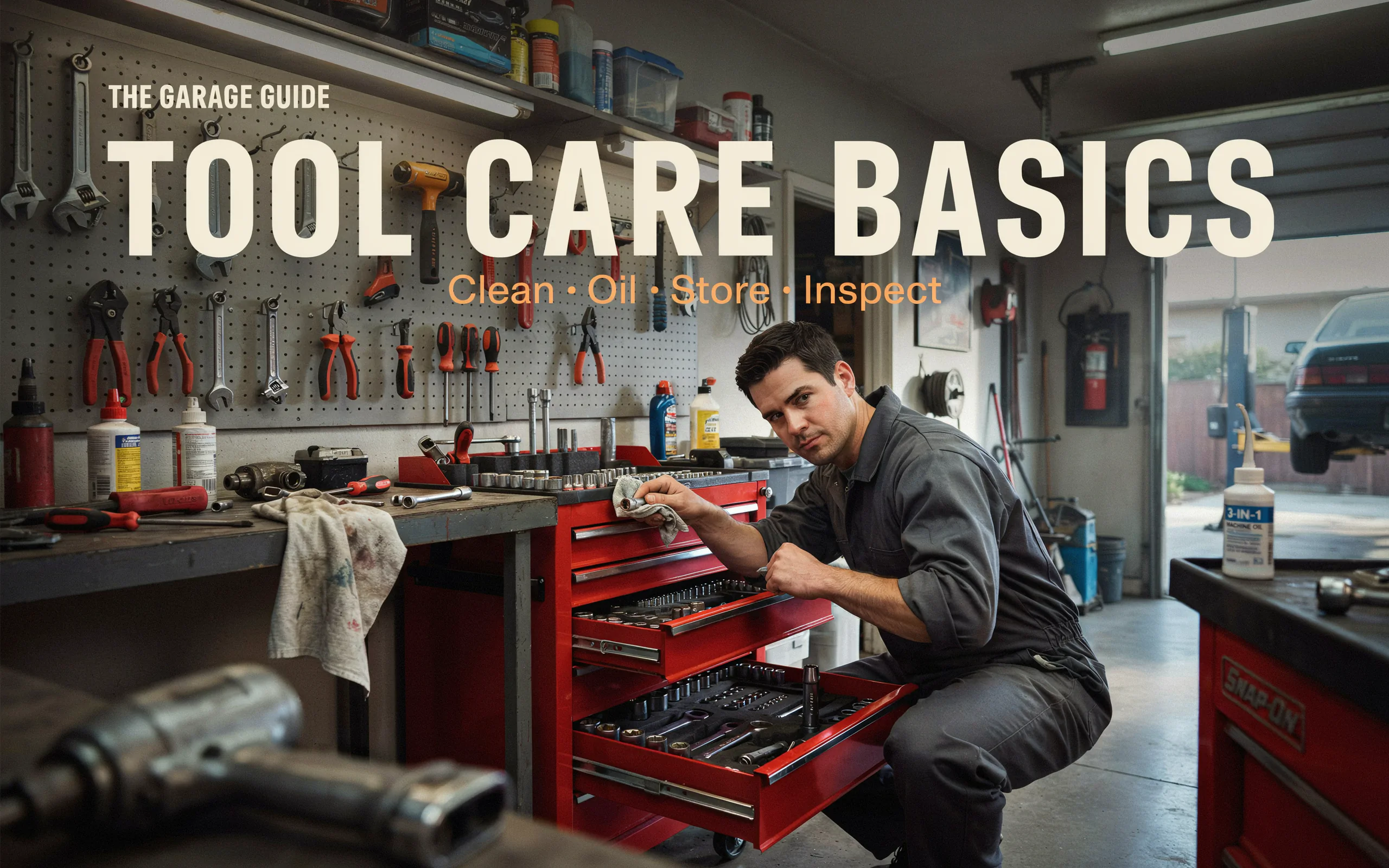
If you want to maintain my automotive tools properly, this guide covers cleaning, storage, rust prevention, and lubrication. Follow these steps to extend tool life, save money, and stay safe in your garage.
We have all been there. You finish a long repair on your car, your hands are covered in grease, and you just want to go inside and wash up. The last thing you feel like doing is wiping down your wrenches or organizing your socket set. But here is the hard truth: your tools will not take care of themselves. If you want them to last, you need to put in a little effort.
Think about what your tools go through every time you use them. They get covered in oil, dirt, and brake dust. They get dropped, banged around, and exposed to moisture. Over time, all of that takes a toll. A ratchet that used to click smoothly starts to feel stiff. A socket that once fit perfectly now slips. A screwdriver tip gets rounded and strips screws instead of turning them.
The good news is that keeping your tools in great shape does not have to be complicated or time-consuming. In fact, with a few simple habits, you can keep your gear working like new for decades. I have been working on cars for over twenty years, and I have learned these lessons the hard way. I have ruined tools by neglecting them, and I have saved tools by giving them a little attention. Let me share what I know so you can avoid my mistakes.
So, how can I maintain my automotive tools in a way that is practical and effective? The answer is simpler than you might think. It comes down to five basic areas: cleaning, lubrication, rust prevention, proper storage, and regular inspection. Let us break each one down.
Why You Should Care About Tool Maintenance
Before we get into the how, let us talk about the why. Why should you spend even five minutes on tool care? There are three big reasons.
First, it saves you money. Good automotive tools are not cheap. A quality torque wrench can cost over a hundred dollars. A full socket set can run even more. When you take care of your tools, they last longer. You do not have to replace them as often. That means more money in your pocket for other things, like parts for your next project.
Second, it keeps you safe. A worn-out wrench can slip off a bolt and send your hand flying into a sharp edge. A rusty ratchet can fail under pressure, causing you to lose your balance. Dull cutting tools require more force, which increases the chance of an accident. Proper maintenance reduces these risks.
Third, it makes your work easier. Clean, well-lubricated tools work better. They grip properly, turn smoothly, and cut cleanly. You get the job done faster and with less frustration.
As automotive tool specialist Draper puts it, “A well-maintained toolkit is about more than simply preserving expensive equipment. It’s about maintaining professional standards and ensuring consistent, reliable results”.
Cleaning Your Tools After Every Use
This is the single most important thing you can do. Cleaning your tools after each use removes dirt, grease, and moisture before they can cause damage. It takes just a few minutes, but it makes a huge difference.
When you finish a job, grab a clean rag and wipe down every tool you used. For light dirt, a dry rag is enough. For grease and grime, you may need a little more. A mild soap solution or a commercial degreaser works well. Dip the rag in the solution and wipe the tool clean. For stubborn buildup, use a soft brush or an old toothbrush to get into the crevices.
Here is a pro tip: never store a wet tool. Moisture is the enemy of metal. After you clean a tool, dry it thoroughly with a clean cloth. Make sure there is no moisture left on the surface or in any moving parts.
For power tools, the cleaning process is a bit different. Wipe down the casing and pay attention to the vents. Dust and debris can clog the vents and cause the tool to overheat. Use compressed air to blow out any particles that have collected inside.
Cleaning Methods for Common Automotive Tools
| Tool Type | Cleaning Method | What to Avoid |
|---|---|---|
| Wrenches and Sockets | Wipe with rag; use degreaser for heavy grime | Soaking in solvent for long periods |
| Ratchets | Wipe exterior; clean mechanism with light solvent if stiff | Submerging the entire ratchet in solvent |
| Screwdrivers | Wipe handle and tip; use brush for stuck-on debris | Using as a pry bar or chisel |
| Pliers | Wipe jaws and pivot; use brush for tight spots | Leaving grease in the pivot joint |
| Power Tools | Wipe casing; blow out vents with compressed air | Getting moisture into electrical parts |
| Air Tools | Wipe exterior; add pneumatic tool oil to fitting | Using standard oil instead of pneumatic oil |
Lubrication Keeps Things Moving Smoothly
Moving parts need lubrication. That includes ratchets, pliers, vice grips, and any tool with a hinge or gear. Without lubrication, these parts wear out faster. They become stiff and hard to use. In some cases, they can even seize up completely.
For ratchets, a drop or two of light machine oil on the mechanism does wonders. Work the oil in by turning the ratchet back and forth a few times. Wipe off any excess oil with a rag. Too much oil attracts dust and dirt, which can turn into a sticky paste. A little goes a long way.
For pliers and vice grips, apply a drop of oil to the pivot joint. Open and close the tool a few times to distribute the oil. Again, wipe off any excess.
For power tools with moving parts, follow the manufacturer’s recommendations. Some tools have sealed bearings that do not need lubrication. Others have grease fittings that require periodic attention.
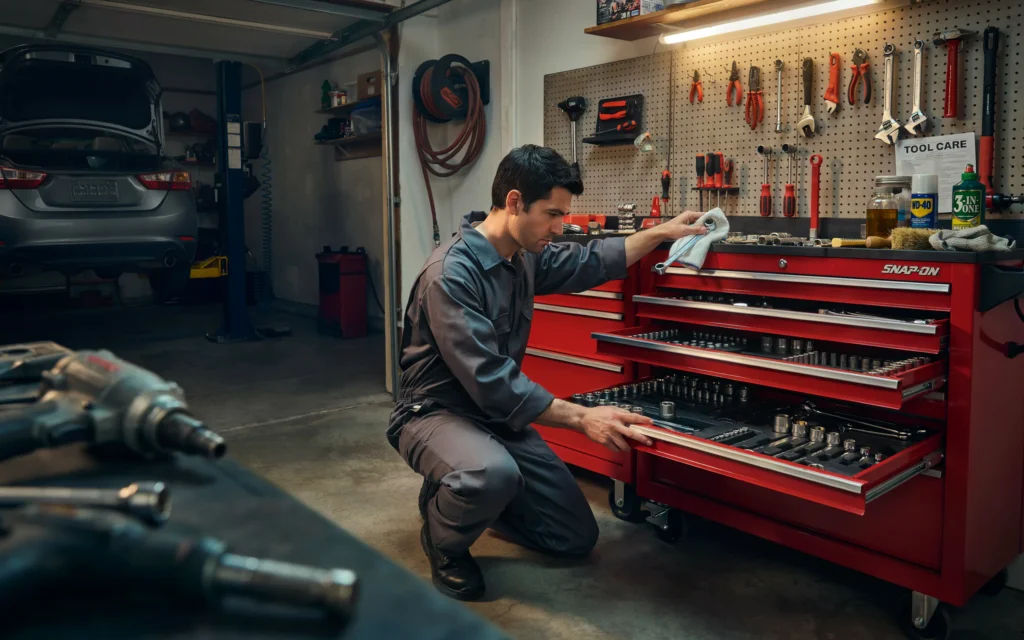
Here is an important point: do not use WD-40 as a lubricant. WD-40 is a solvent and water displacer, not a true lubricant. It can actually strip away existing lubrication and leave parts dry. Use a proper machine oil or a lubricant specifically designed for tools.
For air tools, lubrication is essential. Before each use, add a few drops of pneumatic tool oil to the air fitting. This keeps the internal parts lubricated and prevents rust from moisture in the compressed air. If you use air tools all day, re-oil them a few times throughout the day.
Preventing Rust and Corrosion
Rust is the biggest threat to your automotive tools. It eats away at metal, weakens parts, and ruins the appearance of your tools. Once rust sets in, it is hard to remove. Prevention is much easier than cure.
The key to rust prevention is keeping your tools dry. After cleaning, make sure every tool is completely dry before you put it away. Even a tiny bit of moisture can start the rusting process.
For extra protection, apply a light coat of oil to metal surfaces. Wipe the tool with an oily rag, then wipe off the excess. You want a thin film of oil, not a dripping mess. This oil film acts as a barrier against moisture.
There are also commercial rust inhibitors available. These products leave a protective coating on metal surfaces that lasts for months. Some are sprays, some are liquids, and some are even lanolin-based formulas. They are worth considering if you live in a humid area or if you store your tools for long periods.
Another simple trick is to put silica gel packs in your toolbox or tool drawers. These little packets absorb moisture from the air. You can buy them in bulk online or save them from items you purchase.
If you do find rust on a tool, do not panic. Light surface rust can be removed with a wire brush, steel wool, or a rust remover product. For heavier rust, you may need to soak the tool in a rust remover solution. After removing the rust, clean the tool thoroughly and apply a protective coating.
Storing Your Tools the Right Way
How you store your tools is just as important as how you clean them. Poor storage leads to rust, damage, and lost tools.
First, keep your tools in a dry place. Do not store them in a damp basement or an uninsulated garage where moisture can collect. If your garage is humid, consider using a dehumidifier. A dry environment is your best defense against rust.
Second, use proper storage solutions. A toolbox with drawers is ideal. It keeps your tools organized and protected from dust and moisture. Drawer liners or foam cutouts are helpful because they keep tools from banging into each other. When metal tools hit each other, they can chip or scratch, which creates spots where rust can start.
Third, put your tools back where they belong. This sounds obvious, but it is easy to forget. When you finish a job, take the extra minute to return each tool to its proper place. This prevents loss and makes it easier to find what you need next time.
Fourth, store power tools properly. For cordless tools, remove the batteries before long-term storage. Batteries can drain over time or even leak if left in the tool. Store the tool and battery separately in a cool, dry place.
For portable tool kits, invest in a good case. A hard-shell case with padding protects your tools from drops and impacts. If you transport your tools often, this is especially important.
Storage Tips for Different Tool Types
| Tool Type | Best Storage Method | Things to Avoid |
|---|---|---|
| Hand Tools (wrenches, sockets) | Toolbox with drawer dividers | Leaving loose in a pile |
| Power Tools | Original case or dedicated shelf | Storing with battery attached |
| Air Tools | Clean, dry toolbox drawer | Storing with moisture in the lines |
| Precision Tools (calipers, torque wrenches) | Original case with foam insert | Storing with other tools that could bump them |
| Diagnostic Tools | Clean, dry cabinet or drawer | Exposure to dust or chemicals |
| Extension Cords | Coiled loosely on a hook | Coiling tightly or kinking |
Regular Inspection Catches Problems Early
You do not need to inspect your tools every day, but you should check them regularly. A quick visual inspection can catch problems before they become serious.
Look for signs of wear and tear. Are the jaws of your wrenches spreading? Are the teeth on your ratchet worn down? Are there cracks in the handles of your screwdrivers? Are the cutting edges of your tools still sharp?
Check moving parts for smooth operation. Does your ratchet click properly? Do your pliers open and close smoothly? Do your power tools run without unusual noise or vibration?
For precision tools like torque wrenches, calibration is important. A torque wrench that is out of calibration can over-tighten or under-tighten fasteners. This can lead to damaged parts or unsafe conditions. Have your torque wrench calibrated regularly, or check it against a known standard.
For power tools, check the cords and plugs. Look for frayed wires, cracks in the insulation, or bent prongs. These are safety hazards that need to be addressed immediately.
For air tools, check the hoses and fittings. Look for cracks, leaks, or damage. A damaged air hose can burst under pressure, which is dangerous.
Specific Care for Different Types of Tools
Not all tools are the same. Different types of tools have different needs. Let us look at a few specific categories.
Hand Tools
Hand tools include wrenches, sockets, ratchets, screwdrivers, and pliers. These are the tools you use most often, and they are relatively easy to maintain.
After each use, wipe them clean and put them away. For ratchets, a drop of oil on the mechanism every few weeks keeps them smooth. For screwdrivers, keep the tips clean and free of debris. For pliers, oil the pivot joint and keep the jaws clean.
One thing to watch out for is using the wrong tool for the job. Never use a standard socket with an impact gun. Use impact-rated sockets that are designed to handle the higher forces. Never use a screwdriver as a pry bar or chisel. These abuses damage the tool and create safety hazards.
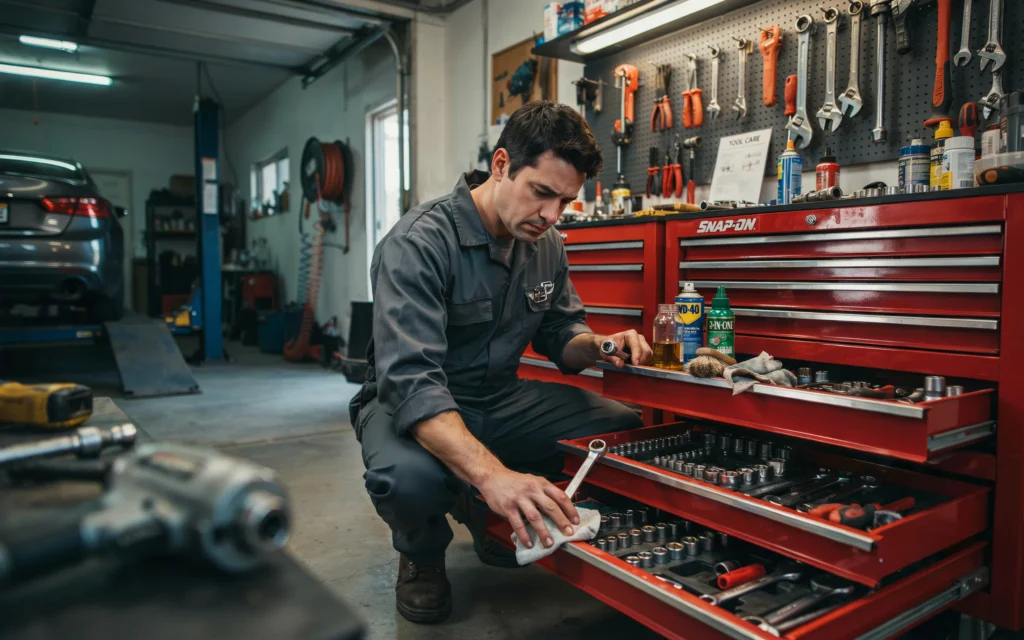
Power Tools
Power tools require more attention than hand tools. They have motors, batteries, and moving parts that need care.
For cordless tools, take care of the batteries. Charge them properly and store them in a warm, dry place. Cold and damp conditions can shorten a battery’s life significantly. Do not leave batteries on the charger indefinitely. Once they are fully charged, remove them.
For corded tools, check the cord regularly for damage. Do not carry the tool by the cord. Unplug the tool when not in use.
Clean the vents on power tools after each use. Dust and debris can block the vents and cause the tool to overheat. Use compressed air to blow out the vents.
Air Tools
Air tools need special care because they are powered by compressed air, which contains moisture. This moisture can cause rust inside the tool.
The most important thing you can do is lubricate your air tools regularly. Add a few drops of pneumatic tool oil to the air fitting before each use. This oil protects the internal parts from moisture and keeps them moving smoothly.
Also, drain your air compressor regularly. The compressor collects moisture from the air, and that moisture can end up in your tools. Draining the compressor removes this moisture and protects your tools.
Precision Tools
Precision tools like torque wrenches, micrometers, and calipers need extra care. They are sensitive instruments that can be damaged by rough handling or improper storage.
Store precision tools in their original cases. The cases are designed to protect them from bumps and impacts. Keep them clean and dry. A light coat of oil on the moving parts helps prevent rust and keeps them operating smoothly.
For torque wrenches, always wind them back to their minimum setting after use. This maintains their accuracy and prevents the internal spring from taking a set.
Creating a Maintenance Routine
The best way to maintain my automotive tools is to make maintenance a habit. It does not have to be a big production. A few minutes of care after each use, plus a more thorough check every few months, is all it takes.
Here is a simple routine you can follow:
After each use: Wipe down your tools with a clean rag. Check for any damage or wear. Put them back in their proper place.
Every few weeks: Oil moving parts like ratchets, pliers, and vice grips. Check the condition of power tool cords and batteries. Inspect hand tools for signs of wear.
Every few months: Do a thorough inspection of all your tools. Clean them more deeply if needed. Check torque wrench calibration. Drain your air compressor. Replace any worn or damaged tools.
As Graham King from Parkers says, “A new tool for working on your car can be a significant investment, but without proper care you might have to stump up for a replacement sooner than expected”. Taking a few minutes for maintenance is a small price to pay for tools that last.
Common Mistakes to Avoid
Over the years, I have made plenty of mistakes with my tools. Here are some of the most common ones, so you can avoid them.
Storing tools wet. This is the fastest way to ruin tools. Always dry your tools completely before putting them away.
Using the wrong lubricant. WD-40 is not a lubricant. Use proper machine oil or pneumatic tool oil.
Over-lubricating. Too much oil attracts dirt and dust. A drop or two is usually enough.
Using the wrong tool for the job. This damages both the tool and the part you are working on. Use the right tool for the job.
Ignoring damage. If a tool is damaged, replace it or repair it. Do not keep using a damaged tool.
Skipping calibration. For torque wrenches and other precision tools, regular calibration is essential.
Frequently Asked Questions
How often should I clean my automotive tools?
You should wipe down your tools after every use. A deeper cleaning with degreaser can be done as needed, depending on how dirty they get.
What is the best way to remove rust from tools?
For light rust, use a wire brush or steel wool. For heavier rust, soak the tool in a rust remover solution, then scrub and apply a protective coating.
Can I use WD-40 on my tools?
WD-40 is good for displacing moisture and loosening stuck parts, but it is not a lubricant. Use proper machine oil or pneumatic tool oil for lubrication.
How do I store my tools to prevent rust?
Keep them in a dry place. Use silica gel packs in your toolbox to absorb moisture. Apply a light coat of oil to metal surfaces.
How often should I lubricate my ratchets?
Apply a drop or two of light machine oil to the mechanism every few weeks, depending on how often you use them.
Do I need to calibrate my torque wrench?
Yes. Calibration is important for accuracy. Have it calibrated regularly, or check it against a known standard.
How do I maintain cordless tool batteries?
Store them in a warm, dry place. Charge them fully, then remove them from the charger. Do not let them deplete entirely.
What should I do if my air tool is not working properly?
Check the lubrication first. Add a few drops of pneumatic tool oil to the air fitting. Also, check the air pressure and make sure the compressor is working properly.
Conclusion
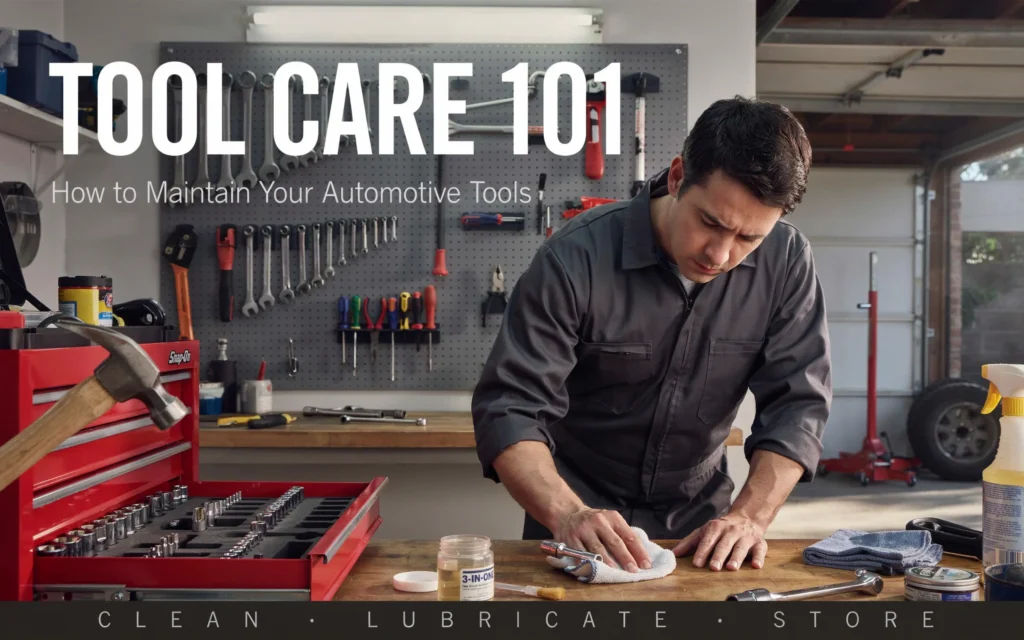
Taking care of your automotive tools is not complicated, but it does require consistency. The question “how can I maintain my automotive tools” has a straightforward answer: clean them, lubricate them, protect them from rust, store them properly, and inspect them regularly.
These habits do not take much time, but they pay off in a big way. Your tools will last longer, work better, and keep you safer. You will save money on replacements and enjoy your work more because you are using tools that perform as they should.
I have been working on cars for over two decades, and I can tell you from experience that the mechanics who take care of their tools are the ones who get the job done right. It is a simple principle: treat your tools with respect, and they will treat you well in return.
As the old saying goes, “A poor workman blames his tools”. But a good workman takes care of his tools. Which one do you want to be?
Start today. The next time you finish a job, take five minutes to wipe down your tools and put them away properly. You will be glad you did.
Related posts
 Which Tool Kit Is Worth Buying? How to Choose the Right Set for Your Home
Wondering which tool kit is worth buying? Compare basic household sets, mechanic kits, and power tool combos to find the best tools for your budget and…
 Which Hand Tools Are Made in the USA? Reliable Brands and Buying Rules
Discover which hand tools are still made in the USA. Compare top domestic brands, tool categories, and learn how to verify origin labels before buying. Several…
 Why Do Campers Carry Multi Tools? Practical Uses in the Field
Why do Campers carry multi tools to handle gear repairs, campsite setup, food prep, and field fixes with minimal weight. Here is why one belongs in…