
How Do I Prevent Tools From Rusting Inside A Tool Bag
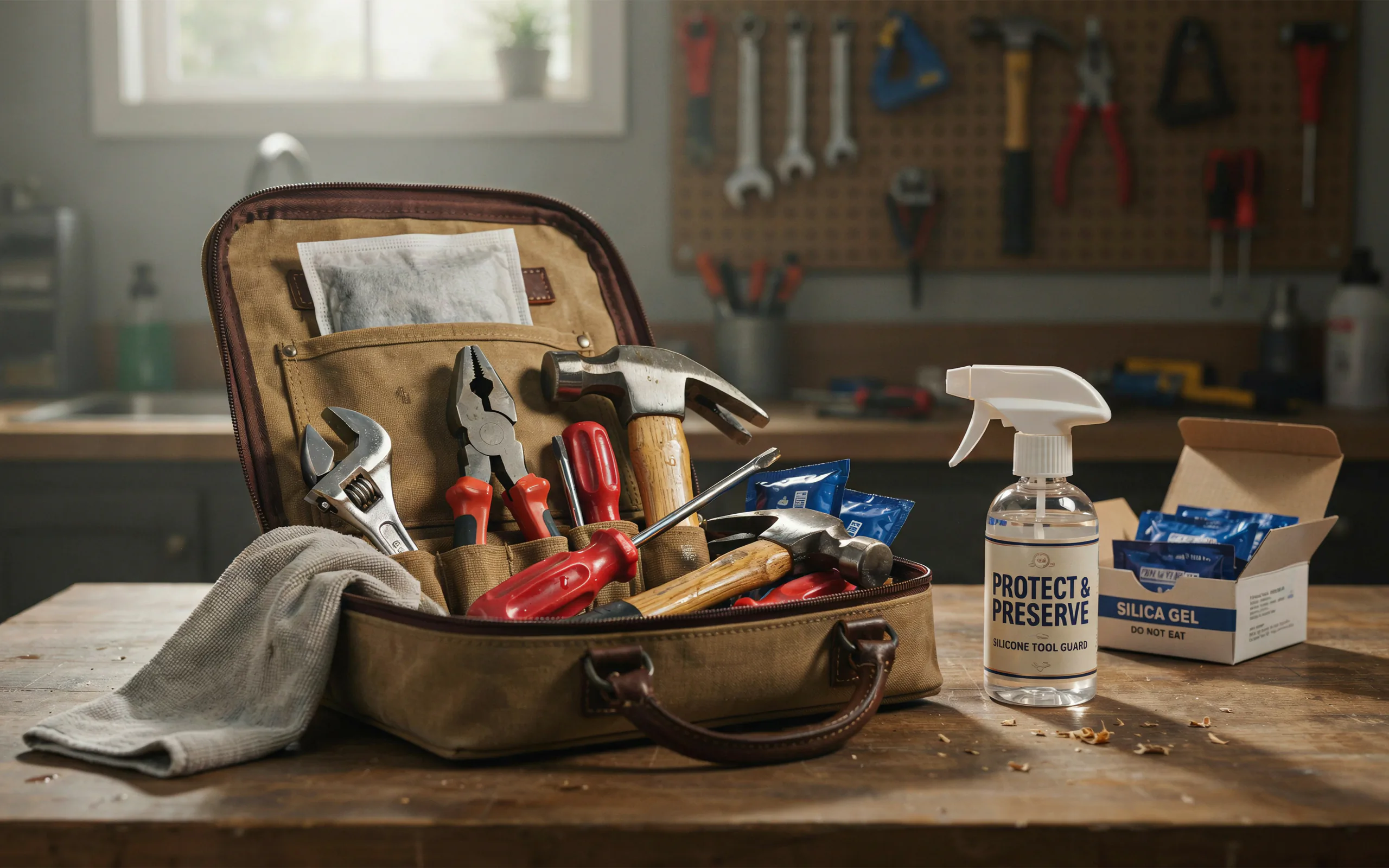
Wondering how to prevent tools from rusting inside a tool bag? This guide covers oiling, silica gel, VCI emitters, and smart storage habits to keep your gear rust-free for years.
Rust is the silent enemy of every tool owner. You open your tool bag one day, and there it is. That orange-brown dust on your favorite wrench or the rough spots on your pliers. It feels like a betrayal. You took care of your tools, but they still rusted.
I have been there. I lost a good set of chisels to rust because I left them in a bag after a rainy job. I did not clean them. I just threw them in and zipped it up. A week later, they were ruined. That mistake taught me a lot. Now, I want to share what I learned so you do not have to learn the hard way.
This guide answers the question: How do I prevent tools from rusting inside a tool bag? We will look at why rust happens, what you can do to stop it, and the best products to use. Let us get your tools protected.
Why Do Tools Rust Inside a Tool Bag?
To stop rust, you need to know what causes it. Rust is a chemical reaction. It happens when iron or steel meets oxygen and moisture. Your tool bag is a perfect place for this to happen.
Think about it. You carry your bag to job sites. You work in the rain or sweat on your tools. You put them back in the bag while they are still damp. The bag traps that moisture inside. Over time, that trapped humidity causes rust to form on your metal tools.
Humidity is another big problem. If you store your bag in a garage or shed, the air can be very humid. That moisture gets into the bag and settles on your tools. Salt and heat can make rust happen even faster. This is why tools near the ocean or in hot garages rust so quickly.
The Simple Steps to Prevent Tools from Rusting Inside a Tool Bag
You do not need expensive tools or a science degree to stop rust. You just need a few simple habits. Here are the most effective ways to protect your gear.
Clean Your Tools Before You Put Them Away
This is the most important rule. You must clean your tools after every use. It sounds basic, but many people skip this step. They are tired after a job and just want to go home. I know the feeling. But this simple action saves you a lot of trouble.
Dirt, sawdust, and sweat hold moisture against the metal. When you put a dirty tool in your bag, you are inviting rust to form.
How to clean your tools:
- Wipe them down with a dry cloth to remove loose dirt.
- For greasy tools, use warm water and a little dish soap.
- Scrub with a soft brush to get into the crevices.
- Dry them completely with a clean towel.
- Let them air dry for a few minutes before putting them in the bag.
Cleaning removes the moisture and dirt that cause rust. It is the first and most powerful defense you have.
Add a Protective Oil Coating
After cleaning your tools, you should add a protective layer. Oil creates a barrier between the metal and the air. This stops moisture from reaching the surface.
You do not need a special oil. Many common oils work well. A light coat of general-purpose oil is enough to protect your tools. Focus on the metal parts. Wipe a thin layer over the surfaces.
Some people use petroleum jelly. It works well and stays in place for a long time. Others use specialized rust-prevention sprays. These products are designed to leave a protective film that lasts for months.
A quick tip: Keep an oily rag in a sealed bag. After you clean a tool, give it a quick wipe with the oily rag before storing it. This makes the process fast and easy.
Choose the Right Tool Bag Material
The bag itself matters. Some materials hold moisture more than others.
Canvas bags are a popular choice. Canvas is absorbent. It can soak up some moisture, which helps keep your tools dry. However, you must be careful. Do not leave a canvas bag in the rain or snow. It will soak up water and hold it against your tools.
Synthetic bags are less absorbent. They do not soak up water, but they can trap moisture inside. If you put wet tools in a synthetic bag, the moisture has nowhere to go. It stays inside and causes rust.
Which bag is better?
| Bag Material | Pros | Cons |
|---|---|---|
| Canvas | Absorbs moisture; breathable | Can get wet and stay wet |
| Synthetic | Durable; easy to clean | Traps moisture inside |
If you use a canvas bag, you can wash it occasionally. Just put it in the washing machine on a gentle cycle. This keeps the bag clean and removes any built-up moisture.
Use Desiccants to Absorb Moisture
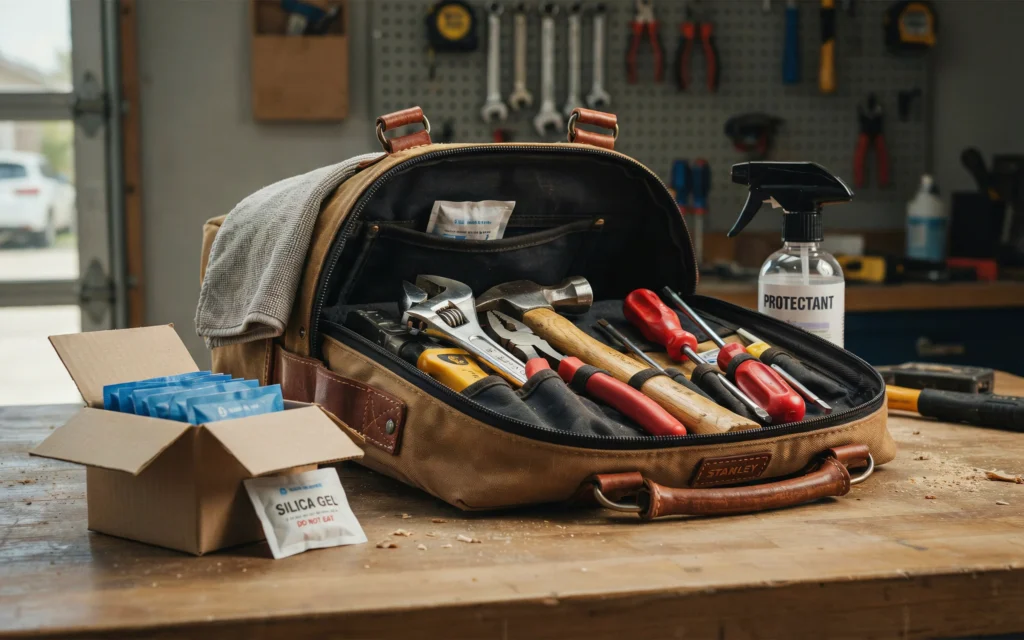
Desiccants are materials that absorb moisture from the air. They are a simple and effective way to prevent tools from rusting inside a tool bag.
Silica gel packets are the most common desiccant. You find them in shoe boxes, electronics, and food packages. Do not throw them away. Save them for your tool bag.
Place a few silica gel packets in your tool bag. They will pull moisture out of the air. This keeps the inside of your bag dry. Silica gel works best in sealed spaces. Keep your bag closed when you are not using it.
Other desiccant options:
- Uncooked rice: Put a handful of rice in a small cloth bag. The rice acts as a desiccant and absorbs moisture.
- Kitty litter: Some types of kitty litter are made from silica gel. You can put a little in a sock and place it in your bag.
- Activated charcoal: This also absorbs moisture and can help with odors.
Desiccants need to be replaced or recharged. When the silica gel changes color, it is full of moisture. You can dry it out by putting it in the oven on low heat. This makes it reusable.
Try Vapor Corrosion Inhibitors (VCI)
VCI is a more advanced rust prevention method. These products release a vapor that forms a protective layer on metal surfaces. The vapor reaches every part of your tool, even the hard-to-reach spots.
VCI products come in many forms. You can buy small capsules, tabs, or emitters. Place them inside your tool bag. They protect your tools for months or even years.
How VCI products work:
| Product Type | How It Works | Best For |
|---|---|---|
| VCI Capsules | Release vapor that coats metal | Small tool bags and boxes |
| VCI Tabs | Infused with inhibitors | Tight spaces and drawers |
| VCI Bags | Plastic bags with built-in protection | Long-term storage |
VCI technology is used in industrial settings to protect expensive parts. It works well for tools too. It is a set-it-and-forget-it solution. You put the product in your bag and it does the work for you.
Keep Your Bag in a Dry Place
Where you store your tool bag matters. Even with all the above steps, a damp storage space will cause problems.
Do not leave your bag on a concrete floor. Concrete can wick moisture from the ground. Put your bag on a shelf or a wooden pallet. This keeps it off the damp floor.
If you store your bag in a garage or shed, consider using a dehumidifier. This removes moisture from the air in the whole room. It helps protect everything in your storage space, not just your tools.
Keep your bag away from windows and doors. These areas can let in rain and humidity. A cool, dry place is best for storing your tools.
Common Mistakes That Cause Rust
Many people make mistakes that lead to rust. Here are some common ones to avoid.
Putting tools away wet: This is the number one cause of rust. Always dry your tools completely before storing them.
Using the wrong oil: Some oils attract moisture. Use a proper rust-prevention oil or a light machine oil.
Forgetting to change desiccants: Desiccants only work until they are full. Replace or recharge them regularly.
Leaving the bag open: An open bag lets in humid air. Keep your bag closed when you are not using it.
Storing the bag in a damp place: Your storage area matters. Keep your bag in a dry, climate-controlled space if possible.
My Personal Routine for Rust Prevention
I want to share my routine with you. It keeps my tools rust-free all year long.
- After each job: I wipe down every tool with a dry cloth.
- If the tool is dirty: I wash it with soap and water, then dry it completely.
- I apply a light coat of oil to all metal surfaces.
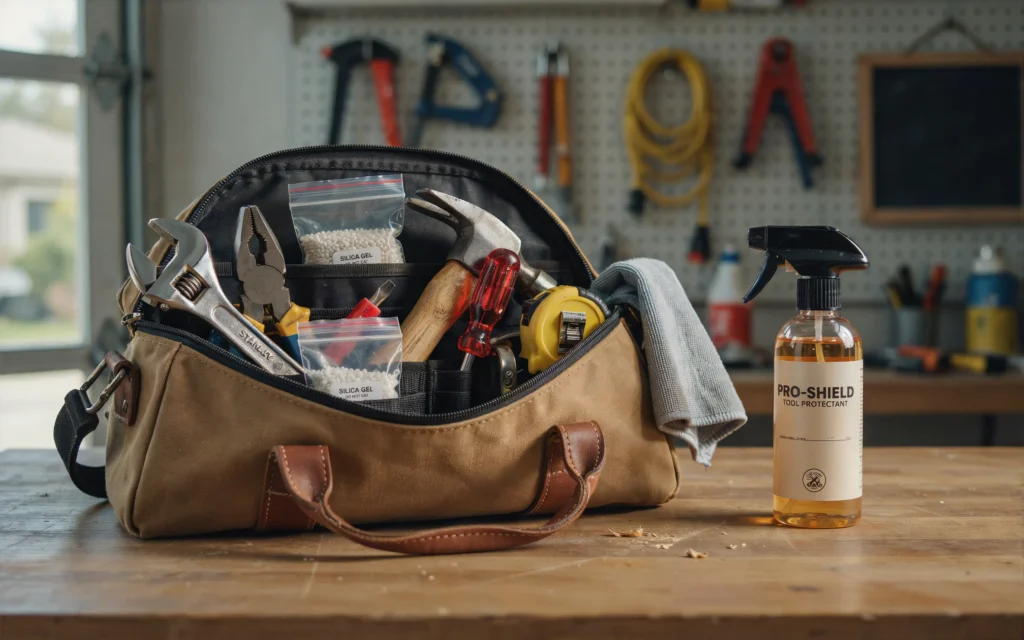
- I put the tools back in my bag with a few silica gel packets.
- I keep my bag in my house or a climate-controlled garage.
- Once a month: I check my tools for any signs of rust. I replace the silica gel packets if they are full.
This routine takes less than five minutes after each job. It has saved me hundreds of dollars in replacement tools.
“A tool is an extension of the hand. If you care for your hand, you must care for your tool.” – Thomas J. Glover, Tool Collector and Restorer.
What to Do If Your Tools Are Already Rusty
If your tools already have rust, do not panic. You can fix them. Here is how.
For light surface rust, use steel wool or a rust eraser. Rub the rust off gently. Then clean and oil the tool as usual.
For more stubborn rust, soak the tool in white vinegar. The vinegar dissolves the rust. Let it soak for a few hours. Then scrub it with a brush. Rinse it with water and dry it completely. Oil it right away to prevent new rust.
For heavy rust, you can use a commercial rust remover. Follow the instructions on the product. These removers work fast but can be harsh. Always wear gloves and work in a well-ventilated area.
“Rust is not the end of a tool’s life. It is a call to action. Clean it, oil it, and it will serve you again.” – Sarah K. Benson, Workshop Educator.
A Comparison of Rust Prevention Methods
Here is a table to help you choose the best method for your needs.
| Method | Cost | Effort | Effectiveness |
|---|---|---|---|
| Cleaning and Oiling | Low | High | Very High |
| Silica Gel Packets | Low | Low | High |
| VCI Emitters | Medium | Very Low | Very High |
| Dehumidifier | High | Low | High |
| Rice Desiccant | Very Low | Medium | Medium |
Choose the methods that fit your budget and your habits. The best approach is to use several methods together.
Frequently Asked Questions
1. How often should I oil my tools to prevent rust?
You should oil your tools after every use. A light coat is all you need. If you do not use a tool often, oil it once a month to keep it protected.
2. Can I use WD-40 to prevent rust on my tools?
Yes, WD-40 can help prevent rust. It displaces moisture and leaves a protective layer. However, it is not a long-term rust inhibitor. For better protection, use a product designed for rust prevention.
3. How many silica gel packets do I need for my tool bag?
The number depends on the size of your bag. For a small bag, two or three packets are enough. For a large bag, use five or more. You can also buy larger desiccant containers for bigger bags.
4. Are VCI emitters safe to use around my tools?
Yes, VCI emitters are safe. They release a non-toxic vapor that protects metal. They do not harm your tools or your health.
5. Can I store my tools in a plastic bag to prevent rust?
A plastic bag can trap moisture. If your tools are not perfectly dry, they will rust faster in a plastic bag. Use a breathable bag or add desiccants if you use plastic.
6. What is the best way to dry my tools after cleaning?
Use a clean, dry cloth to wipe them down. Then let them air dry for a few minutes. Make sure there is no moisture left before you put them in your bag.
7. Does stainless steel rust in a tool bag?
Stainless steel is rust-resistant, but it is not rust-proof. It can still rust in the right conditions. You should still clean and oil your stainless steel tools.
“Prevention is cheaper than replacement. A few minutes of care saves hours of work and money.” – David R. Miller, Master Craftsman.
Conclusion
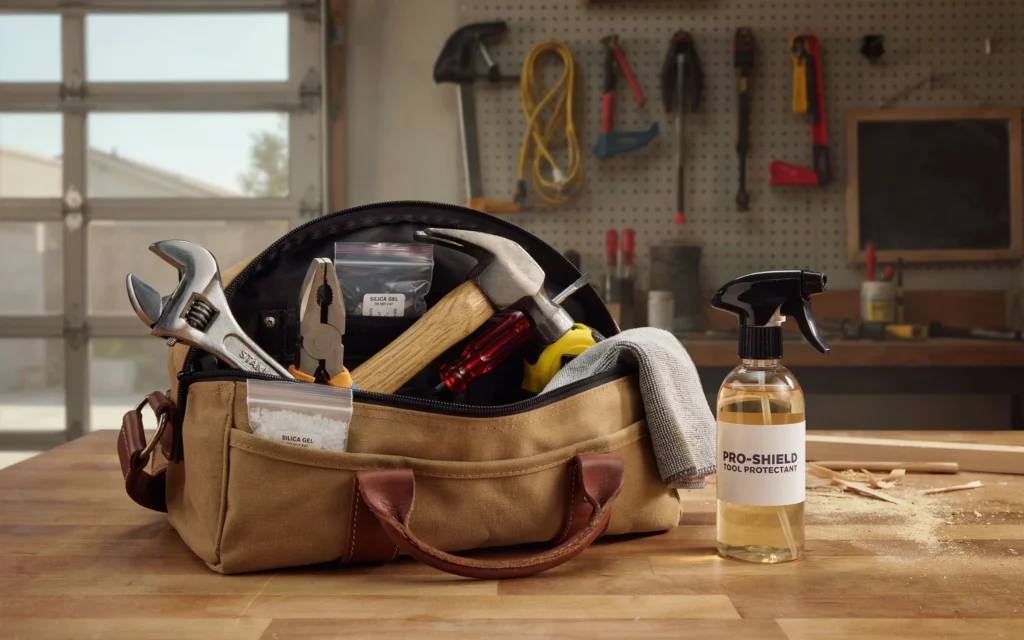
Rust does not have to ruin your tools. You can prevent tools from rusting inside a tool bag with a few simple habits. Clean your tools after every use. Add a protective oil coating. Use desiccants to absorb moisture. Choose the right bag material. Store your bag in a dry place.
These steps take very little time. But they make a huge difference. Your tools will last longer. They will work better. And you will save money on replacements.
The best part is that you do not need to be an expert. Anyone can do this. Start today. Clean your tools. Oil them. Put some silica gel in your bag. You will thank yourself next time you open your bag and find your tools clean and rust-free.
Your tools are an investment. Protect them. They will protect you in return.
Related posts
 Which Tool Kit Is Worth Buying? How to Choose the Right Set for Your Home
Wondering which tool kit is worth buying? Compare basic household sets, mechanic kits, and power tool combos to find the best tools for your budget and…
 Which Hand Tools Are Made in the USA? Reliable Brands and Buying Rules
Discover which hand tools are still made in the USA. Compare top domestic brands, tool categories, and learn how to verify origin labels before buying. Several…
 Why Do Campers Carry Multi Tools? Practical Uses in the Field
Why do Campers carry multi tools to handle gear repairs, campsite setup, food prep, and field fixes with minimal weight. Here is why one belongs in…