
Are Pre-Made Home Tool Kits Worth It
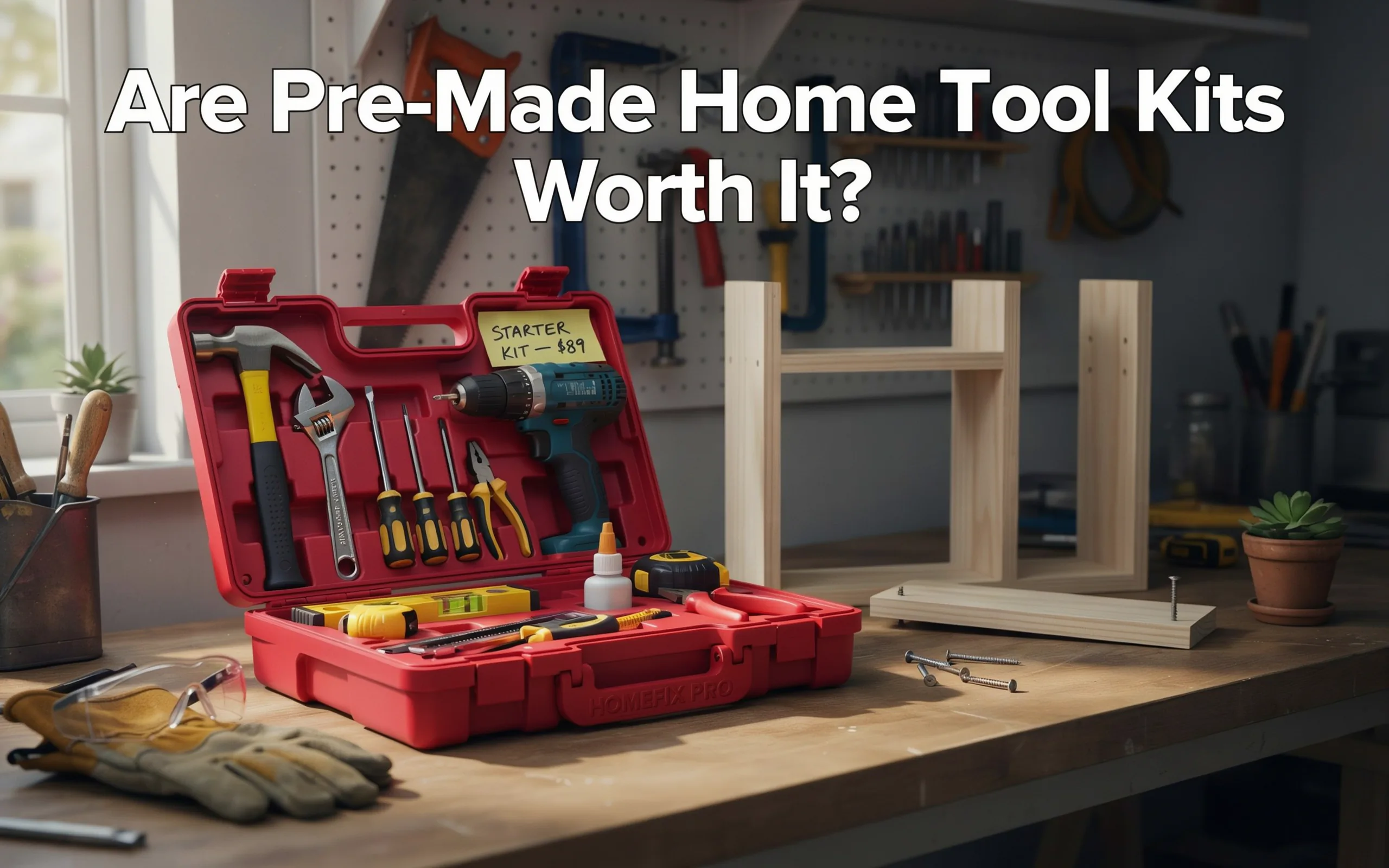
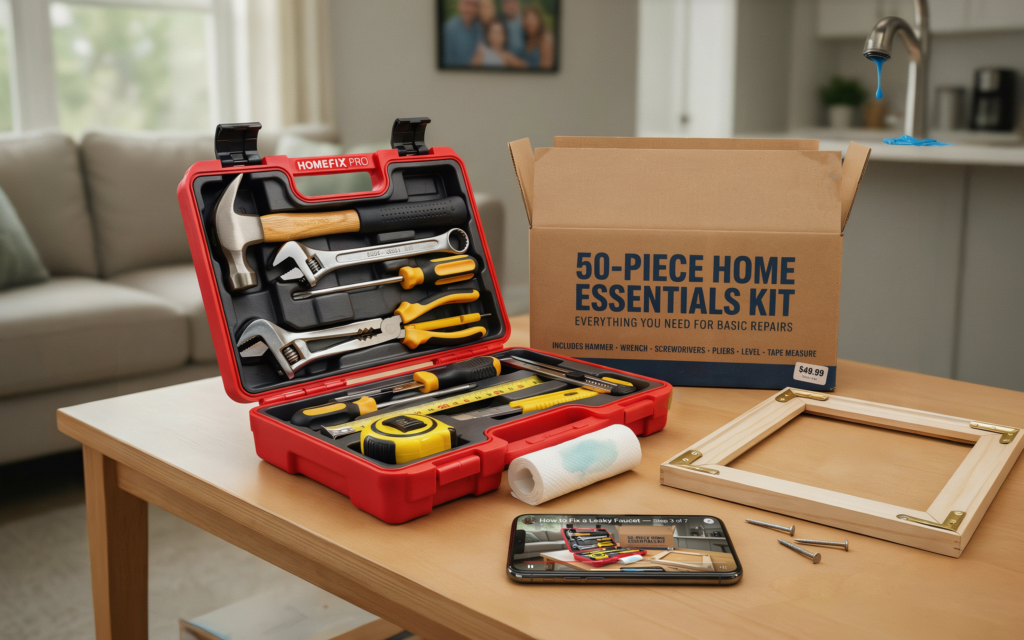
Many new homeowners ask: Are pre-made home tool kits worth it? After testing popular kits, we found they save time and money for basic repairs. But if you need professional quality, building your own set is better. Learn the full truth inside.
You just moved into your first apartment or house. The sink starts dripping. A picture hook falls off the wall. You open the drawer and find… nothing. No hammer. No screwdriver. No pliers. Just old takeout menus and a dead battery.
This is when many people run to the store or click online to buy a pre-made home tool kit. The box looks neat. Everything fits inside a plastic case. The price seems fair. But then you start wondering: Are pre-made home tool kits worth it or should you buy each tool separately?
I have fixed things around my own home for over fifteen years. I have bought cheap kits, expensive kits, and built my own set from scratch. In this article, I will give you a straight answer. No fancy words. No sales pitch. Just real help so you can decide what works best for your home and your wallet.
Let me start with a short story. My first tool kit was a small blue box from a discount store. It cost twelve dollars. The hammer head flew off after three swings. The screwdriver handles cracked in the cold. That kit taught me a hard lesson. But later I found better kits that actually last. So are pre-made home tool kits worth it? The answer depends on what you need and how much you want to spend.
What Exactly Is a Pre-Made Home Tool Kit?
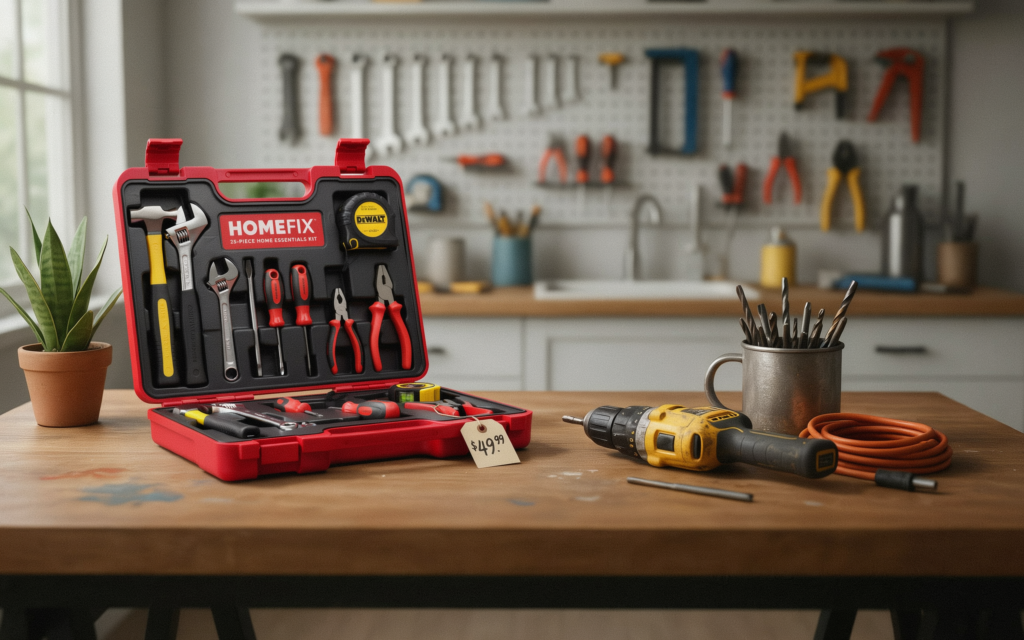
A pre-made home tool kit is a collection of basic tools sold together in one package. The kit usually comes in a plastic or fabric case with a spot for each tool. You do not have to pick individual items. Someone else already decided what a typical home needs.
These kits are sold everywhere. Hardware stores, online shops, and even grocery stores carry them. Prices range from ten dollars to over one hundred dollars. The cheap ones look tempting. The expensive ones often include better materials.
Common Items Found in Standard Kits
Most kits include the same basic tools. Here is what you can expect to find:
- Claw hammer (usually 8 to 16 ounces)
- Flathead and Phillips screwdrivers in two or three sizes
- Adjustable wrench (small to medium size)
- Slip-joint pliers
- Tape measure (10 to 16 feet)
- Utility knife with snap-off blades
- Level (small 6 to 9 inches)
- Needle-nose pliers
- Combination wrench set (metric or standard, rarely both)
- Screwdriver bits and a simple bit holder
Better kits add a small handsaw, hex keys (Allen wrenches), a stud finder, or a multi-bit screwdriver. The plastic case becomes important because it keeps everything organized. Loose tools get lost. A good case prevents that.
So are pre-made home tool kits worth it if they include all these items? The short answer is yes for many people. But we need to look at quality. A hammer that breaks is worse than no hammer at all.
The Good and The Bad: A Quick Comparison
Let me put the pros and cons side by side. This table will help you see the big picture quickly.
| Pros of Pre-Made Kits | Cons of Pre-Made Kits |
|---|---|
| Save time shopping | Tools often low quality |
| Lower upfront cost | Duplicate tools you do not need |
| Everything fits in one case | Hard to replace single broken tool |
| Great for small apartments | Cases can be bulky or cheap |
| Good for beginners | Missing some important tools |
| Make a nice housewarming gift | No room to add your own tools |
As you can see, are pre-made home tool kits worth it depends on whether the pros match your situation. If you have never held a hammer, a basic kit gives you a start. If you fix things every weekend, you will feel frustrated by weak handles and loose joints.
Bob Vila, a well-known home improvement expert, once said, “A beginner is better off with a simple, affordable tool kit than with no tools at all. You can always upgrade the pieces you use most.”
That quote hits the mark. A pre-made kit gets you working today. You do not need to drive to three stores or spend hours reading reviews. But you also accept that some tools might not last forever.
Cost Breakdown: Pre-Made Kit vs. Building Your Own
Money matters. Let me show you a real cost comparison. I checked prices at a major hardware store last week. I compared a popular twenty-dollar pre-made kit against buying each tool separately at the same store.
| Tool | Pre-Made Kit Cost | Individual Cost |
|---|---|---|
| Hammer | (included) | $8 |
| 2 screwdrivers | (included) | $6 |
| Adjustable wrench | (included) | $7 |
| Pliers | (included) | $5 |
| Tape measure | (included) | $4 |
| Utility knife | (included) | $3 |
| Level | (included) | $4 |
| Plastic case | (included) | $8 (similar case) |
| Total | $20 | $45 |
The pre-made kit costs less than half the price. But here is the catch. The individual tools in that price comparison are not fancy. They are the store brand. Yet they are often better than what comes in a twenty dollar kit. The individual hammer might have a wooden handle that feels solid. The kit hammer might have a hollow plastic handle.
So are pre-made home tool kits worth it for saving money? Yes, but only if you accept lower quality. If you spend forty or fifty dollars on a better kit, the quality gets much closer to individual tools. I have used a forty dollar kit for five years. Only one screwdriver tip broke. That is a fair trade.
Tim Carter, a trusted contractor and writer, explains it this way: “Never buy the cheapest kit on the shelf. Spend just a little more, and you will get tools that do not fail when you need them most.”
I agree completely. A ten dollar kit is almost always a waste of money. A fifty dollar kit can serve you for a decade.
Who Benefits Most from Pre-Made Kits?
Not everyone needs a garage full of brand-name tools. Let me help you see which group you fit into.
For Beginners and Renters
If you are new to home repairs, are pre-made home tool kits worth it? Absolutely yes. You do not know yet which tools you will use often. A kit gives you a little of everything. You can hang pictures, tighten a loose chair leg, and fix a running toilet.
Renters also benefit because you are not responsible for major repairs. Your landlord handles the big stuff. You just need to do small tasks. A small kit fits in a closet or under the sink. When you move, you grab one box and go.
I remember my first apartment. I had no tools. My friend gave me a small pre-made kit for my birthday. That little kit helped me assemble furniture, change shower heads, and open paint cans. I felt capable. That feeling matters.
For Frequent DIYers
If you already build shelves, replace faucets, or repair appliances, a pre-made kit might disappoint you. You need better quality. You also need specific tools that most kits skip. For example, few kits include a good wire stripper or a pipe wrench.
However, some experienced DIYers keep a pre-made kit as a backup. They leave it in their car or at a vacation home. They know that the tools are not their best, but they work fine for quick fixes.
Tom Silva, from the TV show This Old House, says, “I have a small pre-made kit in my truck for emergency repairs. It saves me from going back to the shop for simple jobs. But my main tools are all individual pieces I chose myself.”
So the answer to are pre-made home tool kits worth it for experienced people is: maybe as a secondary set. But your primary set should be custom built.
When Should You Avoid Pre-Made Kits?
I want to be fair. Pre-made kits are not always the right choice. Here are clear situations where you should say no.
First, if you do heavy work like construction, remodeling, or automotive repair. The tools in standard kits are too small and weak for these jobs. You need heavy duty hammers, long handle wrenches, and high torque screwdrivers. A pre-made kit will break quickly.
Second, if you already own several tools. Buying a kit gives you duplicates you do not need. You end up with three tape measures and five hammers. That wastes money and space.
Third, if you care about ergonomics. Cheap kit tools often have hard plastic handles that hurt your hands after five minutes. Individual tools let you choose rubber grips, curved handles, or anti slip surfaces.
Fourth, if you need specialty tools. Pre-made kits never include things like a basin wrench, a voltage tester, or a drywall saw. These kits target general home use only.
Finally, if you want tools to last a lifetime. Individual tools from reputable brands can last decades. Pre-made kit tools often last two or three years of light use. The plastic cases break first. Then the hinges snap. Then you have a loose pile of cheap tools in a bag.
So before you click buy, ask yourself honestly are pre-made home tool kits worth it for your actual lifestyle. For many people, the answer is yes. For others, building your own set is better in every way.
How to Choose a Quality Pre-Made Tool Kit
Maybe you decided to buy a kit. Smart choice. But do not grab the first box you see. Follow these tips to get a good one.
Check Handle Comfort
Open the box if you can. Hold the hammer and screwdrivers. Do the handles feel solid? Are they rubber or soft plastic? Hard, slippery handles are bad. They cause blisters and slips. Good handles have texture and a little give when you squeeze.
Look for Basic Warranty
Many kit brands offer a one year warranty. Some offer lifetime warranty on the tools. Read the package. A warranty shows the company believes in their product. No warranty means they expect things to break.
A Note on Storage Cases
The case matters more than you think. Cheap cases have thin plastic hinges that snap after ten opens. Look for cases with metal hinges or fabric bags. Fabric tool rolls actually last longer than hard plastic. They also fit in drawers better.
Also check how the tools stay in place. Some kits have slots so tight you fight to remove the screwdriver. Others are so loose that tools fall out when you carry the case. Find a balance. The tool should come out with one gentle pull but not fall out when you turn the case upside down.
Marie Kondo, organizing expert, once said, “A tool kit should spark joy when you open it. If the case frustrates you, you will avoid using the tools altogether.”
I love that advice. A frustrating case means your tools stay hidden. Hidden tools cannot help you fix things.
Look for kits that include a small parts organizer. Some have a clear lid with compartments for nails, screws, and wall anchors. That extra feature makes the kit much more useful.
Frequently Asked Questions (FAQ)
1. Are pre-made home tool kits worth it for a college student?
Yes. College students live in dorms or small apartments. They need basic tools for hanging posters, fixing bikes, or adjusting desk lamps. A fifteen to twenty dollar kit works fine for two or three years of light use.
2. What is the best price range for a good pre-made kit?
Spend between thirty and sixty dollars. Kits below thirty dollars often have very poor quality. Kits above sixty dollars are overpriced for what they include. At the forty dollar mark, you get decent tools that last.
3. Can I add my own tools to a pre-made kit?
Sometimes. Many hard cases have empty slots or removable foam. You can pull out cheap tools you never use and put in your own pliers or screwdrivers. Fabric bags are even easier to customize.
4. How long does a typical pre-made tool kit last?
With light home use (once or twice a month), expect three to five years. With weekly use, one to two years. The hammer and pliers last longest. The screwdriver tips and tape measure break first.
5. Are pre-made home tool kits worth it compared to borrowing tools?
Borrowing is free but inconvenient. You cannot fix a leak at 9 PM if your neighbor is asleep. Owning your own kit gives you freedom. Even a cheap kit pays for itself after one or two repairs that you do not hire someone for.
6. Do pre-made kits include safety gear?
Very few do. You usually need to buy safety glasses and work gloves separately. That is one weakness of most kits. I recommend adding these two items yourself. They cost less than ten dollars total.
7. Which brand makes the best pre-made home tool kit?
Stanley, Craftsman, and Workpro offer good quality in the forty to sixty dollar range. Avoid unknown brands with fake five star reviews. Look for brands that also sell individual tools. That shows they care about their reputation.
Conclusion
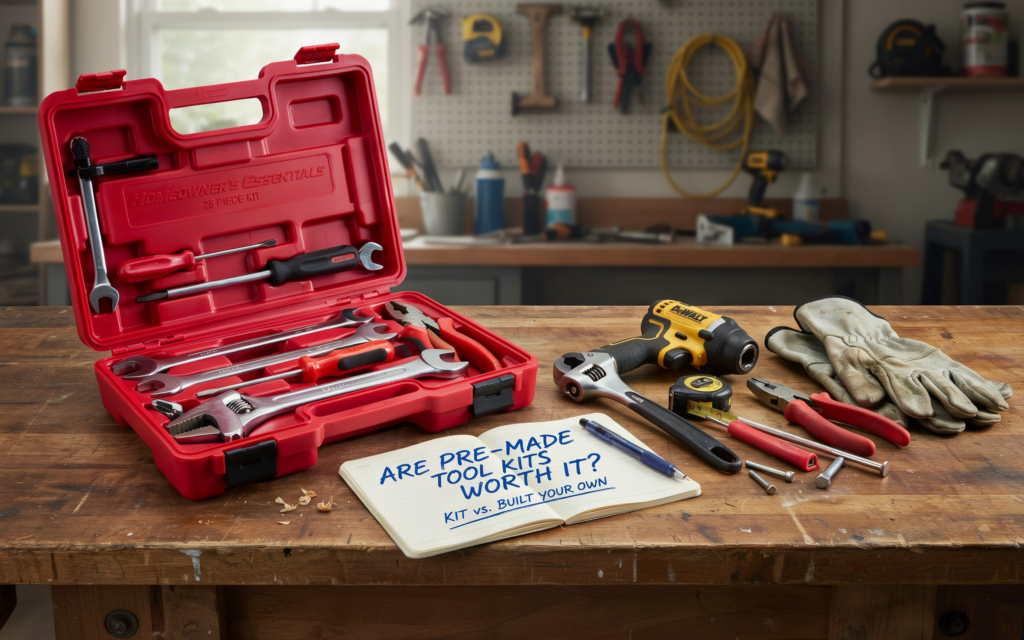
So let me answer the question clearly. Are pre-made home tool kits worth it for most people? Yes, with a few important conditions.
Buy a pre-made kit if you are a beginner, a renter, or a homeowner who only does small repairs once a month. Spend at least thirty dollars. Avoid the ten dollar kits. Look for comfortable handles and a decent case. A good kit will save you time, money, and frustration.
Do not buy a pre-made kit if you work on heavy projects every week. Build your own set instead. Buy individual tools from trusted brands. You will spend more money upfront, but each tool will last for years. Your hands will thank you.
I have used both approaches. My first kit broke quickly. My second kit, which cost forty dollars, still sits in my closet. I added a few extra tools over time. The case holds everything. Every time I open it, I feel ready to fix whatever breaks next.
That feeling of readiness is what matters most. Whether you buy a kit or build your own, just get some tools in your home. A loose screw will not fix itself. A dripping faucet will not stop on its own. Having the right tool at the right time turns a stressful problem into a five minute job.
Now look at your home. Open that drawer. Do you have a hammer within reach? If not, go buy a kit today. Start with something simple. Learn as you go. And remember: even a modest tool kit is better than an empty drawer.
Related posts
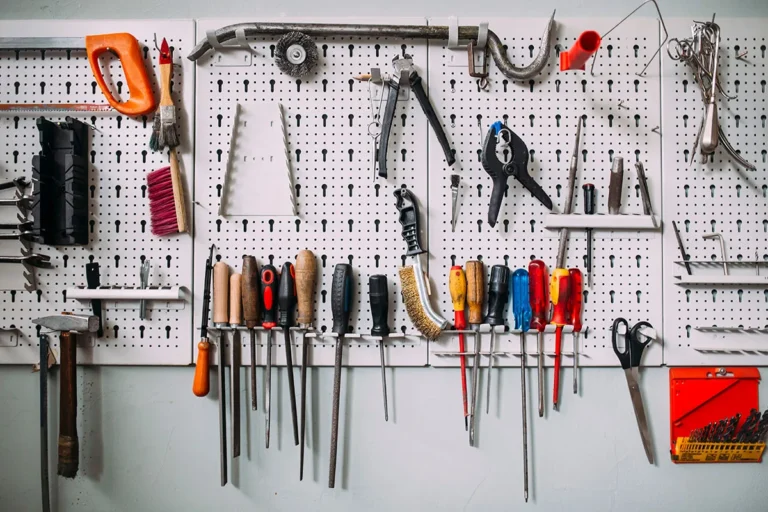 Top Home Tool Kits for Seniors: 2026 Practical Guide
Discover the top home tool kits for seniors in 2026. We compare compact, easy-to-use sets perfect for daily household repairs, furniture assembly, and DIY tasks. Finding…
 Top Home Tool Kits for Women: 2026 Buyer Guide
Discover the top home tool kits for women in 2026. Compare top-rated sets for DIY, furniture assembly, and household repairs to find your perfect match. Finding…
 Top Home Tool Kits for Basic Home Repairs 2026
Find the top home tool kits for basic home repairs in 2026. Compare top-rated sets for DIY projects, furniture assembly, and daily household maintenance. Every home…