
How Often Should I Replace Tools In My Home Tool Kit
If you wonder how often should I replace tools in my home tool kit, the simple answer is every 5 to 7 years for basic hand tools. But inspect each tool yearly for rust, loose handles, or bent parts. Replace any tool that feels unsafe or fails to work right away.
You open your tool drawer. The screwdriver tips look a bit worn. The hammer handle has a small crack. Your pliers don’t grip like they used to. You start asking yourself: how often should I replace tools in my home tool kit? This is a smart question. Many people keep tools for decades. Some tools last that long. But others become unsafe or useless over time.
I have been fixing things around my house for over 20 years. I learned the hard way that old tools can cause problems. A rusted wrench slipped and bruised my knuckles. A dull saw made a simple cut take five times longer. So let me share what I know. By the end of this guide, you will know exactly when to swap out old tools for new ones.
Why Tool Replacement Matters for Safety and Efficiency
Old tools do more than just look bad. They can hurt you. They can damage your home. And they make every repair job harder than it needs to be.
Think about a screwdriver with a worn tip. You try to turn a screw. The driver slips out. Your hand slides forward. Now you have a cut on your finger. Or worse, you scratch the wall or the appliance you are fixing. That small slip can turn a five minute job into an hour long mess.
A hammer with a loose head is dangerous. The metal head can fly off while you swing. That could break a window or hit someone. A wrench that does not grip well can strip bolt heads. Then you cannot remove the bolt at all.
Regular replacement keeps your work safe and easy. You save time. You save frustration. You protect your hands and eyes.
“A dull blade is more dangerous than a sharp one because you force it.” – Tom Silva
This quote applies to all tools. When a tool does not work well, you push harder. You use bad angles. You take risks. That is when accidents happen.
A Simple Guide: How Often Should I Replace Tools in My Home Tool Kit?
Let me give you a clear answer to the main question. For most home tool kits, you should consider replacing basic hand tools every 5 to 7 years. But this depends on how often you use them. If you fix things every weekend, replace sooner. If you only use tools twice a year, they may last 10 years or more.
The real question is not just about years. It is about condition. So let me break down how often should I replace tools in my home tool kit by tool type. The table below gives you a quick reference.
Table 1: Recommended Replacement Frequency for Common Home Tools
| Tool Type | Typical Lifespan (with normal home use) | When to Replace Sooner |
|---|---|---|
| Screwdrivers | 3 to 5 years | Tips are rounded or bent |
| Pliers (slip joint, needle nose) | 5 to 7 years | Pivot joint is loose or rusty |
| Adjustable wrench | 5 to 10 years | Jaw does not close tight or slips |
| Hammer | 10+ years | Handle has cracks or head is loose |
| Tape measure | 3 to 5 years | Blade tears or retraction fails |
| Level | 10+ years | Vials leak or give false readings |
| Handsaw | 2 to 4 years | Teeth are dull or bent |
| Utility knife | 2 to 3 years (blades replaced often) | Handle lock fails |
| Socket set | 5 to 8 years | Ratchet skips or sockets round bolts |
| Wire cutters | 3 to 5 years | Cutting edges have nicks |
Now you might ask again: but really, how often should I replace tools in my home tool kit if I only use them for small jobs? The honest answer is to check each tool once a year. Mark a date on your calendar. Maybe every January. Go through your whole kit. Hold each tool. Look closely. Test how it works. Then decide to keep, fix, or replace.
Signs Your Tools Need Replacement Before the Schedule
You do not need to wait for a certain year to pass. Your tools will tell you when they are done. You just need to know what to look for. Here are the most common warning signs.
Rust and Corrosion
A little surface rust is not a big deal. You can clean it with steel wool or a rust remover. But deep rust that pits the metal is bad. It weakens the tool. It makes moving parts stick. If you see flaking rust or rust that has eaten into the metal, replace that tool.
Loose or Cracked Handles
Wooden handles dry out and crack over time. Plastic handles can break from sun exposure or cold. If a handle has a crack that goes deep, do not use it. The tool can break in your hand. Replace it right away.
Worn Gripping Surfaces
Pliers and wrenches need good teeth or smooth jaws that grab tight. Look at the teeth on your pliers. Are they flat? Look at the jaws on your wrench. Is there a gap when you close them on a bolt? If the grip fails, the tool fails.
Bent or Warped Parts
A bent screwdriver shaft. A twisted wrench. A saw blade that is no longer straight. These tools will not work correctly. They might also put uneven force on your hands. Replace any bent tool. You cannot safely straighten it at home.
Broken Springs or Locks
Many tools have springs or locking mechanisms. Think of tape measures, utility knives, and locking pliers. If the spring feels weak or the lock does not hold, the tool is a hazard. A tape measure that does not lock can snap back and cut you. A utility knife that does not lock can close on your fingers.
“Regular tool inspection saves you from frustration and injury.” – Norm Abram
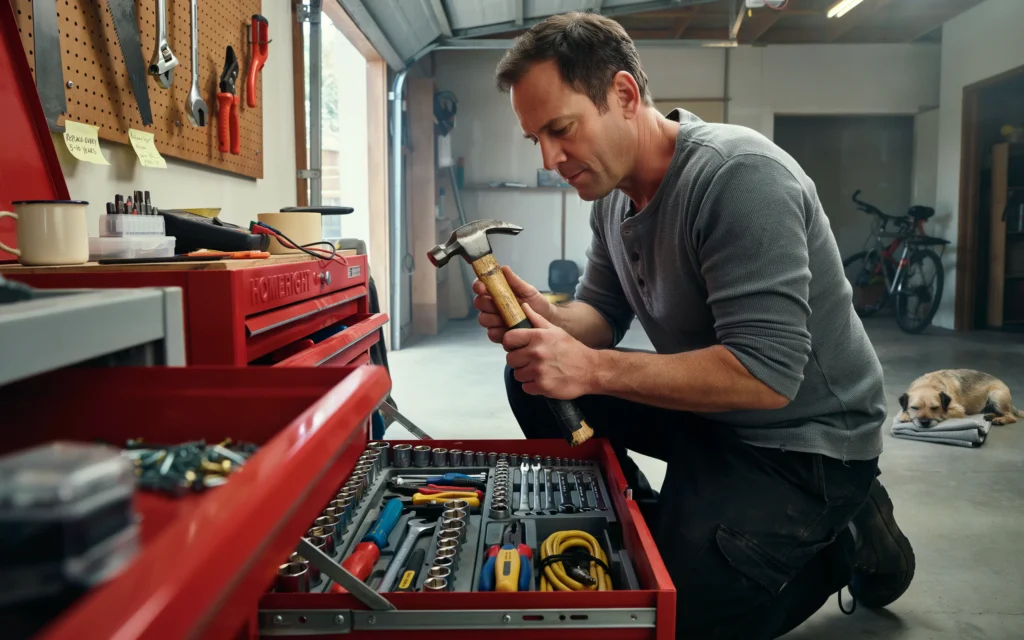
I check my tools every spring. I spread them on a towel in my garage. I go one by one. It takes 15 minutes. That small habit has saved me from many broken tools and sore hands.
Visual Checks You Can Do Today
Here is a quick three step inspection you can do right now. No special skills needed.
Step 1: Look. Hold each tool under good light. Look for rust, cracks, bends, or missing pieces.
Step 2: Feel. Run your fingers over handles and grips. Feel for rough spots or loose parts. For pliers and wrenches, open and close them several times. Does the movement feel smooth?
Step 3: Test. Use the tool on a scrap piece of wood or a spare bolt. Does it work as expected? Does the screwdriver turn screws without slipping? Does the hammer drive a nail straight? Does the tape measure retract fully?
If any tool fails these checks, it is time to replace it. Do not wait for an injury.
How to Extend the Life of Your Home Tool Kit
Good habits make your tools last longer. You do not need to buy expensive brands. You just need to take care of what you have. Here are simple ways to get more years from every tool.
Clean Tools After Each Use
Dirt, dust, and sap build up on tools. That gunk holds moisture against metal parts. Wipe your tools with a dry cloth after every job. For sticky residue, use a little soap and water. Dry completely before putting away.
Store Tools Properly
Do not throw tools into a wet basement drawer. Do not leave them in a hot car or a damp garage. Keep your tool kit in a dry place with stable temperature. A plastic toolbox with a lid works great. A pegboard on an indoor wall is even better. Hang tools so they do not touch each other. This prevents rust from contact with different metals.
Lubricate Moving Parts Once a Year
Put a drop of light oil on pivot joints of pliers, scissors, and wrenches. Use sewing machine oil or a basic household oil. Wipe off extra oil so it does not attract dust. This keeps the action smooth. It also stops rust from forming inside the joint.
Tighten Loose Screws and Bolts
Some tools have screws that hold them together. Look at your pliers. There is often a small screw or rivet at the pivot. Check if it is tight. For tools with wooden handles, look for a metal ferrule (the ring where handle meets metal). If that ring is loose, you can tap it back with a hammer. But if the handle still wiggles, replace the tool.
Sharpen Cutting Tools When Needed
A dull blade is not always a sign to replace the whole tool. You can sharpen many tools. Knives, chisels, and scissors can be sharpened at home with a simple sharpening stone. Saws are harder to sharpen. For a cheap handsaw, replacement often costs less than a sharpening service.
“If your screwdriver slips, it’s time to let it go.” – Bob Vila
Bob Vila got this right. A slipping screwdriver is a clear sign. Do not try to fix it. Just buy a new one. They are cheap. Your safety is worth the few dollars.
Table 2: Tool Maintenance Schedule for Longer Life
| Maintenance Task | How Often | Tools That Need It |
|---|---|---|
| Wipe clean and dry | After every use | All tools |
| Check for rust | Every 3 months | Metal tools in humid areas |
| Oil moving parts | Once per year | Pliers, wrenches, ratchets, scissors |
| Tighten loose handles or ferrules | Once per year | Hammers, axes, screwdrivers with wood handles |
| Test sharpness | Every 6 months | Saws, knives, chisels, wire cutters |
Special Cases: Power Tools vs. Hand Tools
So far we talked mostly about hand tools. But many home tool kits also include basic power tools. A drill. A jigsaw. A sander. These need different replacement rules.
Power Tool Lifespan
A good quality power drill can last 10 to 15 years with light home use. But the batteries are a different story. Lithium ion batteries lose capacity after 2 to 4 years. You might replace the battery twice before the drill itself fails.
For corded power tools, the motor is the main part. Brushes wear out. Cords get frayed. If you use a power tool only a few times a year, it can last decades. But if the tool starts making strange noises, smoking, or losing power under load, replace it. Do not try to fix internal motor problems yourself unless you have electrical training.
When to Replace Power Tools
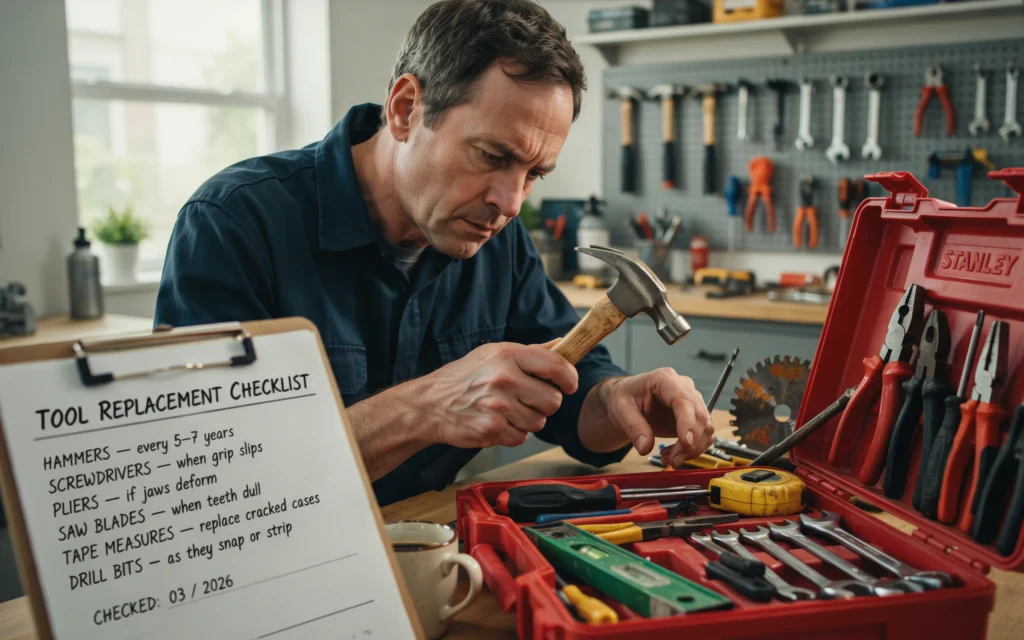
Replace a power tool when:
- The cord has cuts or exposed wires (cannot be safely taped for long term)
- The trigger switch sticks or does not turn off
- The chuck (on a drill) will not hold bits tightly
- The tool sparks excessively or smells like burning
- The plastic housing has large cracks that expose internal parts
For battery tools, if a new battery does not fix the tool’s poor performance, the tool itself is dying. Replace the whole kit or switch to a different brand.
Frequently Asked Questions
Q1: How often should I replace tools in my home tool kit if I never use them?
If tools sit unused for years, they can still rust or degrade. Check them every two years. Replace any with rust, cracks, or stiffness. Unused tools last longer but are not immune to damage.
Q2: Can I just replace the handle or tip instead of the whole tool?
For some tools, yes. You can buy replacement handles for hammers and axes. You can buy replacement blades for utility knives and saws. But for screwdrivers, pliers, and wrenches, replacement parts are hard to find. It is usually cheaper and safer to buy a new tool.
Q3: What about expensive tools? Should I try to repair them?
Expensive tools with lifetime warranties are worth repairing. Send them back to the maker. Many good brands will fix or replace them for free. Cheap tools from discount stores are not worth the shipping cost. Just replace them.
Q4: How often should I replace tools in my home tool kit that I use for work or heavy projects?
If you use your home tool kit for serious DIY projects every week, cut the lifespans in half. Replace screwdrivers every 2 years. Replace pliers every 3 years. Check power tools every 6 months for wear.
Q5: Are there any tools that never need replacement?
No tool lasts forever. But a solid metal hammer with a steel handle can last 30 years or more. A cast iron level with no moving parts can last a lifetime. Still, inspect them regularly. Even steel can bend or break under extreme force.
Q6: Where is the best place to buy replacement tools?
Local hardware stores let you hold the tool before buying. That is best for comfort and feel. Online stores have lower prices. Read customer reviews. Look for tools with good warranty terms. Avoid no name tools with very low prices. They often fail within months.
Q7: How often should I replace tools in my home tool kit that feel fine but look old?
Looks can be deceiving. If the tool works perfectly and passes all inspection checks, keep using it. Age alone is not a reason to replace. But if you feel any doubt about safety, replace it. Peace of mind is worth the small cost.
Q8: What is the single most important tool to replace on time?
Safety tools. If your tool kit has safety glasses, a dust mask, or work gloves, replace those often. Safety glasses get scratched and less clear. Dust masks lose filtering ability. Gloves get holes. Replace these every 1 to 2 years depending on use.
Conclusion
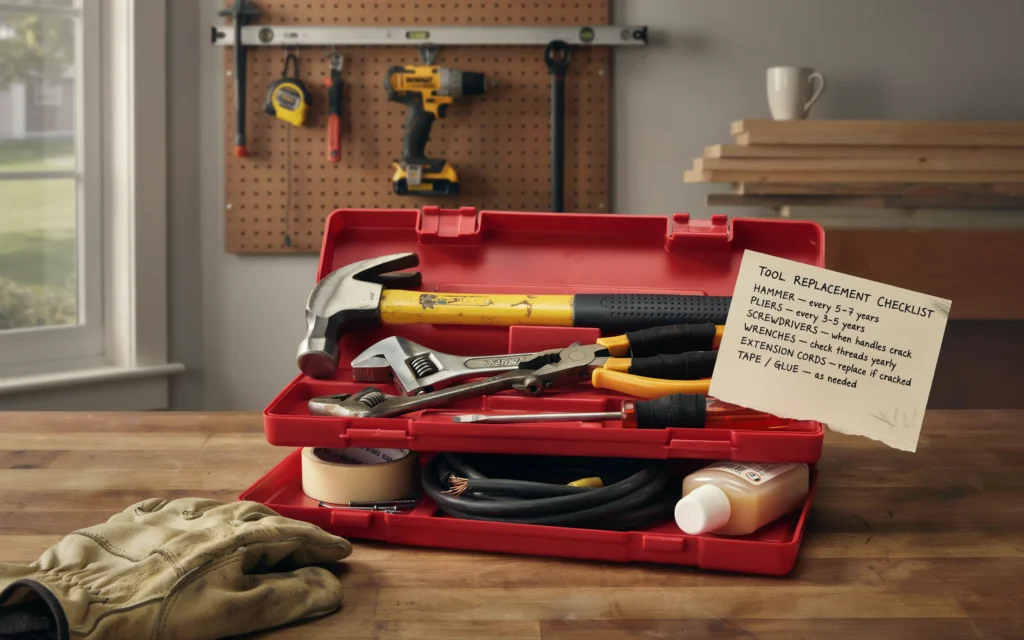
So let me bring this all together. The honest answer to how often should I replace tools in my home tool kit is this: check each tool every year, and replace any that show clear signs of wear, rust, looseness, or bending. For most basic hand tools, a 5 to 7 year replacement cycle works well for average home use. Power tools can last longer, but their batteries and cords need more frequent attention.
Do not wait for a tool to fail during a project. Do not ignore a cracked handle or a loose joint. A few dollars spent on a new screwdriver or a fresh pair of pliers is nothing compared to a trip to the emergency room or the cost of fixing a damaged wall.
Take 15 minutes this weekend. Open your tool kit. Go through every item. Make three piles: keep, maybe fix, and replace. Be honest with yourself. You deserve tools that work safely and easily. Your home repairs will go faster. Your hands will thank you. And the next time someone asks you how often should I replace tools in my home tool kit, you can give them a confident, clear answer.
Related posts
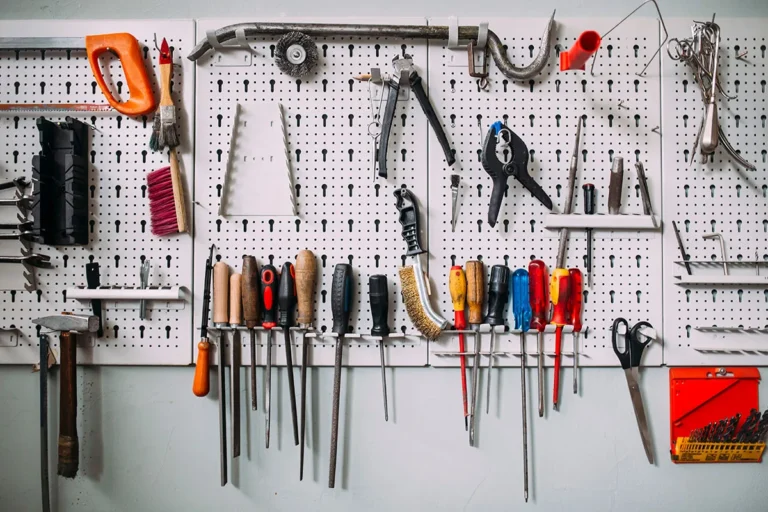 Top Home Tool Kits for Seniors: 2026 Practical Guide
Discover the top home tool kits for seniors in 2026. We compare compact, easy-to-use sets perfect for daily household repairs, furniture assembly, and DIY tasks. Finding…
 Top Home Tool Kits for Women: 2026 Buyer Guide
Discover the top home tool kits for women in 2026. Compare top-rated sets for DIY, furniture assembly, and household repairs to find your perfect match. Finding…
 Top Home Tool Kits for Basic Home Repairs 2026
Find the top home tool kits for basic home repairs in 2026. Compare top-rated sets for DIY projects, furniture assembly, and daily household maintenance. Every home…