
Leather VS Nylon Tool Bags: Which Is Better
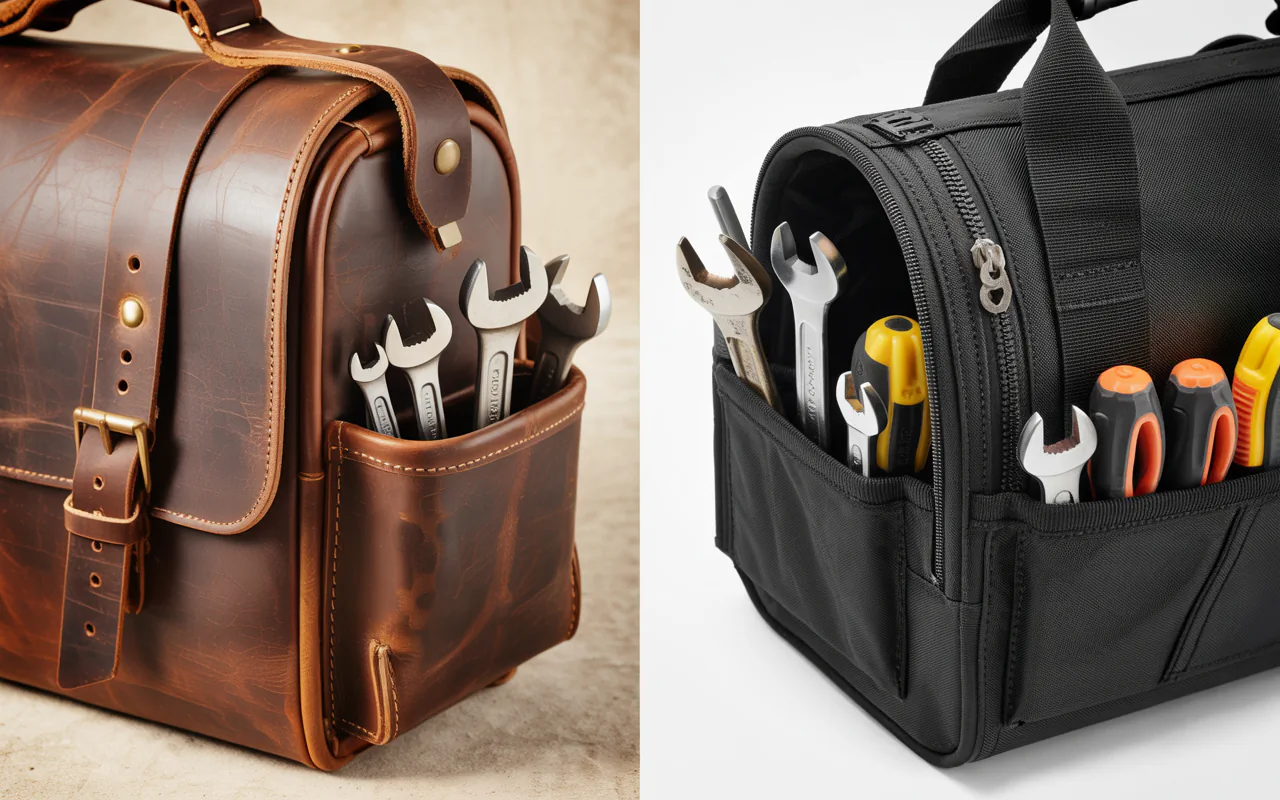
Choosing the right gear matters. In comparing leather vs nylon tool bags: which is better depends on your work needs, as leather offers lifetime durability while nylon provides lightweight comfort and water resistance.
Every tradesperson needs a reliable way to carry gear. Your daily work requires tools that are heavy, sharp, and expensive. Leaving them loose in a truck box causes damage. Carrying them in an old bucket makes you look unprofessional. You need a dedicated tool bag that protects your investment. The choice usually comes down to two classic materials. This guide will look at the long debate between animal hide and synthetic cloth.
Choosing a gear carrier is a personal choice. You spend hours each day with this item. It sits on wet concrete with you. It rides in your front seat. It holds the items that help you earn a living. A bad choice leads to sore shoulders, broken tools, and lost time. We need to look closely at how these materials perform on the job.
The question of leather vs nylon tool bags: which is better is something workers ask every single day. There is no single answer that fits every trade. A finish carpenter has different needs than a commercial plumber. An apprentice might look at price first. A seasoned pro might look at long term value. We will break down every aspect of these two options so you can make the best choice for your daily tasks.
Deep Analysis of Leather Tool Carriers
Leather has been the top choice for tool carry for hundreds of years. It is a natural material that offers unique benefits. When you hold a thick leather pouch, you feel the weight and the strength. It smells like a real workshop. It tells clients that you care about quality and tradition.
The Quality of the Hide
Not all leather is the same. High quality tool bags use thick top-grain or full-grain leather. This comes from the top layer of the hide where the fibers are tight. It resists tears and cuts better than split leather. The tanning process makes a big difference too. Vegetable-tanned leather is stiff at first but shapes itself to your tools over time. Chrome-tanned leather is softer from day one but may not last quite as long in harsh conditions.
Thick leather keeps its shape even when it is completely empty. This is a huge benefit on the job site. You can reach down with one hand and drop a tool right into its slot. The pocket stays open for you. Synthetic bags without a molded base can collapse when empty, forcing you to use two hands just to put a wrench away.
Why Thick Leather Resists Punctures
Sharp tools are a constant threat to your gear bags. Wood chisels, utility knives, and drywall saws can slice through cheap fabrics instantly. Thick leather acts like armor. The dense fiber structure stops sharp tips from poking through. This protects your thighs and hips when you wear a tool belt. It also protects the bag from getting ruined from the inside out.
“A good tool bag is an investment in your daily peace of mind.”
— Marcus Vance, Master Carpenter
The weight of leather is both a blessing and a curse. It gives the bag structure and extreme strength. However, an empty leather bag can weigh five pounds or more before you put a single tool inside. If you walk long distances on large commercial jobsites, this extra weight adds up. It can cause fatigue in your lower back and hips over a long work week.
The Aging Process of Animal Hide
Leather changes as it works with you. It takes on a dark patina from the oils on your hands and the dust of the job site. It softens in the areas where it moves against your body. It hardens around the shapes of your favorite tools. This custom fit means your main tools stay exactly where you want them. They do not rattle around or fall out when you bend over.
This material also deals well with high heat. If a stray spark from a grinder hits a leather bag, it might leave a small mark, but it will not burn a hole through the wall. This makes leather excellent for welders, fabricators, and workers who operate near hot pipes or torch work.
Deep Analysis of Nylon Tool Carriers
Nylon is the modern answer to heavy tool transport. It is a synthetic fabric made from woven polymers. Engineers created it to be light, strong, and cheap to produce. Over the last few decades, it has taken over a large share of the tool bag market. It appeals to workers who want modern features and less weight on their shoulders.
What is Ballistic Nylon?
When looking at synthetic bags, you will often see the term ballistic nylon. This specific weave was made to protect soldiers from flying debris. It uses a basket weave that resists tearing in multiple directions. If a small puncture happens, the weave stops the hole from spreading. This prevents a small tear from ruining the whole bag.
Nylon is flexible and adapts to strange shapes. If you need to pack an odd-sized power tool, a nylon bag will stretch and flex around it. Leather is too stiff for that kind of stretching. This flexibility makes nylon bags great for general contractors who carry a mix of hand tools and power tools every day.
The Denier Rating Explained
To know how strong a nylon bag is, look at the denier rating. This number tells you the thickness of the fibers. A standard backpack might use 400D nylon. A good tool bag will use 1200D or 1680D nylon. The higher the number, the thicker the thread and the tougher the bag. High denier nylon feels rough to the touch, but it stands up to abrasion from concrete and metal studs.
Nylon allows for complex pocket designs. Manufacturers can sew mesh pockets, zipper pouches, and elastic bands into a single bag. This allows for a high level of organization. You can have a specific spot for your phone, your pens, your testers, and your heavy wrenches.
Modern Molded Plastic Bases
Many modern nylon bags feature a hard plastic bottom. This EVA or injection-molded base solves the main weakness of fabric bags. It keeps the bottom of the bag completely dry when placed on wet grass or puddles. It also keeps the bag upright so it does not tip over in the back of your truck.
The lightweight nature of nylon cannot be overstated. A large nylon backpack bag might weigh very little when empty. This allows you to carry more actual tools without hitting your physical weight limit. It changes how you feel at the end of a ten-hour shift.
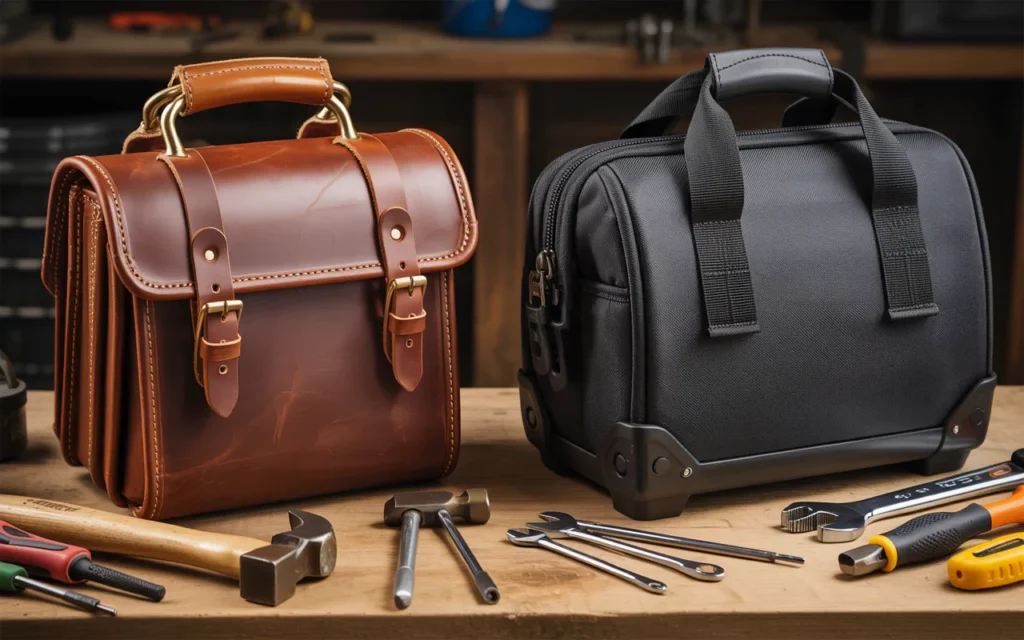
Direct Comparison Matrix
To truly know about leather vs nylon tool bags: which is better, we must compare them head to head. They have different strengths that appeal to different styles of work. Let us look at how they match up across key categories that matter to working professionals.
Durability Over the Years
A high-grade leather bag can last for twenty or thirty years if you treat it well. In fact, many old-world craftsmen pass their leather tool belts down to their children. Nylon bags rarely last that long. Even the best 1680D nylon will start to fray at the seams after five to ten years of heavy daily use. The plastic coatings inside can peel, and the fabric can wear thin from constant rubbing against metal tools.
Total Weight and Daily Comfort
Nylon wins the weight battle easily. When you are lifting a bag in and out of a van twenty times a day, every pound matters. Nylon straps are also heavily padded with foam and breathable mesh. Leather straps can be stiff and dig into your collarbone until they are fully broken in. For pure comfort during long walks, synthetics have a clear advantage.
Resistance to Rain and Mud
Water affects these materials in very different ways. Nylon handles wet weather well because the fibers do not absorb water. Many nylon bags have a waterproof coating on the inside. If they get muddy, you can spray them with a hose and let them dry in the sun.
Leather hates soaking rain. If a leather bag gets wet, it absorbs water and becomes very heavy. If it dries too fast near a heater, it can crack and ruin. You must treat it with special waxes to keep water out.
Cost Versus Long Term Value
Leather bags cost a lot of money upfront. You might pay three times more for a premium leather bag than a high-quality nylon bag. However, you must look at the long term cost. If you buy one leather bag that lasts twenty years, you spend less money than if you buy a new nylon bag every four years.
Below is a short table to help summarize these key differences quickly.
Material Feature Comparison
| Feature | Leather Bags | Nylon Bags |
| Average Lifespan | 15 to 30+ Years | 3 to 10 Years |
| Empty Weight | Heavy | Very Light |
| Puncture Resistance | Excellent | Moderate to High |
| Water Response | Absorbs / Needs Care | Repels / Dries Fast |
| Initial Cost | High Investment | Budget Friendly |
When considering leather vs nylon tool bags: which is better, you must think about your budget today versus your budget over the next decade. If you have the cash now, leather offers great value over time. If you need to get to work today with minimal spend, nylon gets you on the job site for less money.
Matching Materials to Specific Trades
Different jobs put different stresses on equipment. A bag that shines in a clean indoor setting might fail miserably in a muddy trench. Let us look at how these choices play out in real-world jobs.
Requirements for Carpenters
Framing and finish carpenters love leather. They use sharp tools like wood chisels, utility knives, and hand saws. They also carry lots of nails and screws. Leather pouches resist the sharp points of fasteners poking through the bottom. The stiff pockets allow a carpenter to reach blindly for a nail without looking away from their work piece.
Requirements for Electricians
Electricians often prefer nylon bags, especially backpack styles. They carry many small hand tools like pliers, wire strippers, meters, and screwdrivers. Nylon bags offer dozens of small pockets to keep these items sorted. An electrician needs to find the right driver instantly. The high pocket count of nylon bags makes this easy.
“Weight on your shoulder at 7 AM feels twice as heavy by 4 PM.”
— Elena Rostova, Site Superintendent
Electricians also work indoors on finished floors. A nylon bag with a soft or molded plastic base is less likely to scratch a client’s hardwood floor or new tile than a heavy leather bag with metal rivets on the bottom.
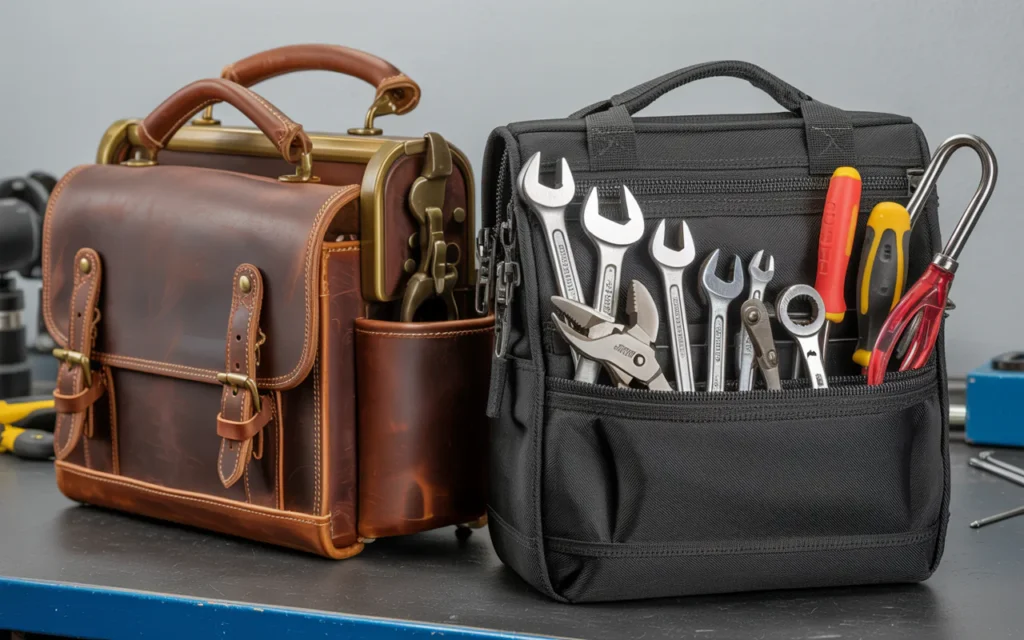
Requirements for HVAC Techs
HVAC technicians deal with a mix of sheet metal, gauges, and heavy tools. They often climb ladders and squeeze into tight crawl spaces or attics. A lightweight nylon backpack keeps their hands free for climbing ladders safely. The water-resistant nature of nylon also helps when they are working on outdoor AC units in the rain or dealing with wet basements.
The table below breaks down the ideal material for common trades based on field feedback.
Recommended Material by Trade
| Trade | Recommended Material | Main Reason |
| Framing Carpenter | Leather | Keeps pockets open / Resists nails |
| Commercial Electrician | Nylon | High pocket count / Lightweight |
| HVAC Technician | Nylon | Easy to carry up ladders / Light |
| Fine Woodworker | Leather | Classic style / Protects sharp steel |
| Pipeline Welder | Leather | Resists hot sparks and slag |
Your choice in the leather vs nylon tool bags: which is better debate depends heavily on what you do every single day. Do not buy a bag just because it looks cool. Buy the one that matches the environment of your specific trade.
How to Keep Your Bag in Top Shape
No matter which material you choose, your bag will last longer if you take care of it. Neglect ruins good gear fast. A little bit of regular maintenance prevents failure when you are busy on a job.
Cleaning and Oiling Leather
Leather needs food to stay alive. Without care, the natural oils evaporate, and the hide dries out. Once leather cracks, you cannot fix it. Every few months, you should empty your leather bag and brush off the dirt. Use a damp cloth to wipe away mud. Let it air dry away from direct heat sources.
Once dry, apply a high-quality leather conditioner or oil. Neatsfoot oil or mink oil works great. Rub it into the skin with a soft cloth. The leather will drink it up and become soft and water-resistant again. This simple task adds years to the life of your bag.
Washing and Drying Nylon
Nylon is much easier to maintain, but it still needs attention. Dirt and sand can get into the weave of the fabric. Over time, these tiny grains act like sandpaper, cutting the fibers from the inside out as the bag moves.
To clean a nylon bag, empty it out and turn it upside down to shake out all the drywall dust and metal shavings. Use a stiff brush with mild soap and warm water to scrub away stains. Rinse it well with clean water. Always let nylon air dry completely before putting your tools back inside. Never put a nylon tool bag in a clothes dryer, as high heat can melt the interior waterproof coatings.
When thinking about leather vs nylon tool bags: which is better for your lifestyle, consider how much time you want to spend on maintenance. If you want a bag you can ignore for months, nylon is forgiving until it fails. Leather demands regular care, but it rewards your effort with an incredible lifespan.
Features to Look for Before You Buy
When you shop for a new carrier, look past the main material. The small details often determine if a bag will survive the year. Bad construction can ruin a bag made from the best material.
Zippers and Metal Rivets
Zippers are the number one failure point on tool bags. If a zipper breaks, the bag becomes useless because your tools will spill out in your truck. Look for large, heavy-duty metal zippers. Brand names like YKK are known for quality. Avoid small plastic zippers that can get jammed with dust and grit easily.
For leather bags, check the rivets. The pockets should be held together with solid steel or copper rivets at the stress points. This prevents the weight of heavy tools from tearing the seams apart over time. Double-stitching with heavy nylon thread is another sign of a quality bag.
Strap Padding and Handles
The handle is how you interact with your bag most often. It should be thick, comfortable, and attached securely to the frame of the bag. On nylon bags, look for handles that use cross-stitching and rivets to secure them to the body. For shoulder straps, look for thick foam padding that distributes the weight across your shoulder.
“Tools change, but the need to find them fast stays the same.”
— David Miller, Field Electrician
The base of the bag should always be stiff. A sagging bag hurts your back and allows tools to bunch up together, making them hard to find. Look for thick internal boards or molded plastic plates that keep the shape intact under full loads.
Frequently Asked Questions
Which material lasts longer in outdoor work?
Leather generally lasts longer if it receives proper oil treatments. It can handle scrapes against concrete, stone, and metal without tearing. However, if your work involves constant exposure to mud and standing water, a high-denier nylon bag with a molded plastic base handles the wet environment better without requiring constant care.
Is leather or nylon better for preventing tool rust?
Nylon with a waterproof coating keeps rain out better, which helps keep tools dry. Leather can absorb moisture from the air or rain. If you leave wet tools inside a damp leather bag, they can rust quickly. Always ensure your leather bag stays dry inside to protect your steel tools.
Why are leather tool bags so expensive?
The cost comes from the raw materials and the labor. High-quality animal hides are expensive to produce and select. Sewing thick leather requires heavy machinery and skilled workers. Nylon is a synthetic material that can be manufactured fast in large quantities, making it much cheaper to produce.
Can I patch a hole in a nylon tool bag?
Yes, you can patch small holes in nylon bags using heavy-duty fabric patches or specialized gear tape. Some people use strong epoxy or heavy thread to sew patches over worn areas. Leather can also be repaired, but it usually requires a professional cobbler or leather worker to sew through the thick hide.
Do leather tool bags stretch over time?
Yes, leather will stretch slightly and mold to the shape of the tools you keep inside it. This creates a custom pocket that holds your specific tool tightly. Nylon does not stretch permanently; it will flex to hold a large item but will snap back to its original shape when the item is removed.
How heavy is a leather bag compared to nylon?
An empty leather bag can weigh anywhere from three to six pounds on its own. A similar-sized nylon bag might weigh only one to three pounds. This difference means you can carry more tools in a nylon bag before reaching a total weight that is uncomfortable to lift.
Is leather vs nylon tool bags: which is better for a beginner?
Nylon is usually better for beginners and apprentices. It costs less money, which keeps your start-up costs low when buying your first set of tools. It also offers lots of pockets to help you learn how to organize your gear. As you progress in your career and learn your specific needs, you can invest in a premium leather bag.
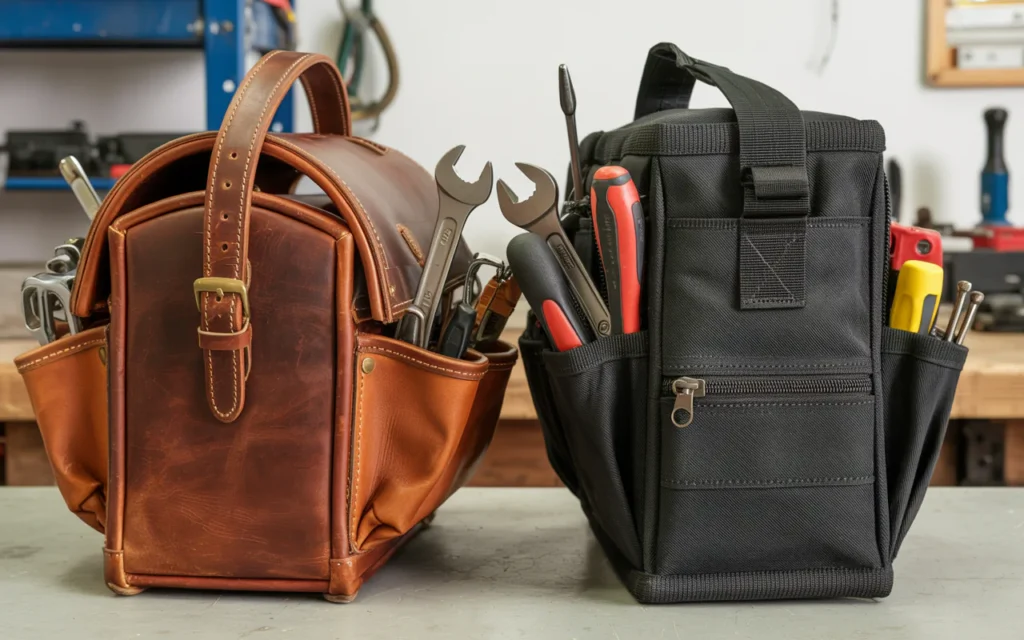
Final Verdict on Tool Bag Materials
We have looked at every side of this classic debate. Both options have earned their place on modern job sites. The ultimate choice comes down to what you value most in your daily routine.
If you value tradition, extreme durability, and a bag that custom-molds to your body and tools, go with leather. It is a premium product that costs more upfront but pays you back by lasting for decades. It protects against sharp edges and resists heat from sparks beautifully.
If you value lightweight transport, superior organization with lots of pockets, and great water resistance, go with nylon. It keeps your initial costs low and saves your back from carrying unnecessary dead weight. A high-denier nylon bag with a molded base is a modern workhorse that performs well in almost any environment.
Look at your tools, your trade, and your budget. Pick the material that makes your workday smooth and efficient. Your tool bag is your portable office; make sure it supports you well every day.
Related posts
 Top Tool Bags for Mobile Contractors: 2026 Buyer Guide
Discover the top tool bags for mobile contractors in 2026. Compare durable totes, backpacks, and multi-pocket organizers to find the best fit for your gear. For…
 Top Tool Bags for Plumbers: 2026 Selection Guide
Discover the top tool bags for plumbers in 2026. We compare durable, multi-pocket storage solutions to help you organize your gear effectively on the job. Plumbing…
 Best Tool Bag for HVAC Technicians in 2026
Find the right tool bag for HVAC technicians with our 2026 guide. Compare top-rated bags, backpacks, and pouches to keep your gear organized and protected. As…