
Which Is Better, A Tool Bag Or A Tool Box For Home Tools
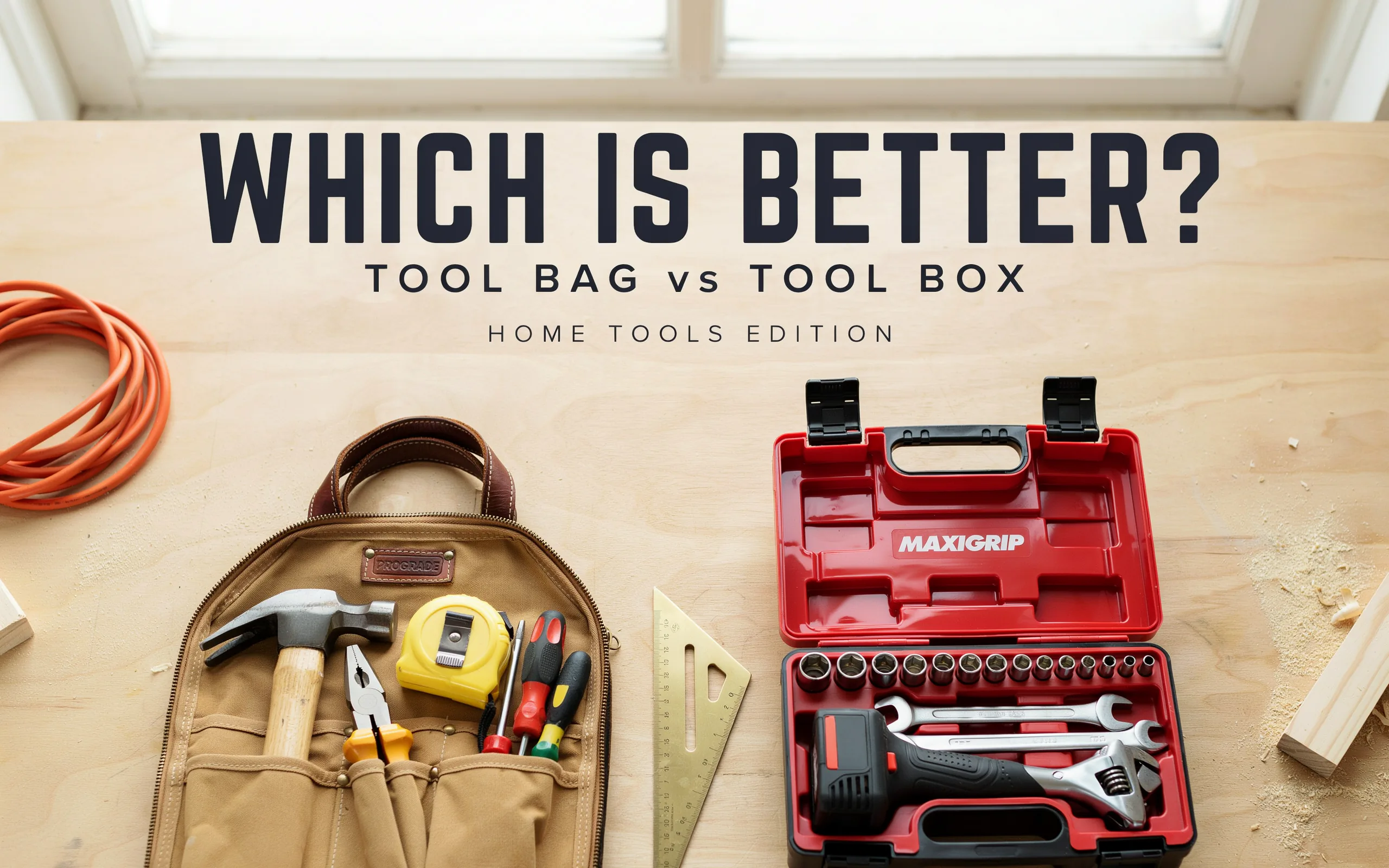
Wondering which is better, a tool bag or a tool box for home tools? Tool bags are light and easy to carry. Tool boxes offer strong protection and fixed storage. This guide helps you choose the right one for your home projects.
Every home needs a small set of basic tools. A hammer, screwdrivers, pliers, a tape measure, and some nails or screws. But where do you keep them? Many people ask the same question: which is better, a tool bag or a tool box for home tools? The answer is not the same for everyone. It depends on how you use your tools, where you store them, and what kind of work you do around the house.
I have fixed many things in my own home over the years. Leaky faucets, loose cabinet handles, squeaky doors, and even small electrical repairs. I started with a plastic tool box. Then I tried a tool bag. Now I use both for different jobs. In this article, I will share what I learned. You will see the good and bad sides of each option. By the end, you will know which is better, a tool bag or a tool box for home tools for your own needs.
Let us start with the basic differences. Then we will look at portability, storage, protection, and real life examples.
What Are the Main Differences?
At first look, a tool box is a hard container. It is often made of plastic, metal, or wood. It has a handle on top and a latch to close it. Inside, there is usually a tray for small items. A tool bag is soft. It is made of fabric like canvas, nylon, or polyester. It has a zipper or a drawstring closure. It may have many outer pockets.
The main difference is the structure. A tool box keeps its shape. A tool bag can bend and squeeze into tight spaces. This affects how you carry them, what you can put inside, and how long your tools last.
Portability and Weight
If you need to carry your tools from room to room or take them to a friend’s house, weight and shape matter. A tool bag is usually lighter. Even a large bag with many pockets weighs less than a metal tool box. The soft sides also make it easier to hold against your body. You can throw a tool bag over your shoulder if it has a strap. Many tool bags come with padded shoulder straps.
A tool box is heavier. The hard shell adds weight. Plastic boxes are lighter than metal ones, but still heavier than a fabric bag of the same size. The handle on top forces you to carry it at arm’s length. This can feel awkward if the box is full. Walking up stairs or getting in and out of a car is harder with a tool box.
“For quick jobs around the house, a tool bag saves time and energy. You can grab it and go. A tool box stays in the garage.” – Bob Vila, home improvement expert.
Storage Capacity and Layout
A tool box uses a rigid layout. Most have a top tray that lifts out. Under the tray is a deep space for larger tools like a hammer or a hand saw. The tray holds small items like drill bits, screws, and utility knives. Everything has a place. But you cannot change the layout much. If you have a tool that is too long or too wide, it may not fit.
A tool bag is more flexible. The main compartment can hold tools of many shapes. You can stuff a long level or a pipe wrench inside because the fabric gives way. The outer pockets are great for screwdrivers, pliers, and wrenches. You can see each tool without digging. However, too many loose items can make the bag messy. Small parts like nuts and washers can fall to the bottom and get lost.
Table 1: Quick Comparison of Tool Bag and Tool Box for Home Use
| Feature | Tool Bag | Tool Box |
|---|---|---|
| Weight | Light | Medium to heavy |
| Portability | Easy to carry, often with strap | Hard handle, arm’s length carry |
| Protection | Low to medium | High |
| Flexibility | High | Low |
| Organization | Many outer pockets | Fixed tray and compartments |
| Durability over time | Fabric wears out | Hard shell lasts longer |
| Best for | Moving often, multiple locations | Stationary storage, workshop |
Pros and Cons at a Glance
Let us break down the good and bad points of each option. This will help you see which is better, a tool bag or a tool box for home tools for your specific tasks.
Table 2: Pros and Cons of Tool Bags vs Tool Boxes
| Tool Bag Pros | Tool Bag Cons |
|---|---|
| Light and easy to move | Less protection for fragile tools |
| Many pockets for small items | Can get dirty and wet |
| Soft sides fit in tight spaces | Zippers can break |
| Often have shoulder straps | Tools can poke through fabric |
| Good for carrying up ladders | Hard to stand upright when empty |
| Tool Box Pros | Tool Box Cons |
|---|---|
| Hard shell protects tools | Heavy even when empty |
| Stays open for easy access | Fixed layout limits odd shapes |
| Easy to clean | Usually no shoulder strap |
| Stackable with other boxes | Outer space is wasted (no pockets) |
| Locks available for security | Can be noisy when moving |
When a Tool Bag Wins for Home Use
A tool bag is a great choice for many homeowners. Here are the situations where a tool bag works best.
You Move Around the House Often
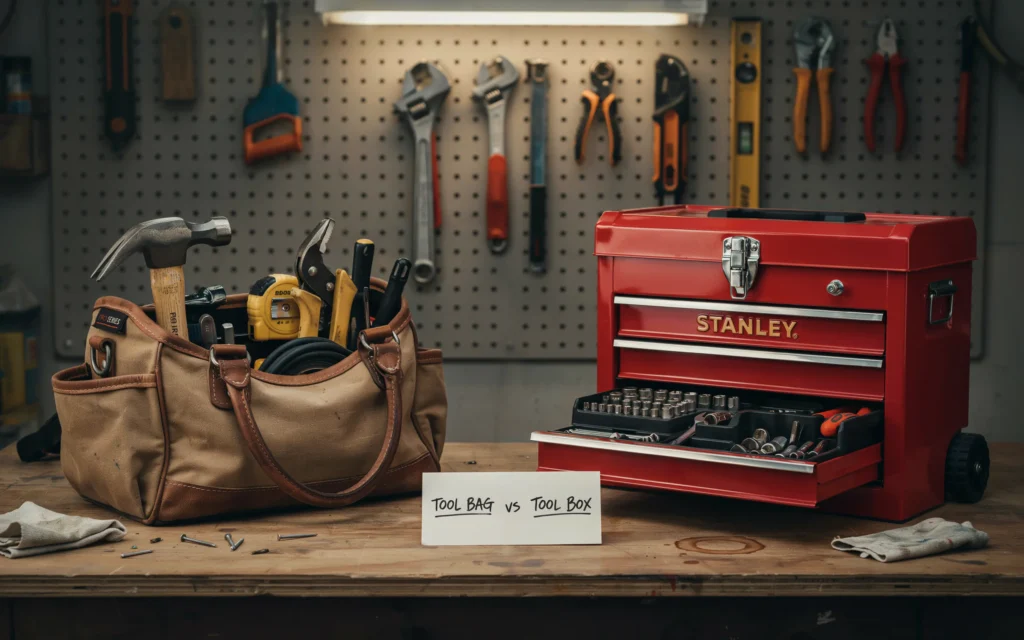
If you do small repairs in different rooms, a tool bag is your friend. Think about hanging pictures in the living room, then fixing a loose drawer in the kitchen, then tightening a doorknob in the bathroom. You do not want to run back to the garage for each tool. A tool bag lets you carry everything in one trip. You can sling it over your shoulder and keep your hands free.
You Take Tools to Other Places
Maybe you help your elderly parents with small fixes. Or you go to a friend’s house to assemble furniture. A tool bag is easier to toss in the car. It fits behind a seat or in the trunk without taking much space. The soft sides do not scratch your car interior. You do not have to worry about the bag tipping over and spilling tools.
You Need Quick Access to Many Small Tools
Tool bags often have a dozen or more pockets on the outside. You can put screwdrivers, pliers, cutters, and wrenches in separate slots. You see each handle sticking out. This saves time. You do not have to open a lid or lift a tray. Just grab what you need and get back to work.
You Work on Ladders or in Tight Spaces
Have you ever tried to carry a hard plastic tool box up a ladder? It is not fun. The box bangs against the rungs. You have to balance it. A soft tool bag hangs from your shoulder or hooks onto the ladder. Some bags have a loop that fits over a ladder rail. This is much safer and easier.
“After 30 years as a handyman, I reach for my tool bag first for 80% of home service calls. Only heavy plumbing or electrical work needs a box.” – Tom Silva, contractor and TV host.
When a Tool Box Takes the Lead
Even though tool bags are popular, tool boxes are not outdated. They still have clear advantages. Here is when a tool box is the better answer to which is better, a tool bag or a tool box for home tools.
You Store Tools in a Garage or Shed
If your tools stay in one place most of the time, a tool box is very good. You can put it on a shelf or on the floor. The hard shell keeps dust, dirt, and moisture away from your tools. A metal tool box also deters mice and insects. Fabric bags can get chewed through.
You Have Expensive or Fragile Tools
Do you own a laser level, a digital multimeter, or a precision screwdriver set? These tools need protection from drops and crushing. A tool bag offers almost no impact protection. If you drop a tool bag, the tools inside hit the ground through the thin fabric. A tool box with a hard shell absorbs the shock. The lid also keeps items from falling out if the box tips over.
You Want a Neat, Organized Look
Some people like everything in its place. A tool box with a tray gives you that feeling. You know exactly where each tool belongs. You can open the box and see all the tools at once. There is no digging through a dark fabric bag. This is helpful if you have many similar tools or if you share tools with family members.
You Stack or Combine Multiple Boxes
Many tool boxes are made to stack. You can put a small box on top of a larger one. Some brands have interlocking latches. This saves floor space. You can also buy a tool chest on wheels. That is a bigger system. But for home use, a medium tool box can stack with a parts organizer. A tool bag does not stack at all.
Types of Tool Bags and Tool Boxes for Home
Not all tool bags are the same. Not all tool boxes are the same. Knowing the types helps you pick the right one.
Popular Tool Bag Styles
Open top tool bag – This is a simple bucket shape with no zipper. Tools stick out the top. Good for very quick access. Bad for keeping dust out.
Zippered tool bag – The most common type. A large zipper closes the main compartment. Outer pockets may have zippers or elastic loops. Good balance of access and protection.
Backpack tool bag – This looks like a school backpack but has many tool pockets inside and out. Great if you walk far or ride a bike to job sites. Two shoulder straps spread the weight evenly.
Rolling tool bag – A large bag with wheels and a handle. Too big for most home use. Useful if you have many heavy tools and need to move them across a parking lot or up a ramp.
Popular Tool Box Styles
Plastic tool box – Lightweight, cheap, and easy to clean. Most common for home use. The latch can break if overloaded. Does not rust.
Metal tool box – Steel or aluminum. Very strong. Heavy. Can rust if wet. Often looks classic. Good for heavy tools like hammers and wrenches.
Portable tool organizer – Also called a “cantilever” box. The sides fold out to reveal trays on multiple levels. Great for small parts and many hand tools. More expensive.
Tool box with wheels – A small rolling chest. Usually has a telescoping handle. Good for a home workshop where you move tools between a bench and a garage bay.
How to Decide: 5 Simple Questions
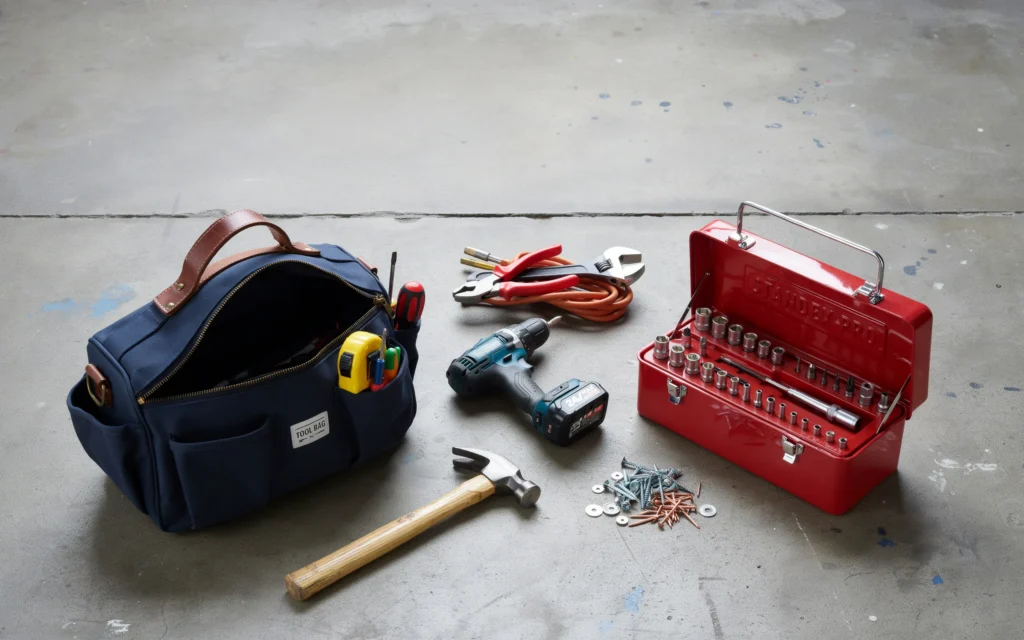
Ask yourself these questions. Your answers will tell you which is better, a tool bag or a tool box for home tools for your situation.
1. Where will you keep the tools?
If on a shelf in the garage, a tool box is fine. If under the kitchen sink or in a closet, a tool bag fits better.
2. How often do you move your tools?
Every day? Choose a tool bag. Once a month? Either works. Once a year? Save money and use a plastic box.
3. What kind of tools do you own?
Lots of screwdrivers, pliers, and small hand tools? A bag with pockets is great. A heavy hammer, pipe wrench, and level? A tool box holds them without poking through fabric.
4. Do you have small parts like screws and nails?
If yes, a tool box with a tray or a separate small parts organizer is better. Small parts get lost in a tool bag.
5. Is weather or moisture a concern?
If you store tools in a damp basement or an unsealed shed, a plastic or metal tool box protects better. Fabric bags absorb moisture and can grow mold.
“I tell new homeowners to start with a cheap tool box. If you find yourself carrying it to every room, switch to a bag. The right answer changes with your habits.” – Amy Matthews, licensed contractor.
Real Homeowner Scenarios
Let me share three real examples from people I know. These stories show how the choice depends on your life.
Scenario 1: Sarah, a renter in an apartment
Sarah has a small set of tools. She uses them to hang shelves, assemble IKEA furniture, and fix her bike. She lives on the third floor with no elevator. She often helps neighbors with small repairs. She chose a medium zippered tool bag with a shoulder strap. She keeps it in her hall closet. She says, “I can carry it down three flights of stairs without hurting my hand. The bag also fits next to my vacuum cleaner.”
Scenario 2: Mark, a homeowner with a garage workshop
Mark has many tools. He does woodworking and car maintenance. He owns several wrenches, sockets, hammers, and power tools. He uses a large metal tool box for his most used hand tools. The box sits on a bench. He says, “I know where my 10mm socket is every time. The metal box is heavy, but I never carry it far. For me, a tool bag would be a mess.”
Scenario 3: Linda, a DIY hobbyist
Linda likes to paint, do minor electrical work, and fix garden tools. She had a tool box but got tired of digging for small items. She switched to a tool bag with 22 pockets. Now each screwdriver and pliers has its own slot. She also bought a small clear plastic box for screws and wire nuts. She keeps that inside the main bag. She says, “Now I spend less time looking and more time fixing.”
These stories show that the answer to which is better, a tool bag or a tool box for home tools is personal. There is no single right answer for everyone.
Frequently Asked Questions (FAQ)
Can I use both a tool bag and a tool box?
Yes. Many people do this. Keep your everyday tools in a bag for quick jobs. Store less used tools or heavy tools in a box. You can also keep a small tool box inside a large tool bag for parts. This gives you the best of both.
Which is better, a tool bag or a tool box for home tools if I have kids?
If you have young children, a tool box with a latch or lock is safer. You can keep it closed and out of reach. A tool bag with a zipper is easier for a child to open. Also, hard boxes do not tip over as easily if a child bumps into them.
Are tool bags durable enough for home use?
Yes, for most home use. A good nylon tool bag with double stitching lasts many years. Avoid cheap thin fabric bags. Look for reinforced bottom and strong zippers. For heavy tools like a 3 pound hammer, a tool box may last longer.
Do tool boxes rust?
Metal tool boxes can rust if left in a damp place. Plastic tool boxes never rust. If you work in a humid area, choose plastic or a tool bag with coated fabric.
Which is better for power tools?
Neither. Power tools like drills, saws, and sanders should stay in their original cases or in a dedicated power tool bag. Power tools have odd shapes and need custom foam protection. A regular tool bag or box does not protect them well.
How do I clean a tool bag?
Empty the bag. Shake out dust and debris. Use a vacuum with a brush attachment. For stains, use a damp cloth with mild soap. Do not put most tool bags in a washing machine. The fabric can shrink or the zipper can break.
How much should I spend?
A basic plastic tool box costs 10 to 20 dollars. A good tool bag costs 20 to 50 dollars. A high end bag with many pockets and padded straps can cost 80 dollars. For home use, stay in the 20 to 40 dollar range.
Conclusion
After reading this guide, you now have a clear answer to which is better, a tool bag or a tool box for home tools. It depends on your home, your tools, and how you work. If you move around a lot, need quick access to many small tools, or carry your kit to other places, a tool bag is likely better for you. If you keep tools in one spot, own heavy or fragile tools, or want a very organized layout, a tool box is probably your best choice.
Do not feel pressured to pick only one. Many homeowners start with a basic tool box. Then they buy a tool bag for small jobs. Both have a place in a well equipped home. The most important thing is to keep your tools safe and easy to find. A tool bag or a tool box that sits unused in a corner helps no one. Pick the one that fits your daily habits. Your future self will thank you when the next leaky faucet or loose screw appears.
Remember this simple rule: For running around the house, carry a bag. For staying in the workshop, use a box. And if you are still not sure, buy an inexpensive version of each. Use them for one month. You will quickly learn which is better, a tool bag or a tool box for home tools for your unique life. Happy fixing
Related posts
 Top Home Tool Kits for Seniors: 2026 Practical Guide
Discover the top home tool kits for seniors in 2026. We compare compact, easy-to-use sets perfect for daily household repairs, furniture assembly, and DIY tasks. Finding…
 Top Home Tool Kits for Women: 2026 Buyer Guide
Discover the top home tool kits for women in 2026. Compare top-rated sets for DIY, furniture assembly, and household repairs to find your perfect match. Finding…
 Top Home Tool Kits for Basic Home Repairs 2026
Find the top home tool kits for basic home repairs in 2026. Compare top-rated sets for DIY projects, furniture assembly, and daily household maintenance. Every home…