
Why Socket Wrenches Skip Under Pressure: Causes and Fixes
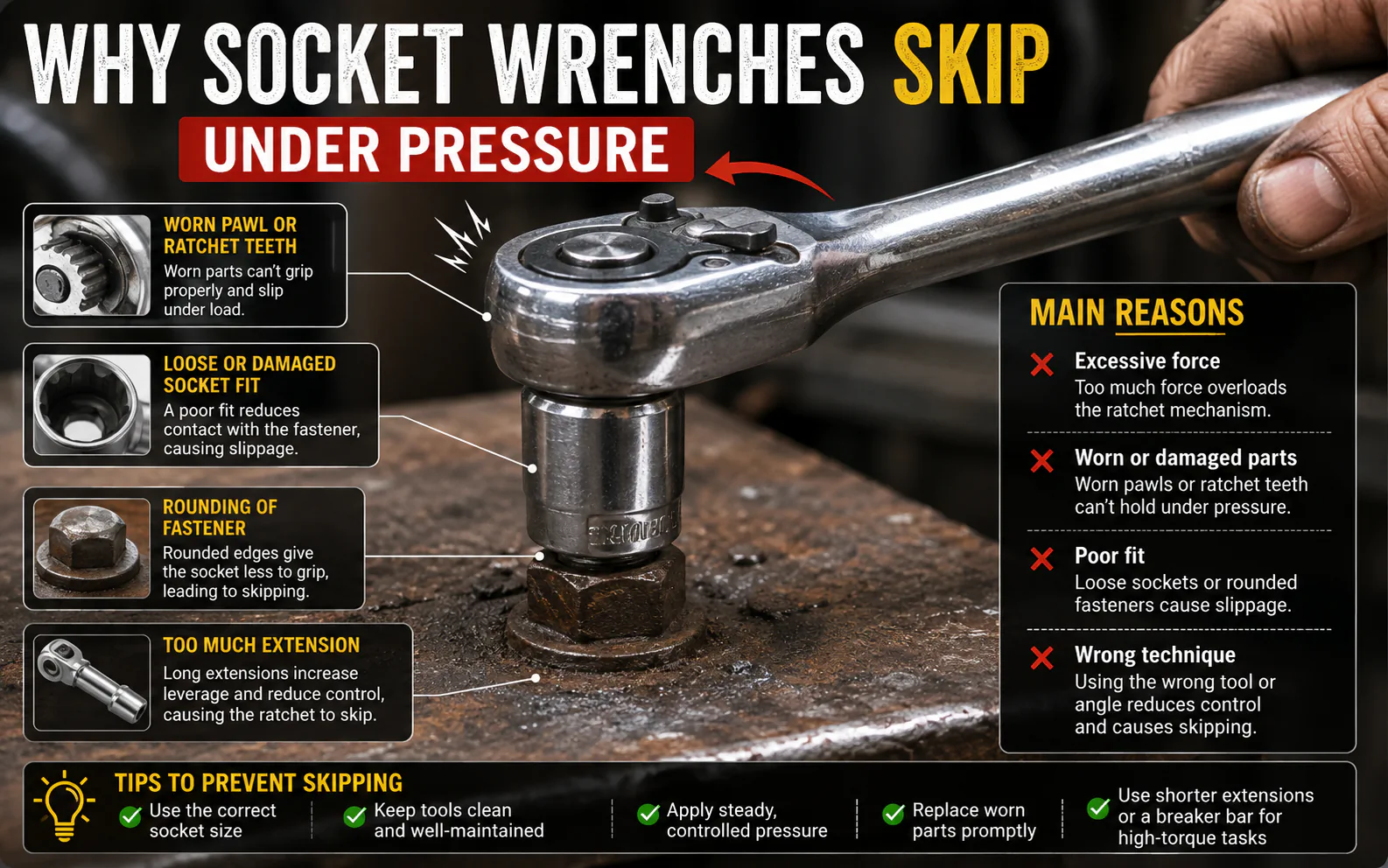
When a socket wrench skips under pressure, it is usually caused by one of two issues: internal mechanical failure within the ratchet head or an improper fit between the socket and the fastener.
If you feel a ‘clicking’ or ‘jumping’ sensation inside the handle while pulling, the internal pawl and gear teeth are likely worn or damaged. If the socket itself rotates around the bolt head without turning it, the issue is external, often due to a loose fit or a rounded fastener.
| Topic | When it helps | What to keep in mind |
|---|---|---|
| 1 | Identifying internal tool failure. | Do not try to force a slipping ratchet; it can snap and cause injury. |
| 2 | Preventing rounded bolt heads. | Avoid using 12-point sockets on high-torque applications if 6-point sockets are available. |
| 3 | Understanding tool limits. | Never use a ‘cheater bar’ or pipe on a standard ratchet handle. |
Diagnosing Internal Ratchet Failure
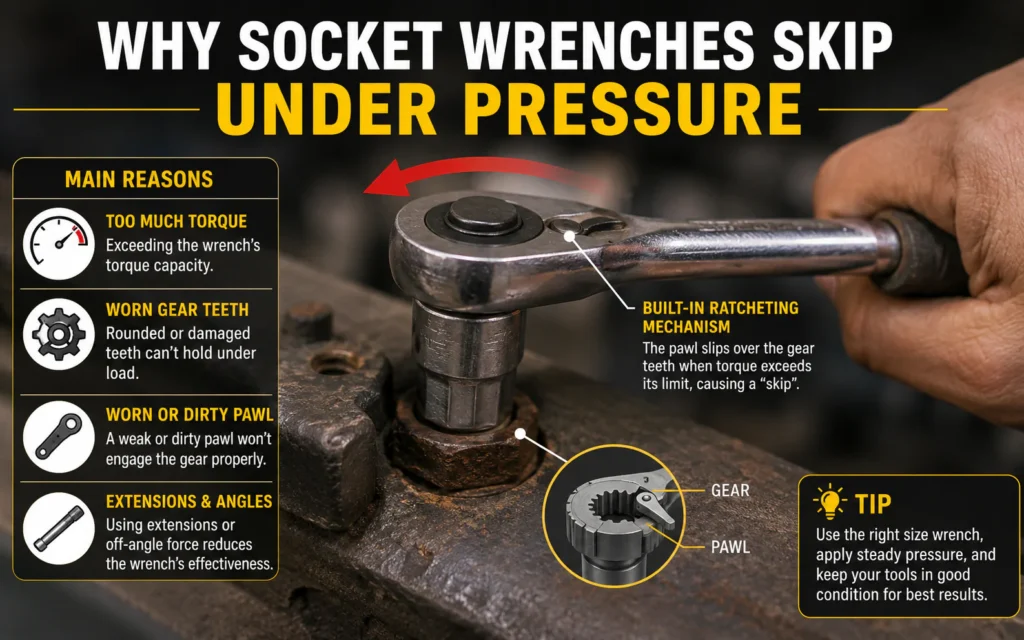
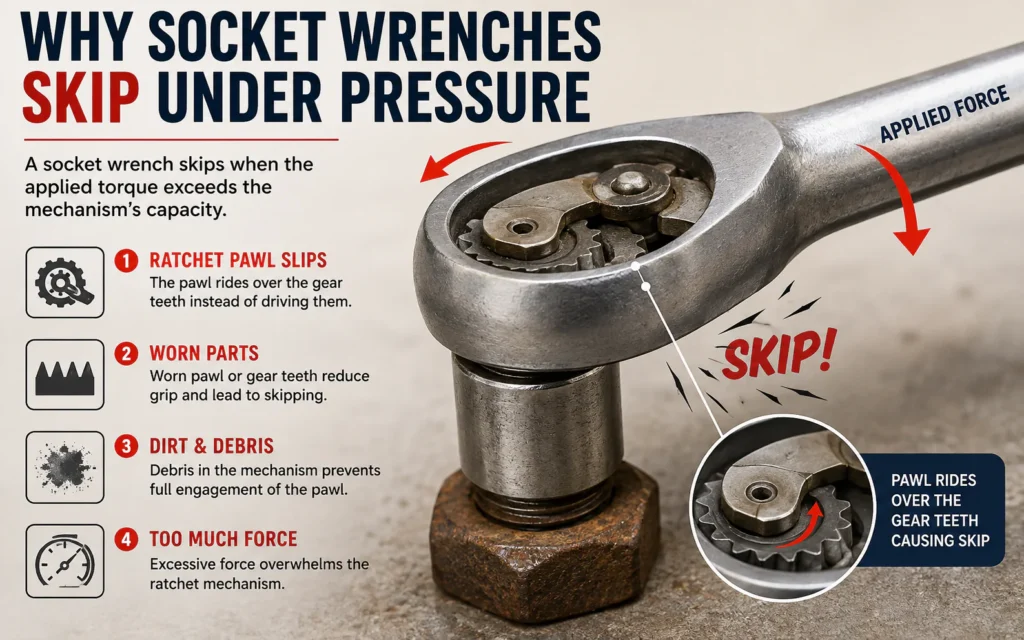
The ratchet head contains a gear and a pawl. Under pressure, the pawl must stay firmly seated in the gear teeth. If the teeth are worn down, the pawl will ‘skip’ over them when you apply force.
This often happens after years of use or if the tool has been used to break loose rusted bolts that exceed its torque rating. Once the metal edges are rounded, they cannot hold under tension.
If you pull the handle and it makes a grinding noise without turning the bolt, the internal pawl is failing to lock.
Ignoring the grinding noise; this will eventually lead to the mechanism locking up entirely or failing completely.
- Check for debris inside the head.
- Ensure the direction switch is fully engaged.
- Listen for inconsistent clicking sounds.
| Symptom | Likely Cause |
|---|---|
| Handle jumps/clicks | Worn pawl/gear |
| Socket spins on bolt | Wrong size/rounded bolt |
| Grinding noise | Debris or lack of lube |
Preventing External Slippage
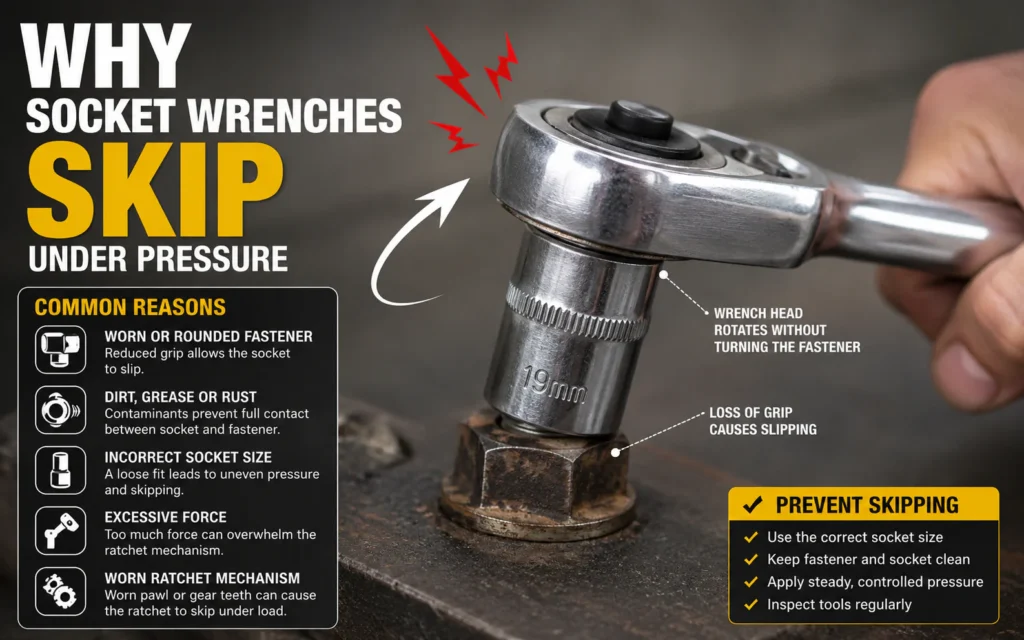
External slipping is often a user error rather than a tool defect. When the socket does not seat fully onto the fastener, the force is applied only to the very edges of the bolt head.
This concentration of force causes the socket to ‘cam out’ or slide off. Always ensure the socket is pushed all the way down onto the fastener before applying pressure.
Using a 12-point socket for high-torque jobs; 6-point sockets provide better contact and are less likely to slip.
Using a 13mm socket on a 1/2-inch bolt might feel ‘close enough,’ but the slight gap will cause the socket to slip and round off the bolt corners.
- Use 6-point sockets for high-torque tasks.
- Clean rust off the bolt head before seating the socket.
- Ensure the socket is fully seated.
Safety checks
- Internal skipping is usually caused by worn pawls or gears.
- External slipping is caused by using the wrong size or worn fasteners.
- Never use a standard socket on a damaged or rounded bolt head.
- Regular cleaning and light oiling extend ratchet life.
Focus on mechanical wear fastener
1. Internal Gear Wear
The pawl (the small metal piece that engages the gear) has rounded teeth or a weak spring, causing it to slip over the gear teeth under load.
- Identifying internal tool failure.
- Do not try to force a slipping ratchet; it can snap and cause injury.
- If the handle skips without the socket moving, the ratchet head needs a rebuild kit or replacement.
- Cause – Mechanical wear
- Fix – Rebuild or replace
2. Socket-to-Fastener Mismatch
Using a slightly oversized socket or a metric socket on an SAE bolt creates play, which leads to the socket slipping off the corners of the fastener.
- Preventing rounded bolt heads.
- Avoid using 12-point sockets on high-torque applications if 6-point sockets are available.
- Always verify the size with a caliper if the fit feels loose before applying force.
- Cause – Fitment error
- Fix – Use correct size
3. Excessive Torque
Applying force beyond the tool’s design capacity can deform the internal components or the socket walls, leading to immediate slipping.
- Understanding tool limits.
- Never use a ‘cheater bar’ or pipe on a standard ratchet handle.
- If you need more leverage, switch to a breaker bar instead of a ratchet.
- Cause – Overloading
- Fix – Use proper tool
FAQs
Why do some socket sets skip specific sizes like 16mm?
Manufacturers often skip sizes that are rarely used or have a close equivalent in other systems, primarily to reduce the cost and size of the set.
Can I fix a skipping ratchet myself?
Yes, many ratchets can be repaired using a rebuild kit that includes a new pawl, spring, and gear, provided the tool is a reputable brand that offers parts.
Is it safe to use a cheater bar on a socket wrench?
No, using a cheater bar significantly increases the torque beyond what the internal mechanism is designed to handle, which will cause the tool to skip or break.
What is the difference between a ratchet and a socket wrench?
A ratchet is the handle mechanism that allows for back-and-forth movement, while the socket is the removable attachment that grips the fastener.
Conclusion
A socket wrench that skips under pressure is a clear signal that either the tool’s internal mechanism is worn or the connection to the fastener is insecure. By distinguishing between internal gear failure and external fitment issues, you can quickly determine whether you need a repair kit or simply a better-fitting socket.
Always prioritize safety by using the correct tool for the job. If you find yourself needing extra leverage, reach for a breaker bar rather than forcing a standard ratchet, as this will prevent both tool damage and potential injury.
Related posts
 Which Tool Kit Is Worth Buying? How to Choose the Right Set for Your Home
Wondering which tool kit is worth buying? Compare basic household sets, mechanic kits, and power tool combos to find the best tools for your budget and…
 Which Hand Tools Are Made in the USA? Reliable Brands and Buying Rules
Discover which hand tools are still made in the USA. Compare top domestic brands, tool categories, and learn how to verify origin labels before buying. Several…
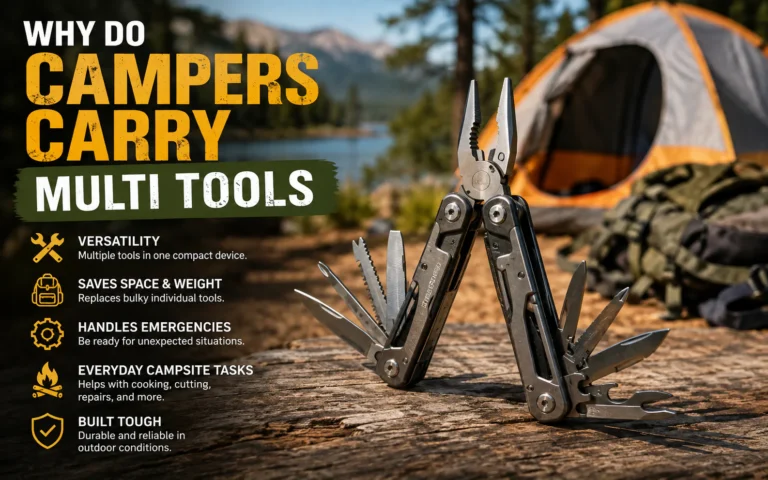 Why Do Campers Carry Multi Tools? Practical Uses in the Field
Why do Campers carry multi tools to handle gear repairs, campsite setup, food prep, and field fixes with minimal weight. Here is why one belongs in…