
How to Choose Mechanic Tools for Beginners: Practical Buying Steps
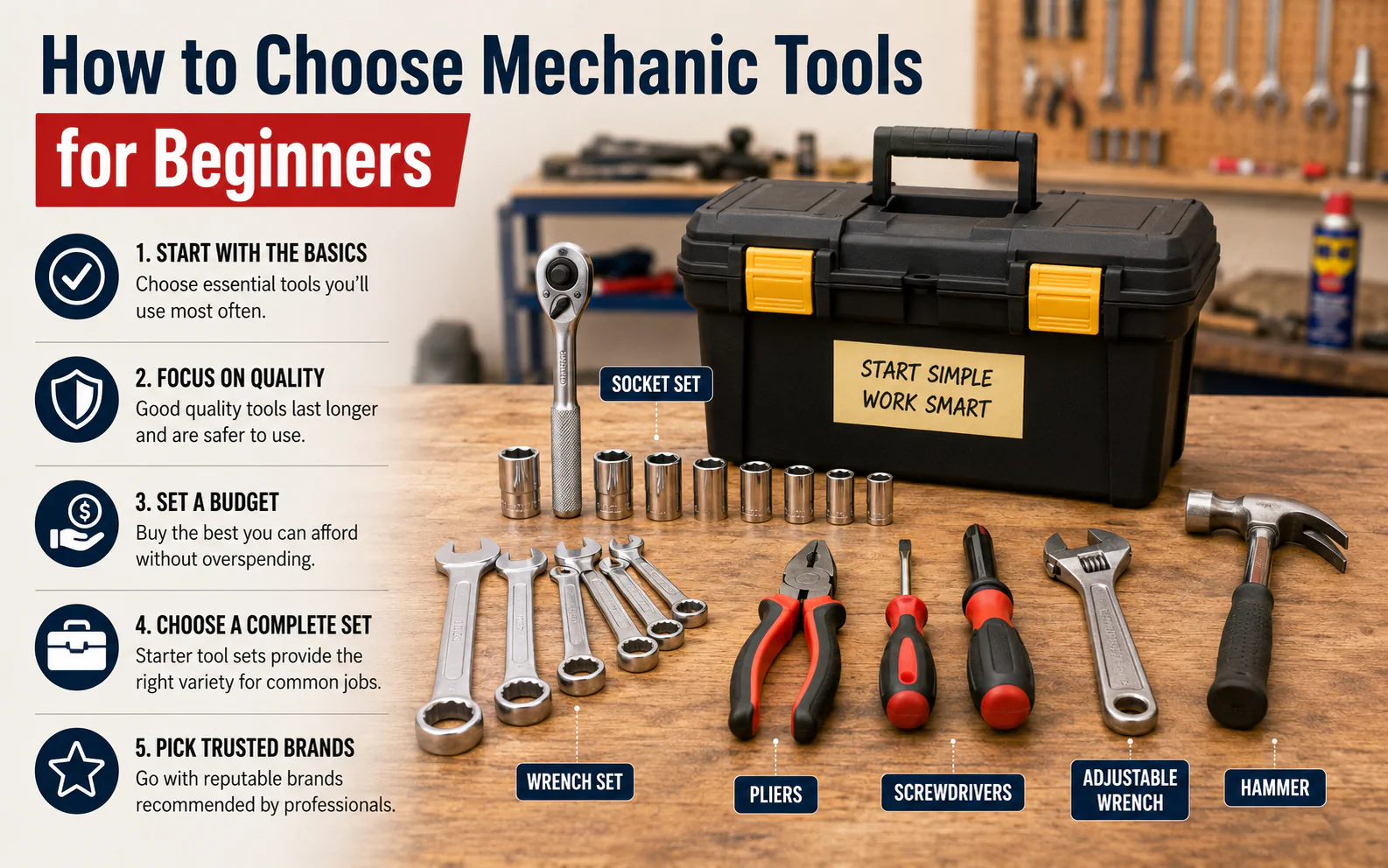
Choosing mechanic tools for beginners starts with selecting a balanced mechanic tool set built around a 3/8-inch ratchet drive, a core collection of 6-point sockets, and a set of combination wrenches. Rather than buying specialized power tools right away, focus on foundational hand tools made from heat-treated Chrome Vanadium steel.
To choose the right tools, determine your vehicle’s fastener system (Metric or SAE), inspect ratchet mechanism quality, and insist on a full lifetime replacement warranty. Avoid buying massive tool sets based on piece count alone, as manufacturers often inflate these numbers with inexpensive hex bits and fasteners you rarely use.
Budget notes
- Start with a comprehensive 3/8-inch drive socket set before buying niche tools.
- Prioritize 6-point sockets over 12-point sockets to prevent rounded bolt heads.
- Check set piece counts carefully to avoid paying for dozens of flimsy screwdriver bits.
- Match your sizing needs to your vehicle: Asian and European cars rely almost entirely on Metric fasteners.
| Topic | When it helps | What to keep in mind |
|---|---|---|
| Step 1 | First-time DIY buyers needing immediate coverage for common repair tasks. | Large sets boasting 300+ pieces that include low-value hardware like zip ties, wire connectors, or driver bits. |
| Step 2 | General maintenance, spark plug replacement, brake servicing, and engine bay work. | Using 1/4-inch drive ratchets on high-torque suspension bolts, which can break smaller tool mechanisms. |
| Step 3 | Beginners working on older vehicles or rusted undercarriage bolts. | 12-point sockets offer easier engagement in tight spots but easily slip on seized bolts. |
| Step 4 | Matching tools directly to your personal automobile lineup. | Using a close-enough SAE socket on a Metric bolt head will eventually round off the fastener corners. |
| Step 5 | Long-term tool longevity and protection against unexpected breakage during tough jobs. | Unbranded carbon steel tools that flex under hand pressure or chip away plating easily. |
Focused strictly on choosing hand
Step 1. Choose a Core Mechanics Tool Set Over Individual Pieces
Buying a multi-piece mechanic set is significantly more cost-effective than purchasing individual ratchets and sockets separately. Look for sets ranging from 90 to 150 core pieces.
- First-time DIY buyers needing immediate coverage for common repair tasks.
- Large sets boasting 300+ pieces that include low-value hardware like zip ties, wire connectors, or driver bits.
- Count only the sockets, ratchets, and wrenches when comparing price-per-piece value across sets.
- Target Piece Count – 90 to 180 core pieces.
- Cost Efficiency – High.
- Primary Focus – Sockets & Ratchets.
Step 2. Prioritize 3/8-Inch Drive Sockets and Accessories
The 3/8-inch drive size is the versatile middle ground of automotive repair, balancing clearance in tight engine compartments with sufficient leverage for stubborn fasteners.
- General maintenance, spark plug replacement, brake servicing, and engine bay work.
- Using 1/4-inch drive ratchets on high-torque suspension bolts, which can break smaller tool mechanisms.
- Ensure your first set includes shallow and deep-well 3/8-inch sockets alongside a 3-inch and 6-inch extension bar.
- Versatility – Highest.
- Torque Range – Moderate to High.
- Recommended Standard – 6-Point Socket Profile.
Step 3. Select 6-Point Socket Profiles for Better Grip
Six-point sockets contact the flat sides of hex bolts rather than the corners. This design dramatically lowers the risk of stripping or rounding rusty fasteners.
- Beginners working on older vehicles or rusted undercarriage bolts.
- 12-Point sockets offer easier engagement in tight spots but easily slip on seized bolts.
- Choose 6-point sockets for your primary working set, reserving 12-point sockets only for specific specialty head bolts.
- Fastener Contact – Flat Wall Surface.
- Slippage Risk – Very Low.
- Durability – Maximum.
Step 4. Verify Vehicle Measurement Standards (Metric vs. SAE)
Modern imports and domestic cars built after the 1990s rely predominantly on Metric fasteners. Older American classics use Imperial SAE (Society of Automotive Engineers) measurements.
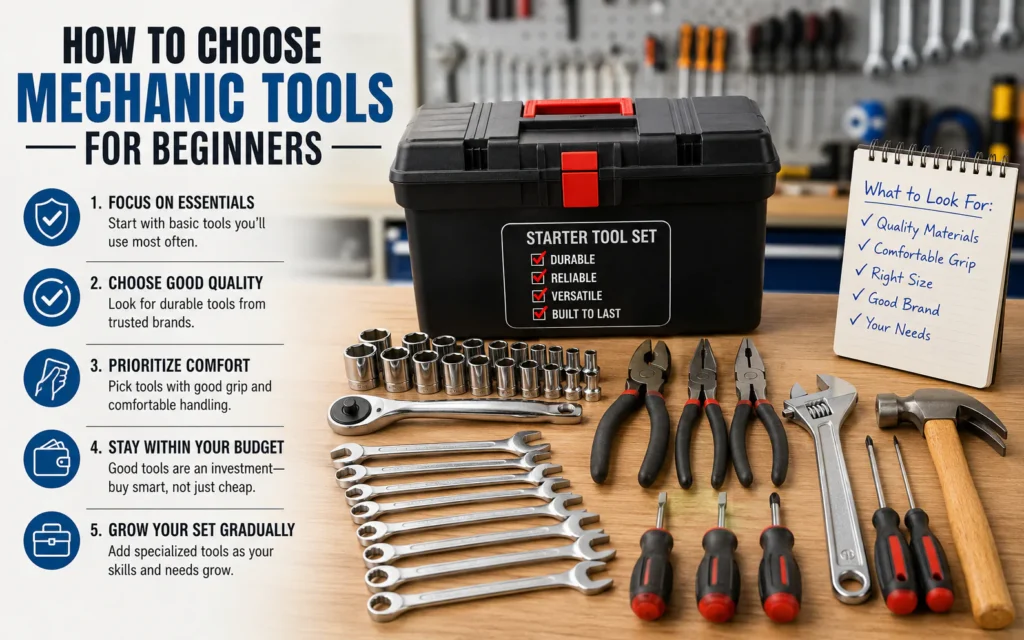
- Matching tools directly to your personal automobile lineup.
- Using a close-enough SAE socket on a Metric bolt head will eventually round off the fastener corners.
- If you own modern European, Asian, or American passenger vehicles, prioritize comprehensive Metric sizing sets first.
- Modern Vehicles – 90%+ Metric.
- Classic Muscle/Trucks – SAE standard.
- Best Practice – Dedicated dual-labeled storage.
Step 5. Confirm Steel Grade and Warranty Terms
Durable mechanics tools are forged from Chrome Vanadium (Cr-V) steel with a smooth chrome finish that resists rust and cleans easily after oil exposure.
- Long-term tool longevity and protection against unexpected breakage during tough jobs.
- Unbranded carbon steel tools that flex under hand pressure or chip away plating easily.
- Buy brands offering a hassle-free full lifetime warranty with easy over-the-counter or mail-in replacement.
- Preferred Material – Chrome Vanadium (Cr-V).
- Finish – Full-Polish Chrome.
- Warranty Standard – Lifetime Replacement.
Evaluating Core Specifications: Drive Sizes and Socket Profiles
When assessing mechanic tools, socket drive sizes determine how much torque you can exert on a fastener and how easily you can reach into confined vehicle spaces. Ratchets and sockets are organized by the square drive stub size: 1/4-inch, 3/8-inch, and 1/2-inch.
A 1/4-inch drive set handles small trim pieces, dashboard components, and engine sensors where excessive force snaps small bolt shanks. The 3/8-inch drive serves as the universal core workhorse for engine bays, water pumps, and alternator replacements.
Changing front brake pads requires a 3/8-inch drive socket for caliper bolts, while a smaller 1/4-inch drive set handles sensitive sensor clips without over-tightening.
Buying a large 1/2-inch drive heavy impact set while lacking basic 1/4-inch drive sockets for interior and trim fasteners.
- 1/4-Inch Drive: Best for interior panels, hose clamps, and small electronic sensors under 10mm.
- 3/8-Inch Drive: Ideal for general engine maintenance, spark plugs, and brake work.
- 1/2-Inch Drive: Essential for high-torque applications like wheel lug nuts and suspension bolts.
- 6-Point Profile: Maximize wall surface contact to prevent damaging stuck fasteners.
| Drive Size | Torque Capacity | Common Automotive Uses | Essential Beginner Need |
|---|---|---|---|
| 1/4-Inch. | Low (Under 30 ft-lbs). | Dash panels, battery terminals, small body clips. | Recommended. |
| 3/8-Inch. | Medium (20 to 100 ft-lbs). | Brakes, alternators, spark plugs, valve covers. | Must-Have. |
| 1/2-Inch. | High (100+ ft-lbs). | Lug nuts, suspension control arms, axle nuts. | Optional Initially. |
Navigating Sizing Standards and Quality Indicators
Matching your tool set to your target vehicle is essential. Auto manufacturers globally have shifted almost entirely to the Metric system.
To ensure long-term durability, evaluate the steel construction and manufacturing finish. Quality hand tools are forged from Chrome Vanadium (Cr-V) steel, which undergoes heat treatment to endure twisting forces without snapping.
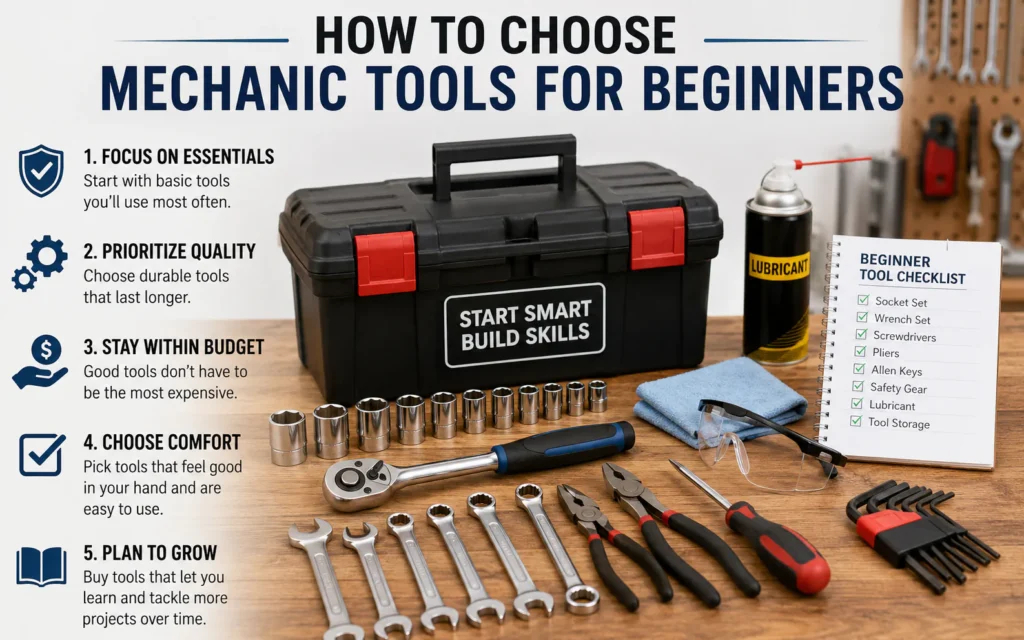
Working on a Honda or Toyota requires metric socket sizes from 8mm to 19mm, whereas an old Ford pickup might require 1/2-inch or 9/16-inch SAE sockets.
Assuming modern cars use an even split of SAE and Metric fasteners; almost all passenger cars made past 2000 are overwhelmingly Metric.
- Focus on 8mm, 10mm, 12mm, 13mm, 14mm, 15mm, 17mm, and 19mm sockets for Asian and.
- Check for high tooth-count ratchets (72 teeth minimum) to maintain leverage in narrow engine slots.
- Look for clear, hard-stamped size markings on socket walls rather than cheap laser etching that.
- Select ratchets with quick-release drive buttons for fast socket changes with greasy hands.
Essential Auxiliary Tools and Purchasing Mistakes to Avoid
While ratchets and sockets form the bulk of your tool set, completing basic jobs requires essential auxiliary equipment. Combination wrenches (open on one end, box on the other) are necessary when a deep socket cannot clear nearby engine frame tubes.
Safety and precision tools should never be overlooked. A click-type torque wrench is non-negotiable for tightening bolts to exact vehicle manufacturer specifications, preventing sheared stud bolts or dangerous loose wheels.
A beginner buys a 250-piece set only to find 120 pieces are tiny driver bits, leaving them without basic pliers or a torque wrench to safely secure wheels.
Tightening wheel lug nuts or internal engine bolts by feel alone without using a calibrated torque wrench.
- Avoid Marketing Traps: Disregard hardware filler items when evaluating overall set prices.
- Invest in a Torque Wrench: Choose a 1/2-inch drive torque wrench rated up to 150.
- Get Quality Lighting: Add a compact rechargeable LED work light to illuminate dark engine wells.
- Plan Storage Early: Choose blow-molded case sets or a portable tool roll to keep sockets.
FAQs
What tools should a beginner mechanic buy first?
A beginner should start with a 3/8-inch drive socket set (Metric and SAE), a matching ratchet, a set of combination wrenches, safety glasses, slip-joint pliers, and a click-type torque wrench.
Is Metric or SAE more important for beginner mechanics?
Metric is more important for modern vehicles. Almost all European, Asian, and contemporary domestic vehicles built after 2000 use Metric fasteners almost exclusively.
Should beginners buy 6-point or 12-point sockets?
Beginners should buy 6-point sockets first. Six-point sockets grip the flat sides of fasteners, significantly reducing the chance of rounding off stuck or rusty bolt heads.
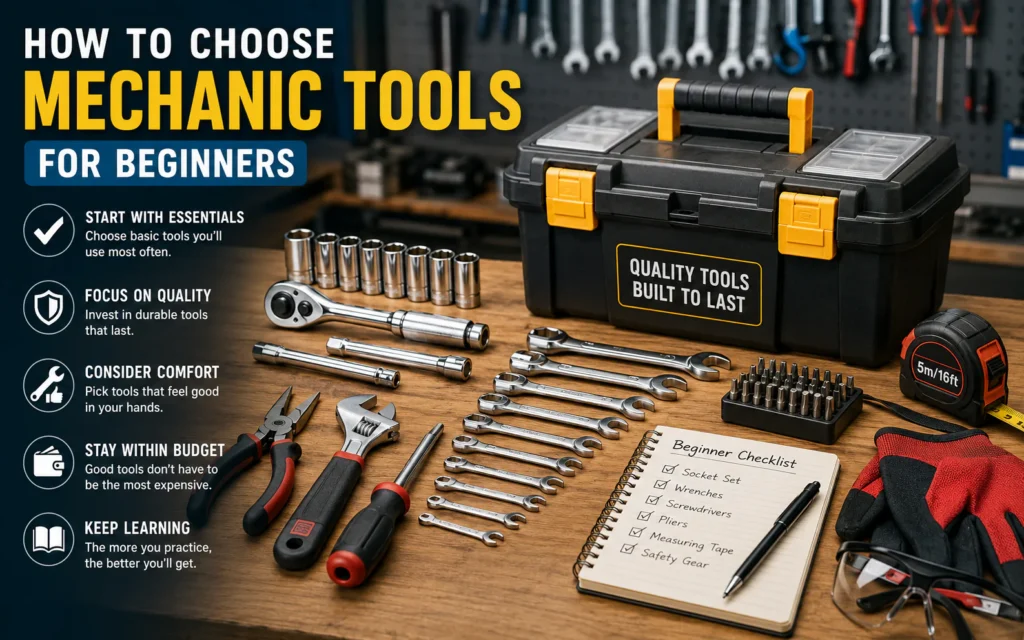
Are high piece-count mechanic tool sets worth it?
High piece-count sets are only worth it if the count consists of sockets, ratchets, and wrenches. Watch out for sets that inflate their piece counts with cheap screwdriver bits and hardware items.
Why do ratchet tooth counts matter for beginner tools?
Higher tooth counts (such as 72 or 90 teeth) require a smaller arc swing to turn fasteners. This allows you to turn bolts easily inside cramped, tight modern engine compartments.
Conclusion
Choosing mechanic tools as a beginner does not require spending thousands of dollars on professional shop roll cabs. Focus your budget on core hand tools made from durable Chrome Vanadium steel that feature functional designs like 6-point sockets and high-tooth ratchets.
Prioritize usable tools over padded piece counts, verify warranty terms, and add precision items like a torque wrench to complete your working setup. With a well-chosen foundation of reliable hand tools, you can handle routine car maintenance with confidence and build your tool chest as.
Related posts
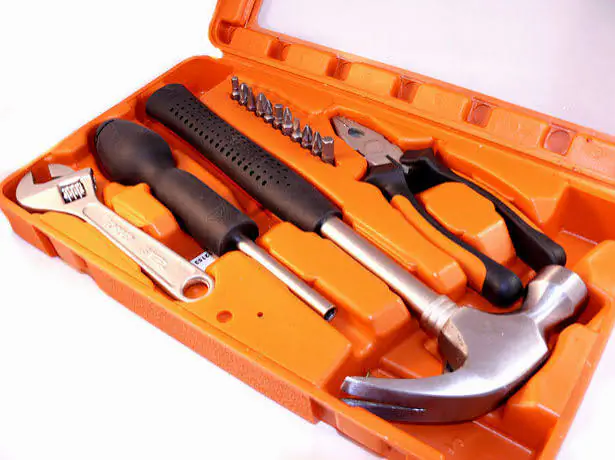 Which Tool Kit Is Worth Buying? How to Choose the Right Set for Your Home
Wondering which tool kit is worth buying? Compare basic household sets, mechanic kits, and power tool combos to find the best tools for your budget and…
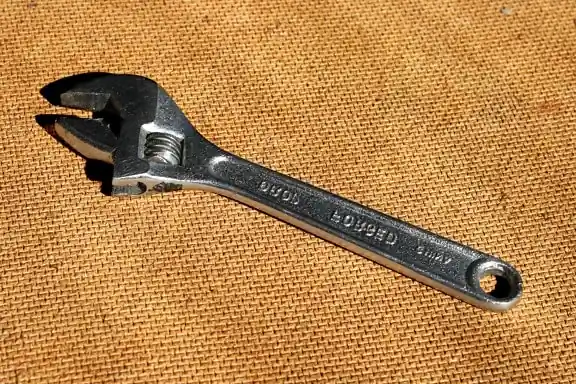 Which Hand Tools Are Made in the USA? Reliable Brands and Buying Rules
Discover which hand tools are still made in the USA. Compare top domestic brands, tool categories, and learn how to verify origin labels before buying. Several…
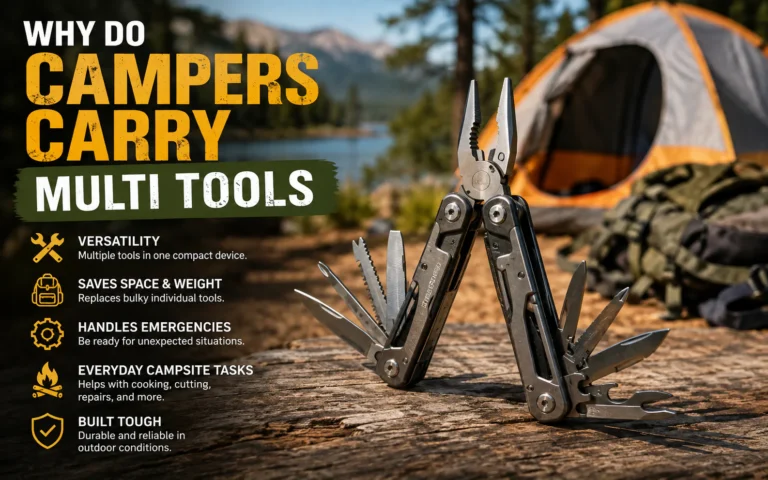 Why Do Campers Carry Multi Tools? Practical Uses in the Field
Why do Campers carry multi tools to handle gear repairs, campsite setup, food prep, and field fixes with minimal weight. Here is why one belongs in…