
Why Insulated Tools Are Important
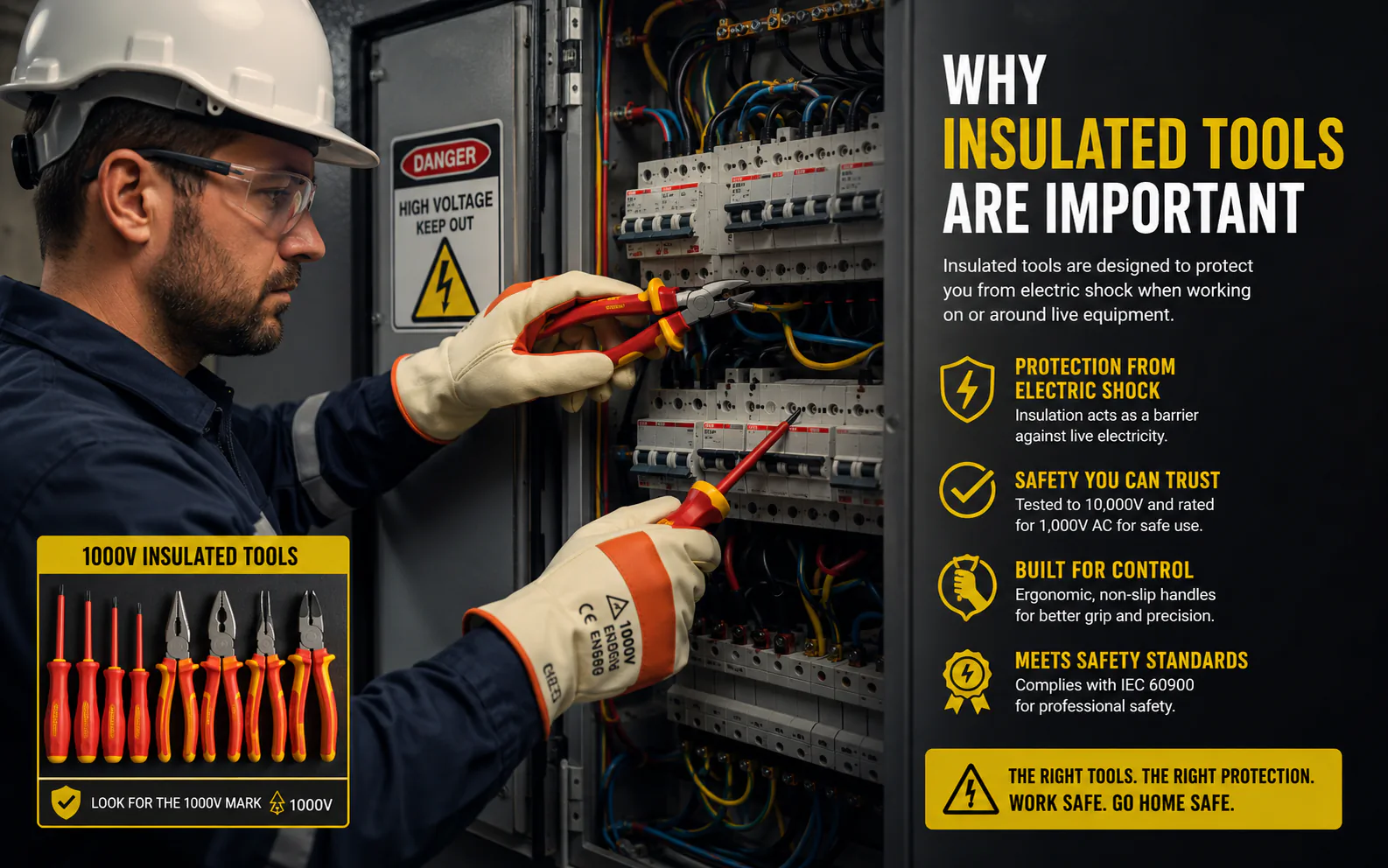
Working with electricity carries serious risks, which is exactly why insulated tools are important for every professional and DIYer. These specialized hand tools provide a nonconductive barrier that protects you from electric shock, arc flashes, and serious injuries. They meet strict safety standards like IEC 60900 and NFPA 70E, making them a required part of any electrical job. Using the right insulated tools can save your life.
Electricity does not give second chances. One small mistake, one accidental touch, and your life can change forever. That is why anyone who works with or near electrical systems needs to take safety seriously. The first rule of electrical work is always to deenergize the equipment before you start. But what about those times when you cannot turn the power off? What about situations where nearby equipment sends unexpected voltage into the system you are working on?
This is where insulated tools come into play. These specialized hand tools are built to protect you from electric shock and arc flash hazards. They are not just fancy versions of regular pliers or screwdrivers. They are lifesaving equipment that every electrician, maintenance worker, and even DIY enthusiast should own. In this article, we will explore why insulated tools are important, how they work, what standards they must meet, and how to choose and care for them properly.
What Exactly Are Insulated Tools?
Before we get into the details, let us clarify what we mean by insulated tools. These are hand tools that have a special nonconductive coating or covering over their handles and, in some cases, over the entire tool body except the working tip. This insulation creates a barrier between you and any electrical current that might pass through the tool.
Insulated tools are made with materials like specific plastics, rubbers, or epoxy coatings that do not conduct electricity. Unlike regular tools that might have a simple plastic grip for comfort, insulated tools are engineered and tested to withstand high voltages. They are rated for use up to 1000 volts AC and 1500 volts DC. The insulation on these tools goes far beyond a simple coating. It is thick, durable, and designed to stay intact even under tough working conditions.
It is also worth noting that insulated tools are not the same as “insulating” tools. Insulated tools have a conductive core (like steel) covered with an insulating layer. Insulating tools are made entirely of nonconductive materials. Both types serve similar purposes but are used in slightly different applications.
Why Insulated Tools Are Important: The Core Reasons
Now let us get straight to the heart of the matter. Why insulated tools are important can be broken down into several key reasons. Each one addresses a specific risk that electrical workers face every day.
Protection Against Electric Shock
The most obvious reason is protection from electric shock. When you work on or near live circuits, there is always a chance that your tool might accidentally touch an energized part. If that happens with a regular tool, the electricity can travel through the metal core and into your hand, giving you a shock that could be minor or fatal.
Insulated tools prevent this by providing a nonconductive barrier. The insulation stops the current from reaching your skin. Even if you accidentally brush against a live wire, the tool’s insulation offers a layer of protection that can save you from serious injury.
According to a Fluke survey, 91% of electrical workers say insulated hand tools are critical when working on electrical equipment. That number alone shows how much professionals trust these tools to keep them safe.
Arc Flash Protection
Electric shock is not the only danger. Arc flashes are another serious hazard. An arc flash happens when electrical discharge travels through the air from one conductor to another or to the ground. These events release intense heat, light, and pressure that can cause severe burns, blindness, and even death.
Insulated tools help reduce the risk of arc flashes. By preventing short circuits between different voltage phases, they lower the chances of an arc flash occurring. This is especially important when you are working in tight spaces where tools might accidentally bridge two live components.
Protection for Your Equipment
It is not just about keeping you safe. Insulated tools also protect the equipment you are working on. When you use a regular tool near live circuits, you risk causing a short circuit that can damage expensive components, blow fuses, or trip breakers. Insulated tools minimize this risk by reducing the chance of accidental contact between energized parts.
Compliance with Safety Regulations
Another reason why insulated tools are important is that safety regulations require them. The NFPA 70E standard, which is the benchmark for electrical safety in the workplace, mandates that insulated tools must be used when working on or near electricity greater than 50 volts. OSHA also requires their use under specific conditions.
Failing to use insulated tools when required can lead to fines, legal liability, and, more importantly, injuries. By using these tools, you are not only protecting yourself but also staying compliant with the law.
“Safety is the biggest reason electricians should use insulated tools when working on energized circuits.” – Donny Metcalf, ECMag Contributor
How Insulated Tools Differ from Regular Tools
A lot of people think that any tool with a plastic handle is insulated. That is a dangerous misconception. Regular tools often have rubber or plastic grips, but these are meant for comfort, not for electrical protection. They are not tested or certified to block voltage.
Here is a simple table to show the key differences:
| Feature | Regular Tools | Insulated Tools |
|---|---|---|
| Handle Material | Basic plastic or rubber for grip | Engineered nonconductive materials like high-grade plastic or rubber |
| Voltage Rating | None | Up to 1000V AC / 1500V DC |
| Testing | None | Individually tested to 10,000V |
| Certification | None | Meets IEC 60900, ASTM F1505, VDE standards |
| Identification | Usually black or single-color handles | Distinctive colors (like red and yellow) with 1000V symbol |
As you can see, the differences are significant. Regular tools may look similar, but they offer no real protection against electric shock. Using a regular tool on a live circuit is like driving without a seatbelt. You might get away with it for a while, but the consequences can be disastrous.
“The difference between these and regular hand tools is that insulated tools provide true electrical isolation on the handle.” – Pro Tool Reviews
Safety Standards and Certifications for Insulated Tools
For insulated tools to be effective, they must meet strict safety standards. These standards ensure that the tools have been properly designed, tested, and manufactured to provide reliable protection.
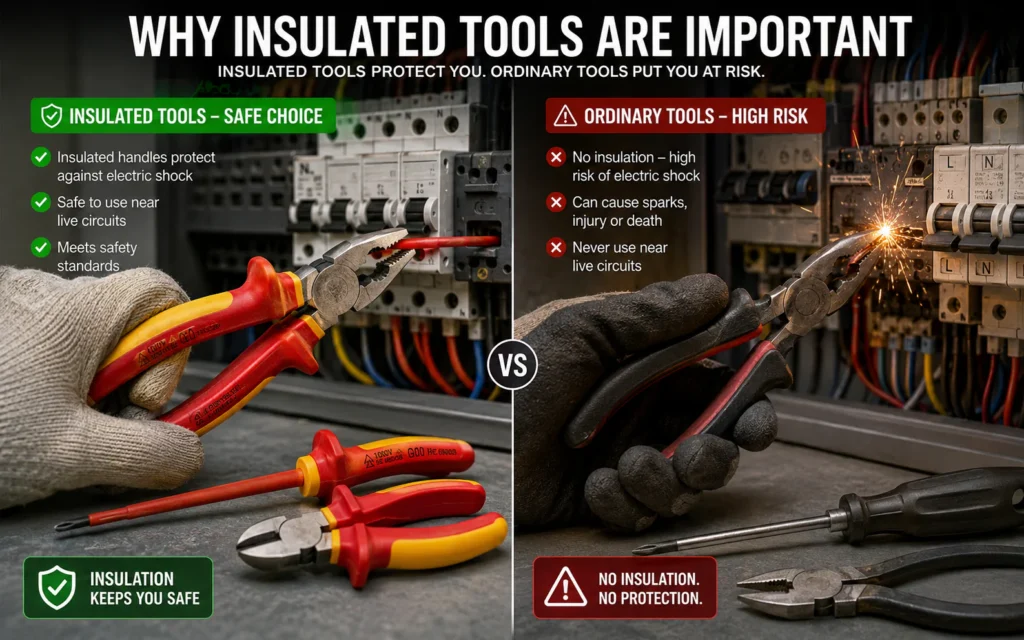
IEC 60900
This is the international standard for insulated hand tools used for live working up to 1000V AC and 1500V DC. It covers everything from design and construction to testing procedures. Tools that meet this standard have passed rigorous tests for dielectric strength, mechanical strength, and durability under extreme conditions.
ASTM F1505
This is the American standard for insulated hand tools. It sets requirements for the insulation material, adhesion, and dielectric properties. Tools that meet ASTM F1505 are tested to withstand 10,000 volts to achieve a 1000-volt rating.
VDE Certification
VDE is a German testing and certification institute that is widely recognized around the world. VDE-certified tools are individually tested to ensure they meet the highest safety standards. The VDE mark is a sign of quality and reliability.
NFPA 70E
While not a certification for tools themselves, NFPA 70E is the standard that dictates when insulated tools must be used. It requires their use when working on or near exposed energized electrical conductors or circuit parts.
When you buy insulated tools, always look for these certifications. They are your assurance that the tool has been properly tested and will do its job when you need it most.
Types of Insulated Tools You Should Have
Insulated tools come in many varieties. Depending on the type of work you do, you may need different tools. Here is a list of the most common insulated tools and what they are used for.
| Tool Type | Common Uses |
|---|---|
| Insulated Screwdrivers | Opening panels, installing breakers, working on terminal blocks |
| Insulated Pliers (Lineman’s, Needle-Nose) | Gripping, cutting, and bending wires |
| Insulated Cutters (Diagonal, Cable) | Cutting wires and cables safely |
| Insulated Wrenches and Sockets | Tightening or loosening nuts and bolts on electrical equipment |
| Insulated Nut Drivers | Working with hex nuts and screws in panels |
| Insulated Wire Strippers | Removing insulation from wires without risking shock |
Most job sites where live work is done will have at least lineman’s pliers, diagonal cutters, needle-nose pliers, wire strippers, and a set of screwdrivers. Having a complete set ensures that you are prepared for any task that comes your way.
How to Choose the Right Insulated Tools
Not all insulated tools are created equal. When you are shopping for these tools, there are a few things you should keep in mind to make sure you get the best protection.
Check for Certification
Always look for tools that are certified to meet IEC 60900, ASTM F1505, or VDE standards. Certification means the tools have been tested and proven to provide the protection they claim.
Inspect the Insulation
Before you buy a tool, examine the insulation carefully. Look for any cracks, cuts, or signs of damage. Even a small nick can compromise the tool’s safety. If you are buying online, make sure the product description clearly states the insulation material and the voltage rating.
Look for Two-Color Insulation
Many high-quality insulated tools feature two-color insulation. This design serves two purposes. First, it provides an extra layer of protection. Second, if the outer layer gets damaged, the inner layer shows through, giving you a visual warning that the tool may no longer be safe.
Consider Ergonomics
Safety is not just about electrical protection. It is also about preventing strain and fatigue. Look for tools with ergonomic designs that fit comfortably in your hand. This will help you maintain control and precision, reducing the likelihood of accidents.
Buy from Reputable Brands
Stick with well-known brands that have a reputation for quality. Brands like Fluke, Wiha, Klein, and Greenlee are trusted by professionals for a reason. They invest in research, development, and testing to ensure their tools meet the highest standards.
Proper Care and Maintenance of Insulated Tools
Buying insulated tools is only half the battle. To keep them effective, you need to take care of them. Damaged insulation can turn a safe tool into a dangerous one.
Inspect Before Each Use
NFPA 70E requires that insulated tools be inspected prior to each use. Check for any damage to the insulation, such as cuts, cracks, nicks, or abrasions. Also look for signs of heat damage, like discoloration or melting. If you find any damage, do not use the tool. Replace it immediately.
Clean Them Properly
Dirt, grease, and other contaminants can degrade the insulation over time. Clean your insulated tools with a mild soap and water solution. Avoid using harsh chemicals or solvents, as these can break down the insulating material.
Store Them Safely
Insulated tools should never be thrown into a toolbox or drawer with other tools. The sharp edges of other tools can cut or nick the insulation. Instead, store them in a dedicated case, pouch, or rack where they are protected from damage.
Protect from Extreme Temperatures
Extreme heat or cold can damage the insulation. Avoid leaving your insulated tools in direct sunlight, near heat sources, or in freezing conditions for extended periods.
Do Not Modify Them
Never try to repair damaged insulation with tape or other makeshift solutions. Once the insulation is compromised, the tool is no longer safe. Replace it with a new one.
“Insulated tools should never be tossed into the tool box like an everyday hand tool. These are precision instruments.” – Nathan Buckert, Product Manager, Ideal Industries
Common Myths About Insulated Tools
There are a lot of misconceptions about insulated tools. Let us clear up a few of the most common ones.
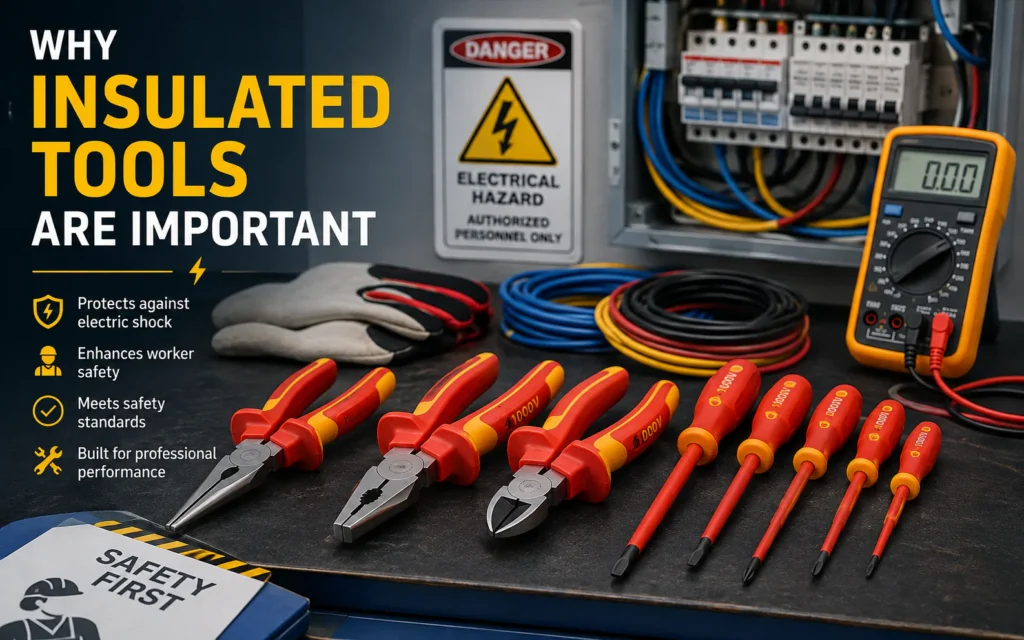
Myth 1: Any Tool with a Plastic Handle Is Insulated
This is false. As we discussed earlier, regular tools have handles made for comfort, not protection. They are not tested or certified for electrical safety.
Myth 2: Insulated Tools Let You Work on Live Circuits Safely
This is also false. Insulated tools are designed for accidental contact, not intentional work on live circuits. You should always deenergize equipment before working on it. Insulated tools are a backup layer of protection, not a license to take unnecessary risks.
Myth 3: Insulated Tools Are Too Expensive
While insulated tools do cost more than regular tools, the price difference is small compared to the cost of an injury or a lawsuit. Think of them as an investment in your safety.
Myth 4: You Can Use Regular Tools If You Wear Rubber Gloves
Rubber gloves provide protection, but they are not a substitute for insulated tools. Gloves can get punctured or torn, and they do not protect your tools from causing short circuits. Always use both insulated tools and proper PPE.
Myth 5: Insulated Tools Last Forever
Insulation can degrade over time due to wear, exposure to chemicals, and environmental factors. Regular inspection and replacement are necessary to maintain safety.
Real-World Scenarios Where Insulated Tools Save Lives
To truly understand why insulated tools are important, it helps to look at real-world situations where they make a difference.
Scenario 1: Working in a Panel
Imagine you are replacing a breaker in a panel. You have turned off the main breaker, but unbeknownst to you, there is a second feed coming into the panel from a solar system. When you reach in with your screwdriver, you accidentally touch a live lug. If you are using a regular screwdriver, the current travels through the tool and into your hand. If you are using an insulated screwdriver, the insulation blocks the current and keeps you safe.
Scenario 2: Tight Spaces
You are working in a junction box with multiple wires. Space is tight, and you need to cut a wire that is near other live wires. With regular cutters, you risk touching a live wire and causing a short or getting shocked. Insulated cutters give you the confidence to make the cut without worrying about accidental contact.
Scenario 3: Unexpected Voltage
You are working on a piece of equipment that you believe is deenergized. But due to a wiring error, there is still voltage present. You touch a terminal with your pliers and feel nothing because the insulation protects you. Without it, you would have received a severe shock.
These scenarios are not hypothetical. They happen every day on job sites around the world. Insulated tools are the difference between a close call and a trip to the hospital.
Insulated Tools for DIYers and Homeowners
You do not have to be a professional electrician to benefit from insulated tools. If you do any electrical work around your home, such as replacing outlets, installing light fixtures, or working on appliances, insulated tools can keep you safe.
DIYers often assume that because they have turned off the circuit breaker, there is no risk. But what if the breaker is mislabeled? What if there is a second circuit feeding the box? What if someone else turns the power back on while you are working?
Using insulated tools adds a layer of protection that can save you from these unexpected situations. They are a small investment for the peace of mind they provide.
When shopping for insulated tools as a DIYer, look for a basic set that includes a few screwdrivers, a pair of pliers, and a wire stripper. Make sure they are properly certified and always inspect them before use.
How to Build Your Insulated Tool Collection
Building a collection of insulated tools does not have to be expensive or complicated. Start with the basics and add more tools as you need them.
Starter Set
- Insulated screwdriver set (slotted and Phillips in common sizes)
- Insulated lineman’s pliers
- Insulated diagonal cutters
- Insulated wire strippers
Intermediate Set
- Insulated needle-nose pliers
- Insulated nut drivers
- Insulated wrench set
- Insulated socket set
Advanced Set
- Insulated torque screwdrivers
- Insulated cable cutters
- Insulated precision screwdrivers for control work
- Insulated crimping tools
Remember, you do not need to buy everything at once. Start with the tools you use most often and expand your collection over time.
Frequently Asked Questions
Q: What voltage rating do insulated tools have?
Insulated tools are typically rated for up to 1000V AC and 1500V DC. This rating is achieved through rigorous testing, where each tool is subjected to 10,000V to ensure a 10-to-1 safety margin.
Q: Can I use insulated tools on live circuits?
No. Insulated tools are designed for accidental contact, not for intentional work on live circuits. Always deenergize equipment before working on it. Insulated tools provide an extra layer of safety in case of unexpected contact.
Q: How often should I replace my insulated tools?
Replace insulated tools whenever you notice any damage to the insulation, such as cuts, cracks, or wear. Even if the tool looks fine, it is a good practice to replace them every few years or according to your company’s safety policy.
Q: Are insulated tools required by law?
Yes, in many cases. OSHA and NFPA 70E require the use of insulated tools when working on or near electricity greater than 50V. Failure to comply can result in fines and legal liability.
Q: Can I use regular tools if I wear insulated gloves?
No. Insulated gloves are not a substitute for insulated tools. Gloves can get punctured or torn, and they do not protect against short circuits caused by your tools. Always use both insulated tools and proper PPE.
Q: How do I know if a tool is truly insulated?
Look for the 1000V rating symbol on the tool. Genuine insulated tools are clearly marked with this symbol, along with the certification standards they meet, such as IEC 60900 or VDE.
Q: Can I repair damaged insulation with tape?
No. Tape does not provide the same level of protection as the original insulation. Once the insulation is damaged, the tool is no longer safe and should be replaced.
Q: Are insulated tools more expensive than regular tools?
Yes, they typically cost more, but the extra cost is justified by the protection they provide. Consider it an investment in your safety rather than an unnecessary expense.
Q: Do I need insulated tools for low-voltage work?
If you are working on low-voltage systems (below 50V), insulated tools may not be strictly required. However, they are still recommended because unexpected voltage can always occur.
Q: How should I store my insulated tools?
Store them in a dedicated case, pouch, or rack where they are protected from damage. Do not throw them in a toolbox with other tools, as sharp edges can nick the insulation.
Conclusion
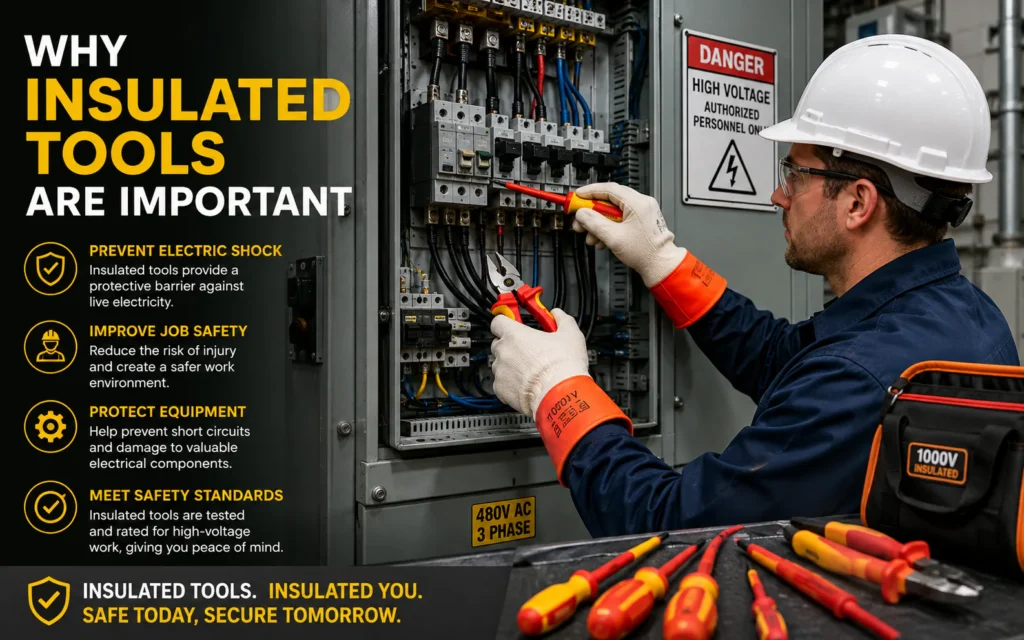
Electricity is a powerful and unforgiving force. It does not care about your experience, your training, or your intentions. One mistake can have life-altering consequences. That is why insulated tools are important for anyone who works with or near electrical systems.
These tools provide a critical layer of protection against electric shock, arc flashes, and short circuits. They are not optional accessories. They are essential safety equipment that every electrician, maintenance worker, and DIY enthusiast should own. They are required by safety standards like NFPA 70E and OSHA, and they are trusted by 91% of electrical workers.
But owning insulated tools is not enough. You must choose the right tools, check for proper certification, inspect them before each use, and store them carefully. Damaged insulation can turn a safe tool into a dangerous one. Regular maintenance and replacement are key to ensuring your tools continue to protect you.
Remember, insulated tools are not a license to take unnecessary risks. They are a backup, a safety net, a final layer of defense. Always deenergize equipment when possible, follow proper safety procedures, and use insulated tools as part of a comprehensive safety strategy.
As Nathan Buckert wisely said, “Insulated tools should never be tossed into the tool box like an everyday hand tool. These are precision instruments.” Treat them with the respect they deserve, and they will help keep you safe for years to come.
Whether you are a seasoned professional or a weekend warrior, make insulated tools a priority. Your life is worth more than the few extra dollars these tools cost. Stay safe, stay smart, and always use the right tool for the job.
Related posts
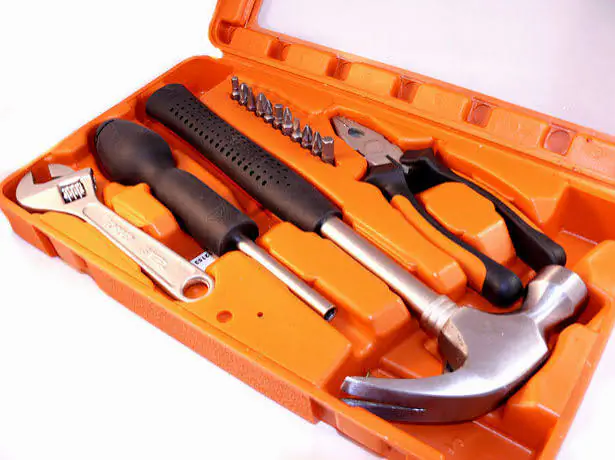 Which Tool Kit Is Worth Buying? How to Choose the Right Set for Your Home
Wondering which tool kit is worth buying? Compare basic household sets, mechanic kits, and power tool combos to find the best tools for your budget and…
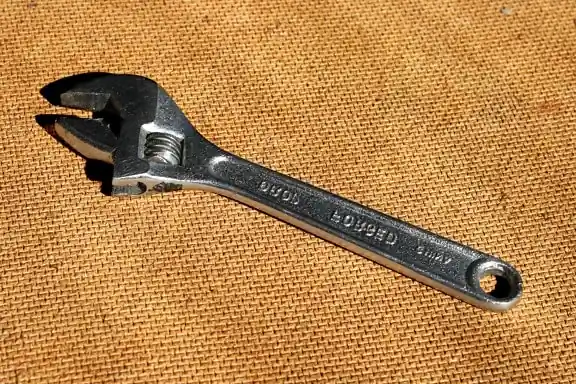 Which Hand Tools Are Made in the USA? Reliable Brands and Buying Rules
Discover which hand tools are still made in the USA. Compare top domestic brands, tool categories, and learn how to verify origin labels before buying. Several…
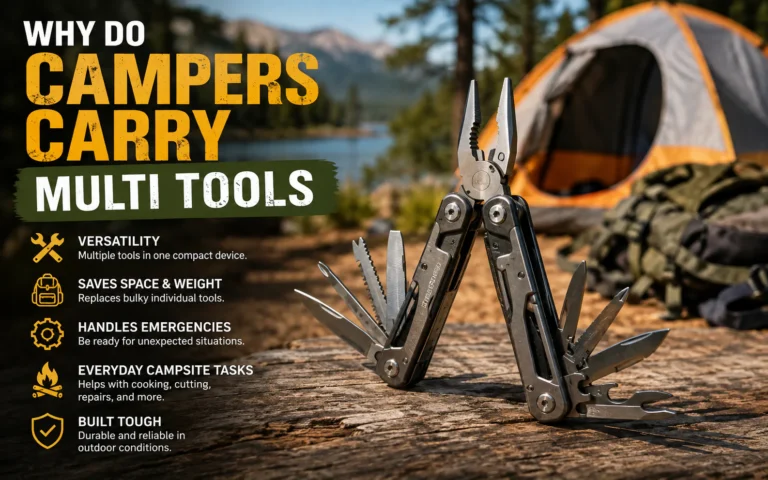 Why Do Campers Carry Multi Tools? Practical Uses in the Field
Why do Campers carry multi tools to handle gear repairs, campsite setup, food prep, and field fixes with minimal weight. Here is why one belongs in…