
Which Wrench to Use: A Practical Guide for Every Task
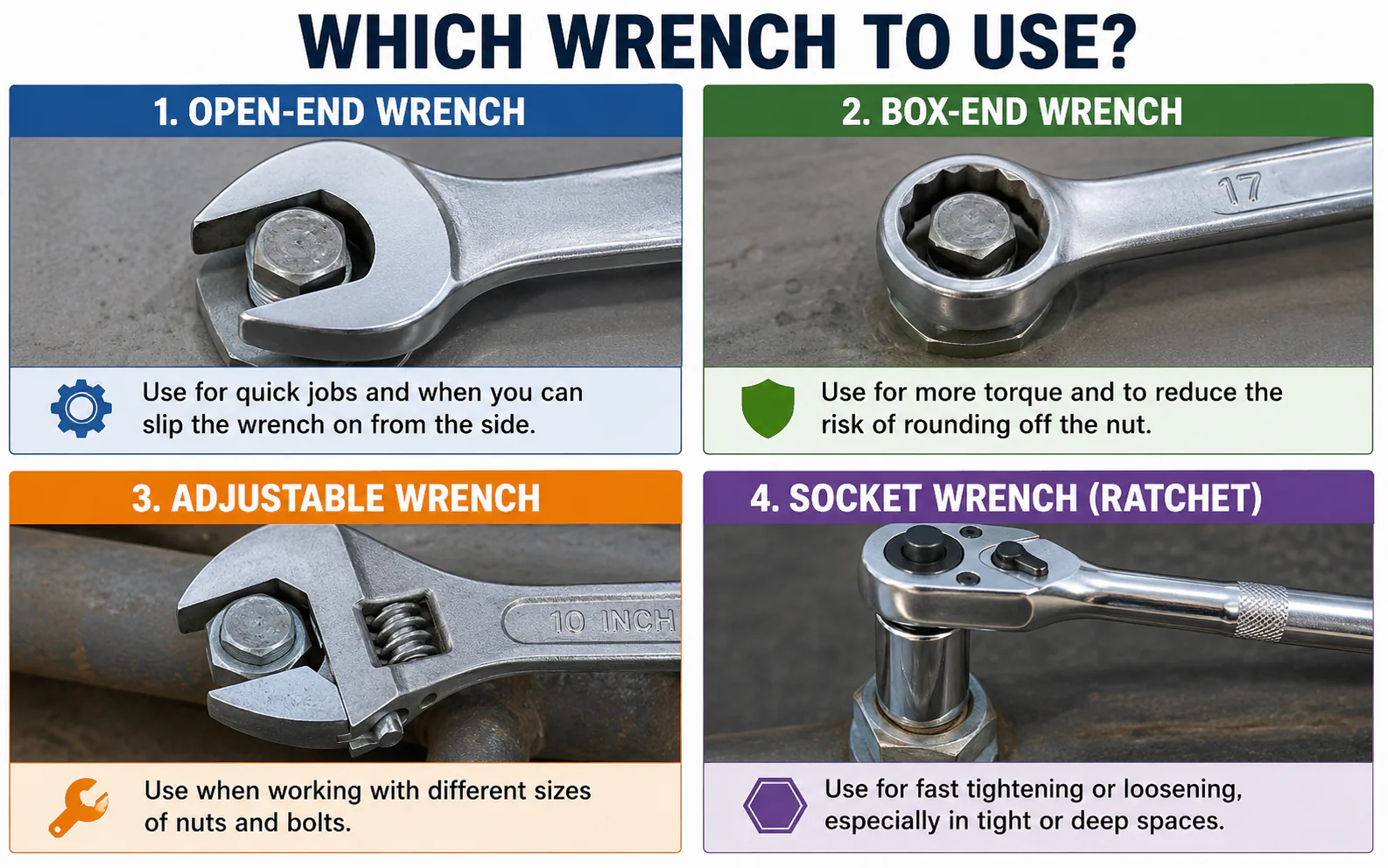
Choosing the right wrench for a task can seem daunting with so many types available. The best wrench to use depends on several factors: the type of fastener you’re working with, its size, the amount of.
Instead of a one-size-fits-all solution, think of wrenches as specialized tools designed for specific jobs. Understanding their unique strengths and limitations will help you select the perfect tool, ensuring your work is efficient, safe, and prevents.
| Topic | When it helps | What to keep in mind |
|---|---|---|
| Adjustable Wrench | General household repairs, occasional use, when you don’t have a full set of fixed-size wrenches. | Prone to slipping if not adjusted tightly or used improperly, which can strip fasteners or. |
| Open-End Wrench | Fasteners in confined spaces where a box-end wrench won’t fit, initial loosening or final tightening. | Provides less grip than a box-end wrench, making it more likely to slip or round. |
| Box-End Wrench | Applying significant torque, loosening stubborn or rusted fasteners, preventing fastener damage, and situations where a. | Requires overhead clearance to fit over the fastener, making it unsuitable for fasteners against a. |
| Combination Wrench | General repairs, situations requiring both quick access (open-end) and secure grip (box-end) on the same. | While versatile, it still has the individual limitations of both open-end and box-end wrenches. |
| Socket Wrench | Automotive repair, machinery assembly, working with multiple fasteners of the same size, and when high. | Requires a full range of sockets and drive sizes (1/4″, 3/8″, 1/2″) to be truly. |
| Torque Wrench | Engine assembly, wheel lug nuts, bicycle components, or any application with specific torque specifications from. | Not for general loosening or tightening; it’s a precision instrument. |
| Pipe Wrench | Plumbing work, tightening or loosening threaded pipes, and working with round stock where a strong. | Its aggressive grip will mar or damage the surface of nuts and bolts, so it. |
Understanding Fasteners and Fit
Which Wrench to Use. Before you even pick up a wrench, take a moment to examine the fastener you need to work on. Fasteners come in various shapes and sizes, and matching the wrench to the fastener is the most crucial step.
Before grabbing any wrench, look closely at the bolt or nut.
Using a wrench that is too large or too small for the fastener.
Key Wrench Types and Their Uses
Wrenches are designed with specific tasks in mind. Knowing the primary function of each type will guide your selection.
If you’re tightening a bicycle seat post bolt, a combination wrench might be perfect.
Assuming one wrench type, like an adjustable wrench, can handle every job.
| Wrench Type | Best For | Key Advantage | Consideration |
|---|---|---|---|
| Adjustable. | General, varying sizes. | Versatility. | Can slip if not snug. |
| Open-End. | Tight spaces, quick turns. | Side access. | Less grip, can round fasteners. |
Making Your Wrench Choice: A Decision Framework
With a better understanding of different wrench types, you can now apply a simple framework to choose the best tool for your current task. Follow these steps to make an informed decision:.
If you’re replacing a car battery terminal, you’d first identify it as a hexagonal nut (Step 1).
Rushing the selection process or using the first wrench that seems to fit.
Essential Wrench Sets for Your Toolkit
While individual wrenches are useful, most DIYers and homeowners benefit greatly from having a well-rounded wrench set. A good set ensures you have the right size and type readily available for most common tasks.
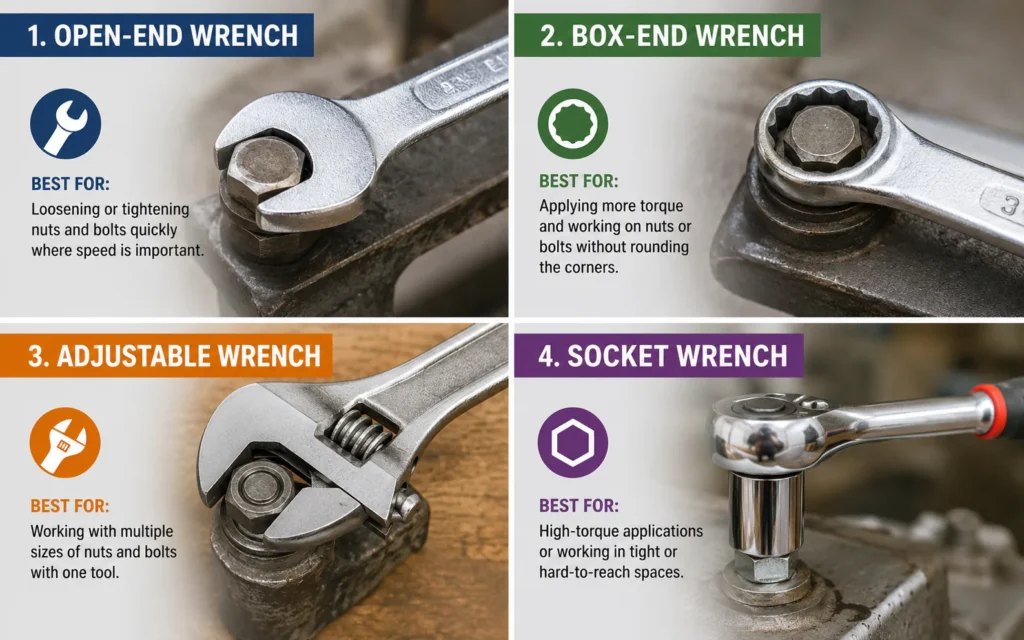
For a beginner, a good starting point is a combination wrench set in both SAE (standard) and metric sizes, covering.
Buying a cheap, incomplete, or poorly made wrench set that quickly breaks or damages fasteners.
- Combination Wrench Set: Essential for versatility, covering both open-end and box-end needs.
- Socket Wrench Set: Ideal for high torque, speed, and recessed fasteners; look.
Safety checks
- The right wrench depends on the fastener type, size, and the task’s required.
- Adjustable wrenches offer versatility but can slip if not used correctly.
- Open-end, box-end, and combination wrenches provide a secure grip for specific sizes.
The article must cover the
Adjustable Wrench: Versatility with a Catch
Which Wrench to Use. An adjustable wrench, often called a crescent wrench, features a movable jaw that can be adjusted to fit various sizes of nuts and bolts. This makes it a highly versatile tool for general tasks.
- General household repairs, occasional use, when you don’t have a full set of fixed-size wrenches.
- Prone to slipping if not adjusted tightly or used improperly, which can strip fasteners or.
- Use it when you need flexibility for different fastener sizes, but prioritize a fixed-size wrench.
- Jaw Type – Adjustable.
Open-End Wrench: Quick Access for Tight Spots
An open-end wrench has a U-shaped opening at one or both ends, designed to grip two opposing sides of a hexagonal or square fastener. Its open design allows it to slide onto a fastener.
- Fasteners in confined spaces where a box-end wrench won’t fit, initial loosening or final tightening.
- Provides less grip than a box-end wrench, making it more likely to slip or round.
- Choose an open-end wrench when you need to access a fastener from the side, but.
- Jaw Type – Open, fixed size.
Box-End Wrench: Secure Grip for Stubborn Fasteners
A box-end wrench has a closed loop at one or both ends, designed to completely encircle a hexagonal or square fastener. This 6-point or 12-point design provides a much more secure grip than an.
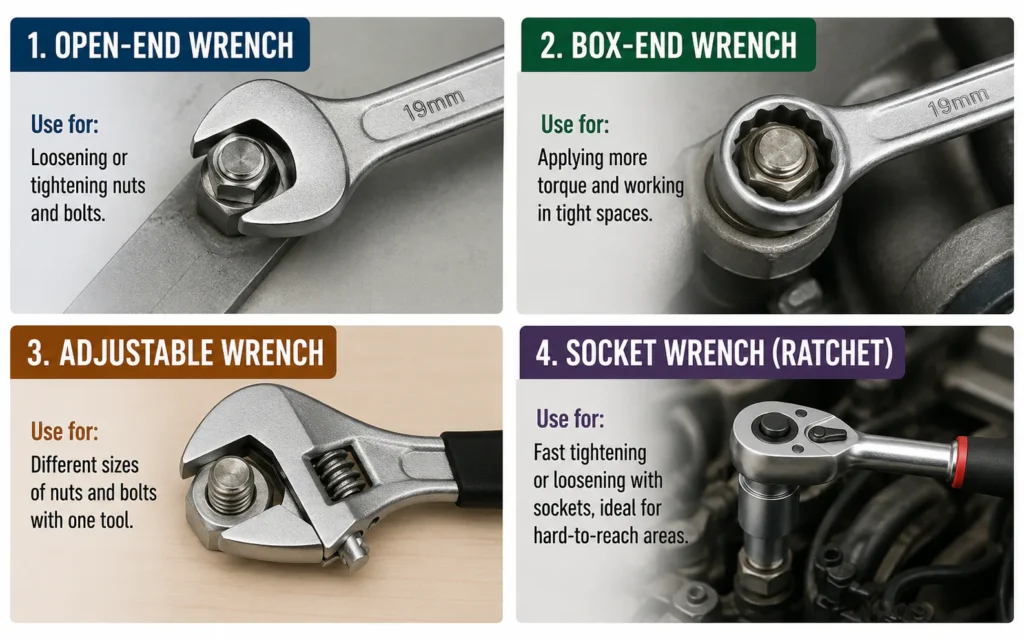
- Applying significant torque, loosening stubborn or rusted fasteners, preventing fastener damage, and situations where a.
- Requires overhead clearance to fit over the fastener, making it unsuitable for fasteners against a.
- Always prefer a box-end wrench over an open-end wrench when possible, especially for fasteners that.
- Jaw Type – Closed loop, fixed size.
Combination Wrench: The Best of Both Worlds
A combination wrench features an open-end on one side and a box-end of the same size on the other. This design offers the versatility of both types in a single tool, making it a.
- General repairs, situations requiring both quick access (open-end) and secure grip (box-end) on the same.
- While versatile, it still has the individual limitations of both open-end and box-end wrenches.
- Start with the open-end for quick turns or in tight spots, then switch to the.
- Jaw Type – Open and closed, fixed size.
Socket Wrench: Speed and Power for Recessed Fasteners
Which Wrench to Use. A socket wrench system consists of a handle (ratchet, breaker bar, torque wrench) and interchangeable sockets that fit over fasteners. Sockets provide a full 360-degree grip, ideal for high torque and speed, especially for.
- Automotive repair, machinery assembly, working with multiple fasteners of the same size, and when high.
- Requires a full range of sockets and drive sizes (1/4″, 3/8″, 1/2″) to be truly.
- Use a socket wrench when you need to apply significant force, work quickly, or access.
- Jaw Type – Interchangeable sockets.
Torque Wrench: Precision for Critical Fasteners
A torque wrench is a specialized tool used to apply a precise amount of rotational force (torque) to a fastener. It’s essential for applications where over-tightening or under-tightening could lead to component failure or.
- Engine assembly, wheel lug nuts, bicycle components, or any application with specific torque specifications from.
- Not for general loosening or tightening; it’s a precision instrument.
- Consult your equipment’s manual for recommended torque settings.
- Jaw Type – Socket-driven, precision.
Pipe Wrench: Gripping Round Surfaces
A pipe wrench has serrated, adjustable jaws designed to grip and turn round pipes or fittings. Its jaws bite into the material, providing a strong, non-slip grip, but also leaving marks.
- Plumbing work, tightening or loosening threaded pipes, and working with round stock where a strong.
- Its aggressive grip will mar or damage the surface of nuts and bolts, so it.
- Reserve the pipe wrench strictly for plumbing and rough pipe work.
- Jaw Type – Serrated, adjustable.
FAQs
How do I know the size of wrench to use?
Fasteners are typically measured across their flats. For hex nuts and bolts, this is the distance between two parallel sides.
What’s the most versatile wrench for home use?
A combination wrench set (with both SAE and metric sizes) is generally considered the most versatile for home use. It provides both an open-end.
When should I use a torque wrench?
You should use a torque wrench whenever a specific tightening force is required, typically specified by a manufacturer. This is common in automotive repair.
Conclusion
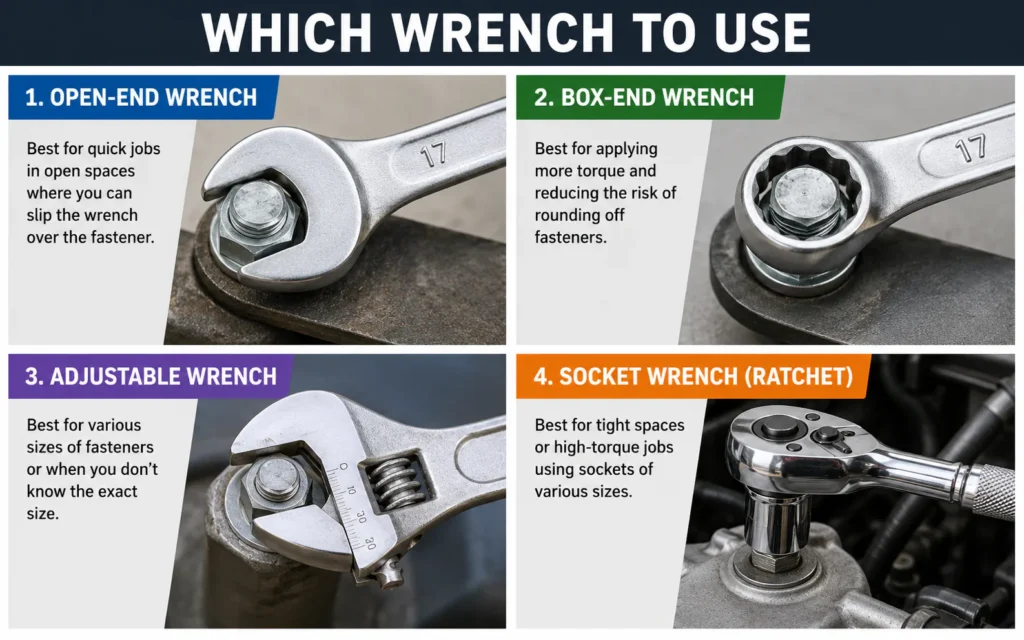
Which Wrench to Use. Selecting the correct wrench is a fundamental skill for any DIY project or repair. By understanding the distinct purposes of adjustable, open-end, box-end, combination, socket, torque, and pipe wrenches, you can approach any task with.
Related posts
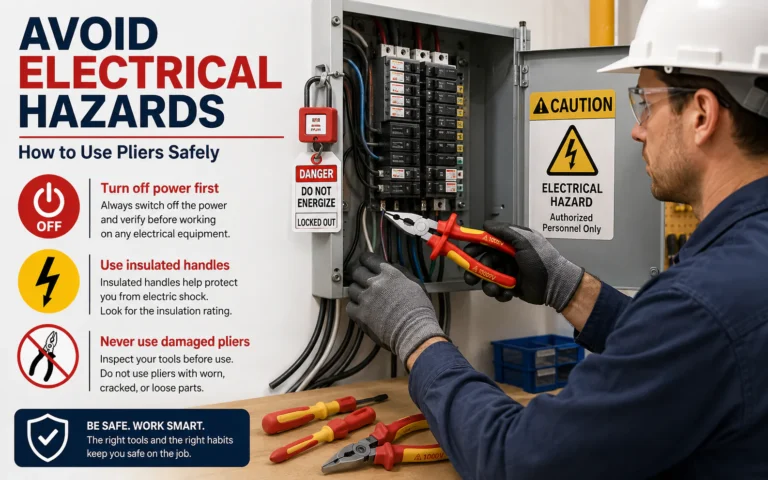 How to Use Pliers Safely: Essential Tips for Every Task
Learn how to use pliers safely with essential tips for proper tool selection, gripping, cutting, and avoiding common mistakes. Protect yourself and your tools. Using pliers…
 How to Keep Tools Organized: Smart Storage Solutions and Habits
Learn how to keep tools organized with smart storage solutions and practical habits. Discover tips for efficient workspaces and longer tool life. Keeping your tools organized…
 How to Prevent Tools from Rusting: A Practical Maintenance Guide
How to prevent tools from rusting. Keep your tools rust-free and extend their lifespan with practical prevention methods. Learn about cleaning, protective coatings, and smart storage…