
How to Prevent Tools from Rusting: A Practical Maintenance Guide
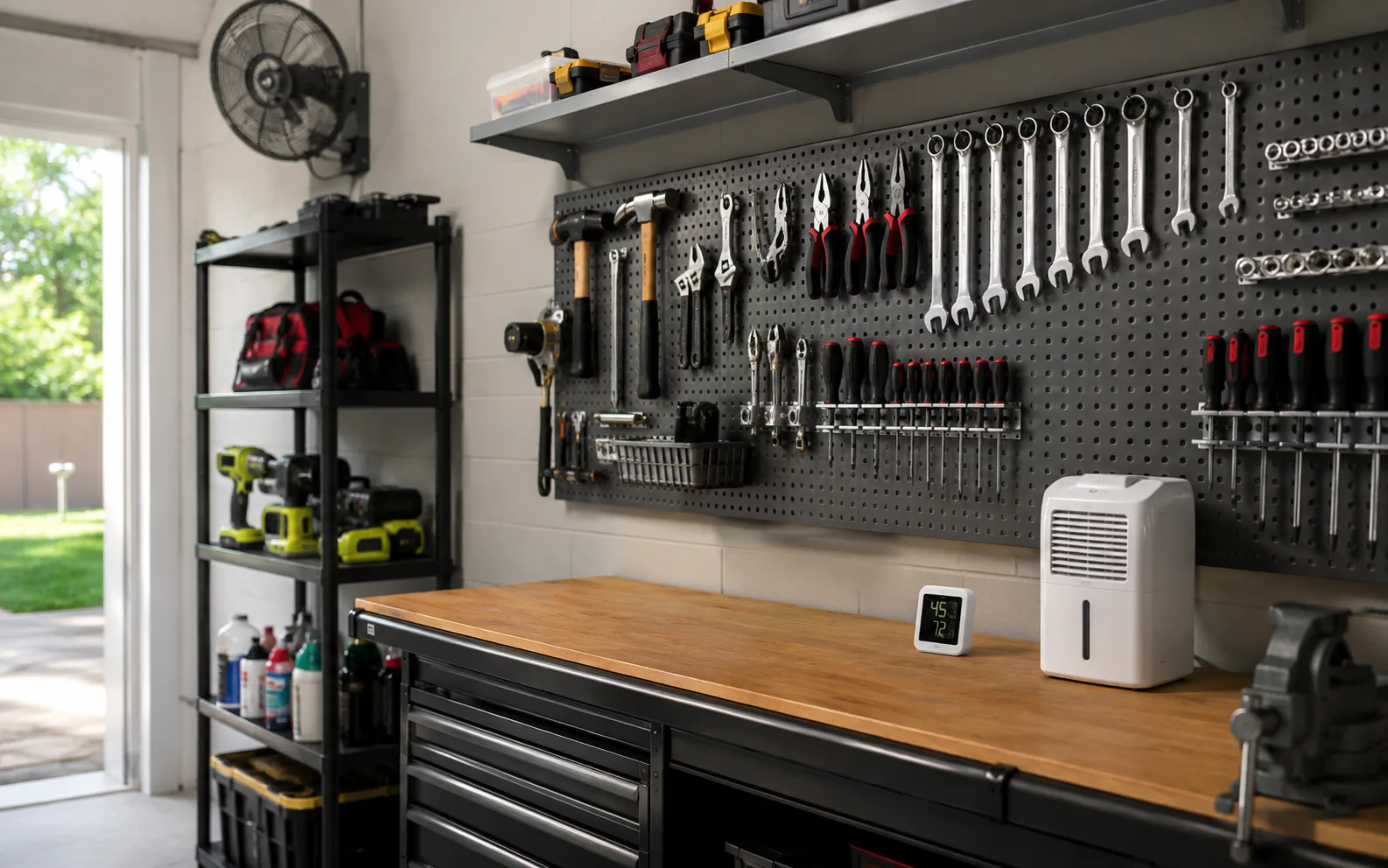
Preventing tools from rusting is a key part of maintaining their functionality and extending their lifespan. Rust, a form of corrosion, occurs when iron or steel tools are exposed to oxygen and moisture, leading to degradation and weakening of the metal.
To effectively prevent tools from rusting, you need a multi-faceted approach that combines proper cleaning and drying after each use, applying a protective barrier, and storing them in a controlled environment. Implementing these habits will keep your tools in top condition and ready for your next project.
Importance of cleaning tools after
- Consistent cleaning and thorough drying are the first lines of defense against rust.
- Applying a protective barrier like oil or wax is crucial for tools in storage.
- Controlling humidity in storage areas is as important as coating the tools themselves.
- Rust prevention is an ongoing process, not a one-time fix.
- Even simple habits can significantly extend the life of your tools.
| Topic | When it helps | What to keep in mind |
|---|---|---|
| Method 1 | All types of tools, especially those used outdoors or with wet materials, like garden tools, plumbing tools, or automotive tools. | Never store tools that are even slightly damp. |
| Method 2 | Hand tools, precision instruments, cast iron surfaces, and any tool stored for extended periods. | Using too much oil can make tools greasy and attract dirt, creating a new problem. |
| Method 3 | All tools, especially those stored in garages, sheds, basements, or other areas prone to humidity fluctuations. | Storing tools in unsealed plastic containers can trap moisture, creating a humid microclimate that encourages rust. |
| Method 4 | Precision tools, expensive equipment, tools stored in sealed containers, or those in very humid environments. | VCI products have a limited lifespan and need to be replaced periodically. |
The article must cover practical
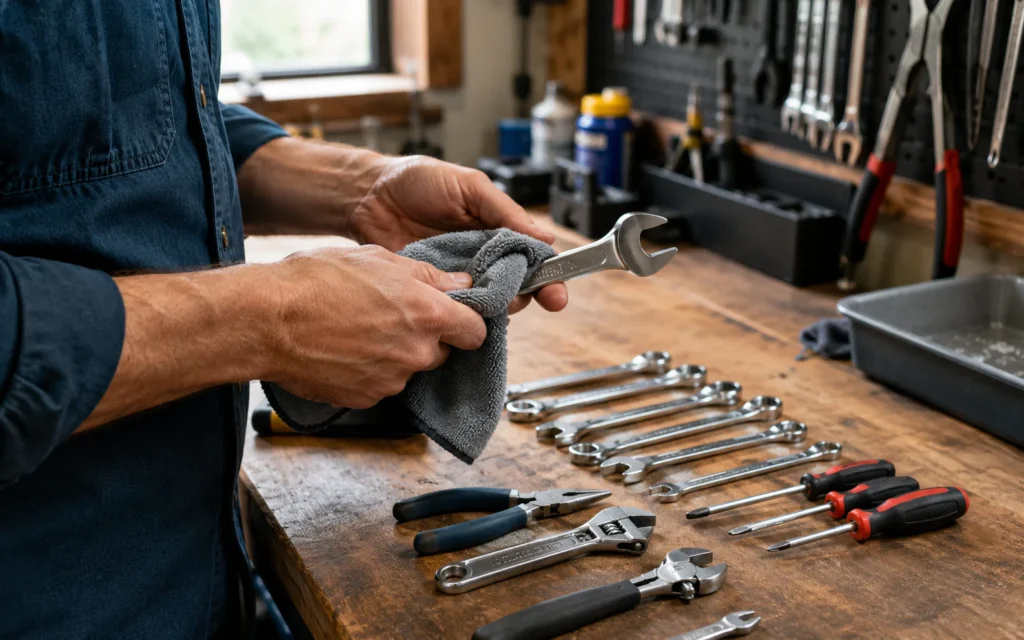
Method 1. Thorough Cleaning and Drying After Each Use
How to Prevent Tools from Rusting. The most fundamental step in preventing rust is to clean your tools immediately after using them. Remove all dirt, grime, sap, and moisture.
- All types of tools, especially those used outdoors or with wet materials, like garden tools, plumbing tools, or automotive tools.
- Never store tools that are even slightly damp.
- Keep a dedicated cleaning station or kit near your workspace, including brushes, rags, and a drying cloth, to make this step a quick habit.
Method 2. Applying Protective Coatings and Barriers
Once clean and dry, apply a thin layer of protective coating to metal surfaces. This creates a physical barrier between the tool and the environment.
- Hand tools, precision instruments, cast iron surfaces, and any tool stored for extended periods.
- Using too much oil can make tools greasy and attract dirt, creating a new problem.
- For tools used frequently, a quick wipe with an oily rag is often enough.
Method 3. Optimizing Your Tool Storage Environment
Where and how you store your tools significantly impacts rust prevention. Aim for a cool, dry environment with stable temperatures.
- All tools, especially those stored in garages, sheds, basements, or other areas prone to humidity fluctuations.
- Storing tools in unsealed plastic containers can trap moisture, creating a humid microclimate that encourages rust.
- Invest in a hygrometer to monitor humidity levels in your storage area.
Method 4. Utilizing Rust-Inhibiting Products
Beyond general oils and waxes, specific products are designed to actively prevent rust. Vapor Corrosion Inhibitor (VCI) products, such as VCI papers, bags, or emitters, release a protective vapor that coats metal surfaces, even in hard-to-reach areas.
- Precision tools, expensive equipment, tools stored in sealed containers, or those in very humid environments.
- VCI products have a limited lifespan and need to be replaced periodically.
- Combine VCI products with a good storage container for maximum effect.
The Foundation: Clean and Dry Your Tools
The battle against rust begins the moment you finish using a tool. Dirt, grease, sap, and even fingerprints can hold moisture against metal surfaces, accelerating corrosion.
Start by removing any visible debris with a stiff brush or scraper. For oily or greasy tools, a degreaser or mineral spirits on a rag works well.
Drying is just as important as cleaning. Use a clean, dry cloth to wipe down all surfaces.
After pruning rose bushes, wipe down your garden shears with a damp cloth to remove sap and dirt, then thoroughly dry them with a clean, dry rag before putting them away.
Putting tools away dirty or even slightly damp.
Shielding Surfaces with Protective Coatings
Once your tools are spotless and completely dry, the next line of defense is a protective coating. This barrier prevents oxygen and moisture from directly contacting the metal surface, which is essential for rust formation.
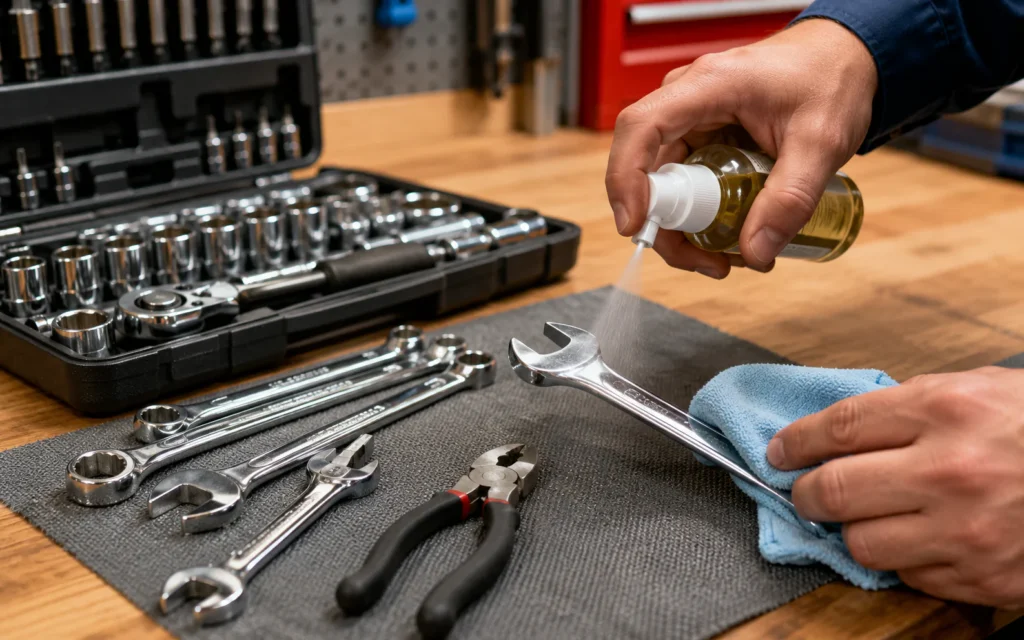
Light machine oil or mineral oil are common choices for general hand tools. Apply a small amount to a clean cloth and wipe down all metal surfaces.
Tool wax, such as carnauba wax or beeswax, is another excellent option, particularly for flat metal surfaces like saw blades, plane bodies, or cast iron tabletops. Wax provides a harder, more durable barrier than oil and is less likely to attract dust.
For your wrenches and screwdrivers, apply a few drops of light machine oil to a clean rag and wipe down each tool, ensuring a thin, even film.
Applying too thick a layer of oil or wax, which can become sticky, attract dust, and be difficult to clean off later.
| Coating Type | Best For | Application Tip |
|---|---|---|
| Light Machine Oil. | General hand tools, moving parts. | Wipe a thin film with a rag. |
| Tool Wax (Paste/Carnauba). | Flat surfaces, cast iron, long-term storage. | Apply thin, let dry, buff off excess. |
| Rust-Inhibiting Spray. | Hard-to-reach areas, complex tools. | Spray lightly, wipe off drips. |
| Grease/Cosmoline. | Very long-term storage, harsh conditions. | Apply thick layer, may need solvent for removal. |
Smart Storage for Long-Term Protection
Even perfectly cleaned and coated tools can rust if stored improperly. The environment where your tools reside plays a huge role in their longevity.
Aim for a storage location that is cool, dry, and has stable temperatures. Garages and sheds can be challenging due to humidity, so consider using sealed toolboxes or cabinets.
To combat humidity in enclosed storage, desiccants like silica gel packets are effective moisture absorbers. For an active defense, Vapor Corrosion Inhibitor (VCI) products release a protective chemical vapor that forms an invisible, rust-preventing layer on metal surfaces.
Instead of leaving your power drill on a workbench in a humid garage, store it in a sealed plastic case with a few silica gel packets.
Storing tools directly on concrete floors, in unventilated plastic bags, or in areas with high, fluctuating humidity without any environmental controls.
- Use sealed toolboxes or drawers to create a microclimate.
- Place desiccant packs (silica gel) in enclosed storage to absorb moisture.
- Line toolboxes with VCI (Vapor Corrosion Inhibitor) paper or use VCI emitters.
- Avoid storing tools directly on concrete floors or near exterior walls prone to dampness.
- Ensure good air circulation in larger storage areas like workshops or sheds.
Regular Maintenance Habits to Keep Rust Away
Rust prevention isn’t a one-time task; it’s an ongoing commitment to regular maintenance. Establishing a routine ensures that your tools remain protected and any potential rust issues are caught early before they become significant problems.
Periodically inspect all your tools, especially those used less frequently. Look for any signs of surface rust, dullness in protective coatings, or excessive dust buildup.
Even if you don’t use a tool often, a quick wipe-down and re-oiling every few months can make a big difference. This proactive approach will save you time and money in the long run by avoiding costly rust removal or tool replacement.
Once a month, dedicate 15 minutes to inspecting your most frequently used tools.
Assuming that once a tool is treated, it’s permanently rust-proof.
FAQs
Does WD-40 prevent tools from rusting long-term?
WD-40 can offer temporary rust prevention by displacing moisture and leaving a light protective film. However, for long-term storage or in humid environments, it’s generally not as effective as dedicated rust-inhibiting oils, waxes, or VCI products, which create a more durable barrier.
Can Vaseline protect tools from rust?
Yes, Vaseline (petroleum jelly) can be an effective, inexpensive barrier against rust. A thin, even layer applied to clean, dry metal surfaces creates a good seal against moisture and oxygen.
What’s the best way to store tools in a humid garage?
In a humid garage, focus on sealed storage. Use airtight plastic containers or metal toolboxes with tight-fitting lids.
How often should I apply rust preventative to my tools?
The frequency depends on tool usage and storage conditions. For frequently used tools, a light reapplication of oil or wax after every few uses or monthly is a good practice.
Will painting tools prevent them from rusting?
Yes, a good quality paint or clear coat can prevent rust by creating a barrier. However, it’s crucial to properly prepare the tool surface (clean, dry, and possibly primed) before painting for the best adhesion and protection.
Conclusion
Keeping your tools rust-free is a straightforward process that relies on consistent habits rather than complex solutions. By prioritizing thorough cleaning and drying after each use, applying appropriate protective coatings, and optimizing your storage environment, you can significantly extend the life and functionality of your valuable tools.
Remember that rust prevention is an ongoing commitment. Regular inspection and reapplication of protective measures will ensure your tools remain in excellent condition, ready for any project you tackle.
Related posts
 Which Tool Kit Is Worth Buying? How to Choose the Right Set for Your Home
Wondering which tool kit is worth buying? Compare basic household sets, mechanic kits, and power tool combos to find the best tools for your budget and…
 Which Hand Tools Are Made in the USA? Reliable Brands and Buying Rules
Discover which hand tools are still made in the USA. Compare top domestic brands, tool categories, and learn how to verify origin labels before buying. Several…
 Why Do Campers Carry Multi Tools? Practical Uses in the Field
Why do Campers carry multi tools to handle gear repairs, campsite setup, food prep, and field fixes with minimal weight. Here is why one belongs in…