
What Tools Are Commonly Included In A Multi Tool
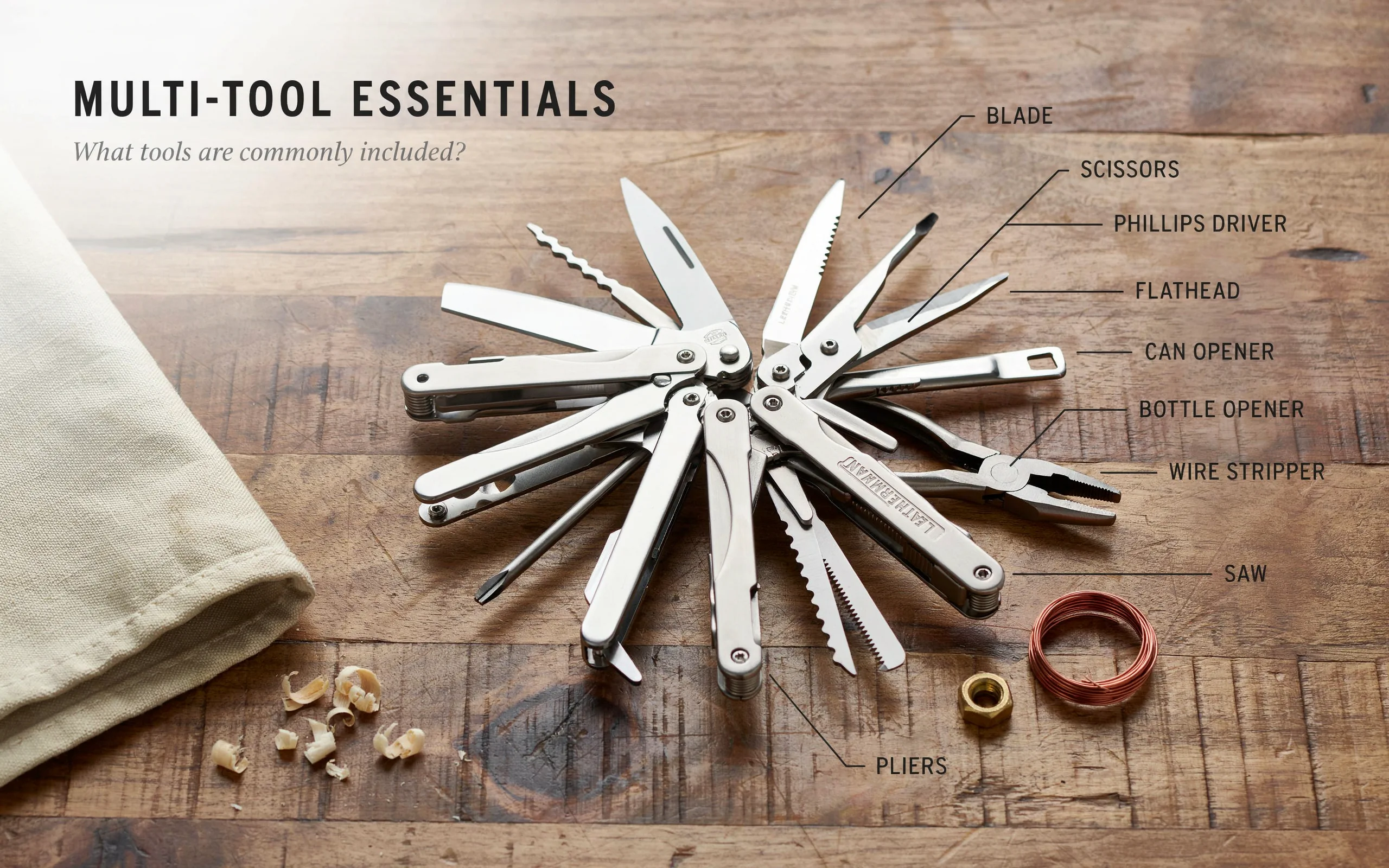
If you have ever asked what tools are commonly included in a multi tool, you will find a straightforward answer here. This guide covers the standard implements, from pliers and knives to screwdrivers and saws, so you know exactly what to expect from these handy devices.
Have you ever found yourself needing a screwdriver but only having a knife? Or maybe you needed a pair of pliers to fix a loose bolt, but all you had was a pair of scissors. These little frustrations are exactly why multi tools exist. They pack several useful implements into one compact gadget that fits in your pocket or toolbox.
Multi tools have been around for decades, and they keep getting better. The basic idea is simple: take the most frequently used hand tools and combine them into a single folding unit. This saves space, weight, and the hassle of carrying around a heavy toolbox for small jobs.
But with so many options on the market, you might wonder what tools are commonly included in a multi tool. The answer depends on the model and its intended use. Some are designed for everyday carry, while others focus on camping, cycling, or professional trades. Let us break down the most common tools you will find and what each one does.
The Core Tools You Will Find in Most Multi Tools
Most multi tools share a set of standard implements. These are the bread and butter of any good multi tool. While fancy extras are nice, these core tools handle the majority of everyday tasks.
Pliers: The Heart of the Multi Tool
Pliers are often the main feature of a multi tool. They form the foundation around which the rest of the tool is built. When you open a typical folding multi tool, the pliers are usually what you see first.
Most multi tools include needle-nose pliers. These have long, tapered jaws that let you reach into tight spots, grip small objects, and bend wire. Many models also include regular pliers with wider jaws for gripping larger items. Some tools add a crimper for squeezing electrical connectors or a wire cutter built into the jaw base.
The quality of the pliers matters a lot. Good ones have a smooth action and strong grip. Spring-loaded pliers are common on newer models, which makes them easier to use for extended periods.
Knife Blades: Your Cutting Companion
Every multi tool has at least one knife blade. Many have two: a straight edge and a serrated edge. The straight blade works well for general cutting, while the serrated blade cuts through rope, fabric, and other tough materials more easily.
High-end multi tools use quality steel like 420HC or MagnaCut for their blades. These steels hold an edge well and resist rust. Some models let you access the blade from the outside without opening the whole tool, which is convenient when you need a quick cut.
Screwdrivers: For Tightening and Loosening
Screwdrivers are another must-have. Most multi tools include both flathead and Phillips head drivers. The flathead works on slotted screws, while the Phillips handles cross-head screws. Some tools offer multiple sizes to fit different screw heads.
More advanced models include a bit driver that accepts interchangeable bits. This gives you access to Torx, hex, and other specialty bits. This feature is especially useful for cyclists and mechanics who need specific tools for their equipment.
Scissors: For Precision Cuts
Scissors are a surprisingly common feature. They are great for cutting paper, thread, fishing line, or small pieces of fabric. Spring-action scissors are common, meaning they open automatically after each cut.
While not as heavy-duty as dedicated shears, the scissors on a multi tool handle most light cutting tasks well. They are especially handy for grooming tasks like trimming nails or cutting bandages.
Opening Tools: Bottle and Can Openers
Bottle openers and can openers are practically standard on multi tools. They might seem simple, but they are incredibly useful in everyday life.
Bottle Opener
The bottle opener is a small hook or notch on the tool. It pries off bottle caps with ease. Many tools also combine this with a wire stripper or a small flathead screwdriver.
Can Opener
The can opener is a small blade with a hook that cuts around the rim of a can. It takes a bit of practice to use smoothly, but it works well in a pinch. This tool is a lifesaver when you are camping or somewhere without a kitchen opener.
Saws and Files: For Cutting and Shaping
Wood Saw
Many multi tools include a small wood saw. The saw blade has teeth designed to cut through wood and plastic. It is not meant for heavy lumber, but it handles small branches, dowels, and other light materials.
The saw folds into the handle when not in use. Some models include a metal saw or a diamond-coated file for sharpening other tools.
File
A file is useful for smoothing rough edges, shaping metal, or sharpening a dull knife. Some files have a diamond coating for harder materials. Others are simple metal files with a coarse surface on one side and a fine surface on the other.
Specialized Tools for Specific Needs
Beyond the basics, many multi tools include specialty implements. These tools cater to specific hobbies, professions, or emergency situations.
Awl and Reamer
An awl is a pointed tool used for piercing holes in leather, plastic, or wood. Some awls include a sewing eye for stitching repairs. A reamer is similar but is used to enlarge existing holes.
Ruler
A ruler might seem like an odd addition, but it is quite handy. Many multi tools have a ruler etched into the handle or a fold-out ruler for quick measurements.
Wire Stripper
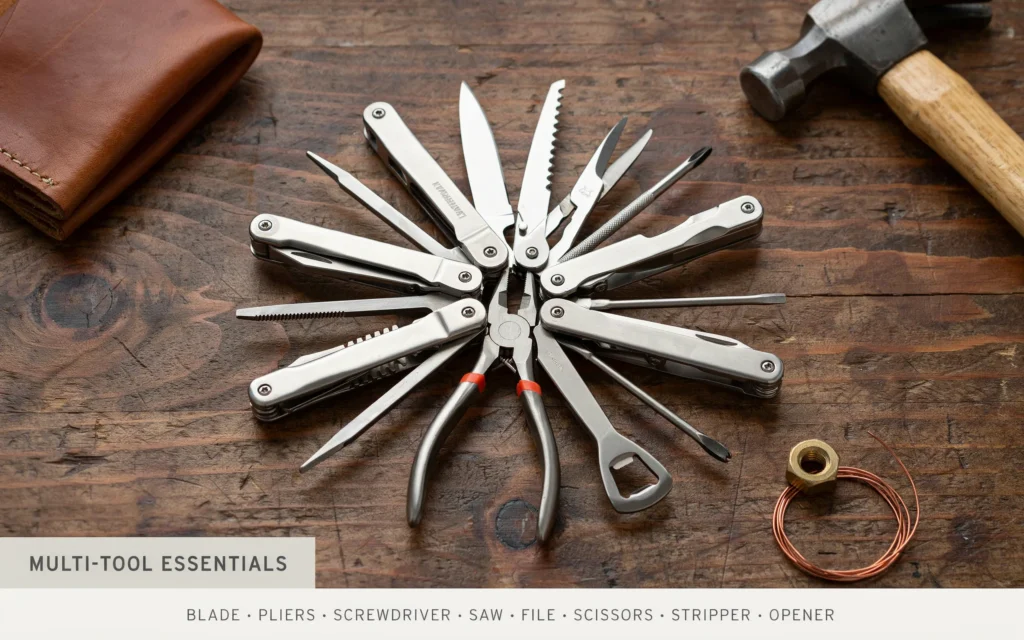
Wire strippers are common on multi tools designed for electrical work. They have notches of different sizes to strip insulation from wires without damaging the conductor.
Corkscrew
The corkscrew is a classic feature on Swiss Army knives. It pulls corks from wine bottles and can also be used to untie knots.
Tweezers and Toothpick
These small accessories are often found in the handles of Swiss Army knives. Tweezers are useful for removing splinters, while a toothpick is exactly what it sounds like.
Keyring or Lanyard Ring
A small ring or loop lets you attach the tool to a keychain, belt loop, or lanyard. This makes it harder to lose and easier to carry.
Specialty Multi Tools for Different Activities
Not all multi tools are the same. Some are built for specific activities and include tools you would not find on a standard model.
Cycling Multi Tools
Cycling multi tools focus on bike maintenance. They include Allen keys (hex wrenches) in common sizes like 2.5 to 8 mm, Torx keys, and spoke wrenches. Some also include a chain breaker for fixing broken chains.
Fishing Multi Tools
Fishing multi tools include a fish scaler, hook remover, and sometimes a small knife for cutting line. They are designed to handle the messy work of cleaning and preparing fish.
Military and Tactical Multi Tools
These tools include features like a glass breaker for emergency escape, a seatbelt cutter, and a hammer surface. Some have a ferro rod for starting fires in survival situations.
Electrical Multi Tools
Electricians need wire strippers, crimpers, and sometimes a voltage tester. Multi tools for this trade focus on these functions.
Common Tools Found in Standard Multi Tools
| Tool | Purpose | Common On |
|---|---|---|
| Needle-nose pliers | Gripping small objects, bending wire | Most multi tools |
| Regular pliers | Gripping larger objects | Most multi tools |
| Wire cutters | Cutting wire and small cables | Most multi tools |
| Straight knife blade | General cutting | All multi tools |
| Serrated knife blade | Cutting rope, fabric, tough materials | Many multi tools |
| Phillips screwdriver | Driving cross-head screws | Most multi tools |
| Flathead screwdriver | Driving slotted screws | Most multi tools |
| Scissors | Cutting paper, thread, light materials | Many multi tools |
| Bottle opener | Opening bottle caps | Most multi tools |
| Can opener | Opening canned food | Many multi tools |
| Wood saw | Cutting small branches, wood, plastic | Many multi tools |
| File | Smoothing edges, sharpening | Many multi tools |
| Awl | Piercing holes | Some multi tools |
| Ruler | Measuring length | Some multi tools |
How Many Tools Are Enough?
Multi tools come with anywhere from 5 to over 30 functions. But more is not always better. A tool with 30 functions might be bulky and heavy. Some of those functions might be ones you never use.
As Tim Leatherman, founder of Leatherman Tool Group, once said: “The best multi-tool is the one you have with you when you need it.” This is a crucial point. A heavy, uncomfortable tool that stays in your drawer is useless. A lighter, simpler tool that you carry every day is far more valuable.
Think about your daily life. What tasks do you run into most often? If you work in an office, you might need scissors and a small screwdriver more than a saw. If you spend weekends camping, a saw and can opener become more important.
Specialty Multi Tools and Their Unique Features
| Specialty Type | Unique Tools Included | Best For |
|---|---|---|
| Cycling | Allen keys, Torx keys, spoke wrench, chain breaker | Bike repairs and adjustments |
| Fishing | Fish scaler, hook remover, line cutter | Cleaning and preparing fish |
| Tactical/Survival | Glass breaker, seatbelt cutter, ferro rod, whistle | Emergency and survival situations |
| Electrical | Wire stripper, crimper, voltage tester | Electrical work and repairs |
| Everyday Carry (EDC) | Compact size, pocket clip, basic tools | Daily use and convenience |
The Importance of Build Quality
The tools included in a multi tool are only as good as the materials and construction. Cheap multi tools use low-grade steel that bends, rusts, or breaks. Quality tools use stainless steel with good corrosion resistance and hardness.
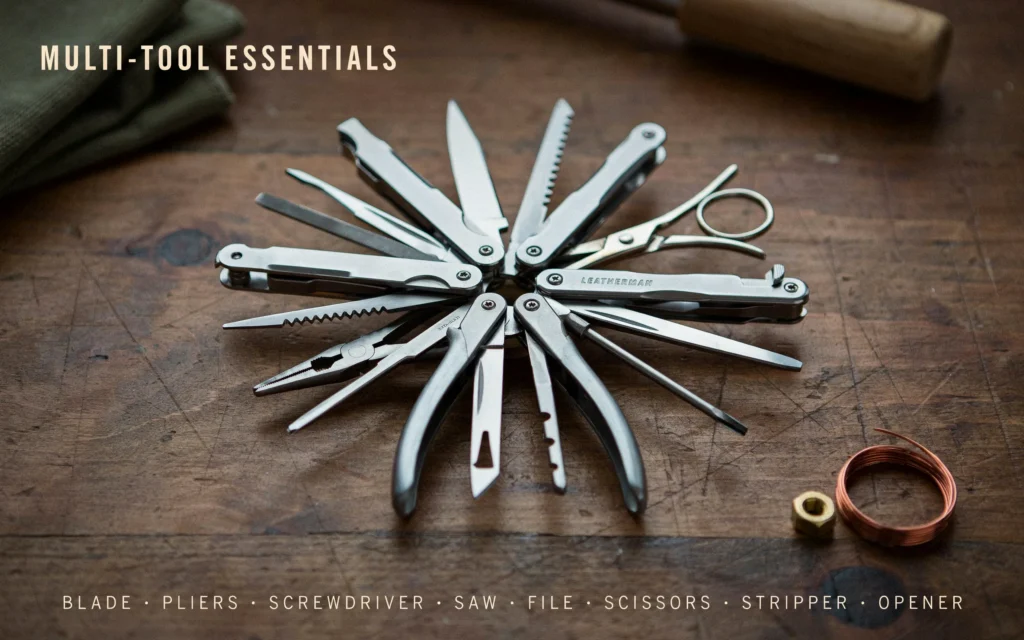
Look for tools made from 420HC, 440A, or MagnaCut steel. These steels offer a good balance of edge retention and toughness. The handles should feel solid, with no wobble or play in the joints.
Locking mechanisms are another important feature. A locking blade or tool stays in place while you use it, reducing the risk of injury. Many modern multi tools have locks on all folding implements.
Choosing the Right Multi Tool for You
With so many options, choosing a multi tool can feel overwhelming. Start by asking yourself a few questions.
First, what will you use it for? If you need a tool for everyday carry, look for a compact model with a pocket clip. The Leatherman Skeletool or Gerber Dime are good examples. If you need a heavy-duty tool for work or camping, a larger model like the Leatherman Wave+ or Surge is a better choice.
Second, how much weight are you willing to carry? Lightweight tools are more comfortable to carry but may have fewer features. Heavier tools offer more functionality but can be a burden in your pocket.
Third, what is your budget? Quality multi tools range from $30 to over $200. You do not need to spend a fortune to get a good tool, but cheap models often disappoint.
As Bob Vila, the home improvement expert, once said: “Buy the best tool you can afford. Cheap tools cost more in the long run because you end up replacing them.” This is true for multi tools as well. A well-made tool can last decades.
Maintaining Your Multi Tool
A multi tool is an investment, and like any tool, it needs care to perform well. Here are some simple maintenance tips.
Clean your tool regularly. Dirt and debris can get into the joints and make them stiff. Use a soft brush or compressed air to remove grime. Wipe the blades and tools with a cloth after use.
Oil the moving parts. A drop of light machine oil on the pivot points keeps the action smooth. Wipe off any excess oil to prevent attracting dirt.
Sharpen the blades as needed. A dull knife is dangerous because it requires more force to cut. Use a sharpening stone or a dedicated sharpener to keep the edge keen.
Check the screws and fasteners. Over time, they can loosen. Tighten them gently with a screwdriver if needed.
Safety Tips for Using Multi Tools
Multi tools are useful, but they can also cause injuries if used carelessly. Follow these safety tips.
Always use the locking mechanism. Make sure the tool is locked in place before applying force. A folding blade that closes on your fingers can cause serious cuts.
Cut away from your body. When using a knife or saw, always cut in a direction that moves the blade away from you. This reduces the risk of injury if the blade slips.
Wear appropriate safety gear. If you are using the tool for heavy work, consider wearing gloves and safety glasses.
Do not use the tool for tasks it was not designed for. A multi tool is not a hammer, a pry bar, or a chisel. Using it for these purposes can damage the tool and cause injury.
Keep the tool clean and dry. Moisture can cause rust, which weakens the tool and makes it unsafe.
Frequently Asked Questions
1. What tools are commonly included in a multi tool for everyday carry?
For everyday carry, you will typically find pliers, a knife blade, scissors, a bottle opener, and screwdrivers. These cover most daily tasks like opening packages, tightening screws, and cutting loose threads.
2. Are all multi tools the same?
No. Multi tools vary widely in size, weight, materials, and the tools they include. Some are designed for general use, while others focus on specific activities like cycling, fishing, or electrical work.
3. Can I fly with a multi tool?
Most multi tools are not allowed in carry-on luggage because they contain knives. You can pack them in checked baggage, but check the airline’s rules before you travel.
4. How do I choose between a multi tool and a Swiss Army knife?
Multi tools typically have pliers as their main feature, while Swiss Army knives focus on blades and other folding tools. Choose a multi tool if you need pliers often. Choose a Swiss Army knife if you prefer a lighter, more compact tool.
5. What is the best steel for a multi tool blade?
420HC, 440A, and MagnaCut are all good choices. They offer a good balance of edge retention, toughness, and corrosion resistance. Higher-end models may use more exotic steels for better performance.
6. How long does a multi tool last?
With proper care, a quality multi tool can last decades. Many brands offer warranties of 25 years or more, which speaks to their durability.
7. What tools are commonly included in a multi tool for camping?
Camping multi tools often include a saw, can opener, awl, and sometimes a fire starter. These tools help with tasks like cutting firewood, opening food cans, and starting campfires.
8. Is it worth buying an expensive multi tool?
Generally, yes. Expensive models use better materials, have stronger locks, and last longer. They are also more pleasant to use because the action is smoother and the tools stay sharp longer.
9. Can I replace parts on my multi tool?
Some brands offer replacement parts like wire cutters and pocket clips. Others do not. Check with the manufacturer if you need a specific replacement.
10. What tools are commonly included in a multi tool for electrical work?
Electrical multi tools include wire strippers, crimpers, and sometimes a voltage tester. They may also have insulated handles for safety when working with live circuits.
Final Thoughts
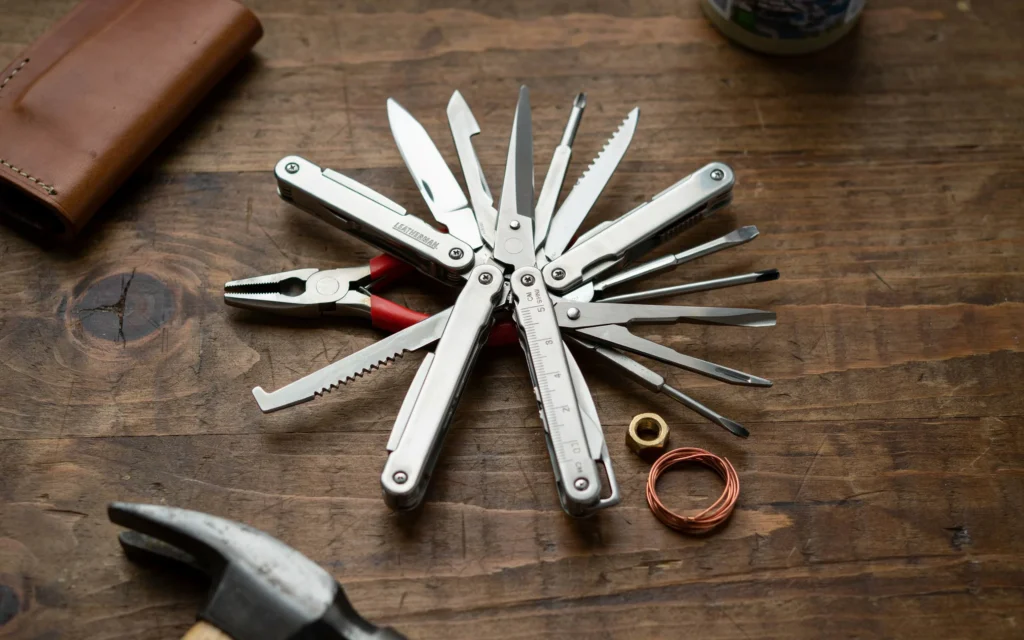
Multi tools are one of those inventions that make you wonder how you ever managed without one. They pack a surprising amount of utility into a small package. Whether you are fixing a loose screw, opening a bottle, or cutting a piece of rope, there is a tool for the job right in your pocket.
Understanding what tools are commonly included in a multi tool helps you choose the right one for your needs. The core tools like pliers, knives, screwdrivers, and scissors are standard on most models. From there, you can look for specialty tools that match your hobbies or profession.
Remember, the best multi tool is the one you actually carry. A tool that sits in a drawer is useless, no matter how many features it has. Find a model that fits your lifestyle, take care of it, and it will serve you well for years.
As the late Steve Jobs once said: “The only way to do great work is to love what you do.” While he was talking about work in general, the same applies to the tools we use. A tool you enjoy using makes every task a little easier and more satisfying.
So go ahead, pick up a multi tool, and see how much easier your daily tasks become. You might be surprised at how often you reach for it.
Related posts
 Which Tool Kit Is Worth Buying? How to Choose the Right Set for Your Home
Wondering which tool kit is worth buying? Compare basic household sets, mechanic kits, and power tool combos to find the best tools for your budget and…
 Which Hand Tools Are Made in the USA? Reliable Brands and Buying Rules
Discover which hand tools are still made in the USA. Compare top domestic brands, tool categories, and learn how to verify origin labels before buying. Several…
 Why Do Campers Carry Multi Tools? Practical Uses in the Field
Why do Campers carry multi tools to handle gear repairs, campsite setup, food prep, and field fixes with minimal weight. Here is why one belongs in…