
How to Repair Loose Cabinet Handles: A Practical Fix Guide
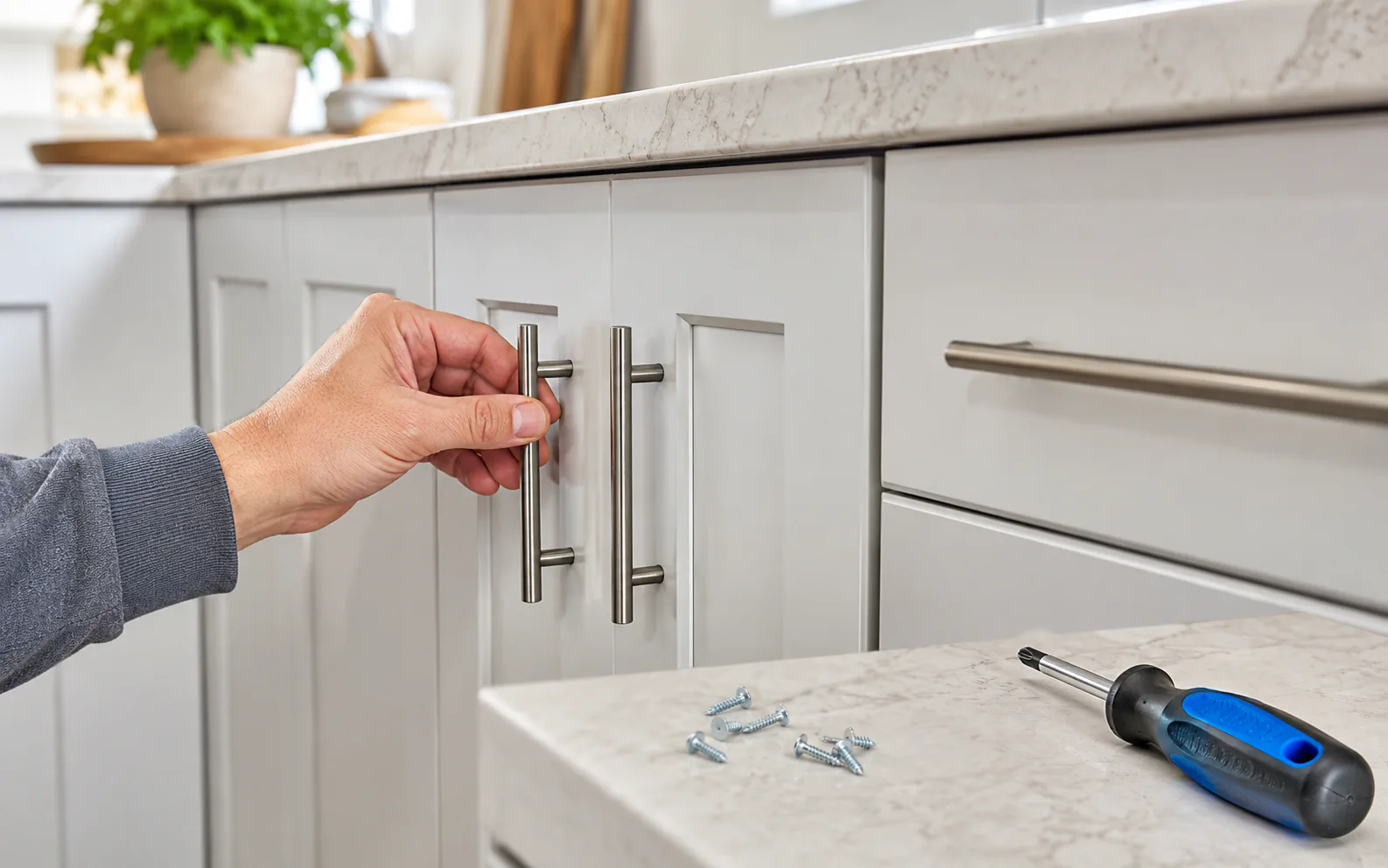
Repairing loose cabinet handles is usually a quick task that requires nothing more than a standard screwdriver. In most cases, the handle has simply vibrated loose over time, and a few turns clockwise will restore it to a firm position.
If the handle continues to wobble after tightening, the issue likely stems from a missing washer or a slightly stripped screw hole. You can easily resolve these issues by adding a lock washer to the screw or filling the hole to give the screw a fresh grip.
Tightening existing screws
- Most loose handles only require a simple turn of a screwdriver.
- If a handle keeps loosening, a split-ring lock washer is often the missing component.
- Stripped wood holes require a simple filler fix before re-inserting the screw.
- Avoid over-tightening, which can damage the cabinet finish or strip the screw threads.
| Topic | When it helps | What to keep in mind |
|---|---|---|
| Step 1 | Handles that are only slightly wobbly. | Do not overtighten, as this can crack the cabinet material or strip the screw threads. |
| Step 2 | Knobs that loosen repeatedly due to daily use. | Ensure the washer is thin enough that it doesn’t prevent the screw from fully engaging the handle. |
| Step 3 | Handles that pull away from the cabinet face. | Wipe away excess glue immediately to prevent finish damage. |
| Step 4 | Metal knobs with threaded inserts. | Use only ‘removable’ or ‘blue’ grade; permanent versions will make future removal impossible. |
Focuses on tightening securing and
Step 1. The Basic Tightening Check
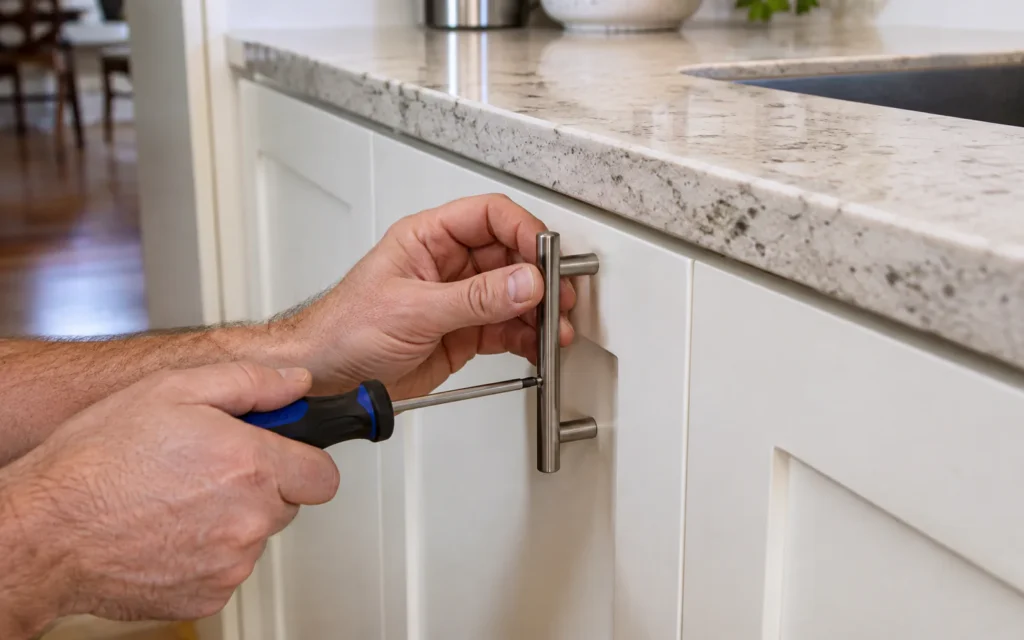
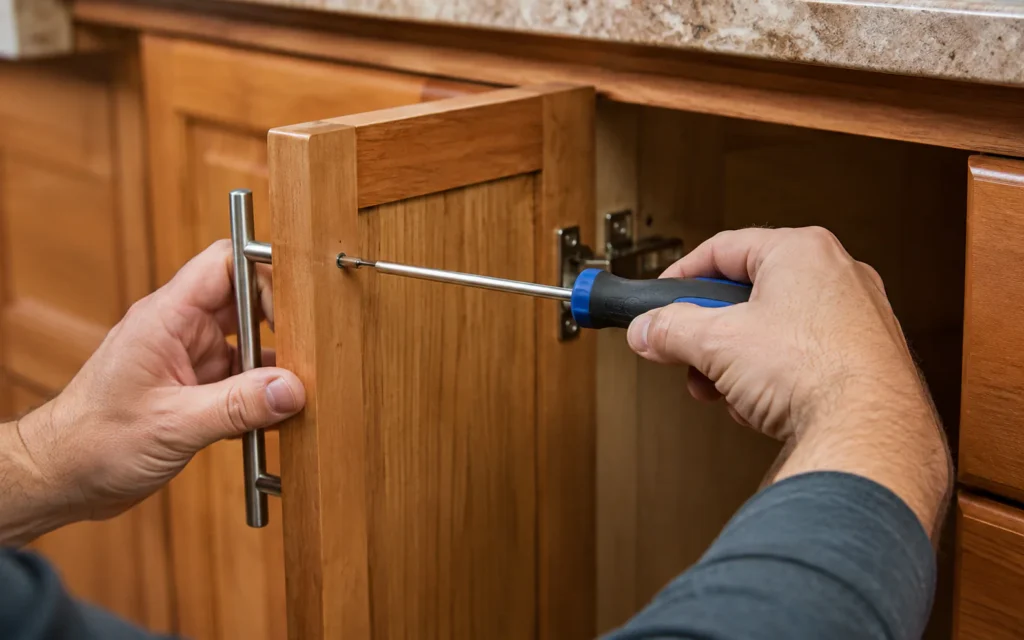
How to Repair Loose Cabinet Handles. Open the cabinet door or drawer and locate the screw head on the inside. Use a Phillips or flathead screwdriver to turn the screw clockwise until firm.
- Handles that are only slightly wobbly.
- Do not overtighten, as this can crack the cabinet material or strip the screw threads.
- If the handle feels tight but still spins, the screw is likely too long or missing a washer.
- Tool – Screwdriver
- Difficulty – Very Easy
Step 2. Adding a Lock Washer
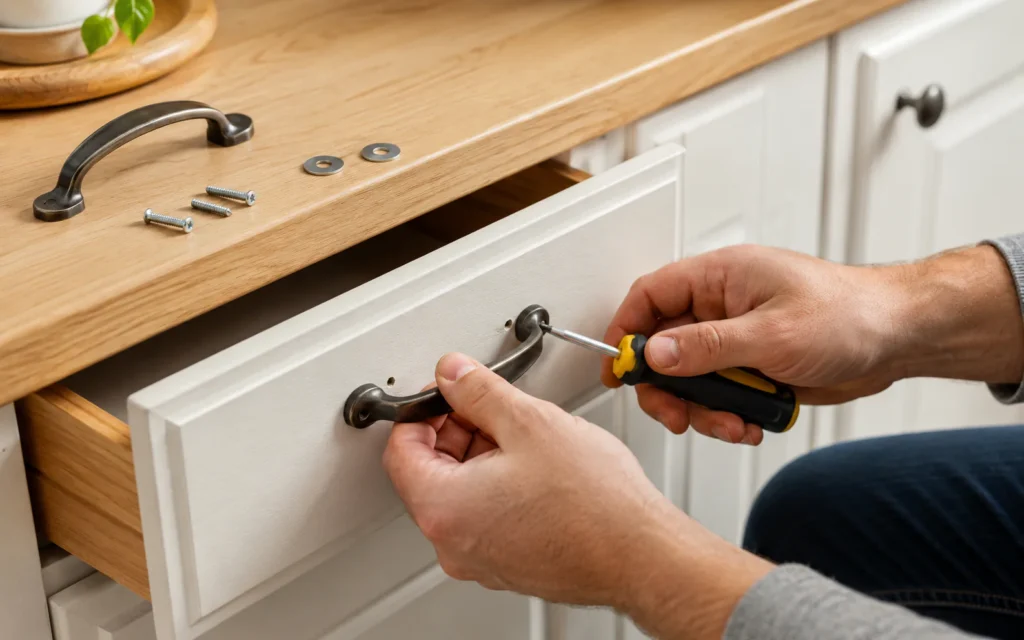
If the handle spins despite being tight, remove the screw, slide a split-ring lock washer onto it, and re-install. The spring tension of the washer keeps the screw from backing out.
- Knobs that loosen repeatedly due to daily use.
- Ensure the washer is thin enough that it doesn’t prevent the screw from fully engaging the handle.
- Use a stainless steel washer to prevent rust if the cabinet is in a humid area like a kitchen or bathroom.
- Tool – Lock washer
- Cost – Inexpensive
Step 3. Fixing Stripped Screw Holes
If the screw turns without ever tightening, the wood hole is stripped. Remove the screw, insert a small wooden toothpick or matchstick coated in wood glue into the hole, let it dry, and re-insert the screw.
- Handles that pull away from the cabinet face.
- Wipe away excess glue immediately to prevent finish damage.
- If the hole is too large for a toothpick, use a small wooden dowel.
- Tool – Wood glue, toothpick
- Time – 15 minutes
Step 4. Applying Thread Locker
For metal-on-metal connections where the screw threads are worn, apply a tiny drop of removable thread-locking fluid to the screw threads before tightening.
- Metal knobs with threaded inserts.
- Use only ‘removable’ or ‘blue’ grade; permanent versions will make future removal impossible.
- Only use this if physical washers fail to keep the handle secure.
- Tool – Thread locker
- Effectiveness – High
Choosing the Right Repair Method
Not all loose handles have the same cause. Before you reach for tools, observe how the handle moves. Does it wobble side-to-side, or does it spin in place? Understanding the movement helps you choose the right solution.
Most hardware issues are mechanical. If the screw is loose, tighten it. If the screw is tight but the handle moves, you need to add tension or fill a gap. Avoid using heavy-duty adhesives unless you have exhausted all mechanical adjustments.
If the handle is a single-post knob that spins, a lock washer is the priority. If it is a two-post pull that pulls away from the door, the screw hole is likely the issue.
Assuming all loose handles need glue; glue is often messy and unnecessary for simple mechanical issues.
| Symptom | Likely Cause | Recommended Fix |
|---|---|---|
| Wobbles side-to-side | Loose screw | Tighten with screwdriver |
| Spins in place | Lack of tension | Add split-ring washer |
| Pulls away from door | Stripped wood hole | Fill hole with glue/wood |
| Screw won’t catch | Stripped threads | Replace screw or use thread locker |
Preventing Future Looseness
Once you have repaired your handles, a little maintenance goes a long way. Cabinet hardware experiences constant vibration from doors closing and drawers sliding, which naturally loosens screws over time.
Make it a habit to check your handles during seasonal cleaning. A quick visual inspection and a gentle tug can alert you to a screw that is starting to back out. By catching these early, you avoid the need for more involved repairs like filling stripped holes.
Check your cabinet hardware every time you deep clean your kitchen to catch loose screws before they fall out.
Using power drills to tighten cabinet hardware, which often leads to over-tightening and damaged wood.
- Use manual screwdrivers instead of power tools to prevent over-tightening.
- Check hardware tension during your biannual kitchen deep clean.
- Ensure all handles are installed with the correct screw length to avoid gaps.
- Keep a small container of spare washers in your junk drawer for quick fixes.
FAQs
Can I use super glue to fix a loose cabinet knob?
While super glue can hold a knob in place, it is generally not recommended. It can damage the cabinet finish and make it very difficult to remove the handle if you ever want to replace it.
What should I do if the screw is too long for the cabinet door?
If the screw protrudes from the back of the handle, you can either buy a shorter screw at a hardware store or use a small spacer or washer between the screw head and the cabinet face to take up the extra length.
How do I fix a handle that has no visible screws?
Some handles are attached from the inside with hidden fasteners or have a set screw on the underside of the handle. Check the underside for a tiny hex-head screw that may need tightening with an Allen wrench.
Is it better to replace the screw or the handle?
Usually, the screw is the part that wears out or loosens. Try replacing the screw with a new one of the same size first. If the handle itself is cracked or the internal threading is destroyed, then replacing the handle is the better option.
Conclusion
Repairing loose cabinet handles is a straightforward task that restores both the look and function of your cabinetry. By identifying whether the issue is a simple loose screw or a deeper problem with the mounting hole, you can apply the correct fix and prevent further damage.
Keep your tools simple and your approach gentle. With the right washer or a bit of wood filler, your handles will stay secure for years to come. If you find yourself fixing the same handle repeatedly, consider a permanent thread-locking solution to end the cycle of loosening.
Related posts
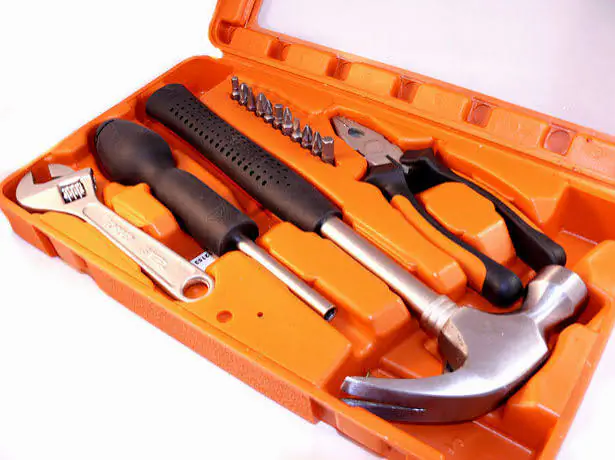 Which Tool Kit Is Worth Buying? How to Choose the Right Set for Your Home
Wondering which tool kit is worth buying? Compare basic household sets, mechanic kits, and power tool combos to find the best tools for your budget and…
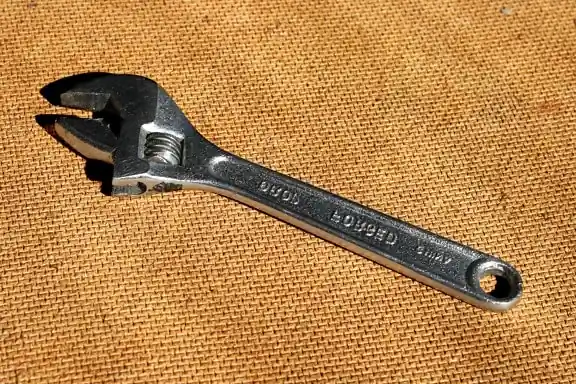 Which Hand Tools Are Made in the USA? Reliable Brands and Buying Rules
Discover which hand tools are still made in the USA. Compare top domestic brands, tool categories, and learn how to verify origin labels before buying. Several…
 Why Do Campers Carry Multi Tools? Practical Uses in the Field
Why do Campers carry multi tools to handle gear repairs, campsite setup, food prep, and field fixes with minimal weight. Here is why one belongs in…