
Essential Tools for Roadside Emergencies: A Driver’s Checklist
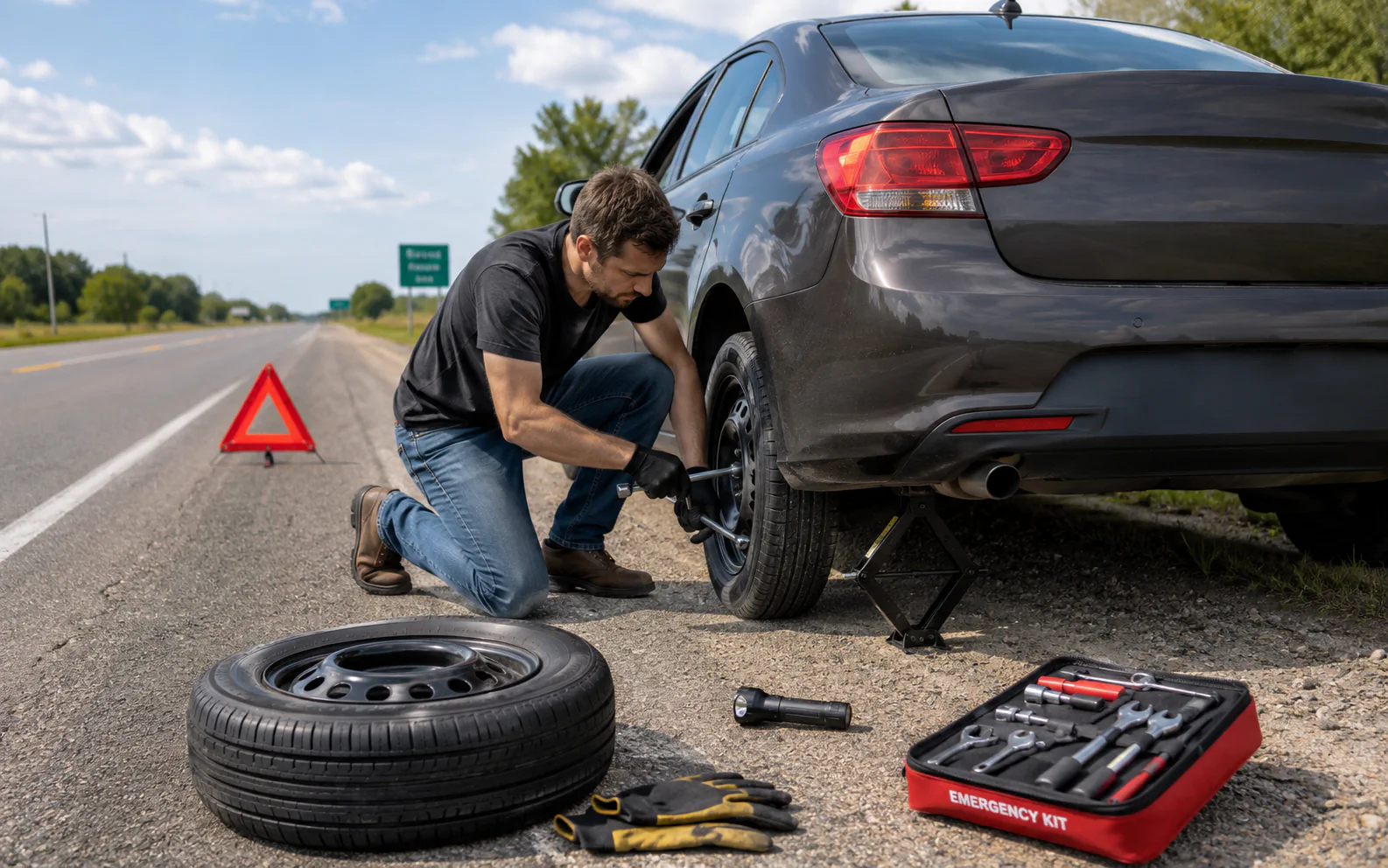
Facing a car breakdown can be stressful, but having the right tools on hand can turn a major problem into a manageable situation. A well-prepared roadside emergency kit is an essential part of responsible driving, offering.
The tools you need for roadside emergencies primarily address issues like dead batteries, flat tires, and poor visibility, along with personal safety and basic first aid. Equipping your vehicle with these essentials means you’re ready to.
Safety checks
- A well-stocked roadside emergency kit is crucial for driver safety and self-reliance.
- Core tools address common issues like dead batteries and flat tires.
- Regularly check and maintain your kit to ensure all items are functional.
| Topic | When it helps | What to keep in mind |
|---|---|---|
| 1 | Anyone, especially those who drive alone or in remote areas where finding another vehicle for. | Ensure cables are long enough (at least 10-12 feet) and heavy-gauge. |
| 2 | Every driver, as flat tires are one of the most frequent roadside emergencies. | Check your spare tire’s pressure regularly. |
| 3 | Minor punctures, slow leaks, or as a temporary fix to reach a repair shop. | Sealant is a temporary fix and may not work for large tears or sidewall damage. |
| 4 | Any nighttime or low-light emergency, inspecting your vehicle. | Batteries can corrode over time; check them periodically. |
| 5 | Treating minor injuries for yourself or passengers. | Check expiration dates on medications and sterile supplies annually. |
| 6 | Increasing visibility and warning other drivers of your presence. | Flares have a limited burn time and can be a fire hazard. |
| 7 | Minor mechanical adjustments or quick fixes. | Don’t attempt complex repairs without proper knowledge and tools. |
| 8 | Protecting hands during any car-related task. | Ensure gloves fit well for dexterity. |
The Core Roadside Emergency Kit: Your Essential Gear
Building a reliable roadside emergency kit starts with a few non-negotiable items designed to address the most frequent vehicle issues. These are the tools that can make the biggest difference when you’re stranded, helping you either resolve the problem yourself or safely wait for assistance.
Imagine your car battery dies in a parking lot.
A common mistake is assuming your spare tire is properly inflated or that your jump starter is charged.
| Tool Category | Primary Use | Key Consideration |
|---|---|---|
| Battery Boost. | Dead battery. | Charged/Good cables. |
| Tire Repair. | Flat tire. | Spare condition/Correct fit. |
Beyond the Basics: Smart Additions for Enhanced Preparedness
While the core kit covers immediate mechanical needs, several other items can significantly improve your safety and comfort during a prolonged wait or in more severe conditions. These additions are particularly valuable for those who travel long distances, drive in varied climates, or simply want.
If you’re stuck in unexpected cold weather, an emergency blanket can prevent hypothermia while you wait for help.
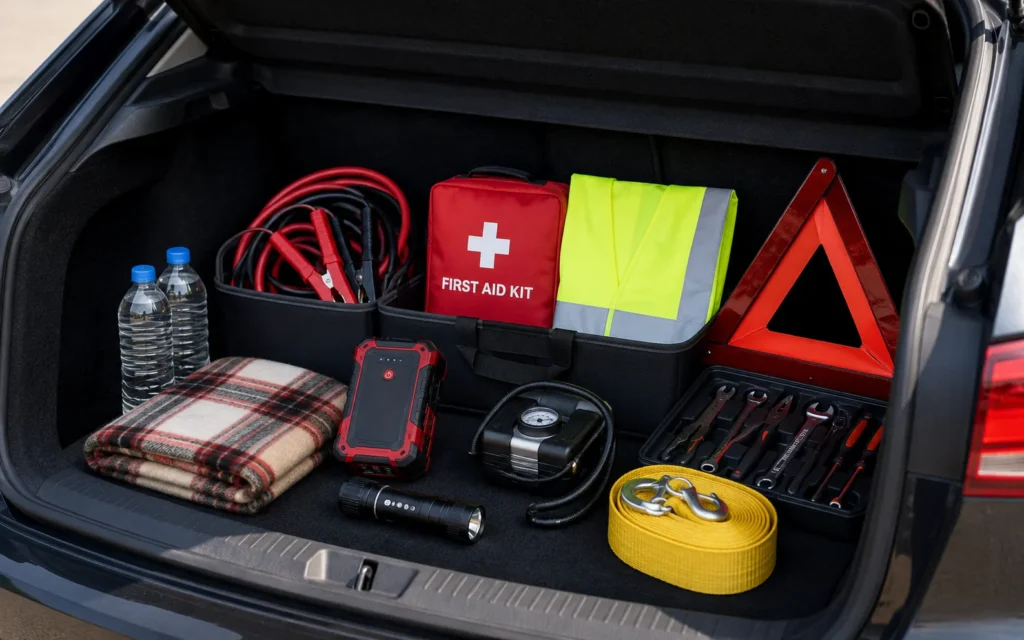
Overpacking with unnecessary items can make your kit bulky and hard to access.
- Car Escape Tool: A compact device combining a seatbelt cutter and window.
- Emergency Blanket/Poncho: Provides warmth in cold weather or protection from rain, especially.
Maintaining Your Roadside Emergency Kit for Readiness
Having a roadside emergency kit is only half the battle; the other half is ensuring it’s always ready for action. Tools can degrade, batteries can lose charge, and perishable items can expire.
Set a reminder on your phone or calendar to check your kit every six months, perhaps when you change your.
The biggest mistake is assembling a kit and then forgetting about it.
- Check Battery Life: For flashlights and portable jump starters, test them and.
- Inspect Spare Tire: Verify the pressure of your spare tire monthly. Ensure.
Safety First: Using Your Emergency Tools Effectively
Even with the best tools, a roadside emergency can be dangerous. Your personal safety and the safety of your passengers should always be the top priority.
If you have a flat tire on a busy highway, pull over as far as possible, turn on your hazard.
Attempting to fix a problem in an unsafe location or without adequate visibility is a major risk.
- Pull Over Safely: Move your vehicle as far off the road as.
- Activate Hazard Lights: Turn on your hazard lights immediately to alert other.
The article must cover the
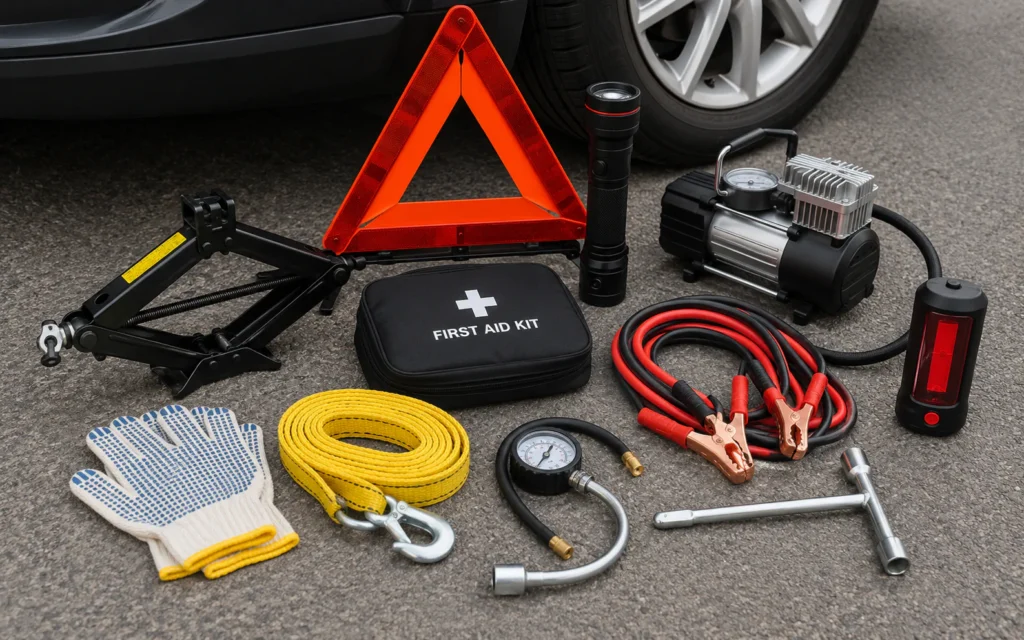
1. Jumper Cables or Portable Jump Starter
A dead battery is a common roadside issue. Jumper cables allow you to get a jump start from another vehicle, while a portable jump starter provides power independently, making it a convenient solo solution.
- Anyone, especially those who drive alone or in remote areas where finding another vehicle for.
- Ensure cables are long enough (at least 10-12 feet) and heavy-gauge.
- If you frequently drive alone, a portable jump starter offers more independence.
- Type – Electrical.
2. Spare Tire Kit (Jack, Lug Wrench, Tire Pressure Gauge)
A flat tire can happen anywhere. A spare tire (full-size or compact ‘donut’), a sturdy jack to lift your vehicle, and a lug wrench to remove wheel nuts are fundamental for changing a tire.
- Every driver, as flat tires are one of the most frequent roadside emergencies.
- Check your spare tire’s pressure regularly.
- Familiarize yourself with your vehicle’s jack points and practice changing a tire in a safe.
- Type – Tire Repair.
3. Tire Inflator and Sealant
For minor punctures or slow leaks, a tire inflator (either a portable compressor or a can of sealant) can temporarily fix the problem and get you to a service station. It’s a quick alternative.
- Minor punctures, slow leaks, or as a temporary fix to reach a repair shop.
- Sealant is a temporary fix and may not work for large tears or sidewall damage.
- Keep both a spare tire kit and an inflator/sealant.
- Type – Tire Repair.
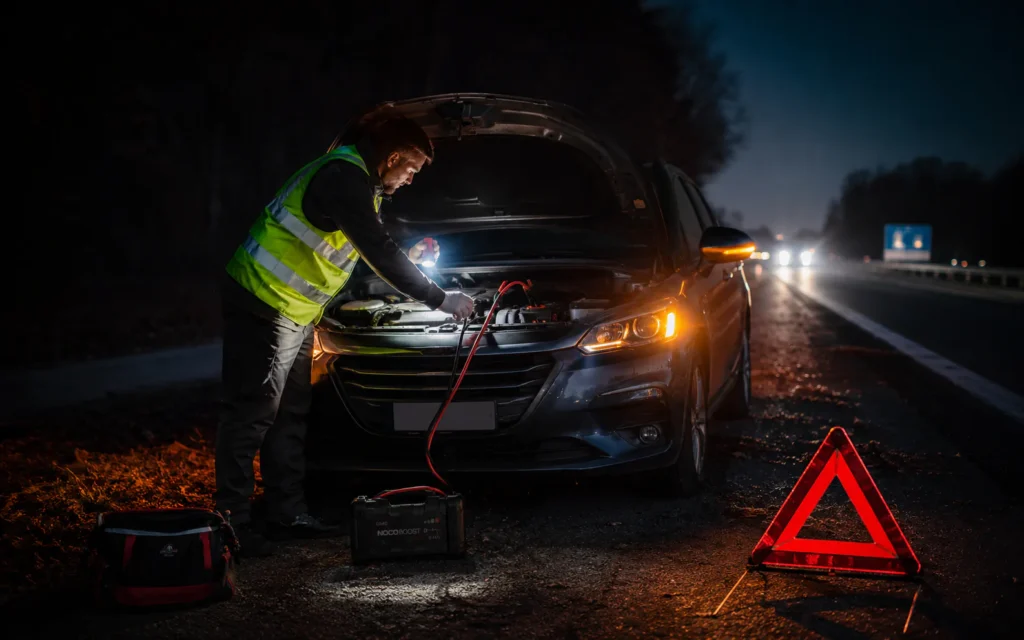
4. Flashlight and Extra Batteries
Breakdowns don’t always happen in daylight. A reliable flashlight is crucial for seeing under the hood, checking tires, or navigating around your vehicle in the dark.
- Any nighttime or low-light emergency, inspecting your vehicle.
- Batteries can corrode over time; check them periodically.
- Consider a headlamp to keep your hands free for tasks, and always store batteries separately.
- Type – Visibility.
5. First-Aid Kit
Minor cuts, scrapes, or other injuries can occur during a breakdown or while working on your car. A basic first-aid kit with bandages, antiseptic wipes, pain relievers, and gauze is essential for immediate care.
- Treating minor injuries for yourself or passengers.
- Check expiration dates on medications and sterile supplies annually.
- Ensure your kit includes items for basic wound care, pain relief, and any personal medications.
- Type – Safety.
6. Reflective Warning Triangles or Road Flares
If your vehicle is disabled on the side of the road, especially at night or in poor visibility, you need to warn oncoming traffic. Reflective triangles or flares create a visible safety zone around.
- Increasing visibility and warning other drivers of your presence.
- Flares have a limited burn time and can be a fire hazard.
- Learn the proper distances for placing warning devices according to local regulations or general safety.
- Type – Safety.
7. Basic Tool Kit (Multi-tool, Screwdrivers, Pliers)
A small set of basic hand tools can be surprisingly useful for minor adjustments or temporary fixes. A multi-tool, a few screwdrivers (Phillips and flathead), and a pair of pliers can help tighten a.
- Minor mechanical adjustments or quick fixes.
- Don’t attempt complex repairs without proper knowledge and tools.
- Choose tools that are sturdy and compact.
- Type – Mechanical.
8. Work Gloves
Protecting your hands from dirt, grease, and potential cuts is important when working on your car. A pair of durable work gloves can make tasks like changing a tire or checking fluids much cleaner.
- Protecting hands during any car-related task.
- Ensure gloves fit well for dexterity.
- Opt for gloves with good grip and durability, suitable for various weather conditions.
- Type – Safety.
FAQs
What is the single most important tool to have in a roadside emergency kit?
While many tools are crucial, a reliable way to address a dead battery (jumper cables or a portable jump starter) and a flat tire.
How often should I check my roadside emergency kit?
It’s recommended to check your kit at least every six months. This allows you to verify battery charges, replace expired items like food or.
Can I build my own roadside emergency kit, or should I buy a pre-made one?
You can absolutely build your own kit, and often this allows for better customization to your specific needs and vehicle. Pre-made kits offer convenience.
Conclusion
Being prepared for a roadside emergency is a fundamental aspect of safe driving. A well-stocked kit, combined with a basic understanding of how to use its contents, empowers you to handle unexpected situations with greater.
Related posts
 How to Protect Tools from Moisture: Essential Steps for Longevity
Learn how to protect tools from moisture and prevent rust with practical methods. Discover effective storage, humidity control, and protective coatings. Protecting your tools from moisture…
 How to Use a Socket Wrench Correctly: A Beginner’s Guide
Learn how to use a socket wrench correctly with this beginner’s guide. Get step-by-step instructions for tightening and loosening fasteners safely and effectively. Using a socket…
 How to Organize a Garage Toolbox for Efficiency and Easy Access
How to Organize a Garage Toolbox.Transform your messy garage toolbox into an organized system. Learn practical steps to sort, categorize, and arrange tools for quick access…