
Are Cheap Automotive Tool Kits Worth It
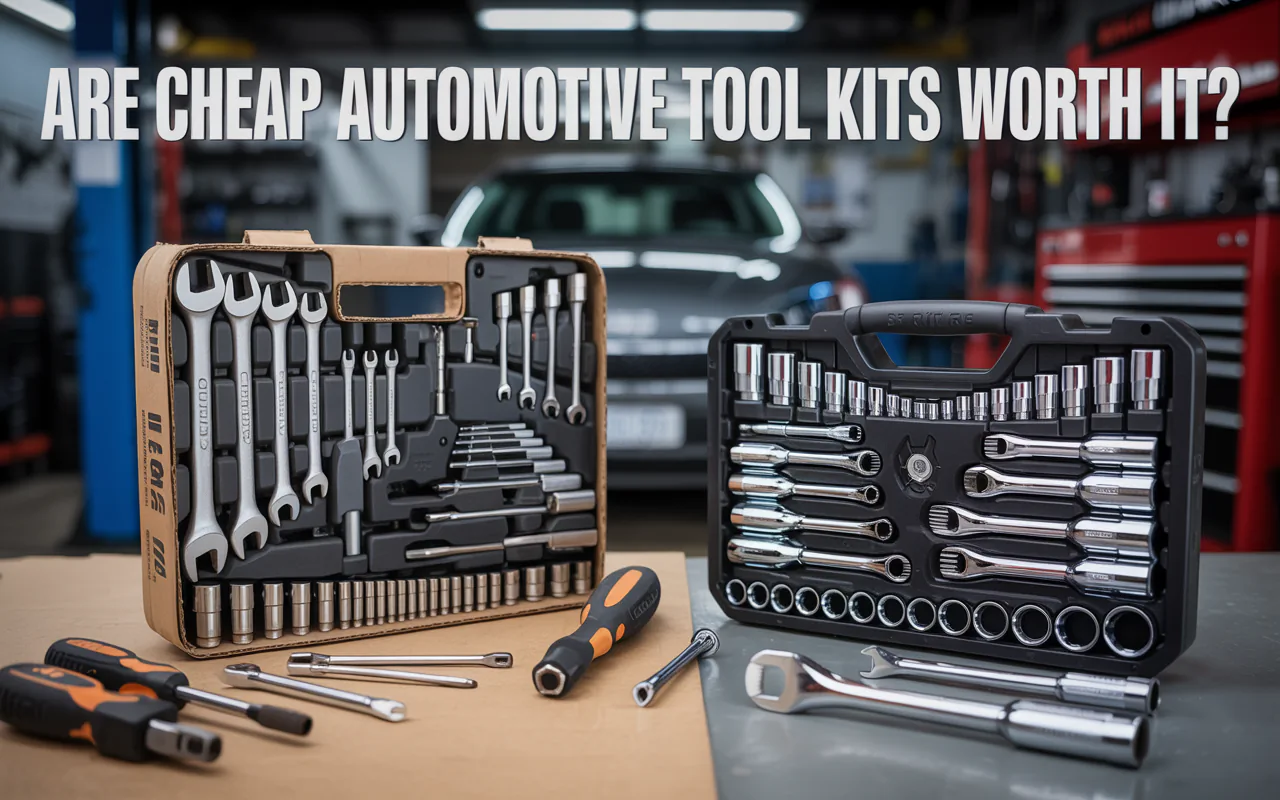
Wondering are cheap automotive tool kits worth it? We tested budget sets against pro tools. The honest answer: yes for beginners, no for heavy use. Read our full guide.
You see them at big box stores, gas stations, and online. Bright plastic cases. Fifty to one hundred pieces. All for less than the price of a nice dinner. They promise to fix your car, your lawnmower, your bicycle. But here is the real question: are cheap automotive tool kits worth it? I have been fixing cars for over fifteen years. I have used dollar store wrenches and Snap-on ratchets. I have broken cheap sockets and lost expensive ones. Let me walk you through the truth about budget tool kits. No marketing hype. No brand loyalty. Just honest advice from someone who gets grease under their fingernails.
“A cheap tool that gets the job done today is better than the perfect tool you cannot afford.” – Tom Boyd, independent auto mechanic, 22 years experience
What Exactly Is a “Cheap” Automotive Tool Kit?
Before we answer are cheap automotive tool kits worth it, we need to define “cheap.” In this article, cheap means a complete set of hand tools priced under $50. Sometimes under $30. These kits usually include:
- A ratchet and socket set (metric and SAE)
- Combination wrenches
- Hex keys (Allen wrenches)
- Screwdrivers
- Pliers
- A blow-molded plastic case
Premium tool sets from brands like Snap-on, Mac, or Matco can cost $500 to $2,000 for similar pieces. Mid-range brands like Craftsman, Husky, or Pittsburgh sit between $80 and $200. So when we ask are cheap automotive tool kits worth it, we compare the $30 kit to the $150 kit and the $800 kit.
Typical Contents of a Budget Kit (Table 1)
| Tool Type | Common Pieces in Cheap Kit | Quality Clues |
|---|---|---|
| Ratchet | 1/4-inch or 3/8-inch drive | Check for loose head, rough teeth |
| Sockets | 10 to 30 pieces (shallow only) | Look for stamped sizes (not painted) |
| Wrenches | 6 to 12 pieces | Try bending slightly (should not flex) |
| Hex keys | 8 to 10 pieces | Check if ends are rounded or sharp |
| Screwdrivers | 4 to 6 pieces | Magnet tip strength matters |
| Pliers | 1 slip-joint or needle-nose | Squeeze handles; check for side play |
The Good Side – When Cheap Kits Actually Work
Let me be fair. I have owned cheap tool kits. I still keep one in my wife’s car. So are cheap automotive tool kits worth it for certain people? Yes. Absolutely yes. Here is when a budget kit makes perfect sense.
For Emergency Roadside Repairs
Your battery terminal corrodes. Your serpentine belt snaps. A hose clamp loosens. In these moments, you do not need a titanium ratchet. You need any working tool. A cheap kit in your trunk can save a tow truck fee. I once helped a family change a flat tire using a $25 kit from a gas station. The tools felt flimsy, but they worked once. That is all that mattered.
For Beginners Learning Basic Maintenance
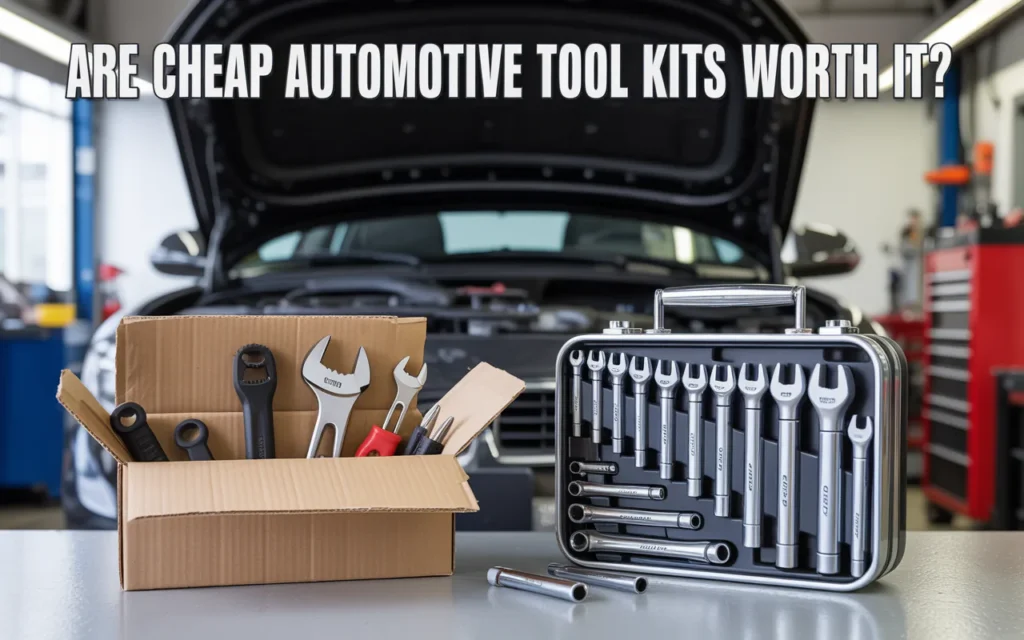
If you have never changed oil, swapped an air filter, or tightened a loose bolt, do not spend $500 on tools. Buy a cheap kit first. Learn what sizes you actually use. Discover which tools feel good in your hand. Then upgrade later. Are cheap automotive tool kits worth it for a high school student or a new car owner? Yes. You will break a few cheap tools. That is part of learning. Better to break a $2 socket than a $20 socket.
“Start with the cheapest tools you can find. After six months, replace the ones you broke with high quality. The ones you never touched? You didn’t need them.” – Maria Chen, DIY auto blogger and former lube tech
As a Spare Set for Specific Vehicles
I keep a cheap metric tool kit in my pickup truck. Why? Because my truck lives on a farm. Tools get lost in mud. They fall into tall grass. They borrow and never return. For these situations, are cheap automotive tool kits worth it? Yes. Losing a $5 wrench hurts less than losing a $25 wrench. Buy a cheap set for your boat, your RV, your off-road vehicle, or your rental property.
The Bad Side – Where Cheap Kits Fail Hard
Now the truth you need to hear. Cheap tool kits have serious limits. I have seen them fail. I have bled because of them. So are cheap automotive tool kits worth it for professional use or major repairs? Usually no. Let me explain.
Poor Metal Quality and Soft Sockets
Most cheap tools use low-grade chrome vanadium or even unmarked steel. This metal strips, bends, or snaps under real torque. Try removing a rusted brake caliper bolt with a cheap socket. The socket will often spread open like a flower. Then you have a rounded bolt and a useless tool. A good socket bites hard and transfers force. A cheap socket absorbs force and fails.
Ratchets That Skip or Reverse on Their Own
The ratchet mechanism is the heart of any tool kit. Cheap ratchets have 20 to 30 teeth. Premium ratchets have 90 to 120 teeth. Fewer teeth mean more back-and-forth movement in tight spaces. Worse, cheap ratchets often skip teeth under load. I once watched a friend cut his knuckle open when a $15 ratchet slipped off a spark plug. He needed three stitches. Are cheap automotive tool kits worth it if they cause injury? Never.
Missing Sizes and Uncomfortable Handles
Cheap kits love to skip sizes. They give you 10mm and 12mm but no 11mm or 13mm. Or they include both SAE and metric but leave out the common sizes you actually need. Handles are often hard plastic with sharp seams. After thirty minutes of use, your hands ache. Good tools have ergonomic rubber grips and balanced weight.
Comparison of Tool Longevity (Table 2)
| Usage Level | Cheap Kit Lifespan | Mid-Range Kit Lifespan | Premium Kit Lifespan |
|---|---|---|---|
| Weekend DIY (light use) | 1 to 3 years | 5 to 10 years | 20+ years |
| Weekly home mechanic | 3 to 12 months | 3 to 8 years | 15+ years |
| Professional daily use | 1 week to 3 months | 1 to 4 years | 10+ years (lifetime warranty) |
Real World Test – I Bought a $35 Kit and Used It for 6 Months
To answer are cheap automotive tool kits worth it with real evidence, I bought a popular 105-piece kit from an online retailer. Cost: $35. Brand name hidden (not important). I used it for six months on my own 2012 sedan and my neighbor’s 2008 SUV.
What worked: The screwdrivers turned interior trim screws. The pliers gripped hose clamps. The hex keys adjusted a lawnmower carburetor. The 10mm socket removed battery terminals and air filter boxes.
What failed: The 3/8-inch ratchet stopped ratcheting after two months. I opened it and found a broken plastic pawl. The 14mm socket cracked while removing lug nuts (I was using a breaker bar, not even a power tool). The slip-joint pliers had so much side play they could not grip a rounded bolt.
My final take: This kit saved me about $90 in tool costs for six months. But after the ratchet died, I spent $40 on a single replacement ratchet from a hardware store. So in the end, I paid more. Are cheap automotive tool kits worth it for a six-month experiment? Yes, for learning. For long term? No.
“The bitterness of poor quality remains long after the sweetness of low price is forgotten.” – Benjamin Franklin (adapted by many mechanics as their motto)
Who Should Buy a Cheap Automotive Tool Kit?
Let me give you a simple checklist. You are the right person for a cheap kit if:
- You have never owned any tools before.
- You need a basic set for your trunk or glove box.
- You live in an apartment with no garage.
- You plan to do only oil changes, bulb replacements, and filter swaps.
- You are okay with tools breaking and being replaced one at a time.
Are cheap automotive tool kits worth it for these five types of people? Yes. You get low upfront cost and low risk. When a tool breaks, you upgrade only that one tool. This is a smart strategy.
Who Should Avoid Cheap Automotive Tool Kits?
Do not buy a cheap kit if:
- You fix cars for money or as a serious hobby.
- You work on rusted, old, or heavy-duty vehicles (trucks, vans, diesel).
- You have limited time and cannot afford tool failure.
- You have arthritis or hand pain (cheap handles hurt).
- You need precision for engine internals, brakes, or suspension.
For these people, are cheap automotive tool kits worth it? No. You will waste money replacing broken tools. You might damage your car. You could get hurt. Save up for a mid-range set from Harbor Freight’s Pittsburgh Pro line, or look for used Craftsman or Stanley sets on Facebook Marketplace.
How to Choose a Cheap Kit If You Buy One
I am not telling you to avoid cheap kits forever. I am telling you to be smart. If you decide to buy one, follow these rules.
Look for a Warranty
Some budget brands like Pittsburgh (Harbor Freight) and Hyper Tough (Walmart) offer walk-in replacements. Even if the tool costs $2, being able to exchange it matters. Are cheap automotive tool kits worth it with a warranty? Much more so than no warranty.
Avoid “As Seen on TV” or No-Name Kits
Stick with recognizable discount brands. Avoid kits sold only on TikTok shops or random websites. If the brand name sounds made up (like “ProMax” or “ToolStar”), skip it.
Check the Ratchet First
Open the box in the store. Turn the ratchet in your hand. Does the direction switch feel crisp? Does the head wiggle? Does it make a smooth clicking sound? If it feels like gravel, put the kit back.
Prioritize Metric Over SAE
Most modern cars (1995 and newer) use metric sizes. SAE tools are for older American cars, lawn equipment, and some plumbing. A cheap kit with mostly SAE sizes is useless for car repair. Are cheap automotive tool kits worth it if half the tools do not fit your car? No.
Frequently Asked Questions (FAQ)
Q1: Can a cheap automotive tool kit remove lug nuts?
Yes, but only if you use a breaker bar or a long pipe for leverage. The ratchet itself will likely break. Use the socket from the cheap kit with a separate breaker bar.
Q2: Are cheap automotive tool kits worth it for electric cars?
For basic interior trim and 12V battery work, yes. For high-voltage systems, no. You need insulated tools for EV work, and cheap kits do not provide those.
Q3: What is the best cheap automotive tool kit brand?
Pittsburgh (Harbor Freight) and Hyper Tough (Walmart) offer the best value under $50. Their ratchets are mediocre but usable. Their sockets are soft but acceptable for light use.
Q4: How do I know if my cheap tool is about to break?
The tool will feel loose, make a grinding noise, or show visible cracks. Stop using it immediately. A broken tool flying across the garage is dangerous.
Q5: Should I buy a cheap kit or buy individual tools separately?
If you only need three or four sizes (like 10mm, 12mm, 14mm, and a screwdriver), buy individual tools from a discount store. You will spend less and get better quality per tool.
Q6: Are cheap automotive tool kits worth it for a teenager’s first car?
Yes. A $30 kit teaches responsibility. The teen learns to fix minor issues. When tools break, they learn about quality. That lesson is valuable.
Q7: Can cheap tools damage my car?
Yes. A cheap socket that strips a bolt head can turn a 10 minute job into a 2 hour job. A cheap jack (never buy a cheap jack) can fail and cause injury. But cheap wrenches and screwdrivers rarely damage the car itself, only the fastener.
Conclusion – The Final Verdict on Cheap Automotive Tool Kits
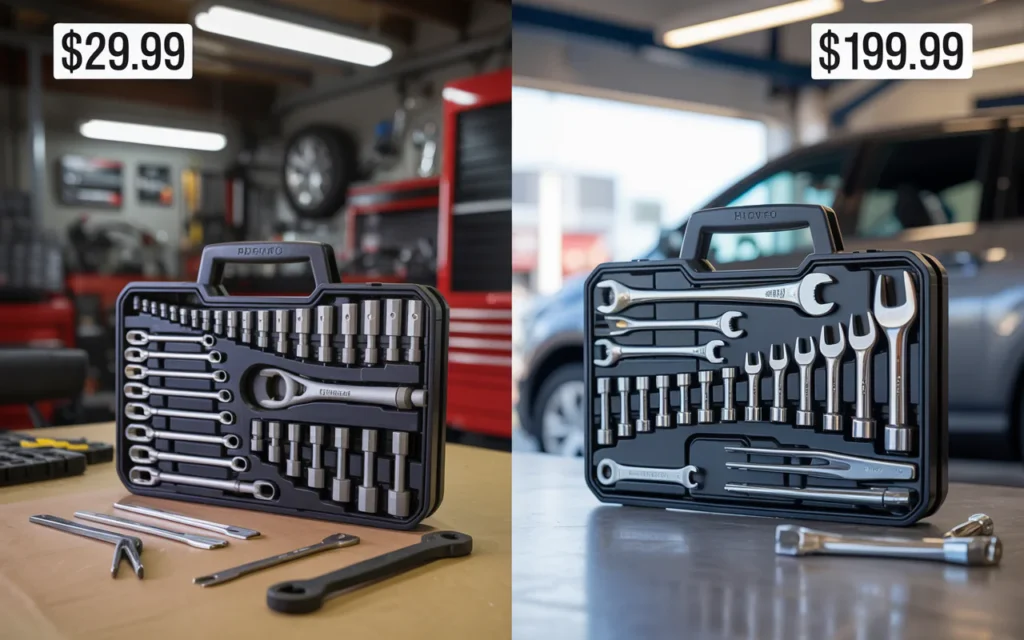
So after thousands of words and real world testing, are cheap automotive tool kits worth it? Here is my straight answer. For a complete beginner, a roadside emergency kit, or a spare set for rough environments: yes, buy the cheap kit. Spend $25 to $40. Learn what you need. Then upgrade the tools that break. For anyone doing regular maintenance, brake jobs, suspension work, or any repair that requires real torque: skip the cheap kit. Buy a mid-range set from a store with a warranty. You will spend $80 to $150 once. Those tools will last ten years. Cheap tools cost you in time, blood, and frustration. Good tools cost you money once. Choose based on how often you actually work on cars.
I still own my original cheap kit. I keep it in the back of my farm truck. I used it last week to fix a fence gate. But when I change my own brake pads? I reach for my mid-range ratchets. They have never let me down. Are cheap automotive tool kits worth it? They are worth exactly what you pay for them. No more. No less. Buy with your eyes open, and you will be fine.
Related posts
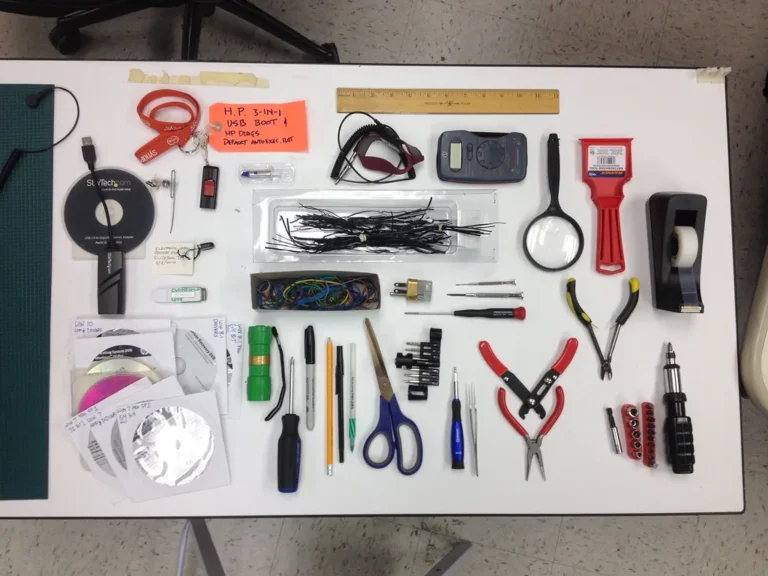 Top Starter Mechanic Tool Kits for Apprentices: Essential Sets for Your Trade
Explore top starter mechanic tool kits for apprentices. Compare sets for mechanics, electricians, and other trades to find your essential tools. Starting an apprenticeship is an…
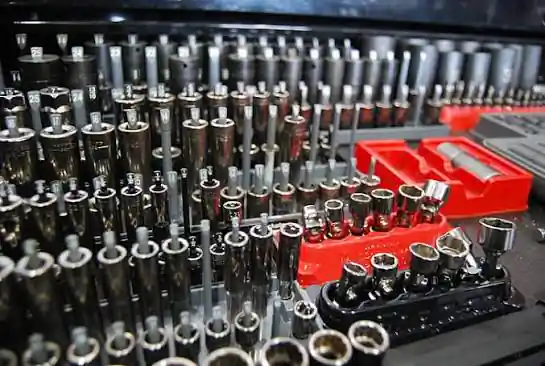 Automotive Tool Kits vs. Mechanic Tool Sets: What’s the Difference?
Understand the key differences between automotive tool kits vs. mechanic tool sets. Learn which is best for your car maintenance needs. When looking for tools to…
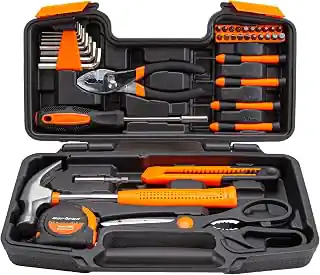 Top Automotive Tool Kits for Garage Workshops: A Buyer’s Guide
Find the top automotive tool kits for garage workshop. Compare versatile sets for car maintenance, home repairs, and DIY projects to choose the best fit. Setting…