
Why Do Campers Carry Multi Tools? Practical Uses in the Field
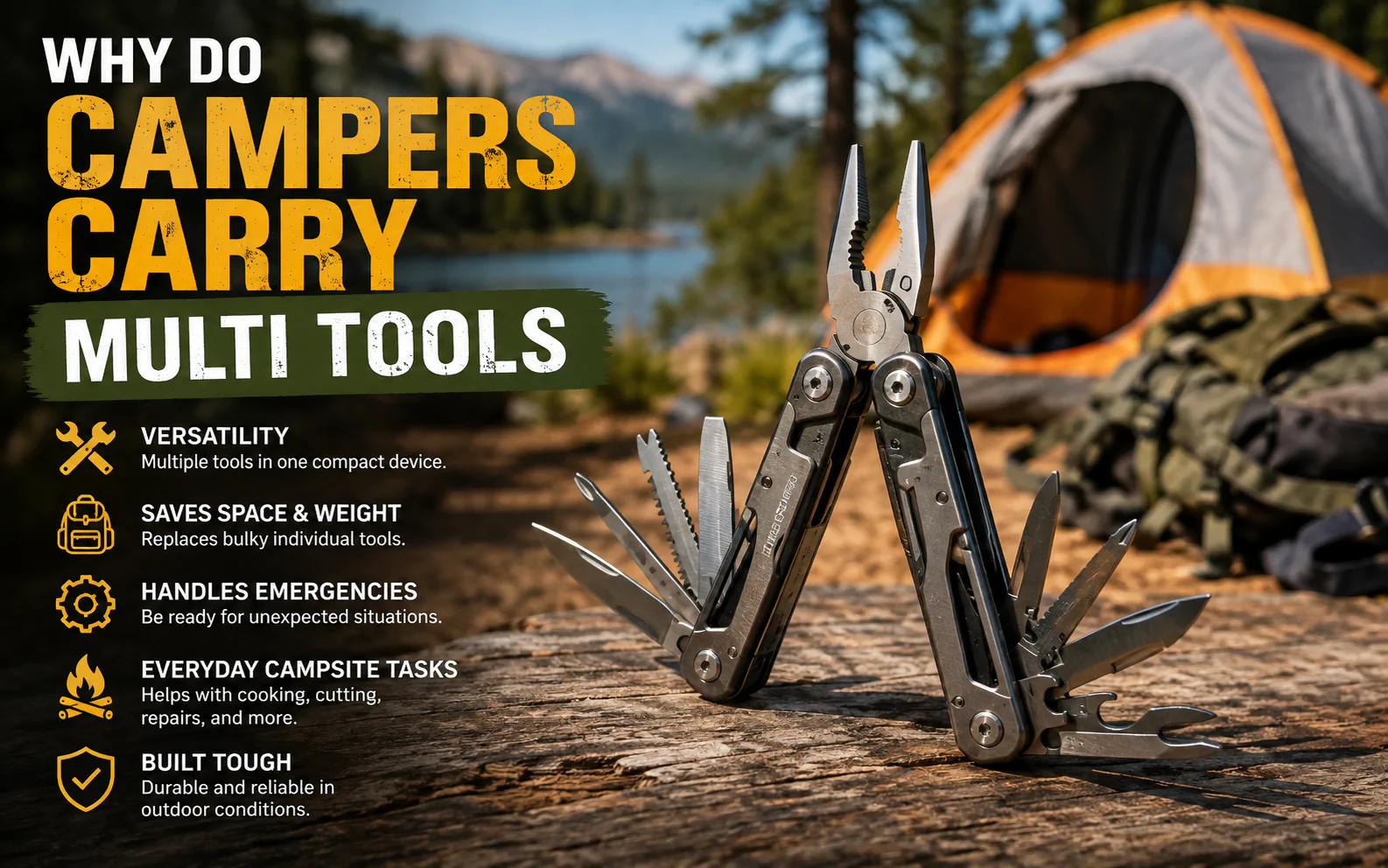
Campers carry multi tools primarily because outdoor gear breaks, bends, or gets stuck in ways that fingers and basic pocket knives cannot handle. A single multi-tool combines needle-nose pliers, knife blades, wire cutters, screwdrivers, and openers into one small device that fits inside a pocket or hip belt pocket.
Instead of packing individual repair tools into a kit, a multi-tool allows campers to repair tent poles, clear jammed stove valves, cut guy lines, remove splinters, and handle campsite chores with very little weight added to their gear load.
Gear maintenance and emergency field
- Multi-tools combine pliers, blades, wire cutters, and openers into one compact unit for quick field repairs.
- Pliers are often the most valuable component for pulling hot cookware, bending tent poles, and tightening hardware.
- Backpackers often prefer lightweight compact models, while car campers benefit from full-sized multi-tools.
- Carrying one multi-tool saves space and keeps essential repair components organized in one spot.
| Topic | When it helps | What to keep in mind |
|---|---|---|
| 1 | Hikers and campers relying on technical gear in remote locations. | Avoid applying excessive torque on tiny multi-tool screwdriver heads to prevent stripping the metal. |
| 2 | Car campers and group tent setup in tough ground conditions. | Pulling stakes at extreme angles can bend lightweight aluminum pliers. |
| 3 | Campers taking simple meal kits, canned goods, or hot cookware. | Clean the blade thoroughly after cutting food to prevent sap or grease buildup. |
| 4 | Backcountry medical kits and trail hygiene. | Ensure tweezers are sterilized before using them on open skin. |
| 5 | Ounce-conscious backpackers wanting consolidated organization. | Full-featured heavy tools can weigh up to 10 ounces, which might be excessive for ultralight hiking. |
How Multi Tools Save Campsite Gear and Time
Camping gear is built to be lightweight, which means metal tubes, clips, zippers, and stove valves can bend or loosen under heavy use. Hands alone often lack the leverage to bend hot metal or pull tight knots, while standard pocket knives lack gripping power.
The inclusion of needle-nose pliers is what makes multi-tools indispensable. Pliers grant leverage to hold hot pot bail handles over open flames, bend back bent zipper teeth, pull stubborn fish hooks, or unscrew frozen fuel canister caps.
Additionally, wire cutters found in the plier jaws easily snip heavy duty repair wire, plastic zip ties, or fishing line without dulling your primary cutting knife.
A tent pole shock cord snaps, or a furnace wire on a camp stove gets bent shut.
Using a fine knife tip to pry heavy objects open instead of using the dedicated screwdriver or flat end.
- Gripping hot campfire items or cookware handles safely.
- Bending back misshapen aluminum tent poles and zipper sliders.
- Snipping repair wire, zip ties, and braided cordage clean.
- Tightening loose screws on trek poles, lanterns, and folding chairs.
| Campsite Task | Standard Pocket Knife | Multi-Tool Pliers & Bits |
|---|---|---|
| Tightening stove fittings. | Impossible / Risks injury. | Easy with integrated bit driver. |
| Removing embedded tent stakes. | Can snap knife tip. | Secure grip with pliers. |
| Cutting heavy cord / wire. | Dulls cutting blade. | Dedicated wire cutters handle easily. |
| Fixing broken zippers. | No gripping power. | Pliers squeeze slider back into shape. |
Multi-Tool vs. Fixed-Blade Knife: Which Belongs in Your Pack?
A frequent question among campers is whether a multi-tool should replace a traditional camp knife. While both tools cut rope and carve wood, they serve different primary roles in the backcountry.
Fixed-blade knives excel at heavy-duty cutting, wood splitting, and shelter building due to their full-tang strength and solid handles. However, they lack secondary utility.
Many experienced campers carry a compact multi-tool alongside a modest fixed blade, while car campers and casual weekenders often rely entirely on a multi-tool for all camp duties.
Carving firewood splinters for kindling is faster with a sturdy fixed-blade knife, but adjusting a loose trekking pole clamp requires the bit driver on a multi-tool.
Assuming a multi-tool blade can handle heavy batoning or wood splitting tasks designed for fixed field knives.
- Multi-tools prioritize versatility, repair utility, and compact storage.
- Fixed knives prioritize ergonomics, heavy wood carving, and blade strength.
- Ultralight hikers often choose mini multi-tools with scissors and a small blade to minimize weight.
Matching Your Multi-Tool to Your Camping Style
Not all camping styles call for the same gear. Selecting the right multi-tool depends heavily on how far you carry your pack and what technical gear you bring along.
Car campers can afford to pack larger tools with heavy pliers, multiple knife blades, and wood saws. The added weight is negligible when parked near a campsite, and the extra features make quick work of campsite setup.
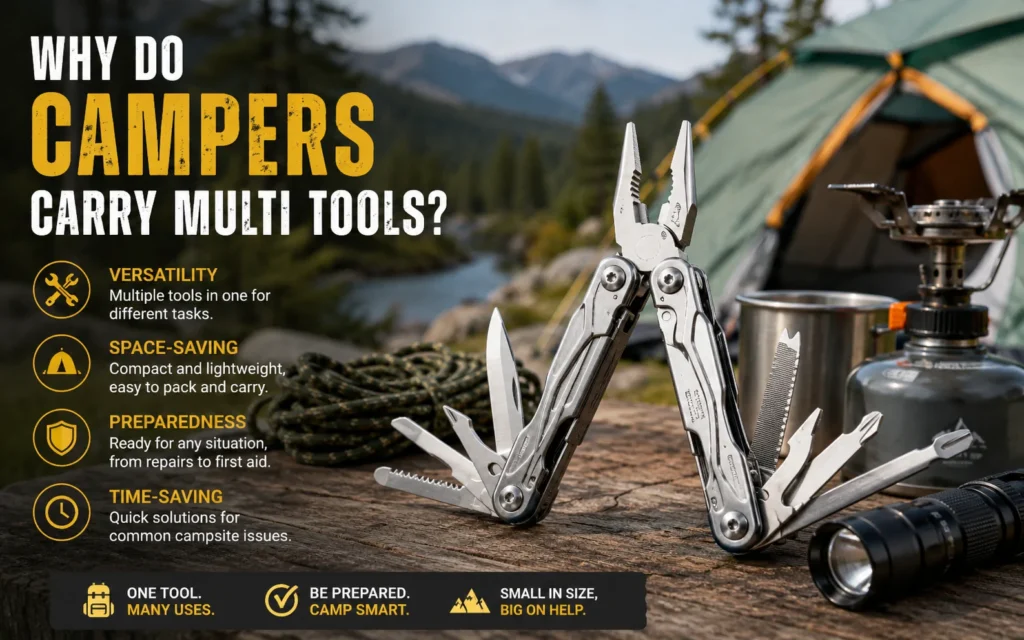
Backpackers and long-distance hikers should focus on function-to-weight ratios. Small keychain tools with a razor blade, tweezers, and scissors cover 90% of trail maintenance without adding unnecessary ounces to your back.
A weekend car camper can carry an 8-ounce heavy-duty multi-tool with full pliers, while an ultralight thru-hiker might opt for a 1.5-ounce keychain tool with scissors and tweezers.
Buying a massive multi-tool filled with specialty bits you will never use on a standard camping trip.
- Car Camping: Choose full-sized tools with comfortable plier grips and wood saws.
- Backpacking: Choose mid-sized tools (4–6 oz) featuring locking blades and screwdrivers.
- Ultralight Hiking: Choose micro tools (under 2 oz) with scissors, tweezers, and a small blade.
- Paddling & Water Sports: Prioritize corrosion-resistant stainless steel or coated finishes.
Primary campsite uses key tool
1. Emergency Field Gear Repairs
Outdoor equipment faces real stress on the trail. Multi-tool pliers and screwdrivers allow you to fix bent tent pole ferrules, tighten loose backpack frame screws, unjam zipper sliders, and clear clogged camping stove burners without returning to civilization.
- Hikers and campers relying on technical gear in remote locations.
- Avoid applying excessive torque on tiny multi-tool screwdriver heads to prevent stripping the metal.
- Choose a tool with lockable implements so screwdrivers do not fold onto your fingers during repairs.
- Primary Tool – Pliers & Screwdrivers.
- Key Benefit – Prevents trip-ending gear failures.
2. Campsite Setup and Utility
Setting up camp involves repetitive physical tasks. The pliers make pulling stubborn tent stakes out of frozen or rocky ground effortless, while built-in scissors or serrated blades clean up frayed paracord and trim tarp tie-downs.
- Car campers and group tent setup in tough ground conditions.
- Pulling stakes at extreme angles can bend lightweight aluminum pliers.
- Look for spring-action pliers if you anticipate doing frequent repetitive tasks.
- Primary Tool – Pliers & Wire Cutters.
- Key Benefit – Saves fingers and speeds up camp work.
3. Camp Kitchen and Meal Prep
Camp kitchen gear is minimal. A multi-tool serves as a backup bottle opener, can opener, and pot gripper for hot metal handles over camp stoves or coals, reducing the need for specialized kitchen utensils.
- Campers taking simple meal kits, canned goods, or hot cookware.
- Clean the blade thoroughly after cutting food to prevent sap or grease buildup.
- Keep a dedicated clean blade or wipe if you plan to use your tool for both gear repair and food.
- Primary Tool – Can Opener & Straight Blade.
- Key Benefit – Replaces specialized camp kitchen tools.
4. First Aid and Personal Care Support
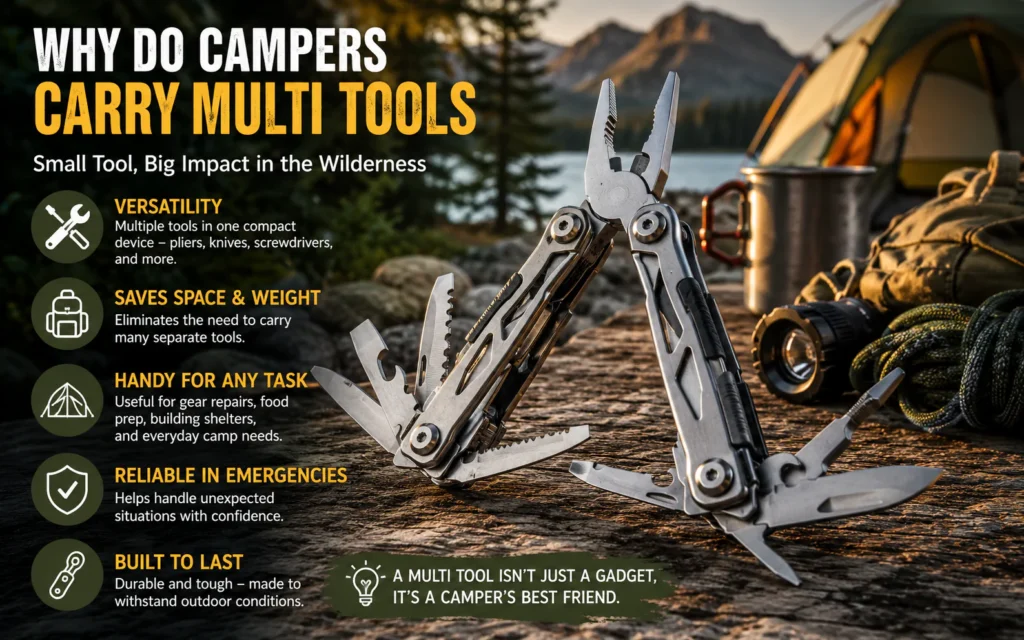
Small implements like fine-tipped tweezers, small scissors, and file edges handle minor trail injuries like removing thorns, cutting medical tape, trimming torn fingernails, or smoothing rough edges on plastic gear.
- Backcountry medical kits and trail hygiene.
- Ensure tweezers are sterilized before using them on open skin.
- Precision scissors are often more useful than a second knife blade for medical tape.
- Primary Tool – Tweezers & Scissors.
- Key Benefit – Enhances basic first aid capability.
5. Weight and Organization Efficiency
Carrying individual tools like pliers, wire cutters, scissors, and knives adds bulk and weight. A well-designed multi-tool packs up to a dozen functional features into a single four-to-eight-ounce body that stays secured in one pocket.
- Ounce-conscious backpackers wanting consolidated organization.
- Full-featured heavy tools can weigh up to 10 ounces, which might be excessive for ultralight hiking.
- Match the weight of the multi-tool to your travel distance and pack weight goals.
- Primary Tool – Integrated Multi-Chasis.
- Key Benefit – Consolidates pack contents.
FAQs
Is a multi-tool strictly necessary for camping?
It is not strictly mandatory, but it serves as an insurance policy against gear failures. Having pliers and screwdrivers can mean the difference between fixing a broken tent pole or sleeping in a collapsed shelter.
Can I carry a multi-tool in my carry-on luggage when flying to a hike?
Multi-tools with knife blades, metal files, or scissors over four inches are prohibited in airline carry-on bags by TSA guidelines. You must pack them in checked luggage.
What is the single most useful feature on a camping multi-tool?
Most campers find the needle-nose pliers to be the most valuable feature. Pliers allow you to manipulate hot cookware, pull tent stakes, bend repair wire, and unjam hardware.
How do you maintain a multi-tool after a dirty outdoor trip?
Rinse out dirt and sand with warm water and mild soap, dry all components thoroughly, and apply a light coat of mineral oil or rust-preventative lubricant to the pivot points.
Are scissors or a second knife blade more useful on a trail multi-tool?
Precision scissors are generally more useful than a second blade. They cut medical tape, moleskin, and fine thread far cleaner and safer than a standard knife blade.
Conclusion
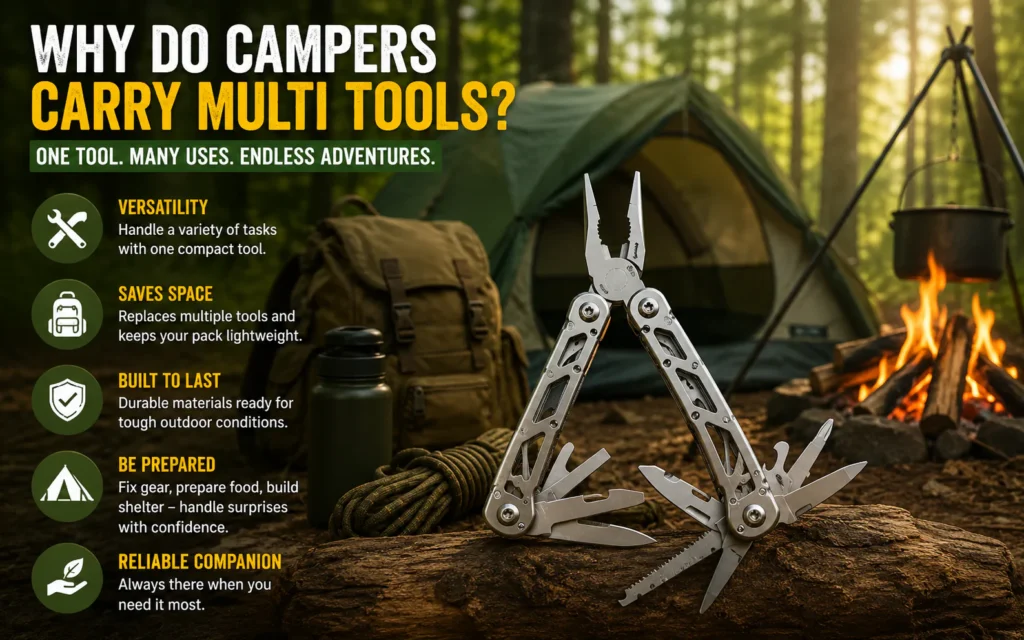
Campers carry multi tools because unpredictable gear issues happen in the field. Having pliers, blades, wire cutters, and screwdrivers in one compact pocket tool allows outdoor recreationists to handle repairs quickly and safely.
By matching the size and feature set of your multi-tool to your camping style-whether lightweight backpacking or relaxed car camping-you ensure you have the utility you need without dragging along unneeded weight.
Related posts
 Which Tool Kit Is Worth Buying? How to Choose the Right Set for Your Home
Wondering which tool kit is worth buying? Compare basic household sets, mechanic kits, and power tool combos to find the best tools for your budget and…
 Which Hand Tools Are Made in the USA? Reliable Brands and Buying Rules
Discover which hand tools are still made in the USA. Compare top domestic brands, tool categories, and learn how to verify origin labels before buying. Several…
 How to Choose Mechanic Tools for Beginners: Practical Buying Steps
Learn how to choose mechanic tools for beginners without overspending. Compare socket set sizes, drive types, metric standards, and warranty policies. Choosing mechanic tools for beginners…