
How to Organize Tools in a Small Garage: A Space-Saving Guide
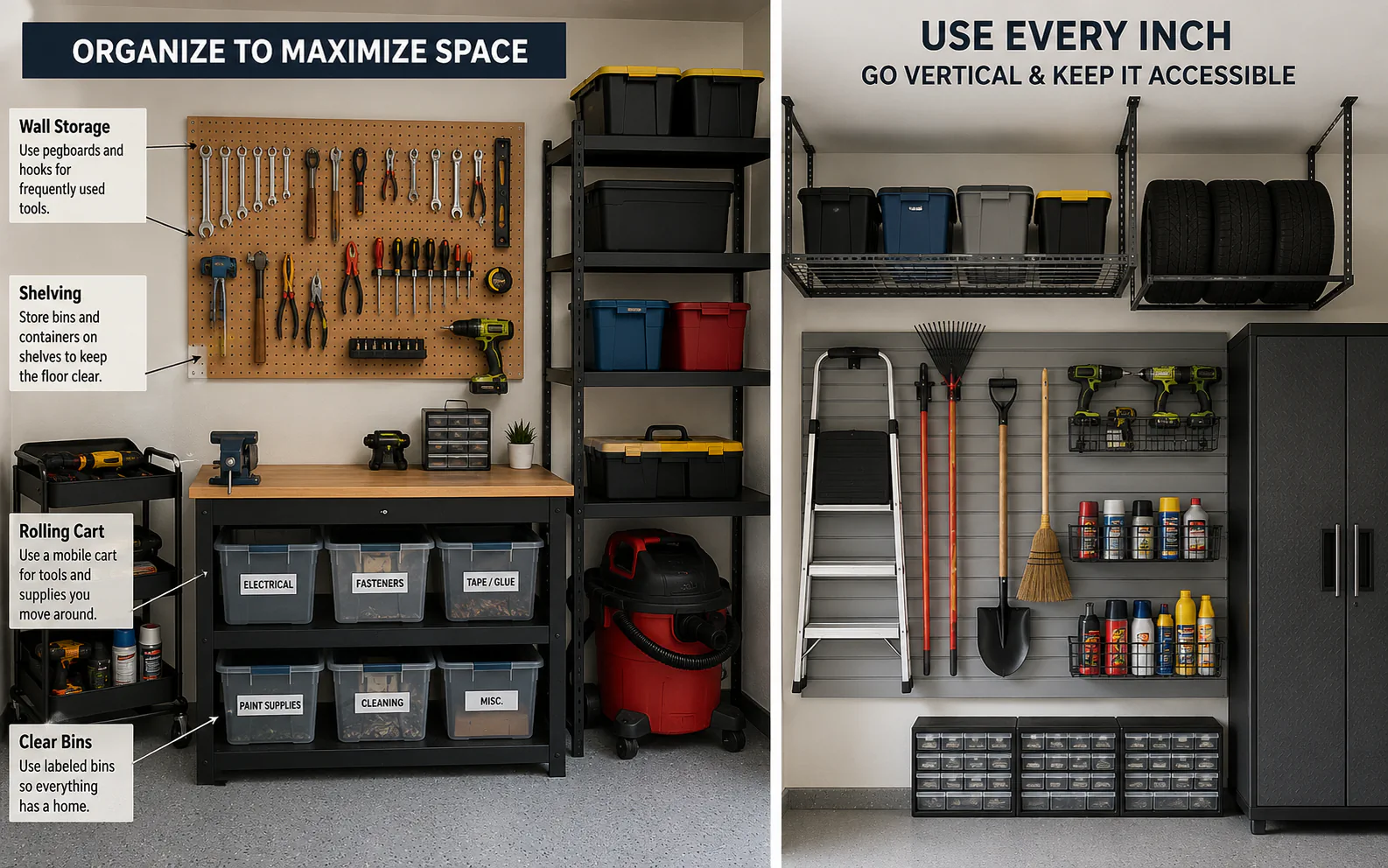
Organizing tools in a small garage requires shifting your focus from floor space to vertical and overhead space. When square footage is limited, leaving tools on workbenches or stacked in corners quickly creates a chaotic, unusable workspace. The key to success is a systematic approach: purge what you do not use, categorize what remains, and mount everything possible onto your walls or ceiling.
To get started, clear a temporary workspace on your driveway or floor. Group your tools into distinct categories-such as hand tools, power tools, fastening hardware, and seasonal items. By assigning a dedicated ‘zone’ for each category and utilizing smart storage solutions like pegboards, magnetic strips, and folding workbenches, you can keep your tools highly accessible while keeping your garage floor completely clear.
Decluttering and sorting tools by
- Get everything off the floor by prioritizing vertical wall and ceiling storage.
- Group tools by project type or frequency of use rather than just size.
- Use clear, labeled bins for small hardware to prevent duplicate purchases.
- Keep your workspace flexible with folding workbenches and rolling carts.
| Topic | When it helps | What to keep in mind |
|---|---|---|
| Step 1 | Anyone starting with a cluttered, unorganized garage. | Avoid keeping rusted or broken tools with the promise of fixing them later; if you haven’t used it in two years, let it go. |
| Step 2 | Hand tools, wrenches, hammers, and frequently used power tools. | Ensure your wall storage systems are anchored securely into wall studs, not just drywall, to prevent collapse. |
| Step 3 | Ladders, seasonal gear, camping equipment, and spare materials. | Check garage door clearance and ceiling joist weight limits before hanging heavy racks. |
| Step 4 | Multi-use garages where cars must still be parked inside. | Make sure rolling carts have locking casters to keep your workspace stable during projects. |
Focus strictly on tool organization
Step 1. Sort, Purge, and Categorize Your Inventory
Empty your drawers and shelves to see exactly what you own. Separate your tools into piles: keep, donate, sell, or discard. Once you have weeded out duplicates and broken items, group the remaining tools by function, such as woodworking, automotive, plumbing, or general home maintenance.
- Anyone starting with a cluttered, unorganized garage.
- Avoid keeping rusted or broken tools with the promise of fixing them later; if you haven’t used it in two years, let it go.
- If you have three identical flathead screwdrivers, keep the two in the best condition and donate the third.
- Time Required – 1 to 3 hours
- Difficulty – Easy
- Primary Goal – Reduce clutter volume
Step 2. Maximize Vertical Wall Space
In a small garage, the walls are your most valuable asset. Install pegboards, slatwalls, or heavy-duty wooden shelving to hang hand tools and power tools. Use heavy-duty hooks for larger items like cords, saws, and drills, keeping them visible and off the floor.
- Hand tools, wrenches, hammers, and frequently used power tools.
- Ensure your wall storage systems are anchored securely into wall studs, not just drywall, to prevent collapse.
- Choose pegboard for lightweight hand tools, and slatwall or stud-mounted shelves for heavier power tools.
- Time Required – 2 to 4 hours
- Difficulty – Moderate
- Primary Goal – Clear floor space
Step 3. Utilize Overhead and Ceiling Storage
Look up to find unused storage potential. Install ceiling-mounted racks or sliding tote systems to store seasonal items, ladders, or rarely used tools. This keeps bulky items out of your sightline and preserves precious wall and floor space for daily tasks.
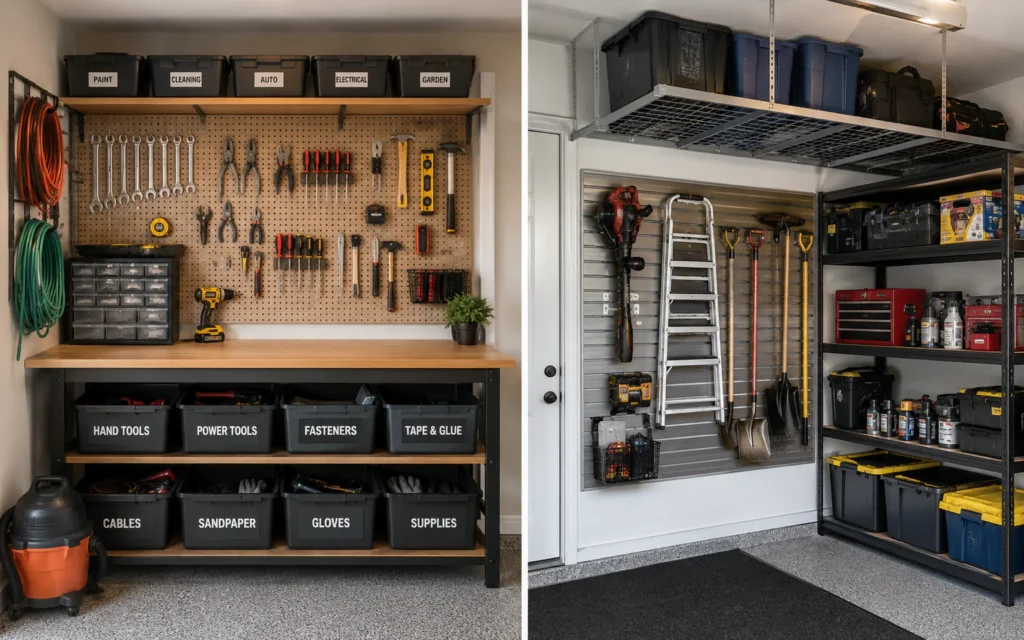
- Ladders, seasonal gear, camping equipment, and spare materials.
- Check garage door clearance and ceiling joist weight limits before hanging heavy racks.
- Use clear plastic bins for overhead storage so you can easily identify the contents from below.
- Time Required – 2 to 3 hours
- Difficulty – Hard
- Primary Goal – Store low-use items
Step 4. Implement Mobile and Folding Workstations
A fixed, bulky workbench can ruin a small garage layout. Instead, opt for a wall-mounted folding workbench that folds flat when not in use. Pair this with a rolling tool cabinet or utility cart that can be tucked under shelves or rolled out of the way when you need to park a vehicle.
- Multi-use garages where cars must still be parked inside.
- Make sure rolling carts have locking casters to keep your workspace stable during projects.
- Look for a folding workbench with a heavy-duty latch mechanism rated for at least 200 pounds.
- Time Required – 1 to 2 hours
- Difficulty – Moderate
- Primary Goal – Maintain flexibility
Establish Dedicated Storage Zones
Before mounting any hooks or buying bins, you need a layout plan. Dividing your small garage into distinct zones ensures that every item has a logical home. Grouping tools by project type or frequency of use prevents you from searching the entire garage for a single wrench.
An efficient layout places your most active tools in the ‘easy-access zone’-the area between your knees and shoulders when standing at your workbench. Less common tools go lower down, while seasonal or bulky items go high up on shelves or ceiling racks.
Keep your most frequently used hand tools (screwdrivers, pliers, tape measure) on a pegboard directly above your workbench at eye level. Store seasonal items, like snow shovels or lawn care tools, in the back corner or overhead.
Do not store frequently used tools in deep drawers or high overhead bins where they are difficult to reach and put away.
- Active Zone: Hand tools, safety gear, and battery chargers.
- Transition Zone: Power tools, drill bit sets, and paint supplies.
- Deep Storage Zone: Holiday decorations, car tires, and seasonal yard tools.
| Storage Option | Best For | Space Impact | Budget Level |
|---|---|---|---|
| Pegboard | Hand tools, wrenches, hammers | Zero floor space, uses wall | Low to Moderate |
| Slatwall | Heavy power tools, cords, hoses | Zero floor space, highly durable | Moderate to High |
| Magnetic Strips | Pliers, screwdrivers, drill bits | Ultra-compact, mounts anywhere | Very Low |
| Overhead Racks | Ladders, bins, seasonal gear | Uses dead ceiling space | Moderate |
Smart Ways to Organize Small Hardware
Small hardware like screws, nails, anchors, and washers can quickly turn into a cluttered mess if left in random boxes. In a small garage, these items should be consolidated into a single, compact system that keeps them visible and sorted.
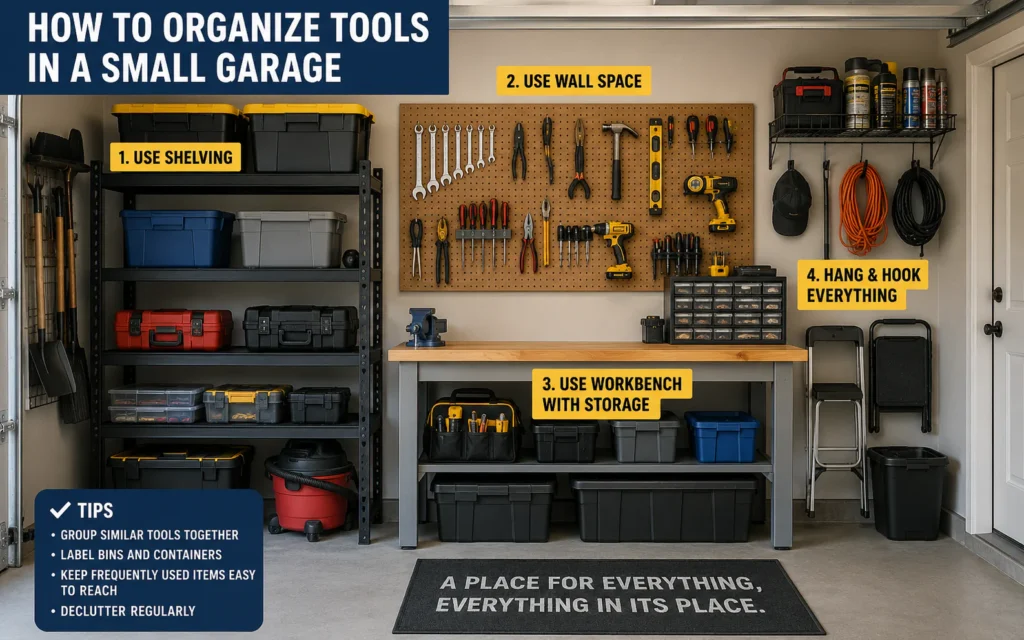
Wall-mounted organizers with clear drawers are excellent because they take up zero workbench space. If you prefer a portable option, look for shallow organizer cases with removable bins. You can stack these cases on a shelf and pull out only the one you need for a specific task.
Mount a metal strip under a shelf and use small glass jars with magnetic lids to hold screws. Alternatively, use a wall-mounted multi-drawer organizer with clear plastic drawers labeled by size.
Avoid keeping hardware in their original cardboard boxes, which tear easily and spill contents.
- Use clear containers so you can see inventory levels at a glance.
- Label every drawer or bin with the specific size and type of fastener.
- Group similar hardware together, keeping wood screws separate from machine bolts.
Common Mistakes to Avoid in Tight Spaces
When organizing a small garage, every inch counts. A common mistake is buying storage bins, pegboards, and shelves before knowing exactly what needs to be stored. This often leads to mismatched containers that do not stack well or shelves that are too deep for the space.
Another frequent error is ignoring vertical clearance. Leaving the space above your garage door empty while crowding the walls at eye level wastes valuable storage potential. Always look for ways to utilize high wall space and ceiling joists for lightweight, bulky items.
Buying a massive, stationary wooden workbench because it looks nice, only to realize it blocks your car door from opening when parked inside.
Do not buy storage containers or shelving units before you have sorted and measured your tools.
- Avoid deep shelves that swallow small items; opt for shallow shelves where everything stays visible.
- Do not block access to electrical panels, outlets, or main walkways.
- Never overload plastic storage bins beyond their weight capacity.
FAQs
How do I organize small things like screws and hardware in a small garage?
Use wall-mounted plastic drawer cabinets with clear compartments, or attach magnetic strips to the underside of shelves to hold small metal jars. Labeling each compartment by size and type is key to keeping them organized.
What is the best tool organizer for a very small space?
A heavy-duty metal pegboard system is highly recommended. It takes up zero floor space, is incredibly versatile, and allows you to customize hook placement as your tool collection changes.
How can I organize my tools if I am on a tight budget?
You can build DIY tool holders using scrap wood or PVC pipe segments mounted to the wall. Magnetic kitchen knife strips are also an inexpensive way to hang pliers, screwdrivers, and drill bits.
Should I use a rolling tool chest in a small garage?
Yes, but choose a compact model that can slide underneath a workbench or shelf when not in use. Rolling chests offer great mobility, allowing you to bring your tools directly to your project and tuck them away afterward.
Conclusion
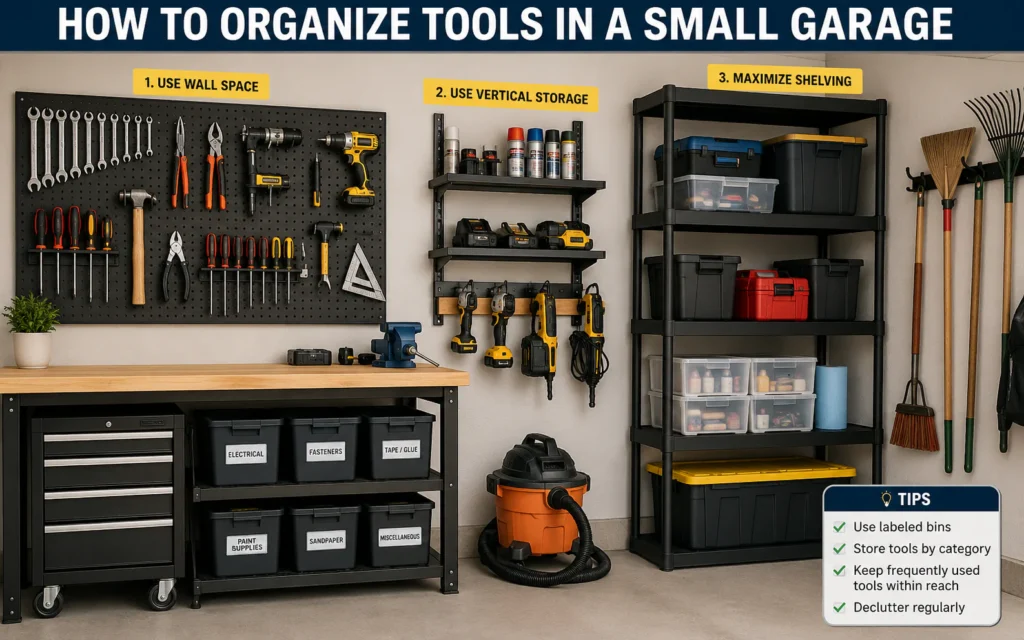
Organizing tools in a small garage does not require a massive budget or professional remodeling. By focusing on vertical wall space, utilizing overhead areas, and keeping your floor plan flexible with mobile storage, you can create a highly functional workspace in any size garage.
Start by sorting your tools and purging what you no longer need. Once you know exactly what you are keeping, invest in simple, versatile storage solutions like pegboards and clear bins. Taking it one step at a time will quickly yield a clean, efficient, and stress-free garage environment.
Related posts
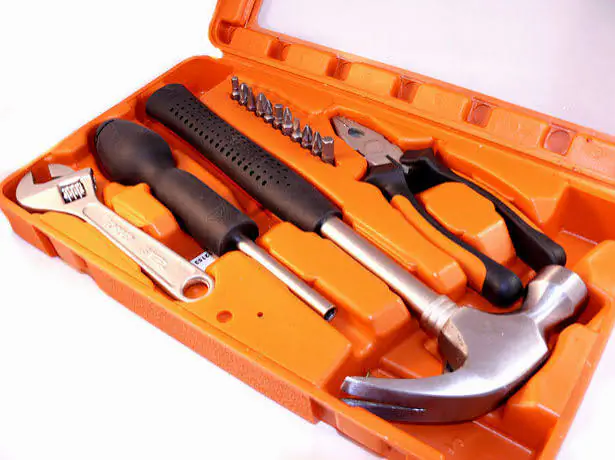 Which Tool Kit Is Worth Buying? How to Choose the Right Set for Your Home
Wondering which tool kit is worth buying? Compare basic household sets, mechanic kits, and power tool combos to find the best tools for your budget and…
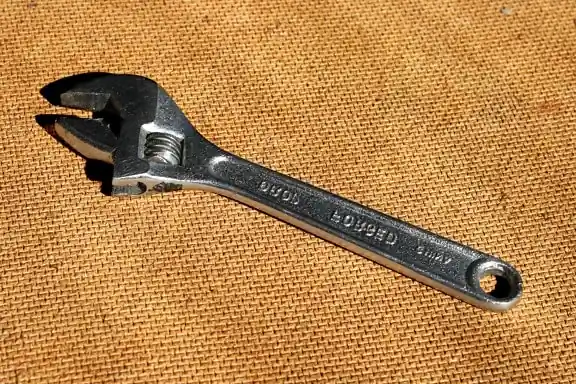 Which Hand Tools Are Made in the USA? Reliable Brands and Buying Rules
Discover which hand tools are still made in the USA. Compare top domestic brands, tool categories, and learn how to verify origin labels before buying. Several…
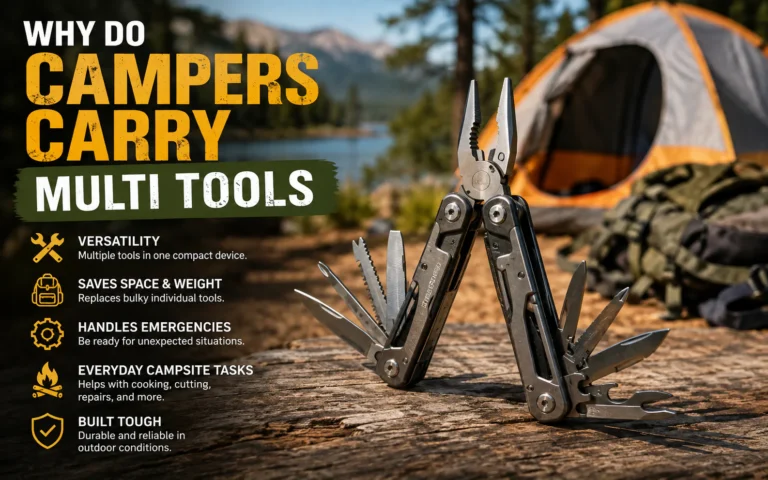 Why Do Campers Carry Multi Tools? Practical Uses in the Field
Why do Campers carry multi tools to handle gear repairs, campsite setup, food prep, and field fixes with minimal weight. Here is why one belongs in…