
What Tools Do Mechanics Use Most
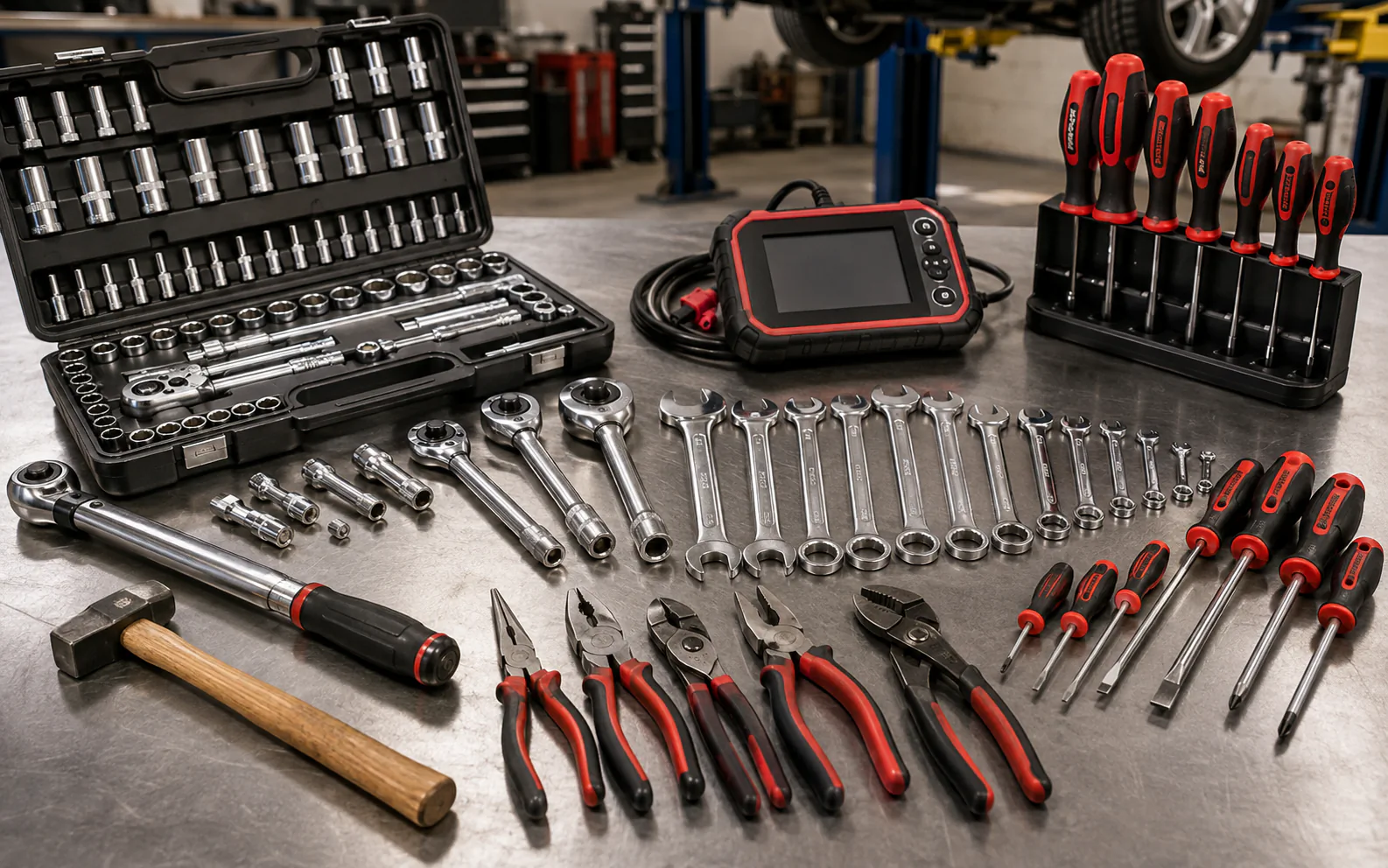
Ever wondered what tools do mechanics use most in their daily work? This complete guide covers the essential hand tools, power equipment, and diagnostic devices every technician relies on to fix cars quickly and safely.
Walking into a professional auto shop for the first time can feel like stepping into another world. The sounds of air tools hissing, the smell of grease and cleaning solvents, and walls covered with neatly organized tools of every shape and size. It is easy to feel overwhelmed. But if you ask any experienced technician what tools do mechanics use most, you will get a surprisingly straightforward answer. The foundation of any mechanic’s toolkit is built around a core set of reliable instruments that handle the vast majority of daily repair work.
Cars have changed a lot over the years. Modern vehicles are packed with computers, sensors, and complex electronic systems. Yet the basic principles of fixing them still rely on good old-fashioned hand tools. Sure, today’s mechanics also use advanced diagnostic scanners and cordless impact wrenches. But the real workhorses remain the sockets, wrenches, screwdrivers, and pliers that technicians have depended on for generations.
I have spent plenty of time in garages watching professionals work. I have seen how the right tool can turn a frustrating job into a smooth repair. I have also seen how the wrong tool or a cheap tool can ruin your day, strip a bolt, or leave you stranded with a half-finished project. This guide will walk you through the essential tools that mechanics reach for most often. Whether you are a beginner setting up your first toolbox or a seasoned pro looking to fill some gaps, this information will help you build a practical, effective kit.
Let us start with the basics. The tools do mechanics use most fall into a few main categories: hand tools, power tools, diagnostic equipment, and specialty items. We will explore each group in detail. By the end, you will have a clear picture of what you really need and what you can safely skip.
The Most Common Hand Tools Mechanics Use Every Day
Hand tools are the backbone of automotive repair. These are the instruments that mechanics pick up dozens of times each shift. They are simple, dependable, and get the job done without batteries or cords. When people ask what tools do mechanics use most, the answer almost always starts with hand tools.
Socket Sets and Ratchets
Sockets and ratchets are probably the most used tools in any mechanic’s box. A good socket set lets you tighten and loosen nuts and bolts quickly and efficiently. Mechanics typically use three drive sizes: 1/4-inch, 3/8-inch, and 1/2-inch. Each size serves a different purpose. The smaller 1/4-inch drive works well for light work and tight spaces. The 3/8-inch drive handles most general repairs. The larger 1/2-inch drive provides the muscle for suspension work, wheel changes, and other heavy-duty jobs.
You will want both shallow and deep sockets in your set. Deep sockets are essential for reaching nuts on long studs or bolts that sit below the surface. Six-point sockets are preferred by many professionals because they grip the flat sides of a fastener rather than the corners. This reduces the chance of rounding off a bolt head. Most mechanics also keep a set of extensions and universal joints handy. These help reach bolts tucked behind brackets, hoses, and other components.
And yes, everyone loses the 10mm socket. It is almost a rite of passage.
“Ask ten techs what tools do mechanics need, and you’ll hear some overlap, plus a lot of strong opinions.” – Olsa Tools Blog
Combination Wrenches
Wrenches are another essential category. Combination wrenches have an open end on one side and a box end on the other. This design gives you two ways to grip a fastener. The open end works well for quick turns in accessible spots. The box end provides a tighter grip for breaking loose stubborn bolts.
Combination wrench sets are among the most-used tools in any shop. Mechanics need both metric and SAE sizes because vehicles come from all over the world. Standard length wrenches should be your starting point. As you gain experience, you might add stubby wrenches for tight spaces and long-pattern wrenches for extra leverage.
Screwdrivers and Bit Drivers
Screwdrivers might seem too basic to mention. But they are absolutely essential. A mechanic needs a dependable set of Phillips, flathead, Torx, and hex-driving options. Modern vehicles use all of these fastener types. Cheap screwdrivers cause endless frustration. Worn tips strip hardware. Weak handles make it hard to apply enough force. Investing in quality screwdrivers with magnetic tips is a smart move.
Pliers and Cutting Tools
Pliers matter more than many new mechanics expect. Slip joint pliers, needle nose pliers, groove joint pliers, and cutting pliers all pull their weight in a typical workday. Locking pliers, often called Vise-Grips, are incredibly useful for holding parts or clamping things in place. Retaining ring pliers, also known as snap ring pliers, become essential depending on the work you do.
The goal is not to collect every variation. The goal is to have dependable pliers that grip cleanly, cut reliably, and do not flex when you lean on them.
Torque Wrenches
A torque wrench is not a luxury item. It is a required tool for wheel service, engine work, and any job where fastener load matters. Guessing on torque is gambling with comebacks. Torque wrenches help mechanics tighten wheels, suspension components, and engine hardware to the vehicle manufacturer’s specifications. Click-type torque wrenches are the most common. They provide an audible and tactile signal when the preset torque value is reached.
Breaker Bars and Pry Bars
A ratchet is not a breaker bar. Forcing a ratchet to do that job is how tools get damaged. Breaker bars provide the extra leverage needed to break loose extremely tight fasteners. Pry bars help with alignment, separation, and stubborn assemblies in ways that save both time and knuckles.
Hammers and Punches
A mechanic usually needs a dead blow hammer, a ball peen hammer, and a basic punch and chisel set. These tools are not glamorous, but they solve real problems fast. When parts are seized, pins are frozen, or surfaces need persuasion, hammers and punches get the job done.
Essential Hand Tools for Every Mechanic
| Tool Category | Common Types | Primary Use |
|---|---|---|
| Sockets and Ratchets | 1/4″, 3/8″, 1/2″ drives, shallow and deep sockets | Tightening and loosening nuts and bolts |
| Combination Wrenches | Metric and SAE sizes, standard and stubby lengths | Turning fasteners in tight spaces |
| Screwdrivers | Phillips, flathead, Torx, hex | Driving and removing screws |
| Pliers | Needle nose, slip joint, groove joint, locking | Gripping, holding, and cutting |
| Torque Wrenches | Click-type, beam-type | Applying precise torque to fasteners |
| Breaker Bars | Various lengths | Breaking loose stubborn fasteners |
| Hammers | Dead blow, ball peen | Driving and persuading parts |
Power Tools That Speed Up the Work
Power tools have changed the way mechanics work. They turn long, exhausting jobs into quick, efficient repairs. Cordless technology has improved so much that many shops have moved away from air tools entirely. When considering what tools do mechanics use most, power tools definitely make the list.
Impact Wrenches
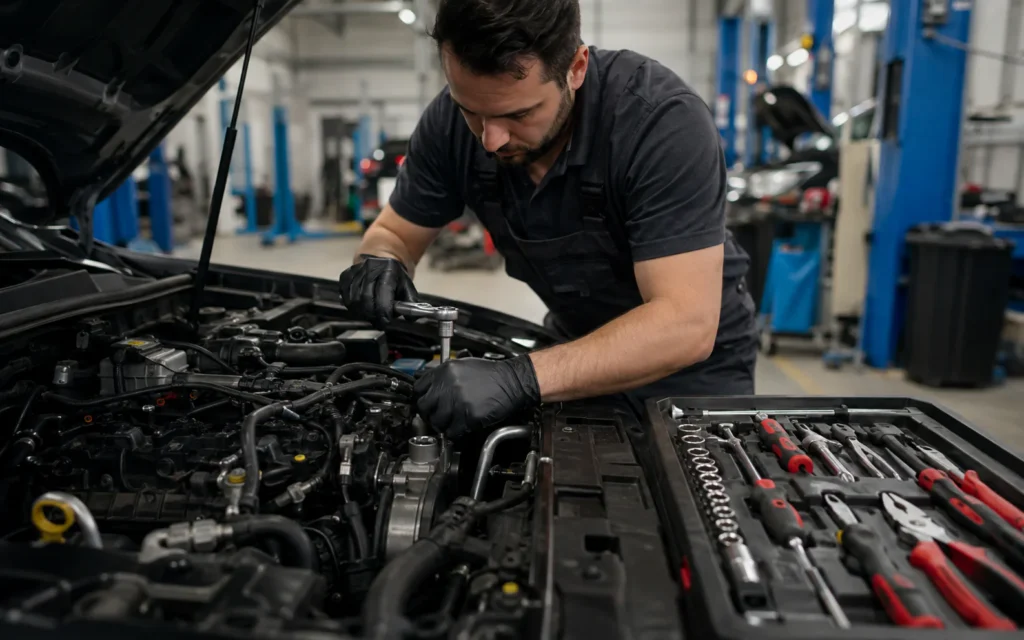
Impact wrenches, often called impact guns, are absolute game-changers for automotive work. They provide the force needed to loosen lug nuts and stubborn suspension hardware in seconds. A 1/2-inch cordless impact wrench is the standard choice for wheel changes and suspension work. These tools save enormous amounts of time and physical effort.
Battery technology has come a long way. Modern cordless impacts deliver impressive torque while remaining relatively compact. Mechanics already using a cordless platform should consider battery compatibility. Sticking with compatible tools reduces the number of batteries and chargers taking up valuable shop space.
Cordless Ratchets
Cordless ratchets are another favorite. They quickly tighten fasteners in confined areas where a traditional ratchet would be awkward. These tools are especially useful for repetitive bolt removal and installation. They save your wrists from endless twisting motions.
Air Tools and Pneumatic Equipment
While cordless tools have become dominant, pneumatic tools still have their place. Air ratchets are faster than hand ratchets for repetitive bolt removal. Angle grinders cut rusted bolts, smooth welds, and prepare surfaces. Many shops still maintain compressed air systems because pneumatic tools are powerful, reliable, and often less expensive than their cordless equivalents.
Drills and Drivers
A drill or driver with a step-bit set is useful for custom brackets and panel work. Mechanics use drills for creating holes, removing broken bolts, and various fabrication tasks. A good cordless drill is a versatile addition to any toolkit.
Diagnostic Tools for Modern Vehicles
Modern cars are computers on wheels. Without diagnostic tools, you are guessing. And guessing costs time and money. The tools do mechanics use most now include electronic devices that communicate directly with a vehicle’s onboard systems.
OBD-II Scanners
OBD-II scanners connect to a vehicle’s onboard system to retrieve error codes. These codes help technicians identify issues within specific systems. Even a basic OBD-II scanner pays for itself on the first check-engine-light job. More advanced scanners provide live data, which helps diagnose intermittent problems and verify repairs.
Multimeters
A digital multimeter (DMM) is essential for testing circuits, sensors, and battery health. Modern technicians use multimeters to replace old test lights. A DMM provides safe, accurate testing of sensitive computer-controlled circuits. Every mechanic should own a quality multimeter and know how to use it.
Specialty Diagnostic Tools
Depending on the work, mechanics may use compression testers, leak-down test kits, and other specialty diagnostic tools. These help diagnose internal engine problems before tearing anything apart. Timing lights, belt tensioner tools, and brake caliper tool kits also fall into this category.
Specialty Tools for Specific Jobs
Beyond the basics, mechanics accumulate specialty tools for specific types of repairs. The tools do mechanics use most will vary depending on their specialty. A transmission specialist needs different tools than a brake specialist. Still, certain specialty tools appear in many shops.
Oil Filter Wrenches
Changing oil is one of the most common maintenance tasks. Oil filter wrenches come in several styles, including strap wrenches, socket-style wrenches, and pliers-style tools. Having the right oil filter wrench makes oil changes quick and clean.
Pulley Pullers and Installers
Pulley pullers and installer sets are essential for removing and installing pulleys on engines. These tools apply even pressure to pull pulleys off shafts without damaging them. A bearing press kit serves a similar purpose for wheel bearings and other pressed components.
Brake Tools
Brake work requires specific tools. A brake caliper tool kit helps compress caliper pistons during brake pad replacement. Brake bleeders and line wrenches are also useful. These tools make brake jobs faster and safer.
Lifting Equipment
Vehicle lifts allow technicians to access the underside of a car safely and comfortably. Floor jacks and jack stands support different types of repairs. A good floor jack is a must-have tool for any mechanic, letting you raise heavy vehicles off the ground with little effort.
Diagnostic and Specialty Tools
| Tool Category | Examples | Primary Use |
|---|---|---|
| Diagnostic Scanners | OBD-II scanners, code readers | Reading and clearing error codes |
| Electrical Testers | Multimeters, circuit testers | Testing circuits and sensors |
| Engine Diagnostic Tools | Compression testers, leak-down kits | Diagnosing internal engine problems |
| Lifting Equipment | Floor jacks, jack stands, vehicle lifts | Raising vehicles for undercarriage access |
| Brake Tools | Caliper tool kits, line wrenches | Brake repair and maintenance |
| Pullers | Pulley pullers, bearing presses | Removing and installing pressed components |
Building Your Toolkit the Smart Way
You do not need to buy everything at once. Start with a solid socket set, a good set of combination wrenches, and a basic OBD-II scanner. Add power tools and specialty items as your projects demand them. Buy quality where it matters and save on things you use rarely. Your toolkit should grow with your skills. That is how every great mechanic builds theirs.
Prioritize the Essentials
Eric Garbe from the Tooltime Podcast offers a useful rule: 90% of your day-to-day work uses about 10% of your toolbox. Start with quality basics rather than chasing every specialty item. Focus first on wrenches, ratchets and sockets, screwdrivers, pliers and cutters, hammers and punches, and basic hand tools.
Know Where to Splurge and Where to Save
Professional technicians use hand tools daily. Tools like wrenches, screwdrivers, and Torx bits are particularly prone to wearing out over time. High-end brands like Snap-On, Matco, and Cornwell are known for their quality and hassle-free lifetime warranties. When you are a professional mechanic who spends hours each day turning a ratchet, you want the highest-quality and most reliable tool you can get.
However, you can save money on tools you use less frequently. Entry-level tools are not necessarily low quality. Manufacturing improvements mean many entry-level sets will serve you for years. Upgrade selectively. Buy higher-end specialty or ergonomic tools once you know you will use them often.
“Start with quality basics rather than chasing every specialty item.” – Eric Garbe, Tooltime Podcast
Organize Your Tools
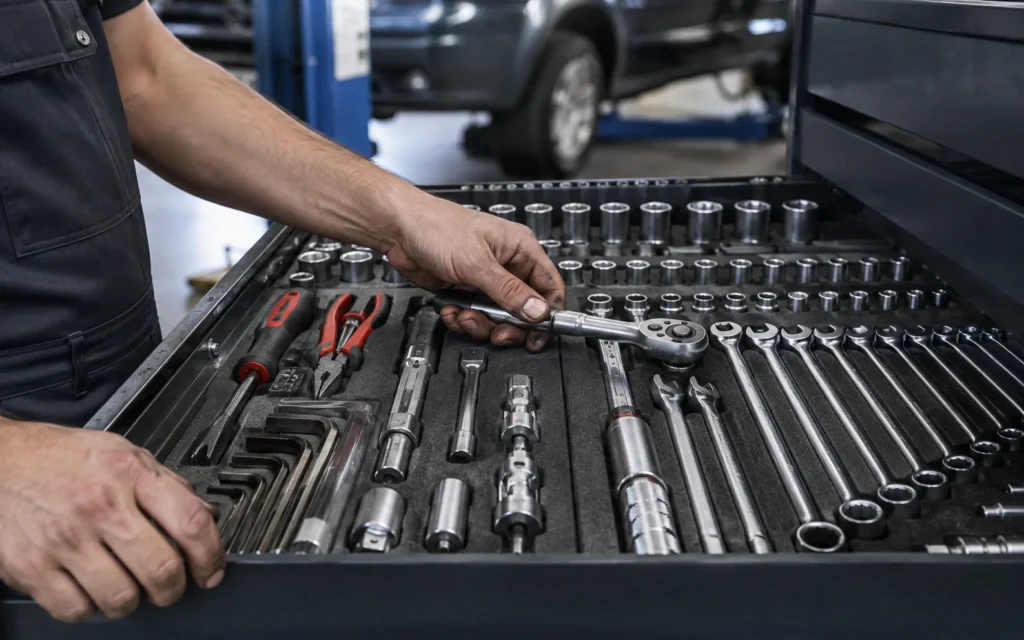
Keep tools organized to save time and prevent loss. Foam drawer organizers with laser-cut foam layouts provide clear layouts and quick accountability. Start with a modest toolbox or cart and expand over time. Good organization helps you spot missing tools before a job ends.
Use Mentors and Resources
Instructors, shop mentors, and experienced technicians can advise which purchases are worthwhile and which can wait. Vocational programs, employers, and some tool companies offer guidance, starter kits, and sometimes financial assistance. Ask about employer support when interviewing.
Tool acquisition is gradual. Many technicians spend years building a comprehensive set. There is value in small, steady investments and learning which specialty tools will actually pay off.
Safety Equipment and Best Practices
Safety gear is essential in any automotive environment. Gloves, eye protection, and proper workwear help reduce the risk of injury. Technicians also follow safety protocols when using tools and working around heavy equipment.
Personal Protective Equipment
Safety glasses protect your eyes from flying debris, chemicals, and dust. Mechanic’s gloves protect your hands from cuts, burns, and harsh chemicals. Steel-toe boots protect your feet from heavy falling parts. Proper workwear, including coveralls or shop coats, keeps your regular clothes clean and provides some protection from sparks and chemicals.
Safe Tool Use
Using tools correctly prevents injuries and damage. Never use a ratchet as a breaker bar. Always use the right tool for the job. Keep tools clean and in good condition. Replace worn or damaged tools promptly. Follow manufacturer torque specifications for critical fasteners.
Shop Safety
Keep your work area clean and organized. Spills should be cleaned up immediately. Tools should be returned to their proper place after use. Fire extinguishers should be accessible. Know the location of first aid supplies and emergency exits.
Frequently Asked Questions
What tools do mechanics use most on a daily basis?
The tools do mechanics use most include socket sets and ratchets, combination wrenches, screwdrivers, pliers, and torque wrenches. These hand tools form the foundation of every mechanic’s toolkit and handle the majority of daily repair tasks.
Do I need both metric and SAE tools?
Yes. Vehicles come from all over the world. American vehicles often use SAE sizes, while Asian and European vehicles use metric sizes. Having both sets ensures you can work on any car that comes into the shop.
What is the most important power tool for a mechanic?
The impact wrench is arguably the most important power tool. It saves enormous time and effort when removing lug nuts, suspension bolts, and other stubborn fasteners. A 1/2-inch cordless impact wrench is the standard choice for most mechanics.
Should I buy cheap tools or expensive ones?
Buy quality where it matters most. Tools you use daily, like wrenches, ratchets, and screwdrivers, should be high quality. They will last longer and perform better. You can save money on tools you use less frequently.
What diagnostic tools do I really need?
Every mechanic should have an OBD-II scanner and a digital multimeter. These two tools cover most diagnostic needs. A basic scanner reads and clears codes. A multimeter tests circuits, sensors, and battery health.
How do I organize my mechanic tools?
Foam drawer organizers provide clear layouts and quick accountability. Start with a modest toolbox and expand over time. Keep similar tools together and return each tool to its place after use.
What should I buy first when building a toolkit?
Start with a solid socket set, a good set of combination wrenches, screwdrivers, pliers, and a torque wrench. Add a basic OBD-II scanner and a multimeter. Add power tools and specialty items as your projects demand them.
How much should I expect to spend on mechanic tools?
The cost varies widely. A basic starter kit might cost a few hundred dollars. A professional toolkit can cost thousands. Start with the essentials and add tools gradually as your skills and needs grow.
Conclusion
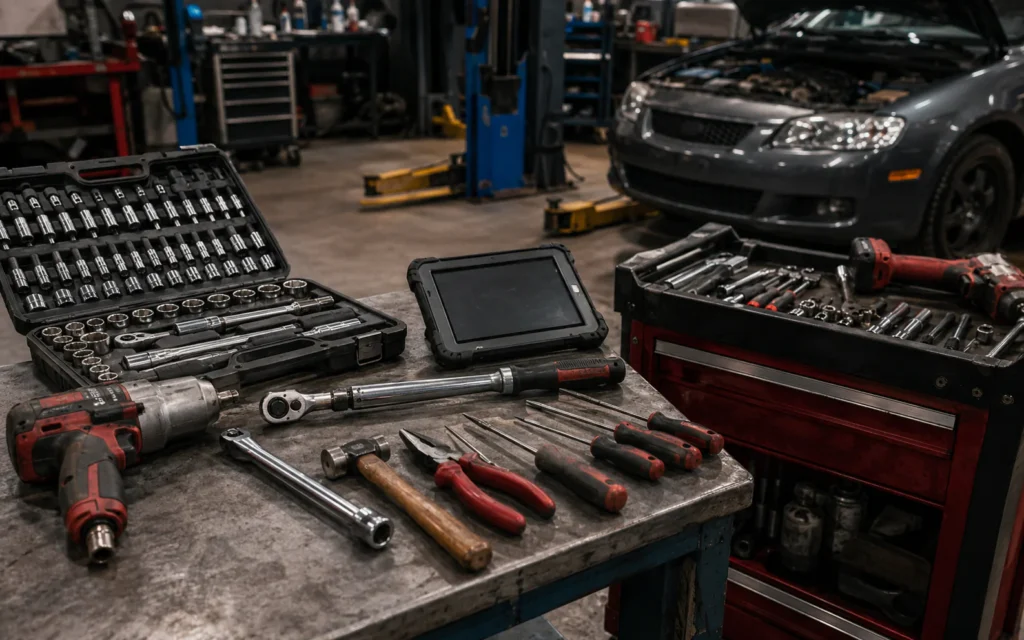
So what tools do mechanics use most? The answer is both simple and complex. Simple because the core tools have remained the same for decades: sockets, wrenches, screwdrivers, and pliers. Complex because modern vehicles demand diagnostic scanners, multimeters, and specialty tools that previous generations never needed.
The best approach is to start with the essentials and build your toolkit gradually. Focus on quality where it matters most. Keep your tools organized. Learn from experienced technicians. And remember that the tools do mechanics use most are the ones that get the job done safely, efficiently, and correctly.
Whether you are just starting out or have been turning wrenches for years, having the right tools makes all the difference. A well-equipped toolbox saves time, reduces frustration, and helps you deliver quality work that keeps customers coming back. Invest in good tools, take care of them, and they will serve you well for decades.
“Your toolkit should grow with your skills. That’s how every great mechanic builds theirs.” – Usama, ASE-Certified Automotive Technician
The automotive industry continues to change. Electric vehicles, advanced driver assistance systems, and connected car technology are reshaping the profession. But the fundamental tools do mechanics use most will always include the reliable hand tools that have been the backbone of automotive repair for generations. Master those basics, stay curious about new technology, and you will have a rewarding career or hobby that lasts a lifetime.
Related posts
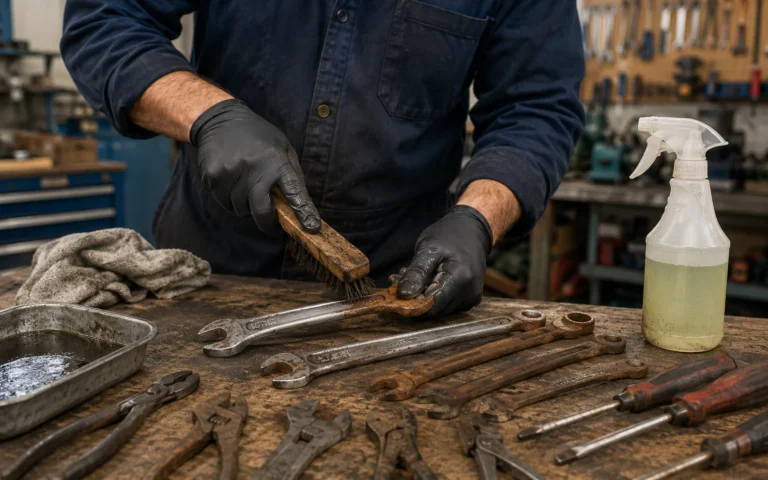 Can Rusty Tools Be Restored
If you have old equipment sitting in the shed, you might wonder can rusty tools be restored to working order. The answer is yes for most…
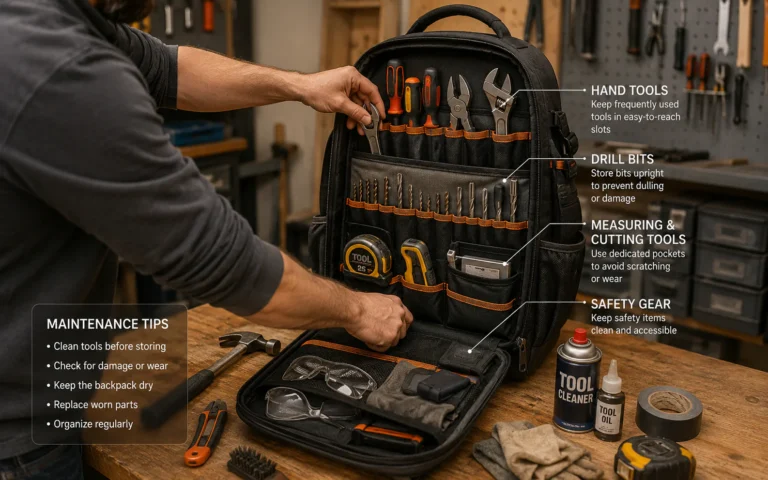 How To Maintain A Tool Backpack
Learn how to maintain a tool backpack with simple cleaning, smart organization, and regular inspections. Keep your gear ready and extend the life of your bag…
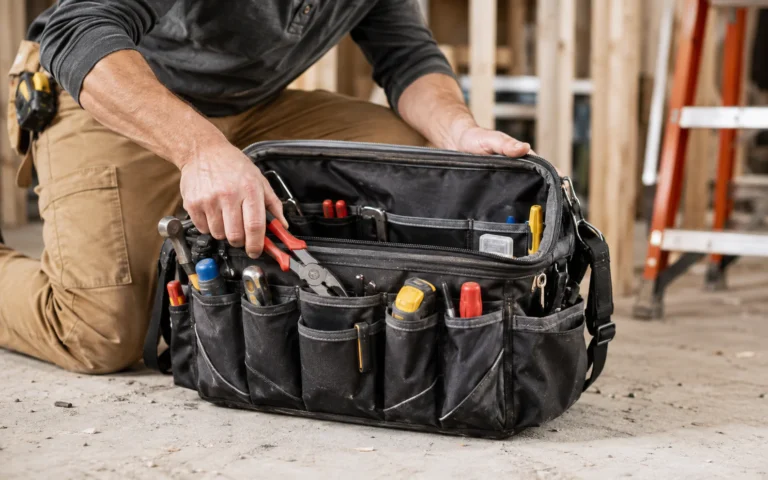 Why Tool Bags Have Multiple Pockets
If you ever wondered why tool bags have multiple pockets, the answer lies in better organization, faster access, and less clutter. This guide breaks down every pocket…