
How to Use Pliers Safely: Essential Tips for Every Task
Using pliers safely is crucial for preventing injuries and ensuring your tools last. Whether you’re gripping, bending, or cutting, understanding the right techniques and precautions makes all the difference.
The key to safe pliers use involves a few fundamental steps: selecting the correct type of pliers for the job, inspecting your tools for damage, wearing appropriate personal protective equipment (PPE), and employing proper gripping and cutting methods. By following these guidelines, you can handle tasks effectively and minimize risks.
This guide will walk you through the essential safety practices for using pliers, from preparation to execution, helping you work with confidence and precision.
Safety checks
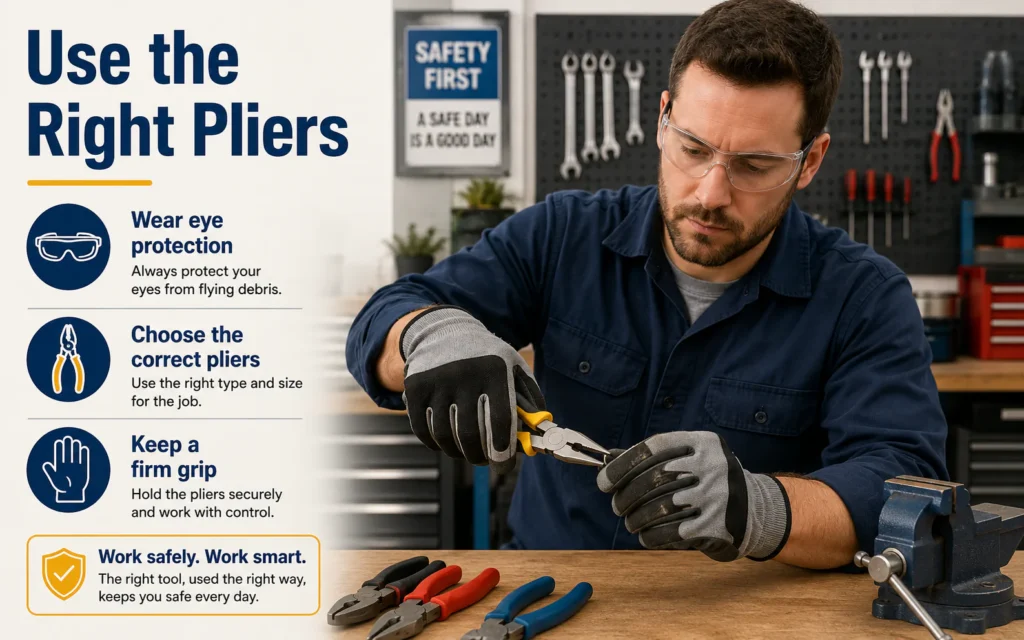
- Always wear eye protection when using pliers, especially for cutting.
- Match the plier type to the task to prevent damage and injury.
- Inspect pliers for damage before use; never use broken tools.
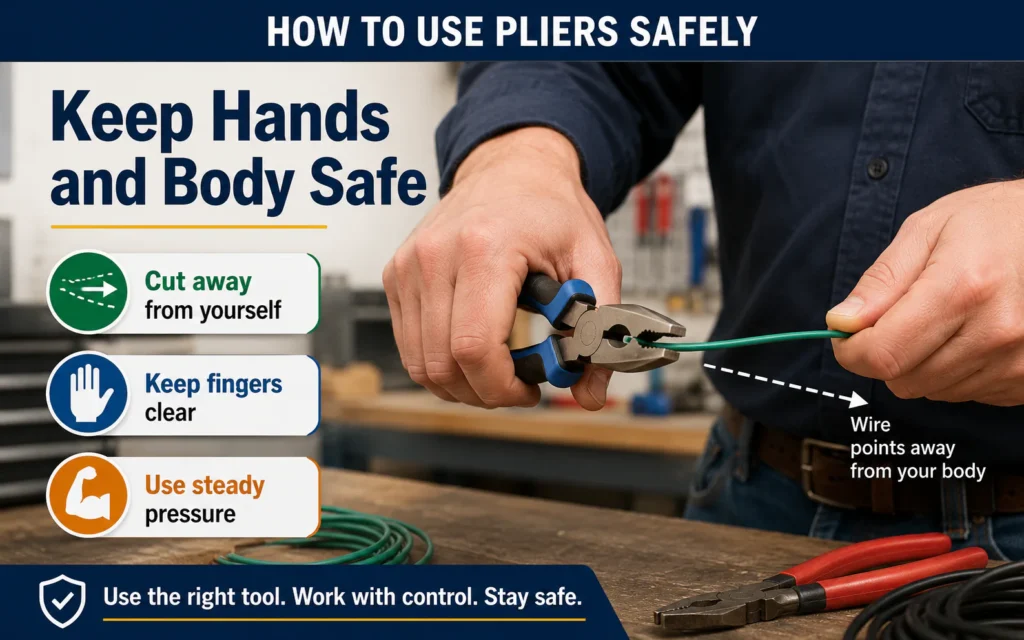
- Maintain a firm, controlled grip and cut away from your body.
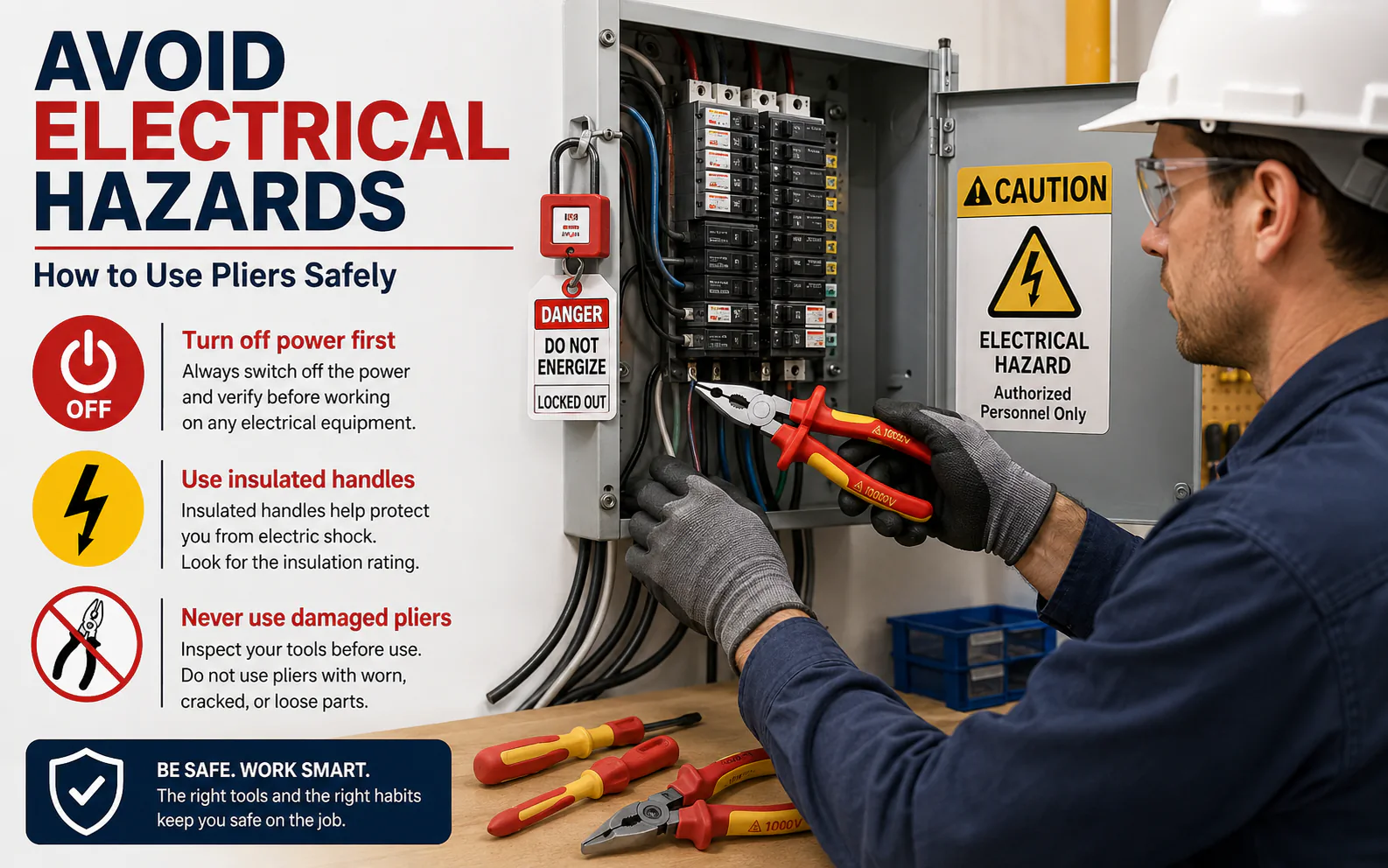
- Avoid using pliers as a hammer, wrench, or on live electrical wires unless specifically designed and insulated.
| Topic | When it helps | What to keep in mind |
|---|---|---|
| Step 1 | All tasks involving pliers, particularly cutting, twisting, or working with brittle materials. | Even seemingly simple tasks can produce unexpected fragments. |
| Step 2 | Ensuring efficiency and safety by matching tool design to material and task. | Never force pliers that aren’t suited for the task; this can cause them to slip or break. |
| Step 3 | Preventing accidents caused by tool malfunction. | Never use pliers that are broken, corroded, or have worn jaws. |
| Step 4 | Maximizing control and minimizing strain or slips during use. | Applying too much force can cause the pliers to slip, potentially injuring your hand or damaging the workpiece. |
| Step 5 | Preventing injury from flying debris or sharp edges. | Small pieces of wire or plastic can travel at high speeds after being cut. |
The article must cover general
Step 1. Wear Eye Protection
How to Use Pliers Safely. Always put on safety glasses or goggles before starting any task involving pliers, especially when cutting wire or small objects. Flying debris can cause serious eye injuries.
- All tasks involving pliers, particularly cutting, twisting, or working with brittle materials.
- Even seemingly simple tasks can produce unexpected fragments.
- Choose safety glasses that meet ANSI Z87.1 standards for impact protection.
- PPE – Safety Glasses.
- Risk Mitigated – Eye Injury.
Step 2. Choose the Right Pliers for the Job
Different pliers are designed for specific tasks. Using the wrong type can damage the pliers, the workpiece, or cause injury due to improper leverage or grip.
- Ensuring efficiency and safety by matching tool design to material and task.
- Never force pliers that aren’t suited for the task; this can cause them to slip or break.
- Familiarize yourself with common plier types and their intended uses before starting a project.
- Pliers Type – Specific Use.
- Risk Mitigated – Tool Damage, Slipping.
Step 3. Inspect Your Pliers Before Each Use
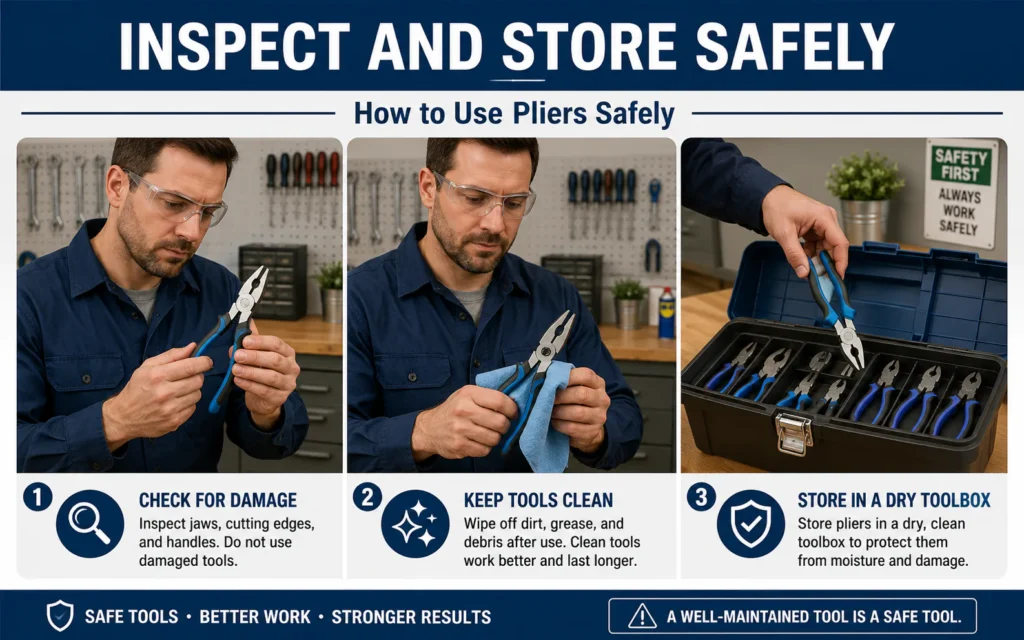
Before you begin, quickly check your pliers for any signs of damage. Look for cracked or chipped jaws, loose pivots, bent handles, or worn insulation (if applicable).
- Preventing accidents caused by tool malfunction.
- Never use pliers that are broken, corroded, or have worn jaws.
- If the handles are loose or the jaws don’t align properly, it’s time to replace the pliers.
- Inspection Point – Jaws, Pivot, Handles.
- Action – Replace if Damaged.
Step 4. Maintain a Secure Grip and Proper Stance
Hold pliers firmly but not excessively tight. Position yourself so you have good balance and leverage.
- Maximizing control and minimizing strain or slips during use.
- Applying too much force can cause the pliers to slip, potentially injuring your hand or damaging the workpiece.
- Use two hands for extra leverage on tough jobs, or consider a tool with longer handles if available.
- Technique – Firm Grip, Balanced Stance.
- Risk Mitigated – Slipping, Strain.
Step 5. Cut Away From Your Body
When using cutting pliers, position the jaws so that any cut-off pieces will fly away from you and others. Always ensure the cutting action is directed away from your face and hands.
- Preventing injury from flying debris or sharp edges.
- Small pieces of wire or plastic can travel at high speeds after being cut.
- Consider using a hand to cup around the cutting area to contain small pieces, in addition to eye protection.
- Cutting Direction – Away from Body.
- Risk Mitigated – Flying Debris Injury.
Essential Safety Gear and Pre-Checks
Before you even pick up a pair of pliers, taking a moment to prepare your workspace and yourself can prevent many common accidents. Safety isn’t just about how you use the tool, but also the environment you’re working in.
The most fundamental piece of safety gear for any task involving pliers, especially cutting, is eye protection. Small pieces of wire, metal, or plastic can become projectiles, causing serious eye damage.
Beyond eye protection, consider gloves for tasks that might involve sharp edges or rough materials. Good quality work gloves can improve grip and protect your hands from nicks and scrapes.
Before cutting a piece of old fence wire, always put on safety glasses to protect against flying metal fragments.
Skipping safety glasses for ‘quick’ tasks or assuming a task is too minor to warrant protection.
Choosing and Inspecting the Right Pliers
One of the most common causes of accidents and damaged tools is using the wrong type of pliers for the task at hand. Pliers come in many forms, each designed for specific functions like gripping, cutting, bending, or holding.
For instance, slip-joint pliers are versatile for gripping various sizes, while diagonal cutters are specifically for cutting wire. Lineman’s pliers offer strong gripping and cutting capabilities for electrical work, and long-nose pliers are ideal for reaching into tight spaces.
Equally important is a quick inspection of your pliers before each use. Look for any signs of wear or damage: chipped or bent jaws, a loose pivot joint, or compromised handle insulation.
If you need to grip a small, delicate wire, reach for needle-nose pliers, not heavy-duty slip-joint pliers.
Using pliers that are too small or too large for the job, or using pliers with worn, chipped, or misaligned jaws.
Safe Gripping and Cutting Techniques
Proper technique is at the heart of safe pliers use. How you hold the tool, apply force, and position your body all contribute to a secure and efficient operation.
When gripping an object, ensure the jaws of the pliers are fully engaged and parallel to the surface for maximum contact. This prevents the object from slipping and reduces the chance of rounding off corners.
For cutting tasks, always position the pliers so that the cutting action is directed away from your body, face, and any bystanders. This minimizes the risk of injury from flying debris.
When cutting a wire, position the pliers so the cut-off piece will fall away from you.
Over-gripping or applying excessive force, which can cause the pliers to slip or damage the workpiece.
- Keep your wrists straight and avoid bending them at awkward angles to prevent strain.
- Use the leverage of the pliers; don’t try to overpower the tool with brute force.
- For very tough cuts, consider using a larger cutting tool designed for higher capacity, rather than straining small.
Common Pliers Misuses to Avoid
Pliers are incredibly versatile, but they are not universal tools. Misusing pliers can lead to serious injury, damage to the tool itself, or harm to the workpiece.
One of the most frequent misuses is treating pliers as a hammer. The hardened jaws are not meant for impact and can chip, sending sharp fragments flying.
Another critical misuse involves electrical work. Unless your pliers are specifically rated and insulated for live electrical circuits, never use them on energized wires.
Never use a pair of pliers as a hammer to tap something into place; the jaws can chip and create dangerous projectiles.
Using pliers for tasks they were not designed for, such as hammering, prying, or as a substitute for a wrench.
| Misuse | Why It’s Dangerous/Harmful | Correct Tool to Use Instead |
|---|---|---|
| Using as a Hammer. | Can chip jaws, create flying debris, damage workpiece. | Hammer or Mallet. |
| Using as a Wrench. | Rounds off fasteners, damages plier jaws, poor grip. | Open-end, Box-end, or Adjustable Wrench. |
| Cutting Hardened Wire. | Dulls or chips cutting edges, can break pliers. | Bolt Cutters or Pliers specifically rated for hardened wire. |
| Working on Live Wires (uninsulated). | Risk of electric shock, arc flash, serious injury. | Insulated Pliers (rated for voltage) AND De-energized Circuit. |
FAQs
How do I know which type of pliers to use for a specific task?
Identify the primary action needed: gripping, cutting, bending, or reaching. For general gripping, slip-joint pliers are versatile.
Can I use pliers on electrical wires?
Only use pliers on electrical wires if they are specifically designed and rated for electrical work, featuring insulated handles. Even then, it’s safest to always de-energize the circuit before working on it to prevent electric shock.
What are common signs of damaged pliers that make them unsafe to use?
Look for chipped, bent, or misaligned jaws, a loose or wobbly pivot joint, bent or cracked handles, or worn/damaged insulation on electrical pliers. Any of these signs indicate the pliers are unsafe and should be replaced or professionally repaired.
Is it okay to use pliers as a wrench to tighten or loosen nuts?
No, it is not recommended. Pliers are designed for gripping, not for applying torque to fasteners.
How should I store my pliers to keep them safe and in good condition?
Store pliers in a dry environment to prevent rust. Keep them organized in a toolbox, tool roll, or on a pegboard to protect them from impacts and prevent damage to their jaws or handles.
Conclusion
Using pliers safely is a fundamental skill that protects both you and your tools. By consistently applying the right safety gear, choosing the correct pliers for the job, and practicing proper techniques, you can tackle a wide range of tasks with confidence.
Remember to always inspect your tools before use, maintain a secure grip, and avoid common misuses that can lead to accidents or damage. A little preparation and attention to detail go a long way in ensuring a safe and productive work experience.
Related posts
 Which Tool Kit Is Worth Buying? How to Choose the Right Set for Your Home
Wondering which tool kit is worth buying? Compare basic household sets, mechanic kits, and power tool combos to find the best tools for your budget and…
 Which Hand Tools Are Made in the USA? Reliable Brands and Buying Rules
Discover which hand tools are still made in the USA. Compare top domestic brands, tool categories, and learn how to verify origin labels before buying. Several…
 Why Do Campers Carry Multi Tools? Practical Uses in the Field
Why do Campers carry multi tools to handle gear repairs, campsite setup, food prep, and field fixes with minimal weight. Here is why one belongs in…