
Why Mechanics Rely on Impact Sockets: Safety and Efficiency
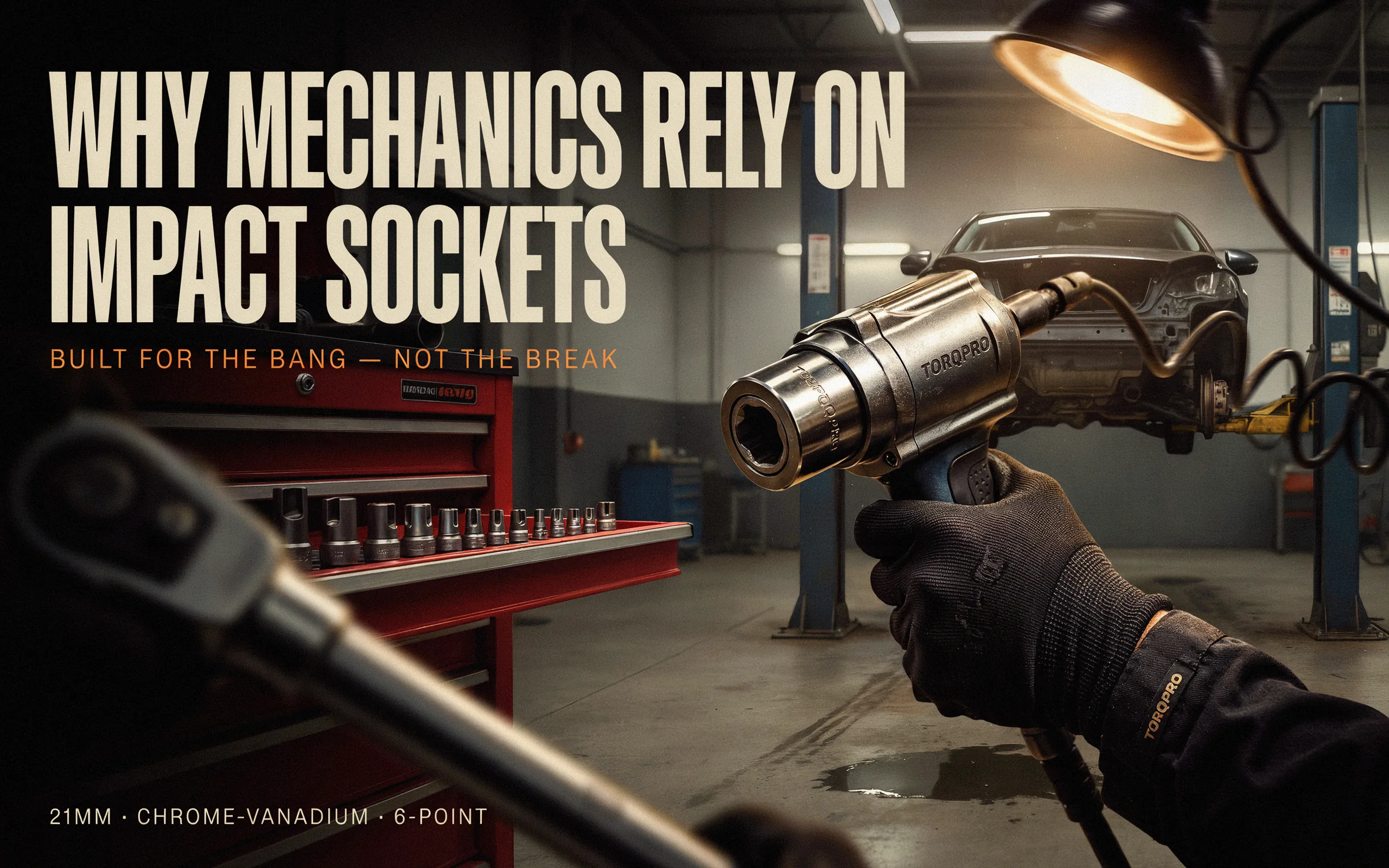
Mechanics primarily use impact sockets because these specialized tools are engineered to safely and efficiently handle the high torque and rapid, concussive force generated by impact wrenches. Unlike standard sockets, impact sockets are designed to absorb powerful blows without cracking, deforming, or shattering, which is crucial for both tool longevity and user safety.
This robust construction allows professionals to quickly loosen stubborn, rusted, or overtightened fasteners common in automotive repair, from lug nuts to suspension components. Without impact sockets, the risk of tool failure, fastener damage, and serious injury would be significantly higher, making them an indispensable part of a mechanic’s toolkit.
Safety checks
- Impact sockets are engineered for safety and durability when used with high-torque impact tools.
- Their specialized material (chrome molybdenum) prevents dangerous shattering under stress.
- Using regular sockets with impact wrenches is a significant safety hazard and can damage tools and fasteners.
- Mechanics rely on impact sockets for efficiency and reliability in demanding automotive tasks.
- Always match the socket type to the tool and the job for optimal performance and safety.
| Topic | When it helps | What to keep in mind |
|---|---|---|
| 1 | Applications requiring high torque and repeated impacts, such as removing stubborn bolts or lug nuts. | Regular sockets made of chrome vanadium can shatter dangerously when subjected to impact forces. |
| 2 | Any task involving power tools like impact wrenches, where tool integrity is paramount for worker safety. | Using a regular socket with an impact wrench is a significant safety hazard due to the risk of shattering. |
| 3 | High-volume work or situations where fasteners are prone to stripping, ensuring a secure grip and efficient operation. | Loose-fitting or worn sockets can still damage fasteners, even if they are impact-rated. |
| 4 | Any task where an impact wrench is used to quickly loosen or tighten fasteners, especially in automotive and heavy-duty applications. | Attempting to use standard sockets with impact tools will lead to premature wear and potential failure of the socket. |
Understanding the Core Difference: Impact vs. Regular Sockets
Why Mechanics Rely on Impact Sockets. The most critical distinction between impact sockets and regular sockets lies in their material composition and manufacturing process. Standard sockets are typically made from chrome vanadium steel, which is heat-treated to be very hard.
Impact sockets, on the other hand, are forged from chrome molybdenum steel, a material chosen for its superior ductility and toughness. While slightly less hard than chrome vanadium, chrome molybdenum can flex and absorb shock without fracturing.
Beyond material, impact sockets often feature thicker walls and a black oxide or phosphate finish, which helps to differentiate them visually and provides some corrosion resistance. This robust construction is a direct response to the extreme demands of impact tool operation, ensuring the socket can withstand repeated abuse without failing.
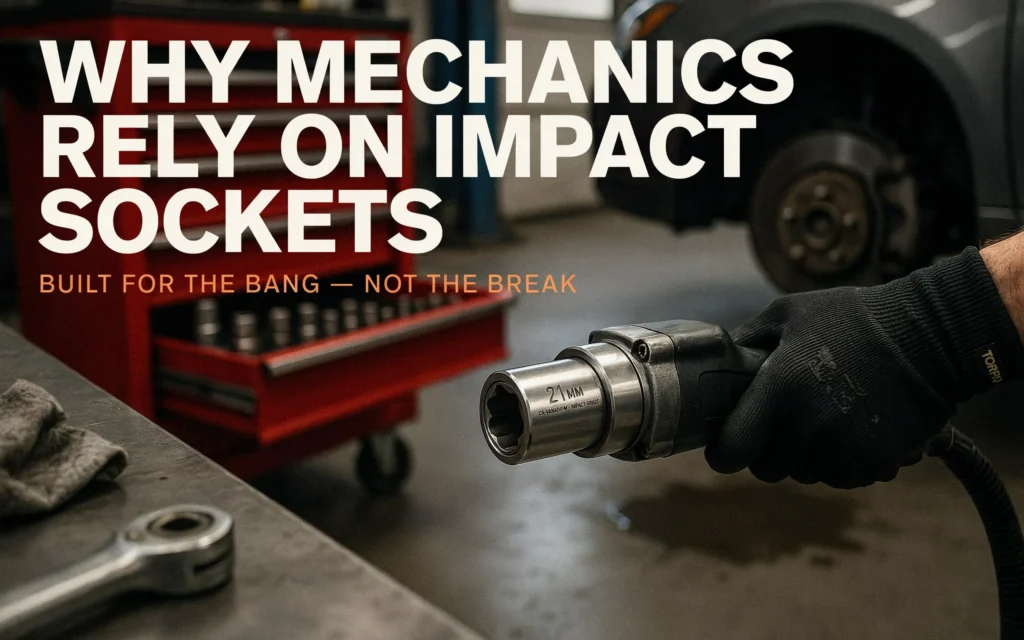
Imagine trying to hammer a nail with a glass rod instead of a steel one.
Never assume a regular chrome socket can handle the force of an impact wrench, even for a ‘quick’ job.
| Feature | Impact Sockets | Regular Sockets |
|---|---|---|
| Material. | Chrome Molybdenum. | Chrome Vanadium. |
| Finish. | Black Oxide/Phosphate. | Chrome Plated. |
| Wall Thickness. | Thicker. | Thinner. |
| Hardness. | Tougher, more ductile. | Harder, more brittle. |
Key Reasons Mechanics Choose Impact Sockets for Daily Work
For mechanics, time is money, and efficiency is paramount. Impact sockets, when combined with powerful impact wrenches, allow for rapid loosening and tightening of fasteners, significantly speeding up repair and maintenance tasks.
The reliability of impact sockets means less downtime due to broken tools. A mechanic can trust that their impact socket will perform consistently under high stress, reducing the frustration and delay caused by a shattered or stripped socket.
Beyond speed and reliability, impact sockets are crucial for preventing damage to both the fastener and the tool itself. Their precise fit and robust construction minimize the risk of rounding off bolt heads, which can turn a simple job into a complex extraction.
When a mechanic needs to remove a severely rusted exhaust manifold bolt, an impact socket paired with an impact wrench can often break it free in seconds, where a hand tool might require significant leverage, heat, or even lead to a broken.
Underestimating the cumulative stress on sockets.
When to Use (and Not Use) Impact Sockets
Impact sockets are the go-to choice whenever you’re using an impact wrench, air ratchet, or any other power tool designed to deliver high torque and percussive force. This includes common automotive tasks such as removing lug nuts, disassembling suspension components, working on engine mounts, or breaking loose rusted bolts on exhaust systems.
However, it’s equally important to understand when not to use impact sockets or impact tools. While impact sockets are durable, impact wrenches are not designed for precise torque application.
Additionally, for delicate components or fasteners that are easily stripped, hand tools with regular sockets offer better control and feel. Using an impact wrench on small, fragile fasteners can lead to overtightening, stripping threads, or damaging the component itself.
A mechanic will use an impact socket to quickly remove lug nuts during a tire rotation, but will switch to a torque wrench with a regular socket for the final, precise tightening to manufacturer specifications.
Using an impact wrench and impact socket to tighten critical components to their final torque specification.
- Use Impact Sockets For:.
- Removing stubborn or rusted fasteners.
- Quickly loosening or tightening lug nuts.
- Disassembling large assemblies like suspension or drivetrain components.
- Any task involving an impact wrench or high-torque power tool.
The article must cover the
1. Superior Durability and Strength
Impact sockets are made from chrome molybdenum steel, a material known for its ductility and toughness. This allows them to withstand the immense rotational and percussive forces from an impact wrench without cracking or deforming, unlike the harder, more brittle chrome vanadium steel used in regular sockets.
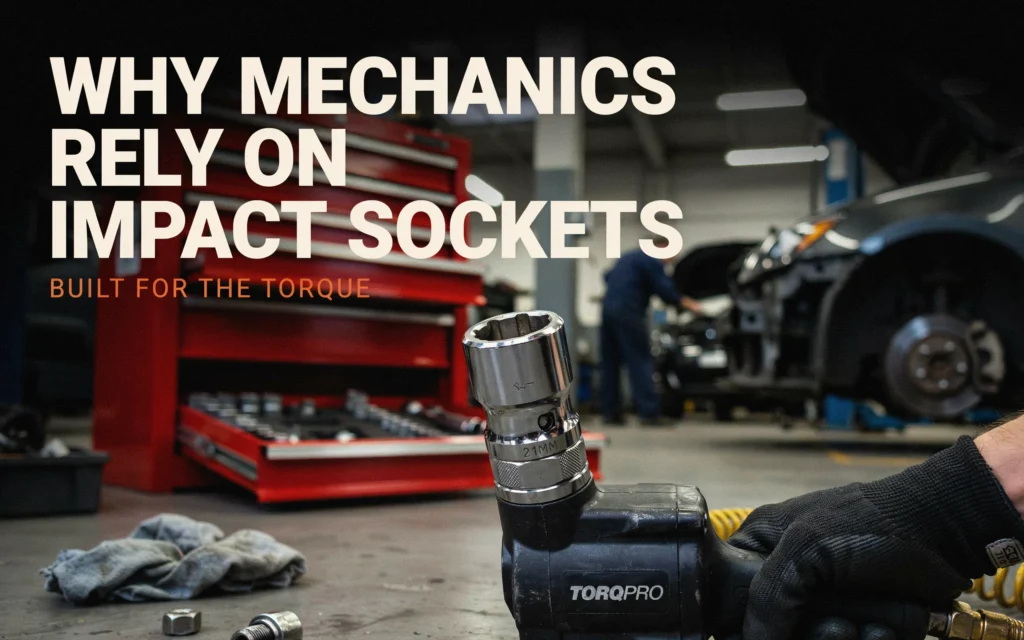
- Applications requiring high torque and repeated impacts, such as removing stubborn bolts or lug nuts.
- Regular sockets made of chrome vanadium can shatter dangerously when subjected to impact forces.
- Always check the socket material and finish; impact sockets are typically black and thicker-walled.
- Material – Chrome Molybdenum.
- Finish – Black Oxide.
2. Enhanced Safety for the User
The primary safety advantage of impact sockets is their resistance to shattering. When a standard socket breaks under impact, it can send sharp metal fragments flying, posing a serious risk of injury to the mechanic.
- Any task involving power tools like impact wrenches, where tool integrity is paramount for worker safety.
- Using a regular socket with an impact wrench is a significant safety hazard due to the risk of shattering.
- Prioritize safety by always using the correct type of socket for the tool you are operating.
- Safety Feature – Shatter Resistance.
- Risk Mitigation – Prevents flying debris.
3. Efficient Power Transfer and Fastener Protection
Impact sockets are designed with thicker walls and precise tolerances to ensure a snug fit on fasteners, which helps transfer the impact wrench’s power more effectively. This reduces the chance of ’rounding off’ or stripping the corners of bolts and nuts, saving time and preventing costly damage to components.
- High-volume work or situations where fasteners are prone to stripping, ensuring a secure grip and efficient operation.
- Loose-fitting or worn sockets can still damage fasteners, even if they are impact-rated.
- Ensure sockets are clean and correctly sized for the fastener to maximize grip and power transfer.
- Efficiency – Optimized Power Transfer.
- Fastener Care – Reduced Stripping Risk.
4. Designed for Specific Impact Tool Applications
Impact sockets are specifically engineered to work seamlessly with impact wrenches, air ratchets, and other high-torque power tools. Their design accounts for the rotational shock and vibration inherent in these tools, providing a reliable connection that standard sockets cannot match.
- Any task where an impact wrench is used to quickly loosen or tighten fasteners, especially in automotive and heavy-duty applications.
- Attempting to use standard sockets with impact tools will lead to premature wear and potential failure of the socket.
- Always pair impact sockets with impact tools to ensure compatibility and optimal performance.
- Compatibility – Impact Wrenches, Air Ratchets.
- Primary Use – Automotive, Heavy Duty.
FAQs
Are impact sockets really necessary?
Yes, impact sockets are essential when using an impact wrench or other high-torque power tools. They are specifically designed to withstand the intense forces without shattering, which is a significant safety risk with regular sockets.
Can I use an impact socket as a regular socket?
Yes, you can use an impact socket with a hand ratchet or breaker bar. They are generally thicker and heavier than regular sockets, but they will function perfectly fine.
When should you not use an impact wrench with an impact socket?
You should not use an impact wrench with an impact socket for the final tightening of fasteners that require precise torque specifications, such as engine components or wheel bearings. Always use a calibrated torque wrench for these critical steps.
What material are impact sockets typically made from?
Impact sockets are typically made from chrome molybdenum steel (Cr-Mo). This material is chosen for its excellent ductility and toughness, allowing it to absorb the high shock and torque from impact tools without fracturing.
How can I tell if a socket is an impact socket?
Impact sockets are usually easily identifiable by their appearance. They typically have a dull, black oxide or phosphate finish, thicker walls, and a heavier feel compared to shiny, chrome-plated regular sockets.
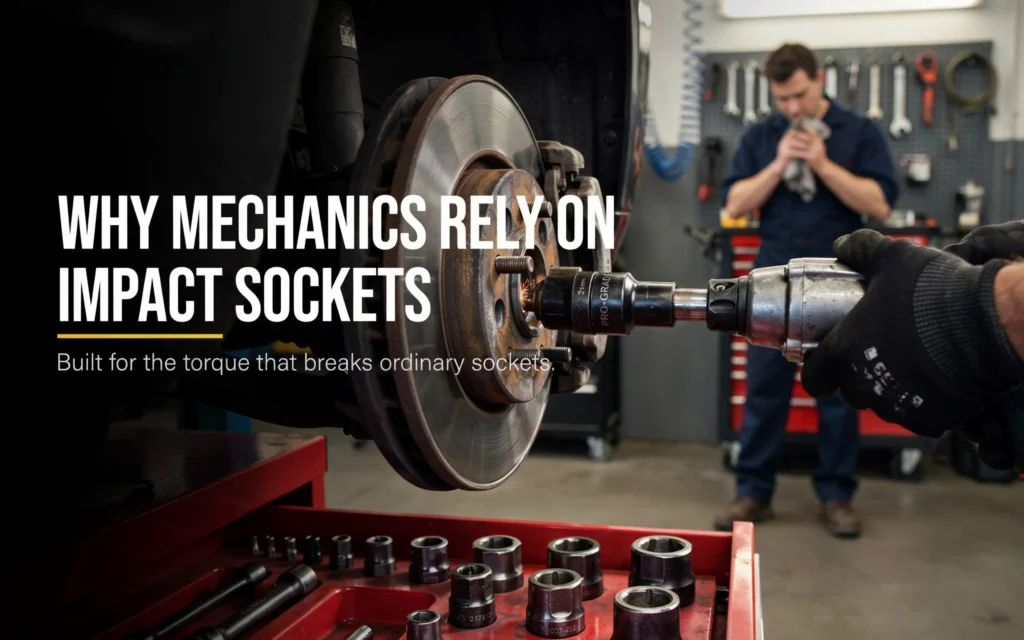
Conclusion
In the demanding world of automotive repair, impact sockets are far more than just another tool; they are a fundamental requirement for safety, efficiency, and durability. Their specialized chrome molybdenum construction allows them to withstand the brutal forces of impact wrenches, protecting both the mechanic and the fasteners.
By understanding the critical differences between impact and regular sockets, professionals and DIYers alike can make informed choices that prevent accidents, save time, and ensure the longevity of their tools and vehicles. Always remember to match the right socket to the right tool and the right job.
Related posts
 Which Tool Kit Is Worth Buying? How to Choose the Right Set for Your Home
Wondering which tool kit is worth buying? Compare basic household sets, mechanic kits, and power tool combos to find the best tools for your budget and…
 Which Hand Tools Are Made in the USA? Reliable Brands and Buying Rules
Discover which hand tools are still made in the USA. Compare top domestic brands, tool categories, and learn how to verify origin labels before buying. Several…
 Why Do Campers Carry Multi Tools? Practical Uses in the Field
Why do Campers carry multi tools to handle gear repairs, campsite setup, food prep, and field fixes with minimal weight. Here is why one belongs in…