
What Is The Difference Between SAE and Metric Tools
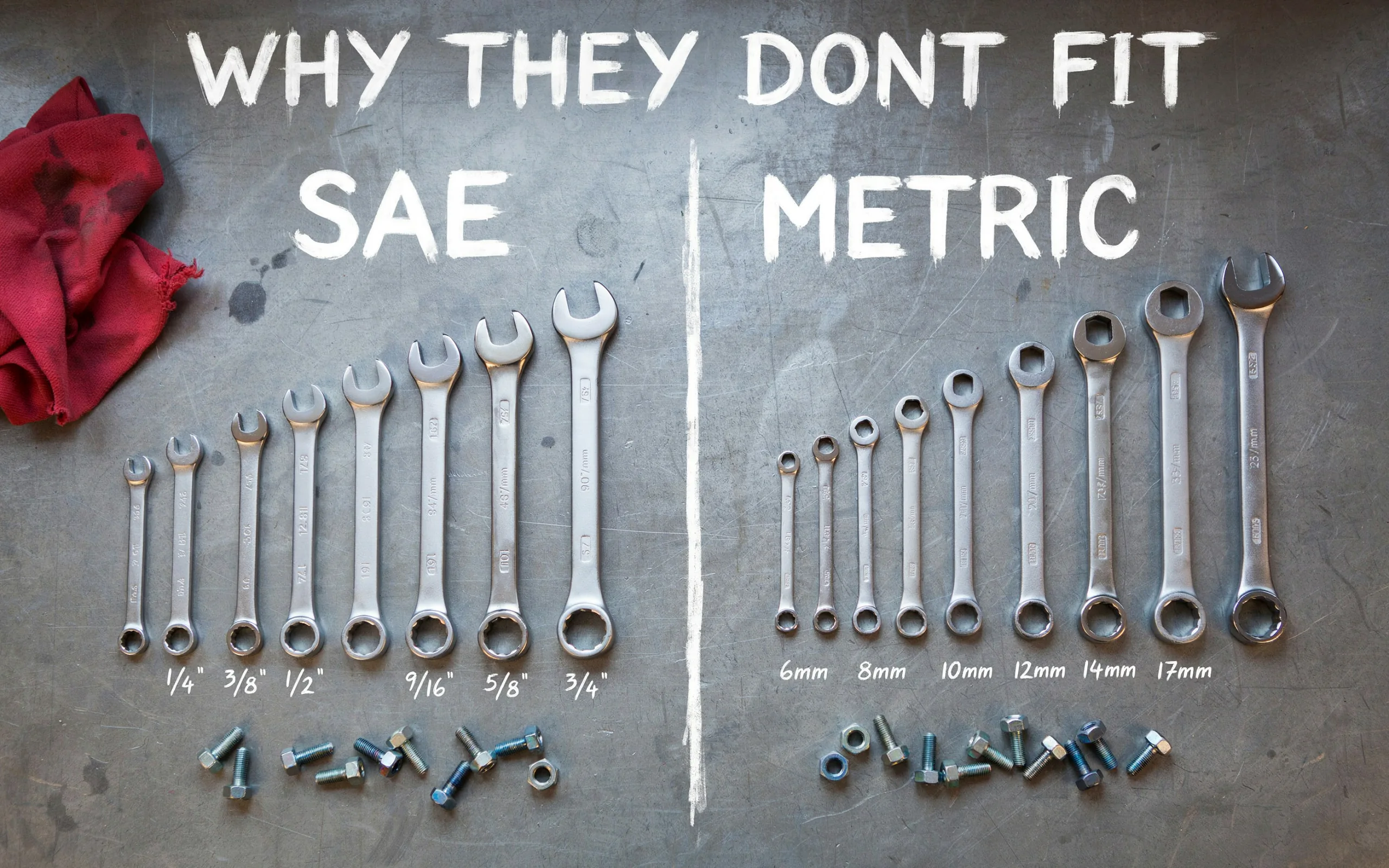
The difference between SAE and metric tools is simple: SAE uses inches and fractions, while metric uses millimeters. This guide explains their uses, sizes, and which set you need.
If you have ever opened a toolbox and felt confused about which wrench to grab, you are not alone. The difference between SAE and metric tools is a common puzzle for many DIYers and even some professionals. SAE tools are measured in inches and fractions, like 1/2 inch or 3/8 inch. Metric tools use millimeters, such as 10mm or 15mm. This simple distinction is the core of the matter, but choosing the right one for your project involves a bit more know-how.
This article will break down everything you need to know about SAE and metric tools. We will look at what they are, where they are used, and how to decide which set is right for you. By the end, you will feel confident grabbing the correct tool for any job.
What Does SAE Stand For?
SAE stands for the Society of Automotive Engineers. This organization was founded in 1905 to create uniform standards for the automotive industry. When you see “SAE” on a tool, it means the tool is sized according to their standard. These standards were originally developed for vehicles and machinery made in the United States. SAE tools are also called “standard” tools because they are based on the imperial measurement system.
Think of SAE as the system for older American cars, classic trucks, and many household items that have been around for decades.
The Metric System in Tools
The metric system is the standard for most of the world. It is a decimal-based system, which makes it very logical and easy to use. Instead of fractions of an inch, metric tools are measured in millimeters (mm). You will see numbers like 8mm, 10mm, or 13mm stamped on the tools.
Most modern vehicles, regardless of where they are made, use metric fasteners. This includes cars from Japan, Europe, and even newer American models. Because of this, metric tools have become the standard for most automotive work today.
The Main Difference Between SAE and Metric Tools
The primary difference between SAE and metric tools is the system of measurement they use.
- SAE (Standard) Tools: Use inches and fractions of an inch. Examples include 1/4″, 3/8″, 1/2″, and 9/16″.
- Metric Tools: Use millimeters. Examples include 8mm, 10mm, 12mm, and 15mm.
This difference is not just about numbers. It affects how the tool fits a fastener. A 1/2-inch SAE wrench and a 13mm metric wrench are very close in size, but they are not exactly the same. Using the wrong one can damage the bolt or the tool.
“A bolt marked with inches is likely to require a SAE set.” – VEVOR DIY Guide
A Detailed Comparison of SAE and Metric Tools
To make the difference clearer, let us look at some key points of comparison.
1. Size Markings and Fractions
SAE tools are marked with fractions. You might see 5/16″, 7/16″, or 11/16″ on a socket or wrench. These fractions can be tricky to work with if you are not used to them.
Metric tools are much simpler. They are marked with whole numbers like 8, 10, 14, and 19. There are no fractions to figure out, which makes them easier to read at a glance.
2. Common Use Cases
SAE tools are common in the United States for older equipment. If you work on classic cars, old lawnmowers, or furniture from a few decades ago, you will likely need SAE tools.
Metric tools are used on almost all modern cars, motorcycles, and appliances. If you buy a new car today, the bolts on it are almost certainly metric.
3. Interchangeability (Can You Swap Them?)
Here is a crucial point. You should avoid swapping SAE and metric tools. While some sizes are close, they are not exact. For example, a 5/16″ SAE socket is close to an 8mm metric socket. However, using the wrong one can strip the bolt head. As Halfords notes, “there’s no exact equivalent for a 9/16” spanner in metric units”.
Comparison Table: Common SAE and Metric Sizes
As you can see, some sizes are very close. However, it is always best to use the correct tool for the fastener to avoid damage.
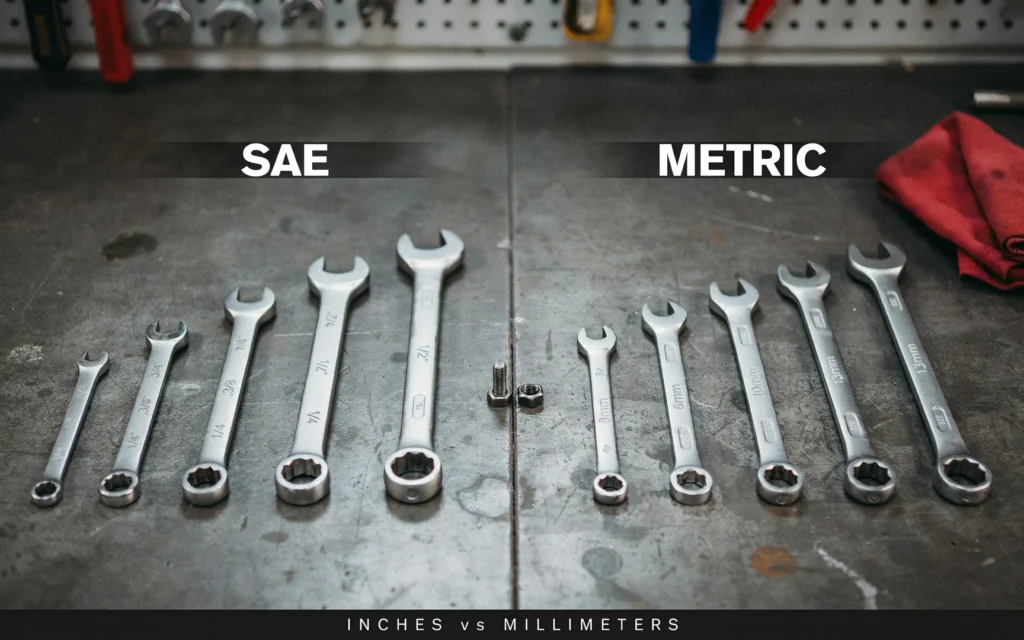
SAE Wrench Set Overview
An SAE wrench set contains wrenches sized in fractions of an inch. These sets are a staple in many American garages. They are essential for working on older domestic vehicles and equipment.
Common Uses for SAE Tools
SAE tools are not obsolete. They are still used for many tasks.
- Classic Cars and Trucks: If you are restoring a 1960s or 1970s American car, you will need SAE tools.
- Lawn Equipment: Older lawnmowers and tractors often use SAE fasteners.
- Plumbing: Many plumbing fixtures in older homes use SAE sizes.
- Furniture Assembly: Some older furniture and bicycles use SAE bolts.
If you have a mix of old and new items, you might need both types of tools.
Metric Wrench Set Overview
A metric wrench set is measured in millimeters. These are the tools you will use most often for modern projects. The numbers are straightforward, and the system is consistent.
Common Uses for Metric Tools
Metric tools are everywhere today.
- Modern Vehicles: Almost all cars made after the 1990s use metric fasteners.
- Motorcycles and Bicycles: Modern bikes use metric sizes.
- Appliances: New refrigerators, washers, and other appliances use metric bolts.
- Electronics: Small metric tools are used for repairing phones and computers.
“Metric wrench sets are more universally used than their SAE counterparts.” – Small Biz Trends
How to Identify If You Need SAE or Metric Tools
Sometimes, it is not obvious which tool you need. Here are a few tips to help you identify the fastener.
1. Check the Bolt Head
Look at the bolt head. If it has lines (like a dash) on it, it is likely an imperial or SAE bolt. If it has numbers on the head, it is metric. The numbers on a metric bolt indicate its strength grade.
2. Consider the Age and Origin
If you are working on an American-made vehicle from the 1970s, it is probably SAE. If you are working on a Japanese or European car from the last 20 years, it is almost certainly metric.
3. Try a Test Fit
If you are still unsure, do a test fit. Try a metric wrench that looks close to the bolt size. If it is loose, try the next size down. If it is too tight, try the next size up. If none of the metric sizes fit well, switch to your SAE tools and try the same process. Remember to be gentle to avoid damaging the bolt.
Which Tool Set Should You Buy?
This is the big question. The answer depends on what you work on.
For the Homeowner and DIYer
If you are a homeowner doing basic repairs, you might not need a full set of both. Consider what you have in your home.
- Newer Home: Most modern appliances and furniture use metric bolts. A good metric set might be all you need.
- Older Home: If you have older fixtures, plumbing, or equipment, an SAE set will be useful.
Many people find that a combination set is the best choice. This gives you the most flexibility for any job.
For the Car Enthusiast
If you work on cars, you will likely need both sets. Older American cars need SAE. Newer cars, including modern American models, need metric.
- Classic Car Owner: Invest in a good SAE set.
- Modern Car Owner: Invest in a metric set.
- Owner of Both: Get a combination set or separate sets for each.
Combination Sets: The Best of Both Worlds
Combination wrench and socket sets include both SAE and metric tools. This is a great option for most people. You will have the right tool for almost any job you encounter. As the saying goes, it is better to have it and not need it than to need it and not have it.
“I personally just gotta have both.” – GMT400 Forum User
Common Mistakes to Avoid
Many people make mistakes when using SAE and metric tools. Here are some to watch out for.
1. Using the Wrong Tool
This is the most common mistake. Using a metric wrench on an SAE bolt is a recipe for disaster. It can strip the bolt head and ruin your tool. Always use the correct tool for the job.
2. Forcing a Tool
If a wrench does not fit easily, do not force it. Find the correct size. Forcing a tool can cause it to slip and injure you or damage the fastener.
3. Not Having Both Sets
If you only have one set of tools, you will eventually run into a job where you need the other. It is wise to invest in both SAE and metric tools over time.
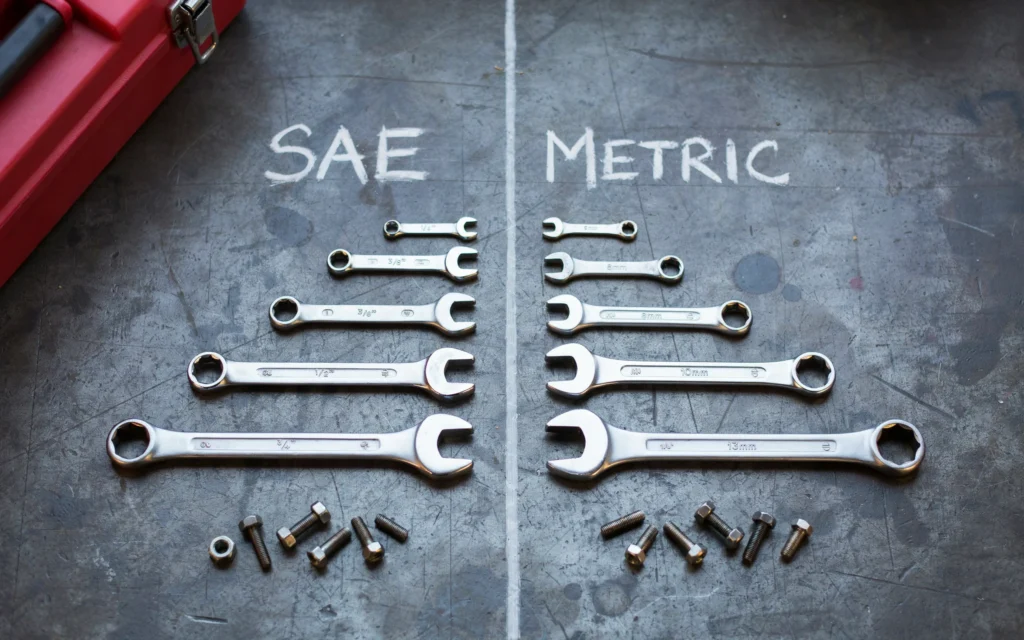
A Quick Guide to Tool Sizes
Here is a simple table showing common SAE and metric sizes from smallest to largest. This can help you see the difference between SAE and metric tools at a glance.
Comparison Table: Small to Medium Sizes
| SAE (Inches) | Metric (mm) |
|---|---|
| 5/32″ | 4 mm |
| 7/32″ | 6 mm |
| 1/4″ | 7 mm |
| 5/16″ | 8 mm |
| 3/8″ | 10 mm |
| 7/16″ | 11 mm |
| 1/2″ | 13 mm |
| 9/16″ | 14 mm |
| 5/8″ | 16 mm |
| 11/16″ | 17 mm |
| 3/4″ | 19 mm |
As you can see, the numbers are different, but the sizes often serve similar purposes. However, never assume they are interchangeable.
Tips for Building Your Tool Collection
Building a tool collection takes time. Here is a simple approach.
Start with a Basic Set
Begin with a combination set that includes both SAE and metric sockets and wrenches. This gives you a foundation to work with. You can then add specialized tools as you need them.
Buy Quality Tools
Quality tools are important. They fit better and last longer. Look for tools made from chrome vanadium or other strong alloys. They resist rust and wear.
Organize Your Tools
Keep your SAE and metric tools separate. This makes it easy to grab the right one. Many toolboxes have different color rails or trays for each type. Good organization saves time and frustration.
Frequently Asked Questions
What is the difference between SAE and metric tools?
The difference between SAE and metric tools is the measurement system. SAE tools use inches and fractions of an inch. Metric tools use millimeters.
Can I use SAE tools on metric bolts?
You should avoid using SAE tools on metric bolts. While some sizes are close, they are not exact. Using the wrong tool can strip the bolt.
Which is better, SAE or metric?
Neither is “better.” They are just different. SAE is used for older American equipment. Metric is used for modern vehicles and most equipment worldwide.
How do I know if a bolt is SAE or metric?
Check the bolt head. Lines on the head usually mean SAE. Numbers on the head mean metric. You can also consider the age and origin of the item.
Do I need both SAE and metric tools?
If you work on a variety of things, yes. A combination set that includes both is a great investment for any DIYer or mechanic.
Conclusion
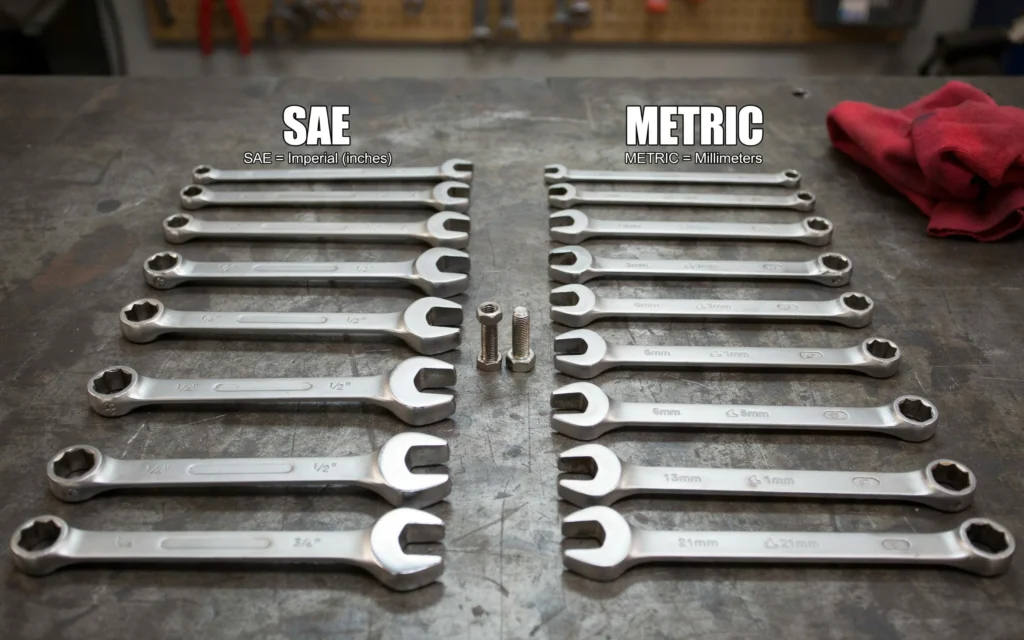
The difference between SAE and metric tools is simple but important. SAE tools are based on inches, and metric tools are based on millimeters. Choosing the right one for your job will save you time and prevent damage.
If you work on older American equipment, you need SAE tools. If you work on modern cars or most imported goods, you need metric tools. For most people, having a combination set of both is the smartest choice.
Remember, using the correct tool is always the best practice. Do not force a wrench that does not fit. With this knowledge, you can confidently open your toolbox and choose the right tool for any project.
Related posts
 Which Tool Kit Is Worth Buying? How to Choose the Right Set for Your Home
Wondering which tool kit is worth buying? Compare basic household sets, mechanic kits, and power tool combos to find the best tools for your budget and…
 Which Hand Tools Are Made in the USA? Reliable Brands and Buying Rules
Discover which hand tools are still made in the USA. Compare top domestic brands, tool categories, and learn how to verify origin labels before buying. Several…
 Why Do Campers Carry Multi Tools? Practical Uses in the Field
Why do Campers carry multi tools to handle gear repairs, campsite setup, food prep, and field fixes with minimal weight. Here is why one belongs in…