
What Is The Difference Between Cheap And Expensive Tool Bags
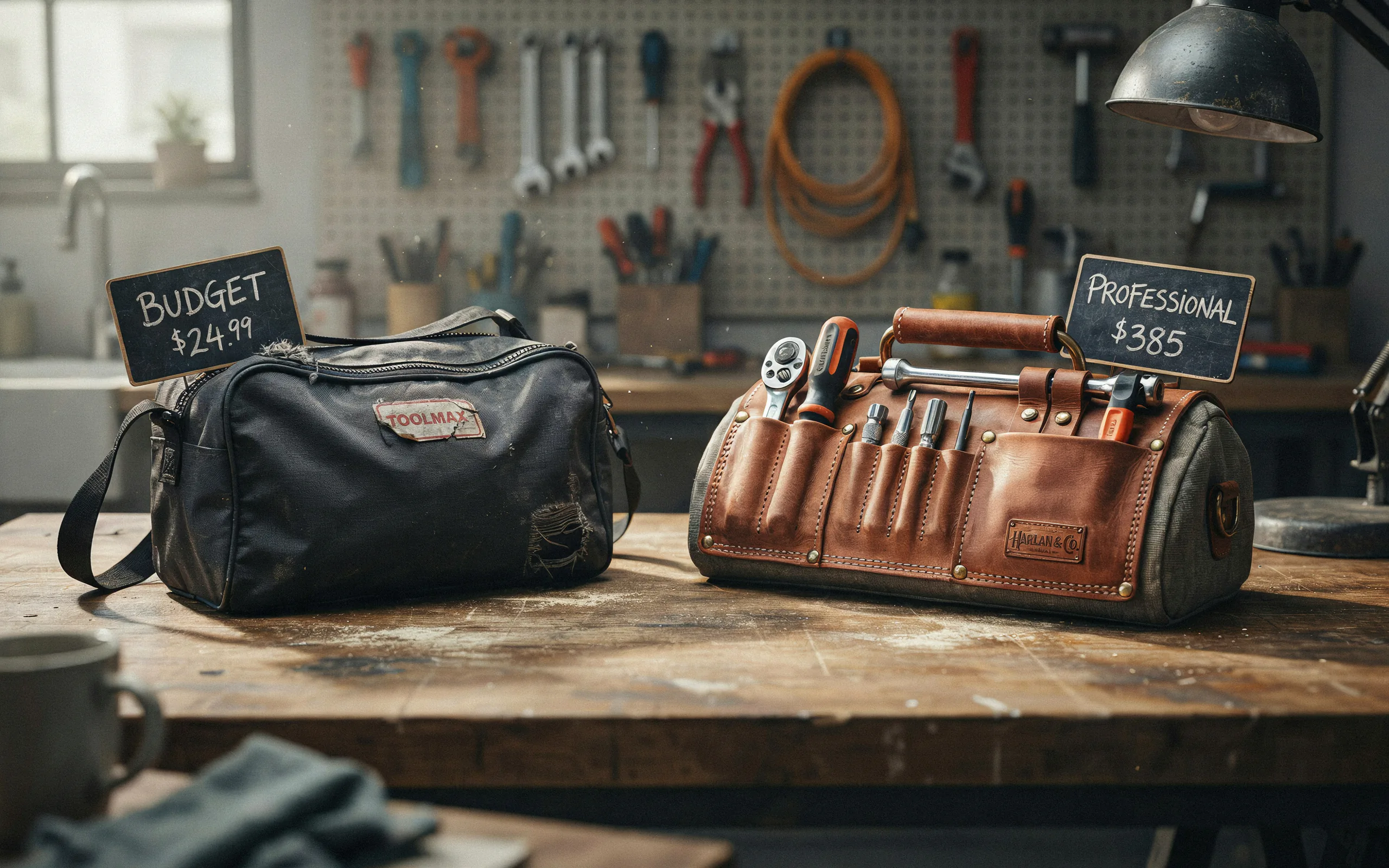
Understanding the difference between cheap and expensive tool bags helps you make a smart purchase. This guide compares materials, durability, and value to show you exactly what your money buys.
Walking down the tool aisle at any hardware store, you will see tool bags at all kinds of prices. Some cost less than a lunch out, while others cost more than a decent power tool. This leaves many people wondering: what is the difference between cheap and expensive tool bags? Is the expensive one really worth all that extra cash? Or is the cheap one just as good?
I have used both kinds over the years. I have bought the ten-dollar bag that fell apart in three months. I have also spent good money on a premium bag that still looks new after years of daily use. The difference between cheap and expensive tool bags is not just about the price tag. It comes down to materials, construction, design, and how long the bag will actually last.
In this guide, I will break down everything you need to know. We will look at the materials used, the quality of stitching, the zippers, the handles, and the overall design. By the end, you will know exactly what you are paying for and which type of bag fits your needs.
Why Does the Price of a Tool Bag Vary So Much?
Tool bags can range from under ten dollars to over three hundred dollars. That is a huge spread. So why such a big difference?
The price of a tool bag depends on several factors. The materials used make a big difference. Cheap bags use thin, low-quality fabrics. Expensive bags use heavy-duty materials that can take a beating. The construction quality also plays a major role. A cheap bag might have single stitching that comes apart quickly. An expensive bag often has double or triple stitching in all the right places.
Brand reputation also affects price. Well-known brands that have been around for years usually charge more. They have a reputation to protect, so they use better materials and better manufacturing processes. Lesser-known brands might cut corners to offer a lower price.
The design and features also add to the cost. More pockets, better organization, padded handles, and reinforced bottoms all cost money to produce. A basic bag with one big compartment will always be cheaper than a bag with twenty pockets, dividers, and a hard plastic base.
The Difference Between Cheap and Expensive Tool Bags: A Quick Overview
Before we get into the details, let us look at the big picture. The difference between cheap and expensive tool bags shows up in five main areas:
| Feature | Cheap Tool Bags | Expensive Tool Bags |
|---|---|---|
| Materials | Thin nylon, low-grade polyester, lightweight canvas | Heavy-duty nylon (1000D+), thick canvas, leather, Cordura |
| Stitching | Single stitching, loose threads, weak seams | Double or triple stitching, reinforced at stress points |
| Zippers | Small plastic zippers that break easily | Large metal zippers, smooth operation, rust-resistant |
| Handles | Thin straps, no padding, weak attachment points | Padded handles, strong attachment, comfortable grips |
| Bottom | Soft fabric that wears through quickly | Hard plastic base, reinforced, padded for protection |
This table gives you a clear picture of what your money buys. But let us go deeper into each of these areas.
What Materials Are Used in Cheap vs Expensive Tool Bags?
The material is the first thing you notice when you pick up a tool bag. You can feel the difference right away.
Cheap Tool Bag Materials
Cheap tool bags often use thin materials like lightweight nylon or low-grade polyester. These fabrics might look okay at first, but they do not hold up to regular use. They tear easily, wear thin at the edges, and offer little protection for your tools.
Some cheap bags use a material called polyester Oxford. This is a woven fabric that is common in budget tool bags. While it is affordable and has some water resistance, it does not have the strength needed for heavy tools. The fabric can stretch and lose its shape over time.
Expensive Tool Bag Materials
Expensive tool bags use much better materials. High-denier nylon is a common choice. The number refers to the thickness of the fabric. A 1000D nylon is very strong and resists abrasion well. Some premium bags use 1680D nylon, which is even tougher.
Canvas is another material found in quality tool bags. Good canvas is thick, durable, and can handle heavy loads. It also absorbs oil over time, which some people like because it becomes more flexible and comfortable to use.
Leather is the most expensive option. Leather tool bags look great and offer excellent protection for your tools. They resist cuts and punctures better than most fabrics. But they are heavy and cost a lot.
Some premium bags use Cordura, which is a brand of high-performance nylon. Cordura 1000D is known for its exceptional durability and abrasion resistance. It lasts longer than leather in many cases and offers better weather protection.
The Material Difference Matters
When you understand the difference between cheap and expensive tool bags, you start with the materials. A bag made from thin fabric will not protect your tools. A bag made from thick, quality fabric will keep your tools safe for years.
How Does Stitching Quality Compare?
Stitching is where many cheap tool bags fail. You might not notice it when the bag is new, but after a few weeks of use, the seams start to come apart.
Cheap Tool Bag Stitching
Cheap bags often have single stitching throughout. The thread is thin and breaks easily. The seams are not reinforced at stress points like the handles and corners. You might see loose threads or uneven stitching right from the store.
Some very cheap bags have stitching that is barely holding the fabric together. These bags can fall apart the first time you load them with heavy tools.
Expensive Tool Bag Stitching
Quality tool bags use double or triple stitching. This is especially important at areas that receive the most stress. The handles, the corners, and the bottom all get extra reinforcement.
The thread used in expensive bags is also heavier and more durable. It resists fraying and wear. The stitching is consistent and neat, with no loose threads or uneven seams.
When you look at the difference between cheap and expensive tool bags, the stitching tells you a lot. Good stitching means the bag will hold together. Bad stitching means the bag will fail.
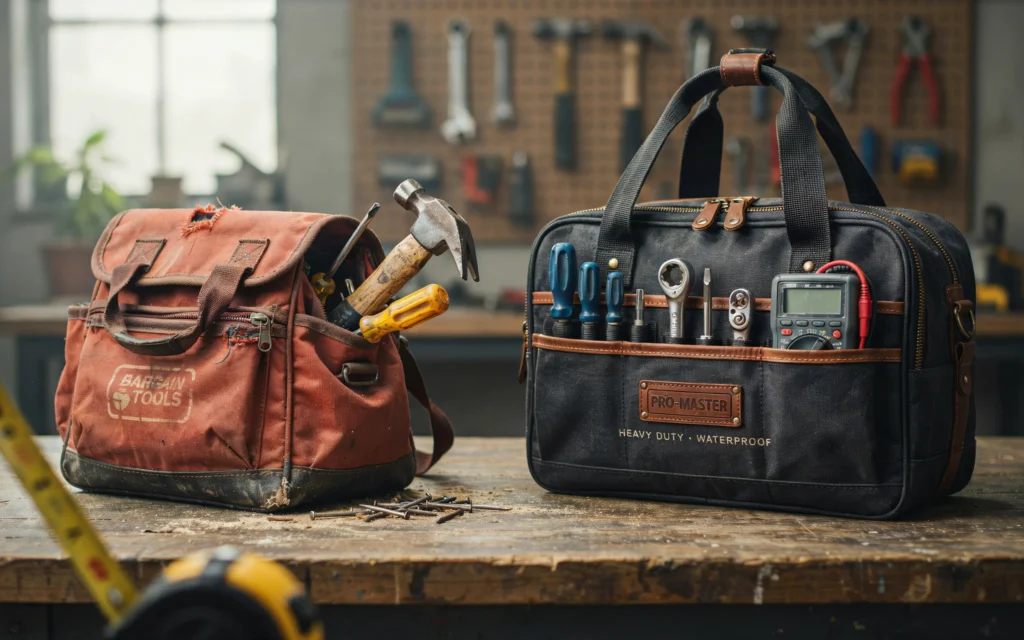
What About Zippers and Hardware?
Zippers are the most common point of failure in any bag. When a zipper breaks, the bag becomes almost useless.
Cheap Tool Bag Zippers
Cheap tool bags use small, lightweight zippers. They are often made of plastic or low-quality metal. These zippers get stuck easily. They break teeth. The pulls snap off. Once the zipper fails, you cannot close your bag properly. Your tools can fall out, and you lose the organization that the bag was supposed to provide.
Expensive Tool Bag Zippers
Quality tool bags use heavy-duty zippers. These are larger, with metal teeth that do not break. The pulls are big and easy to grip, even when you are wearing gloves. The zippers slide smoothly without snagging.
Some premium bags use zippers that are rust-resistant. This is important if you work outdoors or in damp conditions. The zippers are also double-stitched into the fabric, so they do not pull away from the bag.
The zipper difference is a key part of the difference between cheap and expensive tool bags. A good zipper keeps your tools safe. A bad zipper leaves your tools exposed.
How Do Handles and Straps Compare?
Carrying a heavy bag of tools puts a lot of stress on the handles and straps. This is where many cheap bags fail completely.
Cheap Tool Bag Handles
Cheap bags have thin, unpadded handles. The material is often just a strip of the same fabric used for the rest of the bag. These handles dig into your hands when you carry heavy tools. They are attached with weak stitching that can tear loose.
The shoulder straps on cheap bags are also thin and uncomfortable. They offer no padding, so the weight of the tools presses into your shoulder. The clips and buckles are often plastic and break easily.
Expensive Tool Bag Handles
Quality tool bags have padded handles that are comfortable to grip. The padding reduces pressure on your hands, making it easier to carry heavy loads. The handles are attached securely with reinforced stitching and sometimes rivets.
The shoulder straps on expensive bags are wide and padded. They distribute the weight better and reduce fatigue. The hardware, like clips and buckles, is made of metal and built to last.
The handles and straps are a clear indicator of the difference between cheap and expensive tool bags. Good handles make your work easier. Bad handles make your work harder and can lead to dropped tools or injuries.
What About the Bottom of the Bag?
The bottom of a tool bag takes a lot of abuse. You set the bag down on concrete, gravel, dirt, and wet surfaces. The bottom needs to be tough.
Cheap Tool Bag Bottoms
Cheap bags often have soft fabric bottoms. There is no reinforcement or protection. The fabric wears through quickly when you set the bag down on rough surfaces. The corners get holes. The bottom becomes thin and weak.
When the bottom fails, your tools can fall out. The bag becomes useless.
Expensive Tool Bag Bottoms
Quality tool bags have reinforced bottoms. Many have a hard plastic base that protects the bag from wear and tear. This plastic base also helps the bag stand up straight, so it does not tip over.
Some bags have padded bottoms that absorb shock. This protects your tools when you set the bag down heavily. The padding also adds stability.
The bottom of the bag is a major part of the difference between cheap and expensive tool bags. A good bottom protects your tools and extends the life of the bag.
How Does Organization Differ?
Organization is one of the main reasons people buy tool bags. You want to find your tools quickly and keep them safe.
Cheap Tool Bag Organization
Cheap tool bags usually have basic organization. You might get one main compartment and a few external pockets. The pockets are often shallow and cannot hold tools securely. There are no dividers, so everything ends up in a pile at the bottom.
The pockets in cheap bags are often made of the same thin fabric as the rest of the bag. They tear easily and lose their shape.
Expensive Tool Bag Organization
Quality tool bags offer excellent organization. They have many pockets of different sizes. Some have dedicated pockets for specific tools like screwdrivers, pliers, and multimeters.
Expensive bags often have dividers and adjustable compartments. You can customize the layout to fit your specific tools. The pockets are reinforced so they do not tear or stretch out of shape.
Some premium bags have a structured design that keeps the bag open and accessible. You can see all your tools at once and grab what you need quickly.
The organization features are a big part of the difference between cheap and expensive tool bags. Good organization saves you time and frustration.
How Long Will Each Type of Bag Last?
The lifespan of a tool bag depends on how you use it and how well it is made.
Cheap Tool Bag Lifespan
A cheap tool bag might last a few months with regular use. The fabric wears thin. The seams come apart. The zippers break. The handles tear loose.
If you use the bag occasionally for light tools, it might last longer. But for daily professional use, a cheap bag will not hold up. You will end up buying a new bag every few months, which adds up over time.
Expensive Tool Bag Lifespan
A quality tool bag can last for years, even with daily use. The materials hold up to wear and tear. The stitching stays strong. The zippers keep working. The handles stay attached.
Many professionals use the same tool bag for five, ten, or even fifteen years. The initial cost is higher, but the bag pays for itself over time.
The lifespan is a critical part of the difference between cheap and expensive tool bags. A cheap bag costs less now but costs more in the long run.
Who Should Buy a Cheap Tool Bag?
Cheap tool bags have their place. Not everyone needs a premium bag.
Occasional Users
If you only use tools a few times a year, a cheap bag might be fine. You do not need a heavy-duty bag to store a few basic tools in your closet.
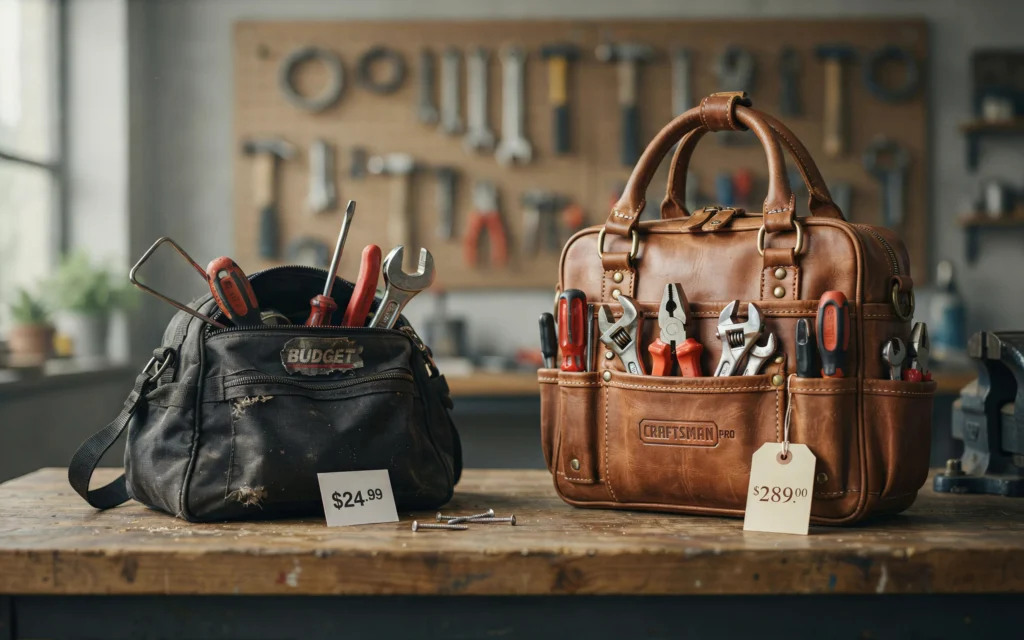
Beginners
If you are just starting out and not sure what you need, a cheap bag lets you test the waters. You can see what features you like before spending more money.
Light Tools Only
If you only carry light tools like screwdrivers, pliers, and a tape measure, a cheap bag can work. The bag does not have to support heavy loads.
Budget Constraints
Sometimes you just cannot afford an expensive bag. A cheap bag is better than no bag at all. It gives you some organization and protection for your tools.
Who Should Buy an Expensive Tool Bag?
Expensive tool bags are worth the investment for many people.
Daily Professional Users
If you use your tools every day for work, you need a bag that can handle the abuse. A quality bag saves you time and money in the long run.
Heavy Tools
If you carry heavy power tools, you need a bag with strong materials and reinforced stitching. Cheap bags will not hold up to the weight.
Outdoor Workers
If you work outdoors in all kinds of weather, you need a bag with water-resistant materials and rust-proof hardware. Cheap bags cannot protect your tools from the elements.
Valuable Tools
If your tools are expensive, you need a bag that protects them. A good bag keeps your tools organized, safe, and easy to find.
What Do the Experts Say?
“Price doesn’t always indicate quality, but high-quality tool bags often come with a higher price tag. Be wary of tool bags that are significantly cheaper than comparable models, as they may be lower in quality.” – Daniel, CEO of IRONLAND Tool Bag Manufacturer
This point is worth repeating. The difference between cheap and expensive tool bags is not just about the price. It is about what you get for that price.
“Look for double or triple stitching along stress points like handles, straps, and seams. Heavy-duty thread that resists fraying and wear.” – Controls Depot Tool Bag Guide
The stitching is where many bags fail. Good stitching is worth paying for.
“Starting off with a more basic model can help pave the road towards an upgrade, satisfy all of your portable tool storage needs, or prove that the concept is not for you, without risking a larger sum of money.” – ToolGuyd Review
This is good advice for beginners. Start with something affordable, learn what you need, and upgrade later if necessary.
Price Ranges: What Can You Expect to Pay?
Tool bag prices vary widely. Here is a general breakdown:
| Price Range | What You Get | Best For |
|---|---|---|
| Under $20 | Basic materials, simple design, limited pockets, light-duty use | Occasional users, light tools |
| $20 – $50 | Better materials, more pockets, some reinforcement | Regular DIY use, moderate tools |
| $50 – $100 | Good materials, reinforced stitching, quality zippers, padded handles | Professional use, daily carry |
| $100 – $200 | Premium materials, excellent organization, ergonomic design | Heavy professional use, valuable tools |
| Over $200 | Top-tier materials, specialized designs, maximum durability | Demanding professional environments |
This gives you an idea of what to expect at each price point. The difference between cheap and expensive tool bags is clear across these ranges.
Making Your Decision: Cheap or Expensive?
So how do you decide which bag to buy? Here are some questions to ask yourself:
How often will you use the bag? Daily use requires a quality bag. Occasional use might not.
What tools will you carry? Heavy tools need strong materials. Light tools are more forgiving.
Where will you use the bag? Outdoor use requires weather resistance. Indoor use is less demanding.
What is your budget? Be honest about what you can afford. But remember that buying cheap can cost more in the long run.
How important is organization? If you need to find tools quickly, invest in a bag with good pockets and dividers.
Frequently Asked Questions
What is the difference between cheap and expensive tool bags?
The difference between cheap and expensive tool bags comes down to materials, stitching, zippers, handles, and overall durability. Expensive bags use heavy-duty materials, reinforced stitching, quality zippers, and padded handles. Cheap bags use thin materials, weak stitching, cheap zippers, and basic handles that fail quickly.
Are expensive tool bags worth the money?
For daily professional use, yes. A quality bag lasts for years and protects your valuable tools. For occasional use, a cheaper bag might be sufficient.
How long should a tool bag last?
A quality tool bag can last five to fifteen years with proper care. A cheap bag might last a few months to a year.
What material is best for a tool bag?
High-denier nylon (1000D or higher), heavy canvas, leather, and Cordura are all excellent choices. Each has different properties, but all are durable and protective.
Can I repair a cheap tool bag?
You can repair some issues like broken zippers or torn seams, but the cost of repair often exceeds the value of the bag. It is usually better to buy a quality bag.
What features should I look for in a tool bag?
Look for double or triple stitching, heavy-duty zippers, padded handles, a reinforced bottom, multiple pockets, and water-resistant materials.
Is a more expensive tool bag always better?
Not always. Some expensive bags have features you might not need. But generally, you get what you pay for. The difference between cheap and expensive tool bags is usually visible in the quality.
What is the best brand for tool bags?
Several brands are known for quality, including Veto Pro Pac, Milwaukee, DeWalt, Klein Tools, and Bucket Boss. Each offers different features and price points.
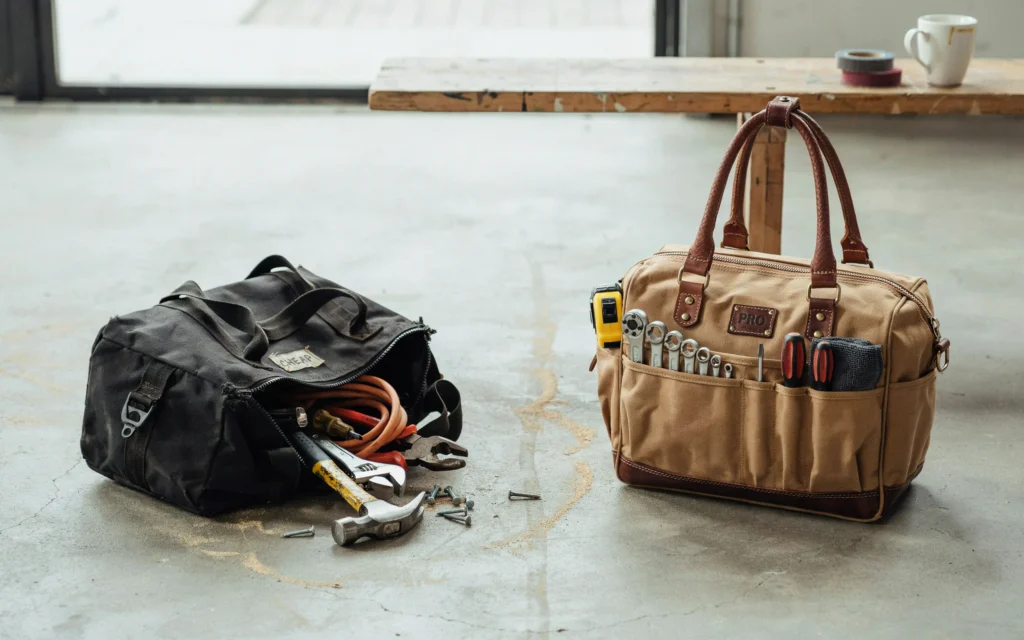
Conclusion
The difference between cheap and expensive tool bags is real and significant. It shows up in every part of the bag, from the materials to the stitching to the zippers to the handles.
Cheap bags have their place. They work for light use, occasional use, and tight budgets. But they do not last. They fail at the seams. The zippers break. The handles tear. The fabric wears thin.
Expensive bags cost more upfront but save money over time. They protect your tools. They make your work easier. They last for years. For anyone who uses tools regularly, a quality bag is a smart investment.
Think about your needs. Consider how often you will use the bag. Think about what tools you will carry. Look at your budget. Then make a choice that fits your situation.
And remember, the difference between cheap and expensive tool bags is not just about the price. It is about the value you get for your money. A bag that lasts five years is worth more than a bag that lasts five months, even if the price is higher.
Related posts
 Top Tool Bags for Mobile Contractors: 2026 Buyer Guide
Discover the top tool bags for mobile contractors in 2026. Compare durable totes, backpacks, and multi-pocket organizers to find the best fit for your gear. For…
 Top Tool Bags for Plumbers: 2026 Selection Guide
Discover the top tool bags for plumbers in 2026. We compare durable, multi-pocket storage solutions to help you organize your gear effectively on the job. Plumbing…
 Best Tool Bag for HVAC Technicians in 2026
Find the right tool bag for HVAC technicians with our 2026 guide. Compare top-rated bags, backpacks, and pouches to keep your gear organized and protected. As…