
How to Build Your Own Automotive Tool Kit: A Beginner’s Guide
Building your own automotive tool kit is a rewarding way to tackle car maintenance and repairs yourself, saving money and gaining valuable skills. Instead of buying an expensive pre-made set, you can assemble a kit tailored to your vehicle and the tasks you plan to do.
The process begins with identifying the fundamental hand tools that cover most common automotive jobs. From there, you’ll strategically add more specialized items as your skills grow and your project needs evolve.
Essential hand tools (sockets wrenches
- Start with a core set of versatile hand tools before investing in specialty items.
- Prioritize quality for frequently used tools, as they will last longer and perform better.
- Consider buying tools individually or in smaller sets to match your specific vehicle’s needs.
- Proper organization and maintenance extend the life of your tools and make tasks easier.
| Topic | When it helps | What to keep in mind |
|---|---|---|
| 1 | Almost all fastening tasks, from engine bay work to suspension components. | Using the wrong size socket or wrench can strip fasteners, making them impossible to remove. |
| 2 | Holding small parts, cutting wires, removing stubborn clips, and general gripping. | Avoid using pliers as a substitute for a wrench on fasteners, as they can round off bolt heads. |
| 3 | Removing screws, prying apart components, and light tapping. | Using a screwdriver as a chisel or pry bar can damage the tip and make it useless for its intended purpose. |
| 4 | Protecting yourself from injury and ensuring a stable work environment. | Never rely solely on a hydraulic jack to support a vehicle; always use jack stands. |
The article must cover essential
1. Sockets and Wrenches: Your Fastener Foundation
These are the workhorses for loosening and tightening nuts and bolts. You’ll need both sockets (with ratchets and extensions) and combination wrenches.
- Almost all fastening tasks, from engine bay work to suspension components.
- Using the wrong size socket or wrench can strip fasteners, making them impossible to remove.
- Start with a 3/8-inch drive ratchet and a basic set of metric sockets.
- Key Feature – Metric & SAE coverage.
- Drive Sizes – 1/4, 3/8, 1/2 inch.
2. Pliers and Cutting Tools: Grip, Snip, and Hold
A good set of pliers provides gripping, bending, and cutting capabilities. Essential types include slip-joint pliers for general use, needle-nose pliers for tight spaces, and cutting pliers (diagonal cutters) for wires and zip ties.
- Holding small parts, cutting wires, removing stubborn clips, and general gripping.
- Avoid using pliers as a substitute for a wrench on fasteners, as they can round off bolt heads.
- Invest in a multi-pack that includes at least slip-joint, needle-nose, and diagonal cutters.
- Types – Slip-joint, Needle-nose, Diagonal, Locking.
- Primary Use – Gripping, cutting, bending.

3. Screwdrivers and Fastener Tools: Turning and Prying
You’ll need a variety of screwdrivers, including Phillips head and flathead, in different sizes. A set with interchangeable bits can save space.
- Removing screws, prying apart components, and light tapping.
- Using a screwdriver as a chisel or pry bar can damage the tip and make it useless for its intended purpose.
- Look for a screwdriver set that includes common Phillips and flathead sizes, plus a few Torx or specialty bits if your vehicle.
- Types – Phillips, Flathead, Torx (optional).
- Additional – Pry bars, Hammer.
4. Safety and Support Gear: Don’t Overlook Protection
Safety is paramount when working on a car. Your kit should include safety glasses to protect your eyes from debris, work gloves to protect your hands, and a sturdy pair of jack stands to safely support the vehicle when it’s lifted.
- Protecting yourself from injury and ensuring a stable work environment.
- Never rely solely on a hydraulic jack to support a vehicle; always use jack stands.
- Prioritize high-quality jack stands that match your vehicle’s weight.
- Essentials – Safety glasses, Work gloves, Jack stands.
- Visibility – Flashlight/Headlamp.
Starting with the Essentials: Your Core Automotive Tools
When you first start building your automotive tool kit, the goal is to cover the most frequent maintenance and repair tasks. Think about what you might encounter: changing a tire, checking fluids, replacing a battery, or tightening loose components.
Many tools can serve multiple purposes, making them excellent first purchases. As you gain experience, you’ll naturally identify gaps in your collection based on the specific projects you undertake.
For a common task like changing a flat tire, you’ll immediately need a lug wrench (often included with the car), a jack (also usually included), and crucially, jack stands for safety if you’re doing.
A common mistake is buying a massive, cheap ‘all-in-one’ tool kit.

| Tool Category | Primary Use | Key Items to Start With |
|---|---|---|
| Fastening. | Loosening/tightening nuts & bolts. | Metric socket set (3/8″ drive), Combination wrenches (metric). |
| Gripping & Cutting. | Holding, bending, snipping wires. | Slip-joint pliers, Needle-nose pliers, Diagonal cutters. |
| Turning & Prying. | Removing screws, separating parts. | Phillips & Flathead screwdrivers, Small pry bar, Hammer. |
| Safety & Support. | Personal protection, vehicle stability. | Safety glasses, Work gloves, Jack stands, Flashlight. |
Beyond the Basics: Expanding Your Kit
Once you have your core set of tools, you’ll find that certain tasks require more specific equipment. This is where you begin to expand your kit, adding tools that address particular maintenance needs or more complex repairs.
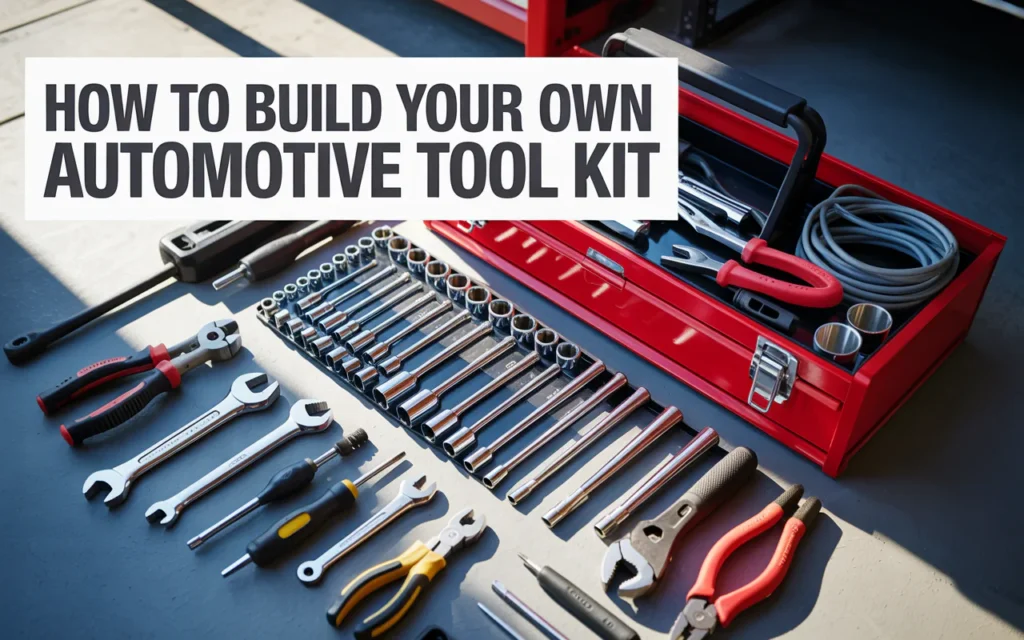
Consider the types of work you anticipate doing. Are you planning to change your own oil?
After mastering oil changes and tire rotations, you might want to tackle brake pad replacement.
A common pitfall is buying specialty tools for a one-time job without considering if you’ll use them again.
- Torque Wrench: Essential for tightening bolts to manufacturer specifications, crucial for safety.
- Multimeter: For diagnosing electrical issues, checking battery voltage, and testing circuits.
- Hydraulic Jack & Jack Stands (if not already owned): For safely lifting and supporting your.
- Oil Filter Wrench & Drain Pan: For performing oil changes.
Smart Buying Strategies for Your Tool Kit
Building a comprehensive tool kit doesn’t have to happen all at once, nor does it need to be prohibitively expensive. Strategic buying can help you acquire quality tools over time, matching your budget and evolving needs.
Consider the ‘buy once, cry once’ philosophy for frequently used or safety-critical tools. A good quality ratchet or torque wrench will last decades, while a cheap one might break on the first tough bolt.
Instead of buying a full 200-piece socket set, consider purchasing a smaller, high-quality 3/8-inch drive metric set (e.g., 10mm-19mm) first.Don’t fall for extremely cheap tools from unknown brands.Prioritize Quality for Core Tools: Invest in reputable brands for items like ratchets, sockets, and.Buy in Stages: Start with essentials, then add specialty tools as specific projects arise.Consider Used Tools: Garage sales, pawn shops, and online listings can offer great deals on.Look for Sales and Bundles: Tool sets often provide better value than buying individual pieces.
Organizing and Maintaining Your Automotive Tools
A well-organized tool kit is just as important as the tools themselves. Proper storage not only protects your investment from damage and rust but also saves you valuable time during a repair, as you’ll always know where to find what you need.
Toolboxes, rolling carts, and wall-mounted pegboards are popular options. Within these, consider using drawer organizers, socket rails, and magnetic strips to keep smaller items in place.
After finishing a brake job, wipe down all wrenches and sockets to remove grease and brake dust.
Leaving tools scattered on a workbench or in a pile can lead to rust, damage, and wasted time searching.
- Invest in Storage: A sturdy toolbox, rolling cart, or wall organizer is essential.
- Use Organizers: Socket rails, wrench organizers, and drawer dividers keep tools tidy.
- Clean After Use: Wipe down tools to remove dirt, grease, and moisture.
- Prevent Rust: Apply a light oil to metal tools, especially in humid environments.
FAQs
What’s the difference between metric and SAE tools, and do I need both?
Metric tools are measured in millimeters (e.g., 10mm, 13mm), while SAE (Standard American/Imperial) tools are measured in inches (e.g., 1/2 inch, 9/16 inch). Most modern vehicles, especially imports, primarily use metric fasteners.
Should I buy a pre-made automotive tool kit or individual tools?
For beginners, a small, quality pre-made kit can be a good starting point, offering a basic selection of common tools. However, buying individual tools or smaller, specialized sets allows you to tailor your kit.
How can I save money when building my automotive tool kit?
To save money, prioritize quality for frequently used tools and buy less expensive options for occasional use. Look for sales, especially around holidays.
What are some essential safety tips when using automotive tools?
Always wear safety glasses to protect your eyes from debris. Use gloves to protect your hands.
How often should I clean and maintain my automotive tools?
It’s best practice to clean your tools immediately after each use to remove dirt, grease, and moisture. This prevents rust and keeps them ready for the next job.
Conclusion
Building your own automotive tool kit is a journey that empowers you to take control of your vehicle’s maintenance. By starting with essential, versatile tools and strategically expanding your collection, you create a personalized kit that grows with your skills and needs.
Remember to prioritize quality for frequently used items, explore smart buying options, and always keep safety at the forefront. A well-organized and maintained tool kit is not just a collection of objects; it’s an investment in your independence and your vehicle’s longevity.
Related posts
 Which Tool Kit Is Worth Buying? How to Choose the Right Set for Your Home
Wondering which tool kit is worth buying? Compare basic household sets, mechanic kits, and power tool combos to find the best tools for your budget and…
 Which Hand Tools Are Made in the USA? Reliable Brands and Buying Rules
Discover which hand tools are still made in the USA. Compare top domestic brands, tool categories, and learn how to verify origin labels before buying. Several…
 Why Do Campers Carry Multi Tools? Practical Uses in the Field
Why do Campers carry multi tools to handle gear repairs, campsite setup, food prep, and field fixes with minimal weight. Here is why one belongs in…