
How To Choose A Multi Tool Kit For Everyday Carry
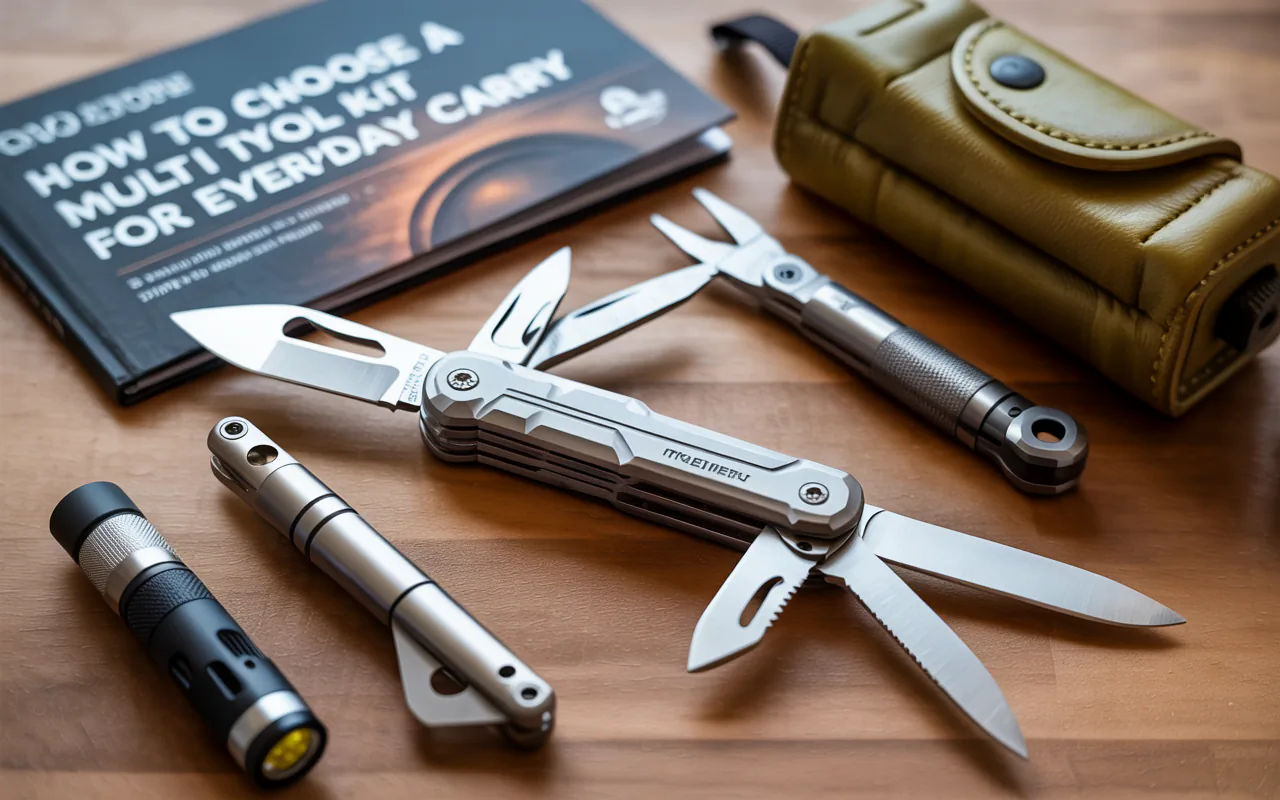
Need to choose a multi tool kit for everyday carry? Focus on size, tools, and build quality. This guide helps you pick the right one with ease.
A good multi tool kit can save your day. Whether you need to fix a loose screw, open a bottle, cut a rope, or tighten a bolt, a multi tool does the job. But with so many options, how do you pick the right one for your pocket or bag? This article will help you choose a multi tool kit for everyday carry without confusion. We will talk about size, weight, tools, build quality, price, and real life use. By the end, you will know exactly what works for you.
Let me be honest. I have carried a multi tool for over ten years. I have tried cheap ones, expensive ones, big ones, and tiny ones. I learned what breaks, what rusts, and what actually helps. So this advice comes from real use, not just product descriptions.
“A multi tool is not a gadget. It is a backup plan for your hands.” – Tom Sachs, artist and maker
Why You Need to Choose a Multi Tool Kit for Everyday Carry
Many people think multi tools are for handymen or soldiers. That is not true. A multi tool helps parents, students, office workers, cyclists, campers, and even cooks. You never know when you need pliers to pull a splinter or a knife to open a package. Having a small kit on you means less frustration and fewer trips to find a toolbox.
When you choose a multi tool kit for everyday carry, you are choosing self reliance. You do not need a big heavy pouch. Modern multi tools are slim and light. Some fit in a coin pocket. Others clip to a belt or slide into a backpack organizer. The key is to match the tool to your daily life.
Step 1: Decide Where You Will Carry It
Before you look at tools, think about where you will keep your multi tool. This one decision changes everything.
| Carry Location | Best Size | Weight Limit | Example Use |
|---|---|---|---|
| Keychain | Very small (under 3 inches) | Under 1.5 oz | Opening boxes, small screws |
| Pocket (jeans) | Medium (3 to 4 inches) | 3 to 5 oz | Daily fixes, light work |
| Belt pouch | Large (4+ inches) | 6 oz or more | Heavy pliers, saw, file |
| Backpack | Full size | Any | Emergency repairs, camping |
Be honest with yourself. If you never wear a belt, do not buy a belt pouch model. If you wear tight pants, a thick multi tool will dig into your leg. For most people, a medium sized tool around 3.5 inches long and 4 ounces heavy is the sweet spot.
“The best tool is the one you have with you. Not the one in your garage.” – Adam Savage, former MythBusters host
Step 2: Look at the Core Tools You Actually Use
Now let us talk about tools. A multi tool kit can have 5 to 30 functions. But more is not always better. You want tools that match your real needs.
Here is a simple way to think. Make a list of problems you had last month. Did you need pliers? A screwdriver? Scissors? A can opener? A file? Write them down.
Most people use these five tools the most:
- Pliers (needle nose or regular)
- Knife blade (straight edge)
- Phillips screwdriver
- Flathead screwdriver
- Bottle opener
If your multi tool has those five, you cover 80% of daily fixes. Everything else is extra.
Table: Common Tools and Who Needs Them
| Tool | Good For | Skip If |
|---|---|---|
| Pliers | Gripping small parts, bending wire | You never fix hardware |
| Scissors | Cutting paper, thread, tape | You carry separate scissors |
| Saw | Cutting small branches, plastic | You live in a city with no plants |
| File | Smoothing rough metal, wood | You do not do craft work |
| Can opener | Opening cans | You eat fresh food only |
| Wire cutter | Cutting electrical wire | You do not touch wires |
When you choose a multi tool kit for everyday carry, pick the one that has your top three tools plus pliers and a blade. That balance keeps you ready without extra weight.
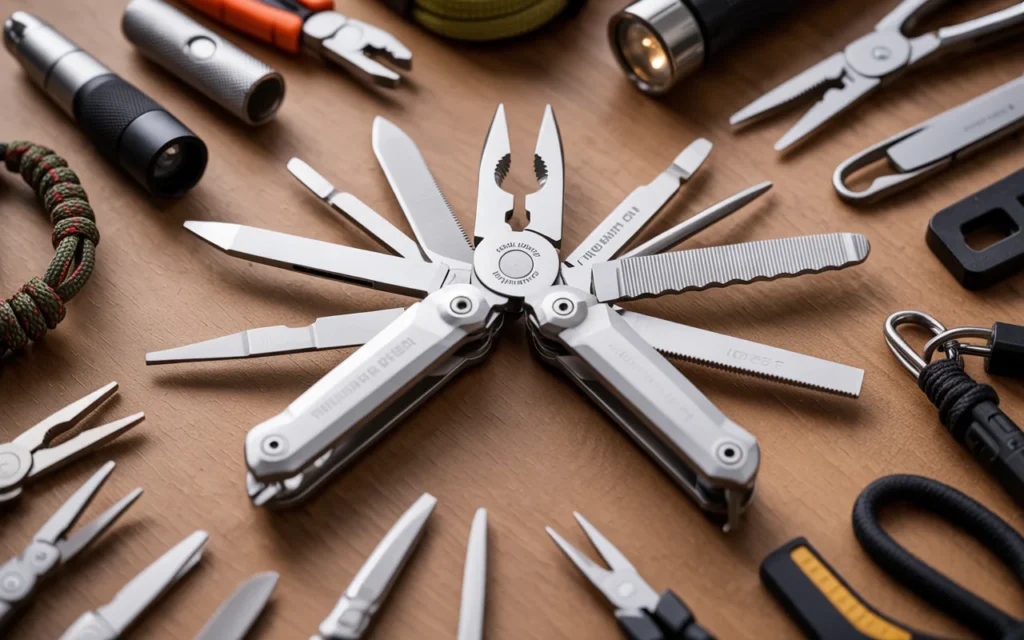
Step 3: Check Build Quality and Materials
Cheap multi tools break. The pliers slip. The knife blade rusts. The screwdriver bends. Do not waste money on no name brands from random online sellers.
Look for these three things:
Stainless steel. Most good multi tools use 420 or 440 stainless steel. It resists rust and holds an edge. Avoid carbon steel for everyday carry because sweat and humidity will cause rust spots.
Locking tools. Each tool should lock open. This stops the blade or screwdriver from closing on your fingers. Many cheap tools do not have locks. That is dangerous.
Smooth action. Open and close the tool in the store or from a video review. It should not feel gritty or loose. A good multi tool has a firm but smooth pivot.
Trusted brands include Leatherman, Victorinox (Swiss Army), Gerber, and SOG. These companies have been making multi tools for decades. They offer warranties and spare parts.
“A tool that fails when you need it is worse than no tool at all.” – Nick Offerman, woodworker and actor
Step 4: Balance Size, Weight, and Comfort
Here is a mistake many people make. They buy a heavy multi tool because it has many features. Then they leave it at home because it pulls their pants down. That defeats the purpose.
Weigh your options. A tool under 5 ounces is easy to carry every single day. Between 5 and 7 ounces is okay if you use a belt clip or pouch. Over 7 ounces feels like a brick in your pocket.
Also check the handle shape. Some multi tools have sharp edges. Others have smooth rounded handles. Hold it (or read reviews about grip comfort). You will use pliers with force sometimes. Sharp handles hurt your palm.
For everyday carry, I recommend staying under 4.5 inches closed length and under 5.5 ounces. That size fits most hands and most pockets.
Step 5: Decide Between One Hand Opening and Two Hand
Some multi tools let you open the pliers with one hand. Others need two hands. This matters more than you think.
One hand opening is useful when you are holding something with your other hand. For example, you are holding a ladder or a piece of wood. You can pull out your multi tool and open the pliers with a flick of your wrist. Leatherman Free series and Gerber Center Drive are good examples.
Two hand opening is fine for desk use or home projects. But for everyday carry, one hand opening adds real convenience. The trade off is cost. One hand models cost $20 to $50 more.
If you work with your hands often, spend extra for one hand opening. If you mostly use your multi tool at a desk or kitchen table, two hand is fine.
Step 6: Check the Knife Laws in Your Area
This is important. Many places have laws about carrying knives. Some countries ban locking blades. Some cities limit blade length to 2.5 inches. Others allow any blade as long as it is not concealed.
Before you choose a multi tool kit for everyday carry, search online for “[your city] knife laws” or “multi tool legal carry.” In some schools, government buildings, or airplanes, any multi tool is banned.
If you live in a strict area, look for multi tools without a knife. Victorinox makes the Swiss Army “Knifeless” models. Leatherman has the Rebar without a blade. You still get pliers, screwdrivers, and scissors.
Do not risk legal trouble. A multi tool is not worth a fine or arrest.
Step 7: Compare Price and Value
Multi tools range from $15 to $200. Here is what each price tier gives you.
- $15 to $30: Basic steel, no locking tools, heavy, rough finish. Okay for a car glovebox but not for daily pocket carry.
- $30 to $60: Good stainless steel, locking tools, better fit and finish. This is the sweet spot for most people. Examples: Leatherman Rev, Gerber MP400.
- $60 to $100: Premium steel, one hand opening, replaceable wire cutters, smooth action. Examples: Leatherman Wave Plus, Victorinox Spirit.
- $100 to $200: Titanium handles, magnetic opening, full tool sets, lifetime warranty. Examples: Leatherman Free P4, SOG PowerAccess.
For your first multi tool, spend between $40 and $70. You get real quality without overspending. After one year of use, you will know if you want a smaller, larger, or more expensive model.
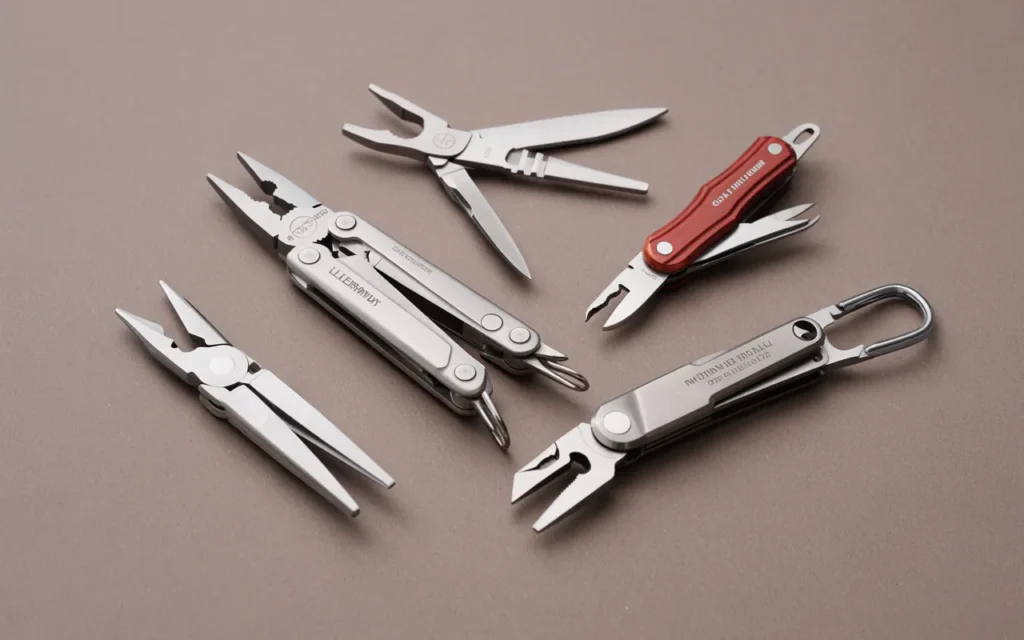
Step 8: Read Real User Reviews (Not Just Product Pages)
Product pages say “the best multi tool ever.” User reviews tell the truth. Go to Amazon, REI, BladeHQ, or YouTube. Look for reviews with photos and videos. Pay attention to complaints about rust, broken springs, loose pliers, or hard to open tools.
Also look for long term reviews. A person who used the tool for two years gives better advice than someone who opened it five minutes ago.
Do not trust only five star ratings. Read the three star and four star reviews. Those people list pros and cons honestly.
Step 9: Try the Pocket Clip or Pouch
Most multi tools come with a nylon pouch. Some have a metal pocket clip. Which one is better?
- Pocket clip: Keeps the tool upright in your pocket. Easy to grab. Adds little bulk. Great for jeans or work pants.
- Pouch: Protects the tool from keys and coins. Holds extra bits. But it adds width and can feel bulky under a shirt.
Try both if you can. Many brands sell clips separately for $5 to $10. Personally, I prefer a pocket clip for everyday carry. The pouch stays in my backpack for travel days.
Step 10: Buy from a Trusted Seller
Fake multi tools exist. They look like Leatherman or Gerber but use weak metal and fake logos. Always buy from the brand website, Amazon directly (not third party sellers), or physical stores like REI, Home Depot, or Bass Pro Shops.
If the price is half of everywhere else, it is probably fake. Do not risk a tool breaking when you need it most.
Frequently Asked Questions
What is the best multi tool kit for everyday carry for a beginner?
The Leatherman Wave Plus is the most popular choice. It has 18 tools, one hand opening, and a pocket clip. Price around $110. For a lower budget, the Gerber Suspension NXT at $45 is very good.
Can I take a multi tool on a plane?
No. TSA rules do not allow any knives or multi tools with blades in carry on luggage. Check your bag if you want to bring a multi tool. Even a tiny Swiss Army knife will be confiscated.
How do I clean and maintain my multi tool?
Open all tools. Wash with warm soapy water. Dry completely. Apply a drop of oil (like mineral oil or 3-in-1) on the pivot points. Open and close a few times. Wipe extra oil. Do this every few months.
What is the difference between a multi tool and a Swiss Army knife?
A multi tool has pliers as the main handle. A Swiss Army knife has scissors or a blade as the main tool. Multi tools are stronger for gripping and twisting. Swiss Army knives are lighter and more comfortable in a pocket.
Can I customize my multi tool?
Yes. Some brands like Leatherman let you remove tools and add others using special kits. You can also buy third party bit drivers, pocket clips, and lanyard rings. But custom work may void the warranty.
How long does a good multi tool last?
With basic care, 10 to 20 years. Many people pass their Leatherman or Victorinox to their children. The steel does not wear out easily. Springs and locks may need repair after heavy use, but brands offer flat fee repair services.
Should I get a multi tool with a serrated blade or straight blade?
Straight blade is easier to sharpen and works for 90% of cuts. Serrated blade cuts rope and straps better but is hard to sharpen. Get straight edge unless you cut a lot of rope or seatbelts.
What is the lightest multi tool with pliers?
The Leatherman Squirt PS4 is 2.2 ounces and 2.25 inches long. It has pliers, scissors, knife, and screwdrivers. Discontinued but still found online. Current lightest is the Gerber Dime at 2.2 ounces.
Conclusion
To choose a multi tool kit for everyday carry, you do not need the most expensive or the biggest one. You need the one that fits your pocket, your daily tasks, and your local laws. Start with a medium sized model between $40 and $70. Make sure it has locking tools, stainless steel, and at least your top three most used tools. Carry it for one month. If you use it at least twice a week, keep it. If not, go smaller or lighter.
Remember, a multi tool is a helper, not a replacement for real tools. It will not build a house. But it will open a paint can, cut a loose thread, tighten a wobbly chair, or fix a kid’s toy. That is real value. Pick one, put it in your pocket, and be ready for small problems before they become big ones.
Keep it clean. Keep it dry. And keep it on you. You will be surprised how often you reach for it.
Related posts
 Top Tool Bags for Apprentices and Trainees 2026
Discover the top tool bags for apprentices and trainees in 2026. Compare durable, portable, and organized storage solutions to help you start your trade right. Starting…
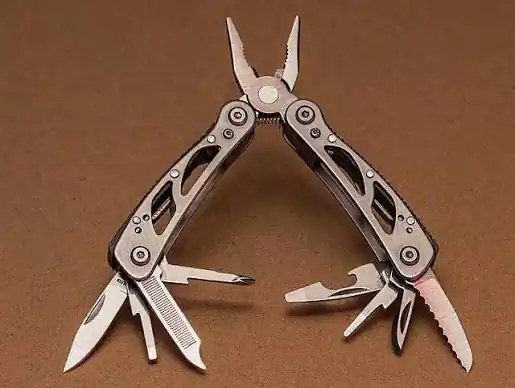 Top Multi Tool Kits for Women: 2026 Buyer Guide
Find the best multi tool kits for women in 2026. Compare household sets, cordless screwdrivers, and compact multitools for easy home repairs and DIY projects. Finding…
 Top Tool Bags for Maintenance Technicians: 2026 Buyer Guide
Find Top Tool Bags for Maintenance Technicians in 2026. Compare durable, organized storage solutions to keep your gear ready for any job site. For maintenance technicians,…