
How To Use A Car Emergency Tool Kit During A Breakdown
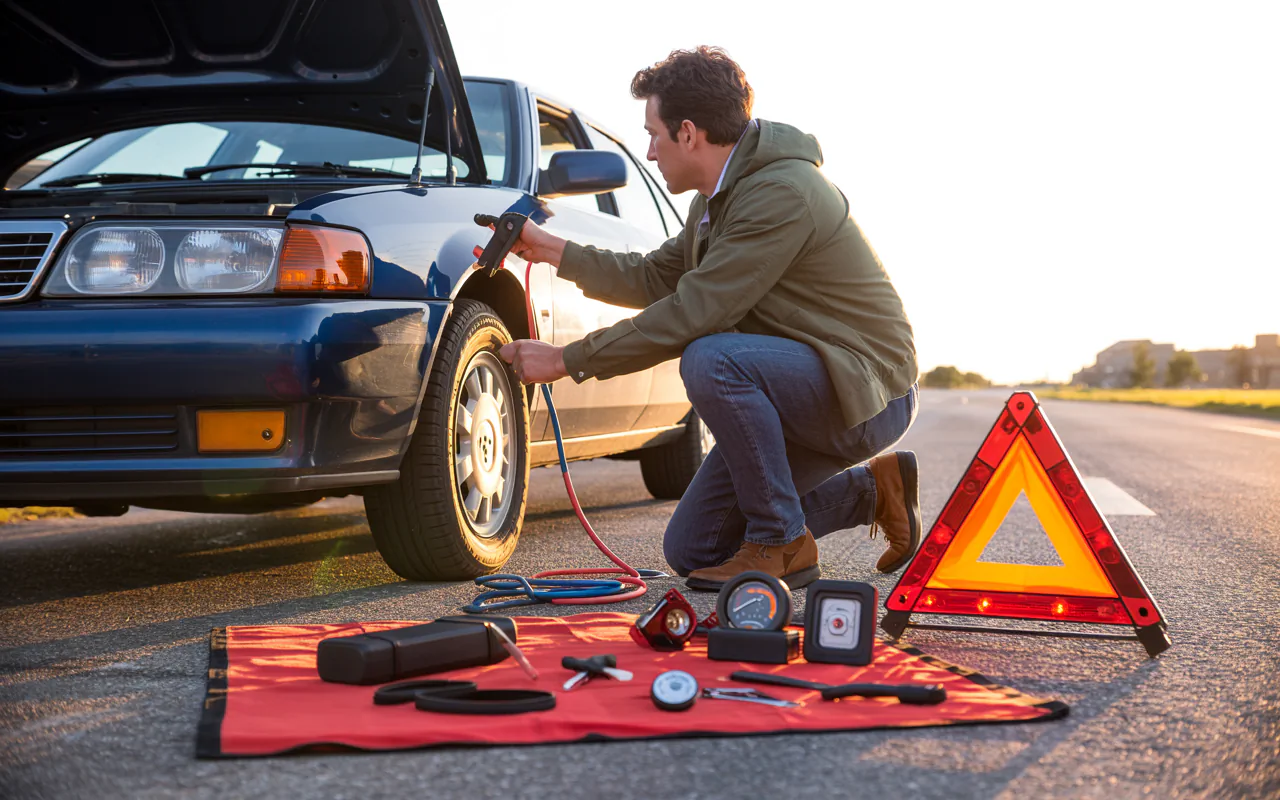
Learn how to use a car emergency tool kit during a breakdown safely. This guide shows you step by step to use a car emergency tool kit during a breakdown for flat tires, dead batteries, and more.
A breakdown can happen anywhere. On a quiet road. In heavy rain. Late at night. You open your trunk, find your car emergency tool kit, and then what? Many drivers own this kit but have no idea how to use it. That changes today. This guide will help you use a car emergency tool kit during a breakdown with confidence. No mechanic degree needed. Just simple steps, clear advice, and a calm mindset.
Let me be honest with you. I have been stuck on a highway shoulder twice. The first time, I panicked. The second time, I opened my kit, took a breath, and fixed a loose battery cable myself. That small win taught me something important. Your kit is only useful if you know what each tool does. So let’s learn together.
What Is Inside a Standard Car Emergency Tool Kit? (And What Each Tool Does)
Before you can use a car emergency tool kit during a breakdown, you need to know its parts. Most basic kits include the items below. Check your kit right now. If something is missing, buy it separately.
| Tool | What It Does |
|---|---|
| Jumper cables | Restart a dead car battery using another vehicle |
| Tire inflator (manual or 12V) | Adds air to a flat or low-pressure tire |
| Flashlight with extra batteries | Lets you see at night or in dark engine bays |
| Screwdrivers (flat and Phillips) | Tighten loose battery terminals or remove small parts |
| Adjustable wrench | Loosen or tighten nuts and bolts |
| Pliers | Grip, bend, or cut wires or small clamps |
| Utility knife | Cut tape, rubber hoses, or seatbelt if stuck |
| Duct tape | Temporary fix for cracked hoses or loose mirrors |
| Gloves (work or nitrile) | Keep hands clean and safe from hot or sharp parts |
| Reflective triangles or safety vest | Alert other drivers and keep you visible |
Some kits also include a small first aid pouch, zip ties, or a tow strap. That is helpful but not critical for most roadside fixes.
“The most important tool in your car is not a wrench. It is the knowledge of how to use it safely.” — Tom Boyd, roadside safety instructor
Before You Open Your Kit: Safety First (Do Not Skip This)
You cannot use a car emergency tool kit during a breakdown if you are not safe. Follow these three rules before you touch any tool.
- Pull off the road completely. Find a flat, solid shoulder away from traffic. Turn your wheels away from the road.
- Turn on hazard lights. Even during daytime. This tells others you are stopped.
- Put on your safety vest (if you have one) and place reflective triangles 50 to 150 feet behind your car.
Only then open your trunk or back seat to get the kit. If you are on a highway with fast traffic, stay inside the car and call for help. Do not get out unless it is very safe.
How to Use a Car Emergency Tool Kit During a Breakdown for a Flat Tire
A flat tire is the most common breakdown. Here is exactly how to use a car emergency tool kit during a breakdown for this problem. Most kits do not include a spare tire jack or lug wrench. Those often come with the car. But your emergency kit has other helpers.
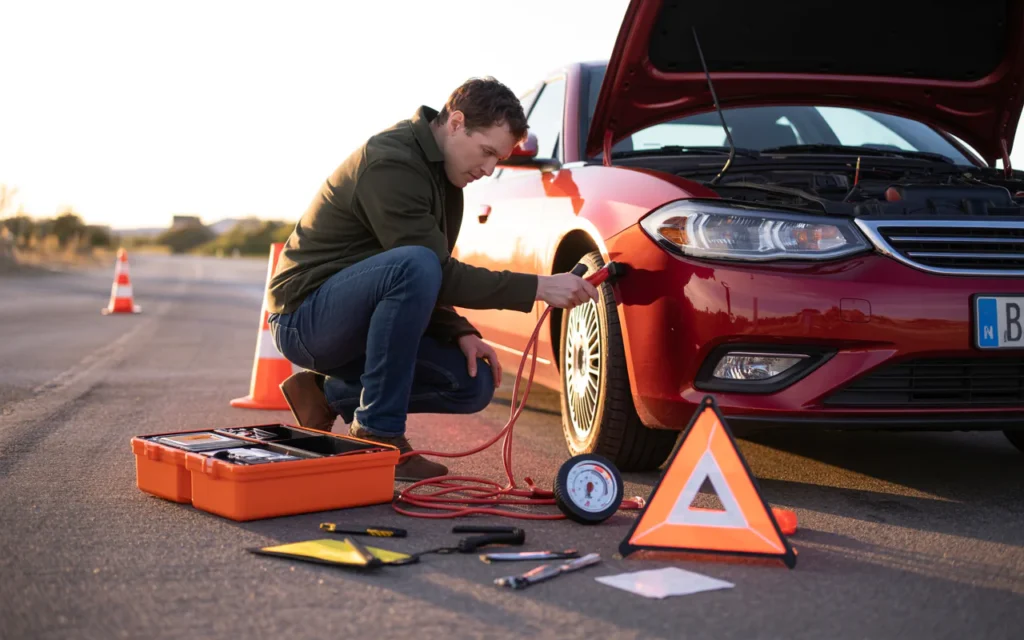
Step 1: Check if the tire is flat or just low
Use the tire pressure gauge if your kit has one. If the pressure is very low, use the 12V tire inflator. Connect it to your car’s cigarette lighter port (or 12V outlet). Attach the hose to the tire valve. Turn it on. Fill to the pressure number written on your driver side door frame. This often fixes a slow leak and lets you drive to a shop.
Step 2: If the tire is fully flat
You will need your car’s spare tire and jack. But your emergency tool kit helps here too. Use the pliers to remove any small nail or screw from the tread (do not pull it out if air is rushing out fast). Use the utility knife to cut away a loose piece of rubber that might flap and cause more damage. Use the duct tape to cover a small sidewall cut as a temporary seal.
Step 3: Use the wrench or screwdriver to remove hubcaps
Some hubcaps are held by small screws. A flathead screwdriver from your kit can pry off plastic hubcaps. This gives you access to the lug nuts.
“A flat tire is frustrating, but a few minutes with basic hand tools can save you hours of waiting.” — Patricia Ng, auto club dispatcher
Step 4: After changing to the spare
Store the flat tire in your trunk. Use the bungee cords or zip ties (if your kit has them) to secure it so it does not roll. Drive slowly to the nearest repair shop. Do not drive on a spare tire for more than 50 miles or above 50 mph.
Using Your Kit for a Dead Car Battery
A dead battery leaves you stranded. But you can use a car emergency tool kit during a breakdown to fix this without calling a tow truck. You need jumper cables and another car with a good battery.
How to Jump Start Safely
| Step | Action |
|---|---|
| 1 | Park the working car close to yours but not touching. Both engines off. |
| 2 | Open both hoods. Use your flashlight to see the battery terminals. |
| 3 | Put on your gloves. Battery acid is dangerous. |
| 4 | Connect red clamp to dead battery positive (+) terminal. |
| 5 | Connect other red clamp to good battery positive (+). |
| 6 | Connect black clamp to good battery negative (-). |
| 7 | Connect last black clamp to an unpainted metal part on your car (not the dead battery negative). |
| 8 | Start the working car. Let it run for 2 minutes. |
| 9 | Start your car. If it starts, let both cars run for 5 more minutes. |
| 10 | Remove clamps in reverse order. Do not let clamps touch each other. |
If your car does not start, the battery may be completely dead or damaged. Call for help. Do not keep trying.
Your emergency kit’s screwdriver can also tighten loose battery terminal clamps. That is a simple fix many people miss. A loose connection looks like a dead battery but is not.
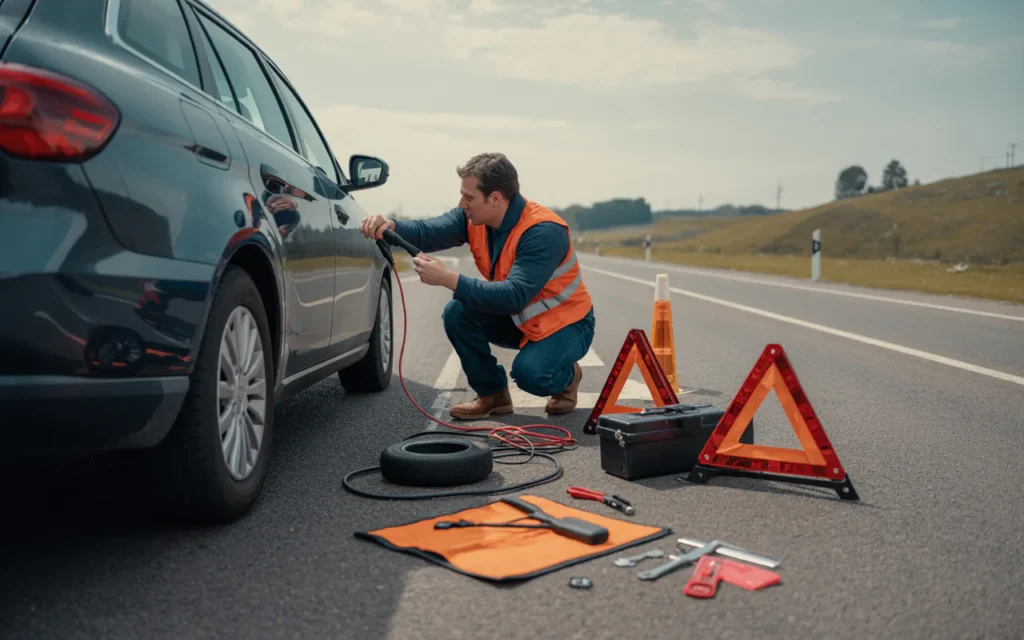
Overheating Engine: How Your Kit Can Help
Overheating is scary. Steam from under the hood. A hot smell. But you can use a car emergency tool kit during a breakdown for this too. Wait for the engine to cool completely before opening the hood. This can take 30 minutes or more.
Once cool, open the hood. Use your flashlight to check the coolant reservoir. It is a plastic tank with marks for low and high. If it is low, add water from your emergency water bottle (keep one in your kit or car). This is a temporary fix. Drive to a shop with the heat on full blast. The heater pulls heat away from the engine.
If you see a leaking hose, use duct tape from your kit to wrap the leak tightly. Add water. Drive slowly. Stop every few miles to check. Duct tape is not a permanent fix but it can get you to safety.
“Duct tape and water got me home from a mountain pass. Never leave home without both.” — Carla Mendez, long-haul driver
Using Your Kit for Electrical or Belt Issues
Sometimes a breakdown is not a flat tire or battery. Maybe a belt snapped. Or a wire came loose. Here is how to use a car emergency tool kit during a breakdown for small electrical and belt problems.
- Loose wire: Use pliers to reconnect a broken wire temporarily. Use electrical tape (if your kit has it) to cover exposed metal.
- Squealing belt: Do not touch a moving belt. But if the engine is off and cool, check if the belt is loose. Some kits include a small pry bar to tension older belt systems. This is advanced. Only try if you have done it before.
- Broken belt: You cannot drive without a serpentine belt. Call a tow truck. But use your reflective triangles and safety vest to stay visible while you wait.
Your utility knife can cut a frayed belt end to stop it from whipping around and damaging other parts. That is a good temporary safety step before the tow arrives.
Nighttime Breakdowns: Using Your Kit in the Dark
Breakdowns at night are more dangerous. But you can still use a car emergency tool kit during a breakdown after sunset. The key is light and visibility.
First, put on your safety vest. Place reflective triangles further back than during daytime. At night, put them 200 feet behind your car. Second, use your flashlight. Check the batteries every six months. Keep a second small light or headlamp in your kit. Third, do not work alone in the dark if you are unsure. Call for roadside help. Use your kit’s tools only for simple fixes like adding air to a tire or tightening a battery cable.
If you must change a tire at night, use your car’s dome light and your flashlight. Ask any passenger to hold a second light. Work slowly. Stop if you feel unsafe.
Common Mistakes People Make When Using Their Kit
I have seen drivers make the same errors again and again. Avoid these so you can correctly use a car emergency tool kit during a breakdown without making things worse.
- Using the wrong tool. Do not use pliers as a hammer. Do not use a screwdriver as a pry bar. Tools break.
- Forgetting gloves. Hot engine parts and sharp metal cause cuts and burns.
- Not reading the manual first. Your car and your kit have instructions. Read them at home, not on the roadside.
- Standing too close to traffic. Always face oncoming cars. Keep your body behind your door or a guardrail.
- Leaving the kit in the trunk without checking it. Batteries die. Tape dries out. Air inflators break. Check your kit every spring and fall.
How to Organize Your Kit for Faster Use
When you need to use a car emergency tool kit during a breakdown, you should not have to dig for ten minutes. Organize your kit now.
Put the most used items on top: flashlight, gloves, jumper cables, tire inflator. Put reflective triangles where you can grab them first. Keep the kit in the same spot every day. Tell your family where it is. Use a small bag or box inside the larger kit to hold small items like fuses, tape, and zip ties. Label each tool with a simple tag or color code. Red for electrical tools. Blue for tire tools. Yellow for safety gear.
| Layer | Items |
|---|---|
| Top (grab first) | Flashlight, gloves, reflective vest, triangles |
| Middle (most fixes) | Jumper cables, tire inflator, screwdrivers, pliers, wrench |
| Bottom (rare use) | Utility knife, duct tape, zip ties, first aid, spare fuses |
What If Your Kit Does Not Have a Tool You Need?
No kit has everything. But you can still use a car emergency tool kit during a breakdown by being creative. For example, if you do not have pliers, use the wrench’s adjustable jaw to pinch a small wire. If you have no flashlight, use your phone light. If you have no tire inflator, call a friend with a portable pump. If you have no duct tape, use a clean rag and zip ties to wrap a leaking hose.
Do not attempt a repair that feels unsafe. Your safety is worth more than saving a tow fee. Know your limits. It is okay to call for professional help.
“A good driver knows how to fix small problems. A wise driver knows when to stop and call for help.” — Edgar Torres, automotive instructor
Frequently Asked Questions
Can I use a car emergency tool kit during a breakdown for any car model?
Yes. Most tools like screwdrivers, pliers, jumper cables, and tire inflators work on any standard car, SUV, or light truck. Electric cars have different battery systems, so only use the 12V jumper cables for the small battery, not the high-voltage drive battery.
How often should I check my car emergency tool kit?
Check every six months. Replace dead flashlight batteries. Test the tire inflator. Make sure jumper cables are not frayed. Add fresh duct tape and replace any used first aid items.
What is the first thing I should do when I stop for a breakdown?
Turn on hazard lights, put on your safety vest, and place reflective triangles. Only then open your kit. Safety always comes before repair.
Do I need to know car mechanics to use a car emergency tool kit during a breakdown?
No. The kit handles basic issues: flat tires, dead batteries, loose wires, low tire pressure, and small leaks. For engine or transmission failures, call a tow truck. Your kit keeps you safe while you wait.
Can I use a car emergency tool kit during a breakdown in rain or snow?
Yes but be extra careful. Wet roads reduce traction for you and other drivers. Wear a bright rain jacket. Work faster but calmly. Do not lie on wet ground to reach under the car. If weather is severe, stay inside and call for help.
What tools should I add to my basic kit?
Add a portable jump starter (no second car needed), a headlamp (keeps both hands free), a small fire extinguisher, a reflective rain poncho, and a paper copy of your car’s fuse box diagram.
Conclusion
You now know how to use a car emergency tool kit during a breakdown for flat tires, dead batteries, overheating, and small electrical issues. The key steps are simple: stay safe, know your tools, work slowly, and call for help when needed. A breakdown is stressful, but your kit turns a bad situation into a manageable one. Check your kit this week. Practice using each tool in your driveway. That small effort will pay off the next time you hear a strange noise or see a warning light. Drive safe, stay calm, and keep your kit close.
Related posts
 Top Starter Mechanic Tool Kits for Apprentices: Essential Sets for Your Trade
Explore top starter mechanic tool kits for apprentices. Compare sets for mechanics, electricians, and other trades to find your essential tools. Starting an apprenticeship is an…
 Automotive Tool Kits vs. Mechanic Tool Sets: What’s the Difference?
Understand the key differences between automotive tool kits vs. mechanic tool sets. Learn which is best for your car maintenance needs. When looking for tools to…
 Top Automotive Tool Kits for Garage Workshops: A Buyer’s Guide
Find the top automotive tool kits for garage workshop. Compare versatile sets for car maintenance, home repairs, and DIY projects to choose the best fit. Setting…