
What Tools Do Mechanics Use The Most
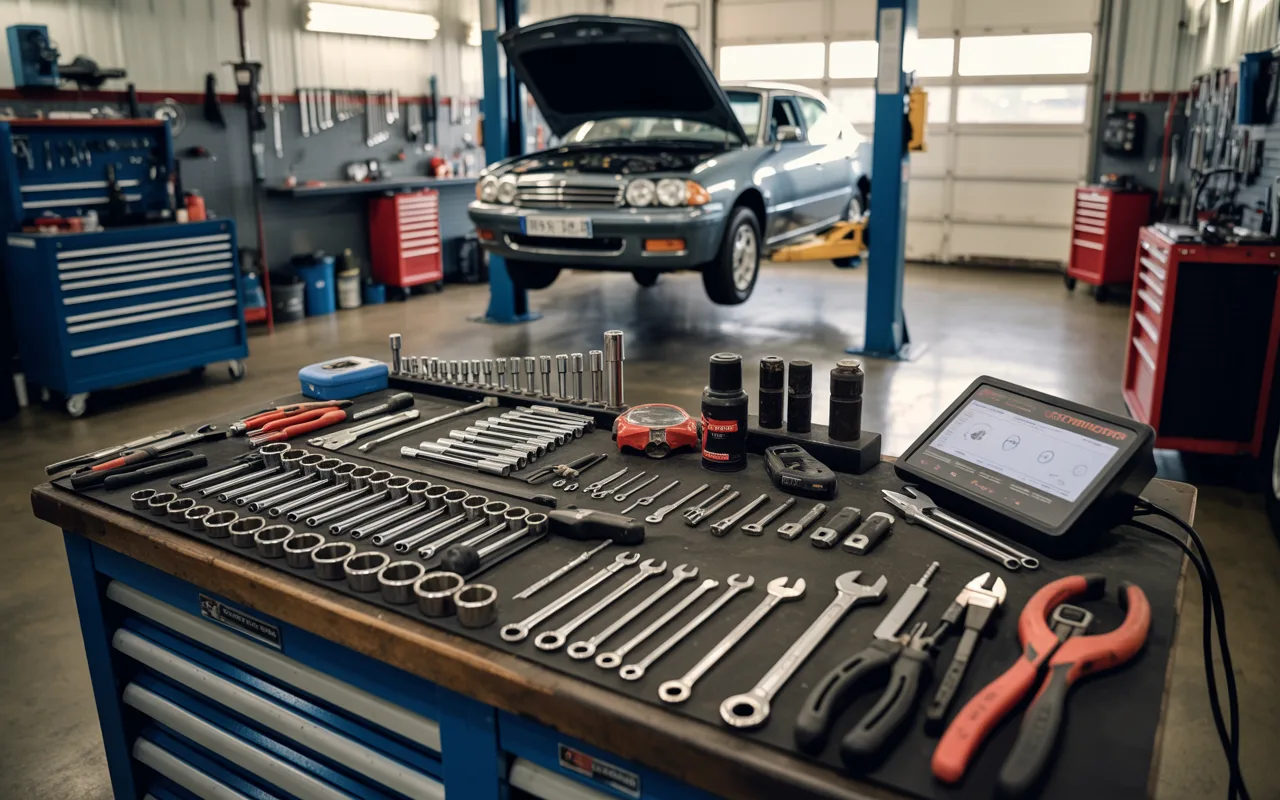
If you are curious about what tools do mechanics use the most, this guide lists the top ten essential hand tools, diagnostic scanners, and air tools that professionals rely on every single day in the workshop.
I remember walking into a busy auto shop for the first time. The noise was loud. The smell of oil was strong. But what caught my eye was the neat rows of tools lining the walls. Every mechanic had their own toolbox, and each drawer held a story of hard work and problem solving.
If you are new to car repair, or just curious about the trade, you might wonder what tools do mechanics use the most. The answer is not just one tool. It is a mix of old-school hand tools and new digital gadgets. The best mechanics know that having the right tool saves time, saves money, and keeps you from getting frustrated.
I have spent years talking with professional mechanics, watching them work, and learning the difference between a tool that looks nice and a tool that gets the job done. In this article, I will share the top ten tools that no mechanic can live without. We will look at why each tool matters, how it is used, and what to look for if you want to buy your own.
Whether you are a DIY home mechanic or thinking about a career in auto repair, this list will help you understand the essentials. Let us get started.
What Tools Do Mechanics Use the Most? The Essential List
When you ask what tools do mechanics use the most, the answer depends on the job. A mechanic working on transmissions uses different tools than one working on brakes. But there is a core set of tools that every mechanic reaches for day after day.
The tools on this list are the backbone of any shop. They are the ones that see the most use, take the most abuse, and rarely let you down. I have organized them into categories to make it easier to see the full picture.
Hand Tools That Start Every Job
Before we talk about fancy scanners or power tools, we have to start with the basics. Hand tools are the foundation. They are what mechanics use to take things apart and put them back together. Without these, no other tool matters.
Ratchets and Sockets
If there is one answer to what tools do mechanics use the most, it is ratchets and sockets. I have never met a mechanic who does not have at least three different sizes of ratchets in their top drawer.
Ratchets come in three main sizes: 1/4-inch drive for small bolts, 3/8-inch drive for most jobs, and 1/2-inch drive for heavy work like suspension parts. The socket set includes standard (SAE) and metric sizes. In modern cars, metric is used most often.
A good mechanic will have shallow sockets for tight spaces and deep sockets for bolts that stick out. They will also have impact sockets for use with air tools. The feel of a good ratchet is something you learn to appreciate. It has a smooth action and a strong release button.
| Rachet Size | Common Use |
|---|---|
| 1/4-inch drive | Small bolts, interior trim, light work |
| 3/8-inch drive | Most engine work, brakes, general repairs |
| 1/2-inch drive | Suspension, large bolts, heavy torque |
Wrenches (Combination and Adjustable)
Wrenches are the second most used hand tool. A combination wrench has an open end on one side and a box end on the other. The box end gives a better grip and is less likely to slip.
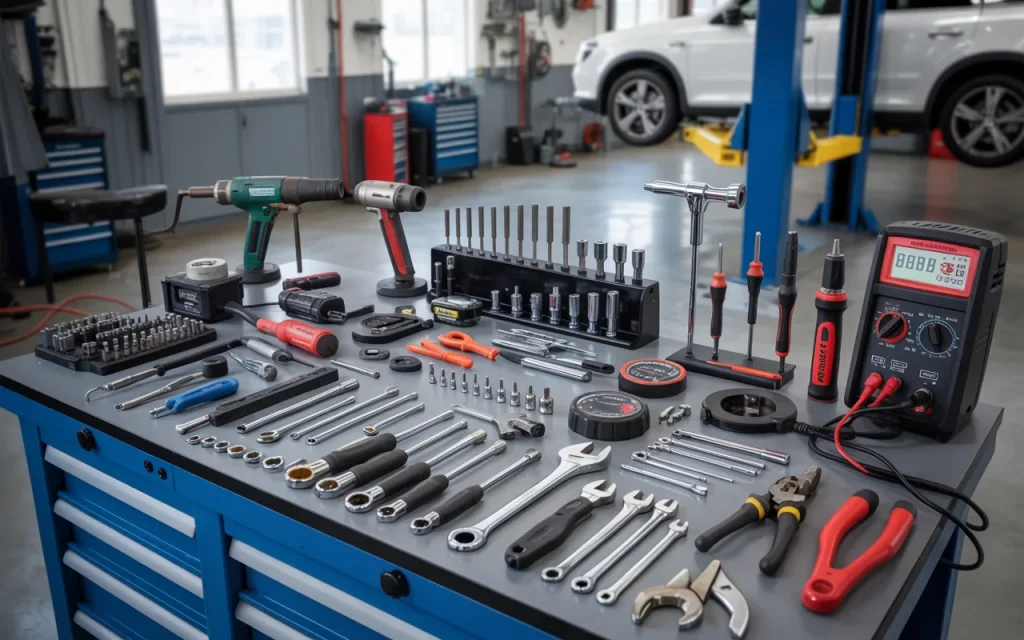
Mechanics use wrenches when a socket cannot fit. For example, when working on the back of an engine or in tight spots, a wrench is the only option. A good set includes sizes from 8mm to 19mm for metric and 1/4-inch to 3/4-inch for standard.
Adjustable wrenches are also handy. They are not for heavy torque, but they work well for quick adjustments or when you need a specific size that is not in your set.
Screwdrivers and Pliers
Every mechanic has a set of screwdrivers that look worn and used. The tips get a little rounded, but they still work. Flathead and Phillips are the two main types. Good mechanics also have Torx and security bits for modern cars.
Pliers are just as important. Needle-nose pliers reach into small spaces. Slip-joint pliers grip odd-shaped parts. Locking pliers, often called Vise-Grips, act like a third hand when you need to hold something still.
“A mechanic is only as good as their tools. I have seen beginners struggle for hours with cheap pliers, while a pro finishes the job in minutes with the right grip.” – Robert Hayes, ASE Certified Master Technician
Power Tools That Save Time and Energy
Hand tools get the job done, but power tools make it faster. When you work on cars all day, saving minutes on each job adds up to hours at the end of the week.
Impact Wrenches
If you ask any shop worker what tools do mechanics use the most in the power tool category, they will say impact wrench. This tool is a game changer for removing lug nuts, suspension bolts, and any fastener that is stuck.
Impact wrenches come in air-powered (pneumatic) and battery-powered (cordless) versions. Air tools have been the standard for years, but cordless impacts have gotten so good that many mechanics are switching. A good impact wrench delivers high torque without breaking your wrist.
The key is to use impact-rated sockets. Regular sockets can crack under the force. Most mechanics keep a full set of impact sockets in 1/2-inch drive for heavy jobs.
Air Compressor and Air Tools
An air compressor is the heart of many shops. It powers impact wrenches, air ratchets, die grinders, and blow guns. The size of the compressor matters. A small one runs out of air fast. A large one with a big tank keeps up with constant use.
Air ratchets are great for jobs where you need speed but not a lot of torque. They fit into tight spaces and make removing multiple bolts much faster than a hand ratchet.
Die grinders are used for cleaning gasket surfaces, cutting rusted bolts, and smoothing rough edges. With the right attachment, an air tool can do the work of several hand tools.
Diagnostic Tools for Modern Cars
Cars today are not like the cars from 30 years ago. They have computers, sensors, and complex electronic systems. This means that modern mechanics need digital tools to find problems.
OBD2 Scanners
When a car’s check engine light comes on, the first tool a mechanic grabs is an OBD2 scanner. This tool plugs into the car’s computer and reads trouble codes. These codes tell the mechanic which system is having a problem.
Basic scanners show the code number. Advanced scanners show live data, freeze frame data, and even let you run tests on components. For example, you can command a fuel pump to turn on or watch the oxygen sensor readings change in real time.
For many mechanics, what tools do mechanics use the most for diagnosis is a high-end scan tool. It is expensive, but it pays for itself by saving hours of guesswork.
| Tool Type | Primary Use |
|---|---|
| Basic Code Reader | Reads check engine codes, clears codes |
| Advanced Scan Tool | Live data, bi-directional controls, special functions |
Multimeters
A digital multimeter (DMM) is another must-have. Cars have wiring, sensors, and circuits. When something electrical fails, a multimeter helps find the break.
Mechanics use multimeters to check for voltage, continuity, and resistance. For example, if a fuel pump is not running, you use the multimeter to see if power is reaching the pump. If there is power but no pump noise, the pump is bad. If there is no power, you trace the circuit back to find the problem.
A good multimeter is durable, easy to read, and has auto-ranging. Some mechanics prefer a clamp meter that can measure current without disconnecting wires.
“I tell my apprentices all the time: learn to use a multimeter before you learn to use a scan tool. The computer tells you what is wrong, but the multimeter tells you why.” – Linda Chen, Automotive Electrical Specialist
Specialty Tools for Specific Jobs
Some tools are not used every day, but when they are needed, nothing else works. These specialty tools separate the professional from the hobbyist.
Brake Tools
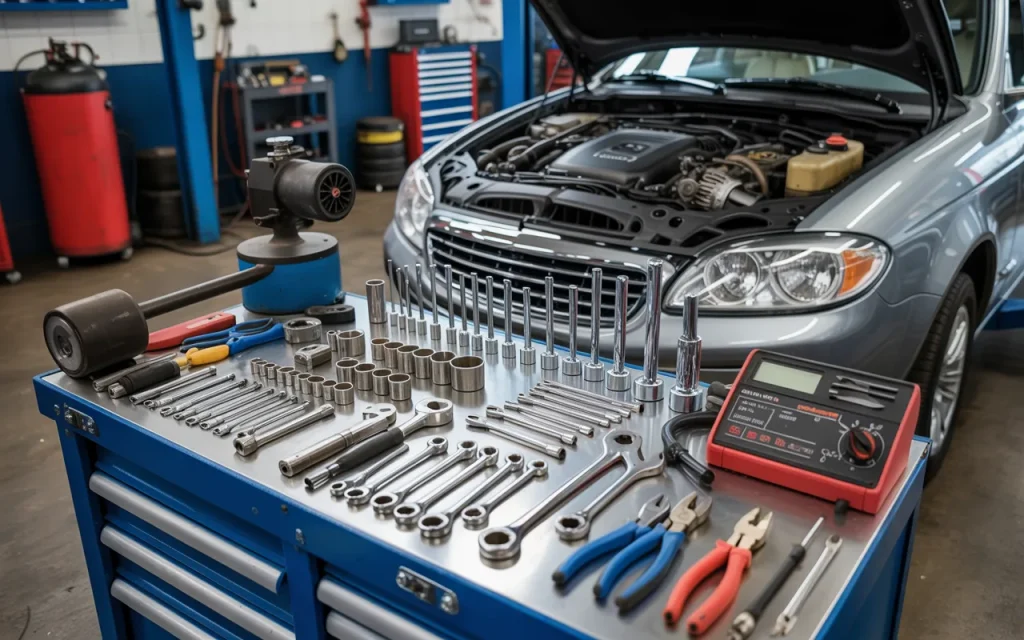
Brake jobs are common in any shop. The tools for brakes include brake caliper tools, brake bleeder kits, and disc brake piston tools. Some calipers screw in, some push in. The right tool makes the job quick and easy.
A brake bleeder is used to remove air from the brake lines. Air in the lines makes the brake pedal feel soft. A vacuum bleeder or pressure bleeder does the job in minutes.
Engine and Transmission Tools
Engine work often requires pullers, presses, and special holders. A harmonic balancer puller removes the crankshaft pulley. A transmission jack holds the transmission steady while you lower it from the car.
Torque wrenches are also in this category. They ensure bolts are tightened to the right spec. Too loose and things fall apart. Too tight and bolts break. A click-type torque wrench is the most common.
Suspension and Steering Tools
Working on suspension means dealing with springs, ball joints, and tie rods. These parts are under high tension. Spring compressors are used carefully to remove strut springs. Ball joint presses push old joints out and new ones in.
Tie rod tools help separate the tie rod from the steering knuckle without damaging the rubber boot. A pickle fork works but often tears the boot. A proper separator is a better choice.
Organization and Storage
A messy toolbox leads to wasted time. Mechanics who stay organized find tools faster and work more efficiently.
Toolboxes and Tool Carts
Toolboxes come in many sizes. A small home box holds basics. A professional box is large, with deep drawers and ball-bearing slides. The top of the line boxes cost thousands of dollars, but they last a lifetime.
Tool carts are smaller and roll around the shop. Mechanics load a cart with the tools they need for a specific job. This saves walking back and forth to the main box.
Magnetic Trays and Parts Organizers
Small parts like bolts, nuts, and clips are easy to lose. Magnetic trays hold metal parts and keep them from rolling away. Parts organizers with compartments help sort fasteners by size and location.
Good organization also means labeling. Many mechanics label their socket rails and wrench racks. When a job is done, every tool goes back in its spot.
“A clean toolbox is a sign of a clean mind. I can walk into any shop and tell who the top mechanics are just by looking at their tool organization.” – James K. Williams, Shop Owner with 35 Years Experience
Safety Tools and Equipment
Working on cars has risks. Good mechanics protect themselves with the right safety gear.
Safety glasses are worn for almost every job. Grinding, hammering, and working under cars all pose eye injury risks. Gloves protect hands from cuts, burns, and chemicals. Nitrile gloves are popular because they resist oil and fuel.
A good floor jack and jack stands are non-negotiable. Never work under a car supported only by a jack. Jack stands are rated by weight capacity. A good set holds the car safely while you work.
Wheel chocks prevent the car from rolling. Even on flat ground, a car can move. Chocks behind the rear wheels add safety.
The Shift to Cordless Tools
In the past ten years, cordless tools have changed the shop. Battery technology has improved so much that cordless impacts, ratchets, and lights are now as strong as their air-powered cousins.
Many mechanics now ask what tools do mechanics use the most and answer with cordless brands like Milwaukee, DeWalt, and Snap-on. The advantage is mobility. You can work in a parking lot, on a roadside, or in a shop without dragging an air hose.
The downside is battery cost. A full set of cordless tools with multiple batteries can cost as much as a used car. But for many, the freedom is worth the price.
How to Choose Your First Set of Tools
If you are starting out, you do not need to buy everything at once. Focus on the basics first.
Start with a good 3/8-inch ratchet and socket set. Add a set of combination wrenches in metric sizes. Buy a few screwdrivers and a pair of slip-joint pliers. As you take on more jobs, add tools as needed.
Quality matters. Cheap tools break and can cause injury. You do not need the most expensive brand, but avoid the very cheapest. Look for tools with a lifetime warranty. Many mid-range brands offer good value.
Buy used when you can. Estate sales, pawn shops, and online marketplaces often have high-quality tools for a fraction of the new price. Older US-made tools are often better than new imports.
Frequently Asked Questions
1. What tools do mechanics use the most on a daily basis?
Most mechanics use ratchets, sockets, combination wrenches, and an OBD2 scanner daily. These tools cover the majority of repair tasks from simple maintenance to complex diagnostics.
2. What is the most important tool for a beginner mechanic?
A 3/8-inch drive ratchet and socket set is the best starting point. It handles most common jobs like oil changes, brake work, and basic engine repairs. Add a set of combination wrenches next.
3. Are cordless tools worth the cost for home mechanics?
Yes, if you work on cars regularly. A cordless impact wrench and a good battery system save time and effort. For occasional use, a basic set of hand tools may be enough to start.
4. What tools do mechanics use the most for electrical problems?
A digital multimeter and a scan tool are the top two tools for electrical issues. The multimeter checks circuits and sensors. The scan tool reads codes and monitors live data from the car’s computer.
5. How much does a professional mechanic spend on tools?
A professional mechanic often spends $10,000 to $30,000 on tools over their career. High-end toolboxes and specialty tools make up a large part of that cost. Many shops require mechanics to provide their own hand tools.
Conclusion
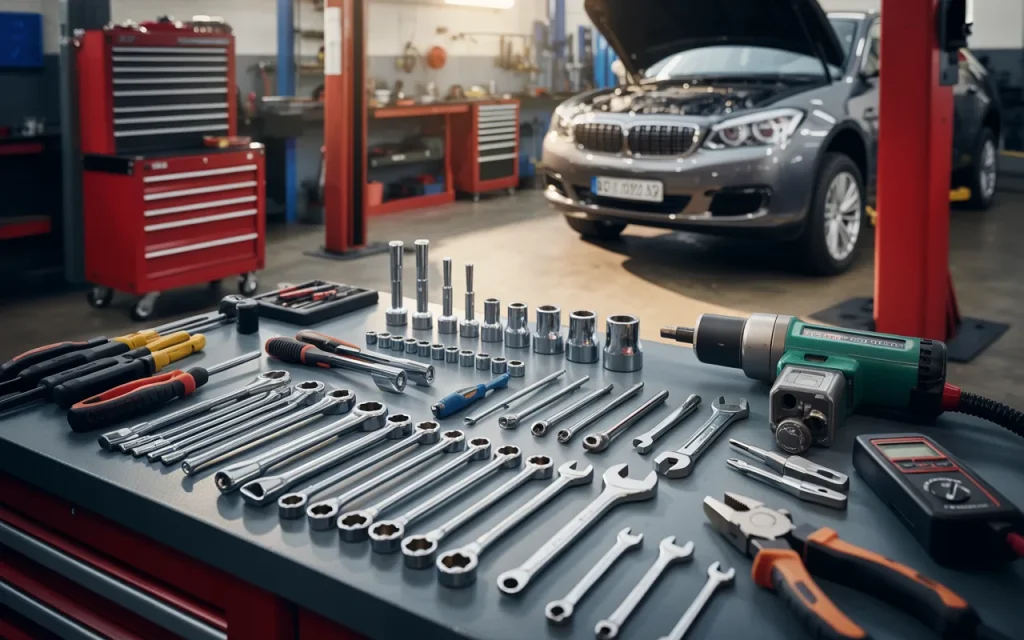
Knowing what tools do mechanics use the most gives you a clear path whether you are starting a career or building a home garage. The list starts with basic hand tools like ratchets, sockets, and wrenches. It grows to include power tools, diagnostic scanners, and specialty items for specific jobs.
The best mechanics do not just collect tools. They learn to use each tool well. They keep their tools clean and organized. They invest in quality where it matters most. And they never stop learning how new tools can make their work better and safer.
If you are just starting out, take it one tool at a time. Buy what you need for the job in front of you. Keep your tools clean and put them back where they belong. Over time, you will build a set that serves you well for years to come.
The garage is a place of learning. Every scratch, every stripped bolt, and every successful repair teaches you something. The tools in your hand are just the helpers. Your skill, patience, and curiosity are what really matter.
Related posts
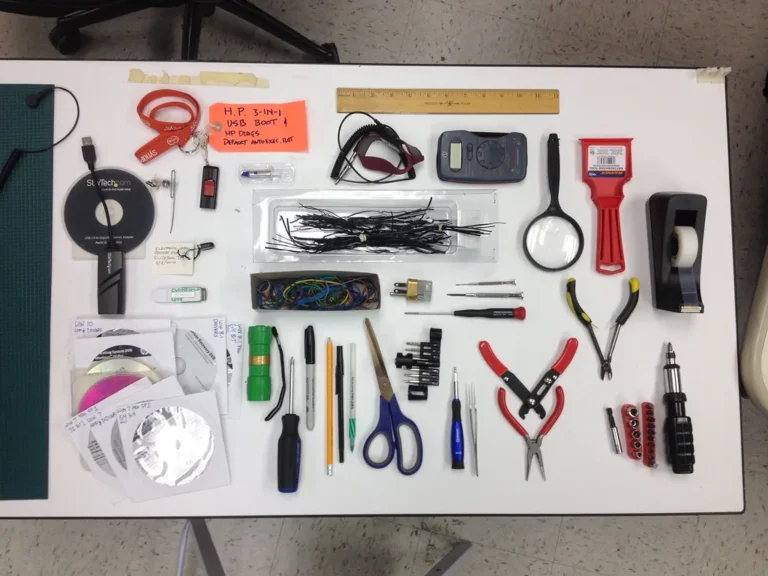 Top Starter Mechanic Tool Kits for Apprentices: Essential Sets for Your Trade
Explore top starter mechanic tool kits for apprentices. Compare sets for mechanics, electricians, and other trades to find your essential tools. Starting an apprenticeship is an…
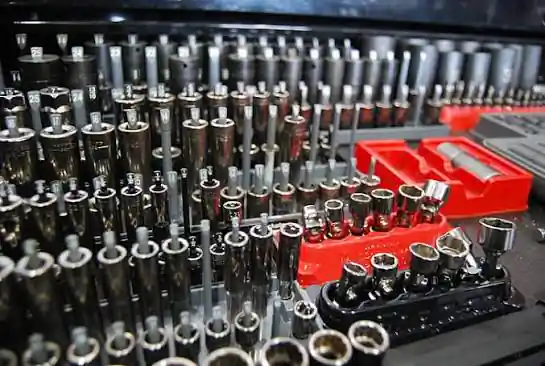 Automotive Tool Kits vs. Mechanic Tool Sets: What’s the Difference?
Understand the key differences between automotive tool kits vs. mechanic tool sets. Learn which is best for your car maintenance needs. When looking for tools to…
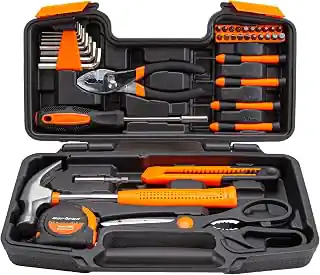 Top Automotive Tool Kits for Garage Workshops: A Buyer’s Guide
Find the top automotive tool kits for garage workshop. Compare versatile sets for car maintenance, home repairs, and DIY projects to choose the best fit. Setting…