
What Is An Automotive Tool Kit Used For
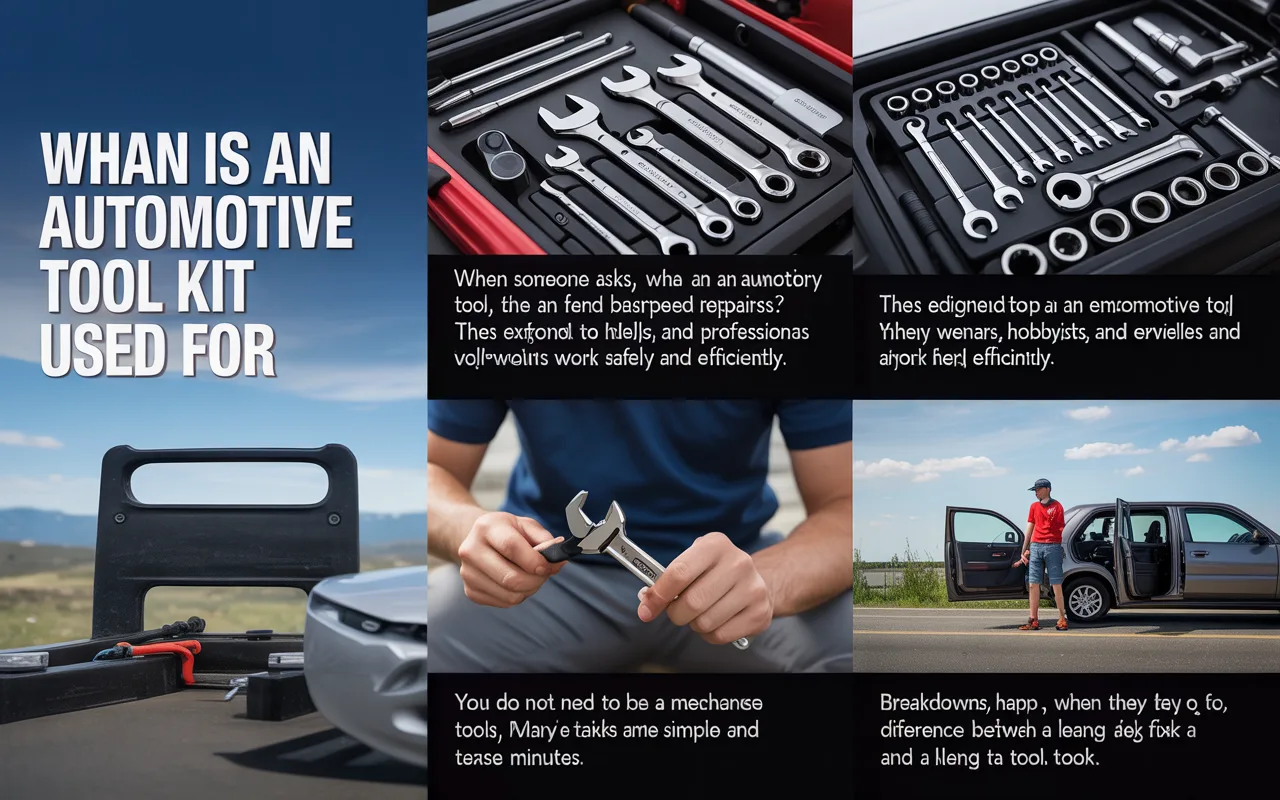
If you have ever asked what is an automotive tool kit used for, the answer is simple: it gives you the right tools to handle car repairs, routine maintenance, and roadside fixes with confidence and safety.
Have you ever popped the hood of your car and felt a little lost? You are not alone. Many of us rely on our vehicles every day, but when something goes wrong, we often feel helpless without the right equipment. That is where a good set of tools comes in. A car tool set is more than just a box of wrenches and screwdrivers. It is your ticket to independence, safety, and savings.
What is an automotive tool kit used for? In short, it is used to perform repairs, maintenance, and emergency fixes on your vehicle. Whether you are changing a flat tire, replacing a dead battery, or simply checking your engine oil, these tools make the job possible. This guide will walk you through everything you need to know about these tool sets, why they matter, and how to use them effectively. By the end, you will feel more prepared to handle common car issues on your own.
A Complete Breakdown
When someone asks, what is an automotive tool kit used for, the answer goes beyond basic repairs. These kits are designed to help car owners, hobbyists, and professionals work on vehicles safely and efficiently. A well-equipped kit allows you to perform tasks ranging from simple maintenance to more complex mechanical work.
An automotive tool kit typically includes a variety of hand tools such as socket sets, ratchets, combination wrenches, screwdrivers, pliers, and specialty tools like a torque wrench or multimeter. Each tool has a specific purpose, but together they form a complete system that helps you diagnose problems, tighten bolts, remove parts, and keep your car running smoothly.
Why Having One Matters
Cars are complex machines, but many common issues do not require a mechanic. With the right tools, you can handle tasks like changing air filters, replacing spark plugs, or fixing a loose belt. This saves you time and money. More importantly, it gives you control. When you understand your car and have the tools to maintain it, you reduce the risk of being stranded by a problem that could have been fixed on the spot.
Key Components of a Standard Automotive Tool Kit
To fully grasp what is an automotive tool kit used for, it helps to know what tools are inside. Not all kits are the same, but most contain a core set of essentials. Below is a table showing the common tools and their main uses.
| Tool | Primary Use |
|---|---|
| Socket Set | Removing and tightening bolts and nuts in tight spaces |
| Combination Wrenches | Turning fasteners where sockets cannot fit |
| Screwdrivers | Removing screws on interior panels, battery terminals, and small parts |
| Pliers | Gripping, bending, or cutting wires and hoses |
| Torque Wrench | Applying exact tightness to bolts like wheel lug nuts |
| Multimeter | Testing electrical systems, battery voltage, and fuses |
| Tire Pressure Gauge | Checking and adjusting tire pressure for safety and fuel economy |
These tools cover the majority of basic car repairs. A quality kit will have both metric and standard sizes, as modern cars often use metric fasteners.
Everyday Uses for an Automotive Tool Kit
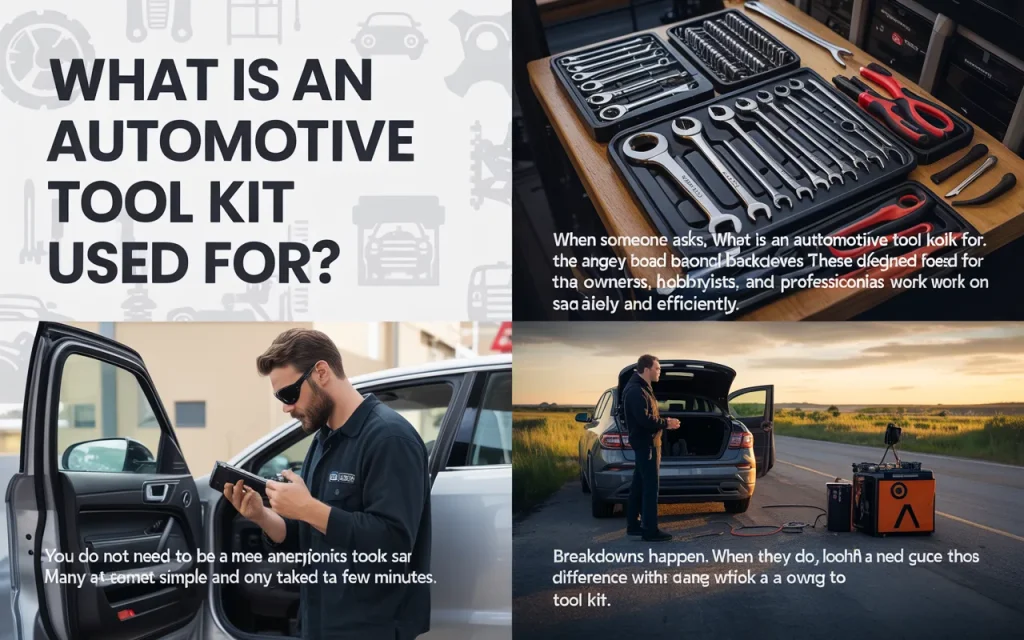
You do not need to be a mechanic to use these tools. Many tasks are simple and only take a few minutes. Here are some common situations where you will find yourself asking what is an automotive tool kit used for and getting a practical answer.
Routine Maintenance
Keeping your car in good shape requires regular checks. With your tool kit, you can:
- Change the engine oil and oil filter
- Replace the air filter and cabin air filter
- Check and top off fluids like coolant, brake fluid, and windshield washer fluid
- Inspect belts and hoses for wear
- Rotate tires to promote even wear
These small jobs prevent bigger problems later. They also help your car run better and last longer.
Emergency Repairs
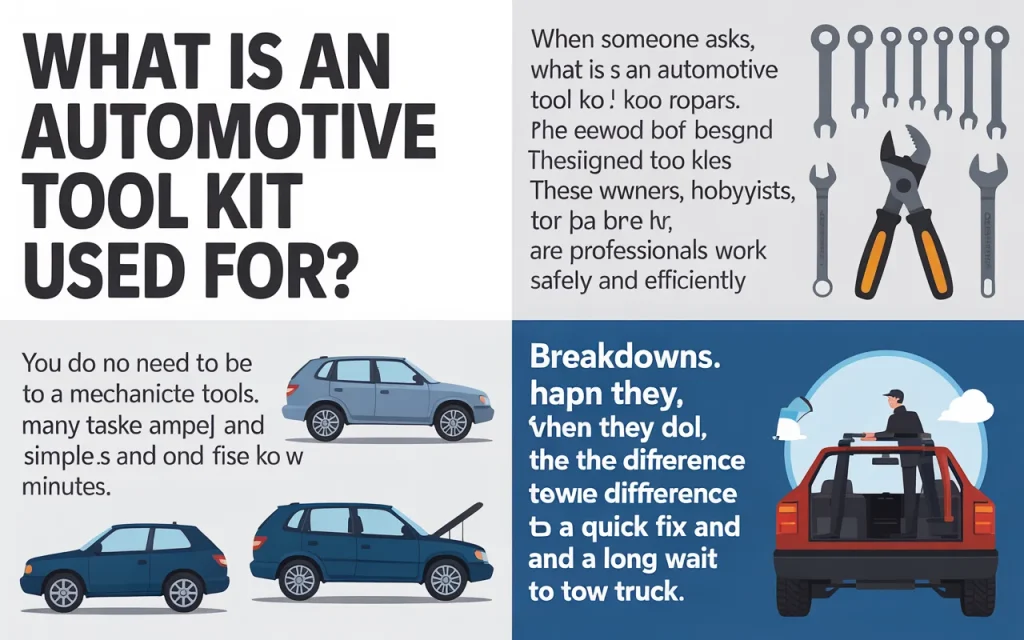
Breakdowns happen. When they do, having a tool kit can be the difference between a quick fix and a long wait for a tow truck. Common roadside emergencies include:
- Changing a flat tire
- Jump-starting a dead battery
- Replacing a blown fuse
- Tightening a loose battery cable
- Fixing a broken belt or hose temporarily
How a Tool Kit Saves You Money
One of the best reasons to own an automotive tool kit is the money you save. Labor costs at repair shops can add up quickly. Even simple jobs like replacing brake pads or changing a serpentine belt can cost hundreds of dollars in labor alone.
When you do these tasks yourself, you only pay for parts. Over time, the savings can be significant. A basic tool kit pays for itself after just one or two repairs.
“The most expensive tool is the one you don’t have when you need it. A basic automotive tool kit is an investment in self-reliance.”
— Mike Allen, automotive journalist and author
Choosing the Right Automotive Tool Kit for Your Needs
Not every tool kit is the same. Some are small and portable, while others are large and meant for a garage. To answer what is an automotive tool kit used for in your own life, you need to think about your skill level, the type of car you drive, and the kinds of repairs you want to do.
For Beginners
If you are new to car repair, start with a basic kit that includes:
- ⅜-inch drive socket set with both metric and standard sizes
- Set of combination wrenches (8mm to 19mm)
- Screwdrivers (flathead and Phillips)
- Slip-joint pliers and needle-nose pliers
- Tire pressure gauge
- Flashlight
This setup is enough for most basic maintenance and emergency repairs.
For Enthusiasts
If you enjoy working on cars or own an older vehicle, consider a larger set with:
- ½-inch drive socket set for larger fasteners
- Torque wrench for precision tightening
- Multimeter for electrical work
- Specialty tools like a breaker bar, wire strippers, and a trim removal tool
These tools allow you to tackle more complex jobs like brake work, suspension repairs, and electrical troubleshooting.
Safety Tips When Using Automotive Tools
Using tools correctly keeps you safe and prevents damage to your car. Before you start any repair, keep these safety tips in mind.
Use the Right Tool for the Job
Using a screwdriver as a pry bar or pliers on a bolt can damage the tool and the car. Always use the proper tool for the task.
Wear Safety Gear
Safety glasses protect your eyes from debris. Gloves keep your hands clean and shield them from sharp edges and hot surfaces. If you are working under the car, use jack stands, not just a jack.
Work in a Well-Lit Area
Good lighting helps you see what you are doing and reduces mistakes. A portable work light or headlamp is a great addition to any tool kit.
Organizing Your Tools for Easy Access
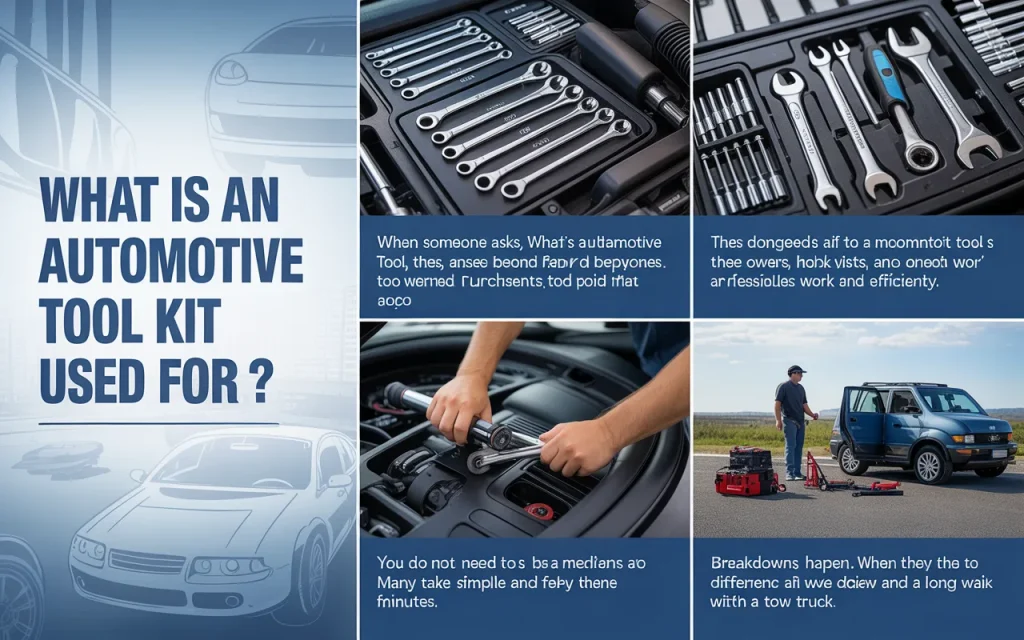
A disorganized tool kit is frustrating and wastes time. Keeping your tools organized helps you find what you need quickly, especially in an emergency.
| Organization Tip | Benefit |
|---|---|
| Use a tool box with labeled compartments | Saves time finding tools |
| Keep sockets on rails or trays | Prevents losing small pieces |
| Clean tools after each use | Prevents rust and extends tool life |
| Store in a dry place | Protects tools from moisture damage |
When you know where each tool is, you spend less time searching and more time fixing.
Common Misconceptions About Automotive Tool Kits
Many people avoid buying a tool kit because of common myths. Let us clear those up.
Myth 1: You Need to Be a Mechanic to Use One
Not true. Many repairs are simple and come with step-by-step guides online. A tool kit gives you the ability to try these repairs yourself.
Myth 2: All Tool Kits Are Expensive
There are affordable options that include everything a beginner needs. You can start small and add tools over time as your skills grow.
Myth 3: Modern Cars Are Too Complicated to Work On
While modern cars have advanced electronics, many mechanical parts are still easy to service. Tasks like changing air filters, batteries, and light bulbs remain straightforward.
“The best way to learn about cars is to start with the basics. A simple tool kit and a willingness to learn can take you further than you think.”
— Christine Gable, automotive educator and author
How an Automotive Tool Kit Enhances Road Trip Safety
Before a long drive, checking your car is a smart habit. A tool kit lets you perform a quick safety inspection. You can check tire pressure, tighten battery connections, and ensure fluids are at the correct levels.
If something goes wrong during your trip, having tools on hand gives you options. You might fix a loose hose, replace a fuse, or change a tire without waiting for roadside assistance. This peace of mind is invaluable, especially when traveling with family.
Teaching Others How to Use Automotive Tools
Knowing how to use a tool kit is a skill you can share. Teaching a teenager or a partner basic car care builds confidence and prepares them for emergencies. Start with simple tasks like checking tire pressure, changing a flat tire, or jump-starting a battery.
When you teach someone what is an automotive tool kit used for, you give them more than tools. You give them independence and safety on the road.
Maintaining Your Tools for Long Life
Good tools last a long time if you care for them. After each use, wipe off dirt and grease. Check for rust and apply a light coat of oil to metal surfaces. Keep tools in a dry place, and never leave them in the trunk for long periods where moisture can cause rust.
Inspect your tools regularly. If a ratchet or wrench becomes worn, replace it. A broken tool can cause injury or damage your car.
“A tool is only as good as its maintenance. Take care of your tools, and they will take care of you.”
— Tom Boyd, professional mechanic and shop owner
Frequently Asked Questions
What is an automotive tool kit used for in emergencies?
It is used for emergency tasks like changing a flat tire, jump-starting a battery, replacing fuses, and making temporary repairs to belts or hoses until you reach a shop.
Do I need both metric and standard tools?
Yes. Most modern vehicles use metric fasteners, but older cars and some domestic models may have standard sizes. A kit with both ensures you are prepared.
Can I use an automotive tool kit for other things?
Absolutely. These tools are useful for home repairs, bicycle maintenance, furniture assembly, and many DIY projects around the house.
How do I know which tool kit to buy?
Consider your skill level and what repairs you plan to do. Beginners should start with a 50 to 100-piece set that includes sockets, wrenches, screwdrivers, and pliers.
Is it safe to work on my car myself?
Yes, as long as you follow safety rules. Always use jack stands when lifting the car, disconnect the battery when working on electrical parts, and never work under a car supported only by a jack.
Conclusion
Understanding what is an automotive tool kit used for is the first step toward becoming more self-sufficient with your vehicle. These kits are not just for professional mechanics. They are for anyone who wants to handle basic car maintenance, save money on repairs, and stay safe on the road.
A good tool kit gives you the freedom to fix small problems before they become big ones. It helps you perform routine checks that keep your car running smoothly. It also prepares you for unexpected breakdowns, turning a stressful situation into one you can manage.
Whether you are a beginner or an experienced DIYer, having a reliable set of tools is one of the smartest investments you can make. Start with a basic kit, learn how to use each tool, and build your skills over time. Your car will thank you, and so will your wallet.
Remember, every expert was once a beginner. With the right tools and a little patience, you can handle many car tasks on your own. So go ahead, open that hood, and take the first step. You have got this.
Related posts
 Top Starter Mechanic Tool Kits for Apprentices: Essential Sets for Your Trade
Explore top starter mechanic tool kits for apprentices. Compare sets for mechanics, electricians, and other trades to find your essential tools. Starting an apprenticeship is an…
 Automotive Tool Kits vs. Mechanic Tool Sets: What’s the Difference?
Understand the key differences between automotive tool kits vs. mechanic tool sets. Learn which is best for your car maintenance needs. When looking for tools to…
 Top Automotive Tool Kits for Garage Workshops: A Buyer’s Guide
Find the top automotive tool kits for garage workshop. Compare versatile sets for car maintenance, home repairs, and DIY projects to choose the best fit. Setting…