
How to Pack Tools for Travel: Secure Packing and TSA Rules
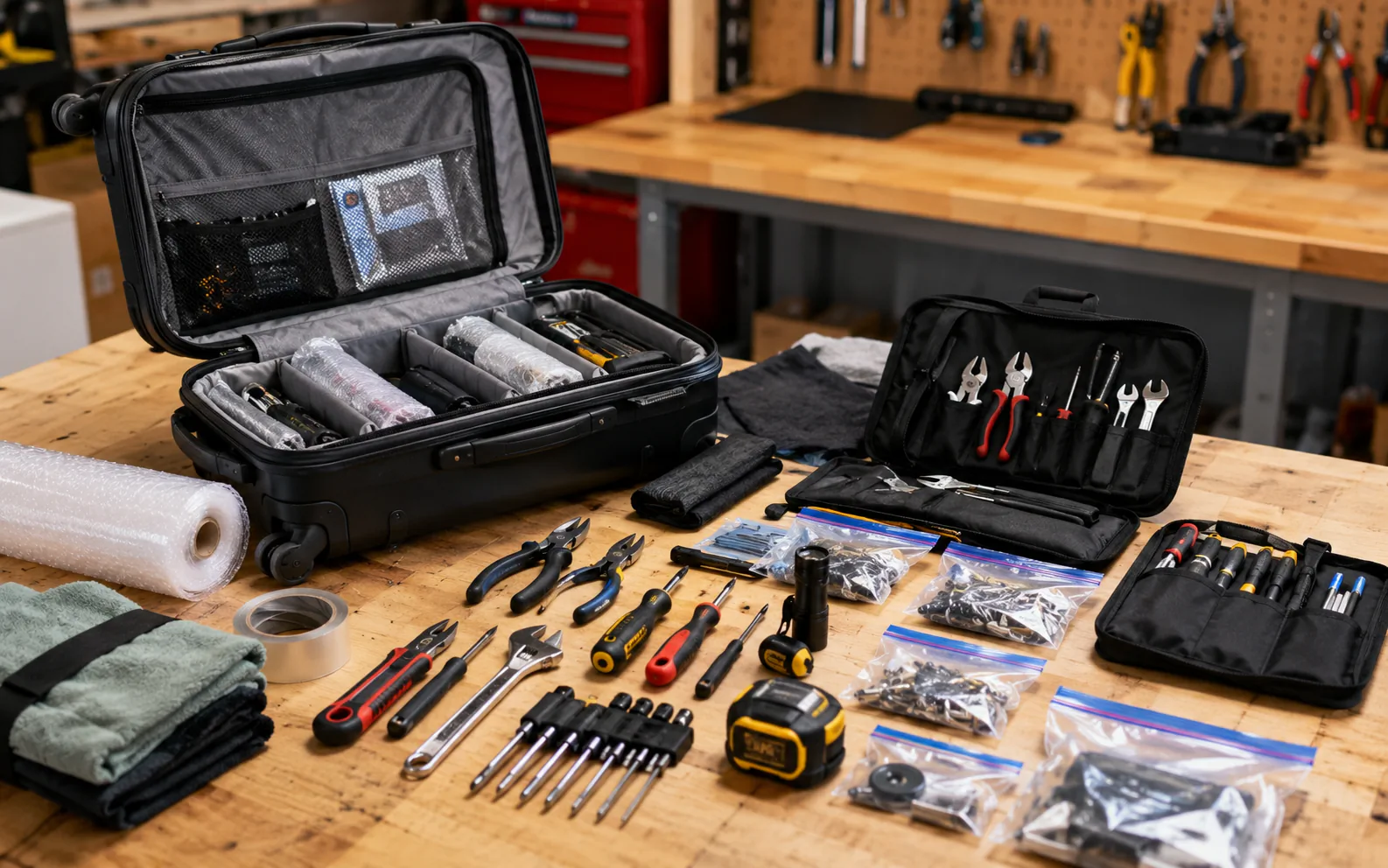
Packing tools for travel requires balancing physical protection with strict security regulations. To pack tools successfully, you must separate your gear by size and power source.
Before packing, group your tools, document them with photos, and wrap sharp edges to prevent damage to other gear or your suitcase. Power tool batteries require special handling: lithium-ion batteries must be removed from the tools and carried in your cabin baggage to comply with aviation safety laws.
Safety checks
- Tools longer than seven inches must be packed in checked baggage.
- Lithium-ion batteries must go in your carry-on bag, never in checked luggage.
- Wrap tool rolls tightly with plastic wrap or heavy bands to prevent them from opening during rough handling.
- Keep a printed photo inventory inside your tool case to assist security inspectors.
| Topic | When it helps | What to keep in mind |
|---|---|---|
| Step 1 | All travelers, especially professionals with high-value kits. | Failing to document serial numbers of expensive power tools can complicate insurance claims. |
| Step 2 | Chisels, saws, screwdrivers, and drill bits. | Thin plastic bags or standard packing tape will easily puncture and fail under pressure. |
| Step 3 | Air travel and long-distance road trips. | Standard plastic toolboxes can crack under the weight of other luggage in a cargo hold. |
| Step 4 | Preventing internal damage during rough handling. | Do not leave empty space in your bag; items will shift violently when tossed by baggage handlers. |
Covers inventorying wrapping choosing cases
Step 1. Inventory and Document Your Tools
Lay out every tool you plan to bring. Take a high-resolution photo of the entire spread, then list each item on a sheet of paper.
- All travelers, especially professionals with high-value kits.
- Failing to document serial numbers of expensive power tools can complicate insurance claims.
- Print two copies of your inventory.
- Time required – 10-15 minutes.
- Materials needed – Smartphone camera, paper, pen.
Step 2. Protect Sharp Edges and Delicate Parts
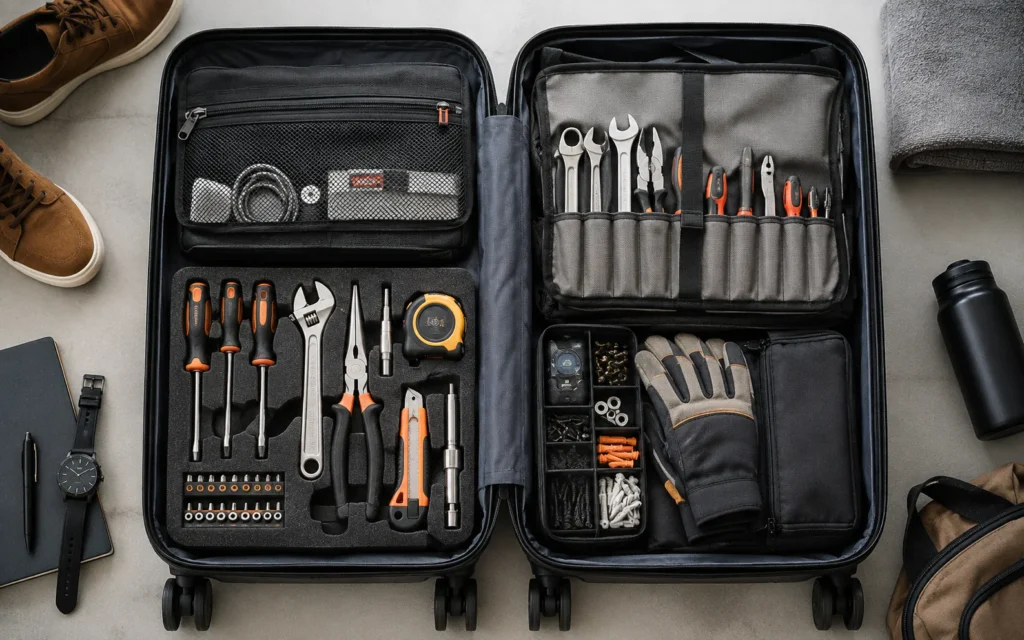
Sharp blades, drill bits, and chisel tips can easily puncture tool bags, scratch other equipment, or injure baggage inspectors. Cover all sharp edges with dedicated plastic guards, heavy-duty cardboard, or thick leather sheaths.
- Chisels, saws, screwdrivers, and drill bits.
- Thin plastic bags or standard packing tape will easily puncture and fail under pressure.
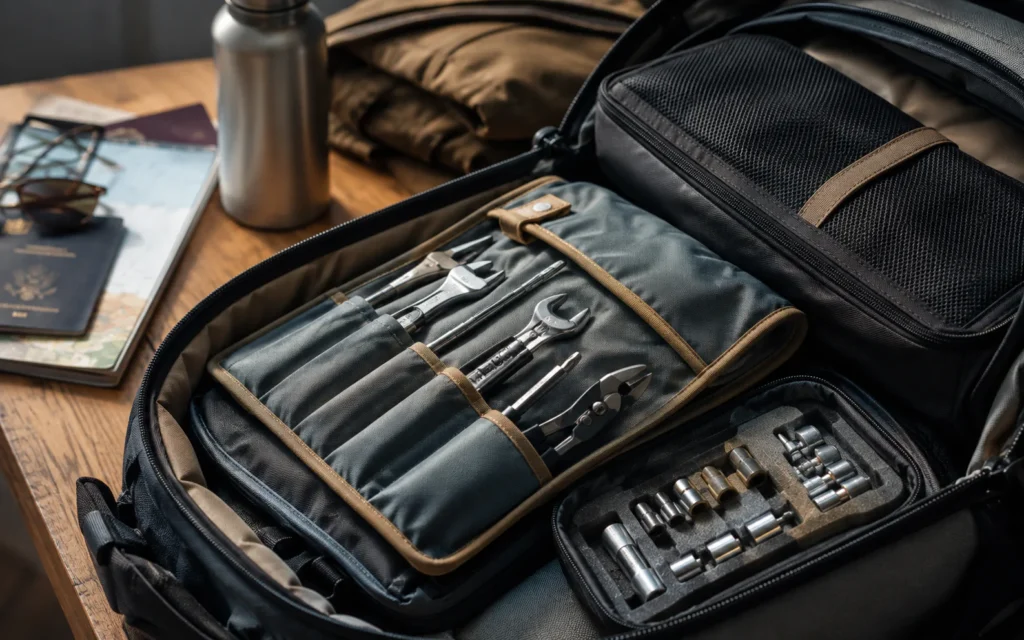
- Use heavy-duty rags or canvas tool rolls to wrap individual hand tools before placing them in a larger box.
- Protection level – High.
- Materials needed – Guards, rags, heavy tape.
Step 3. Choose and Prepare the Container
Select a hard-sided tool case or a heavy-duty rolling bag designed for construction environments. If you are flying, ensure the case is equipped with TSA-approved locks.
- Air travel and long-distance road trips.
- Standard plastic toolboxes can crack under the weight of other luggage in a cargo hold.
- Opt for a case with customizable foam inserts to keep each tool nested in its own secure slot.
- Container type – Hard-sided case.
- Security – TSA-approved locks.
Step 4. Secure the Interior to Prevent Shifting
Loose tools will clatter together, causing scratches, calibration loss, or structural damage. Pack the container tightly, filling any empty spaces with bubble wrap, foam blocks, or clean work clothes.
- Preventing internal damage during rough handling.
- Do not leave empty space in your bag; items will shift violently when tossed by baggage handlers.
- Give the packed case a gentle shake.
- Void fill – Foam or bubble wrap.
- Security trick – Plastic wrap outer layer.
Understanding TSA and Airline Regulations for Tools
Aviation security agencies have strict rules regarding what tools can enter the aircraft cabin. The primary rule of thumb for hand tools is the seven-inch limit.
Power tools, including drills, circular saws, and nail guns, are never allowed in carry-on luggage. They must be checked.
When packing batteries in your carry-on, protect the terminals to prevent short circuits. You can do this by placing each battery in its own plastic bag, putting tape over the metal contacts, or using the original protective caps.
A technician traveling with a 9-inch wrench must pack it in checked luggage, while their 6-inch precision screwdriver set can technically go in their carry-on bag.Leaving lithium-ion batteries inside checked power tools, which violates aviation safety rules and can lead to your bag being held.Hand tools 7 inches or shorter: Allowed in carry-on (subject to officer discretion).Hand tools over 7 inches: Must be packed in checked baggage.Power tools: Must be packed in checked baggage.Lithium-ion batteries: Must be carried in carry-on baggage only.Sharp tools (saws, knives, chisels): Must be securely wrapped and checked.
| Tool Type | Carry-On Baggage | Checked Baggage | Special Requirements |
|---|---|---|---|
| Screwdrivers under 7 inches. | Allowed. | Allowed. | Must not have sharp, specialized tips. |
| Wrenches over 7 inches. | Prohibited. | Allowed. | Must be securely packed. |
| Cordless Drills. | Prohibited. | Allowed. | Remove batteries before checking. |
| Lithium-Ion Batteries. | Allowed. | Prohibited. | Keep terminals protected; limit watt-hours. |
Choosing and Preparing Your Travel Tool Case
The container you choose is your tools primary defense against rough handling. Standard fabric suitcases rarely offer enough structural support for heavy, metallic items.
If you must use a soft-sided bag, choose one made from heavy ballistic nylon with reinforced stitching and a solid bottom panel. To prepare the interior, line the bottom and sides with dense closed-cell foam.
Weight limits are another critical factor. Most airlines impose strict weight limits on checked bags, typically around 50 pounds.
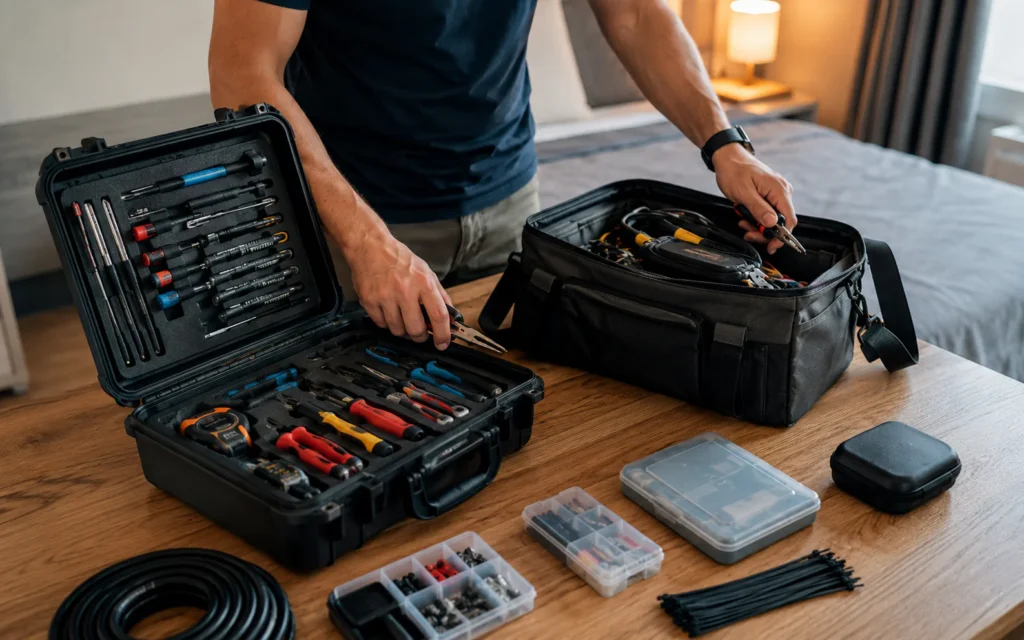
Using a heavy-duty, weather-resistant hard case with custom-cut foam inserts to transport a delicate digital multimeter and calibration tools.Using a cheap, thin plastic toolbox that can easily shatter when dropped or stacked under heavy suitcases in a cargo hold.Hard-sided cases: Best for impact resistance and weather protection.Ballistic nylon bags: Good for flexibility, but require extra internal padding.Closed-cell foam: Ideal for lining cases and creating custom tool slots.Luggage scale: Use this to verify your bag is under the airline weight limit.
Pro Packing Techniques to Prevent Damage and Loss
Even inside a sturdy case, tools can damage each other if they are allowed to shift. One of the most effective ways to prevent movement is the plastic wrap method.
For larger hand tools, group them by type and bind them together using heavy-duty rubber bands or hook-and-loop straps. This turns several loose, shifting items into a single, heavy block that is much easier to secure.
Finally, prepare for the possibility of a security inspection. TSA officers may open your case to examine the contents.
Wrapping a complete socket set in plastic stretch wrap before placing it in a checked suitcase to ensure the sockets stay in their designated slots.
Leaving small screws, drill bits, or sockets loose in a large compartment, where they can easily get lost or jam tool mechanisms.
FAQs
Can I bring power tools on a plane?
Yes, you can bring power tools on a plane, but they must be packed in your checked baggage. You cannot bring power tools in your carry-on luggage.
What is the TSA 7-inch rule for tools?
The TSA allows hand tools, such as screwdrivers, wrenches, and pliers, in carry-on baggage only if they measure seven inches or less in total length. Any hand tool longer than seven inches must be packed in your checked baggage.
How should I pack lithium-ion tool batteries for travel?
Lithium-ion batteries must be packed in your carry-on baggage. They are prohibited in checked luggage due to fire risks.
Should I lock my tool case when traveling by air?
Yes, you should lock your tool case, but you must use a TSA-approved lock. These locks can be opened by security officers using special master keys if they need to inspect your gear.
How do I prevent my tools from rusting during travel?
To prevent rust, ensure your tools are completely dry before packing them. You can wipe them down with a light coat of tool oil and place silica gel packets inside your travel case to absorb any moisture that enters during transit.
Conclusion
Packing tools for travel does not have to be stressful if you prepare systematically. By understanding the seven-inch rule for hand tools and the strict cabin-only requirements for lithium-ion batteries, you can navigate airport security checkpoints without delays or confiscated gear.
Protecting your investment requires choosing a rugged, hard-sided case, cushioning the interior with dense foam, and securing individual tools to prevent shifting. Taking a few extra minutes to document your gear and wrap sharp edges ensures your tools arrive safely, organized, and ready for the job at your destination.
Related posts
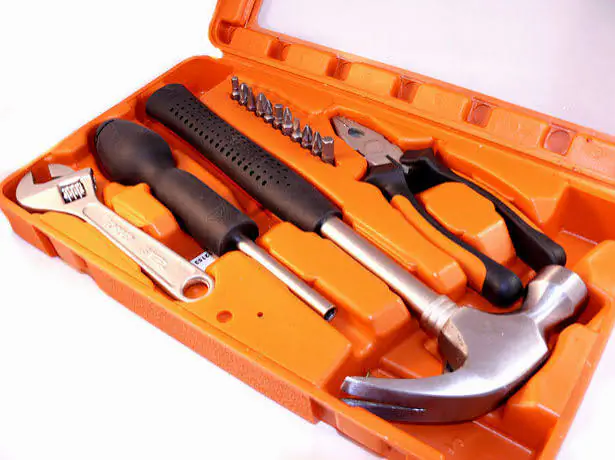 Which Tool Kit Is Worth Buying? How to Choose the Right Set for Your Home
Wondering which tool kit is worth buying? Compare basic household sets, mechanic kits, and power tool combos to find the best tools for your budget and…
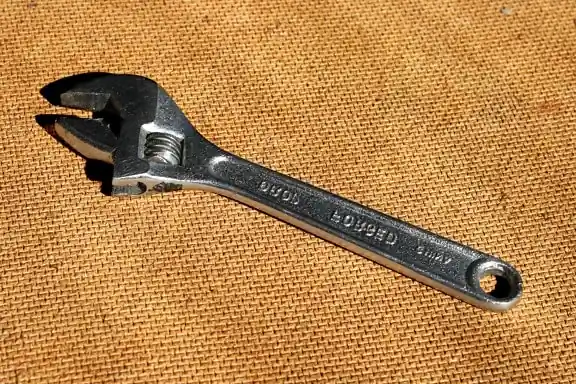 Which Hand Tools Are Made in the USA? Reliable Brands and Buying Rules
Discover which hand tools are still made in the USA. Compare top domestic brands, tool categories, and learn how to verify origin labels before buying. Several…
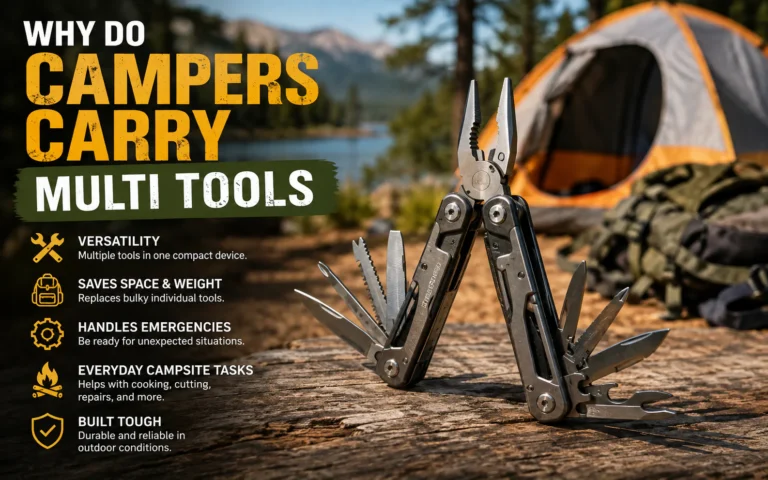 Why Do Campers Carry Multi Tools? Practical Uses in the Field
Why do Campers carry multi tools to handle gear repairs, campsite setup, food prep, and field fixes with minimal weight. Here is why one belongs in…