
How to Use a Torque Wrench Properly: Step-by-Step Setup and Care
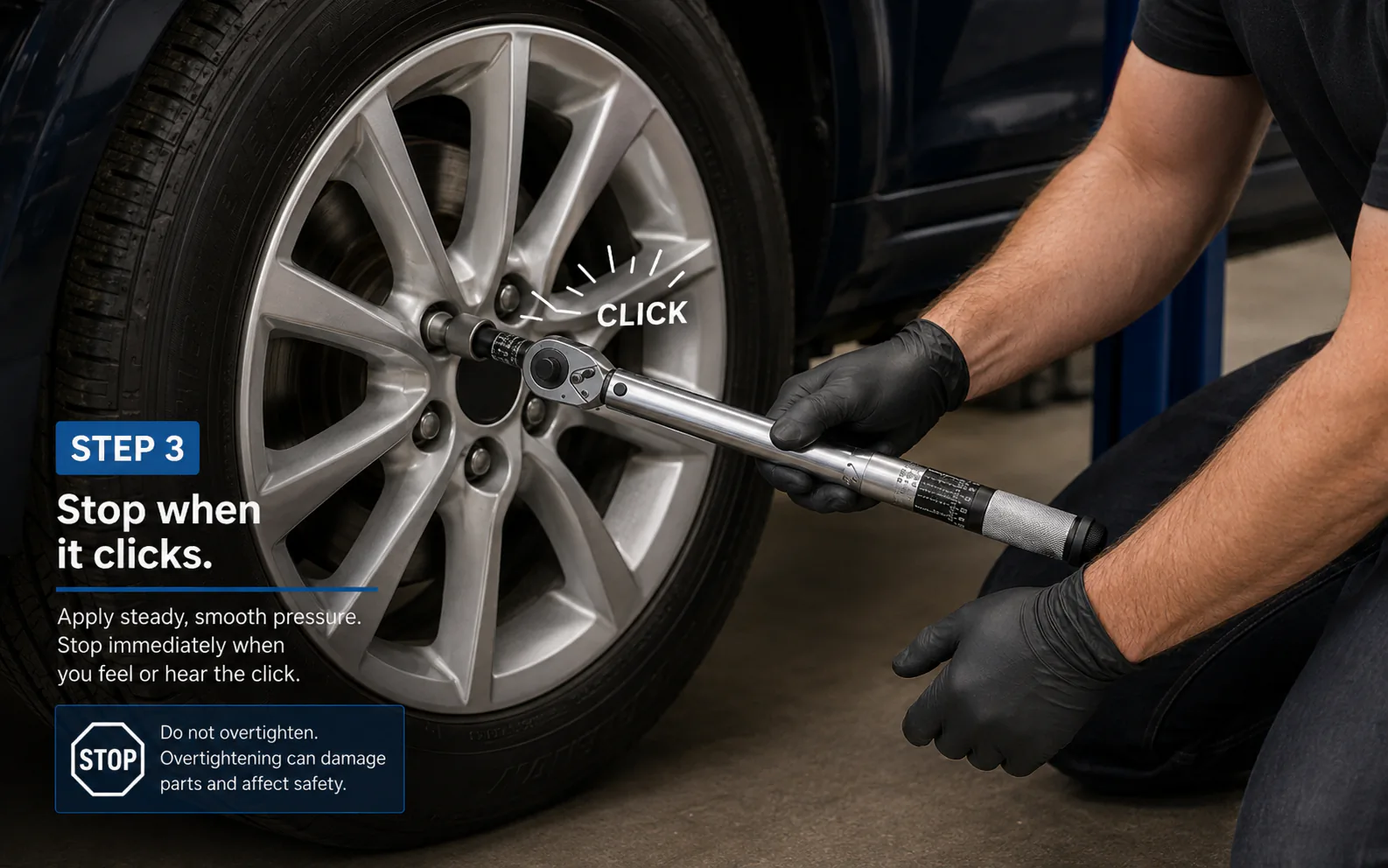
Using a torque wrench properly requires setting the tool to the correct specification, pulling with a smooth and continuous motion, and stopping the moment the wrench clicks or signals that the target torque has been reached. This specialized tool measures the exact rotational force applied to a fastener, ensuring critical bolts on vehicles, bicycles, and machinery are neither too loose nor dangerously over-tightened.
To get started, you must clean the fastener threads, unlock the wrench handle, align the micrometer scale with your target value, and lock it back in place. Once set, place your hand squarely on the center of the handle grip and pull.
Safety checks
- Always pull slowly and smoothly until you hear or feel a single click, then stop immediately.
- Clean threads before tightening; do not lubricate them unless specifically instructed by the manufacturer.
- Never use a torque wrench to loosen stuck bolts or as a general-purpose ratchet.
- Reset the wrench to its lowest marked scale setting before storing it to preserve spring calibration.
| Topic | When it helps | What to keep in mind |
|---|---|---|
| Step 1 | All mechanical assembly tasks. | Do not apply oil or anti-seize unless the manufacturer manual explicitly calls for a wet torque spec. |
| Step 2 | Click-type torque wrenches. | Avoid guessing between markings. |
| Step 3 | Accurate force delivery. | Holding the wrench by the shaft or choking up on the handle changes the leverage and alters the actual torque applied. |
| Step 4 | Preventing over-tightening. | At very low torque settings, the click can be incredibly quiet and subtle. |
Focus strictly on the mechanical
Step 1. Clean and Inspect the Fastener Threads
How to Use a Torque Wrench Properly. Before touching the wrench, ensure the bolt and receiving threads are free of dirt, rust, and debris. Foreign material in the threads creates artificial friction, which fools the torque wrench into clicking before the joint is actually tight.
- All mechanical assembly tasks.
- Do not apply oil or anti-seize unless the manufacturer manual explicitly calls for a wet torque spec.
- Use a wire brush and a clean rag to wipe down the threads until they are completely dry and clear.
- Thread Condition – Dry and clean.
- Risk Level – High if dirty.
Step 2. Unlock and Set the Target Torque Value
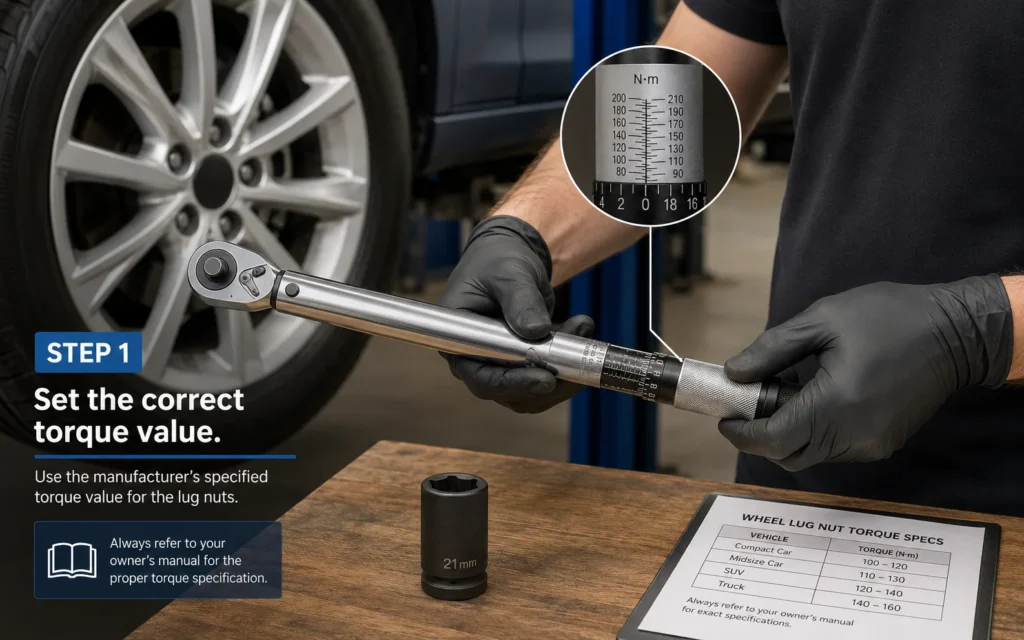
Locate the locking knob or collar at the bottom of the handle. Pull down or unscrew the lock, then rotate the handle to align the major scale on the shaft with the minor markings on the rotating grip.
- Click-type torque wrenches.
- Avoid guessing between markings.
- Double-check whether your specifications are listed in foot-pounds (ft-lbs), inch-pounds (in-lbs), or Newton-meters (Nm).
- Adjustment Type – Manual rotation.
- Precision – High.
Step 3. Position Your Hand and Apply Steady Pressure
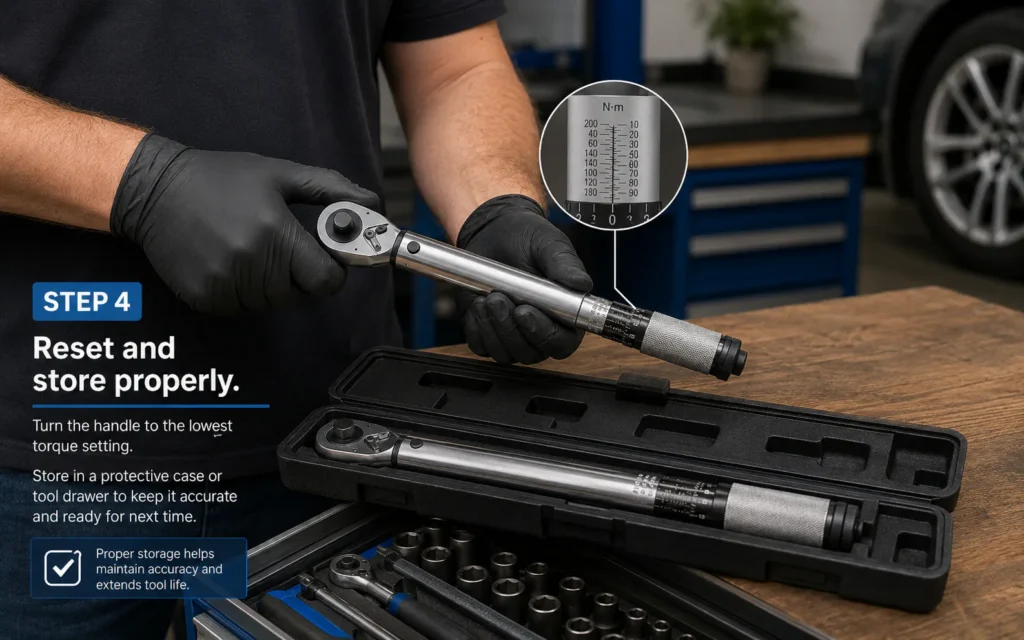
Fit the correct socket onto the wrench head and place it squarely over the fastener. Grip the handle directly in the center of the designated plastic or knurled marking.
- Accurate force delivery.
- Holding the wrench by the shaft or choking up on the handle changes the leverage and alters the actual torque applied.
- Keep your body balanced so you can maintain a steady, controlled pull throughout the rotation.
- Grip Position – Center of handle.
- Pull Speed – Slow and steady.
Step 4. Stop Immediately at the Click
As you reach the target torque, you will feel and hear a distinct click or physical release in the handle. Do not continue to pull or bounce on the wrench to double-check the tightness, as this instantly over-tightens the fastener.
- Preventing over-tightening.
- At very low torque settings, the click can be incredibly quiet and subtle.
- If you suspect you missed the click, loosen the bolt completely and repeat the process from the beginning.
- Feedback Type – Audible and tactile.
- Action Required – Instant stop.
Choosing the Right Torque Wrench for the Job
Torque wrenches come in several distinct designs, each suited for different levels of precision and mechanical tasks. The most common type found in home garages is the click-type wrench, which uses an internal spring mechanism that slips slightly to create a clicking sound when the target limit is met.
Other varieties include beam wrenches, which rely on a simple indicator needle that bends relative to a scale, and digital wrenches, which use electronic sensors to beep or vibrate. Matching your tool to the scale of your project is essential for safety and accuracy.
Using a heavy-duty click wrench on delicate bicycle carbon fiber parts can easily crush the frame because the tool is too large to register low torque values accurately.
Do not use a high-capacity 1/2-inch drive wrench for small fasteners that require low inch-pound measurements.
- Click-Type: Best for general automotive work, wheel lugs, and suspension components.
- Beam-Type: Highly reliable and never goes out of calibration, making it excellent for engine rebuilds.
- Digital/Electronic: Offers maximum precision with LED screens and warning tones, ideal for sensitive aerospace or high-end bicycle components.
| Wrench Type | Best Use Case | Calibration Needs | User Skill Level |
|---|---|---|---|
| Click-Type. | Automotive wheel lugs and suspension. | Requires annual calibration. | Beginner to Intermediate. |
| Beam-Type. | Engine rebuilds and low-torque tasks. | Virtually maintenance-free. | Intermediate (requires visual tracking). |
| Digital. | High-precision aerospace and carbon bikes. | Requires periodic battery checks. | Advanced. |
The Critical Difference Between Dry and Wet Torque
Torque specifications are calculated based on the friction between the threads of the bolt and the receiving hole. A dry torque specification assumes clean, unlubricated metal-on-metal contact.
When threads are lubricated, the wrench will require much less effort to turn the bolt. If you attempt to reach a dry torque specification on a wet bolt, you will over-tighten the fastener, potentially stripping the threads or snapping the bolt shank entirely.
Applying anti-seize to a wheel stud and then tightening it to the standard dry torque spec of 100 foot-pounds can stretch or snap the stud, because the lubricant reduces friction and allows the bolt to turn too far.
Never lubricate threads unless the service manual specifically provides a wet torque specification.
- Dry Torque: Standard default setting. Threads must be clean, dry, and free of oil.
- Wet Torque: Used only when specified. Reduces the required torque reading by roughly 20% to 30% to achieve.
- Thread Lockers: Blue or red thread-locking compounds act as a lubricant while wet, so adjust your technique according.
How to Store and Maintain Your Torque Wrench
A torque wrench is a highly sensitive measuring instrument, not a standard hand tool. The internal spring inside a click-type wrench is calibrated to precise tension levels.
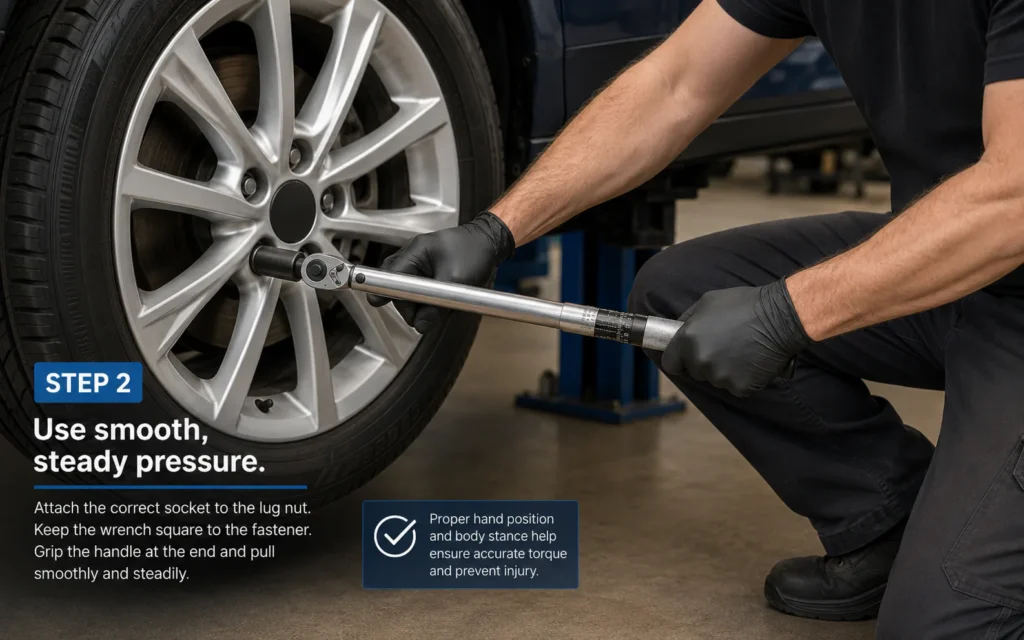
To prevent this, always dial the wrench back down to its lowest marked setting on the scale before putting it away. This relieves the tension on the spring without allowing the internal mechanism to shift out of alignment.
Leaving a click torque wrench stored at 150 foot-pounds for six months compresses the internal spring permanently, causing it to click prematurely the next time it is used.
Do not wind the handle down past the lowest marked number on the scale, as this can dislodge internal components.
- Dial Back to Lowest Setting: Never store a click wrench under tension. Wind it down to the lowest.
- Avoid the Breaker Bar Temptation: Never use your torque wrench to loosen stubborn or rusted bolts, as this.
- Keep It in the Case: Store the tool in its protective hard case to shield it from accidental.
- Handle with Care: Dropping a torque wrench on a concrete floor can instantly knock it out of calibration.
FAQs
Can I use a torque wrench to loosen bolts?
You should never use a torque wrench to loosen stuck or frozen bolts. Doing so can easily exceed the maximum torque limit of the tool and permanently damage the internal calibration mechanism.
What is the 20 percent rule for torque wrenches?
The 20 percent rule states that a torque wrench is most accurate within the top 80 percent of its scale. Avoid using a wrench for tasks that fall within the bottom 20 percent of its maximum limit.
How often should a torque wrench be calibrated?
For casual home use, having your torque wrench calibrated once every year or after every 5,000 clicks is highly recommended. If you drop the wrench or use it heavily on daily projects, it should be checked for accuracy more frequently.
What happens if I click a torque wrench twice?
Clicking the wrench twice often leads to over-tightening. The second pull is usually a quick, jerky motion that applies extra momentum, pushing the fastener past its target limit before the wrench can click again.
Conclusion
Using a torque wrench properly is a fundamental skill that protects both your projects and your tools. By taking the time to clean fastener threads, setting the scale with precision, and pulling with a slow, controlled motion, you ensure that every bolt is tightened to exact specifications.
Remember that your torque wrench is a precision instrument that requires careful handling. Always store it at its lowest marked setting to preserve the internal spring tension, keep it protected in its case, and never use it for heavy loosening tasks.
Related posts
 Which Tool Kit Is Worth Buying? How to Choose the Right Set for Your Home
Wondering which tool kit is worth buying? Compare basic household sets, mechanic kits, and power tool combos to find the best tools for your budget and…
 Which Hand Tools Are Made in the USA? Reliable Brands and Buying Rules
Discover which hand tools are still made in the USA. Compare top domestic brands, tool categories, and learn how to verify origin labels before buying. Several…
 Why Do Campers Carry Multi Tools? Practical Uses in the Field
Why do Campers carry multi tools to handle gear repairs, campsite setup, food prep, and field fixes with minimal weight. Here is why one belongs in…