
How To Maintain A Tool Backpack
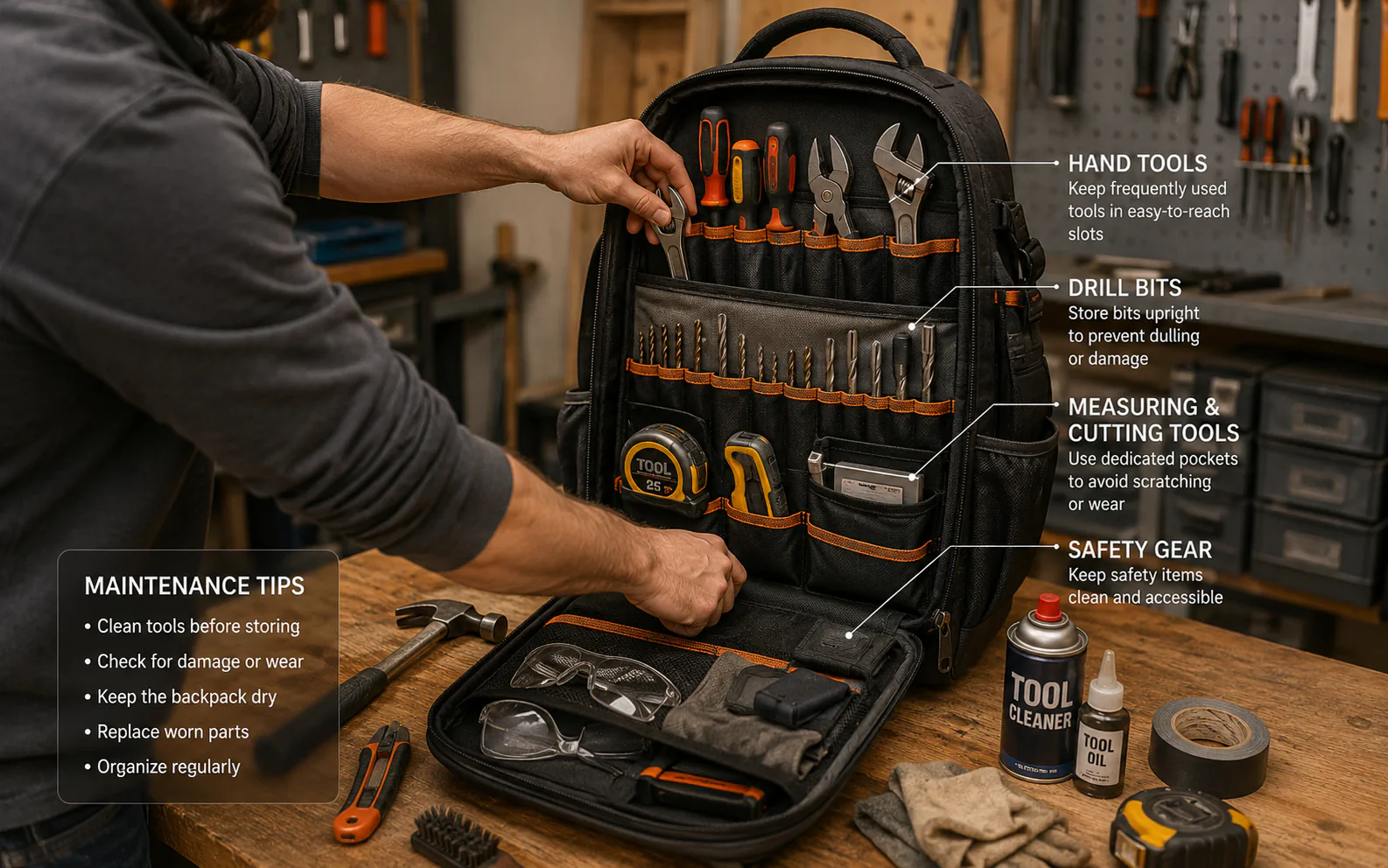
Learn how to maintain a tool backpack with simple cleaning, smart organization, and regular inspections. Keep your gear ready and extend the life of your bag for years.
Your tool backpack is more than just a carrier. It is your mobile workshop, your companion on every job site, and the home for your valuable tools. You depend on it daily, so it deserves a little attention in return. A well-cared-for backpack not only protects your tools but also makes your work easier and faster. Nobody wants to waste time searching for a wrench in a messy, dusty bag.
The good news is that learning how to maintain a tool backpack is not complicated. With a few simple habits, you can keep your bag clean, organized, and in great shape for many years. This guide will walk you through everything you need to know, from cleaning different materials to organizing your tools smartly. Let us get started.
Why You Should Maintain a Tool Backpack Regularly
Many people overlook their tool backpack until something breaks. A torn strap, a stuck zipper, or a musty smell often comes as a surprise. But these problems do not happen overnight. They build up from daily use, dirt, and neglect.
Regular maintenance saves you money. Replacing a quality tool backpack costs a good amount. Simple care like cleaning and inspecting can double or even triple its lifespan. “A good backpack is an investment,” says the team at Wild Rock. Treating it with care protects that investment.
Maintenance also keeps your tools safe. Dirt and moisture inside the bag can cause rust on your metal tools. A clean, dry backpack prevents this damage. Plus, an organized bag helps you work faster. You spend less time digging and more time doing.
Cleaning Your Tool Backpack: A Step-by-Step Guide
Cleaning is the most important part of how to maintain a tool backpack. But you cannot just throw it in the washing machine. Different materials need different care. Let us break it down.
Identify the Material First
Before you clean anything, check what your backpack is made of. Most tool backpacks use canvas, nylon, polyester, or leather.
- Canvas: Tough and durable but absorbs water easily.
- Nylon and Polyester: Lightweight and somewhat water-resistant. Heat can damage them.
- Leather: Looks great and lasts long but needs special products. Never soak leather in water.
Look for a care label inside the main compartment. If the label is missing, you can usually guess the material by feel. Canvas feels heavy and rough. Nylon feels lighter and smoother. Leather has a distinct smell and texture.
Gather Your Cleaning Supplies
You do not need fancy products. Here is a simple list:
| Supply | Purpose |
|---|---|
| Mild detergent (like Dawn or SimpleGreen) | General cleaning |
| Soft-bristle brush or old toothbrush | Scrubbing stains and zippers |
| Microfiber cloth or sponge | Wiping surfaces |
| Large bucket or basin | Soaking the bag |
| Silicone spray or beeswax | Lubricating zippers |
Avoid harsh chemicals like bleach. They can damage the fabric and weaken the stitching.
The Cleaning Process
Follow these steps to clean your backpack properly.
1. Empty the Bag Completely
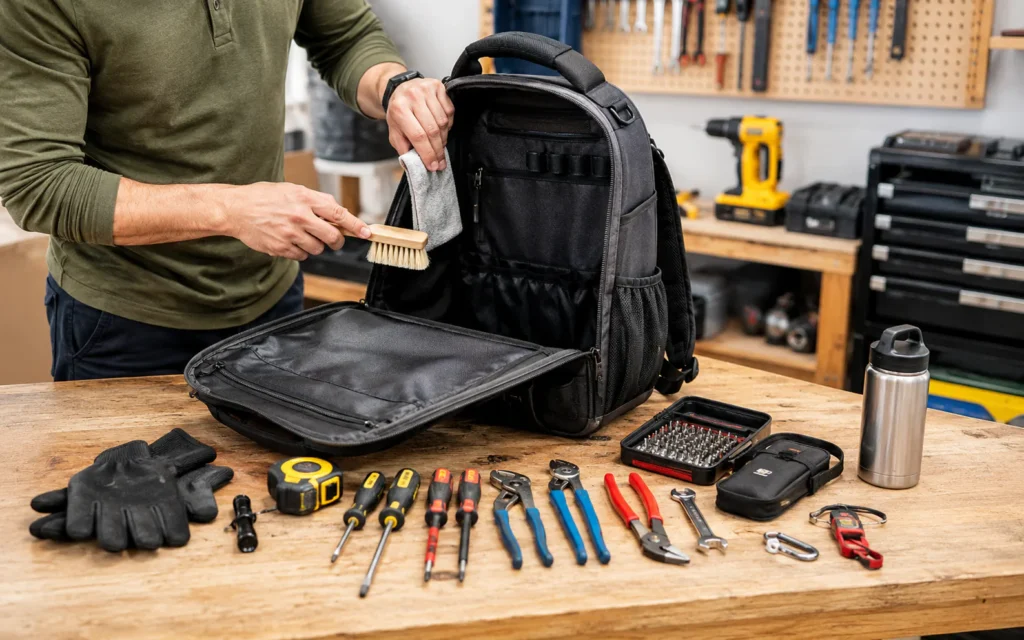
Take out every tool, every screw, and every piece of debris. Shake the bag upside down to remove loose dirt. Use a vacuum with a crevice attachment to suck out dust from the corners. Dirt trapped in seams causes wear over time, so be thorough.
2. Spot Clean Stains
Mix a small amount of mild detergent with warm water. Dip your soft brush into the soapy water and gently scrub any stained areas. Work in a circular motion. Let the soap sit for a few minutes, then wipe it off with a damp cloth.
3. Hand Wash the Bag
Fill a bucket or sink with lukewarm water and add your detergent. Submerge the backpack and swish it around. Let it soak for 15 to 30 minutes to lift deep dirt. Pay extra attention to the back panel and shoulder straps. These areas absorb sweat and body oils.
For nylon or canvas bags, you can gently scrub the entire surface with your brush. For leather, only wipe with a damp cloth. Do not submerge leather.
4. Rinse Thoroughly
Drain the soapy water and refill the basin with clean, cold water. Rinse the backpack until the water runs clear. Leftover soap attracts more dirt later, so rinse well.
5. Dry Properly
This step is very important. Never put your tool backpack in a dryer. Heat can shrink the fabric, melt coatings, or damage foam padding. Instead, hang the bag in a well-ventilated area away from direct sunlight. UV rays can weaken nylon and polyester over time.
Stuff the bag with clean towels to help it hold its shape while drying. Allow it to air dry completely before storing or using it again. A damp bag can grow mold and mildew.
Zipper Care: A Critical Part of How to Maintain a Tool Backpack
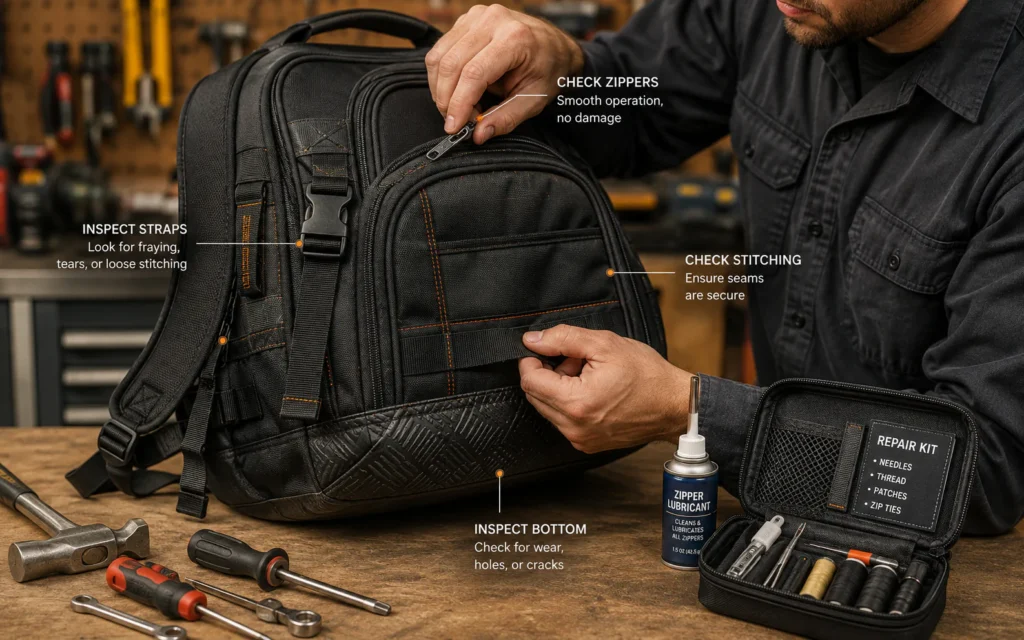
Zippers are the weakest link on any backpack. They take a lot of stress every time you open and close the bag. Dirt, grit, and sharp tools can damage them quickly.
Clean the Zippers Regularly
Over time, dust and small particles get trapped in the zipper coils. This prevents the zipper from closing properly. To clean the coils, scrub them with soapy water using an old toothbrush. After scrubbing, blow out the zippers with an air hose to remove any remaining grit.
Lubricate the Zippers
After cleaning, apply a lubricant to the zipper teeth. Silicone spray, beeswax, or a dedicated zipper lubricant works well. This keeps the zipper sliding smoothly and prevents it from sticking. “Clean and lubricate your zippers twice a year (more often if you work on a job site with a high amount of airborne debris)”.
Protect Zippers from Sharp Objects
Sharp tools can cut the zipper coils. Once a coil is cut, the zipper often cannot be repaired. Always store sharp tools with the cutting edges facing down, away from the zippers. “Most of the cut zipper coils we see are the result of sharp tools stored inside the bag with the sharp side facing up”.
Do Not Overstuff the Bag
Overstuffing puts too much pressure on the zippers. If you struggle to close the zipper, your bag is too full. This stress can cause the zipper to separate permanently. Only carry what you need for the job.
Organizing Your Tool Backpack for Easy Access
Organization is a big part of how to maintain a tool backpack. When tools are organized, they cause less wear on the bag. They also make your work more efficient.
Sort Tools by Function
Group your tools by what they do. Keep screwdrivers and bits together. Put pliers and wire cutters in another section. Store measuring tools like tape measures in a separate pocket. This logical grouping helps you find things quickly.
Place Heavy Tools at the Bottom
Weight distribution matters a lot for backpack comfort and bag longevity. Store the heaviest items, like cordless drills and hammers, near the bottom and centered in the main compartment. This keeps the backpack stable and reduces strain on the straps and seams.
Use the Put-It-Back Rule
The best way to stay organized is to put each tool back in its spot right after use. This simple habit prevents clutter from building up. It also ensures you never leave a tool behind on a job site.
Consider Removable Panels and Pouches
Many tool backpacks come with removable tool panels or boards. These panels have elastic loops that hold tools vertically. They make tools easy to see and grab. Small pouches are great for bits, hex keys, and other small items. Use clear pouches so you can see the contents at a glance.
Keep a Regular Sorting Schedule
As your projects change, the contents of your backpack may change too. Set aside time every month to sort through your bag. Remove any tools you no longer need. Check for broken items that need replacing.
Storage Tips for Your Tool Backpack
How you store your backpack when not in use affects its condition. Proper storage prevents damage and keeps the bag ready for action.
Store in a Dry Place
Moisture is the enemy of both fabric and metal tools. Always store your backpack in a dry area away from humidity. Avoid leaving it in a damp basement or a hot car. Humidity can cause mold on the fabric and rust on your tools.
Keep It Out of Direct Sunlight
Prolonged exposure to sunlight breaks down nylon and polyester fibers. It can also fade the colors and weaken the straps. Store your backpack in a shaded area or inside a closet.
Use Silica Gel Packs
Toss a few silica gel desiccant packs into the bottom of your backpack. These packs absorb moisture and keep the inside of the bag dry. Replace them every few months for the best results.
Do Not Hang by the Straps
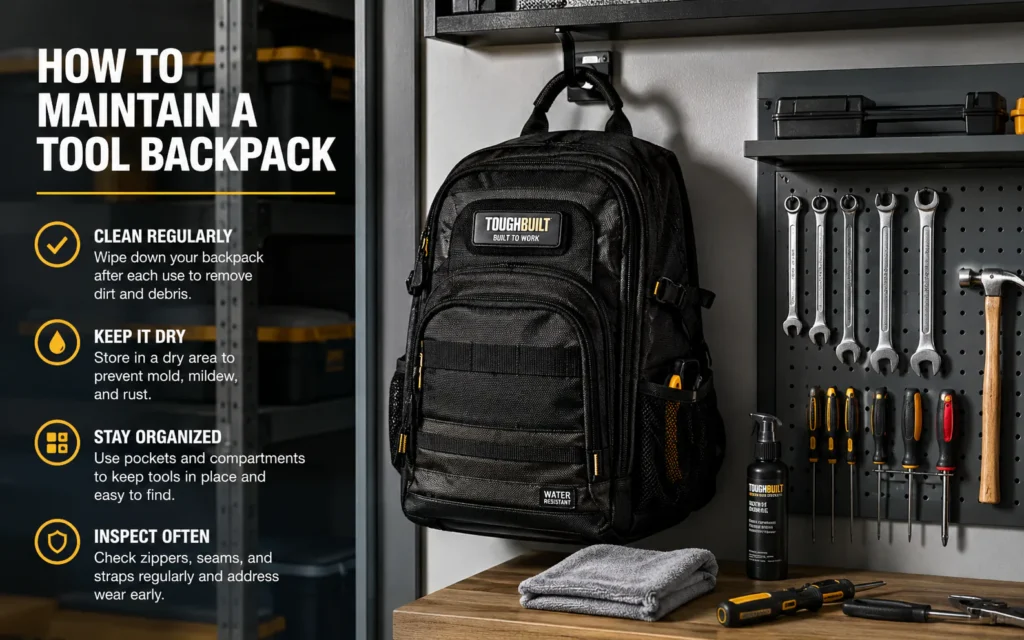
When storing, avoid hanging the backpack by its shoulder straps for long periods. The weight of the bag can stretch the straps and cause them to weaken at the attachment points. Place the bag on a shelf or in a cabinet instead.
Additional Maintenance Tips
Beyond cleaning and organizing, there are a few more things you can do to keep your backpack in top shape.
Inspect Straps and Seams Regularly
Check the shoulder straps, handles, and seams for signs of wear. Look for loose threads, fraying fabric, or weakened stitching. Fix small issues early before they turn into big tears. A simple stitch can save a strap from breaking completely.
Keep Tools Clean and Dry
Before you put tools back into your backpack, wipe them down. Remove dust, grease, and moisture. “Spray it with WD-40 and wipe it off with a rag before putting back in the box”. Clean tools keep the inside of your backpack cleaner too.
Rotate Between Bags
If you own more than one tool bag, rotate their use. Giving each bag a break reduces wear on any single one. This is especially helpful if you carry heavy loads regularly.
Address Wet Conditions Immediately
If your backpack gets wet from rain or a spill, act fast. Remove all tools and dry them separately. Allow the backpack to air dry completely before storing. For leather bags, dry them away from direct heat to avoid cracking.
Common Mistakes to Avoid
Knowing what not to do is just as important as knowing what to do. Here are some common errors people make with their tool backpacks.
| Mistake | Consequence |
|---|---|
| Never cleaning the bag | Dirt accelerates wear; moisture causes rust |
| Overloading with too many tools | Straps and zippers break; back strain |
| Storing sharp tools facing up | Zippers get cut and fail |
| Ignoring small rips | Small tears become large, irreparable holes |
| Leaving the bag in a damp place | Mold grows; metal tools corrode |
Avoid these mistakes, and your backpack will last much longer. As one expert notes, “Dirt and debris accelerate fabric/zipper deterioration”. Regular care prevents these problems.
Frequently Asked Questions
How often should I clean my tool backpack?
You should do a basic cleaning every month. Shake out debris and wipe down the exterior. Do a deeper hand wash every three to six months, depending on how much you use the bag.
Can I put my tool backpack in the washing machine?
It depends on the material. Canvas and nylon bags can sometimes go in the machine on a gentle cycle, but hand washing is safer. Always check the care label first. Leather bags should never go in the washing machine.
How do I remove bad smells from my tool backpack?
Baking soda works well. Sprinkle it inside the bag and let it sit overnight. Vacuum it out the next day. You can also wipe the inside with a mixture of water and white vinegar, then let it air dry.
What should I do if my zipper gets stuck?
Do not pull hard. Clean the zipper coils with a toothbrush and soapy water. Then apply a lubricant like beeswax or silicone spray. If the zipper is still stuck, check for fabric caught in the teeth.
How can I prevent rust on my tools inside the backpack?
Make sure all tools are completely dry before putting them away. Use silica gel packs inside the bag to absorb moisture. You can also wipe metal tools with a light coat of oil to prevent rust.
Conclusion
Learning how to maintain a tool backpack is a simple skill that pays off in many ways. A clean, organized backpack saves you time, protects your tools, and lasts much longer. The steps are easy: clean regularly, care for the zippers, organize smartly, and store properly.
“Simple routines such as proper drying, correct storage, and mindful use can add years to backpacks”. That is a powerful statement. Your tool backpack works hard for you every day. Give it the care it deserves, and it will serve you well for years to come.
Start with one small habit today. Empty your bag and give it a quick wipe. Check the zippers and maybe apply some lubricant. These small actions add up to big results. Your back, your tools, and your wallet will thank you.
Related posts
 Which Tool Kit Is Worth Buying? How to Choose the Right Set for Your Home
Wondering which tool kit is worth buying? Compare basic household sets, mechanic kits, and power tool combos to find the best tools for your budget and…
 Which Hand Tools Are Made in the USA? Reliable Brands and Buying Rules
Discover which hand tools are still made in the USA. Compare top domestic brands, tool categories, and learn how to verify origin labels before buying. Several…
 Why Do Campers Carry Multi Tools? Practical Uses in the Field
Why do Campers carry multi tools to handle gear repairs, campsite setup, food prep, and field fixes with minimal weight. Here is why one belongs in…