
How Do I Organize A Tool Bag Efficiently
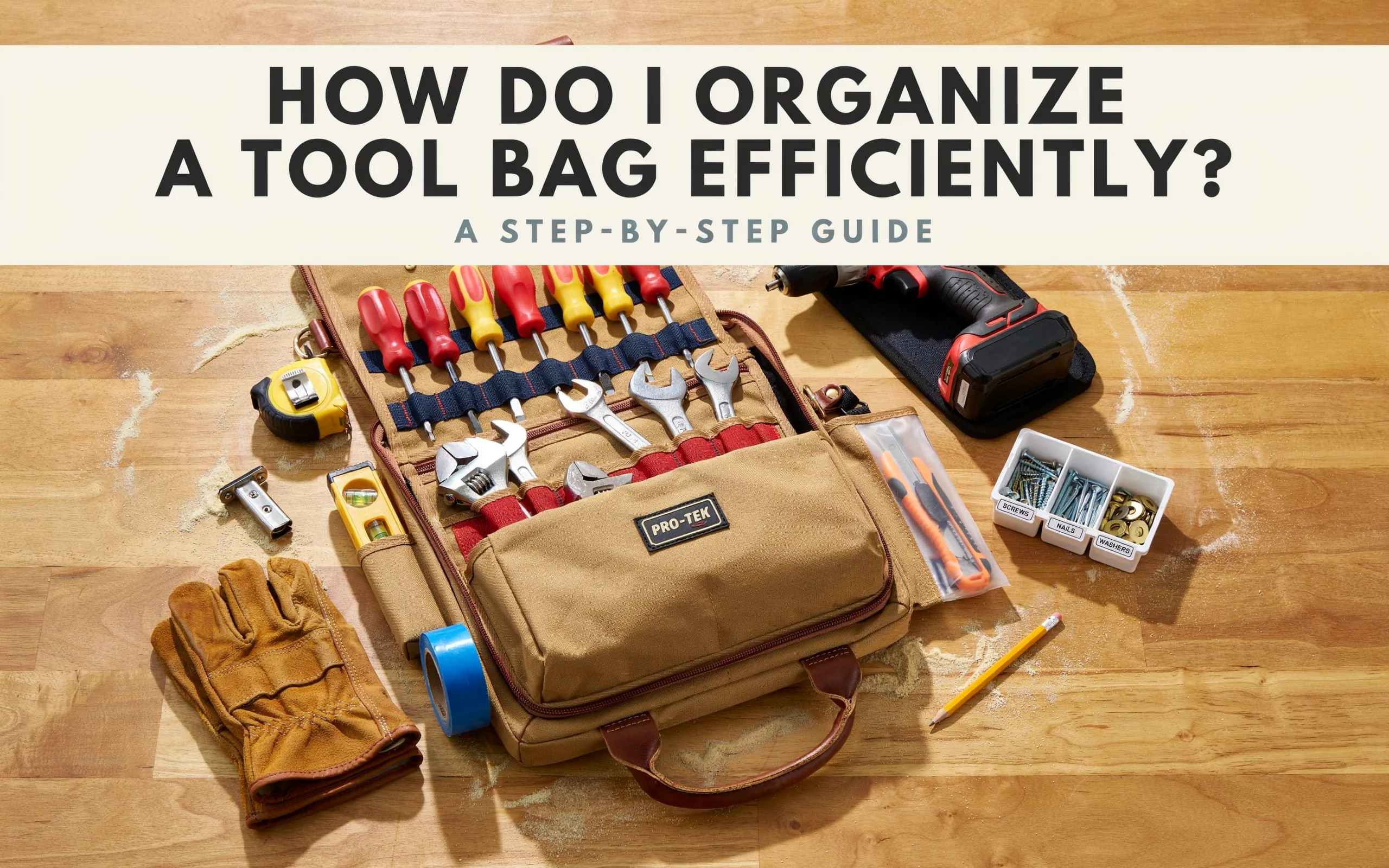
If you want to know how I organize a tool bag efficiently, the secret is to group tools by use, protect your measuring tools, and use pouches. I will show you my simple method to find any tool in seconds, cut weight, and save time on every job.
I used to carry a tool bag that felt like a black hole. I would put my hand inside, feel around for a screwdriver, and pull out a handful of nails, a wrench, and a roll of tape. The tool I needed was always at the bottom. I wasted so much time digging through that bag. It was heavy, noisy, and frustrating.
A few years ago, I decided to change this. I wanted to know how I organize a tool bag efficiently so I could work faster and stop losing my temper. I tried a lot of different methods. Some worked well. Some were a total waste of time. Now, I have a system that I use every day. It saves me time and keeps my tools safe.
When I organize a tool bag efficiently, I start with a simple rule. If I do not use it every week, it does not go in the bag. This is the most important step. My bag is for daily work. It is not a storage unit for old tools. I keep a separate box for tools I only need once a month. This keeps my daily bag light and easy to carry.
In this guide, I want to share my method. I will show you the exact steps I organize a tool bag efficiently. I will talk about which tools to keep, which to leave out, and how to arrange them. This is not a theory. This is what I do on my jobs. I hope it helps you as much as it helped me.
My Main Rule for a Tidy Tool Bag
The main rule I organize a tool bag efficiently is to sort by frequency of use. This is the backbone of my whole system. It makes everything else easier. You cannot have a good bag if you ignore this rule.
Group by How Often You Use Each Tool
Before you put anything in the bag, you need to think about your work. What do you reach for the most? For me, it is my tape measure, my utility knife, and my screwdrivers. These are my “hot” tools. They need to be right on top or in an outside pocket.
What tools do you use once a day? Those go in the main compartment but near the top. What tools do you use once a week? Those go at the bottom or in a side pocket. When I organize a tool bag efficiently, this is my first step. It stops me from burying my daily tools under stuff I rarely touch.
A good way to do this is to empty your bag. Put all your tools on the floor. Now, pick up each tool and ask, “Do I use this every day?” If the answer is yes, put it in one pile. If the answer is no, put it in a different pile. You will be surprised how many tools you carry but never use.
Leave the Rarely Used Tools Behind
This is hard for some people. We like to be ready for anything. But carrying a tool “just in case” makes the bag heavy and messy. When I organize a tool bag efficiently, I leave the rarely used tools in my workshop. I keep them in a small box in my truck.
If I need that special wrench once a month, I can walk to the truck and get it. It takes two minutes. It is much better than carrying that heavy wrench around every single day. Your back will thank you. Your shoulders will thank you. And your bag will stay clean and organized.
Pick the Right Bag for Your Tools
The bag itself is very important. You cannot I organize a tool bag efficiently if you use the wrong bag. It is like trying to put a puzzle together with the wrong pieces. It just will not work.
Open Tote vs. Closed Bag
There are two main types of tool bags. The open tote has no zipper on top. It is open all the time. This is great for quick access. You can see all your tools at once. But tools can fall out if you tip it over.
The closed bag has a zipper. It keeps your tools safe and clean. It keeps them dry in the rain. But it takes more time to open and close. When I organize a tool bag efficiently, I prefer a closed bag for power tools and a tote for hand tools. I use a closed bag because I work outside a lot. It keeps my tools dry.
Pockets are Your Best Friend
You need a bag with many pockets. Inside pockets and outside pockets. These pockets are the secret to good organization. They hold your small tools in place. When I organize a tool bag efficiently, I use pockets for every small thing. Screwdrivers go in pockets. Pliers go in pockets. Markers and pencils go in pockets.
If you just throw small tools into the main space, they will fall to the bottom. They will get lost under your hammer and drill. You will waste time searching for them. So, a bag with lots of pockets is a huge help.
Size Matters for Your Tool Bag
Do not buy a bag that is too big. A big bag gives you space, but it also makes you carry extra stuff. It is tempting to fill that space. When I organize a tool bag efficiently, I buy a bag that just fits my daily tools. If the bag is small, it forces me to be smart about what I carry.
A smaller bag is easier to carry. It is easier to put in the truck. It is easier to carry up a ladder. It is easier to find things inside. Do not think you need a huge bag. Think about what you actually need. Then get a bag that fits that stuff and nothing more.
How I Set Up the Main Compartment
The main compartment is the big space in the middle of your bag. This is where your big tools live. How you arrange this space is key. Here is how I organize my main space.
Heavy Tools Go at the Bottom
This is a simple but important rule. Put your heaviest tools at the bottom of the bag. This includes hammers, heavy drills, and big wrenches. When the heavy tools are at the bottom, the bag is stable. It will not tip over. It is easier to carry. The center of gravity is low.
When I organize a tool bag efficiently, I put my hammer at the bottom, flat on its side. I put my heavy drill next to it. This creates a solid base. Then I put lighter things on top. If you put heavy tools on top, the bag is top-heavy. It will fall over. It will swing around when you carry it. This makes it hard to work.
Vertical Placement for Easy Reach
I like to stand my tools up in the main compartment. I lean them against the sides of the bag. This is better than laying them flat on top of each other. When tools are stacked flat, you have to lift all the top tools to get the bottom tool. That is a waste of time.
When I lean tools against the sides, I can see each tool handle. I can grab the one I want without moving everything else. When I organize a tool bag efficiently, I use the vertical space inside the bag. I stand up my wrenches, pliers, and screwdrivers. It is like a tool belt, but inside a bag. It makes finding things so much faster.
The Power Tool Rule
Power tools are bulky. They take up a lot of space. When I organize a tool bag efficiently, I keep my power tools in their own case. I do not put them in the same bag as my hand tools. Many tools come with their own cases. I use those cases.
I keep my drill in its case. I keep my saw in its case. Then I carry my hand tools in a separate bag. This makes each bag lighter. It also protects my power tools from damage. Hand tools can scratch and dent power tools. Keeping them separate solves this.
Organizing Pockets and Small Pouches
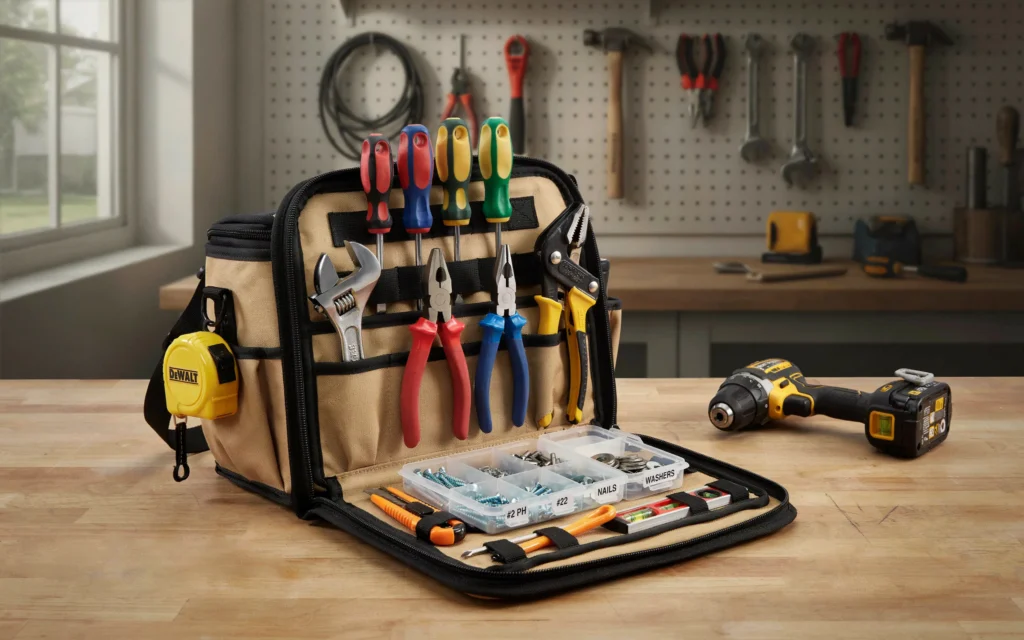
The little pockets on your bag are important. They are for small things like bits, pencils, and tape. Here is how I organize a tool bag efficiently using these pockets.
Use Smaller Pouches Inside the Bag
This is one of my favorite tricks. I use small zipper pouches inside my main bag. These are like bags within a bag. I have one pouch for drill bits. I have one pouch for screws and anchors. I have one pouch for markers and pencils.
These pouches keep my small stuff from getting lost at the bottom of the bag. When I organize a tool bag efficiently, I label these pouches. I use a simple marker to write “BITS” or “SCREWS” on the outside. This saves me so much time. I can just reach in and grab the pouch I need.
Keep Your Measuring Tools Safe
Measuring tools are delicate. Tape measures and levels need special care. A bent tape measure is useless. A level with a crack is useless. When I organize a tool bag efficiently, I keep these tools in a separate pocket.
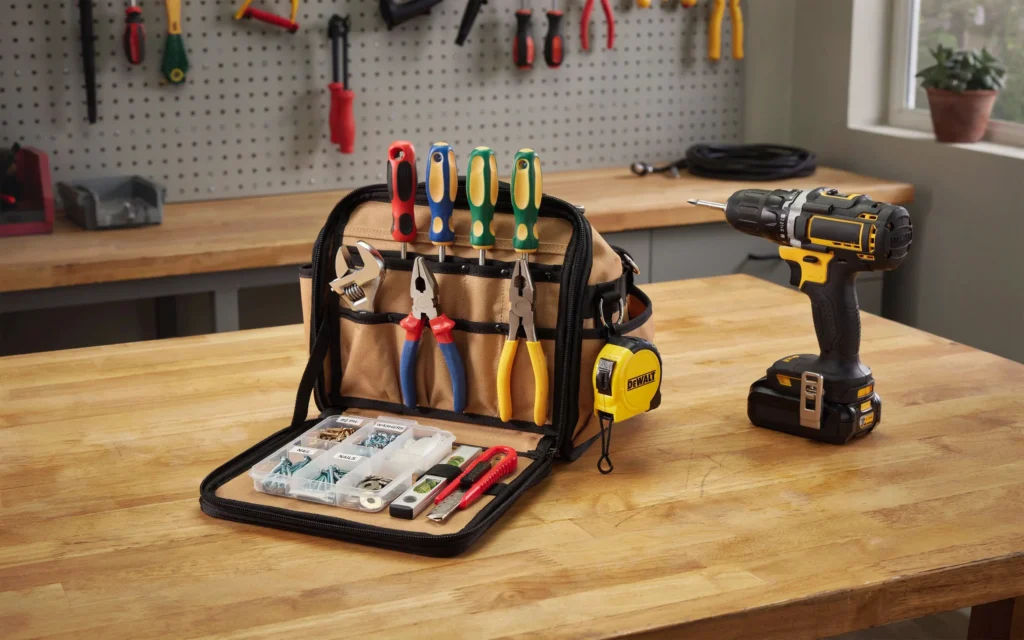
I always put my tape measure in the same outside pocket. This pocket is soft and not too tight. It protects the tape. It also means I always know where my tape is. I do not have to search for it. My level goes in a side pocket on the other side. This keeps it safe from hammers and heavy tools.
The Tape and Pencil Home
Tape rolls and pencils are things we use all the time. They are small and easy to lose. When I organize a tool bag efficiently, I give them a permanent home. I have a small pocket just for my tape. I have a loop on the side of my bag for my pencil.
I always put the tape and pencil back in the same place. I never toss them into the main compartment. This is a small habit, but it makes a big difference. I never have to look for my pencil. I never have to dig for tape. It is always there, in its home.
The Weight Balance Trick
A heavy bag is hard to carry. It hurts your back and shoulders. It slows you down. Balancing the weight is very important for your health.
Distribute the Load Evenly
When I organize a tool bag efficiently, I think about weight distribution. I do not want all the heavy tools on one side. This pulls your body to one side. It is bad for your back. It makes you tired.
I put heavy tools on both sides of the bag. I put a heavy hammer on the left side. I put a heavy wrench set on the right side. This centers the weight in the middle. The bag is balanced. It is much easier to carry. You can walk longer without getting tired.
Use a Bag with a Good Shoulder Strap
The strap on your bag is important. A thin strap hurts your shoulder. A wide, padded strap is much more comfortable. When I organize a tool bag efficiently, I buy a bag with a good strap. It makes a huge difference.
I adjust the strap so the bag sits at my side, not too low. It should sit around my hip. This puts the weight on my legs, not my back. It is more comfortable. It helps me work longer without pain. A good strap is worth the extra money.
Quick Check for Tool Placement
| Tool Type | Best Location in the Bag |
|---|---|
| Hammer, Heavy Drills | Bottom of main compartment |
| Screwdrivers, Pliers, Wrenches | Side pockets or main compartment, standing up |
| Tape Measure, Level, Flashlight | Soft outside pockets or side sleeves |
| Drill Bits, Screws, Pencils | Small inside pouches or small outside pockets |
| Power Tools | Separate case, not in the main hand tool bag |
My Daily Tool Bag Layout
| Zone | What Goes There |
|---|---|
| Bottom Center | Heavy hammer and big wrench |
| Left Side (Main) | Screwdrivers (standing up) and utility knife |
| Right Side (Main) | Pliers and small pry bar |
| Front Outside Pocket | Tape measure and pencils |
| Side Loop | Flashlight |
| Interior Zipper Pouch | Drill bits, screws, wall anchors |
| Main Space (Top) | Gloves, safety glasses, small parts pouch |
Keep Things Clean and Dry
Your tools need to be clean. Rust is the enemy of a good tool. Dirt makes tools hard to use. Water ruins everything.
Clean Your Bag Often
Dirt and dust get into your bag every day. It builds up. It gets into the pockets. It gets on your tools. When I organize a tool bag efficiently, I clean my bag every week. I empty it out. I turn it upside down and shake it.
I use a small brush to clean out the pockets. I wipe the inside with a dry cloth. This is simple. It takes five minutes. It keeps my tools working well. It also helps me keep my system in place. When I empty the bag, I can check if anything is out of place.
Protect Your Tools from Moisture
Water is the worst thing for tools. It causes rust. Rust ruins tools. When I organize a tool bag efficiently, I keep my bag away from water. I do not leave it in the rain. I put a small cloth in the bottom of the bag. This cloth catches any moisture.
I also use tool oil. I wipe my metal tools with a light coat of oil once a month. This prevents rust. It keeps them working smoothly. A little care goes a long way. It makes your tools last for years.
Keep Your System Working
Organizing your bag is not a one-time job. It is a habit. You have to keep it up. Here is how I keep my system working every day.
Return Tools to Their Place
This is the secret to staying organized. You must put every tool back in its exact spot. When you are done with a tool, do not leave it on the ground. Do not toss it in the bag. Put it back in its pocket. Put it back in its place.
When I organize a tool bag efficiently, this is the most important rule. If you do not put things back, the bag becomes a mess in one day. It is a simple habit. It takes two seconds. But it keeps your bag organized forever. It saves you so much time on your next job.
Do a Weekly Check
Every Friday, I check my bag. I look at my tools. I see if anything is broken or missing. I clean out the dust. This is my weekly reset. When I organize a tool bag efficiently, this weekly check is my secret weapon.
I take all the tools out. I wipe the bag. I check that all my pouches are full. I sharpen my knife. I oil my pliers. It is a small routine. But it means my bag is always perfect. I am ready for Monday morning.
A Story About My Old Tool Bag
I used to have a terrible system. I would just throw tools in a bag. It was a mess. I would spend hours looking for a wrench. I would get angry. My work was slow. My customers saw me frustrated. It was not a good look.
One day, a friend of mine was working with me. He watched me dig through my bag for five minutes. He laughed and said, “You really need to fix that.” I realized he was right. That is when I decided to change.
Now, when I organize a tool bag efficiently, I remember that day. I think about how slow and angry I used to be. My new system has made my work life so much better. I am faster. I am calmer. I am more professional.
“A tidy workspace reflects a tidy mind. When your tools are in order, your work is half done before you even start.” – James Walker, Carpenter and Workshop Consultant.
I think about this quote from James Walker a lot. When my bag is organized, my mind is clear. I can focus on the job. I do not waste energy looking for tools. It really does make the work easier.
Special Tips for Different Trades
Everyone has different tools. A plumber has different tools than a carpenter. An electrician has different tools than a painter. But the rules are the same. You just change the tools.
For Electricians
For electricians, you have many small tools. You have wire strippers, pliers, and testers. When I organize a tool bag efficiently for electrical work, I put small tools in pouches. I keep my tester in a clear pocket so I can see it.
I keep my wire nuts and connectors in a small parts box. I put this box in the main compartment. I keep my screwdrivers in the outside pockets. This makes them easy to grab.
For Plumbers
Plumbers have heavy wrenches and pipe cutters. These tools are heavy and bulky. When I organize a tool bag efficiently for plumbing, I think about weight. I put wrenches on opposite sides of the bag.
I keep my pipe cutter in a leather pouch. This protects it. I keep my Teflon tape in a small outside pocket. I always know where it is. I put heavier tools on the bottom. I put my pliers in the side pockets.
“The tools you use are an extension of your hands. You cannot work well if you cannot find your hands.” – Maria Flores, Master Plumber.
Maria Flores is right. Your tools are part of you. If you cannot find them, you cannot work. A good system for your bag is a system for your hands. It is that simple.
For Carpenters
Carpenters have many measuring tools and marking tools. You have squares, levels, and chalk lines. When I organize a tool bag efficiently for carpentry, I protect these measuring tools. They are precise and fragile.
I keep my square in a side sleeve. I keep my level in a padded pocket. I keep my chalk line in a pouch. I keep my pencils in a loop on the side. I keep my hammer on the bottom of the main compartment.
Frequently Asked Questions
What if my bag does not have enough pockets?
You can add smaller pouches or tool rolls that fit inside your bag. Tool rolls are great for screwdrivers and wrenches. They keep them organized and stop them from clanking together. You can also attach small pouches to the outside of the bag using carabiners.
How often should I organize my tool bag?
I do a quick check every day. I make sure everything is in its place. I do a deeper clean and reset every week. This weekly reset takes about 15 minutes. It keeps my bag ready for the next week.
Should I use a backpack or a shoulder bag?
This depends on you. Backpacks balance the weight on both shoulders. This is better for your back. Shoulder bags are easier to access quickly. I use a shoulder bag because I like to grab tools fast. But a backpack is better if you carry heavy tools.
How do I stop my tools from rusting in the bag?
Keep your bag dry. Do not leave it in the rain. Put a small silica gel pack in the bottom of your bag. This absorbs moisture. You can also wipe your tools with a light coat of oil. I use a small spray can of tool oil. It works very well.
What tools should I keep in my bag every day?
Keep the tools you use every day. For me, this is a hammer, tape measure, utility knife, screwdrivers, pliers, and a level. Everything else goes in a separate box. Keep it simple. Only carry what you need.
Can I organize a tool bag with power tools?
Yes, but I suggest you keep power tools in their own case. This protects them. It also saves space in your hand tool bag. If you must keep a power tool in your bag, put it at the bottom. Put a cloth around it to protect it from scratches.
“A craftsman’s kit is his garden. It requires daily weeding to stay fruitful.” – Dr. Samuel Chen, Industrial Psychologist.
I like Dr. Chen’s quote. Your tool bag is like a garden. You have to tend to it. You have to remove the weeds, which are the tools you do not use. You have to water the plants, which means taking care of your tools. It is a good way to think about it.
Conclusion
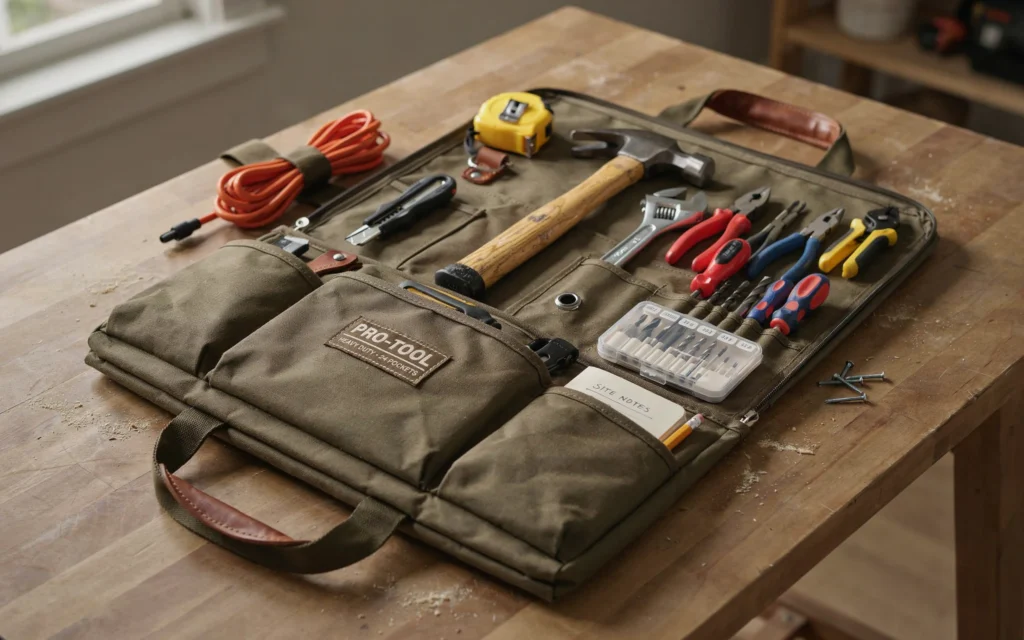
So, how do I organize a tool bag efficiently? I follow a few simple rules. I keep only what I use. I put heavy tools at the bottom. I use pockets and pouches for small tools. I clean my bag every week. I return every tool to its spot.
This system has changed my work. I am faster. I am less stressed. I am more professional. My back does not hurt as much. My tools last longer. It took a little time to set up, but it was worth it.
I encourage you to try this system. Start by emptying your bag. Throw away the trash. Sort your tools. Give everything a home. Then, make a promise to yourself. Promise that you will put each tool back in its home. If you do this, you will never waste time looking for a tool again. You will be ready for any job. Good luck. I know you can do this.
Related posts
 How Do I Choose A Home Repair Tool Kit
Wondering how to choose a home repair tool kit? This guide covers essential tools, quality checks, budget tips, and storage ideas to help you pick the…
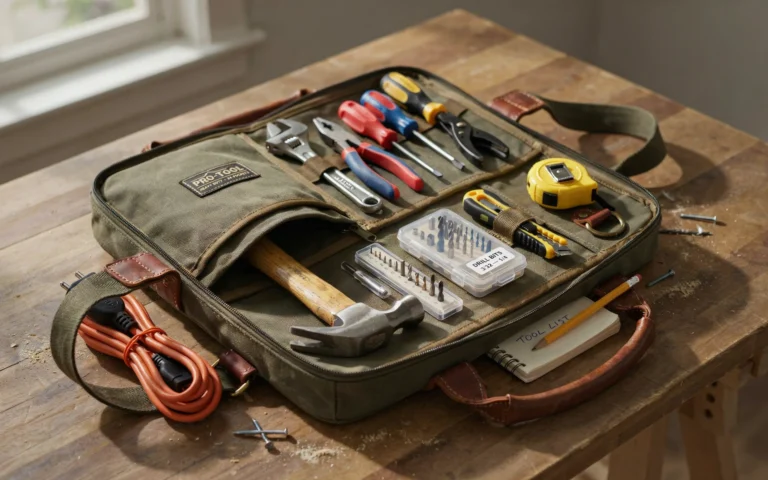 Which Tool Bag Is Best For Contractors
Finding the right tool bag is best for contractors depends on your trade, daily load, and work environment. This guide reviews top picks, key features, and real-world advice…
 What Are The Best Cordless Tools For Homeowners
If you are searching for the best cordless tools for homeowners, this guide covers drills, saws, impact drivers, and multi-tools. We share top brand recommendations, buying…