
How To Choose A Power Drill For Home Use
If you want to fix things, you should choose a power drill for home use that fits your grip, your tasks, and your budget for every project.
A house always needs work. You might need to hang a new picture. You might want to build a small shelf. For these tasks, a drill is your best friend. It saves you time. It saves your hands from getting tired. Most people feel happy when they finish a job on their own. To do that, you need the right tool. If you choose a power drill for home use that is too heavy, you will not want to use it. If it is too weak, the job will stay half done. This guide helps you find the middle ground. We will look at what makes a drill good for a house.
Many tools look the same in the store. They are often black and yellow or red and black. You might see big price tags and small price tags. It can feel like a lot to take in. But do not worry. You just need to know a few things. You need to know what you will build. You need to know how much you want to spend. Most home users do not need the most expensive tool. They just need one that works when they pull the trigger.
As Warren Buffett once said, “Price is what you pay. Value is what you get.” This is very true for tools. A cheap drill that breaks in a week is not a good deal. A very pricey drill that sits in a box is also a waste. You want a tool that gives you back what you put in.
Think About Your Projects First
Before you go to the shop, look at your walls. Are they made of wood? Are they made of brick? This matters a lot. A basic drill is fine for wood. Brick needs a bit more kick. If you only want to put together flat pack furniture, you can get a small tool. These are light and easy to hold. They fit into tight spots. But if you want to build a deck in the yard, you need more grit. You need a tool that can spin a long screw into thick wood without stopping.
When you choose a power drill for home use, think about who will hold it. If your hands are small, a big tool will feel bad. It might even be unsafe. You want a tool that feels like a part of your arm. It should balance well. If the head is too heavy, it will tip down. If the base is too heavy, it will pull on your wrist. Try to hold a few in the store. See how they feel. This is the first step to being happy with your purchase.
Light Work vs Heavy Work
Most people do light work. This includes hanging curtains or fixing a loose door. For this, a 12 volt drill is often plenty. It is small and packs enough punch for most things. Heavy work is different. This might mean drilling into stone or mixing paint in a bucket. For that, you want an 18 volt or 20 volt tool. These have more muscle. They can run for a longer time before the battery dies.
“A tool is only as good as the person who uses it,” as the old saying goes. This means you should get a tool you feel good using. If a tool is too big, you might make a mistake. If it is too small, you might get mad at it. Pick the one that fits the work you plan to do most of the time.
Corded vs Cordless Drills
There are two main types of drills. One has a cord. The other has a battery. Years ago, corded drills were much better. They had more torque. They never ran out of juice. But today, battery tech is very good. Most people now pick the cordless kind. It lets you move around the house. You can go up a ladder or out to the fence. You do not have to look for a plug. You do not have to trip over a long wire.
However, a corded drill still has a place. It is usually cheaper. It is often lighter because there is no heavy battery on the bottom. If you only use a drill once a year, a corded one is great. You do not have to worry about a battery going bad in the drawer. You just plug it in and go.
Comparing Cord Types
| Feature | Cordless Drill | Corded Drill |
| Portability | Very High | Low |
| Power | High | Very High |
| Weight | Heavier | Lighter |
| Run Time | Needs Charge | Endless |
When you choose a power drill for home use, think about your yard. If you have a big garden, a cord will be a pain. You will need a lot of extension cords. A battery tool is much better there. But if you work at a bench in the garage, a cord is fine. It will always be ready to work.
Understanding Drill Types
Not all drills are the same. Some just spin. Others spin and tap. Some spin very fast with a lot of force. Here are the three main kinds you will see in the store.
The Drill Driver
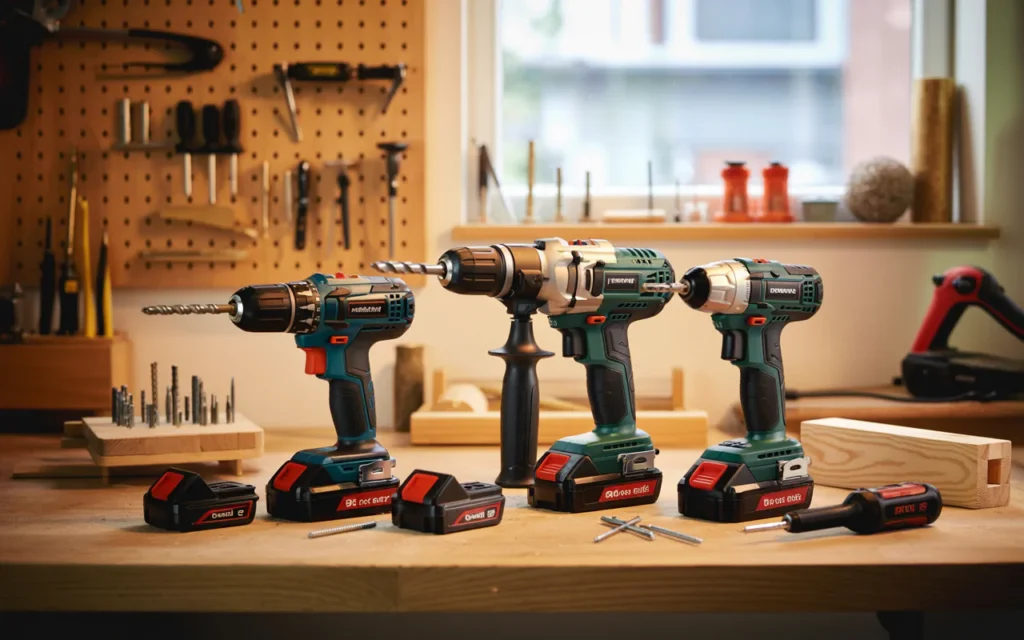
This is the most common tool. It is the one most people think of. It can drill holes and it can drive screws. It has a clutch. The clutch is a ring you can turn. It stops the tool from turning once the screw is tight. This prevents you from stripping the screw head. It also protects the wood. If you are new to DIY, this is likely the one you want. It is a great all around tool for the house.
The Impact Driver
An impact driver is different. It looks like a drill but it is shorter. It does not have a chuck that opens and closes with a key or by hand. It has a hex slot. You just pop the bit in. This tool is for driving long screws into tough wood. It uses a hammer action inside the motor. It hits the screw as it spins. This gives it a lot of force. It is loud, but it is very fast. You might not need this for small jobs, but for big ones, it is a life saver.
The Hammer Drill
A hammer drill is for hard stuff. If you have a brick or stone home, you might need this. As the bit spins, it also moves in and out very fast. It acts like a tiny jack hammer. This breaks up the stone so the bit can move forward. Most hammer drills have a switch. You can turn the hammer part off. Then it works just like a normal drill. This makes it very useful.
Key Features to Check
When you choose a power drill for home use, look at the specs. You do not need to be an expert. Just look at the volts, the speed, and the chuck.
Voltage and Batteries
Volts tell you how much power the drill has. For a house, 12V is light, 18V is standard, and 24V is heavy. Most people find that 18V is the sweet spot. It is strong but not too big. Also, look at the Amp hours or Ah. This tells you how long the battery lasts. A 2.0Ah battery is light. A 4.0Ah battery lasts twice as long but is much heavier.
| Project Type | Recommended Voltage | Battery Size (Ah) |
| Simple Furniture | 12V | 1.5Ah – 2.0Ah |
| General Home Repair | 18V | 2.0Ah |
| Deck Building | 18V or 20V | 4.0Ah+ |
The Chuck Size
The chuck is the part that holds the drill bit. Most home drills have a 3/8 inch or a 1/2 inch chuck. A 1/2 inch chuck is better. It can hold bigger bits. It is usually found on stronger drills. Also, look for a keyless chuck. This means you can tighten it with your hand. You do not need a special key. It makes changing bits very fast and easy.
Speed Settings
Most good drills have two speeds. One is slow. The other is fast. Use the slow speed for driving screws. It gives you more control. Use the fast speed for drilling holes. This helps the bit cut through the material cleanly. A trigger that lets you change speed based on how hard you pull it is also a must. This is called a variable speed trigger. It lets you start a hole slowly so the bit does not slip.
Comfort and Ergonomics
You might use your drill for an hour at a time. If it hurts your hand, you will hate it. Look for a grip that is soft. Rubber over mold is a good feature. It keeps your hand from slipping if you get sweaty. Also, check the light. Most new drills have an LED light. It shines on the spot where you are drilling. This is very helpful in dark corners or under a sink.
The weight of the tool is a big deal. If you are working over your head, a heavy drill will make your arm ache. Some brands make “compact” versions. These are smaller and lighter but still have good power. These are often the best choice for home users who want to do a bit of everything.
Abraham Lincoln once said, “He who has a sharp ax can cut wood fast.” While he was talking about axes, the same is true for drills. Having a tool that feels right and works well makes the job easy. It keeps you safe too. A tired hand is a hand that makes mistakes.
Motor Types: Brushed vs Brushless
When you browse the aisles, you will see the word “Brushless.” These tools cost more. Why? A brushed motor uses small carbon brushes to pass power. These create heat and friction. They wear out over time. A brushless motor uses magnets. It is more efficient. It stays cool. It makes the battery last longer. If you have the extra cash, go brushless. It is a better tool that will last many years. But if you are on a tight budget, a brushed motor is still okay for light home use.
Drill Bits and Accessories
A drill is no good without bits. You need a set of bits for wood. You might need some for metal. If you have a hammer drill, you need masonry bits. Do not buy the cheapest bits you can find. They dull fast. They can even snap. A good set of bits makes a huge difference.
You should also look at the bag or case. A hard case is great for keeping everything in one place. It protects the tool from dust and bumps. Some drills come as a kit. You get the drill, two batteries, and a charger. Getting two batteries is a smart move. You can use one while the other is on the charger. This way, you never have to stop and wait.
Safety While Using a Drill
Safety is a big part of DIY. Always wear eye protection. Bits can snap. Wood chips can fly. A pair of safety glasses is cheap and vital. Also, make sure you know what is behind the wall. Do not drill into a pipe or a wire. You can buy a stud finder that also looks for wires. It is a good tool to have in your kit.
When you choose a power drill for home use, look for a tool with a side handle if you plan to do heavy work. This gives you two hands to hold the tool. If the bit gets stuck, the drill might twist in your hand. A side handle helps you keep a firm grip. This prevents wrist injury.
Maintenance for Your Power Drill
Your tool will last a long time if you take care of it. Keep it clean. Wipe off the dust after you use it. Do not let it get wet. If it does get wet, dry it off right away. Store your batteries in a cool, dry place. Do not leave them in a hot car or a cold shed. This kills the battery life.
Check the chuck now and then. Make sure it opens and closes smoothly. If it gets stuck, a little bit of oil can help. But do not use too much. You do not want oil dripping into the motor. A clean tool is a safe tool. It shows you take pride in your work and your gear.
Choosing the Right Brand
There are many brands out there. Some are for pros. Others are for DIY folks. The pro brands are very tough. They can fall off a roof and still work. But they cost a lot. The DIY brands are made for home use. They are perfect for most people. They are light and cheap.
When you pick a brand, think about the future. Most brands use the same battery for all their tools. If you buy a drill from one brand, you can buy a saw or a light from that same brand later. You can use the same batteries. This saves you a lot of money over time. It is a good idea to stick with one brand for all your big battery tools.
Frequently Asked Questions
What is the best voltage for a home drill?
For most homes, 18 volts is the best. It has enough power for almost any job. It is not too heavy. If you only do very light work, 12 volts is also a good pick.
Can I use a regular drill for brick?
You can, but it is hard. You need a masonry bit. It will take a long time. A hammer drill is much better for brick. It will save you from wearing out your bits and your drill motor.
What is a brushless motor?
A brushless motor is a modern type of motor. It is more efficient than old motors. It makes the tool run longer on one charge. It also lasts longer because it has fewer parts that touch and wear down.
Do I need two batteries?
It is very helpful. If one battery dies, you can swap it and keep working. If you only have one, you have to stop and wait for it to charge. Most kits come with two for this reason.
How do I stop a screw from stripping?
Use the clutch on your drill. Set it to a low number. The drill will stop spinning when it feels resistance. This keeps the bit from spinning inside the screw head and ruining it.
Is a corded drill better for heavy jobs?
It can be. A corded drill never loses power. It can run all day at full strength. But modern 18V cordless drills are very strong now. For most people, the cordless one is strong enough and much easier to use.
Conclusion
Finding the right tool does not have to be hard. When you choose a power drill for home use, focus on what you really need. Look at the weight. Look at the power. Think about the types of walls in your home. If you get a tool that fits your hand and your tasks, you will be very happy.
A good drill is the start of many great projects. It lets you fix things yourself. It lets you build things for your family. It is an investment in your home. Take your time in the store. Hold a few drills. Check the features we talked about. Soon, you will have the perfect tool in your hand. You will be ready to tackle any job that comes your way. Happy building!
Related posts
 Top Home Tool Kits for Housewarming Gifts: A Practical Buyer’s Guide
Find the perfect top home tool kits for housewarming gift. Compare versatile sets for daily fixes, DIY projects, and furniture setup, ensuring a thoughtful and practical…
 Top Home Tool Kits for Hanging Pictures and Shelves: Your Buyer’s Guide
Find the top home tool kits for hanging pictures and shelves. Compare features, included hardware, and specialized tools to choose the best kit for your projects.…
 Top Home Tool Kits for Basic Plumbing Repairs: Essential Picks for DIYers
Find top home tool kits for basic plumbing repairs. Compare versatile sets for everyday fixes, DIY projects, and essential household maintenance. Every home faces occasional drips,…