
How To Choose The Right Tool Bag For Electricians
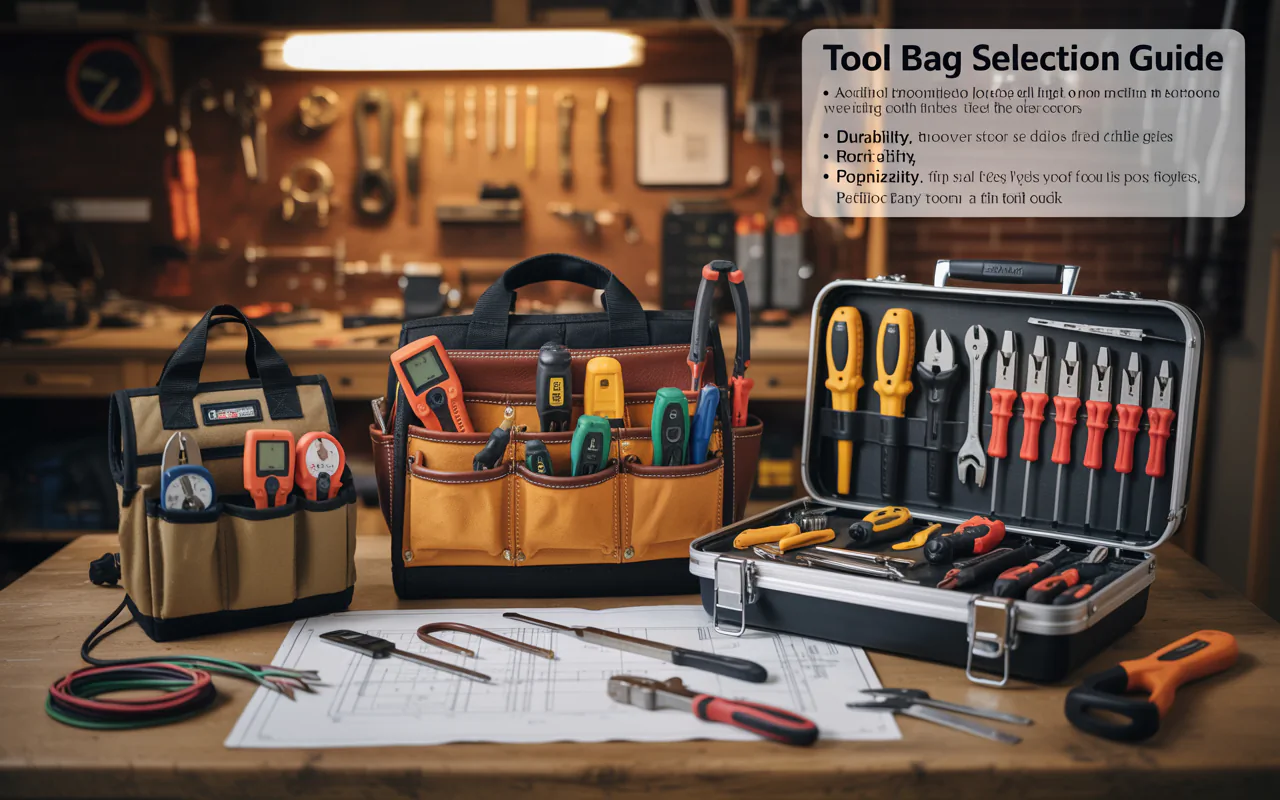
Learn to choose the right tool bag for electricians by focusing on pocket layout, weight, and durability. This guide helps you pick the perfect bag for pliers, screwdrivers, and meters on every job.
As an electrician, your tools are your paycheck. But the bag you carry them in? That is often an afterthought. I have seen too many new apprentices show up with a cheap cloth bag or an old backpack. Within a month, the bag rips, their back hurts, or they spend ten minutes every morning hunting for their wire strippers.
I have been doing electrical work for over twelve years. From new home construction to service calls in tight attics, I have tested many tool bags. And I want to share simple, honest advice on how to choose the right tool bag for electricians. This is not about fancy brands or spending hundreds of dollars. It is about finding a bag that works for your daily jobs, keeps your tools safe, and saves your body from extra strain.
Let me walk you through what really matters. No fluff. Just real talk from someone who carries a tool bag every single day.
Why Your Tool Bag Matters More Than You Think
A good tool bag does more than hold your pliers and screwdrivers. It protects your tools from moisture and drops. It keeps your work area organized so you do not lose time searching. And it spreads the weight across your body so you do not end up with a sore shoulder or lower back pain.
“The right tool bag is like a good helper. It keeps everything where you need it, and it does not fight you on the job.” – Mike Holt, master electrician and trainer
If you have ever spent fifteen minutes looking for a lost pair of side cutters inside a messy tote, you know what I mean. Time is money. A smart bag saves both.
Also, electricians carry delicate items. A voltage tester, a multimeter, or a thermal imager can break if banged around. The wrong bag offers no padding. The right bag has dedicated compartments that hold each tool in place.
So before you buy anything, ask yourself: How many hours a week do I carry this bag? What kind of sites do I work on? Do I climb ladders often? Do I work in rain or dust? Your answers will help you choose the right tool bag for electricians for your specific situation.
5 Key Factors to Choose the Right Tool Bag for Electricians
Let me break down the five most important things to look at. I will keep it simple so you can walk into a store or browse online with a clear checklist.
1. Size and Capacity
Do not buy the biggest bag just because you think you need all your tools. I made that mistake early in my career. I bought a giant open tote. I filled it with every screwdriver, every wrench, every spare part. That bag weighed over forty pounds. I could barely lift it into my truck.
Instead, think about what you actually use on 90% of your calls. Most electricians need a basic set: linesman pliers, diagonal cutters, needle nose, wire strippers, a couple of screwdrivers (flat and Phillips), a voltage tester, a level, a utility knife, and some tape. That is maybe ten to fifteen tools.
A good bag for this set is about 12 to 15 inches long, 8 inches wide, and 8 inches tall. That is enough room without being too heavy.
If you do industrial work or carry a full meter kit, you may need a larger backpack style. But start small. You can always add a separate pouch for specialty tools.
A common mistake is overpacking. A bag that is too heavy will wear out faster and hurt your body. Be honest about what you need daily.
2. Pocket Layout and Organization
This is where many cheap bags fail. They have one big open space and a few floppy pockets. Everything falls to the bottom. You end up digging like you are searching for lost coins in a couch.
Look for a bag with rigid or semi-rigid pockets that hold their shape. Pockets should be deep enough that screwdrivers do not fall out when you bend over. A good design includes:
- Outside pockets for pliers and cutters (easy to grab)
- Internal loops for screwdrivers (keeps them separated)
- A padded compartment for your meter or tester
- Small zippered pockets for wire nuts, connectors, and bits
- A clip or D-ring for your tape measure or key ring
When you choose the right tool bag for electricians, pay attention to how the pockets are sewn. Double stitching or reinforced corners last much longer. Also, clear plastic pockets are nice for small parts because you can see what is inside without opening.
Here is a quick comparison of common bag types and their pocket layouts:
| Bag Type | Best For | Pocket Style | Typical Number of Pockets |
|---|---|---|---|
| Open Tote | Quick access, stationary work | Wide open center + outer sleeves | 8 to 15 |
| Backpack | Ladder work, long walks | Many small pockets, padded laptop/tablet sleeve | 15 to 30 |
| Tool Apron | Small jobs, trim work | Few deep pockets for basic tools | 4 to 8 |
| Rolling Bag | Heavy tools, large meter kits | Large compartments, less external pockets | 5 to 10 |
3. Material and Build Quality
This is simple. Cheap polyester or thin canvas tears fast. You want something that can handle sharp edges of pliers and the rough concrete of a job site.
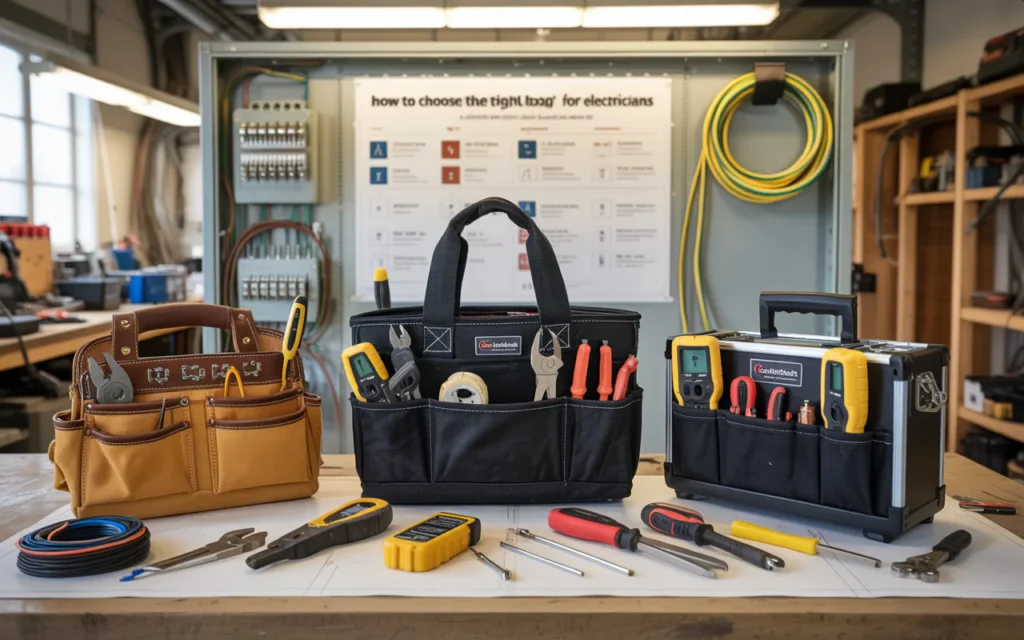
The best materials for electrician tool bags are:
- 1680 Denier nylon – Very tough, resists abrasion, slightly water resistant
- Thick canvas (20 oz or more) – Durable but can get heavy when wet
- Leather (for pouches) – Lasts for decades but expensive and heavy
- Reinforced PVC or tarpaulin – Waterproof and easy to clean, but less breathable
Look for metal zippers instead of plastic ones. Plastic zippers break when you overload the bag. Metal zippers can be a little stiff but they last.
Also check the bottom of the bag. Many bags have a plastic or rubber base. That is good because it keeps moisture from soaking up from the ground. If a bag has no hard bottom, it will sag and tip over.
Here is a simple table to help you compare material choices:
| Material | Durability | Water Resistance | Weight | Cost |
|---|---|---|---|---|
| 600D Polyester | Low | Low | Light | Low |
| 1680D Nylon | High | Medium | Medium | Medium |
| Heavy Canvas | Medium | Low (needs treatment) | Heavy | Medium |
| Leather | Very High | Medium | Heavy | High |
| Tarpaulin (Tarp) | High | Very High | Light | Medium |
For most electricians, 1680D nylon offers the best balance of weight, cost, and toughness. That is what I use personally.
4. Weight and Portability
An empty bag should feel light. I recommend under two pounds for a small tote and under four pounds for a backpack. Every extra pound of empty bag weight means less room for tools before you hit a comfortable total weight.
What is a comfortable total weight? Most experts say you should not carry more than 20% of your body weight. For a 180-pound person, that is 36 pounds total. But for daily carrying, even 25 pounds gets old fast. Try to keep your loaded bag under 20 pounds.
Portability also means how the bag sits on your body. A backpack with padded shoulder straps and a chest strap is best for walking long distances or climbing ladders. A shoulder tote with a padded handle is fine for moving from truck to house. A rolling bag is great for parking lots and warehouses but terrible on stairs.
Think about your typical day. Do you climb three flights of stairs? Do not get a rolling bag. Do you park a block away? A backpack saves your shoulders. Do you work mostly from a lift or ladder? A small tote you can hook onto a rail is perfect.
When you choose the right tool bag for electricians, match the carry style to your actual work environment.
5. Comfort and Support
I cannot stress this enough. A bag that digs into your shoulder or pulls your back sideways will cause long-term pain. I have had shoulder tendinitis from a poorly designed tool bag. It is not fun.
Look for these comfort features:
- Wide, padded shoulder strap (at least two inches wide) – A thin strap cuts into your muscle
- Adjustable sternum strap on backpacks – Keeps the bag from swinging
- Padded back panel – Prevents tools from poking you
- Handle wrap – Thick foam or leather so you can grab it without pain
- Balanced design – When you set the bag down, it should stand upright without falling
“I tell all my students, your body is your most important tool. A bad tool bag will wear out your joints before you turn forty.” – Linda Garcia, electrical contractor and safety instructor
Also test how the bag feels when it is half full. Some bags become very unbalanced. Put a few heavy items like pliers and a meter in the bag. Hold it. Does it lean to one side? Does the strap slip off your shoulder? Those are red flags.
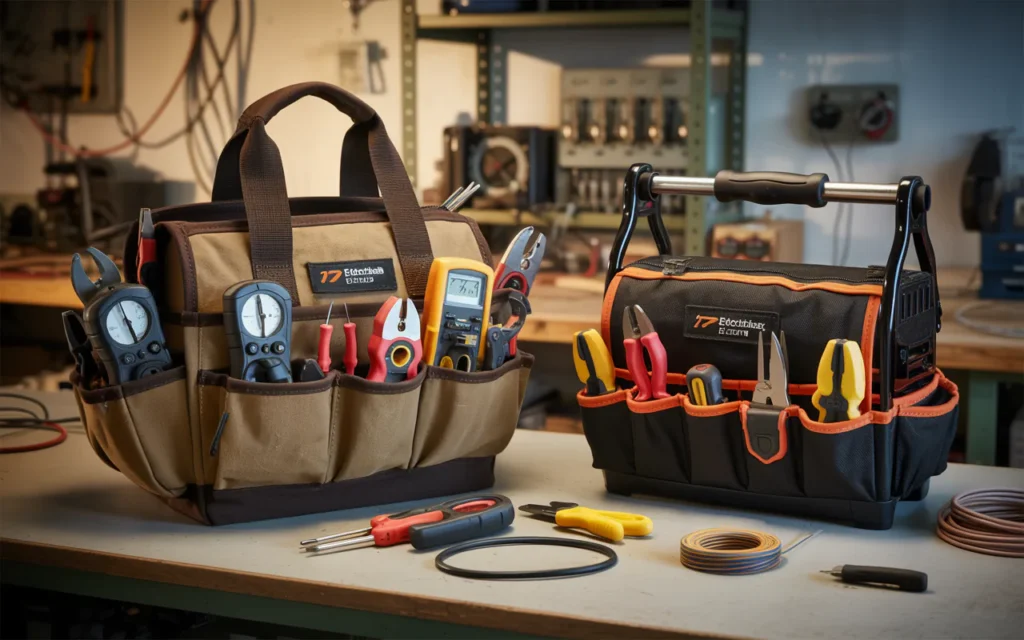
Backpack vs Tote vs Rolling Bag – Which One Fits You?
Let me give you a straight answer. There is no single best type. Each works for different jobs.
Backpack – Best for electricians who walk a lot, climb ladders, or commute on public transit. The weight is evenly distributed on both shoulders. Your hands stay free. The downside: you cannot see all your tools at once without taking it off. Backpacks also get hot on your back in summer.
Open Tote – Best for service electricians who work out of a truck or van. You open the top and everything is visible. You can quickly grab a tool and set it back. The downside: one shoulder carries all the weight. After a few hours, that side gets sore. Also, tools can fall out if you tip the bag over.
Rolling Bag – Best for industrial electricians who carry heavy meters, large wrench sets, or cable testers. You pull it like a suitcase. The downside: stairs, gravel, mud, and ladders are impossible. You will still need a small hand bag for those situations.
Tool Apron / Pouch – Best for trim out, panel work, or tasks where you only need a few tools. You wear it around your waist. It keeps pliers and screwdrivers right at your fingers. The downside: you cannot carry many tools, and it puts weight on your hips.
I personally own two bags. A small leather pouch for my daily carry (six tools) and a backpack for heavy service calls. That covers everything.
To choose the right tool bag for electricians, think about your main job type. Residential service? Get a medium tote. Commercial new build? Get a backpack. Industrial maintenance? Get a rolling bag plus a small pouch.
How Many Tools Do You Really Carry?
Let me save you some back pain. You do not need to carry your entire workshop.
I recommend making two piles. Pile one is tools you use every single day. Pile two is tools you use once a week or less. Put pile one in your main tool bag. Put pile two in a separate box or bag that stays in your truck or shop.
For most electricians, the daily pile includes:
- Linesman pliers
- Diagonal cutters
- Needle nose pliers
- Wire strippers (one good pair)
- Two flathead screwdrivers (small and medium)
- Two Phillips screwdrivers (#1 and #2)
- Voltage tester (non contact)
- Multimeter (if you do troubleshooting)
- Utility knife
- Tape measure (16 or 25 feet)
- Electrical tape (one roll)
- Flashlight or headlamp
That is about 12 to 15 items. Many tool bags can handle this easily. Once you add a hammer, a hacksaw, a level, a stud finder, three sizes of channel locks, and a box of wire nuts, you cross into 30 pounds.
Be honest with yourself. Do you really need that second pair of wire strippers? Probably not.
When you choose the right tool bag for electricians, choose a bag that fits your daily pile plus maybe 20% extra for rare days. Do not buy a bag for the one time a year you carry everything.
Real Electrician Tips for Maintaining Your Tool Bag
A good tool bag can last five years or more if you take care of it. Here is what I do.
Empty it once a month. You will find old wire nuts, lost bits, and trash. This also gives you a chance to wipe out dust and metal shavings.
Check the seams and zippers. If you see a loose thread, fix it early with a needle and heavy thread or a drop of super glue. A small repair now saves you from a blowout later.
Keep it dry. Do not leave your bag on wet ground or in the rain. If it gets soaked, open it up and let it air dry completely. Mold and mildew can weaken fabric and smell bad.
Do not overload it. This is the number one killer of tool bags. When you stuff too many tools, the seams pop, the zippers break, and the straps tear. Respect the weight limit.
“A tool bag is like a pair of work boots. If you treat it rough and never clean it, it will fall apart fast. A little care goes a long way.” – James Carter, union electrician for 25 years
Use a floor mat or a small scrap of carpet on wet sites. Set your bag on that instead of direct mud or water. It keeps the bottom dry and clean.
Budget vs Premium – What’s Worth Your Money?
You can find tool bags for 20andfor200. Where should you spend?
Here is my honest take. A $20 bag from a big box store will last a few months if you use it daily. The fabric is thin, the zippers are plastic, and the stitching will come loose. It is fine for a homeowner or a beginner who only does small jobs. But for a full time electrician, it is a waste of money.
A 50to80 bag from a known brand like Klein, Veto, or Milwaukee gives you good materials and smart pocket designs. These bags usually last two to four years. That is a good value.
Premium bags over $150 often come with leather or heavy duty ballistic nylon. They have steel reinforced bottoms and replaceable straps. They can last a decade. If you are a master electrician who works full time and wants one bag for life, this is a reasonable choice.
My advice: Do not start with a premium bag. Buy a mid range bag first. After a year, you will know exactly what features you want. Then you can invest in a premium bag that fits your style perfectly.
No matter your budget, always prioritize strong zippers and double stitching. Those two features make the biggest difference in longevity.
Frequently Asked Questions
What is the best brand for electrician tool bags?
There is no single best brand. Klein Tools, Veto Pro Pac, Milwaukee, and ToughBuilt are all popular among electricians. Each has different strengths. Klein offers great basic totes. Veto makes heavy duty backpacks. Try holding a few in a store to see which feels right to you.
How do I clean my tool bag?
For nylon or canvas bags, use a soft brush to remove dust. For stains, mix mild soap with warm water and scrub gently. Do not put your bag in a washing machine. That can damage the padding and shape. Air dry only.
Can I use a regular backpack for electrical tools?
Only for very light use. Regular backpacks lack tool loops, reinforced pockets, and hard bottoms. Sharp pliers will poke through the fabric quickly. Also, the zippers are not strong enough for heavy tools. Spend a little more on a bag made for electricians.
How often should I replace my tool bag?
Check your bag every six months. If you see ripped seams, broken zippers, or worn strap attachments, replace it. Using a damaged bag risks losing tools or getting hurt.
What size tool bag do I need for residential electrical work?
A medium tote about 15 inches wide and 8 inches deep is a good start. It holds your core tools without being too heavy. As you add more tools, consider a second small pouch instead of a bigger bag.
How do I choose the right tool bag for electricians if I work in wet conditions?
Look for bags made of tarpaulin or coated nylon. These materials repel water. Also choose a bag with a raised plastic bottom so it does not sit in puddles. Avoid leather and canvas in wet climates.
Conclusion
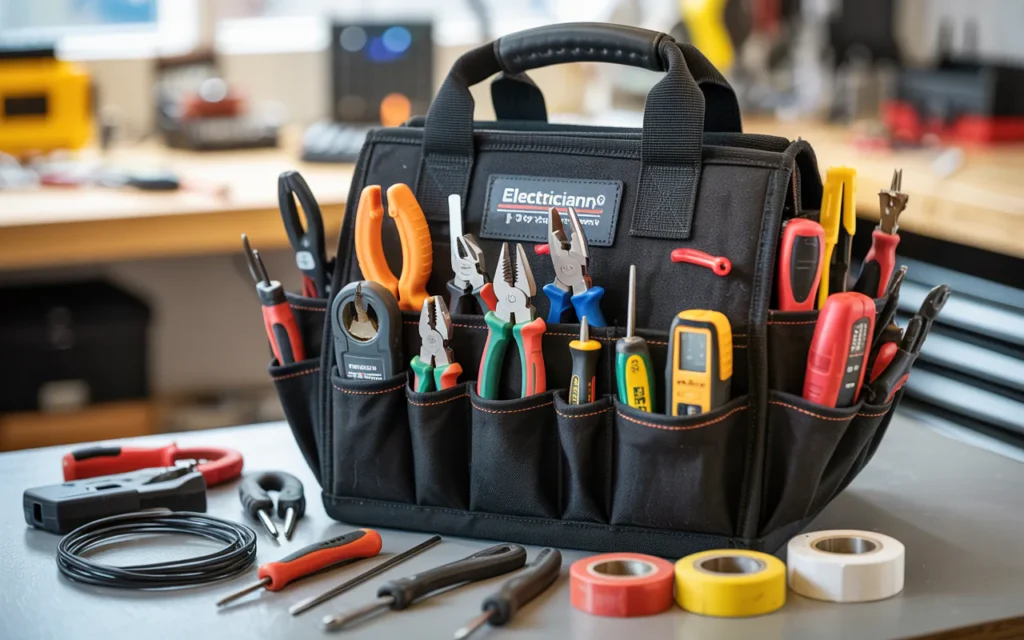
Your tools do the work, but your tool bag carries the load. After reading this guide, you have a clear path to choose the right tool bag for electricians. Remember the five key factors: size, pocket layout, material, weight, and comfort. Match the bag to your real daily tasks, not to what looks cool on a shelf.
Start by listing your ten most used tools. Then find a bag that holds them securely and feels good on your body. Do not spend too much on your first bag. Do not overload it. And take care of it like you take care of your pliers and meter.
You will save time, save your back, and save money on replacing broken bags. That is a win for any electrician, whether you are a first year apprentice or a thirty year veteran.
Now go pick a bag that works for you. Your shoulders will thank you.
Related posts
 Top Home Tool Kits with Tool Bags for Storage for Every DIYer
Find the top home tool kits with tool bags for storage. Compare top-rated options for everyday repairs, auto work, and general household tasks. Having the right…
 Top Tool Bags for Framers and Builders: Essential Storage Solutions
Compare top tool bags for framers and builders. Find durable, organized storage solutions with waterproof bases and adjustable straps for your job site needs. For framers…
 What Features Should A Quality Tool Bag Have
If you’re wondering what features should a quality tool bag have, the answer includes durable materials, strong zippers, padded handles, smart pockets, and a waterproof base. This…