
How To Upgrade Your Basic Automotive Tool Kit Over Time
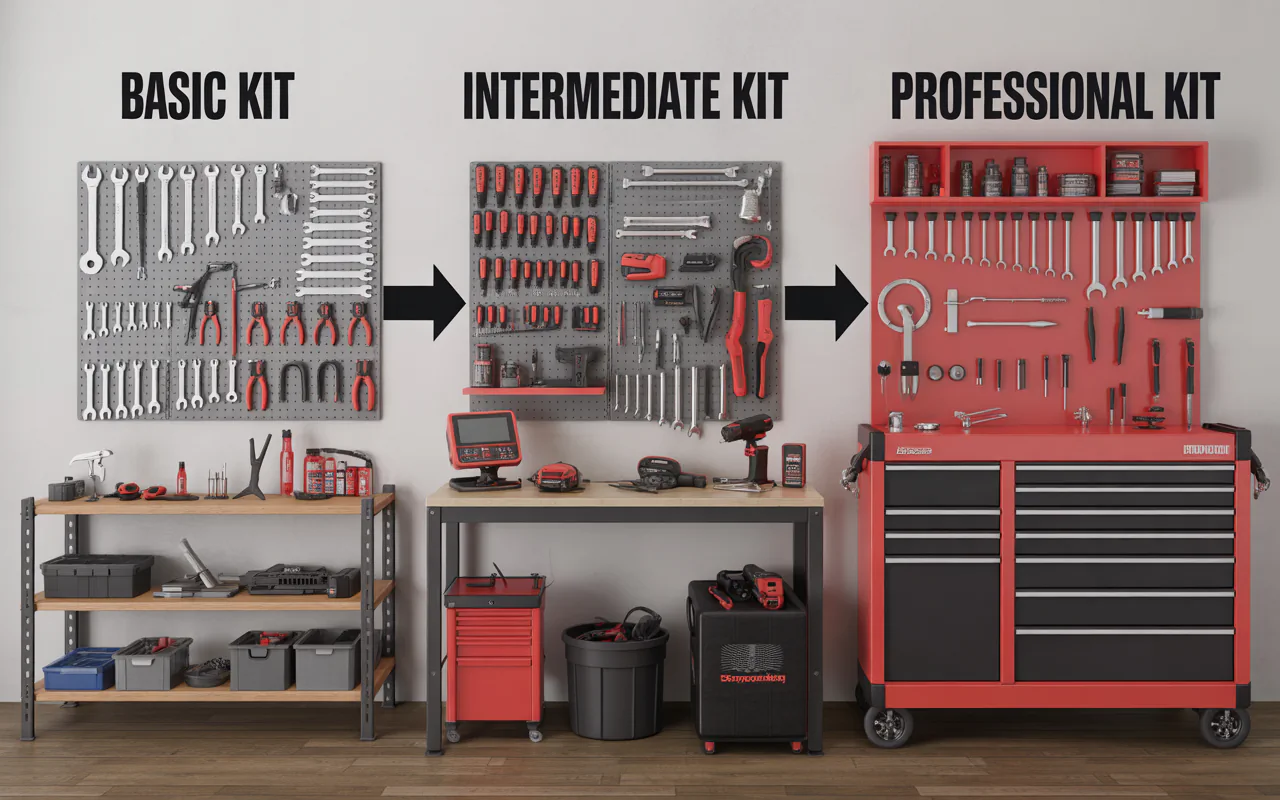
Want to upgrade your basic automotive tool kit over time? This guide shows you simple steps to add quality tools each month, avoid waste, and build a pro-level setup on any budget. Perfect for home mechanics.
Every car owner starts somewhere. Maybe you got a small tool set for Christmas. Or you picked up a cheap kit from the big box store. That basic set works fine for simple fixes like tightening a battery cable or changing a light bulb. But soon you will face bigger jobs. A brake pad change. A belt replacement. Maybe even an oil change. That is when you realize your basic tools are not enough.
The good news? You do not need to spend a thousand dollars in one day. You can upgrade your basic automotive tool kit over time. Slowly. Smartly. Without breaking your budget. This article will show you exactly how to do that. You will learn which tools to buy first, which to buy later, and which to skip forever.
Let me share what I have learned from years of working on cars in my own garage. I made plenty of mistakes. I bought cheap tools that broke. I bought fancy tools I never used. But I also learned what works. And I want to help you avoid my errors.
“Give me six hours to chop down a tree and I will spend the first four sharpening the axe.” – Abraham Lincoln
That quote fits tool buying perfectly. Taking time to prepare your tool collection saves you hours of frustration later.
Why You Should Upgrade Your Basic Automotive Tool Kit Over Time
A basic tool kit usually includes a few screwdrivers, a pair of pliers, an adjustable wrench, and maybe a small socket set. These tools have limits. The screwdrivers might strip screw heads. The pliers slip off rounded nuts. The adjustable wrench feels loose and wobbly. And the socket set? It probably misses the one size you need.
When you upgrade your basic automotive tool kit over time, you gain three big benefits.
First, you save money by buying only what you need. No waste. No fancy sets with fifty pieces you will never touch. Second, you build confidence. Each new tool lets you tackle one more job. Third, you avoid emergency purchases. Nothing is worse than being halfway through a repair and realizing you need a tool you do not own. Then you drive to the store with a half taken apart car. Not fun.
The Problem with Basic Kits
Basic kits are fine for emergencies. But they lack quality. Many use cheap metal that bends or breaks. The ratchets have rough teeth that skip. The screwdrivers feel slippery in your hand. I once had a cheap ratchet fail while I was leaning hard on it. My knuckles hit the engine block. That hurt for a week.
Also, basic kits often skip important tools. Where is the breaker bar? Where is the torque wrench? Where are the deep sockets? Basic kits give you just enough to get frustrated.
Smart Spending Over Time
Here is the secret. Do not buy everything at once. Instead, make a list of the next three jobs you plan to do. Buy the tools for those jobs. Fix the car. Then repeat. This method keeps your spending under control. And it feels good because each new tool helps you finish a real project.
Table 1: Priority Tools for Your First Three Upgrades
| Priority | Tool Category | Why You Need It | Typical Cost |
|---|---|---|---|
| First | Better ratchet and socket set | Basic ratchets fail often. A quality 3/8 inch set lasts for years. | 40to80 |
| Second | Torque wrench | Many car parts need exact tightness. Too loose or too tight causes damage. | 30to60 |
| Third | Breaker bar | Breaks loose stuck bolts that ratchets cannot handle. | 20to40 |
Start with These Three Tool Categories First
Before you add anything fancy, focus on the tools you use every single repair. These are your workhorses. Buy good versions of these three categories, and you will handle 80 percent of common car repairs.
Better Sockets and Ratchets
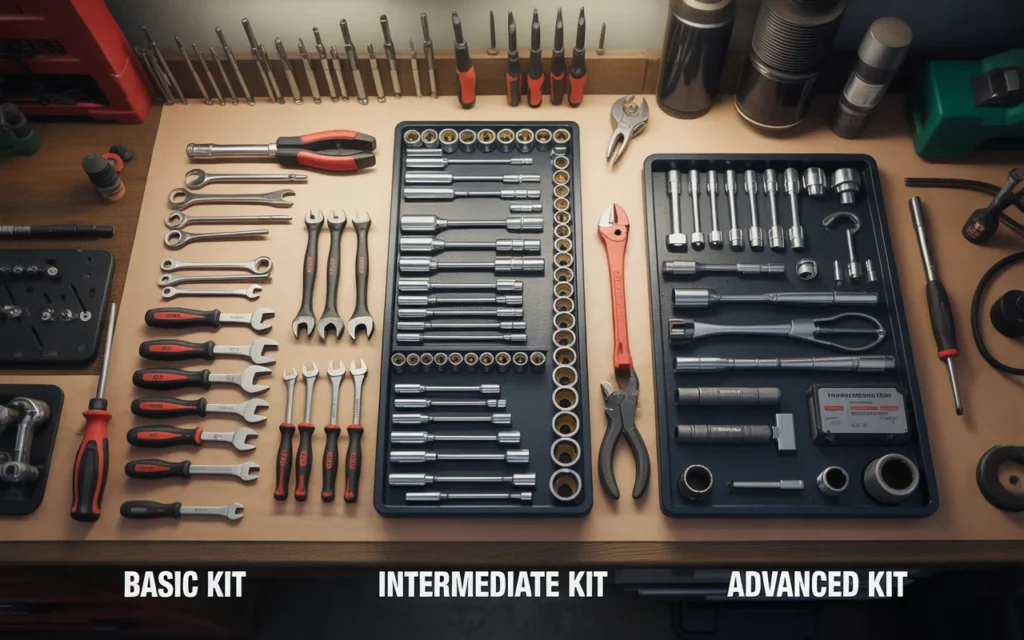
Your basic kit probably has a 3/8 inch drive ratchet with shallow sockets. That works for simple things. But you want a set with both shallow and deep sockets. Deep sockets reach nuts on long bolts. You also want a 1/4 inch drive set for small fasteners. And a 1/2 inch drive set for bigger jobs like suspension work.
What makes a ratchet good? Look for fine tooth count. More teeth mean you can turn the ratchet in tighter spaces. Also look for a quick release button. This stops sockets from sticking. Good brands include GearWrench, Tekton, and Husky. They cost more than the no name ones but not crazy money.
When you upgrade your basic automotive tool kit over time, start with a 3/8 inch drive set of quality sockets. Add a better ratchet. You will feel the difference immediately.
Quality Screwdrivers and Pliers
Basic screwdrivers have soft tips that round off. You need hardened steel tips. Buy a set with color coded handles so you grab the right one fast. Also get a set of Torx bits. Modern cars use these star shaped fasteners everywhere.
For pliers, buy three types. Needle nose pliers reach into tight spots. Slip joint pliers grip odd shapes. And locking pliers (often called Vise Grips) hold parts steady while you work on them. Cheap locking pliers slip. Good ones lock tight.
“The bitterness of poor quality remains long after the sweetness of low price is forgotten.” – Benjamin Franklin
Benjamin Franklin was not talking about tools. But the same truth applies. Saving ten dollars on cheap pliers brings years of frustration. Spending a little more brings smooth work.
A Reliable Torque Wrench
This tool saves you from disaster. Many car parts need exact tightness. Wheel lug nuts. Cylinder head bolts. Oil drain plugs. Too loose and things fall off. Too tight and you strip threads or crack parts.
A torque wrench makes a clicking sound when you reach the right tightness. Get a 3/8 inch drive model for most jobs. Learn how to store it properly. Set it back to zero after each use. Leaving it set tight damages the internal spring.
How to Upgrade Your Basic Automotive Tool Kit Over Time on a Budget
You do not need a big wallet to build a great tool set. You need patience and a plan. Here is a budget friendly approach that works.
One Tool Per Month Rule
Set aside twenty to forty dollars each month. Buy one good tool. After one year, you will own twelve excellent tools. That is better than owning fifty cheap tools that break.
Write down your next five planned car repairs. Research the tools needed for each. Then buy in that order. For example, if you plan to change brake pads, you need a brake caliper tool. Buy that first. If you plan to change oil, get a good filter wrench and a drain pan. Buy those second.
Used Tools That Are Safe to Buy
Some tools work perfectly fine when bought used. Sockets, ratchets, and breaker bars from pawn shops or garage sales often cost half price. Look for brands like Craftsman, Snap On, Mac, or Matco. These have lifetime warranties. Even used, the company will replace broken ones in many cases.
What tools should you never buy used? Torque wrenches. You do not know how the previous owner stored it. A dropped or mis stored torque wrench loses accuracy. Also avoid used screwdrivers with damaged tips. And skip used electrical tools unless you can test them first.
Avoiding Unnecessary Gimmicks
Tool stores love selling you things you do not need. Fifty piece hex key sets. Magnetic pickup tools with lights. Spark plug gap gauges with digital readouts. Most of these sit in a drawer forever.
Stick to basics. Ask yourself: Will I use this tool at least six times per year? If the answer is no, skip it. When you upgrade your basic automotive tool kit over time, focus on tools with real daily value.
Table 2: Monthly Upgrade Plan on a $30 Budget
| Month | Tool to Buy | Approximate Cost | Job It Helps |
|---|---|---|---|
| Month 1 | 3/8 inch deep socket set (metric) | $25 | Many engine and suspension bolts |
| Month 2 | Quality needle nose pliers | $15 | Hose clamps, electrical connectors |
| Month 3 | Breaker bar 1/2 inch drive | $30 | Rusty suspension bolts |
| Month 4 | Torque wrench 3/8 inch | $35 | Wheel lugs, engine parts |
| Month 5 | Screwdriver set with Torx bits | $20 | Interior trim, brake work |
| Month 6 | Oil filter wrench | $10 | Oil changes |
Intermediate Tools That Make a Big Difference
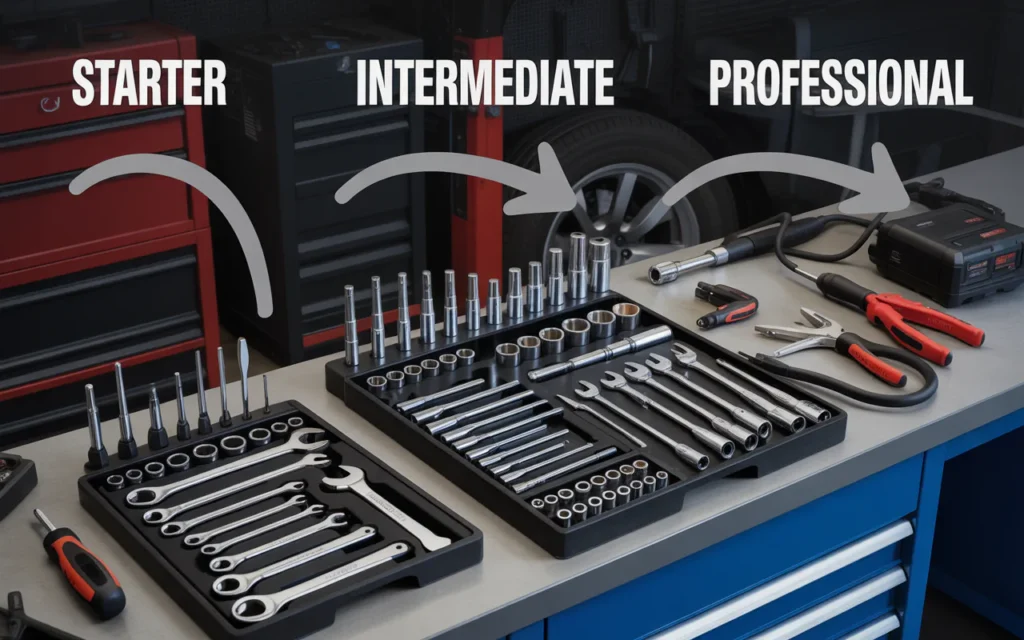
Once you have the basics down, you can add tools that expand what you can fix. These tools are not daily use items. But when you need them, nothing else works.
Breaker Bar and Extensions
A breaker bar has no moving parts. It is just a long steel bar with a ratchet head on the end. The length gives you leverage. Stuck bolts that laugh at your ratchet will break free with a breaker bar. Get a 1/2 inch drive model with a 24 inch length. Add a set of extensions in 3 inch, 6 inch, and 10 inch sizes. Extensions let you reach bolts hidden deep in the engine bay.
Jack Stands and a Floor Jack
Never work under a car held up by the jack that came with your spare tire. That jack is for emergency tire changes only. Buy a proper floor jack. A 2 ton or 3 ton model costs about 60to100. Then buy at least two jack stands. They cost $25 each. When you lift the car, place the jack stands under solid frame points. Lower the car onto them. Shake the car hard before you go under it. If it feels solid, you are safe.
I learned this lesson the hard way. A cheap jack failed while I was changing a starter. The car dropped six inches before the jack stands caught it. I was not under the car at that moment. But I never forgot that sound.
“Luck is what happens when preparation meets opportunity.” – Seneca
Being prepared with proper jack stands is not luck. It is smart planning.
Multimeter for Electrical Work
Modern cars have many electrical parts. Bad sensors. Dead alternators. Parasitic battery drains. You cannot fix these without a multimeter. A basic $20 multimeter works fine. Learn three functions: measuring DC voltage, measuring resistance (ohms), and checking continuity (a beep when wires connect). With these three skills, you can find most electrical problems.
Advanced Upgrades for Serious DIYers
After a year or two of working on cars, you might want to take on bigger projects. Engine swaps. Transmission repairs. Full suspension rebuilds. These jobs need more specialized tools.
Impact Wrench and Compressor
An impact wrench uses air pressure to spin bolts loose in seconds. Rusted exhaust bolts that take an hour with a breaker bar come loose in five seconds with an impact. You need an air compressor to run it. A small 3 gallon compressor works for impact wrenches. But bigger is better.
Cordless impact wrenches have gotten very good. Brands like Milwaukee and Dewalt make battery powered models that match air tools. They cost more, but you skip the compressor. A cordless 1/2 inch impact wrench costs 150to250.
Scan Tool for Car Codes
When the check engine light comes on, you need to read the codes. Basic code readers cost 20.TheyshowacodelikeP0301.Thattellsyoucylinderonemisfire.Butbetterscantoolsfor100 to $200 show live data. You can see oxygen sensor voltages, coolant temperature, and fuel trims in real time. This helps you diagnose problems instead of just swapping parts.
Create a Tool Storage System That Grows With You
As you upgrade your basic automotive tool kit over time, you need a place to keep everything. A cardboard box or a plastic bag will not work. You will lose tools. You will waste time searching.
Start with a simple tool bag. A canvas tool bag with pockets costs 15.Itholdsyourfirsttentoolsfine.Whenyoureachtwentytools,buyatoolbox.A26inchwidetopchestcostsaround60. Later, add a rolling cabinet. This lets you organize by tool type. Sockets in one drawer. Wrenches in another. Pliers in a third.
Label your drawers. Put foam cutouts in the drawers if you want to get fancy. But even simple dividers help. The goal is to know where every tool lives. When you finish a job, put each tool back in its spot. This habit saves hours over a lifetime.
Frequently Asked Questions
How long does it take to upgrade your basic automotive tool kit over time?
Most people reach a solid intermediate level in 6 to 12 months. That means buying one to two tools per month. After two years, you will have a set that handles nearly any repair on common cars.
Should I buy tool sets or individual tools?
Individual tools give you better value. Sets often include sizes you never use. Buy singles for the sizes you actually need. The only exception is socket sets. A complete socket set from 8mm to 19mm is cheaper than buying each size alone.
What is the one tool people forget most often?
A good work light. Seriously. You cannot fix what you cannot see. Buy a rechargeable LED work light with a magnetic base. Stick it to the car frame. Aim it at your work area. This costs $20 and saves endless frustration.
Can I borrow tools instead of buying them?
Yes, for rare jobs. Auto parts stores loan tools for free with a deposit. You pay the full price, then get your money back when you return the tool. This works great for special tools like ball joint presses or pulley pullers. But for common tools like ratchets and wrenches, buying is better. You will use them again.
Are cheap power tools worth it?
No. Cheap power drills and impact wrenches have weak batteries that stop holding a charge after a few months. They also lack power for tough bolts. Save up for a mid tier brand like Ryobi, Hart, or Bauer. Or buy a good used brand from a pawn shop.
Conclusion
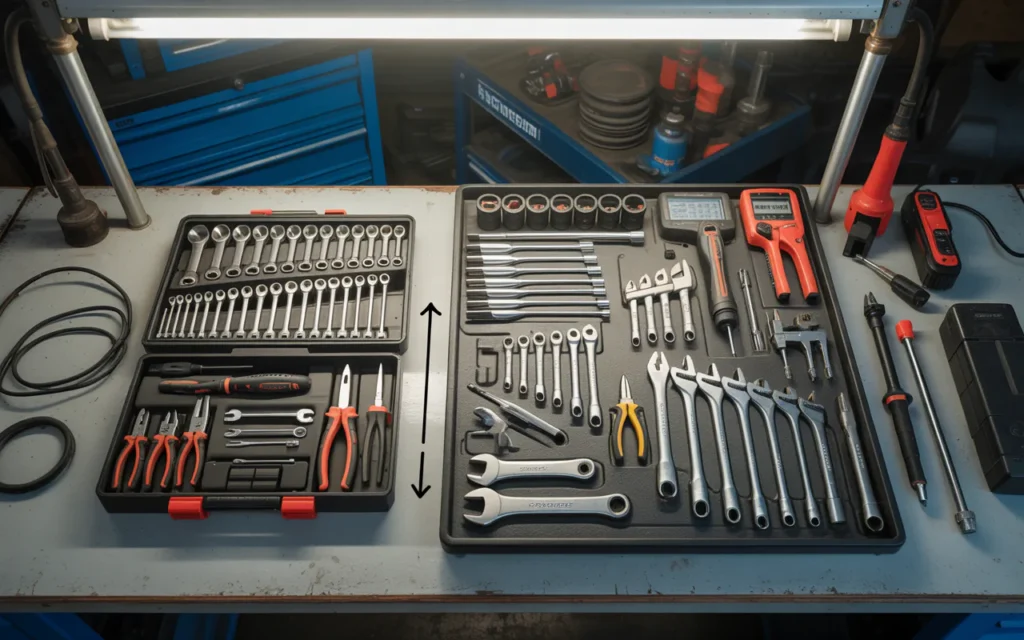
Building a great tool collection does not happen overnight. And it should not. When you upgrade your basic automotive tool kit over time, you learn the value of each new tool. You appreciate quality over quantity. And you save money by buying only what truly helps you fix your car.
Start where you are today. Look at your basic kit. Pick one missing tool that would help your next car project. Buy a good version of that tool. Use it. Feel the difference. Then move to the next tool next month.
Remember that quote from Abraham Lincoln about sharpening the axe. Your tools are your axe. Keep them sharp. Keep them organized. Keep adding good pieces over time. A few years from now, you will open your toolbox and smile. Every tool there will have a story. Every tool will have earned its place. And you will fix any car problem that comes your way with confidence.
So go ahead. Make that list. Set that monthly budget. And start your upgrade today, one tool at a time.
Related posts
 Top Starter Mechanic Tool Kits for Apprentices: Essential Sets for Your Trade
Explore top starter mechanic tool kits for apprentices. Compare sets for mechanics, electricians, and other trades to find your essential tools. Starting an apprenticeship is an…
 Automotive Tool Kits vs. Mechanic Tool Sets: What’s the Difference?
Understand the key differences between automotive tool kits vs. mechanic tool sets. Learn which is best for your car maintenance needs. When looking for tools to…
 Top Automotive Tool Kits for Garage Workshops: A Buyer’s Guide
Find the top automotive tool kits for garage workshop. Compare versatile sets for car maintenance, home repairs, and DIY projects to choose the best fit. Setting…